
20231005 Open Topic
I have mentioned before that my many-times great-grandmother was one of the last women tried for witchcraft in America, a full hundred years after Salem, in 1792. I say “tried,” but it was her neighbors, not the courts, who put her on trial. She was tortured, but survived. And she was about eighty years old when this happened, which is hard to imagine. According to documentation I discovered, she also lived until at least 1802, and died by 1803. I imagine that, considering what was done to her, she never walked without pain in those last ten years.
Anyway, Wolf said I should write about her sometime, and this is that time, I guess.
First, though, I want to share another bit of history from South Carolina where Mary Free Ingleman, my ancestor, lived, which might be related. This is a shocking tale, at least to me, considering the time period. I thought pre-Colonial America was more Puritan than perverse, but maybe not!
The story of the Weberites, also known as the Gifted Brethren, took place in an area of South Carolina known as the “Dutch Fork.” The settlers there were from the Palatinate area of Germany for the most part.
“Jacob Weber (also spelled as Weaver) was a Swiss immigrant who came to Saxe Gotha in 1739 with his brother. Weber underwent a conversion and started to preach to his neighbors starting around 1759. According to some sources, Weber’s group practiced animal sacrifices according to Old Testament rules and some fantastical accounts reported that they started dancing naked in the woods. Either way, the group grew and began to exhibit cult-like characteristics, as some members were apparently forced into joining. Soon, Weber began to believe that he was God himself and that a man named John George Schmidtpeter was Jesus Christ incarnate. An escaped slave named Dauber (or Dubard) was declared to be the Holy Spirit.
The only ordained minister in Saxe Gotha, Christian Theus, attended one of the meetings of the Weberites, where he was insulted and asked to recognize Weber as God. Upon Theus’ refusal, the congregation tried to drown him. However, Theus ran for his life and managed to escape after finding an enslaved person on a boat on the Broad River. Theus tried to get the colonial authorities involved to no avail.
During this time, the leaders of the sect began to have disagreements. Dauber was murdered by the sect, and Schmidtpeter murdered a Saxe Gotha resident named Michael Hans. This may have been an attempt to prove that Schmidtpeter could raise the dead. The murder of Hans enraged Weber who ordered his flock to beat and trample Schmidtpeter to death since he was Satan in disguise.
The murder of Hans was enough to get the attention of the authorities in Charleston though. The militia intervened and arrested seven of the Weberites. Four were found guilty and one, Jacob Weber, was executed. Weber wrote a confession while imprisoned and may have promised to rise from the dead after his execution.”
https://www.lexingtonchronicle.com/stories/the-murderous-saga-of-a-1700s-lexington-county-religious-sect,51197
From another account:
“During the harsh and violent winter of 1761 on February 23rd and 24th, thirty-one year old John George Smithpeter and allegedly “a godless colored preacher” named Dauber met with a sudden and violent death at the hands of Jacob and Hannah Weber, John Geiger, and Jacob Bourghart and possibly other followers of Jacob Weber at the Dutch Fork near the confluence of the Saluda, Broad, and Congaree Rivers in the western part of South Carolina north of Saxe Gotha. On Marach 17, 1761 a trial was held at the March Sessions of the court in Charleston, South Carolina. Jacob Weber, allegedly a crazed religious zealot, was convicted of the murders of John George Smithpeter and Preacher Dauber along with his wife, Hannah Wieber, John Geiger, and Jacob Bourghart. On March 31, 1761 Jacob Wieber was hanged for the murders at Charleston. Another Weberite, Abraham Geiger, was banished from South Carolina in about 1761 as a result of his involvement in the “Weberite Heresy.” Abraham Geiger died five years later in Georgia at the age of seventy-six. Dauber was NOT murdered by the Weberites at all; in fact it was Michael Hentz who was the second victim of the Weberites.
An item in the South Carolina Gazette, May 13-26, 1761 edition, on page three states the following: “At a court of Common Pleas held this week, before the honourable William Simpson, Esq; chief justice, John Gieger, Jacob Bourghart, and Hannah Wieber, (who, with Jacob Wieber executed on the 17th, were convicted of murder at March sessions and received sentence of death the 31st of the same month) were admitted to bail, to appear on their own recognizance from sessions to sessions, his majesty’s pleasure touching the sentence passed upon them shall be known.” It was however proven that the murder victims were John George Smithpeter/Schmidtpeter and one Michael Hentz. The preacher Dauber or Dubber was not in fact murdered and went on to live a long life.”
Mary Free Ingleman’s maiden name is not known. Her first husband, Lawrence Free, died in 1771, and she remarried not long after. There is a possibility that her new husband, Jacob Ingleman, was a member of the Weberite sect. That may have been the impetus for Mary’s neighbor’s suspicions of her. In any case, in 1792, they accused her of witchcraft. The following account states that Mary herself may have been a Weberite; I personally don’t believe that records support that conclusion.
This is a photo of the house Mary Free Ingleman lived in back in 1792 (obviously the pic was taken far more recently!
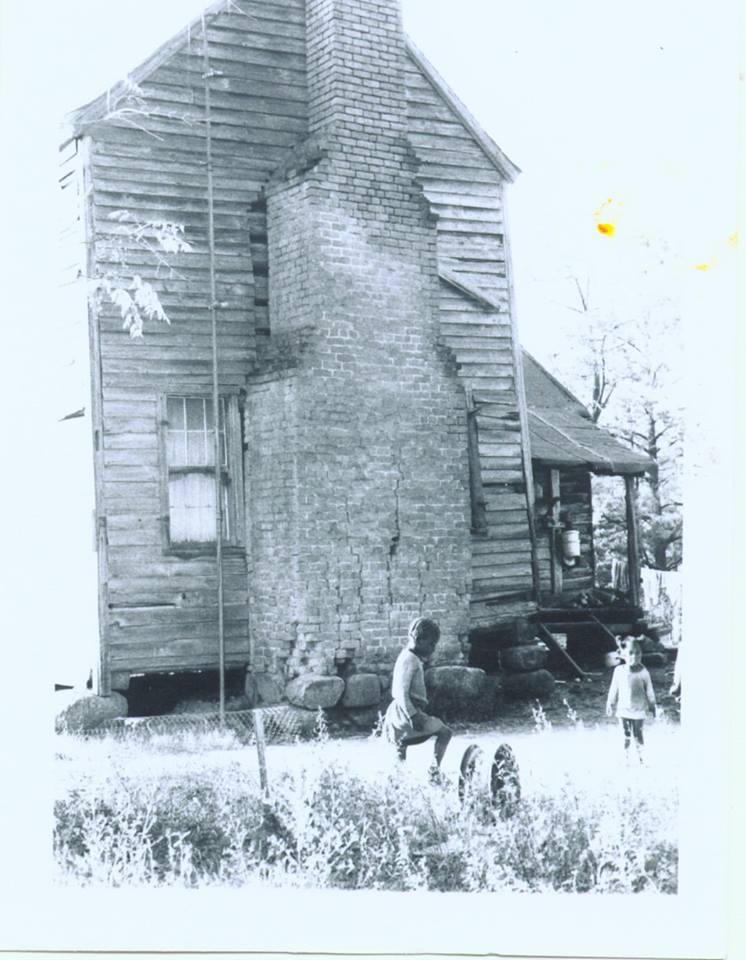
https://www.theqtree.com/wp-content/uploads/2023/09/Mary-Ingleman-house.jpg
From “The Witches of Fairfield, S.C.,” by Lee R. Gandee, Fate Magazine, 1972:
In 1792 Fairfield County was across Broad River from Lexington County (an arm of Richland County now separates them), where a generation earlier a bizarre cult called the Gifted Brethren practiced incredible excesses, deifying three of its leaders as God the Father, Jesus Christ and the Holy Ghost. This bizarre group practiced hypnosis and before it was broken up its leaders hanged or banished for the murders they committed, many of the “gifted” members had come to be considered witches. Colonial records suggest that Mary Ingelman was a native of Lexington or a member of a family who had lived there and it seems possible that the imputation of witchcraft followed her when she moved to Fairfield, about 20 miles from the headquarters of the Gifted Brethren. In any case, she was the principal one of the accused, the others being an old Mr. Harding and his wife and an old crone named Sally Smith.
Lawyer Pearson stated that from the time of the first settlement of Fairfield there always had been persons reputed to be witches living there but that up to 1792 their activities had been considered harmless, more in the nature of white hex than of black magic. In 1792, however, a number of strange phenomena occurred; women began to act possessed. Presently about one person in 20 yielded to unreason and organized to stamp out witchcraft.
Apparently they realized they might be held accountable for their acts for in assembling their evidence they took depositions and also kept written records of the testimony at the trial of the four accused. Pearson had access to these depositions and the testimony and repeats enough of it to allow reconstruction of a few of the incidents on which the charges were based.
The “judge” chosen to decide the cases was a respectable planter, Thomas Hill, whose home was five miles from Winnsboro. He was a slaveholder and a man of considerable property. The accused were brought to his plantation for trial, Mary Ingelman from a distance of about 15 miles. A jury was selected and John Crossland, a poor man, apparently young and strong and perhaps a tenant on Hill’s land, was named “sheriff” and “executioner.” The “trial” was conducted at night in a hut or outbuilding on the Hill plantation.
Mary Ingelman was accused by Rosy Henley and her sister of having placed a spell on them. Of the two Rosy was the worse affected and the evidence suggests that she was psychically disturbed — if not actually possessed by devils. The manuscript reads: “Lying in her bed she could not be prevented by the utmost exertions of four strong men from rising up and clinging to the ceiling. They were both bitten on the neck and shoulders and stuck over with pins and splinters. Their case was dreadful . . .”
Anyone can fake and two sisters could bite each other unobserved and if they were willing to undergo the discomfort, could stick pins and splinters into themselves or each other. but it is hardly possible to fake a levitation convincingly enough to withstand the efforts of four strong men to prevent it and equally difficult to give the impression of clinging to a ceiling while four men attempt to pull one down.
There seem to be only two possibilities: The individual supposed to be levitating, the four strong men and all witnesses were hypnotized and conditioned by suggestion to believe there was a levitation. Or the levitation actually occurred.
It is not possible to say whether autosuggestion could or could not simultaneously control the participants and witnesses of a supposed levitation. Hex and voodoo seem to utilize telepathic suggestion in a way which makes this possible but from admitting this it is only a short step to believing witchcraft. Rosy Henley may have been unconsciously overwhelming the sense-impressions of those around her and filling their consciousness with the fantasies of her own mind but the psychic energy necessary to cause this probably could produce an actual levitation just as readily. Whether Mary Ingelman had any part in it at all seems doubtful.
Pearson makes it clear that he believed the levitations occurred. In fact, a wizard not brought to trial, one Joe Fairs of Lower Fairfield, was accused of affecting tow of Drury Walker’s daughters in the same manner. Pearson said, “It took four strong men to prevent her (the worse afflicted one) from rising out of her bed to the ceiling. Sometimes she would rise up the wall, slide across the ceiling and descend the opposite wall without injury. There was no doubt as to these phenomena at Walker’s.”
For a circuit court lawyer to risk his reputation by making such a statement indicates he had complete confidence in the truth of those who reported these levitations. He also must have believed persons still living could and would verify his claim.
Aside from the levitations of the Henley and Walker sisters, the most unusual phenomena occurred in the case of Willing Haw “alias Martha Holley.” She testified that after Mary Ingelman bewitched her she “. . . put up (vomited) balls of hair with pins sticking out, was all over the neck and shoulders stuck full of pins and splinters and deprived of all peace and comfort . . . “
The other testimony reads like all testimony in witch trials for as far back as records go. Adam Free, Mary Ingelman’s son by a previous marriage, testified that his mother once asked him for one of his cows. When he refused Mary immediately cast a spell on it causing it to spring up convulsively, fall and break its neck.
His son, Jacob Free, testified that his grandmother once turned him into a horse and rode him to Pearson’s apple orchard on Broad River six miles from his home. The manuscript relates quaintly, “While she was filling her bag with apples, his eye was attracted by the beautiful red apples that hung over him. He put up his long horse head to obtain a stealthy supply and while he was attempting to do so, she drove a punch into his cheek from the effects of which he did not soon recover.”
One is tempted to say that a young man must really be bewitched to make such a statement or impelled by motives that a psychiatrist would find interesting.
However, it remained for Isaac Collins to accuse Mary Ingelman of consorting with Satan. “He testified that on one occasion he took his trusty rifle and went out on a deer hunt around McTyre’s old field. He saw a deer and tried several times to fire at it but the rifle would not fire. He suspected witchcraft so he removed the ball, split it and inserted a sliver of silver. The then fired; the deer vanished; in its place a large black cat appeared with its front leg wounded and the cat limped away.
“A day or two later he was plowing corn and became thirsty. He went to a spring near the field and while he was resting there Mary Ingelman came up with her arm in a sling and told him that he was to blame for her injury and that she would not forget it.
“He testified that after that she turned him into a horse and rode him to a grand convention of witches. Where, he could not say, but he thought somewhere in North America; and on the way the Devil rode up by her side and observed, ‘Mother Ingelman, you have a splendid horse.’
” ‘Ah,’ she said, ‘This is that rascal Collins!’ “
Faced with this a accusation Mary Ingelman offered no defense, nor did any of the others to the charges made against them. They were adjudged guilty and sentenced to be punished.
As punishment they first were tied by the wrists and hanged to joists in the building where they were flogged, the newspaper account says, brutally. They were taken down, “then placed with their feet to a bark fire and confined there until the soles popped off.” After this torture they were released and allowed to crawl away. The Hardings and Mary Ingelman escaped further abuse but Sally Smith was found some distance from the Hill plantation by a vindictive man who “cast her down and placed a pine log across her neck. She could not stir and the next day was relieved by a benevolent person passing along the path.”
Despite this treatment none of the four victims died as a direct result of it and the witch-hunters began to consider action against Hezekiah Hunt and his wife, Mourning Hunt, who were strongly suspected.
Evidently the group felt that public opinion protected them. Of the four only Mary Ingelman attempted to have anyone brought to justice for the outrages committed upon her. In all Camden District she found only one magistrate who would issue a warrant for anyone’s arrest. He was The Rev. William Yongue, a Presbyterian minister, so shocked by the circumstances that he ignored public opinion. He issued a warrant for the arrest of John Crossland who was tried in the County Court, found guilty of aggravated assault and sentenced to be fined five pounds. He never paid it but fled “the far west,” which in 1792 meant Georgia or Alabama. Pearson expressed some sympathy for him saying that “. . . other better-informed men than Crossland also participated . . .” and were not punished.
Early in the account Mr. Pearson referred to Mrs. Ingelman as ” . . . the dreadful old Mary Ingelman” but apparently this was intended as irony. In concluding his account he wrote: “Some persons now living may remember the great witch Mary Ingelman. She was a remarkably neat, tidy and decent old lady. She was of German extraction and probably a native of Germany. Her conversation was pleasant, entertaining, instructive; her manners mild, simple and agreeable. Her knowledge in pharmacy was considerable and her application of simples in the cure of country complaints was the result of much observation and gratuitous practice. . . .” He added that she was a pious old soul and that when her spirit left this earth it probably went to a better place.
In Salem, Rebecca Nurse was described in much the same way and Rebecca Nurse was put to death. Being a “remarkably neat, tidy and decent” person is no protection, nor is benevolence and piety when a community falls under the spell of a witch-hunt.
In Salem horror and excess brought about its own reaction. In Fairfield the delusion was broken by a a wise minister, “Preacher Woodward,” who announced that he would preach on witchcraft and thus attracted a huge crowd. The crowd was keyed to a high pitch of expectancy and the minister began by admitting that sorcery and magic exist, that indeed there are witches. However, he declared with mock seriousness, people should not imagine that old or ugly women were witches. What woman with supernatural powers would use them to make herself ugly or old, he asked the congregation. Rather, he said, suspect beautiful girls of witchcraft, since with a look and a few words murmured in a certain way they can draw boys away from their families, turn them first into lackeys and at last into lifelong toilers. Wizards, he averred, are not to be found among old, broken men but among the young and handsome who with a touch and a murmur can deprive a girl of her senses and turn the most lissome and carefree maiden into a servant and a household drudge.
The tension broke. The crowd laughed and the Fairfield witch-hunt was over. No more did Rosy Henley and the Walker girl rise to the ceiling. No more did William Haw “put up balls of hair with pins sticking out.” Witchcraft and laughter cannot coexist.”
I actually own a copy of the original Fate Magazine where this story was published.
My direct ancestor was Adam Free’s brother. He appears to have remained clear of the doings, and did not condemn his mother. As a side note, from the historical record it appears quite clear to me that Adam Free fathered some of his own grandchildren by not one but two of his own daughters. This was not a nice man.