

The header image for today’s offering is courtesy of Google Images.
Health Friday is a series devoted to Big Pharma, vaccines, general health, and associated topics. There are Important Notifications by our host, Wolf Moon; the Rules of our late, good Wheatie; and, certain caveats from Yours Truly, of which readers should be aware. They are linked here. Note: Yours Truly has checked today’s offering for AI-generated content. To the best of her knowledge and belief, there is none, except perhaps for AI-generated content within linked URLs. If readers wish to post AI-generated content to today’s discussion thread, they must cite their source. Thank you.
Yours Truly is thankful that our gracious host, Wolf Moon, has established this blog to be a haven for truth; to be a place for honest discussion (and honest disagreement, too); to be a place for the sharing of life’s joys, and of life’s difficulties and sorrows; as a place for those who come to this Tree to encourage and support one another. One is grateful to be an author on this blog; grateful for all the other authors on this blog, including our gracious host; grateful for all who comment.

Yours Truly is grateful to those Pilgrims who came to Plymouth Rock, and to those earlier colonists who came to what is now the Commonwealth of Virginia (courtesy of our good Aubergine providing this latter knowledge), to establish a country based on freedom and on the Divine Providence of the Supreme Being: the country which became the United States of America. Yours Truly is grateful for her grandparents and great-grandparents who left their homes in England, Ireland, and Scotland, to come to the United States to make new lives for themselves, to marry, and to raise their children in this country.
———————————————————————-
And, on the concept of gratefulness: Yours Truly is also grateful for one particular thing: the successful completion of the difficult, time-consuming (seven months long), physician-supervised process of “tapering-down the dose, then weaning off, leading to discontinuation” of the SSRI prescription drug that she had been taking, on and off, for six years. (SSRI = Selective Serotonin Reuptake Inhibitor.)
Yours Truly was put on this SSRI in February 2019, after being diagnosed with PTSD (Post-Traumatic [or, Posttraumatic] Stress Disorder) following the death of my late husband. Please see the screenshot below, from Psychiatry.org/, “What is Posttraumatic Stress Disoder (PTSD)?”, reviewed by Donald Egan, M.D., March 2025 [1]:
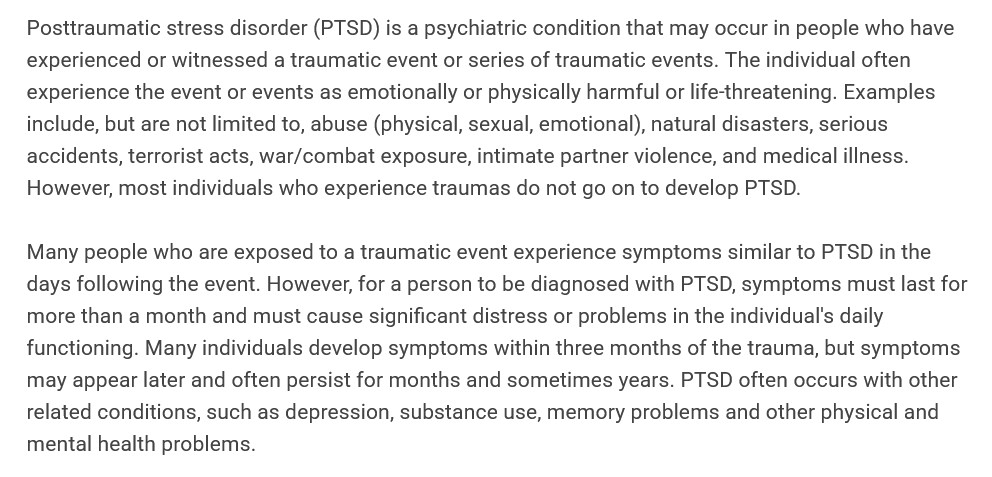
In Yours Truly’s case, the PTSD was one of “delayed onset”, meaning that the symptoms began to appear months after my husband’s death.
Anti-depressant drugs are routinely prescribed by healthcare professionals for persons who are diagnosed with PTSD. Below is a screenshot from the Cleveland Clinic regarding SSRIs [2]:
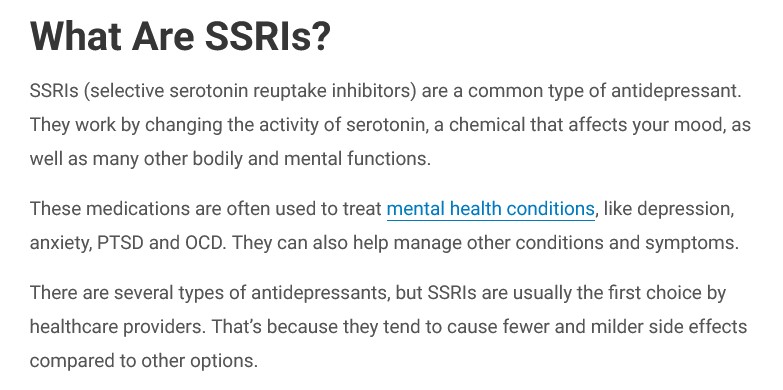
Note the phrase above regarding SSRIs – that “they tend to cause fewer and milder side effects compared to other options.” Let’s look at the side effects lists for the SSRI that Yours Truly had been taking, paroxetine (Paxil), from Drugs.com/ [3]. Paroxetine is available in several different formulations — tablet; oral suspension; extended-release tablet; and, capsule. The Mayo Clinic list of paroxetine‘s brand names is: Brisdelle; Paxil; Paxil CR;, and, Pexeva [4].
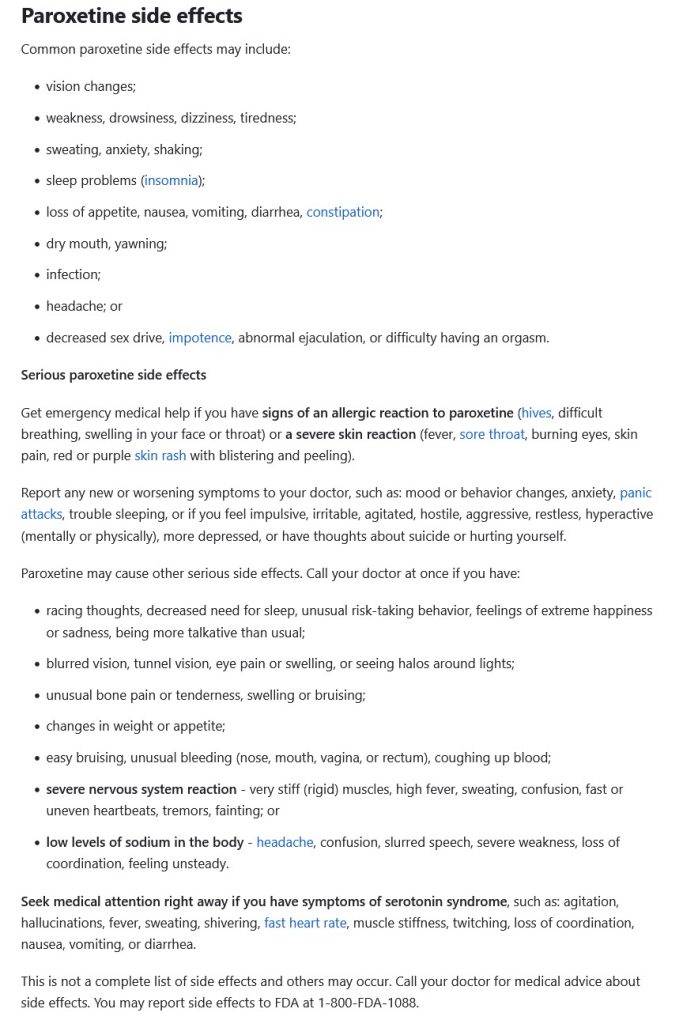
How can any of the side effects listed above be called “fewer and milder”? Let’s take a look at only one of the side effects lists of paroxetine from Drugs.com/, from the For healthcare professionals section [5]:
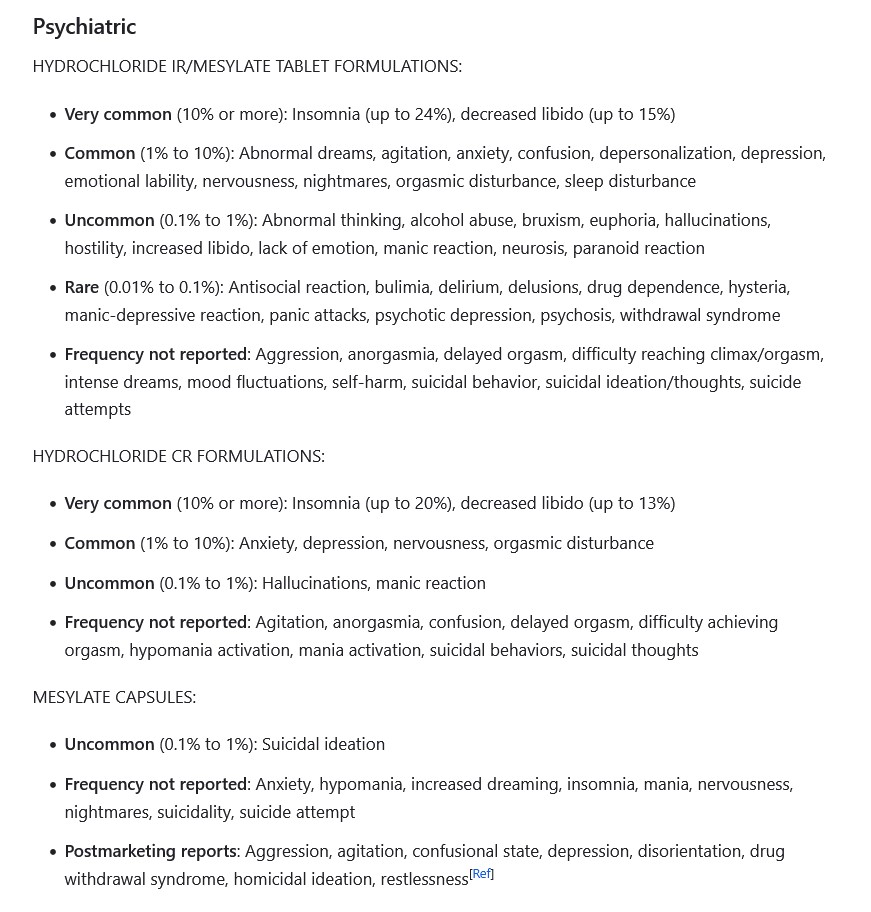
The For healthcare professionals section lists of paroxetine side effects includes eighteen different areas, from General to Endocrine, that have adverse reactions and/or side effects from the use of this drug. Literally every organ or function of the human body is interfered with, and/or could be damaged by, paroxetine use. How can any of this be described as “fewer and milder” side effects?
Dr. Robert Malone, MD, penned a recent blog article, “Well Being: Selective Serotonin ReUptake Inhibitors (SSRI)”, regarding the routine prescribing of SSRIs by physicians [6]. Please see the screenshots, below, from his article:
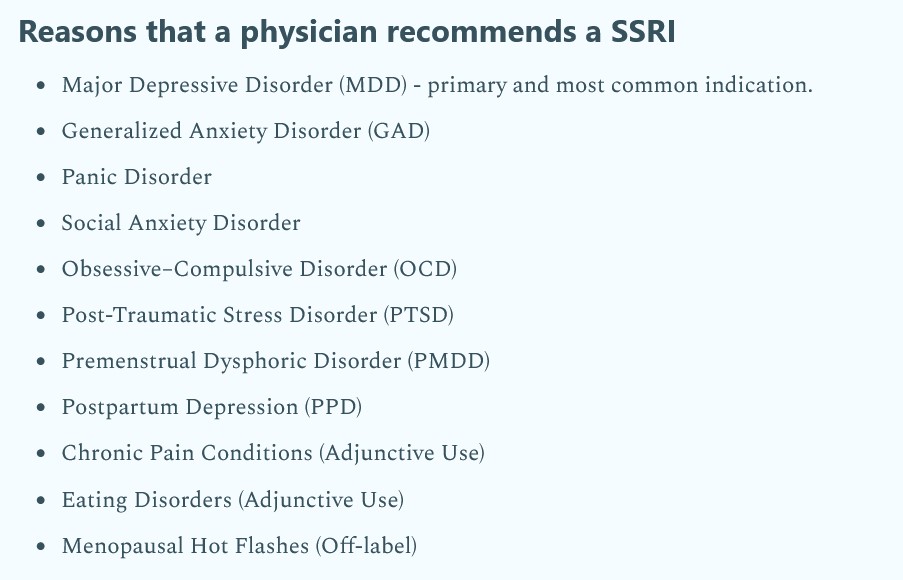
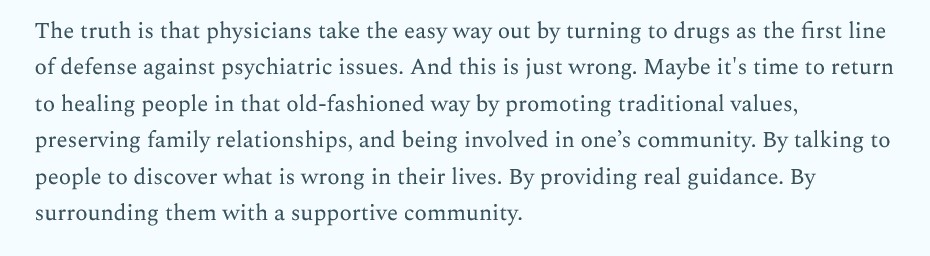
A Midwestern Doctor, in their blog, has written extensively regarding the dangers of SSRIs; the multiple marketing and other ploys used to acclimate physicians to prescribing them, and patients to take them; and how difficult it is to follow the process of taper down the dose, wean off the drug, and have it finally discontinued. The following screenshots are from these articles: first, “The Dark Side of Antidepressants”, of 24 January 2025 [7]. Note: Some of the articles from A Midwestern Doctor are accessible in the entirety only if the reader subscribes (for free); and/or becomes a paying subscriber.
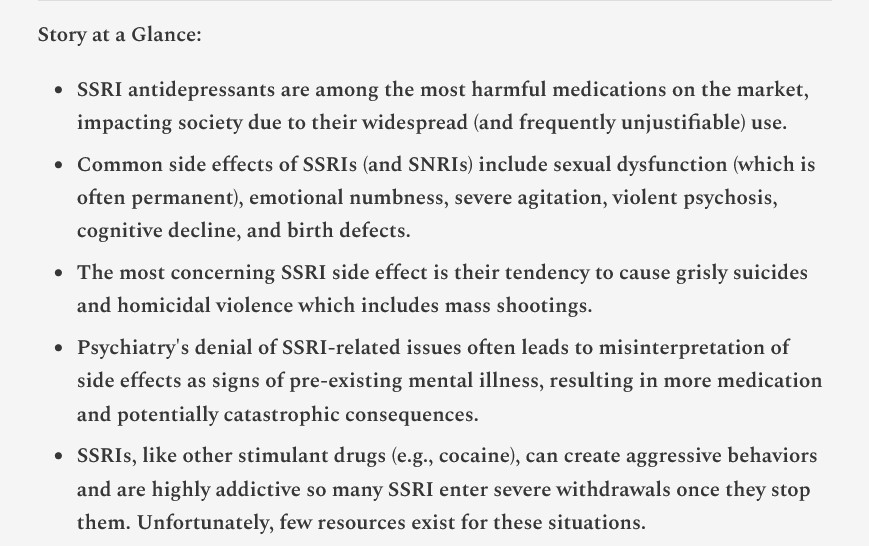
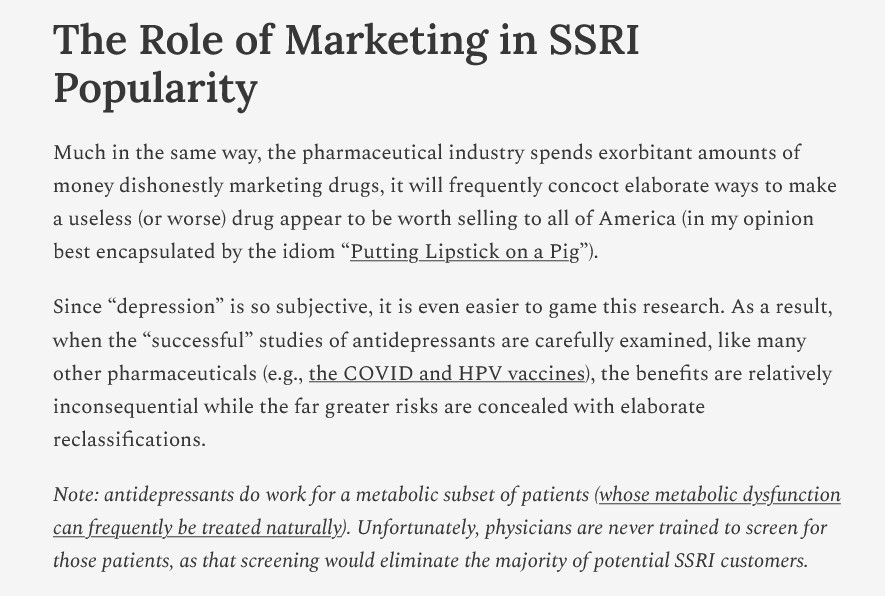
Then, from their article, “The Hidden Dangers of Antidepressants and Why They’re So Hard To Stop Taking”, [8] 9 February 2025:
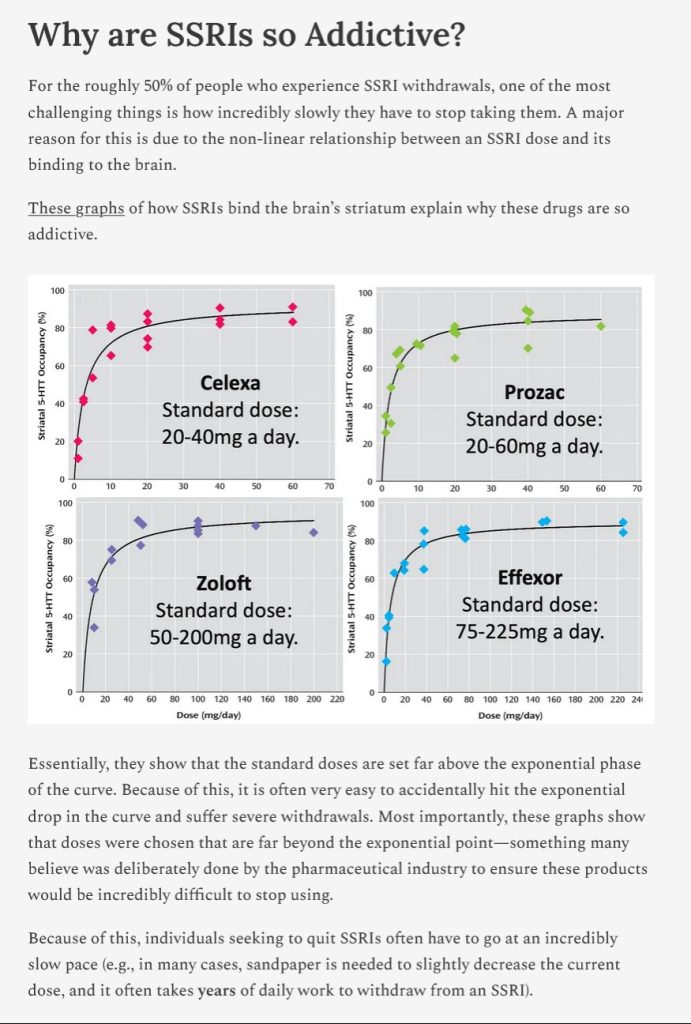
And, from their article, “”Why Are Antidepressants So Harmful?”, [9] 26 November 2023:
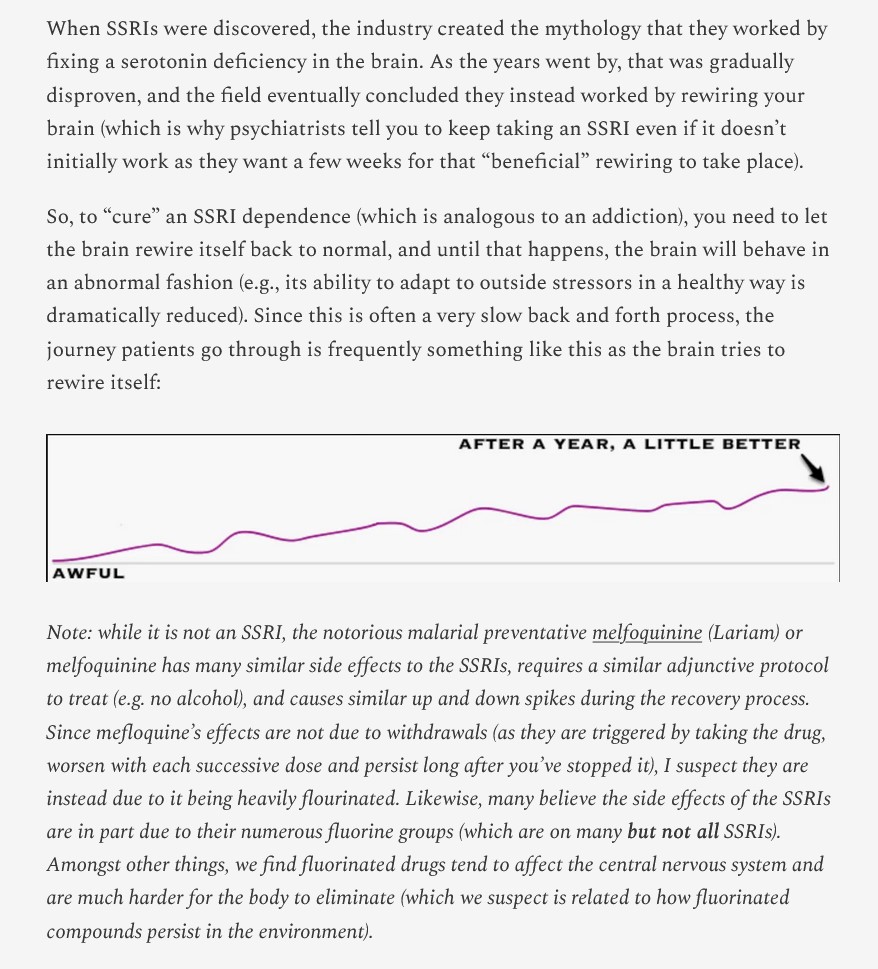
Yours Truly was fortunate so have been able to get the taper down – wean off – discontinue process successfully completed (as regards stopping the taking of paroxetine) in about six months. However, the “wiring” of one’s brain to accept this SSRI and allow it to operate within the brain began in early 2019, when I was put on the drug by the PCP after diagnosis of PTSD. Thus, even with the discontinuation of the physical process of taking the drug, the “rewiring” of the brain back to pre-use of the drug is ongoing. One already feels much better since the “endemic physical effects” of the drug have ceased. One has also made a decision to never take another psychotropic drug.
What has helped Yours Truly to make real progress in “rewiring” the brain after the paroxetine discontinuation process was completed? A daily program that includes:
Probiotics (this includes yogurt)
Vitamin D, 2500IU
Vitamin C, 3000mg
Walking and free-weights exercise
Exposure to sunshine
Being well-hydrated
Cutting sugar, cutting simple carbohydrates, replacing them with complex carbohydrates, and using very little honey as a sweetener
Eating meat, eggs, and fish, rotating these during the week
Eating more green vegetables
Journaling — meditating — connecting with the Divine
Getting out and doing things — being with family; walking the dog; working in the yard
Reducing / eliminating stressors to the extent possible
Attitude — one is absolutely determined to “rewire” the brain back to pre-SSRI
———————————————————————-
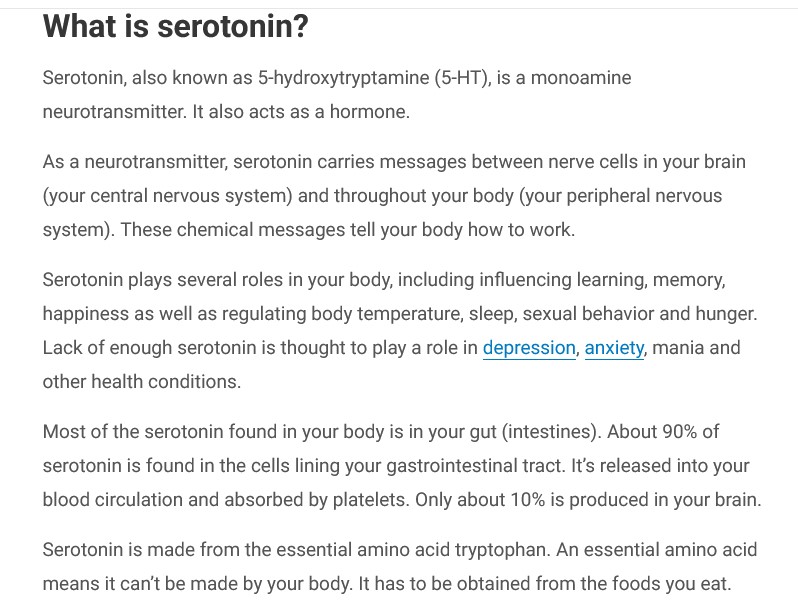
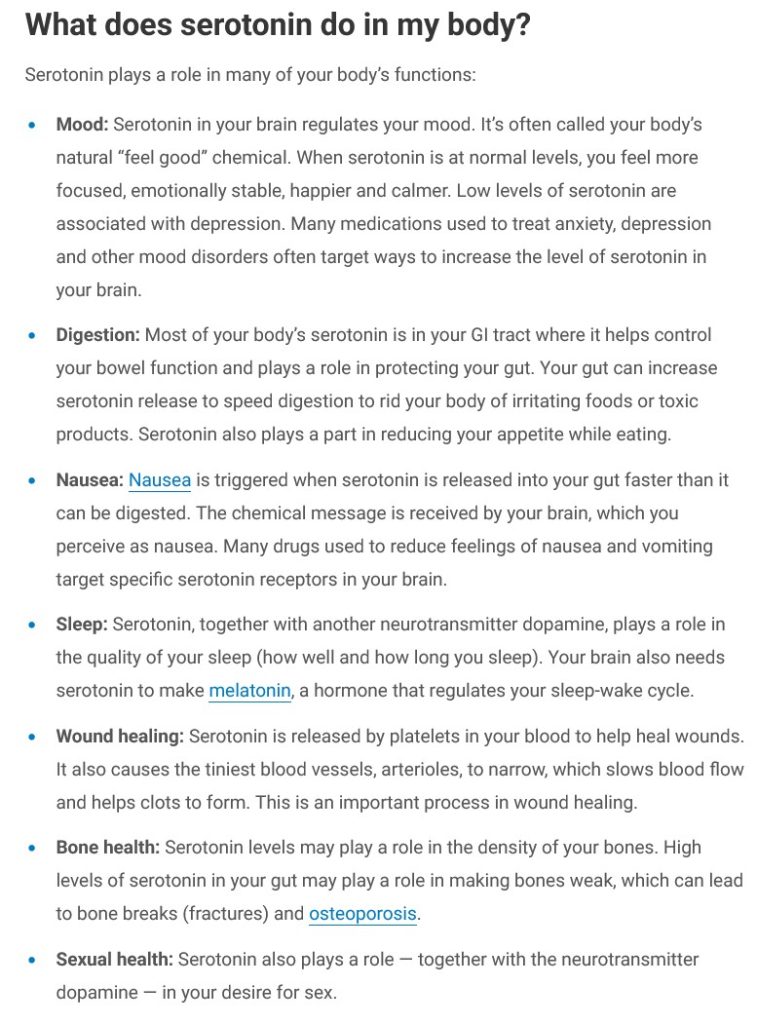
Let’s take a look at serotonin, the crucially important element that the human gut makes — and which is the “target” of SSRIs. Below are screenshots from the 2022 Cleveland Clinic article, “What is serotonin?” [10]:
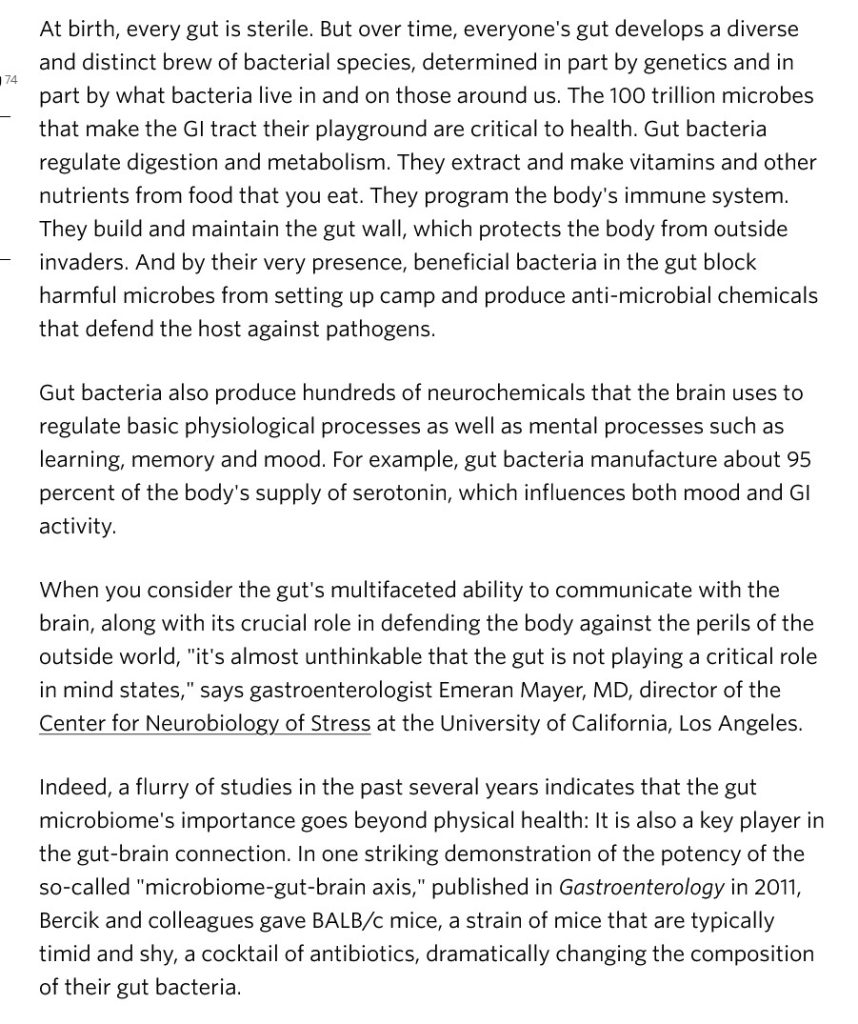
And, regarding the “gut-brain axis”, an article, “That gut feeling”, Dr. Siri Carpenter, [11] 1 September 2012, a screenshot from which is below:
Yours Truly does not fault the physician who started one on paroxetine in early 2019, nor the physician-therapist who continued the drug until I had had enough of the side effects by September 2024 and requested to go through the process to taper down — wean off — discontinue the drug. They were following conventional medical “recommendations.” However, Yours Truly, by the late summer of 2024, had also done enough research to understand that SSRIs are dangerous and addictive, that the decision to request going through the process was what had to be done. How many people taking SSRIs do the research necessary to understand what these drugs are doing to their bodies and their brains? Why don’t physicians who prescribe SSRIs (or, indeed, any psychotropic drug) caution the patient that there are multiple and potentially serious side effects and/or adverse reactions to these drugs? Why don’t physicians make it their business to ensure that, unless there is clear indication that the patient needs a higher dose, to start the patient on the lowest possible dose of an SSRI, and at the the first indication that the patient is having real trouble with side effects and/or adverse reactions, to begin the process of taper down — wean off — discontinue the drug; while, at the same time, ensuring that the patient starts or continues therapeutic counseling and healthy lifestyle changes? Similarly, why don’t physicians make it their business to ensure that, there is clear indication that the patient needs a higher dose of an SSRI drug, to start and keep the patient on the lowest possible dose?
The human gut is where over 90% of the body’s serotonin is produced. The human brain produces 10% or less of the body’s serotonin. Because of the “gut-brain axis” system in the body, serotonin produced in the gut “travels” to the brain via the bloodstream. Why aren’t physicians trained in the nutritional knowledge necessary to counsel patients with emotional/psychological issues to eat foods that would assist in proper and healthy serotonin production — foods such as, salmon, eggs, cheese, nuts, and turkey? Why don’t physicians realize that taking SSRI drugs actually block the normal “gut-brain axis travel” of serotonin to the brain — leaving the brain with only a small amount of serotonin; and which low level of serotonin is targeted by SSRI drugs? [12]
Yes, there are circumstances in which a physician makes the decision that the emotional/psychological issues of the patient warrant the need for that patient to take an SSRI. However, Yours Truly believes that, in addition to the SSRI, the patient needs to be counseled to eat foods that will help the gut produce healthy serotonin in proper amounts, to get out into the sunshine, to move their body, to get restful sleep, to have therapeutic psychological counseling if necessary; and, to understand that what they’re experiencing isn’t just “all in their head” — it’s also “that gut feeling.”
Peace, Good Energy, Respect: PAVACA
References:
[1]: “What is PTSD?”. https://www.psychiatry.org/patients-families/ptsd/what-is-ptsd. Reviewed by Donald Egan, M.D. March 2025.
[2]: “SSRIs (Selective Serotonin Reuptake Inhibitors.” https://.my.clevelandclinic.org/health-treatments/24795-ssri. Last reviewed on 09/26/2025 by Cleveland Clinic.
[3]: “Paroxetine side effects.” https://www.drugs.com/paroxetine.html#side-effects.
[4]: “Paroxetine – oral route.” https://www.mayoclinic.org/drugs-supplements/paroxetine-oral-route/description/drg-20067632.
[5]: “Paroxetine – side effects. For healthcare professionals.” https://www.drugs.com/sfx/paroexetine-side-effects.html.
[6]: “Well Being: Selective Serotonin ReUptake Inhibitors (SSR).” https://www.malone.news/cp/179662213. 12 November 2025.
[7]: “The Dark Side of Antidepressants.” https://www.midwesterndoctor.com/p/the-dark-side-of-antidepressants. 24 January 2025.
[8[: “The Hidden Dangers of Antidepressants and Why They’re So Hard To Stop Taking.” https://www.midwesterndoctor.com/p/the-hidden-dangers-of-antidepressants. 9 February 2025.
[9]: “Why Antidepressants Are So Harmful?” https://www.midwesterndoctor.com/p/why-are-antidepressants-so-harmful. 26 November 2023.
[10]: “What is serotonin?” https://my.clevelandclinic.org/health/articles/22572-serotonin. Last reviewed on 03/18/2022.
[11]: “That gut feeling.” https://www.apa-org/monitor/2012/09/gut-feeling. Dr. Siri Carpenter, PhD. 1 September 2012.
[12]: “Chronic SSRI Treatment Exacerbates Serotonin Deficiency in Humanized Tph2 Mutant Mice.” William B. Siessner, et al. https://doi.org/10.1021/cn300127h. 1 October 2012.
(Intellectual Property Disclaimer and Notice: With the exception of published scientific items cited above, the ideas and conclusions of today’s post are by PAVACA. Proper credit must be given to PAVACA if the ideas or conclusions from today’ post are used by other blog writers, by podcasters, in social media, or in print media.)