“We do not believe any group of men adequate enough or wise enough to operate without scrutiny or without criticism. We know that the only way to avoid error is to detect it, that the only way to detect it is to be free to inquire. We know that in secrecy error undetected will flourish and subvert.” –J. Robert Oppenheimer
This Sanctuary Sunday Open Thread, with full respect to those who worship God on the Sabbath, is a place to reaffirm our worship of our Creator, our Father, our King Eternal.
It’s also a place to read, post, and discuss news that is worth knowing and sharing. Please post links to any news stories that you use as sources or quote from.
In the QTree, we’re a friendly and civil lot. We encourage free speech and the open exchange and civil discussion of different ideas. Topics aren’t constrained, and sound logic is highly encouraged, all built on a solid foundation of truth and established facts.
We have a policy of mutual respect, shown by civility. Civility encourages discussions, promotes objectivity and rational thought in discourse, and camaraderie in the participants – characteristics we strive toward in our Q Tree community.
Please show respect and consideration for our fellow QTreepers. Before hitting the “post” button, please proofread your post and make sure you’re addressing the issue only, and not trying to confront the poster. Keep to the topic – avoid “you” and “your”. Here in The Q Tree, personal attacks, name-calling, ridicule, insults, baiting, and other conduct for which a penalty flag would be thrown are VERBOTEN.
In The Q Tree, we’re compatriots, sitting around the campfire, roasting hot dogs, making s’mores, and discussing, agreeing, and disagreeing about whatever interests us. This board will remain a home for those who seek respectful conversations.
The saying “my yoke is easy and my burden is light” is part of a larger passage (Matthew 11:28–30), in which Jesus tells all who are weary and burdened to come to Him for rest. He isn’t speaking here of physical burdens. Rather, it was the heavy burden of the system of works that the Pharisees laid on the backs of the people that Jesus was offering to relieve. Later on in Matthew’s Gospel, Jesus will rebuke the Pharisees for laying heavy burdens on the shoulders of the people (Matthew 23:4).
The “yoke of the Pharisees” is the burdensome yoke of self-righteousness and legalistic law-keeping. It has been said by biblical scholars that the Pharisees had added over 600 regulations regarding what qualified as “working” on the Sabbath. That is a heavy burden! Recall the story of the lawyer who asked Jesus what was the greatest commandment of the Law (Matthew 22:36). You can almost read between the lines of the man’s question: “What law, of all the laws we have, do I absolutely have to keep?”
Jesus was saying that any kind of law-keeping is burdensome and amounts to a “heavy yoke” of oppression because no amount of law-keeping can bridge the gap between our sinfulness and God’s holiness. God says through the mouth of the prophet Isaiah that all of our righteous deeds are like a “polluted garment,” and Paul reiterated to the Romans that “no one will be declared righteous in his sight by observing the law” (Romans 3:20).
The good news is that Jesus promises to all who come to Him that He will give them rest from the heavy burden of trying to earn our way into heaven and rest from the oppressive yoke of self-righteousness and legalism. Jesus encourages those who are “heavy laden” to take His yoke upon them, and in so doing they will find rest for their souls. The yoke of Jesus is light and easy to carry because it is the yoke of repentance and faith followed by a singular commitment to follow Him. As the apostle John says, “For this is the love of God, that we keep his commandments. And his commandments are not burdensome” (1 John 5:3).
This is what Jesus says in Matthew 11:30. His yoke is easy and His burden light. Now, we might think that there is really no difference between the commandments of Jesus and the Jewish Law. Isn’t the same God responsible for both? Technically speaking, yes. If anything, one might argue that the commands of Jesus are even more burdensome because His reformulation of the Mosaic Law in the Sermon on the Mount (Matthew 5-7) actually goes above and beyond a mere outward conformity to the Law and deals instead with the inner person.
What makes Jesus’ yoke easy and His burden light is that in Jesus’ own active obedience (i.e., His perfect fulfillment of the Law of God), He carried the burden that we were meant to carry. His perfect obedience is applied (imputed) to us through faith, just as His righteousness was exchanged for our sin at the cross (2 Corinthians 5:21). Our obedience to Jesus then becomes our “spiritual worship” (Romans 12:1).
Furthermore, we are indwelt by the Holy Spirit who works in our lives to mold us into the image of Christ, thereby making the yoke of Jesus easy and His burden light. The life lived by faith is a much lighter yoke and a much easier burden to carry than the heavy and burdensome yoke of self-righteousness under which some continually strive to make themselves acceptable to God through works.
“One might argue that the commands of Jesus are even more burdensome ” . . . and they could be considered so if we looked at being a Christian as a great number of things that we should do or shouldn’t do. Being a Christian, however, is all about our relationship to God . . . the Father, the Son and the Holy Spirit . . . and, from a personal development viewpoint, who we are becoming. It’s not what we do, it’s our characteristics as a child of God . . . and what we do will flow naturally from who we are.
An example is needed here. God’s Word says “Husbands, love your wives . . .” (Ephesians 5:25). So, some super-duper relational expert grabs onto that and writes a book containing all the things husbands must do if they love their wives. The book is entitled “The 3,471 Things Husbands Must Do” and it becomes the Behavior Bible for husbands throughout the nation . . . the runaway best seller of all time. Well, that certainly would be a great example of a difficult yoke and a heavy burden.
From God’s Word, however, we get a different perspective. 1 Corinthians 13:4-7 tells us what God wants when He says “Husbands, love your wives . . .”. He is saying “Husbands, this is the kind of person I want you to be.”
God doesn’t want you to be envious, boastful, proud, easily angered, bringing shame to others, delighting in evil, being self-absorbed or keeping a list of things you think your wife did wrong. God wants you to be patient, kind, truthful, protective, trusting, and hopeful . . . and stick with those things! God wants us to be that kind of person and to make sure our actions conform to those characteristics, and not to work off a huge, long list of things we should and shouldn’t do.
And, as noted earlier, as Christians God has given us His Holy Spirit to work within us to make us loving, joyful, peaceful, patient, kind, good, faithful, gentle, and under self-control.
He was in the world, and the world was made through Him, and the world did not know Him. He came to His own, and His own did not receive Him. But as many as received Him, to them He gave the right to become children of God, to those who believe in His name: who were born, not of blood, nor of the will of the flesh, nor of the will of man, but of God. (John 1:10-13)
On this day and every day –
God is in Control . . . and His Grace is Sufficient, so . . . Keep Looking Up
Hopefully, every Sunday, we can find something here that will build us up a little . . . give us a smile . . . and add some joy or peace, very much needed in all our lives.
“This day is holy to the Lord your God; do not mourn nor weep.” . . . “Go your way, eat the fat, drink the sweet, and send portions to those for whom nothing is prepared; for this day is holy to our Lord. Do not sorrow, for the joy of the Lord is your strength.”
This Sanctuary Sunday Open Thread, with full respect to those who worship God on the Sabbath, is a place to reaffirm our worship of our Creator, our Father, our King Eternal.
It’s also a place to read, post and discuss news that is worth knowing and sharing. Please post links to any news stories that you use as sources or quote from.
In the QTree, we’re a friendly and civil lot. We encourage free speech and the open exchange and civil discussion of different ideas. Topics aren’t constrained, and sound logic is highly encouraged, all built on a solid foundation of truth and established facts.
We have a policy of mutual respect, shown by civility. Civility encourages discussions, promotes objectivity and rational thought in discourse, and camaraderie in the participants – characteristics we strive toward in our Q Tree community.
Please show respect and consideration for our fellow QTreepers. Before hitting the “post” button, please proofread your post and make sure you’re addressing the issue only, and not trying to confront the poster. Keep to the topic – avoid “you” and “your”. Here in The Q Tree, personal attacks, name calling, ridicule, insults, baiting and other conduct for which a penalty flag would be thrown are VERBOTEN.
In The Q Tree, we’re compatriots, sitting around the campfire, roasting hot dogs, making s’mores, and discussing, agreeing, and disagreeing about whatever interests us. This board will remain a home for those who seek respectful conversations.
Last Sunday, a post included an image and some verse. The verse mentioned “Paid in full” and “remembered”, a phrase and a word that generated the idea for this Sunday’s daily thread. So, thanks to that poster for the idea. I made a new image from what was posted:
Of the last sayings of Christ on the cross, none is more important or more poignant than, “It is finished.” Found only in the Gospel of John, the Greek word translated “it is finished” is tetelestai, an accounting term that means “paid in full.” When Jesus uttered those words, He was declaring the debt owed to His Father was wiped away completely and forever. Not that Jesus wiped away any debt that He owed to the Father; rather, Jesus eliminated the debt owed by mankind—the debt of sin.
Just prior to His arrest by the Romans, Jesus prayed His last public prayer, asking the Father to glorify Him, just as Jesus had glorified the Father on earth, having “finished the work you have given me to do” (John 17:4). The work Jesus was sent to do was to “seek and save that which is lost” (Luke 19:10), to provide atonement for the sins of all who would ever believe in Him (Romans 3:23-25), and to reconcile sinful men to a holy God.
“All this is from God, who reconciled us to himself through Christ and gave us the ministry of reconciliation: that God was reconciling the world to himself in Christ, not counting men’s sins against them. And he has committed to us the message of reconciliation” (2 Corinthians 5:18-19). None other but God in the flesh could accomplish such a task.
Also completed was the fulfillment of all Old Testament prophecies, symbols, and foreshadowings of the coming Messiah. From Genesis to Malachi, there are over 300 specific prophecies detailing the coming of the Anointed One, all fulfilled by Jesus. From the “seed” who would crush the serpent’s head (Genesis 3:15), to the Suffering Servant of Isaiah 53, to the prediction of the “messenger” of the Lord (John the Baptist) who would “prepare the way” for the Messiah, all prophecies of Jesus’ life, ministry, and death were fulfilled and finished at the cross.
Although the redemption of mankind is the most important finished task, many other things were finished at the cross. The sufferings Jesus endured while on the earth, and especially in His last hours, were at last over. God’s will for Jesus was accomplished in His perfect obedience to the Father (John 5:30; 6:38). Most importantly, the power of sin and Satan was finished. No longer would mankind have to suffer the “flaming arrows of the evil one” (Ephesians 6:16).
By raising the “shield of faith” in the One who completed the work of redemption and salvation, we can, by faith, live as new creations in Christ. Jesus’ finished work on the cross was the beginning of new life for all who were once “dead in trespasses and sins” but who are now made “alive with Christ” (Ephesians 2:1, 5).
On this day and every day –
God is in Control . . . and His Grace is Sufficient, so . . . Keep Looking Up
Hopefully, every Sunday, we can find something here that will build us up a little . . . give us a smile . . . and add some joy or peace, very much needed in all our lives.
“This day is holy to the Lord your God; do not mourn nor weep.” . . . “Go your way, eat the fat, drink the sweet, and send portions to those for whom nothing is prepared; for this day is holy to our Lord. Do not sorrow, for the joy of the Lord is your strength.”
This Sanctuary Sunday Open Thread, with full respect to those who worship God on the Sabbath, is a place to reaffirm our worship of our Creator, our Father, our King Eternal.
It is also a place to read, post and discuss news that is worth knowing and sharing. Please post links to any news stories that you use as sources or quote from.
In the QTree, we’re a friendly and civil lot. We encourage free speech and the open exchange and civil discussion of different ideas. Topics aren’t constrained, and sound logic is highly encouraged, all built on a solid foundation of truth and established facts.
We have a policy of mutual respect, shown by civility. Civility encourages discussions, promotes objectivity and rational thought in discourse, and camaraderie in the participants – characteristics we strive toward in our Q Tree community.
Please show respect and consideration for our fellow QTreepers. Before hitting the “post” button, please proofread your post and make sure you’re addressing the issue only, and not trying to confront the poster. Keep to the topic – avoid “you” and “your”. Here in The Q Tree, personal attacks, name calling, ridicule, insults, baiting and other conduct for which a penalty flag would be thrown are VERBOTEN.
In The Q Tree, we’re compatriots, sitting around the campfire, roasting hot dogs, making s’mores, and discussing, agreeing, and disagreeing about whatever interests us. This board will remain a home for those who seek respectful conversations.
“Thy will be done” is one of the requests in the Lord’s Prayer. In part, Jesus taught His disciples to pray, “Our Father in heaven, hallowed be your name, your kingdom come, your will be done, on earth as it is in heaven” (Matthew 6:9–10). Jesus Himself pleaded for God’s will to be done in the Garden of Gethsemane.
Prior to His crucifixion, Jesus prayed, “My Father, if it is possible, may this cup be taken from me. Yet not as I will, but as you will” (Matthew 26:39). Jesus was committed to seeing God’s will accomplished, and the prayer “Thy will be done” was a theme of His life.
Most simply, to pray, “Thy will be done,” is to ask God to do what He desires. Of course, we’re praying to the God who said, “Let there be light,” and there was light (Genesis 1:3), so we know that
His sovereign decree will be accomplished, whether or not we pray for it.
But there is another aspect of God’s will, which we call His “revealed” will or “preceptive” will. This is God’s “will” that He has revealed to us but that He does not force upon us. For example, it is God’s will that we speak the truth in love (Ephesians 4:15) and that we not commit adultery (1 Corinthians 6:18) or get drunk (Ephesians 5:18). When we pray, “Thy will be done,” we are asking God to increase righteousness in the world, to bring more people to repentance, and to further the cause of the kingdom of His Son.
When we pray, “Thy will be done,” we acknowledge God’s right to rule. We do not pray, “My will be done”; we pray, “Thy will be done.” Asking that God’s will be done is a demonstration of our trust that He knows what is best. It is a statement of submission to God’s ways and His plans. We ask for our will to be conformed to His.
The Lord’s Prayer begins by acknowledging God as Father in heaven. Jesus then models petition, presenting three requests to the Father: 1) That God would cause His name to be hallowed; in other words, as Albert Mohler explains, “that God would act in such a way that he visibly demonstrates his holiness and his glory” (The Prayer That Turns the World Upside Down: The Lord’s Prayer as a Manifesto for Revolution, p. 61). 2) That God would bring His kingdom to earth; that is, that the preaching of the gospel would convert sinners into saints who walk in the power of the Holy Spirit and that God would rid the world of evil and create the new heavens and new earth where God will dwell with His people and there will be no more curse and no more death (see Revelation 21—22). 3) That God’s will would be done “on earth as it is in heaven” (Matthew 6:10). In heaven, the angels perform God’s desire completely, joyfully, and immediately—what a world this would be if humans acted like that!
As a point of clarification, “Thy will be done” is not an impassive prayer of resignation. Jesus’ prayer in Gethsemane was not passive or fatalistic in the least; He bared His heart before the Father and revealed His ultimate desire: for God’s will to be accomplished. Praying, “Thy will be done,” acknowledges that God has more knowledge than we do and that we trust His way is best. And it is a commitment to actively work to further the execution of God’s will.
Romans 12:1–2 says, “Therefore, I urge you, brothers and sisters, in view of God’s mercy, to offer your bodies as a living sacrifice, holy and pleasing to God—this is your true and proper worship. Do not conform to the pattern of this world, but be transformed by the renewing of your mind. Then you will be able to test and approve what God’s will is—his good, pleasing and perfect will.” Understanding who God is, we submit ourselves to Him and allow Him to transform us. The more we know God, the more readily our prayers will align with His will and we can truly pray, “Thy will be done.” We can approach God in confidence that “if we ask anything according to his will, he hears us” (1 John 5:14–15).
By faith, we know that praying, “Thy will be done,” is the best thing we can ask for.
“Now to him who is able to do immeasurably more than all we ask or imagine, according to his power that is at work within us, to him be glory in the church and in Christ Jesus throughout all generations, for ever and ever! Amen” (Ephesians 3:20–21).
On this day and every day –
God is in Control . . . and His Grace is Sufficient, so . . . Keep Looking Up
Hopefully, every Sunday, we can find something here that will build us up a little . . . give us a smile . . . and add some joy or peace, very much needed in all our lives.
“This day is holy to the Lord your God; do not mourn nor weep.” . . . “Go your way, eat the fat, drink the sweet, and send portions to those for whom nothing is prepared; for this day is holy to our Lord. Do not sorrow, for the joy of the Lord is your strength.”
This Sanctuary Sunday Open Thread, with full respect to those who worship God on the Sabbath, is a place to reaffirm our worship of our Creator, our Father, our King Eternal.
It is also a place to read, post and discuss news that is worth knowing and sharing. Please post links to any news stories that you use as sources or quote from.
In the QTree, we’re a friendly and civil lot. We encourage free speech and the open exchange and civil discussion of different ideas. Topics aren’t constrained, and sound logic is highly encouraged, all built on a solid foundation of truth and established facts.
We have a policy of mutual respect, shown by civility. Civility encourages discussions, promotes objectivity and rational thought in discourse, and camaraderie in the participants – characteristics we strive toward in our Q Tree community.
Please show respect and consideration for our fellow QTreepers. Before hitting the “post” button, please proofread your post and make sure you’re addressing the issue only, and not trying to confront the poster. Keep to the topic – avoid “you” and “your”. Here in The Q Tree, personal attacks, name calling, ridicule, insults, baiting and other conduct for which a penalty flag would be thrown are VERBOTEN.
In The Q Tree, we’re compatriots, sitting around the campfire, roasting hot dogs, making s’mores, and discussing, agreeing, and disagreeing about whatever interests us. This board will remain a home for those who seek respectful conversations.
The word glory as related to God in the Old Testament bears with it the idea of greatness of splendor. In the New Testament, the word translated “glory” means “dignity, honor, praise and worship.” Putting the two together, we find that glorifying God means to acknowledge His greatness and give Him honor by praising and worshiping Him, primarily because He, and He alone, deserves to be praised, honored and worshiped. God’s glory is the essence of His nature, and we give glory to Him by recognizing that essence.
A question that comes to mind is if God has all the glory, which He does, how then do we “give Him” glory? How can we give God something which is His in the first place? The key is found in 1 Chronicles 16:28-29, “Ascribe to the LORD, O families of nations, ascribe to the LORD glory and strength, ascribe to the LORD the glory due his name. Bring an offering and come before him; worship the LORD in the splendor of his holiness.”
In this verse, we see two actions on our part that make up the action of glorifying God. First, we “ascribe” or give glory to Him because it is His due. No one else deserves the praise and worship that we give to glorify Him. Isaiah 42:8 confirms this: “I am the LORD; that is my name! I will not give my glory to another or my praise to idols.” Second, we are to “bring an offering” to God as part of the worship that glorifies Him. What is the offering we bring to God to glorify Him?
The offering we bring to God as we come before Him involves agreement, obedience, submission, and praising His attributes and Himself. Glorifying God begins with agreeing with everything He says, especially about Himself. In Isaiah 42:5, God declares, “I am the Lord God. I created the heavens like an open tent above. I made the earth and everything that grows on it. I am the source of life for all who live on this earth, so listen to what I say.”
Because of who He is, holy and perfect and true, His proclamations and statutes are holy and perfect and true (Psalm 19:7), and we glorify Him by listening to and agreeing with them. God’s Word, the Bible, is His Word to us, all that we need for life in Him. Listening to and agreeing with Him, though, will not glorify Him unless we also submit to Him and obey the commands contained in His Word. “But from everlasting to everlasting the LORD’s love is with those who respect him, and his righteousness with their children’s children—with those who keep his covenant and remember to obey his precepts” (Psalm 103:17-18). Jesus reiterated the idea that glorifying and loving God are one and the same in John 14:15: “If you love me, you will obey what I command.”
We also glorify God by thinking over His attributes and His deeds. Stephen, in his final sermon before he was killed for his faith, retold the story of God’s dealings with Israel from the time Abraham left his country in obedience to God’s command, all the way to the coming of Christ, the “Righteous One,” whom Israel betrayed and murdered. The crowd who heard Stephen hated what he said, covering their ears and rushing at him to stone him. “But Stephen, full of the Holy Spirit, looked up to heaven and saw the glory of God, and Jesus standing at the right hand of God” (Acts 7:55).
When we tell of God’s work in our lives, how He saved us from sin, and the marvelous works He does in our hearts and minds every day, we glorify Him before others. Even though others don’t always want to hear our glorifying God, He is more than pleased by it. To glorify God is to praise His attributes—His holiness, faithfulness, mercy, grace, love, majesty, sovereignty, power, and omniscience, to name a few—going over them in our minds, and by living our lives with respect, honor and affection to God, and by abiding in Christ.
First Corinthians 10:31 teaches believers to honor the Lord in all they do: “So whether you eat or drink or whatever you do, do it all for the glory of God.” The context of this verse includes a discussion of the freedom believers have in Christ. We are free to make personal choices in life, but we are not to do anything that causes another person to “stumble” or sin in his own walk with God. We are to seek the good of others (1 Corinthians 10:32–33).
Further, believers may have the “right” to do anything, but not everything is beneficial (1 Corinthians 10:23). Paul used the illustration of eating meat that had been dedicated to idols. To him, such a dedication meant nothing since idols are not real gods. However, he would abstain from ever eating meat again for the good of others who might sin by following his example. Believers serve the Lord both through their personal lives and in their actions toward others.
To glorify God requires full commitment to Him. In Colossians 3:23 we read, “Whatever you do, work at it with all your heart, as working for the Lord.” The context includes Paul’s directions for Christian slaves working for human masters. Even in this role, their work was to be done as if they were serving Jesus (Colossians 3:24). To honor or glorify God in everything includes having a strong work ethic, even when we work for those we do not like or labor in difficult situations.
Glorifying God in everything means we honor Him in our thoughts and actions. Our thoughts are to be set on the things of God (Psalm 1) and the Word of God (Psalm 119:11). When we focus on God’s Word, we know what is right and can follow through with doing what is right.
Jesus always glorified His Father in heaven. There was never a moment when He did not glorify God. Our Lord’s every thought, word, and action was totally devoted to the glory of God. When Jesus faced the temptations of Satan (Matthew 4:1–11), Jesus quoted Scripture all three times. Jesus was a man of the Word, fully committed to God’s will, and His example in overcoming temptation offers hope to all of us who seek to stand firm during times of testing.
Another way we glorify God in everything we do is in the proper treatment of our bodies. In speaking of immorality, 1 Corinthians 6:19–20 teaches, “Do you not know that your bodies are temples of the Holy Spirit, who is in you, whom you have received from God? You are not your own; you were bought at a price. Therefore honor God with your bodies.”
To glorify God in everything, we must exercise faith (Hebrews 11:6), love without hypocrisy (Romans 12:9), deny ourselves (Luke 9:23), be filled with the Spirit (Ephesians 5:18), and offer ourselves as “living sacrifices” to God (Romans 12:1). Every area of life is important to evaluate and live to its fullest for the glory and honor of God. We should strive for every thought and deed to bring joy to our Father in heaven.
God doesn’t want our recognition of Him to be a part-time, hit-or-miss proposition. He wants us to be continually aware of who He is, what He has done, is doing and will do for us, and to know, trust in, think about and do the precepts that He has given us . . . precepts that He knows will make our lives better for ourselves.
On this day and every day –
God is in Control . . . and His Grace is Sufficient, so . . . Keep Looking Up
Hopefully, every Sunday, we can find something here that will build us up a little . . . give us a smile . . . and add some joy or peace, very much needed in all our lives.
“This day is holy to the Lord your God; do not mourn nor weep.” . . . “Go your way, eat the fat, drink the sweet, and send portions to those for whom nothing is prepared; for this day is holy to our Lord. Do not sorrow, for the joy of the Lord is your strength.”
This Sanctuary Sunday Open Thread, with full respect to those who worship God on the Sabbath, is a place to reaffirm our worship of our Creator, our Father, our King Eternal.
It is also a place to read, post and discuss news that is worth knowing and sharing. Please post links to any news stories that you use as sources or quote from.
In the QTree, we’re a friendly and civil lot. We encourage free speech and the open exchange and civil discussion of different ideas. Topics aren’t constrained, and sound logic is highly encouraged, all built on a solid foundation of truth and established facts.
We have a policy of mutual respect, shown by civility. Civility encourages discussions, promotes objectivity and rational thought in discourse, and camaraderie in the participants – characteristics we strive toward in our Q Tree community.
Please show respect and consideration for our fellow QTreepers. Before hitting the “post” button, please proofread your post and make sure you’re addressing the issue only, and not trying to confront the poster. Keep to the topic – avoid “you” and “your”. Here in The Q Tree, personal attacks, name calling, ridicule, insults, baiting and other conduct for which a penalty flag would be thrown are VERBOTEN.
In The Q Tree, we’re compatriots, sitting around the campfire, roasting hot dogs, making s’mores and discussing, agreeing, and disagreeing about whatever interests us. This board will remain a home for those who seek respectful conversations.
Thankfulness (gratitude) is a prominent Bible theme. 1st Thes 5:16-18 says, “Be joyful always; pray continually;
give thanks in ALL circumstances,
for this is God’s will for you in Christ Jesus.” Did you catch that? Give thanks in all circumstances. Thankfulness should be a way of life for us, naturally flowing from our hearts and mouths.
God’s Word tells us why we should be thankful and how to have gratitude in different circumstances.
Psalm 136:1 says, “Give thanks to the Lord, for he is good. His love endures forever.” Here we have two reasons to be thankful: God’s constant goodness and His steadfast love. When we recognize the nature of our depravity and understand that, apart from God, there is only death (John 10:10; Romans 7:5), our natural response is to be grateful for the life He gives.
Psalm 30 gives praise to God for His deliverance. David writes, “I will exalt you, O Lord, for you lifted me out of the depths and did not let my enemies gloat over me. O Lord my God, I called to you for help, and you healed me. O Lord, you brought me up from the grave; you spared me from going down into the pit. . . . You turned my wailing into dancing; you removed my sackcloth and clothed me with joy, that my heart may sing to you and not be silent. O Lord my God, I will give you thanks forever” (Psalm 30:1-12). Here David gives thanks to God following an obviously difficult circumstance. This psalm of thanksgiving not only praises God in the moment but remembers God’s past faithfulness. It is a statement of God’s character, which is so wonderful that praise is the only appropriate response.
We also have examples of being thankful in the midst of hard circumstances. Psalm 28, for example, depicts David’s distress. It is a cry to God for mercy, protection, and justice. After David cries out to God, he writes, “Praise be to the Lord, for he has heard my cry for mercy. The Lord is my strength and my shield; my heart trusts in him, and I am helped. My heart leaps for joy, and I will give thanks to him in song” (Psalm 28:6-7). In the midst of hardship, David remembers who God is and, as a result of knowing and trusting God, gives thanks. Job had a similar attitude of praise, even in the face of death: “The LORD gave and the LORD has taken away; may the name of the LORD be praised” (Job 1:21).
There are examples of believers’ thankfulness in the New Testament as well. Paul was heavily persecuted, yet he wrote, “Thanks be to God, who always leads us in triumphal procession in Christ and through us spreads everywhere the fragrance of the knowledge of him” (2 Corinthians 2:14). The writer of Hebrews says, “Therefore, since we are receiving a kingdom that cannot be shaken, let us be thankful, and so worship God acceptably with reverence and awe” (Hebrews 12:28). Peter gives a reason to be thankful for “grief and all kinds of trials,” saying that, through the hardships, our faith “may be proved genuine and may result in praise, glory and honor when Jesus Christ is revealed” (1 Peter 1:6-7).
The people of God are thankful people, for they realize how much they have been given. One of the characteristics of the last days is a lack of thanksgiving, according to 2 Timothy 3:2. Wicked people will be “ungrateful.”
We should be thankful because God is worthy of our thanksgiving. It is only right to credit Him for “every good and perfect gift” He gives (James 1:17). When we are thankful, our focus moves off selfish desires and off the pain of current circumstances. Expressing thankfulness helps us remember that God is in control. Thankfulness, then, is not only appropriate; it is actually healthy and beneficial to us. It reminds us of the bigger picture, that we belong to God, and that we have been blessed with every spiritual blessing (Ephesians 1:3). Truly, we have an abundant life (John 10:10), and gratefulness is fitting.
The Bible is filled with commands to give thanks to God (Psalm 106:1; 107:1; 118:1; 1 Chronicles 16:34; 1 Thessalonians 5:18). Most verses go on to list reasons why we should thank Him, such as “His love endures forever” (Psalm 136:3), “He is good” (Psalm 118:29), and “His mercy is everlasting” (Psalm 100:5). Thanksgiving and praise always go together. We cannot adequately praise and worship God without also being thankful.
Feeling and expressing appreciation is good for us. Like any wise father, God wants us to learn to be thankful for all the gifts He has given us (James 1:17). It is in our best interest to be reminded that everything we have is a gift from Him. Without gratitude, we become arrogant and self-centered. We begin to believe that we have achieved everything on our own. Thankfulness keeps our hearts in right relationship to the Giver of all good gifts.
Giving thanks also reminds us of how much we do have. Human beings are prone to covetousness. We tend to focus on what we don’t have. By giving thanks continually we are reminded of how much we do have. When we focus on blessings rather than wants, we are happier. When we start thanking God for the things we usually take for granted, our perspective changes. We realize that we could not even exist without the merciful blessings of God.
First Thessalonians 5:18 says, “In everything give thanks; for this is God’s will for you in Christ Jesus.” We are to be thankful not only for the things we like, but for the circumstances we don’t like. When we purpose to thank God for everything that He allows to come into our lives, we keep bitterness at bay. We cannot be both thankful and bitter at the same time. We do not thank Him for evil, but that He is sustaining us through it (James 1:12). We don’t thank Him for harm He did not cause, but we thank Him when He gives us the strength to endure it (2 Corinthians 12:9). We thank Him for His promise that “all things will work together for the good, to those who love God and are called according to His purpose” (Romans 8:28).
We can have thankful hearts toward God even when we do not feel thankful for the circumstance. We can grieve and still be thankful. We can hurt and still be thankful. We can be angry at sin and still be thankful toward God. That is what the Bible calls a “sacrifice of praise” (Hebrews 13:15). Giving thanks to God keeps our hearts in right relationship with Him and saves us from a host of harmful emotions and attitudes that will rob us of the peace God wants us to experience (Philippians 4:6–7).
Thank you, God, for everything, The big things and the small. For “every good gift comes from God”… The giver of them all.
And all too often we accept, Without any thanks or praise, The gifts God sends as blessings, Each day in many ways.
And so at this time, We offer up a prayer… To thank you, God, for giving us A lot more than our share.
First, thank you for the little things That often come our way, The things we take for granted But don’t mention when we pray,
The unexpected courtesy, The thoughtful, kindly deed, A hand reached out to help us In the time of sudden need.
Oh, make us more aware, dear God, Of little daily graces That come to us with “sweet surprise” From never-dreamed-of places.
Then, thank you for the “Miracles” We are much too blind to see, And give us new awareness of our many gifts from Thee,
And help us to remember That the Key of Life and Living Is to make each prayer a Prayer of Thanks And every day Thanksgiving
–Helen Steiner Rice
On this day and every day –
God is in Control . . . and His Grace is Sufficient, so . . . Keep Looking Up
Hopefully, every Sunday, we can find something here that will build us up a little . . . give us a smile . . . and add some joy or peace, very much needed in all our lives.
“This day is holy to the Lord your God; do not mourn nor weep.” . . . “Go your way, eat the fat, drink the sweet, and send portions to those for whom nothing is prepared; for this day is holy to our Lord. Do not sorrow, for the joy of the Lord is your strength.”
This Sanctuary Sunday Open Thread, with full respect to those who worship God on the Sabbath, is a place to reaffirm our worship of our Creator, our Father, our King Eternal.
It is also a place to read, post and discuss news that is worth knowing and sharing. Please post links to any news stories that you use as sources or quote from.
In the QTree, we’re a friendly and civil lot. We encourage free speech and the open exchange and civil discussion of different ideas. Topics aren’t constrained, and sound logic is highly encouraged, all built on a solid foundation of truth and established facts.
We have a policy of mutual respect, shown by civility. Civility encourages discussions, promotes objectivity and rational thought in discourse, and camaraderie in the participants – characteristics we strive toward in our Q Tree community.
Please show respect and consideration for our fellow QTreepers. Before hitting the “post” button, please proofread your post and make sure you’re addressing the issue only, and not trying to confront the poster. Keep to the topic – avoid “you” and “your”. Here in The Q Tree, personal attacks, name calling, ridicule, insults, baiting and other conduct for which a penalty flag would be thrown are VERBOTEN.
In The Q Tree, we’re compatriots, sitting around the campfire, roasting hot dogs, making s’mores and discussing, agreeing, and disagreeing about whatever interests us. This board will remain a home for those who seek respectful conversations.
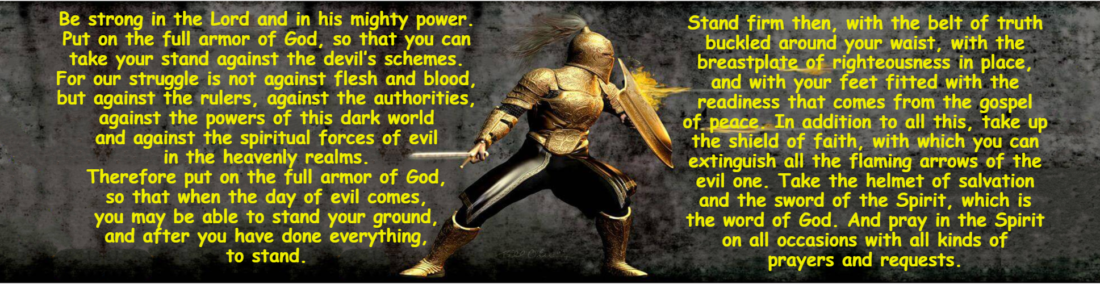
10 Finally, my brethren, be strong in the Lord and in the power of His might. 11 Put on the whole armor of God, that you may be able to stand against the wiles of the devil. 12 For we do not struggle against flesh and blood, but against principalities, against powers, against the rulers of the darkness of this age, against spiritual hosts of wickedness in the heavenly places. 13 Therefore take up the whole armor of God, that you may be able to withstand in the evil day, and having done all, to stand.
14 Stand therefore, having girded your waist with truth, having put on the breastplate of righteousness, 15 and having shod your feet with the preparation of the gospel of peace; 16 above all, taking the shield of faith with which you will be able to quench all the fiery darts of the wicked one. 17 And take the helmet of salvation, and the sword of the Spirit, which is the word of God; 18 praying always with all prayer and supplication in the Spirit, being watchful to this end with all perseverance and supplication for all the saints—
Ephesians 6:12 clearly indicates that the conflict with Satan is spiritual, and so no tangible weapons can be effectively employed against him and his minions. We are not given a list of specific tactics Satan will use. However, the passage is quite clear that when we follow all the instructions faithfully, we will be able to stand, and we will have victory regardless of Satan’s strategy.
The first element of our armor is truth (verse 14). This is easy to understand, since Satan is said to be the “father of lies” (John 8:44). Deception is high on the list of things God considers to be an abomination. A “lying tongue” is one of the things He describes as “detestable to Him” (Proverbs 6:16-17). We are exhorted to put on truth for our own sanctification and deliverance, as well as for the benefit of those to whom we witness.
Also in verse 14, we are told to put on the breastplate of righteousness. This righteousness is not works of righteousness done by men. Rather, this is the righteousness of Christ, imputed by God and received by faith, which guards our hearts against the accusations and charges of Satan and secures our innermost being from his attacks.
Verse 15 speaks of the preparation of the feet for spiritual conflict. In warfare, sometimes an enemy places dangerous obstacles in the path of soldiers. The idea of the preparation of the gospel of peace as footwear suggest there will be traps. Satan has many obstacles placed in the path to halt the propagation of the gospel.
The shield of faith spoken of in verse 16 makes Satan’s sowing of doubt about the faithfulness of God and His Word ineffective. Our faith—of which Christ is “the author and perfecter” (Hebrews 12:2)— is like a golden shield, precious, solid, and substantial.
The helmet of salvation in verse 17 is protection for the head. We could say that our way of thinking needs preservation. The head is the seat of the mind, which, when it has laid hold of the sure gospel hope of eternal life, will not receive false doctrine or give way to Satan’s temptations. The unsaved person has no hope of warding off the blows of false doctrine because he is without the helmet of salvation and his mind is incapable of discerning between spiritual truth and spiritual deception.
Verse 17 interprets itself as to the meaning of the sword of the Spirit—it is the Word of God. While all the other pieces of spiritual armor are defensive in nature, the sword of the Spirit is the only offensive weapon in the armor of God. It speaks of the holiness and power of the Word of God. A greater spiritual weapon is not conceivable. In Jesus’ temptations in the desert, the Word of God was always His overpowering response to Satan. What a blessing that the same Word is available to us!
In verse 18, we are told to pray in the Spirit (that is, with the mind of Christ, with His heart and His priorities) in addition to wearing the full armor of God. We cannot neglect prayer, as it is the means by which we draw spiritual strength from God. Without prayer, without reliance upon God, our efforts at spiritual warfare are empty and futile. The full armor of God—truth, righteousness, the gospel, faith, salvation, the Word of God, and prayer—are the tools God has given us, through which we can be spiritually victorious, overcoming Satan’s attacks and temptations.
There are two primary errors when it comes to spiritual warfare—over-emphasis and under-emphasis. Some blame every sin, every conflict, and every problem on demons that need to be cast out. Others completely ignore the spiritual realm and the fact that the Bible tells us our battle is against spiritual powers. The key to successful spiritual warfare is finding the biblical balance. Jesus sometimes cast demons out of people; other times He healed people with no mention of the demonic. The apostle Paul instructs Christians to wage war against the sin in themselves (Romans 6) and warns us to oppose the schemes of the devil (Ephesians 6:10–18).
Ephesians 6:10–12 says, “Finally, be strong in the Lord and in his mighty power. Put on the full armor of God so that you can take your stand against the devil’s schemes. For our struggle is not against flesh and blood, but against the rulers, against the authorities, against the powers of this dark world and against the spiritual forces of evil in the heavenly realms.” This text teaches some crucial truths: we can only stand strong in the Lord’s power, it is God’s armor that protects us, and our battle is ultimately against spiritual forces of evil in the world.
Ephesians 6:13–18 is a description of the spiritual armor God gives us. We are to stand firm with the belt of truth, the breastplate of righteousness, the gospel of peace, the shield of faith, the helmet of salvation, the sword of the Spirit, and by praying in the Spirit. What do these pieces of spiritual armor represent in spiritual warfare? We are to know the truth, believe the truth, and speak the truth. We are to rest in the fact that we are declared righteous because of Christ’s sacrifice for us. We are to proclaim the gospel no matter how much resistance we face. We are not to waver in our faith, trusting God’s promises no matter how strongly we are attacked. Our ultimate defense is the assurance we have of our salvation, an assurance that no spiritual force can take away. Our offensive weapon is the Word of God, not our own opinions and feelings. And we are to pray in the power and will of the Holy Spirit.
Jesus is our ultimate example of resisting temptation in spiritual warfare. Observe how Jesus handled direct attacks from Satan when He was tempted in the wilderness (Matthew 4:1–11). Each temptation was combatted with the words “it is written.” The Word of the living God is the most powerful weapon against the temptations of the devil. “I have hidden your word in my heart that I might not sin against you” (Psalm 119:11).
A word of caution concerning spiritual warfare is in order. The name of Jesus is not a magic incantation that causes demons to flee from before us. The seven sons of Sceva are an example of what can happen when people presume an authority they have not been given (Acts 19:13–16). Even Michael the archangel did not rebuke Satan in his own power but said, “The Lord rebuke you!” (Jude 1:9). When we start talking to the devil, we run the risk of being led astray as Eve was (Genesis 3:1–7). Our focus should be on God, not demons; we speak to Him, not them.
In summary, what are the keys to success in spiritual warfare? We rely on God’s power, not our own. We put on the whole armor of God. We draw on the power of Scripture—the Word of God is the Spirit’s sword. We pray in perseverance and holiness, making our appeal to God. We stand firm (Ephesians 6:13–14); we submit to God; we resist the devil’s work (James 4:7), knowing that the Lord of hosts is our protector. “Truly he is my rock and my salvation; he is my fortress, I will never be shaken” (Psalm 62:2).
God is in Control . . . and His Grace is Sufficient, so . . . Keep Looking Up
Hopefully, every Sunday, we can find something here that will build us up a little . . . give us a smile . . . and add some joy or peace, very much needed in all our lives.
“This day is holy to the Lord your God; do not mourn nor weep.” . . . “Go your way, eat the fat, drink the sweet, and send portions to those for whom nothing is prepared; for this day is holy to our Lord. Do not sorrow, for the joy of the Lord is your strength.”
This Sanctuary Sunday Open Thread, with full respect to those who worship God on the Sabbath, is a place to reaffirm our worship of our Creator, our Father, our King Eternal.
It is also a place to read, post and discuss news that is worth knowing and sharing. Please post links to any news stories that you use as sources or quote from.
In the QTree, we’re a friendly and civil lot. We encourage free speech and the open exchange and civil discussion of different ideas. Topics aren’t constrained, and sound logic is highly encouraged, all built on a solid foundation of truth and established facts.
We have a policy of mutual respect, shown by civility. Civility encourages discussions, promotes objectivity and rational thought in discourse, and camaraderie in the participants – characteristics we strive toward in our Q Tree community.
Please show respect and consideration for our fellow QTreepers. Before hitting the “post” button, please proofread your post and make sure you’re addressing the issue only, and not trying to confront the poster. Keep to the topic – avoid “you” and “your”. Here in The Q Tree, personal attacks, name calling, ridicule, insults, baiting and other conduct for which a penalty flag would be thrown are VERBOTEN.
In The Q Tree, we’re compatriots, sitting around the campfire, roasting hot dogs, making s’mores and discussing, agreeing, and disagreeing about whatever interests us. This board will remain a home for those who seek respectful conversations.
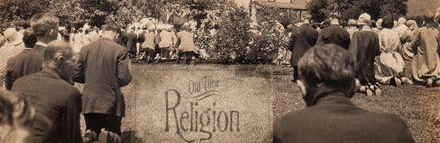
Last week, we read about the need for Christians to return to an “Old Time Religion”, but, specifically, what might that entail? What are the essentials or basic beliefs and practices of that Old Time Religion?
The following are two articles that address that topic. I don’t intend for these statements to be taken as a complete statement of the basics, and I won’t defend them as such. However, they provide a decent overview to address what Christianity is all about.
Remember that Jesus did not present His gospel via a four-year intensive program of studies attended by the religious elite of the day. Jesus spoke to be understood by the rough, hard-working people of that time and, specifically, to the sinners identified in that society.
As an example of the simplicity of our beliefs, we have the incident of the thief on the cross. That thief simply said to Jesus, “Lord, remember me when you come into your kingdom.” And Jesus replied, “Truly I tell you, today you will be with me in paradise.” No walking down front, no special prayer being sure to mention 3 or 4 things, no special blessing or approval by a high-ranking member of the local church, no special religious rites to be performed . . . nothing else. That thief simply trusted in Jesus.
“There is no one righteous, not even one; there is no one who understands; there is no one who seeks God. All have turned away, they have together become worthless; there is no one who does good, not even one.” Romans 3:10-12
And so it is today. God’s Word does not need a host of religious elite to interpret and expound, seemingly without end, the intricacies of the Christian faith. Christianity remains today as a set of core beliefs and practices meant to be understood, believed and practiced by the common people of our time.
At that time Jesus answered and said, “I thank You, Father, Lord of heaven and earth, that You have hidden these things from the wise and prudent and have revealed them to babes. Even so, Father, for so it seemed good in Your sight . . . Come to Me, all you who labor and are heavy laden, and I will give you rest. Take My yoke upon you and learn from Me, for I am gentle and lowly in heart, and you will find rest for your souls. For My yoke is easy and My burden is light.” Matthew 11:25, 26, 28-30
In the essentials . . . UNITY. In the non-essentials . . . LIBERTY. In all things . . . CHARITY (LOVE – Agape Love).
What are the essentials of the Christian faith?
The Bible itself reveals what is important and essential to the Christian faith. These essentials are the deity of Christ, salvation by God’s grace and not by works, salvation through Jesus Christ alone, the resurrection of Christ, the Gospel, monotheism and the Holy Trinity. These are the main “essentials” that we should understand and believe if we are followers of Jesus Christ. Let’s look at all of these in a little more detail.
The deity of Christ. Quite simply, Jesus is God. While Jesus never directly says, “I am God” in the Scriptures, He makes it very clear to those around Him, especially the Pharisees and Sadducees, that He is God. John 10:30 says, “I and the Father are one.” Jesus was claiming deity, and, interestingly enough, He did not deny that He was God. Another example is John 20:28, when Thomas says, “My Lord and my God!” Again, Jesus does not correct Him by saying that He is not God. There are many other examples one can find in the Scriptures regarding Jesus’ rightful place in heaven.
Salvation by grace. We are all sinners separated from God and deserving of eternal punishment for our sin. Jesus’ death on the cross paid for the sins of mankind, giving us access to heaven and an eternal relationship with God. God did not have to do this for us, but He loves us so much that He sacrificed His only Son. This is grace, and it is most definitely undeserved favor. Scripture tells us, “For it is by grace you have been saved, through faith—and this not from yourselves, it is the gift of God not by works, so that no one can boast” (Ephesians 2:8-9). There is nothing we can do to earn God’s favor or gain access to heaven apart from His grace.
Salvation through Jesus Christ alone. A truly provocative question to ask someone might be “Do all roads lead to God?” The truth is that all roads do lead to God. Eventually, we are all going to stand before God when we die, no matter what faith we are. It is there that we will be judged for what we have or have not done while we were alive and whether Jesus Christ is Lord of our lives. For the majority of people, this will be a terrible occasion, as most will not know Him or be known by Him. For these people, hell will be the final destination. But God in His mercy has provided all of us the only means for salvation through His Son, Jesus Christ. Acts 4:12 tells us that “salvation is found in no one else, for there is no other name under heaven given to men by which we must be saved.” This passage speaks of the name of Jesus and His saving power. Another example is found in the book of John. Jesus answered, “I am the way and the truth and the life. No one comes to the Father except through me” (John 14:6). No one gets into heaven except by faith in the saving work of the Lord Jesus Christ on his or her behalf.
The resurrection of Christ. Perhaps no other event in the Bible, aside from Jesus’ appearance here on earth and subsequent death on the cross, is as significant to the Christian faith as that of the resurrection. Why is this event significant? The answer lies in the fact that Jesus died and then after three days came back to life and rose again to reappear to His followers in bodily form. Jesus had already demonstrated His ability to resurrect others such as His friend Lazarus. But now God the Father had resurrected Him to display His awesome power and glory. This amazing fact is what separates the Christian faith from all others. All other religions are based on works or a powerless deity or person. The leaders of all other religions die and remain dead. The Christian faith is based on Christ crucified and resurrected to life. “And if Christ has not been raised, then our preaching is in vain and your faith is in vain” (1 Corinthians 15:14). Lastly, to deny Christ’s bodily resurrection (John 2:19-21) is to deny that Jesus’ work here on earth was a satisfactory offering to God for the sins of mankind.
The gospel. In 1 Corinthians 15:1-4, Paul spells out what the gospel is and how important it is to embrace it and share it with others. He reminds the Corinthians of the gospel he preached among them: “That Christ died for our sins in accordance with the Scriptures, that he was buried, that he was raised on the third day in accordance with the Scriptures.” This is the essence of the gospel. Paul also warns us to be wary of the many “false gospels” that are being offered to the unsuspecting: “But even if we or an angel from heaven should preach to you a gospel contrary to the one we preached to you, let him be accursed. As we have said before, so now I say again: If anyone is preaching to you a gospel contrary to the one you received, let him be accursed” (Galatians 1:8-9). The pure gospel of Jesus Christ—His death on the cross for sinners and His resurrection to everlasting life—is central to the Christian faith.
Monotheism. Quite simply, there is only one God. Exodus 20:3 states very powerfully, “You shall have no other gods before me.” Monotheism is the belief that there is only one God to be worshiped and served. “‘You are my witnesses,’ declares the LORD, ‘and my servant whom I have chosen, that you may know and believe me and understand that I am he. Before me no god was formed, nor shall there be any after me’” (Isaiah 43:10). Here we see that we are to “believe” and “understand” that God lives and is one. A Christian will know that there is only one God, the God of the Bible. All other “gods” are false and are no gods at all. “For even if there are so-called gods, whether in heaven or on earth (as indeed there are many ‘gods’ and many ‘lords’), yet for us there is but one God, the Father, from whom all things came and for whom we live; and there is but one Lord, Jesus Christ, through whom all things came and through whom we live” (1 Corinthians 8:5-6).
The Holy Trinity. While the concept of a “three-in-one God” is not represented by a single verse or passage, it is described frequently throughout Scripture. If we look at Matthew 28:19, we see the verse calling out the Trinity: “Go therefore and make disciples of all nations, baptizing them in the name of the Father and of the Son and of the Holy Spirit.” While this verse mentions all three Persons of the triune God, it does not call them the Trinity. So to understand the doctrine of the Holy Trinity, we must look at the “totality” of Scripture and glean from it the definition. In 1 Corinthians 12:4-6, we see how this comes together: “Now there are varieties of gifts, but the same Spirit; and there are varieties of service, but the same Lord; and there are varieties of activities, but it is the same God who empowers them all in everyone.” Again, we see all three Persons being represented but not titled the Holy Trinity.
Faith. The essentials of Christianity would not be complete without the ingredient that binds everything together—faith. “Now faith is the assurance of things hoped for, the conviction of things not seen” (Hebrews 11:1). As Christians we live by this verse with the understanding that we believe in a God we cannot see. But we see His work in our lives and all around us in His creation. We do all of this through faith because we know that faith pleases God. “And without faith it is impossible to please him, for whoever would draw near to God must believe that he exists and that he rewards those who seek him” (Hebrews 11:6).
The core beliefs of Christianity are summarized in 1 Corinthians 15:1-4. Jesus died for our sins, was buried, was resurrected, and thereby offers salvation to all who will trust in Him in faith. Unique among all other faiths, Christianity is more about a relationship than religious practices. Instead of adhering to a list of “do’s and don’ts,” the goal of a Christian is to cultivate a close walk with God. That relationship is made possible because of the work of Jesus Christ and the ministry of the Holy Spirit.
Beyond these core beliefs, there are many other items that are, or at least should be, indicative of what Christianity is and what Christians believe.
Christians believe that the Bible is the inspired, “God-breathed” Word of God and that its teaching is the final authority in all matters of faith and practice (2 Timothy 3:16; 2 Peter 1:20-21).
Christians believe in one God that exists in three persons—the Father, the Son (Jesus Christ), and the Holy Spirit.
Christians believe that mankind was created specifically to have a relationship with God, but sin separates all men from God (Romans 3:23; 5:12).
Christianity teaches that Jesus Christ walked this earth, fully God, and yet fully man (Philippians 2:6-11), and died on the cross.
Christians believe that after His death, Christ was buried, He rose again, and now lives at the right hand of the Father, making intercession for the believers forever (Hebrews 7:25).
Christianity proclaims that Jesus’ death on the cross was sufficient to completely pay the sin debt owed by all men and this is what restores the broken relationship between God and man (Hebrews 9:11-14; 10:10; Romans 5:8; 6:23).
Christianity teaches that in order to be saved and be granted entrance into heaven after death, one must place one’s faith entirely in the finished work of Christ on the cross. If we believe that Christ died in our place and paid the price of our own sins, and rose again, then we are saved. There is nothing that anyone can do to earn salvation. We cannot be “good enough” to please God on our own, because we are all sinners (Isaiah 53:6; 64:6-7). There is nothing more to be done, because Christ has done all the work! When He was on the cross, Jesus said, “It is finished” (John 19:30), meaning that the work of redemption was completed.
According to Christianity, salvation is freedom from the old sin nature and freedom to pursue a right relationship with God. Where we were once slaves to sin, we are now slaves to Christ (Romans 6:15-22). As long as believers live on this earth in their sinful bodies, they will engage in a constant struggle with sin. However, Christians can have victory in the struggle with sin by studying and applying God’s Word in their lives and being controlled by the Holy Spirit—that is, submitting to the Spirit’s leading in everyday circumstances.
So, while many religious systems require that a person do or not do certain things, Christianity is about believing that Christ died on the cross as payment for our own sins and rose again. Our sin debt is paid and we can have fellowship with God. We can have victory over our sin nature and walk in fellowship and obedience with God. That is true biblical Christianity.
* https://www.gotquestions.org/christianity.html
The church today is surrounded by, struggling with, and in many cases has been corrupted by, a liberal, secular culture and needs people who are not ashamed to proclaim the gospel of Christ. Truth does not change, and adherence to the essential or basic principles of doctrine is needed. These principles are the bedrock upon which Christianity stands, and, as Jesus taught, the house built upon the Rock will weather any storm.
“Therefore everyone who hears these words of mine and puts them into practice is like a wise man who built his house on the rock. The rain came down, the streams rose, and the winds blew and beat against that house; yet it did not fall, because it had its foundation on the rock. (Matthew 7:24-25).
On this day and every day –
God is in Control . . . and His Grace is Sufficient, so . . . Keep Looking Up
Hopefully, every Sunday, we can find something here that will build us up a little . . . give us a smile . . . and add some joy or peace, very much needed in all our lives.
“This day is holy to the Lord your God; do not mourn nor weep.” . . . “Go your way, eat the fat, drink the sweet, and send portions to those for whom nothing is prepared; for this day is holy to our Lord. Do not sorrow, for the joy of the Lord is your strength.”
This Sanctuary Sunday Open Thread, with full respect to those who worship God on the Sabbath, is a place to reaffirm our worship of our Creator, our Father, our King Eternal.
It is also a place to read, post and discuss news that is worth knowing and sharing. Please post links to any news stories that you use as sources or quote from.
In the QTree, we’re a friendly and civil lot. We encourage free speech and the open exchange and civil discussion of different ideas. Topics aren’t constrained, and sound logic is highly encouraged, all built on a solid foundation of truth and established facts.
We have a policy of mutual respect, shown by civility. Civility encourages discussions, promotes objectivity and rational thought in discourse, and camaraderie in the participants – characteristics we strive toward in our Q Tree community.
Please show respect and consideration for our fellow QTreepers. Before hitting the “post” button, please proofread your post and make sure you’re addressing the issue only, and not trying to confront the poster. Keep to the topic – avoid “you” and “your”. Here in The Q Tree, personal attacks, name calling, ridicule, insults, baiting and other conduct for which a penalty flag would be thrown are VERBOTEN.
In The Q Tree, we’re compatriots, sitting around the campfire, roasting hot dogs, making s’mores and discussing, agreeing, and disagreeing about whatever interests us. This board will remain a home for those who seek respectful conversations.
Away with such an old-time Christianity! Charles Ebert Orr – 1844-1913
Satan has robed a harlot, named her ‘Christianity’ and succeeded in imposing her upon many. They are fondling with her. She indulges them in sensuality, while encouraging them to hope for a blissful immortality. The kings of the earth have committed fornication with her. They are reveling, feasting and banqueting with her–crazed by her seductive charms. She has neither purity, peace, nor power. Her robes are defiled by sin. She scoffs at pure Christianity, and calls her old-fashioned.
This strange young woman is using every device to allure souls into her wanton chamber. She is most subtle of heart. She “flatters with her words. In the twilight, in the evening, in the black and dark night–she walks in the streets, and lies in wait at every corner, that she might catch and kiss him who is void of understanding.” With a beguiling, impudent face, she says to him: “I have peace offerings with me; I have decked my bed with tapestry and fine linen of Egypt. I have perfumed my bed with myrrh, aloes, and cinnamon. Come let us take our fill of love until the morning; let us enjoy each other’s caresses.”
Such is the mirthful, shallow, frivolous Christianity of the popular present day religions! The generality of professors (we speak in love) desire a Christianity which will go with them to the halls of pleasure; which will dine with them at their rich banquets; which will smile on them as they walk in the ways of sin and worldliness–calming their fears with her flattering words of ‘peace, peace’.
Primitive Christianity, they consider, was good enough for primitive days–but she would be a horrid old maid in these days of progress. In this fast-moving age, the Christianity that crowned the life of Christ and the holy apostles, is altogether too antiquated.
She drew men from the world; she crucified their lusts;she taught them to practice self-denial; she brought them in humility to her feet; she led them in the paths of virtue and holiness; she upbraided them for sin; she told them of the vengeance and wrath of God against every evil.
The Christian world today, in general, is saying, “Away with such an old-time Christianity! She has no charms for us! She is too common and plain–too grave and sober! We will not walk with her! Give us the mirthful and dashing young harlot–that we may walk with her amid the pleasures of the world, and with her gratify our lusts! She never chides us for sin, nor troubles us about the anger of God nor the torments of Hell. She invites us into her bosom and gives us a sweet opiate drink of ‘stolen waters’, and bids us take our fill of love.
We desire to tear off the sacrilegious robes of the harlot of false Christianity–and expose her shame to the gaze of every honest soul.
Dear reader, “Do not go after her! Do not let your heart incline to her ways! Do not go astray in her paths. For she has cast down many wounded–yes, many strong men have been slain by her. Her house is the way to Hell, going down to the chambers of death!”
Give me that old time religion, Give me that old time religion, Give me that old time religion, It’s good enough for me.
1 It was good for Paul and Silas, It was good for Paul and Silas, It was good for Paul and Silas, It’s good enough for me. [Refrain]
2 It was good for the Hebrew children, It was good for the Hebrew children, It was good for the Hebrew children, It’s good enough for me. [Refrain]
3 It was good for our mothers, It was good for our mothers, It was good for our mothers, It’s good enough for me. [Refrain]
4 Makes me love ev’rybody, Makes me love ev’rybody, Makes me love ev’rybody, It’s good enough for me. [Refrain]
On this day and every day –
God is in Control . . . and His Grace is Sufficient, so . . . Keep Looking Up
Hopefully, every Sunday, we can find something here that will build us up a little . . . give us a smile . . . and add some joy or peace, very much needed in all our lives.
“This day is holy to the Lord your God; do not mourn nor weep.” . . . “Go your way, eat the fat, drink the sweet, and send portions to those for whom nothing is prepared; for this day is holy to our Lord. Do not sorrow, for the joy of the Lord is your strength.”
This Sanctuary Sunday Open Thread, with full respect to those who worship God on the Sabbath, is a place to reaffirm our worship of our Creator, our Father, our King Eternal.
It is also a place to read, post and discuss news that is worth knowing and sharing. Please post links to any news stories that you use as sources or quote from.
In the QTree, we’re a friendly and civil lot. We encourage free speech and the open exchange and civil discussion of different ideas. Topics aren’t constrained, and sound logic is highly encouraged, all built on a solid foundation of truth and established facts.
We have a policy of mutual respect, shown by civility. Civility encourages discussions, promotes objectivity and rational thought in discourse, and camaraderie in the participants – characteristics we strive toward in our Q Tree community.
Please show respect and consideration for our fellow QTreepers. Before hitting the “post” button, please proofread your post and make sure you’re addressing the issue only, and not trying to confront the poster. Keep to the topic – avoid “you” and “your”. Here in The Q Tree, personal attacks, name calling, ridicule, insults, baiting and other conduct for which a penalty flag would be thrown are VERBOTEN.
In The Q Tree, we’re compatriots, sitting around the campfire, roasting hot dogs, making s’mores and discussing, agreeing, and disagreeing about whatever interests us. This board will remain a home for those who seek respectful conversations.
Many people make the mistake of reading what the Bible says in Exodus 20:13, “You shall not kill,” and then seeking to apply this command to war. However, the Hebrew word literally means “the intentional, premeditated killing of another person with malice; murder.” God often ordered the Israelites to go to war with other nations (1 Samuel 15:3; Joshua 4:13). God ordered the death penalty for numerous crimes (Exodus 21:12, 15; 22:19; Leviticus 20:11). So, God is not against killing in all circumstances, but only murder. War is never a good thing, but sometimes it is a necessary thing. In a world filled with sinful people (Romans 3:10-18), war is inevitable. Sometimes the only way to keep sinful people from doing great harm to the innocent is by going to war.
In the Old Testament, God ordered the Israelites to “take vengeance on the Midianites for the Israelites” (Numbers 31:2). Deuteronomy 20:16-17 declares, “However, in the cities of the nations the LORD your God is giving you as an inheritance, do not leave alive anything that breathes. Completely destroy them…as the LORD your God has commanded you.” Also, 1 Samuel 15:18 says, “Go and completely destroy those wicked people, the Amalekites; make war on them until you have wiped them out.” Obviously God is not against all war. Jesus is always in perfect agreement with the Father (John 10:30), so we cannot argue that war was only God’s will in the Old Testament. God does not change (Malachi 3:6; James 1:17).
Jesus’ second coming will be exceedingly violent. Revelation 19:11-21 describes the ultimate war with Christ, the conquering commander who judges and makes war “with justice” (v. 11). It’s going to be bloody (v. 13) and gory. The birds will eat the flesh of all those who oppose Him (v. 17-18). He has no compassion upon His enemies, whom He will conquer completely and consign to a “fiery lake of burning sulfur” (v. 20).
It is an error to say that God never supports a war. Jesus is not a pacifist. In a world filled with evil people, sometimes war is necessary to prevent even greater evil. If Hitler had not been defeated by World War II, how many more millions would have been killed? If the American Civil War had not been fought, how much longer would African-Americans have had to suffer as slaves?
War is a terrible thing. Some wars are more “just” than others, but war is always the result of sin (Romans 3:10-18). At the same time, Ecclesiastes 3:8 declares, “There is…a time to love and a time to hate, a time for war and a time for peace.” In a world filled with sin, hatred, and evil (Romans 3:10-18), war is inevitable. Christians should not desire war, but neither are Christians to oppose the government God has placed in authority over them (Romans 13:1-4; 1 Peter 2:17). The most important thing we can be doing in a time of war is to be praying for godly wisdom for our leaders, praying for the safety of our military, praying for quick resolution to conflicts, and praying for a minimum of casualties among civilians on both sides (Philippians 4:6-7).
But what about Christians and civil disobedience?
The emperor of Rome from AD 54 to 68 was Nero Claudius Caesar Augustus Germanicus, also known simply as Nero. The emperor was not known for being a moral and ethical person, to say the least. In AD 64 the great Roman fire occurred, with Nero himself being suspected of arson. In his writings, the Roman senator and historian Tacitus recorded, “To get rid of the report [that he had started the fire], Nero fastened the guilt and inflicted the most exquisite tortures on a class hated for their abominations, called Christians by the populace” (Annals, XV).
It was during the reign of Nero that the apostle Paul wrote his epistle to the Romans. While one might expect him to encourage the Christians in Rome to rise up against their oppressive ruler, in chapter 13, we find this instead:
“Every person is to be in subjection to the governing authorities. For there is no authority except from God, and those which exist are established by God. Therefore whoever resists authority has opposed the ordinance of God; and they who have opposed will receive condemnation upon themselves. For rulers are not a cause of fear for good behavior, but for evil. Do you want to have no fear of authority? Do what is good and you will have praise from the same; for it is a minister of God to you for good. But if you do what is evil, be afraid; for it does not bear the sword for nothing; for it is a minister of God, an avenger who brings wrath on the one who practices evil. Therefore it is necessary to be in subjection, not only because of wrath, but also for conscience’ sake. For because of this you also pay taxes, for rulers are servants of God, devoting themselves to this very thing. Render to all what is due them: tax to whom tax is due; custom to whom custom; fear to whom fear; honor to whom honor” (Romans 13:1–7).
Even under the reign of a ruthless and godless emperor, Paul, writing under the inspiration of the Holy Spirit, tells his readers to be in subjection to the government. Moreover, he states that no authority exists other than that established by God, and that rulers are serving God in their political office.
Peter writes nearly the same thing in one of his two New Testament letters:
“Submit yourselves for the Lord’s sake to every human institution, whether to a king as the one in authority, or to governors as sent by him for the punishment of evildoers and the praise of those who do right. For such is the will of God that by doing right you may silence the ignorance of foolish men. Act as free men, and do not use your freedom as a covering for evil, but use it as bondslaves of God. Honor all people, love the brotherhood, fear God, honor the king” (1 Peter 2:13–17).
Both Paul’s and Peter’s teachings have led to quite a few questions from Christians where civil disobedience is concerned. Do Paul and Peter mean that Christians are always to submit to whatever the government commands, no matter what is asked of them?
There are at least three general positions on the matter of civil disobedience. The anarchist view says that a person can choose to disobey the government whenever he likes and whenever he feels he is personally justified in doing so. Such a stance has no biblical support whatsoever, as evidenced in the writings of Paul in Romans 13.
The extremist patriot says that a person should always follow and obey his country, no matter what the command. As will be shown in a moment, this view also does not have biblical support. Moreover, it is not supported in the history of nations. For example, during the Nuremberg trials, the attorneys for the Nazi war criminals attempted to use the defense that their clients were only following the direct orders of the government and therefore could not be held responsible for their actions. However, one of the judges dismissed their argument with the simple question: “But gentlemen, is there not a law above our laws?”
The position the Scriptures uphold is one of biblical submission, with a Christian being allowed to act in civil disobedience to the government if it commands evil, such that it requires a Christian to act in a manner that is contrary to the clear teachings and requirements of God’s Word.
Civil Disobedience—Examples in Scripture
In Exodus 1, the Egyptian Pharaoh gave the clear command to two Hebrew midwives that they were to kill all male Jewish babies. An extreme patriot would have carried out the government’s order, yet the Bible says the midwives disobeyed Pharaoh and “feared God, and did not do as the king of Egypt had commanded them, but let the boys live” (Exodus 1:17). The Bible goes on to say the midwives lied to Pharaoh about why they were letting the children live; yet even though they lied and disobeyed their government, “God was good to the midwives, and the people multiplied, and became very mighty. Because the midwives feared God, He established households for them” (Exodus 1:20–21).
In Joshua 2, Rahab directly disobeyed a command from the king of Jericho to produce the Israelite spies who had entered the city to gain intelligence for battle. Instead, she let them down via a rope so they could escape. Even though Rahab had received a clear order from the top government official, she resisted the command and was redeemed from the city’s destruction when Joshua and the Israeli army destroyed it.
The book of 1 Samuel records a command given by King Saul during a military campaign that no one could eat until Saul had won his battle with the Philistines. However, Saul’s son Jonathan, who had not heard the order, ate honey to refresh himself from the hard battle the army had waged. When Saul found out about it, he ordered his son to die. However, the people resisted Saul and his command and saved Jonathan from being put to death (1 Samuel 14:45).
Another example of civil disobedience in keeping with biblical submission is found in 1 Kings 18. That chapter briefly introduces a man named Obadiah who “feared the Lord greatly.” When the queen Jezebel was killing God’s prophets, Obadiah took a hundred of them and hid them from her so they could live. Such an act was in clear defiance of the ruling authority’s wishes.
In 2 Kings, the only apparently approved revolt against a reigning government official is recorded. Athaliah, the mother of Ahaziah, began to destroy the royal offspring of the house of Judah. However, Joash the son of Ahaziah was taken by the king’s daughter and hidden from Athaliah so that the bloodline would be preserved. Six years later, Jehoiada gathered men around him, declared Joash to be king, and put Athaliah to death.
Daniel records a number of civil disobedience examples. The first is found in chapter 3 where Shadrach, Meshach and Abednego refused to bow down to the golden idol in disobedience to King Nebuchadnezzar’s command. The second is in chapter 6 where Daniel defies King Darius’ decree to not pray to anyone other than the king. In both cases, God rescued His people from the death penalty that was imposed, signaling His approval of their actions.
In the New Testament, the book of Acts records the civil disobedience of Peter and John towards the authorities that were in power at the time. After Peter healed a man born lame, Peter and John were arrested for preaching about Jesus and put in jail. The religious authorities were determined to stop them from teaching about Jesus; however, Peter said, “Whether it is right in the sight of God to give heed to you rather than to God, you be the judge; for we cannot stop speaking about what we have seen and heard” (Acts 4:19–20). Later, the rulers confronted the apostles again and reminded them of their command to not teach about Jesus, but Peter responded, “We must obey God rather than men” (Acts 5:29).
One last example of civil disobedience is found in the book of Revelation where the Antichrist commands all those who are alive during the end times to worship an image of himself. But the apostle John, who wrote Revelation, states that those who become Christians at the time will disobey the Antichrist and his government and refuse to worship the image (Revelation 13:15) just as Daniel’s companions violated Nebuchadnezzar’s decree to worship his idol.
Civil Disobedience—Conclusion
What conclusions can be drawn from the above biblical examples? The guidelines for a Christian’s civil disobedience can be summed as follows:
• Christians should resist a government that commands or compels evil and should work nonviolently within the laws of the land to change a government that permits evil.
• Civil disobedience is permitted when the government’s laws or commands are in direct violation of God’s laws and commands.
• Christians are certainly permitted to work to install new government leaders within the laws that have been established.
Lastly, Christians are commanded to pray for their leaders and for God to intervene in His time to change any ungodly path that they are pursuing: “First of all, then, I urge that entreaties and prayers, petitions and thanksgivings, be made on behalf of all men, for kings and all who are in authority, so that we may lead a tranquil and quiet life in all godliness and dignity” (1 Timothy 2:1–2).
A D-Day Tribute
Eleven Friends
This morning my father said to me, son, Remember your uncle, not John, Big Ed. Well, he was at Normandy, on D-Day, In the first wave, storming the beachhead.
In June, after high school, Ed and his friends, So young and carefree, all joined the army. They joined to protect all the folks back home, Early in the summer of ’43.
They all stayed together, from Fort Devens To Devon, England where they would train At Slapton Sands for the big invasion, All to bring freedom to France once again.
With the First Division just off Omaha Beach, Out of the transports, all climb down the net. Eleven friends into the Higgins Boats, Some men praying, but all in a cold sweat.
In the Higgins Boats, tossed by the sea, Many were puking and seasick and cold. Weakness, nausea and gut-wrenching fear Were a foretaste of the battle’s grim toll.
The boats came in close, but some out too far There was a short pause, then the ramps came down. The order was given “Men, hit the beach!” Many, overloaded, stepped off and drowned.
For Ed and Stash, the water wasn’t deep. They both charged forward, heroes at the least. They landed off the beach by the high cliffs; A stiff wind had blown the boats too far east.
Into the water to the jaws of death, Obstacles, beach mines and cruel barbed wire. Rifles, machine guns and artillery, Death everywhere from the flanking fire.
Through it all the men struggled and fought; Thousands died at Omaha in the bay. Of the original eleven friends, Only Ed and Stash were alive the next day.
Son, you think of Ed, laid back and quiet, Never ever speaking of what he’s done. Back in the day he was “Ready Eddie,” Always smiling and always looking for fun.
War, death and killing will change a man In ways sometimes bad, and other times good. Ed came back changed, a grown serious man, Having less fun than, perhaps, a man should.
We’ll all be going to Greenlawn today, To honor Big Ed and all of his friends. Nine of them buried at Normandy, Ed and Stash, here, close friends to the end.
Eleven markers, for eleven men, Eleven heroes that kept the world free. Eleven patriots, eleven friends, Who lived life and died for our liberty.
On this day and every day –
God is in Control . . . and His Grace is Sufficient, so . . . Keep Looking Up
Hopefully, every Sunday, we can find something here that will build us up a little . . . give us a smile . . . and add some joy or peace, very much needed in all our lives.
“This day is holy to the Lord your God; do not mourn nor weep.” . . . “Go your way, eat the fat, drink the sweet, and send portions to those for whom nothing is prepared; for this day is holy to our Lord. Do not sorrow, for the joy of the Lord is your strength.”
This Sanctuary Sunday Open Thread, with full respect to those who worship God on the Sabbath, is a place to reaffirm our worship of our Creator, our Father, our King Eternal.
It is also a place to read, post and discuss news that is worth knowing and sharing. Please post links to any news stories that you use as sources or quote from.
In the QTree, we’re a friendly and civil lot. We encourage free speech and the open exchange and civil discussion of different ideas. Topics aren’t constrained, and sound logic is highly encouraged, all built on a solid foundation of truth and established facts.
We have a policy of mutual respect, shown by civility. Civility encourages discussions, promotes objectivity and rational thought in discourse, and camaraderie in the participants – characteristics we strive toward in our Q Tree community.
Please show respect and consideration for our fellow QTreepers. Before hitting the “post” button, please proofread your post and make sure you’re addressing the issue only, and not trying to confront the poster. Keep to the topic – avoid “you” and “your”. Here in The Q Tree, personal attacks, name calling, ridicule, insults, baiting and other conduct for which a penalty flag would be thrown are VERBOTEN.
In The Q Tree, we’re compatriots, sitting around the campfire, roasting hot dogs, making s’mores and discussing, agreeing, and disagreeing about whatever interests us. This board will remain a home for those who seek respectful conversations.
Living with eternity in mind is the wisest way to live. An eternal perspective keeps us from chasing empty dreams and material gratification. It keeps us from wasting our years pursuing temporal things that we can’t take with us when we die. We gain an eternal perspective when we think of our lives as a 1000-foot rope with a black tip on one end: the rope symbolizes our existence; the black tip is our life on earth. We tend to focus all our passion and energy on the black tip while giving little thought to the rest of the rope.
There are several ways to develop and maintain an eternal perspective on life:
1. Make certain you have been born again (John 3:3). Eternity awaits all of us, but the only way to ensure that we spend eternity in heaven with God is to be born again. That new birth results in a renewed spirit and a new desire to please God. When we accept by faith the death and resurrection of Jesus Christ on our behalf, the Holy Spirit moves into our spirits and births us into God’s forever family (Romans 8:15-17). It’s at that point that we begin to gain an eternal perspective.
2. Be filled with the Holy Spirit (Acts 4:31; Ephesians 5:18). We receive the Holy Spirit as a gift the moment we are saved (Acts 2:38), and He continues to work in our lives. However, the degree to which we submit ourselves to His transforming work is the degree to which we can live with an eternal perspective. When we are “filled” with the Spirit, we are totally yielded to Him. He has control of us. Galatians 5:16 says that, if we walk by the Spirit, we will not gratify the lusts of our flesh. Sinful self-gratification, focused on the things of this world, cannot coexist with an eternal perspective. The solution for self-centeredness is to surrender to the Holy Spirit (Galatians 2:20).
3. Store up treasure in heaven. Jesus said, “Do not store up for yourselves treasures on earth, where moths and vermin destroy, and where thieves break in and steal. But store up for yourselves treasures in heaven, where moths and vermin do not destroy, and where thieves do not break in and steal. For where your treasure is, there your heart will be also” (Matthew 6:19:21). The treasures we store for eternity are the things done for Christ on earth. Even offering a cup of cold water to a servant of the Lord is cause for reward (Matthew 10:42). An eternal perspective is one that has shifted from earthly concerns to heavenly ones and invests time, energy, and resources in God’s kingdom.
4. Spend time with God and His Word (Psalm 119:11). We would not expect our cars to go a thousand miles on a single tank of gas. Yet, we think a quick prayer or a tweeted Bible verse is sufficient to sustain an eternal perspective for weeks or months. We need continual refilling of truth. Romans 12:1-2 calls it the “renewing” of the mind. Spending time in the presence of God invites Him to reveal areas of our lives that are not surrendered to Him. We acknowledge and confess those and then replace the lies we’ve believed with truths from His Word. This continual “washing” of the Word (Ephesians 5:26) keeps our priorities in agreement with God’s and helps maintain an eternal perspective.
5. Stay conscious of the fact that this world is not all there is. It is easy to lose ourselves in daily cares and desires. But those who live with an eternal perspective are equally aware that every day counts down toward our final journey. Second Corinthians 4:17-18 says, “For our light and momentary troubles are achieving for us an eternal glory that far outweighs them all. So we fix our eyes not on what is seen, but on what is unseen, since what is seen is temporary, but what is unseen is eternal.” We must intentionally redirect our thoughts toward that which is eternal, judging the value of decisions based on their eternal significance. Colossians 3:1:3 says, “Since, then, you have been raised with Christ, set your hearts on things above, where Christ is, seated at the right hand of God. Set your minds on things above, not on earthly things. For you died, and your life is now hidden with Christ in God.”
God has commanded that we live with an eternal perspective. If holding an eternal perspective came naturally, He would not need to command it. So we choose to continually set our minds on things above. As we develop a habit of setting our minds on eternal things, we begin to handle things differently from those with earth-bound perspectives. As the eternal mindset becomes part of us, other people notice and one day may ask, “How can I, too, gain an eternal perspective on life?”
The world treasures wealth, power and fame, But we’re not citizens of this sphere. We won’t win, playing the world’s games; Our future’s above and not down here.
We can’t take it with us, that is true. Earthly goods stay here while we go on. Store riches above, that’s what we do, To wait for us at eternity’s dawn.
But how can we do this from below, With heaven’s delights so far away? What can we do here so that we know Our treasure waits on that Glorious Day?
God never tells us something to do Without telling or showing us how. It’s in God’s Word, both tried and true, All of the blessings God will allow.
God’s first command, above all the rest, Is love Him with all our heart and soul. That is the way we will be blest; That is the way to all of life’s goals.
When we love God, we live to please Him, And want His will to direct our ways. We are led by His Spirit within, Teaching and guiding us through our days.
When we follow God’s will in our walk, Doing good deeds God prepared before, Or using our talents to build up His flock, We’re putting treasure safely in store.
Praising, thanking, giving glory to God, Worshiping, praying and minding His Word – All are treasured. Though we live lives flawed, His mercy and grace are freely conferred.
God made us and chose us to be with Him. He gave us His Son and gave our faith, too. He gave us His Spirit and made us kin. He did this for us, for me and you.
One day, could be soon, He’ll bring us home, Our treasure, bestowed, at Christ’s Bema Seat. And ever we’ll live with delights unknown, But leaving our treasure at Christ’s pierced feet.
This World Is Not My Home Anon/Unk 1919
This world is not my home, I’m just a-passing through, My treasures are laid up somewhere beyond the blue; The angels beckon me from heaven’s open door, And I can’t feel at home in this world anymore.
They’re all expecting me, and that’s one thing I know— My Savior pardoned me, and now I onward go; I know He’ll take me through though I am weak and poor, And I can’t feel at home in this world anymore.
I have a loving Savior up in glory-land, I don’t expect to stop until I with Him stand; He’s waiting now for me in heaven’s open door, And I can’t feel at home in this world anymore.
Just up in glory-land we’ll live eternally, The saints on every hand are shouting victory, Their songs of sweetest praise drift back from heaven’s shore, And I can’t feel at home in this world anymore.
Refrain: O Lord, You know I have no friend like You, If heaven’s not my home, then, Lord, what will I do? The angels beckon me from heaven’s open door, And I can’t feel at home in this world anymore.
On this day and every day –
God is in Control . . . and His Grace is Sufficient, so . . . Keep Looking Up
Hopefully, every Sunday, we can find something here that will build us up a little . . . give us a smile . . . and add some joy or peace, very much needed in all our lives.
“This day is holy to the Lord your God; do not mourn nor weep.” . . . “Go your way, eat the fat, drink the sweet, and send portions to those for whom nothing is prepared; for this day is holy to our Lord. Do not sorrow, for the joy of the Lord is your strength.”