
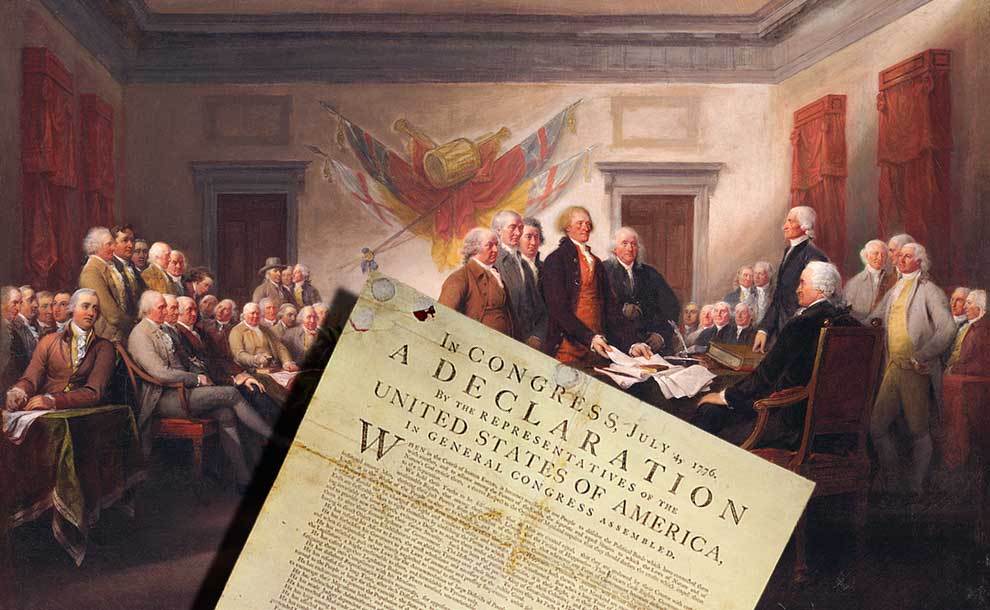
With this part and the next we will follow our article on Benjamin Franklin and go deeper into the lives of other patriot founding fathers that were from the Keystone State of Pennsylvania. The Keystone name originated from its geographic location in the center of the 13 colonies as well as from its “key” contributions to the economic, political and social fabric of our young nation. Its location touches the Mid-Atlantic, Northeast Appalachia, and Great Lakes regions. As a result it has been multi-cultural and diverse since it was given in a royal land grant to William Penn in 1681.
To say it has been the site of American history in all of its glory, rage and everything in between is an understatement. Pennsylvania has been the seed planter of this great nation in Independence Hall as well as a literal and figurative battlefield from the 1700’s through today, especially with its political theatrics. Yet, when it was first settled it was considered to be a peaceful colony with settlers coexisting well with native American Indian tribes as well people from other nations such as Sweden, Germany (the Pennsylvania Dutch), and others who had major influences on the area.
Just a note at this point; I refuse to use the woke term “indigenous peoples” in reference to our native American Indian fellow citizens. It is historically inaccurate. Treaties, land grants, legal documents, Congressional records, etc. that were executed and referenced with the native American Indians in the development of our nation all state the term “Indian” in it. I have some Appalachian Cherokee blood running through my veins. I am not going to play the word games of the leftists. Right or wrong, God can judge, this world has always worked on the ancient Roman adage of, “To the victor goes the spoils.” The idgits who want to play the victims and reparations games can go pound sand.
It was into this great melting pot of people with patriot and loyalist blood in their veins that liberty was seeded. Pennsylvania’s prominent place in our nation’s history will be forever noted. I will not delve into its history as it would take too long for this series. The links below should help those who desire to know more. First there is a good bullet point style summary,
Next there is a more detailed history from Wiki,
https://en.wikipedia.org/wiki/History_of_Pennsylvania
Now on to the next Declaration signer from the Keystone State.
George Clymer
George Clymer is a founder that many know very little about, yet, was one of the more important.
Clymer was born in Philly in 1739 and was orphaned at age seven. He was apprenticed to his maternal aunt and uncle. They were childless and agreed to raise, educate, and train young George into their merchant occupations. His uncle was also a friend of Benjamin Franklin. George received no formal education, but loved to read and learn. His grandfather left him some wealth in his will at age eleven. George continued working in the family business and became its accountant. He used his wealth to start his own trading business with his uncle’s blessing in 1759. When his uncle passed away he left the family business to George and with it, more wealth.
He married his wife, Elizabeth Meredith, in 1765. She was the daughter of the second wealthiest merchant in Pennsylvania. The couple went on to have nine children together with five surviving. One adult son later died in the Whiskey Rebellion. They were of the Episcopalian faith, which caused Elizabeth’s disownment by her family as they were Quakers.
George was a strong early backer of the independence movement. He served on Philadelphia’s Committee of Safety and was soon elected to serve its Common Council for six years. He was appointed a justice of the peace and later, an associate justice of the City Court despite not having a law degree. During the 1760’s he became even more involved in the patriot movement by authoring articles and pamphlets, leading a boycott of the Townshend Act, and adding his name to a 400 merchant public signing of the anti-importation stance against the Stamp Act. He was opposed by Quakers and loyalists who preferred a more conciliatory approach to Great Britain. He had great opposition to his adamant support for independence from the majority of citizens in the area, yet, they respected him so much he continue to ascend politically.
In 1773 he visited Boston in search of medical assistance for a chest ailment. While there he met and became good friends with John Quincey, an attorney who along with John Adams successfully defended the British soldiers in the Boston Massacre trials. Quincey was a big backer of Samuel Adams and John Hancock. This only encouraged Clymer more and he became an ardent supporter of the patriots in Boston.
He was very successful in his businesses in the Philly area and being popular was elected as a representative to the Second Continental Congress. After signing the Declaration of Independence he resigned in 1777. He remained there and ran his businesses during the ensuing battles in the area and the move of Congress until they could safely return. He was very generous with his wealth in his support of the military and other needs. At a crucial time during this period with funds low for the military, he and other local business leaders chartered the Pennsylvania Bank to assist in the effort. It served as a model for a national bank envisioned by Alexander Hamilton later. During the period he contributed to the war effort by serving on the Board of War and Treasury Board.
A few years later he was elected to the Philadelphia legislature where he served until he was requested to go to the southern states to increase manpower subscription for military and government service as well as soliciting funding. He returned to take part as a representative to the Constitutional Congress. In so doing he became one of only six who signed both the Declaration and the Constitution.
Clymer was a devoted Federalist and key supporter of Washington and his efforts. Washington called him into service in national financial roles as needed. He was also sent to Georgia to negotiate a treaty with the Creek and the Seminole as he had good relationships with native Indians. This resulted in peaceful relations with America and a move by the tribes away from the Spanish trading influence in Florida. He also did a mission to the Cherokees to improve relations in 1796.
He continued holding political office and running his businesses until his death in 1813. Elizabeth died two years later. They had been married 47 years. As a man of strong opinions he had an admirable way of relating to those with different perspectives that created harmony. As a result, despite his Episcopal faith and Elizabeth being disowned from her Quaker family, he was buried in a Quaker cemetery in Trenton, NJ. However, Elizabeth’s burial site is unknown and she is unlikely to have been buried by her husband.
For someone with zero formal education who had been orphaned as a child, George Clymer became a brilliant businessman, politician, judge, patriot, husband and father. He had one quote that stood out to me as it is applicable for our current times, which means it was applicable during his days over two centuries ago.
“A printer publishes a lie: for which he ought to stand in the pillory, for the people believe in and act upon it.”
Yup, fake news was influencing even back then. Fortunately, a growing majority of citizens do not fall for their garbage today. However, the sentiment is still applicable in regards to the use of the pillory against them as it might be appropriate as retribution.
Please remember Wolf’s rules for our community. In general that means to be respectful to each other and to pull no shenanigans that your mom might find offensive or otherwise cause jail time. That said, free speech is honored here.
Be blessed and go make something good happen!