
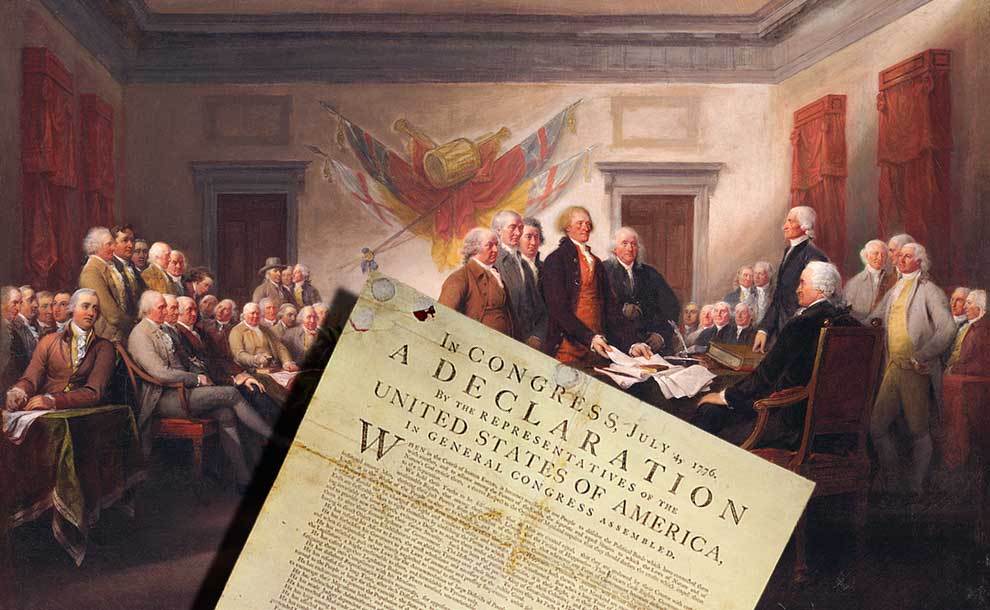
Today, we celebrate the culmination of a successful year recounting life in America. Thank you, POTUS Donald J. Trump and fellow patriots. It is also fitting that we end the stories of individual signers of the Declaration of Independence at this point as we have entered into our 250th year of existence as the United States of America. I will not spend any more time on this lead, most readers will agree this man deserves all of the attention due him.
Because of his accomplishments and the value of this signer to our nation, please provide enough time to read if interested in this series. There was no way to do this quickly. Do not miss the conclusion.
Thomas Jefferson
Thomas, T, Big T, Tommy, Tomás, TJ, Tom Terrific. I have a friend named TJ, so if I get sloppy that is what I will use. Thought I would get those out of the way early. Regardless, Thomas Jefferson was a big deal. His lasting legacy still is.
The biographies, documents and stories about Thomas Jefferson are plentiful. Since he is the last signer to discuss, I want to focus on some personal aspects and events of his life that express more about what he valued and who he was as a person in addition to the usual bio summary. Those are what formed his world views and led to his work that we value so highly even today.
Thomas Jefferson was born in 1743 on his family’s Shadwell Plantation. He was the third of ten children of Peter and Jane Randolph Jefferson. His father was a planter, surveyor, justice of the peace, sheriff, Colonel and member of the House of Burgesses. Peter was not well educated, but increased his understanding through reading many books. In 1745 Peter moved the family to Tuckahoe Plantation following the death of close friend, William Randolph III, who had named Peter guardian of his children. They remained there until 1753, when they returned to Shadwell.
Peter and Jane provided a privileged life to their family. They ate on fine dishware, frequently entertained, enjoyed classic books and music, and attended dances. The family was considered prosperous and cultured. While at Tuckahoe, Peter also oversaw the development of his plantation at Shadwell, traveling there as needed while managing the affairs of the Tuckahoe plantation. They owned 60-80 slaves for the farming and household needs.
While living with the Randolph children, Peter made sure Thomas was educated by tutors and schools. He thrived in his education. He studied languages, classics, science, history and other subjects while reading everything he could find. He and his family were friends with native Americans and they would visit frequently with the chief of the Cherokees, Ostenaco, in their home when he came to trade in Williamsburg. It was also there when he first came to know a man he admired, Patrick Henry.
In 1757 his father passed away and the estate was divided between Thomas and his brother, Randolph. He was 14 at the time and had a guardian, John Harvie, Sr. Harvie was a friend and business associate of Peter, who was also named executor of his estate. All of the children received an inheritance with Thomas inheriting over 5000 acres that included the ground that his famous Monticello would be built upon beginning in 1772. His mother received a life estate on the Shadwell home along with property that Thomas leased from her until her death.
At this point Thomas had grown tall (6′ 2″) and gangly while preferring to use the written word since he was not an eloquent speaker. In 1761 at age 18 he entered William & Mary College. The first school year he admitted to spending too much money and partying. Realizing this mistake, in his second year he committed to studying 15 hours per day, sleeping and eating for 6 hours, and practicing violin the remaining three hours.
He studied math and philosophy. He was taught British empiricism by William Small, which is the view that experience, especially of the senses, is the only source of knowledge. This is the same professor who was close associates with Francis Fauquier and professor George Wythe whom we discussed in the previous part. The four became a close knit group of friends who explored ideas together for five years. Jefferson later wrote that in their presence he “heard more common good sense, more rational and philosophical conversations than in all the rest of my life.”
What a group! Small was a Scottish physician who had emigrated to Virginia to teach there, who had background in medicine and philosophy. He was ten years older than Jefferson. Fauquier was 59 years old and serving as the Lt. Governor of the colony. He was raised in great wealth and was a renaissance man of the world who had interests and experiences in industry, science, arts and charities. We reviewed George Wythe in the previous part. He was in his mid 30’s, established in his law practice as well as being a professor. Young Thomas must have felt he struck gold with mentors. However, due to his upbringing and intelligence he added great value to the group.
He finished his formal studies in 1762 and joined the Wythe law practice to read the law working as a clerk. He followed that by opening his own law practice that focused primarily on land transactions. He was not oriented to being a great litigator, but to be a scholar.
The Next Phase
In 1768 he made the decision to build Monticello on a tall bluff on his property as well as to run for office in the House of Burgesses. A politician was born. A few years later in 1772 he married a wealthy widow, Martha Wayles Skelton. Her inherited land and slave holdings were double the size of his, thus making them quite wealthy. The couple had six children, but only two daughters survived to adulthood. They lived in a smaller structure Thomas built in 1772 while the much grander Monticello main house was under construction. Unfortunately, Martha did not live long enough to move into it. She passed away at age 33 in 1782. Thomas completed it soon after her death that same year.
Thomas stayed involved in law and politics while venturing into expressing views about the rights of colonists. He felt that the colonies were bound to Great Britain voluntarily and only through loyalty to the King. This led to a personal position paper he wrote being published in 1774 without his permission that was titled, A Summary View of the Rights of British Americans. This increased his prominence in Virginia and set him up as a strong advocate for independence from Parliamentary authority. The colonial leadership responded by sending him to represent the state at the Second Continental Congress in early 1775.
Jefferson was introverted and shy when all of the debates were flowing. John Adams wrote about his silence, yet, clear dedication to independence. His role soon became that of a drafter of Congressional resolutions. He was chosen to be a member in a committee that included Adams and B that was to draft the document that reflected the positions of Congressional members as to why independence from Great Britain was necessary. As the author, he chose to provide an “expression of the American mind” from the general “originality of principle or sentiment” that he heard from the words of all Americans, not just those in the Congress. This expression included the text covering the charges against King George III. It only took him a few days to prepare the draft. The members then began editing and revising only about 20% of the document. What they did not touch, which is included in its entirety, were these famous and arguably most important words in our nation’s history.
We hold these truths to be self-evident; that all men are created equal; that they are endowed by their Creator with certain inalienable rights; that among these are life, liberty and the pursuit of happiness; that to secure these rights, governments are instituted among men, deriving their just powers from the consent of the governed.
Chills. Some 250 years later these words reverberate as loudly now as they did then.
As we know our founding fathers soon voted to approve and sign the Declaration of Independence. Thomas Jefferson was only 33 years old. What many did not realize at that time was that he was somewhat saddened that the members found it necessary to modify any of the draft document at all. He meant every single word he wrote.
Carry Me Back to Ole Virginny
Thomas headed back to Virginia in October 1776 with legal system, education, and separation of church and state reforms in mind. He was met with great resistance on education and separation of church and state. It took a decade until 1786 to get a religious freedom statute approved. Jefferson considered the Revolutionary War period as the start of a worldwide battle to free all people of the world from power hungry institutions and oppressive governments. His proposed state reforms mirrored what he envisioned for the country with its independence from Great Britain.
He was elected Governor of the state in 1779, however, he and the state were surprised and unprepared for a British invasion that sent him quickly escaping as troops approached. The press caught wind of him leaving and called him a coward, a subject over which he fought the rest of his life. There was a formal inquiry into his actions that were repudiated by the General Assembly. Jefferson blamed Patrick Henry for the accusations and he never got over it. It hurt him deep in his being as he had respected Henry for much of his life. Three years later his wife, Martha, died while giving birth to their third daughter. Those two difficult events made a huge impression during this dark period in his life.
After Martha’s death he agreed to become a minister (ambassador) to France with B’s return to Philadelphia. He acknowledged that nobody could actually replace B and his impact, that he would just serve as his successor. During the period he deeply studied the cultures of the European nations and sent many artifacts, books and documents home to Monticello. After five years there soliciting better relations, trade and investment into America, he returned at the request of President Washington to serve as the first Secretary of State under the new Constitution. He was immediately at odds with Alexander Hamilton in that he felt Hamilton was for a powerful central government and favored the British too highly.
Due to the rise of the Federalists that included the dominant personalities of Adams and Hamilton, Jefferson united with friend James Madison in the founding of the rival Democratic-Republican (D-R) Party to counter their views. The D-R members believed in a decentralized central government, states rights, strict interpretation of the Constitution, and individual rights. The Federalists were generally the opposite and aligned with Great Britain even after the war while the D-R’s were aligned with France. The D-R’s referred to themselves as the Republican Party and historians often call them Jeffersonian Republicans to avoid confusing them with the more recent GOP.
Thomas ran for POTUS in 1796 against John Adams and lost by 3 electoral votes. That made him the Vice President to Adams under the rules of that time. They were two formerly close friends who had become increasingly agitated with each other’s positions and unwilling to compromise. The situation was awkward and contentious. Since Thomas and the D-R’s were opposed to a central federal bank, they were also at odds with Alexander Hamilton, who was its biggest proponent.
Four years later Adams and Jefferson ran against each other again with Jefferson coming out on top. Rather than discuss the convoluted mess that delivered that victory to Jefferson, I have linked a summary below. Just know that toughening the immigration laws by Adams and the Federalists with the Alien and Sedition Acts killed their chances and there was much political intrigue over those years that eventually led to the infamous duel between Hamilton and Aaron Burr.
https://www.monticello.org/research-education/thomas-jefferson-encyclopedia/election-1800
Presidency
I will now focus on Jefferson’s accomplishments during that first and second term. The first term was named the “revolution of 1800” by TJ himself. He came rolling into office like POTUS Trump did in his second term. Change was the order of the day. He wanted to reduce the scope and size of the federal government and empower citizens to control it. After the Alien and Sedition Acts that infuriated all non-Federalist Americans, he first sought reconciliation. Which is what was intended with his famous quote, “We are all republicans: we are all federalists.” In Jefferson’s mind the era had devolved into a “reign of witches” to go along with open calls of state succession. He offered the olive branch to all in an effort to bring the country together. It helped that he had a strong, loyal Cabinet that knew their roles well. His close ally James Madison was secretary of state, Albert Gallatin was secretary of treasury, Levi Lincoln (and later John Breckinridge and Caesar Rodney) was attorney general, Henry Dearborn was secretary of war, and Robert Smith was secretary of the navy. Again, just like PDT’s second term.
He had the MAGA type ideas when it came to establishing the roles of the judicial branch. Less than a week before his election, Adams and the Federalists created 16 federal judge positions to eliminate the SCOTUS justices having to travel. Jefferson was offended they added this additional judicial level without consulting him and was soon able to fire all of them when they abolished their circuit courts. All of the related events led to the famous case of Marbury v. Madison in the court of Chief Justice John Marshall. Yes, the same student and protege of Jefferson’s friend, George Wythe. The decision ruled that the law that was passed by Congress to permit the judges was unconstitutional. That ruling gave judicial review authority to the federal judiciary to overturn unconstitutional Congressional laws. It was a big deal then and now.
Jefferson went after SCOTUS associate justice Samuel Chase for many violations from the bench. Chase seemed to have a vendetta against Jefferson and his allies due to the removal of the federal judges. He was abusive to parties in many cases before the court. Jefferson called for impeachment. The Senate failed to secure the required two thirds vote which prompted him to conclude that impeachment was inadequate to address judicial abuses. He later referred to it as “not even a scare-crow.”
Which is one reason why politicized federal judges still get by with the lawfare BS they do today as well as We the People having to endure the idiocy of the leftist justices on SCOTUS.
He had a desire to reduce the size of the Navy to reduce costs. However, he sent it to handle the extortion of the nations of northern Africa in the Barbary War. Despite the costs involved it led to the resolution of the issue and the end of the tribute system those nations imposed. The American public was very supportive and appreciative.
He hated the snobbishness of the aristocrats and was vocal about his dislike of Washington and Adams mimicking British monarchal ceremonies and practices. From his election and on each anniversary date he would walk to his office rather than have any extravagant special events or processions. One of Britain’s new diplomats, Anthony Merry along with his wife, paid him a visit in 1803 all decked out with a plumed hat and ceremonial sword. The Merry Affair was born. Jefferson greeted him while wearing informal clothes with a pair of slippers on his feet. 😂 Later at the formal dinner in honor of the visit, he seated them amongst everybody else instead of preferred seating as his guests. He did similar things with the Spanish dignitaries that visited. Word got around in Europe. They were not amused.
In his mind he was not being rude or obnoxious, he was sending a message. He was making a point that he lived in his own life and expected in all American lives – We the People are all equal.
Louisiana Purchase
Granted, $24 worth of trinkets in exchange for Manhattan was a masterpiece deal from the century before. But what Jefferson and team negotiated with Napoleon was probably the deal of all time. An exchange of $15 million for nearly 828,000 square miles of land (approximately 4 cents per acre) is an astounding deal. It doubled the size of the nation overnight. Over time 15 more states would form from the acquired territory. Not only was it highly valued for natural resources, in so doing he closed off an unrestricted foreign port of entry into the continental U. S. at New Orleans while taking control of Mississippi River navigation.
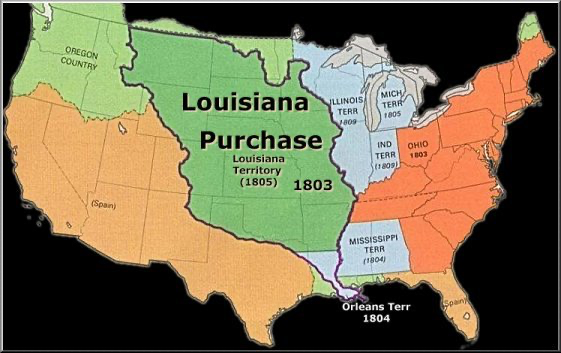
However, it did not come easy in getting done. He had to pull a legal and political slight of hand move over which other elected officials and American people had to give him a pass. He had personal misgivings in doing the deal quickly, which was required by Napoleon, since TJ was a strict constructionist in regards to the Constitution. We will cover what that entails in a future thread.
He faced opposition from the usual Federalist opponents who had cost concerns as well as opposing geographic expansion of the country in general. However, the majority of elected officials and public supported it greatly. So, he got it done.
Because of it and other high points, his second term election victory was a blow out landslide. He took all of the states except Connecticut and Delaware to go with 73% of the popular vote and an electors advantage of 162-14 over Charles Pinckney of South Carolina, who also was a former minister to France. It remains the largest winning margin in American history. This illustrates how popular Jefferson and the D-R party had become along with how far the Federalists had fallen in the view of the public. He was the first and only former Vice President to be elected to two terms as President until Richard Nixon did so.
The Federalists had lost all leverage with the public over their opposition to the Louisiana Purchase, to TJ’s gunboat Navy, and allegations about his relationship with slave Sally Hemings. None of that mattered to the vast majority of We the People of that day. The D-R’s had jettisoned Aaron Burr from their ranks by that point and replaced him on the ballots with New Yorker George Clinton. The party also handily won control of both the Senate and House.
His second inaugural address was focused on the conditions on the ground. He sought peace and neutrality with the major foreign powers, but especially with Great Britain and France as they were warring against each other. He continued to seek even more support for the Louisiana Purchase even after completing the transaction. He wanted more peaceful relations with the native Indian tribes with efforts to educate more of them in an attempt to help them assimilate. He also sought to bring to an end the personal attacks he faced in the press, proving once again, that the fake media existed then as well as now. His words below will remind many readers of what we have seen for decades now.
During this course of administration, and in order to disturb it, the artillery of the press has been levelled against us, charged with whatsoever its licentiousness could devise or dare. These abuses of an institution so important to freedom and science, are deeply to be regretted.
Our fellow citizens have looked on, cool and collected… they gathered around their public functionaries, and when the constitution called them to the decision by suffrage, they pronounced their verdict, honorable to those who had served them, and consolatory to the friend of man, who believes he may be intrusted with his own affairs…our wish, as well as theirs, is, that the public efforts may be directed honestly to the public good.
His second term was a series of ups and downs dealing with issues of the day. Exploration and development of purchased territory, road building, improvement in relations with Indians, supporting the continued exploration by Lewis & Clark all the way to the Pacific, ending the Barbary War, dealing with Aaron Burr’s sedition and treason, trying to navigate through the war between Britain and France without damage to America, banning the importation of slaves, and so on dominated his time. When he finished his term, he endorsed his long term friend James Madison over his VP Clinton. He spent much effort calming the waters of party politics that this endorsement churned up to ensure Madison’s and the party’s victories over the Federalists in 1808.
However, one period stood out as troublesome. The Brits never stopped harassing American merchants with attacks on shipping and impressment of sailors into service in the British Navy as they fought France. But France also did likewise to a somewhat lesser degree as the Napoleonic Wars raged on. In 1806 Jefferson and Congress easily passed the Non-importation Act in an attempt to stop Great Britain from doing those activities. It cut trade off with them with specific, popular products. It did not work, Britain ignored it. Faced with continued pressure, Jefferson and Congress easily passed a stronger version, the Embargo Act of 1807, that also stopped American firms from importing or exporting with both Great Britain and France, albeit with loopholes as well as lax subsequent enforcement. Jefferson was pushing to increase domestic manufacturing and production of many of the products that were imported. He wanted more time to get that done.
Great Britain and France worked around that by trading in other countries near America that were not included in the embargo, who would then sell the goods to American merchants. The Act was marginally successful at best and the public grew to hate it due to price increases and lack of availability of some products. Most of the public actually supported smuggling to import the needed items. Laws and their enforcement were ignored. After the Federalist Party rebounded from the fallout and gained a handful of seats in Congress in the 1808 elections, the Act was repealed in 1809 with Jefferson’s support when Madison became POTUS.
The issues became moot in 1812 when America declared war against Great Britain and war time restrictions on trade took hold. With the war’s peace settlement, Congress passed the Tariff of 1816 to protect American manufacturing for a three year period. An extension was requested, but southern politicians objected due to their trade connections to Great Britain. A decade after the war the issue was eventually addressed through Senator Henry Clay’s and Senator John Calhoun’s American Systems which did employ more structured tariffs.
But that tariff structure chafed the south even more in the lead up to rebellion a few decades later. With their agrarian based economy the movement of agricultural products to Great Britain was a lifeblood for prosperity. They did not take to the tariffs well.
Jefferson’s Presidency and standing were still so admired by the people that Jeffersonian Republicans won the Presidency for 24 of the following 28 years. He retired from public life back to Monticello where he frequently met with leaders in government and other walks of life as they sought his counsel, wisdom and companionship. His last major public service achievement was the successful founding of the University of Virginia at the age of 76. Per monticello.org, he led the legislative campaign for its charter, secured its location, designed its buildings, planned its curriculum, and served as the first rector.
Winding Down
His later years were dedicated to trying to pay his debts. Complicating it were the negative effects that the Louisiana Purchase had on property values in the east during the rush to purchase inexpensive land in the west. There were fewer buyers remaining in the east. He had difficulty selling his property for enough to repay debts. He also had co-signed on notes to help a couple of friends, one of whom had passed away; which cost him even more.
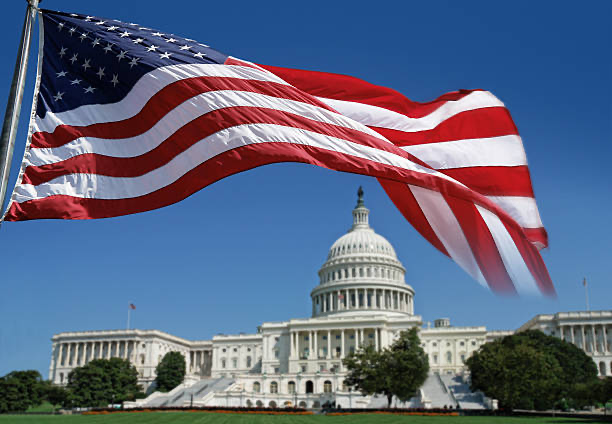
When the British burned the Capitol Building in the War of 1812 the entire 3000 books in the Library were burned with it. Jefferson sold his personal 6500 book library to replace it as he had planned to give it to Congress at his death anyway. An agreed price of $23,950 was negotiated and both houses of Congress approved the purchase despite the usual Federalist opposition. They hated his political positions and thought many of the books would reflect them. Jefferson was able to repay two debts of his friends he had cosigned from a large portion of the proceeds. Despite his cash problems, he found enough funds in his remaining years to purchase an additional 2500 books before his death. He often said he could not live without reading books.
When he died he left all of the 5000 acre Monticello property and personal collections to his daughter, Martha Jefferson Randolph. She could not afford to maintain the Monticello property, so it was eventually sold in 1827 to a Charlottesville druggist for $7500. After a failed business venture on the property he later sold it to the Levy family who owned and maintained it for 90 years, which was a blessing. At that point it was sold to the Thomas Jefferson Foundation in 1923 for $500,000 and a full restoration was completed afterwards. All but 500 acres of the original land that is retained by the organization was sold over the years.
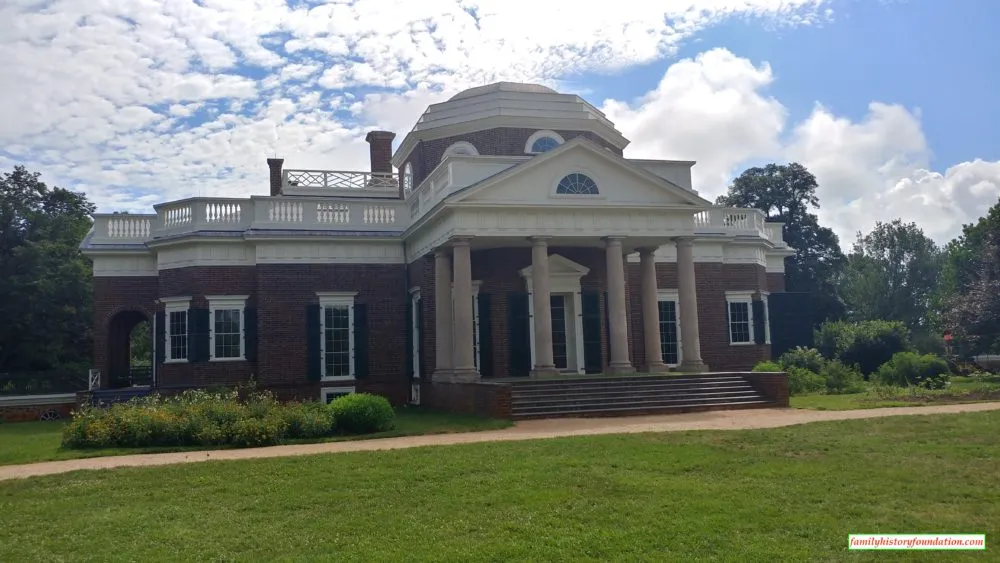

The link below is a summary history of the property.
Elephants In The Room
So let’s address one of the elephants in the room – the Jefferson Bible. It was one of his most controversial actions taken by him later in life and it brought heated responses, mostly negative. Basically he did not want anything to do with the miracles and deity of Jesus, but wanted everything to do with His moral positions, wisdom, and philosophical compassion for humanity. He saw his Biblical revision as a rational expression of the philosophy he personally valued, which is why he kept it private. He felt religion should remain privately held by an individual.
George Whitefield he wasn’t. Whitefield taught the Calvinist view that salvation comes from the blood sacrifice of Jesus on the Cross for our sins and His subsequent resurrection conquering death. Whitefield preached the opposite of Jefferson’s beliefs, that we could never do enough good works to earn God’s favor, that the deity of Jesus Christ as Son of God, his sacrifice on the Cross, and subsequent resurrection conquering death were essential to Christian beliefs. That was the prevailing belief then and now of traditional Protestant Christianity. On the other hand Jefferson was the anti-Calvinist who believed that good works earned acceptance by the Creator or Being as he called Him at times. The inherent problems with that view is that it contradicted the Word of God in many ways, so he cut the related parts of the Bible out in response. I have not checked, but I doubt these words are still in his revision. Ephesians 2:8-9 says,
For by grace you have been saved through faith. And this is not your own doing; it is the gift of God, not a result of works, so that no one may boast.
Needless to say it would be hard to claim to be a disciple of Jesus when you are only a disciple of the doctrine of Jesus that matched your views, so he did not claim it.
As a result it appears that TJ was a powerful, effective instrument used for the Godly purposes of moving America forward. Many of his words and actions indicate he was a deist as some were who were influenced by Enlightenment period views. However, there were contradictory statements made by TJ throughout his years that indicated he did accept Christ as his personal Savior, however, only God knows the hearts and minds of man. That determination is outside of our purview – thankfully.
https://www.history.com/articles/thomas-jefferson-bible-religious-beliefs
Next up was the even bigger elephant in our culture’s views involving the issue of intimate relations with slaves and in particular, one Sally Hemings. Despite the scandal it caused at the time, this one resolved quickly in this era with the following public release from Monticello.org in 2018;
Additional information was released by Monticello later and the pertinent statement is below.
Many of the enslaved house servants were members of the Hemings family. Elizabeth Hemings and her children were a part of the (Martha) Wayles estate and tradition says that John Wayles was the father of six of Hemings’s children and, thus, they were the half-brothers and sisters of Jefferson’s wife Martha. Jefferson gave the Hemingses special positions, and the only slaves Jefferson freed in his lifetime and in his will were all Hemingses, giving credence to the oral history. Years after his wife’s death, Jefferson fathered at least six of Sally Hemings’s children. Four survived to adulthood and are mentioned in Jefferson’s plantation records. Their daughter Harriet and eldest son Beverly were allowed to leave Monticello during Jefferson’s lifetime and the two youngest sons, Madison and Eston, were freed in Jefferson’s will.
Historical accounts have Sally’s parents being an African woman and a British sea captain. Many accounts said she was attractive, however, portraits made in the years since her death are speculative in nature since no period portraits are known to exist. After TJ’s death, Sally moved to Charlottesville to live with two sons. She died there in 1835.
Another elephant we discussed in an earlier part, which was his on and off and on again friendship with John Adams. We have Benjamin Rush to thank for the final reconciliation of the two. In their latter years they both realized they were being too hard headed in their positions and expressions during their day in politics and governing. They were able to share humor about themselves in their many letters to each other. It is fitting they both died on July 4, 1826, two hours apart some 50 years after the signing our Declaration of Independence.
Conclusion
Jefferson was asked his opinion of the most important things he accomplished in his life. Per Monticello.org; “He was the primary draftsman of the Declaration of Independence and of the Virginia Statue of Religious Freedom, nor could others claim the position as the Father of the University of Virginia.”
It goes on to say, “He had dedicated his life to meeting the challenges of his age: political freedom, religious freedom, and educational opportunity. While he knew that we would continue to face these challenges through time, he believed that America’s democratic values would become a beacon for the rest of the world. He never wavered from his belief in the American experiment.”
“I have no fear that the result of our experiment will be that men may be trusted to govern themselves. . . .”
Thomas Jefferson, 2 July 1787
It is time to take in his achievements. He was President of the United States – 2 terms, Vice President, Secretary of State, Minister to France, Governor of Virginia, Co-founder Democratic-Republican Party, Member and Representative to the Continental Congress and Virginia State Legislature, Colonel in the Virginia Militia, author, architect, attorney, farmer, scientist and patriarch of a large clan. He will be forever remembered for the Louisiana Purchase during his first term – it had a monumental affect on America.
Yet, per his instructions all he wanted to be remembered for was etched on his grave marker:
HERE WAS BURIED
THOMAS JEFFERSON
AUTHOR OF THE
DECLARATION
OF AMERICAN INDEPENDENCE
OF THE
STATUTE OF VIRGINIA
FOR
RELIGIOUS FREEDOM
AND FATHER OF THE
UNIVERSITY OF VIRGINIA
BORN APRIL 2, 1743
DIED JULY 4. 1826
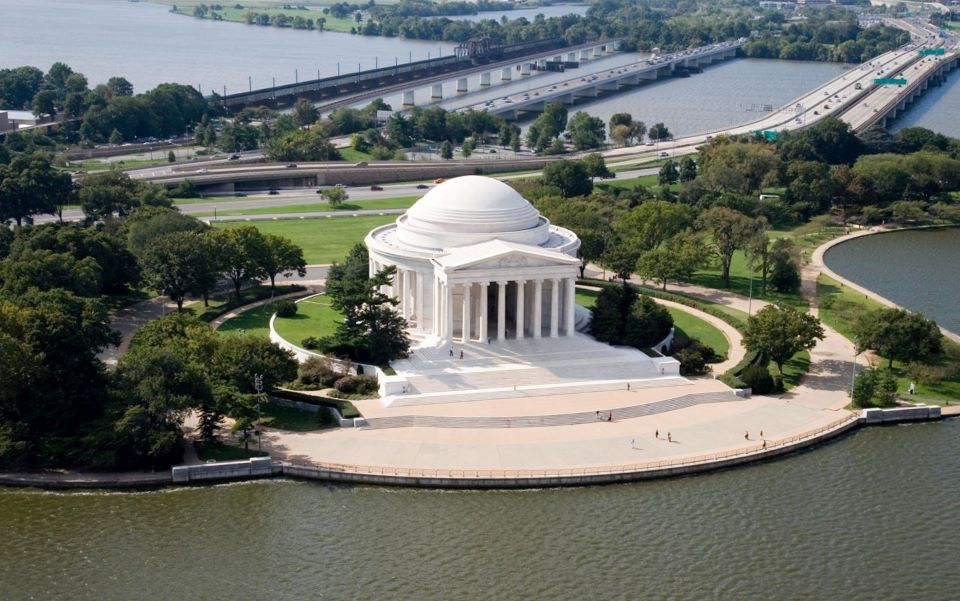
We will remember this great patriot for as long as America exists. There are insufficient words to express our gratitude. There are major reasons he was honored in our nations capital with this,
But wait, one more thing…
Remove the radical differences in personalities, then compare the lives and achievements of Thomas Jefferson and Donald Trump. The parallels are eye opening.
Both were/are practical, well educated, very stable geniuses. Both were raised in prosperous homes. Both were/are workaholics. Both were builders who had/have famous estates. Both were/are incredible visionaries. One is a master of spoken words, the other was a master of written words. Both believed/believe in a decentralized and limited government, the rights of states, in individual liberty and rights, in freedom of religious expression, in law and order. Both sought/seek peaceful relations with foreign countries. Both valued/value deep thought and intelligence. They both had multiple female “attractions” and children from multiple women. Both were/are healthy and were raised in ecumenical Protestant backgrounds. One fleeced the Louisiana Purchase territory from Napoleon while the other is working on acquiring or controlling Greenland and even Canada. Both did not hesitate to use their military to go after criminals and foreign aggressors when needed. The similar comparisons go on and on.
However, the most interesting is who their obvious enemies were/are. That would be the Federalists for TJ, with the Dem controlled Uniparty of today for the Donald. Their enemies used/use identical tactics and strategy. They both expressed/express irrational hatred of the men. They smear, defame and oppose anything either TJ or the Donald wanted/want to do or accomplished/accomplish regardless of how good it was/is for We the People. The Federalists never did like or trust average Americans at all. Their early leader, John Adams, expressed as much well before the revolution, moving his family once to avoid interaction with common folks. They used them as sheeple like the Dems/uniparty do today. Both political groups wanted/want to be treated as the betters in society, above We the People. To achieve their ends they enlisted the fake news media in their attacks just like today. The propaganda, lies and smears were done the same way. They used/use lawfare, activated politicized judges, and played/play dirty politics the same then as they do now.
The results have been the same as well. Both Jefferson and Trump got stronger as they withstood the personal attacks. We the People grew in number and had their backs the entire time. Their popularity grew/grows.
We can only look forward to the same result for the Donald and MAGA as Jefferson had with the D-R’s and populism then. Jefferson turned the American Experience on its head and the movement controlled the nation for two decades after he had passed away. The Federalist Party died with the War of 1812 due primarily to the weight of their relationships with the British enemy, but also due to central government overreach and taxation. The D-R’s began a run of control that was not without bumps and bruises, but pushed America forward. As a party they died later. The politics of the day evolved with the development and needs of the country. The two political parties were replaced by the Democrat Party in the 1830’s that arose from the remnants of the Jeffersonian Republicans as well as the formation of the relatively short lived Whigs in the 1930’s and 1940’s.
That tells us that there is no guarantee that the current Dems or even the GOP will survive the MAGA movement. I am OK with that. It’s the American Way.
Long live Donald J. Trump, but longer live MAGA in the spirit of the great Donald Trump and the great Thomas Jefferson.
Please remember Wolf’s rules for our community. In general that means to be respectful to each other and to pull no shenanigans that your mom might find offensive or otherwise cause jail time. That said, free speech is honored here.
Be blessed and go make something good happen!