Dear MAGA: 20250330 Open Topic

This Rejoice & Praise God Sunday Open Thread, with full respect to those who worship God on the Sabbath, is a place to reaffirm our worship of our Creator, our Father, our King Eternal.

It’s also a place to read, post, and discuss news that is worth knowing and sharing. Please post links to any news stories that you use as sources or quote from.

In the QTree, we’re a friendly and civil lot. We encourage free speech and the open exchange and civil discussion of different ideas. Topics aren’t constrained, and sound logic is highly encouraged, all built on a solid foundation of truth and established facts.

We have a policy of mutual respect, shown by civility. Civility encourages discussions, promotes objectivity and rational thought in discourse, and camaraderie in the participants – characteristics we strive toward in our Q Tree community.

Please show respect and consideration for our fellow QTreepers. Before hitting the “post” button, please proofread your post and make sure your opinion addresses the issue only, and does not confront or denigrate the poster. Keep to the topic – avoid “you” and “your”. Here in The Q Tree, personal attacks, name-calling, ridicule, insults, baiting, and other conduct for which a penalty flag would be thrown are VERBOTEN.

In The Q Tree, we’re compatriots, sitting around the campfire, roasting hot dogs, making s’mores, and discussing, agreeing, and disagreeing about whatever interests us. This board will remain a home for those who seek respectful conversations.

Please also consider the Guidelines for posting and discussion printed here: 
https://www.theqtree.com/2019/01/01/dear-maga-open-topic-20190101/


On this day and every day –

God is in Control
. . . and His Grace is Sufficient, so . . .
Keep Looking Up


Hopefully, every Sunday, we can find something here that will build us up a little . . . give us a smile . . . and add some joy or peace, very much needed in all our lives.

“This day is holy to the Lord your God;
do not mourn nor weep.” . . .
“Go your way, eat the fat, drink the sweet,
and send portions to those for whom nothing is prepared;
for this day is holy to our Lord.
Do not sorrow,
for the joy of the Lord is your strength.”


Ministering Spirits

Hebrews 1:14 includes information about the ministry of elect angels to believers: “Are not all angels ministering spirits sent to serve those who will inherit salvation?” Angels are spiritual beings involved in many different tasks, and part of the elect angel’s work is to serve, or minister to, believers in different ways.

The Greek word for “ministering” refers to being in service to others. Being servants, angels are said to “serve” believers, which in the original Greek has the idea of someone waiting a table. The author of Hebrews refers to angels as ministers or servants to those who have trusted in Jesus for salvation, and the context of Hebrews 1 specifically contrasts the service of angels with the greater work of Jesus, since He is superior to angels (Hebrews 1:5–14).

As “ministering spirits,” angels serve believers in several ways. At times, angels are sent by God to answer prayers. An example of this is when Peter was imprisoned shortly after the execution of James (Acts 12). As Peter was in his cell chained between two guards, “the church was earnestly praying to God for him” (verse 5). “Suddenly an angel of the Lord appeared and a light shone in the cell. He struck Peter on the side and woke him up. ‘Quick, get up!’ he said, and the chains fell off Peter’s wrists” (verse 7). The arrival of an angel to rescue Peter was an obvious answer to the church’s prayer. God can use angels to answer our prayers just as He did in this instance, even if it is not in a visible manner.

Another way that angels are ministering spirits is that they are sometimes sent to encourage believers. In Scripture, angels encouraged and attended the Lord Jesus at least twice: after He was tempted in the desert for 40 days and 40 nights and in the Garden of Gethsemane (Matthew 4:11; Luke 22:43). Paul was encouraged by an angel during a storm at sea (Acts 27:23–24).

Providing protection for believers is another service that angels do for the Lord (see Psalm 91:11). An army of angels surrounded Elisha in 2 Kings 6, protecting him from the Arameans. Daniel was protected in the lions’ den by an angel who “shut the mouths of the lions” (Daniel 6:22). Many people believe in personal “guardian angels”; it could be that every believer has an angel assigned to him for protection, but there is nothing specifically stated in the Bible about personal guardian angels.

Despite the ministries that angels carry out for believers, it is important to remember that the Lord of hosts is our Savior, and He is the one who ultimately sends them. Angels do not act on their own accord, nor are they omniscient or omnipresent (Psalm 148:5). The holy angels do God’s bidding. It is God alone who deserves the praise and glory for the answered prayers, encouragement, protection, and service that angels carry out for believers.

We are grateful for the “ministering spirits” that God has ordained, and we give God praise for His care for us. For all their power and glory, the elect angels know their role as servants of the Most High. Like the angel in Revelation emphatically said to John when the apostle tried to worship him, “Don’t do that! I am a fellow servant with you and with your fellow prophets and with all who keep the words of this scroll. Worship God!” (Revelation 22:9).
https://www.gotquestions.org/ministering-spirits.html

Dear MAGA: 20240323 Open Topic

This Rejoice & Praise God Sunday Open Thread, with full respect to those who worship God on the Sabbath, is a place to reaffirm our worship of our Creator, our Father, our King Eternal.

It’s also a place to read, post, and discuss news that is worth knowing and sharing. Please post links to any news stories that you use as sources or quote from.

In the QTree, we’re a friendly and civil lot. We encourage free speech and the open exchange and civil discussion of different ideas. Topics aren’t constrained, and sound logic is highly encouraged, all built on a solid foundation of truth and established facts.

We have a policy of mutual respect, shown by civility. Civility encourages discussions, promotes objectivity and rational thought in discourse, and camaraderie in the participants – characteristics we strive toward in our Q Tree community.

Please show respect and consideration for our fellow QTreepers. Before hitting the “post” button, please proofread your post and make sure your opinion addresses the issue only, and does not confront or denigrate the poster. Keep to the topic – avoid “you” and “your”. Here in The Q Tree, personal attacks, name-calling, ridicule, insults, baiting, and other conduct for which a penalty flag would be thrown are VERBOTEN.

In The Q Tree, we’re compatriots, sitting around the campfire, roasting hot dogs, making s’mores, and discussing, agreeing, and disagreeing about whatever interests us. This board will remain a home for those who seek respectful conversations.

Please also consider the Guidelines for posting and discussion printed here: 
https://www.theqtree.com/2019/01/01/dear-maga-open-topic-20190101/


On this day and every day –

God is in Control
. . . and His Grace is Sufficient, so . . .
Keep Looking Up


Hopefully, every Sunday, we can find something here that will build us up a little . . . give us a smile . . . and add some joy or peace, very much needed in all our lives.

“This day is holy to the Lord your God;
do not mourn nor weep.” . . .
“Go your way, eat the fat, drink the sweet,
and send portions to those for whom nothing is prepared;
for this day is holy to our Lord.
Do not sorrow,
for the joy of the Lord is your strength.”


The Purpose of Angels

Naked cherubs, wings, halos, and cute kindergartners in the Christmas play are some of the images that come to mind when we think about angels. But God’s Word gives us an entirely different picture. Hebrews 1:7 says, “He makes his angels spirits, and his servants flames of fire.” Angels are spirits created to serve God’s purposes.

Scripture gives us only glimpses into the supernatural realm, but it is enough to learn that angels perform a variety of tasks and are used for several purposes:

1. To serve the people God saves. One purpose of angels is to minister to the elect of God: “Are not all angels ministering spirits sent to serve those who will inherit salvation?” (Hebrews 1:14). Paul experienced an angelic visitation during a storm at sea. The angel brought him comfort (Acts 27:23–24). Others who have been served by angels include Elijah (1 Kings 19:3–8) and Peter (Acts 12:6–10).

2. To deliver messages. The word angel literally means “messenger.” In the Bible, angels usually appeared as men when they delivered messages from God to people (see Genesis 18:1–3). The angel Gabriel appeared to at least three people in the Bible. He interpreted a vision for Daniel (Daniel 8:16), told Zechariah about the birth of John the Baptist (Luke 1:19), and proclaimed to Mary that she would be the mother of the Messiah (Luke 1:26). Angels in the form of men also warned Lot of God’s impending judgment on Sodom and Gomorrah (Genesis 19:1).

3. To wage spiritual battle. Another purpose of angels is to fight the forces of spiritual darkness who try to thwart God’s plans (Ephesians 6:12; Jude 1:9). When an angel appeared to Daniel to deliver the interpretation of a vision, the angel stated that Michael the archangel had to help him fight his way through enemy forces (Daniel 10:10–14). The full extent of angelic warfare is not known to us, but these few glimpses are enough to suggest that a fierce cosmic battle rages just out of sight.

4. To worship God. Angels constantly surround the throne of God, worshiping and shouting His praises (Psalm 148:1–2; Isaiah 6:3, Hebrews 1:6; Revelation 5:8–13). Since angels were created to worship God, their rejection of that purpose is an unforgivable wrong. When Lucifer, a chief angel, refused to worship God and insisted that angels worship him instead, God cast him from heaven (Isaiah 14:12–18). Angels siding with Lucifer were exiled with him.

5. To serve. Angels exist to do the will of their Creator. They go where God sends them, say what He gives them to say, and minister to His children on earth (Psalm 103:20; Revelation 22:9; Hebrews 1:14). After Jesus’ forty-day temptation in the wilderness, angels came and ministered to Him (Matthew 4:11). When the righteous die, it seems that angels carry them straight to the place of God’s rest (Luke 16:22).

6. To execute judgment. Angels are not all radiance and joy. They also carry out God’s orders for destruction. The book of Revelation foretells many angelic acts that will bring about the ultimate destruction of the world (Revelation 7:1; 8—10). When Pharaoh refused to let the people of God leave Egypt, God sent an angel to strike down every firstborn son (Exodus 12:12, 23). Angels were involved in the death of Herod (Acts 12:23), the slaughter of the Assyrian army (2 Kings 19:35), and the punishment of Jerusalem (1 Chronicles 21:15).

7. To aid in the transmission of God’s Word. Hebrews 2:2, speaking of the Mosaic Law, calls it “the message spoken through angels.” Somehow, angels were involved in the process of Moses receiving the law on Sinai, revealing yet another purpose of angels.

God uses angels any way He chooses. Because we hardly know anything about a world outside our physical universe, we cannot possibly understand all the purposes angels fulfill. But Christians have the confidence that God’s holy angels stand ready to protect and deliver God’s mortal children (Psalm 91:11). While angels are created beings, as we are, and should never be worshiped, we can thank the Lord for them and the unseen ways He uses them to impact our lives.
xhttps://www.gotquestions.org/purpose-of-angels.html

Dear MAGA: 20250316 Open Topic

This Rejoice & Praise God Sunday Open Thread, with full respect to those who worship God on the Sabbath, is a place to reaffirm our worship of our Creator, our Father, our King Eternal.

It’s also a place to read, post, and discuss news that is worth knowing and sharing. Please post links to any news stories that you use as sources or quote from.

In the QTree, we’re a friendly and civil lot. We encourage free speech and the open exchange and civil discussion of different ideas. Topics aren’t constrained, and sound logic is highly encouraged, all built on a solid foundation of truth and established facts.

We have a policy of mutual respect, shown by civility. Civility encourages discussions, promotes objectivity and rational thought in discourse, and camaraderie in the participants – characteristics we strive toward in our Q Tree community.

Please show respect and consideration for our fellow QTreepers. Before hitting the “post” button, please proofread your post and make sure your opinion addresses the issue only, and does not confront or denigrate the poster. Keep to the topic – avoid “you” and “your”. Here in The Q Tree, personal attacks, name-calling, ridicule, insults, baiting, and other conduct for which a penalty flag would be thrown are VERBOTEN.

In The Q Tree, we’re compatriots, sitting around the campfire, roasting hot dogs, making s’mores, and discussing, agreeing, and disagreeing about whatever interests us. This board will remain a home for those who seek respectful conversations.

Please also consider the Guidelines for posting and discussion printed here: 
https://www.theqtree.com/2019/01/01/dear-maga-open-topic-20190101/


On this day and every day –

God is in Control
. . . and His Grace is Sufficient, so . . .
Keep Looking Up


Hopefully, every Sunday, we can find something here that will build us up a little . . . give us a smile . . . and add some joy or peace, very much needed in all our lives.

“This day is holy to the Lord your God;
do not mourn nor weep.” . . .
“Go your way, eat the fat, drink the sweet,
and send portions to those for whom nothing is prepared;
for this day is holy to our Lord.
Do not sorrow,
for the joy of the Lord is your strength.”


Fallen Angels

When exactly God created angels is open for debate, but what is known for sure is that God created everything good because God, in His holiness, cannot create something sinful. So when Satan, who was once the angel Lucifer, rebelled against God and fell from heaven (Isaiah 14; Ezekiel 28), one third of the angelic host joined his insurrection (Revelation 12:3-4,9). There is no doubt these fallen angels are now known as the demons.

We know that hell was prepared for the devil and his angels, according to Matthew 25:41: “Then He will say to those on His left, ‘Depart from me, you who are cursed, into the eternal fire prepared for the devil and his angels.’” Jesus, by using the possessive word his makes it clear that these angels belong to Satan. Revelation 12:7-9 describes an end-times angelic battle between Michael and “his angels” and the devil and “his angels.” From these and similar verses, it is clear that demons and fallen angels are synonymous.

Some reject the idea that the demons are the fallen angels due to the fact that Jude verse 6 declares the angels who sinned to be “bound with everlasting chains.” However, it is clear that not all of the angels who sinned are “bound,” as Satan is still free (1 Peter 5:8). Why would God imprison the rest of the fallen angels, but allow the leader of the rebellion to remain free? It seems that Jude verse 6 is referring to God confining the fallen angels who rebelled in an additional way, likely the “sons of God” incident in Genesis chapter 6.

The most common alternate explanation for the origin of the demons is that when the Nephilim of Genesis 6 were destroyed in the Flood, their disembodied souls became the demons. While the Bible does not specifically say what happened to the souls of the Nephilim when they were killed, it is unlikely that God would destroy the Nephilim in the Flood only to allow their souls to cause even greater evil as the demons. The most biblically consistent explanation for the origin of the demons is that they are the fallen angels, the angels who rebelled against God with Satan.
xhttps://www.gotquestions.org/fallen-angels.html

Dear MAGA: 20250309 Open Topic

This Rejoice & Praise God Sunday Open Thread, with full respect to those who worship God on the Sabbath, is a place to reaffirm our worship of our Creator, our Father, our King Eternal.

It’s also a place to read, post, and discuss news that is worth knowing and sharing. Please post links to any news stories that you use as sources or quote from.

In the QTree, we’re a friendly and civil lot. We encourage free speech and the open exchange and civil discussion of different ideas. Topics aren’t constrained, and sound logic is highly encouraged, all built on a solid foundation of truth and established facts.

We have a policy of mutual respect, shown by civility. Civility encourages discussions, promotes objectivity and rational thought in discourse, and camaraderie in the participants – characteristics we strive toward in our Q Tree community.

Please show respect and consideration for our fellow QTreepers. Before hitting the “post” button, please proofread your post and make sure your opinion addresses the issue only, and does not confront or denigrate the poster. Keep to the topic – avoid “you” and “your”. Here in The Q Tree, personal attacks, name-calling, ridicule, insults, baiting, and other conduct for which a penalty flag would be thrown are VERBOTEN.

In The Q Tree, we’re compatriots, sitting around the campfire, roasting hot dogs, making s’mores, and discussing, agreeing, and disagreeing about whatever interests us. This board will remain a home for those who seek respectful conversations.

Please also consider the Guidelines for posting and discussion printed here: 
https://www.theqtree.com/2019/01/01/dear-maga-open-topic-20190101/


On this day and every day –

God is in Control
. . . and His Grace is Sufficient, so . . .
Keep Looking Up


Hopefully, every Sunday, we can find something here that will build us up a little . . . give us a smile . . . and add some joy or peace, very much needed in all our lives.

“This day is holy to the Lord your God;
do not mourn nor weep.” . . .
“Go your way, eat the fat, drink the sweet,
and send portions to those for whom nothing is prepared;
for this day is holy to our Lord.
Do not sorrow,
for the joy of the Lord is your strength.”


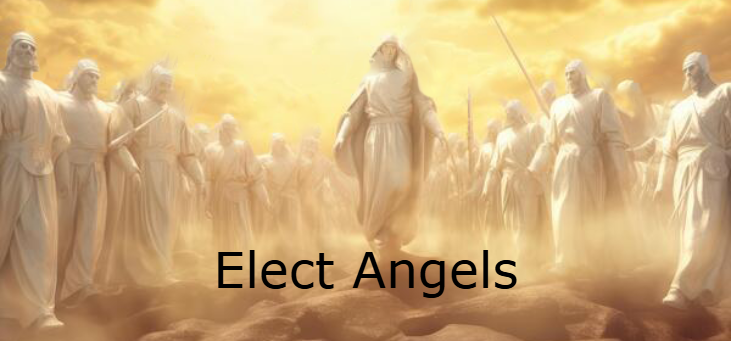
Elect Angels

When God created the angels, they were all good just like the rest of creation (Genesis 1:31). Angels were holy and faithfully devoted to the Lord, but this changed when Satan rebelled against God (Isaiah 14:12–15; Ezekiel 28:16). Many angels followed Satan’s rebellion and thus became “fallen” angels, or demons (Matthew 25:41; Revelation 12:3–4). In contrast, the angels who remained faithful to the Lord are known as “holy angels” or “elect angels” (Mark 8:38; 1 Timothy 5:21).

The Greek word for “elect” found in 1 Timothy 5:21 refers to being chosen or picked. This would indicate that God chose some angels not to fall with Satan. The same word in the verse, eklekton, is used elsewhere for Christians who are elected and chosen by God in salvation (Romans 8:33; Titus 1:1). The word suggests that the elect angels, like elect people, were chosen by God and cannot lose their elect position. None of the elect angels will rebel against God or lose their chosen status, just as Christians cannot lose their salvation as God’s elect children (John 10:28; Romans 8:38–39). Secure in their standing before the Lord, elect angels cannot sin or go against the commands of God but will remain faithful to the Lord forever.

Of course, the fact that the holy angels are “elect” does not imply they are “saved” in the same way that Christians are. Both angels and Christians are chosen and elected by the Lord, but only humans can experience the new birth, forgiveness, and other aspects of salvation. The elect angels cannot experience forgiveness, since they have never sinned. Furthermore, Jesus died for humanity, not for angels. He took on human flesh and came to save mankind from their sins; His sacrifice was not to save the fallen angels (Hebrews 2:16). Angels “long to look into these things,” and are fascinated by the fact that the Son of God laid down His life to save humans (1 Peter 1:12). In this way, the election of angels is different from the election of Christians.

In addition to calling them “chosen” or “elect” angels, Scripture also designates them as good and “holy angels” (Mark 8:38). Worshipping and serving God are the main purposes of the elect angels (Revelation 7:11). Like Christians, elect angels are servants of God who seek to bring Him glory (Revelation 22:9). God uses the elect angels to carry out His will and to provide ministry to believers (Hebrews 1:14). Throughout history, elect angels have been a part of God’s plan in delivering messages (Daniel 8:16; 9:21; Luke 1:19, 26), carrying out judgment (Genesis 19:13; Psalm 78:49; Revelation 14:17–20), and providing encouragement to God’s people (Acts 27:23).

The elect angels have the special purpose of serving God and doing as He commands. The elect angels minister to believers today, and they will also play a major part in the events of the end times. The power and position of the elect angels are awe-inspiring, but the Bible teaches that Jesus’ followers are more blessed than even they, since believers “have been made complete in Christ, who is the head over every ruler and authority” (Colossians 2:10, BSB).
xhttps://www.gotquestions.org/elect-angels.html

Dear MAGA: 20250302 Open Topic

This Rejoice & Praise God Sunday Open Thread, with full respect to those who worship God on the Sabbath, is a place to reaffirm our worship of our Creator, our Father, our King Eternal.

It’s also a place to read, post, and discuss news that is worth knowing and sharing. Please post links to any news stories that you use as sources or quote from.

In the QTree, we’re a friendly and civil lot. We encourage free speech and the open exchange and civil discussion of different ideas. Topics aren’t constrained, and sound logic is highly encouraged, all built on a solid foundation of truth and established facts.

We have a policy of mutual respect, shown by civility. Civility encourages discussions, promotes objectivity and rational thought in discourse, and camaraderie in the participants – characteristics we strive toward in our Q Tree community.

Please show respect and consideration for our fellow QTreepers. Before hitting the “post” button, please proofread your post and make sure your opinion addresses the issue only, and does not confront or denigrate the poster. Keep to the topic – avoid “you” and “your”. Here in The Q Tree, personal attacks, name-calling, ridicule, insults, baiting, and other conduct for which a penalty flag would be thrown are VERBOTEN.

In The Q Tree, we’re compatriots, sitting around the campfire, roasting hot dogs, making s’mores, and discussing, agreeing, and disagreeing about whatever interests us. This board will remain a home for those who seek respectful conversations.

Please also consider the Guidelines for posting and discussion printed here: 
https://www.theqtree.com/2019/01/01/dear-maga-open-topic-20190101/


On this day and every day –

God is in Control
. . . and His Grace is Sufficient, so . . .
Keep Looking Up


Hopefully, every Sunday, we can find something here that will build us up a little . . . give us a smile . . . and add some joy or peace, very much needed in all our lives.

“This day is holy to the Lord your God;
do not mourn nor weep.” . . .
“Go your way, eat the fat, drink the sweet,
and send portions to those for whom nothing is prepared;
for this day is holy to our Lord.
Do not sorrow,
for the joy of the Lord is your strength.”


Angels

Angels fall into two categories: the “unfallen” angels and the fallen angels. Unfallen angels are those who have remained holy throughout their existence and accordingly are called “holy angels.” In Scripture, generally when angels are mentioned, it is the class of holy angels in view. By contrast, the fallen angels are those who have not maintained their holiness.

Holy angels fall into special classes, and certain individuals are named and mentioned. Michael the archangel is likely the head of all the holy angels, and his name means “who is like unto God?” (Daniel 10:21; 12:1; 1 Thessalonians 4:16; Jude 1:9; Revelation 12:7-10). Gabriel is one of the principal messengers of God, his name meaning “hero of God,” and was entrusted with important messages such as those delivered to Daniel (Daniel 8:16; 9:21), to Zechariah (Luke 1:18-19), and to Mary (Luke 1:26-38).

Most holy angels are not named in the Bible but are described only as “elect angels” (1 Timothy 5:21). The expressions “principalities” and “powers” seem to be used of all angels whether fallen or holy (Luke 21:26; Romans 8:38; Ephesians 1:21; 3:10; Colossians 1:16; 2:10, 15; 1 Peter 3:22). Some angels are designated as “cherubim,” which are living creatures who defend God’s holiness from any defilement of sin (Genesis 3:24; Exodus 25:18, 20). “Seraphim” are another class of angels, mentioned only once in Scripture in Isaiah 6:2-7, and are described as having three pairs of wings. They apparently have the function of praising God, being God’s messengers to earth, and are especially concerned with the holiness of God. Most of the references to holy angels in Scripture refer to their ministries, which are broad. Holy angels were present at creation, the giving of the Law, the birth of Christ and His resurrection, the Ascension, and they will be present at the rapture of the Church and the second coming of Christ.

In stark contrast to the company of holy angels, the fallen angels are also innumerable, though considerably less than the holy angels, and are described as fallen from their first estate. Led by Satan, who was originally a cherub, the fallen angels defected, rebelled against God, and became sinful in their nature and work. Fallen angels have been divided into two classes: those who are free and those who are bound. Of the fallen angels, Satan alone is given particular mention in the Bible. When Satan fell (John 8:44; Luke 10:18), he drew after him one third of the angels. Of those, some are reserved in chains awaiting judgment (1 Corinthians 6:3; 2 Peter 2:4; Jude 1:6), and the remainder are free and are the demons, or devils, to whom reference is made throughout the New Testament (Mark 5:9, 15; Luke 8:30; 1 Timothy 4:1). They are Satan’s servants in all his undertakings and share his doom (Matthew 25:41; Revelation 20:10).
xhttps://www.gotquestions.org/types-of-angels.html

Dear MAGA: 20250223

This Rejoice & Praise God Sunday Open Thread, with full respect to those who worship God on the Sabbath, is a place to reaffirm our worship of our Creator, our Father, our King Eternal.

It’s also a place to read, post, and discuss news that is worth knowing and sharing. Please post links to any news stories that you use as sources or quote from.

In the QTree, we’re a friendly and civil lot. We encourage free speech and the open exchange and civil discussion of different ideas. Topics aren’t constrained, and sound logic is highly encouraged, all built on a solid foundation of truth and established facts.

We have a policy of mutual respect, shown by civility. Civility encourages discussions, promotes objectivity and rational thought in discourse, and camaraderie in the participants – characteristics we strive toward in our Q Tree community.

Please show respect and consideration for our fellow QTreepers. Before hitting the “post” button, please proofread your post and make sure your opinion addresses the issue only, and does not confront or denigrate the poster. Keep to the topic – avoid “you” and “your”. Here in The Q Tree, personal attacks, name-calling, ridicule, insults, baiting, and other conduct for which a penalty flag would be thrown are VERBOTEN.

In The Q Tree, we’re compatriots, sitting around the campfire, roasting hot dogs, making s’mores, and discussing, agreeing, and disagreeing about whatever interests us. This board will remain a home for those who seek respectful conversations.

Please also consider the Guidelines for posting and discussion printed here: 
https://www.theqtree.com/2019/01/01/dear-maga-open-topic-20190101/


On this day and every day –

God is in Control
. . . and His Grace is Sufficient, so . . .
Keep Looking Up


Hopefully, every Sunday, we can find something here that will build us up a little . . . give us a smile . . . and add some joy or peace, very much needed in all our lives.

“This day is holy to the Lord your God;
do not mourn nor weep.” . . .
“Go your way, eat the fat, drink the sweet,
and send portions to those for whom nothing is prepared;
for this day is holy to our Lord.
Do not sorrow,
for the joy of the Lord is your strength.”

EGO

Egotism is an excessive focus or occupation with oneself driven by an inflated sense of self-importance. The human tendency toward being an egotist is no surprise from a biblical perspective. It is also something the Bible speaks against, and God soundly dealt with egotists such as King Nebuchadnezzar (Daniel 4).

At the root of egotism is self. Egotism is ultimately driven by pride and thinking oneself worthy of the utmost attention or capable of complete self-sufficiency.

Philippians 2:1–11 is one passage that speaks to egotism. Verses 3–4 say, “Do nothing out of selfish ambition or vain conceit. Rather, in humility value others above yourselves, not looking to your own interests but each of you to the interests of the others.” We are to look to the interests of others based on the example of Jesus Christ, who, though He is God, humbled Himself to live a human life and die a humiliating death in our stead. In both the Old and New Testaments, followers of God are called to humility; we are not to have an over-inflated sense of self-importance. Humility is not self-debasement or a lack of confidence. Being humble does not mean that we neglect our own needs or uphold no boundaries. Rather, humility is having an accurate estimation of oneself wherein we think of ourselves less often. We are not preoccupied with ourselves; rather, we see and care about the needs of others. We are willing to sacrifice our own preferences for the benefit of others.

Christians understand that serving self is not the highest goal. To those who are egotistical due primarily to pride, the Bible reminds us that all have fallen short of God’s glory (Romans 3:23). We are each sinners, enslaved to sin, dead in guilt, and in need of a Savior (John 8:34; Romans 6:15–23; Ephesians 2:1–5). On our own, we are nothing and only deserving of hell (John 3:16–18). In truth, there is no justification for pride. But, in Christ, we are made new (2 Corinthians 5:17). We become children of God (John 1:12; 1 Peter 2:9–10). God is the one who validates our existence and gives meaning to our lives. Egotism ultimately leaves people empty. As with all sin, egotism promises a reward it is incapable of delivering (James 1:14–17; Galatians 6:8). It is only in God that we find true life (John 10:10).

The truth of who God is and His gift of salvation resolve the motivation for egotism. First Peter 5:5–7 says, “All of you, clothe yourselves with humility toward one another, because, ‘God opposes the proud but shows favor to the humble.’ Humble yourselves, therefore, under God’s mighty hand, that he may lift you up in due time. Cast all your anxiety on him because he cares for you.” In Matthew 6:25–34 Jesus says not to worry but to instead seek God’s kingdom first and trust Him for our needs. We can see how God cares for sparrows and the grass of the field, and we trust that we are of much more worth to Him. We don’t need to look out for ourselves as number one because God is looking out for us. He alone is fully capable to meet all of our needs, and we can trust that He will.

God alone is to be worshiped. He is of utmost importance. We can never take His place—either by thinking of ourselves so highly that we believe we deserve to be the center of all attention, or by remaining in a wounded condition that causes us to distrust everyone. Egotism is a natural human tendency. But it is one born of sin that only results in disappointment. Rejecting egotism, Christians are called to entrust themselves to God. Out of the love He lavishes on us, we are to love others (John 13:34–35). We are called to put others above ourselves, care for other people, and attend to their needs. Ultimately, we are to surrender our lives completely to God, worshiping Him alone, loving Him with all of our being, and loving others with His love (Matthew 22:37–40; Galatians 6:2–10). It is in giving of ourselves, not in putting ourselves first, that we actually find life (Matthew 16:24–25).


Pride goes before destruction,
and a haughty spirit before a fall.

Dear MAGA: 20240216 Open Topic

This Rejoice & Praise God Sunday Open Thread, with full respect to those who worship God on the Sabbath, is a place to reaffirm our worship of our Creator, our Father, our King Eternal.

It’s also a place to read, post, and discuss news that is worth knowing and sharing. Please post links to any news stories that you use as sources or quote from.

In the QTree, we’re a friendly and civil lot. We encourage free speech and the open exchange and civil discussion of different ideas. Topics aren’t constrained, and sound logic is highly encouraged, all built on a solid foundation of truth and established facts.

We have a policy of mutual respect, shown by civility. Civility encourages discussions, promotes objectivity and rational thought in discourse, and camaraderie in the participants – characteristics we strive toward in our Q Tree community.

Please show respect and consideration for our fellow QTreepers. Before hitting the “post” button, please proofread your post and make sure your opinion addresses the issue only, and does not confront or denigrate the poster. Keep to the topic – avoid “you” and “your”. Here in The Q Tree, personal attacks, name-calling, ridicule, insults, baiting, and other conduct for which a penalty flag would be thrown are VERBOTEN.

In The Q Tree, we’re compatriots, sitting around the campfire, roasting hot dogs, making s’mores, and discussing, agreeing, and disagreeing about whatever interests us. This board will remain a home for those who seek respectful conversations.

Please also consider the Guidelines for posting and discussion printed here: 
https://www.theqtree.com/2019/01/01/dear-maga-open-topic-20190101/


On this day and every day –

God is in Control
. . . and His Grace is Sufficient, so . . .
Keep Looking Up


Hopefully, every Sunday, we can find something here that will build us up a little . . . give us a smile . . . and add some joy or peace, very much needed in all our lives.

“This day is holy to the Lord your God;
do not mourn nor weep.” . . .
“Go your way, eat the fat, drink the sweet,
and send portions to those for whom nothing is prepared;
for this day is holy to our Lord.
Do not sorrow,
for the joy of the Lord is your strength.”

Be Kind

In this day of entitlement, self-promotion, and impersonal, virtual relationships, many people have forgotten what it means to be kind to one another. To Christians, who are called to become like Jesus Christ, the Bible teaches, “Let all bitterness and wrath and anger and clamor and slander be put away from you, along with all malice. Be kind to one another, tenderhearted, forgiving one another, as God in Christ forgave you” (Ephesians 4:31–32, ESV).

The apostle Paul told the Ephesians to put away six sinful attitudes and behaviors: bitterness, wrath, anger, clamor, slander, and malice. Bitterness is an inward frame of mind that refuses to forgive. Wrath and anger are combined here to refer to violent outbreaks of uncontrolled human rage. Clamor speaks of shouting and loud quarreling. Slander means evil speaking, and the Greek word translated “malice” implies wickedness, which is at the root of all the other sins listed here. All these practices to be rejected center on our relationships with others.

In place of these things, believers are to put on kindness, tenderheartedness, and forgiveness. These three virtues also deal with interpersonal relationships. In the original Greek, the phrase rendered “be kind to one another” literally means “keep on becoming kind toward one another.” The graciousness of God, which is also found in Jesus Christ, shows us what it means to be kind to one another. Because God acts kindly toward us, we are to behave the same way toward others. Because Christ offered grace as the basis for our forgiveness, so too should we.

Being kind to one another is not optional for the people of God (Micah 6:8; Zechariah 7:9; 1 Peter 3:8). In the very next verses, Paul instructed the Ephesians to “imitate God, therefore, in everything you do, because you are his dear children. Live a life filled with love, following the example of Christ. He loved us and offered himself as a sacrifice for us, a pleasing aroma to God” (Ephesians 5:1–2, NLT). Walking in love means following the example of Jesus Christ.

Paul reiterated the teaching on kindness to the Colossians: “Therefore, as God’s chosen people, holy and dearly loved, clothe yourselves with compassion, kindness, humility, gentleness and patience. Bear with each other and forgive one another if any of you has a grievance against someone. Forgive as the Lord forgave you. And over all these virtues put on love, which binds them all together in perfect unity” (Colossians 3:12–14). Paul mentioned several virtues that believers were to clothe themselves with or “put on”: compassion, kindness, humility, gentleness, patience, forgiveness, and love. Again, these all have to do with personal relationships.

Compassion and kindness are closely linked. Compassion can be defined as “heartfelt sympathy or empathy toward those who are suffering or in need.” Kindness is the helpful spirit that sees someone else in need and is motivated to respond through good deeds. Kindness is the tangible action that results from compassion. Kindness goes beyond mere words; it translates into helping and serving one another (Acts 28:2).

Kindness is one of the attributes of God (Titus 3:4), one of the fruits of the Spirit (Galatians 5:22), and one of the proofs of a faithful minister of the gospel (2 Corinthians 6:6). Being kind to one another is how we show love: “Love is patient, love is kind” (1 Corinthians 13:4).

Being kind to one another involves caring for others, bearing their burdens, and valuing them above ourselves (Romans 12:10; Galatians 6:2; Philippians 2:3). Kindness motivates us to speak life and encouragement to others instead of death and discouragement (Proverbs 16:24; Ephesians 4:29; 1 Thessalonians 5:11). Expressing support and affirmation instead of condemnation is characteristic of kindness (Proverbs 15:4).

Being kind to one another means finding a way to forgive rather than blame (Matthew 5:7; Luke 6:36; 10:37; James 2:13). Perhaps the most stunning example of this is found in God’s supreme act of kindness that provided for our forgiveness and salvation when He sent His Son to die for us on a cross: “Don’t you see how wonderfully kind, tolerant, and patient God is with you? Does this mean nothing to you? Can’t you see that his kindness is intended to turn you from your sin?” (Romans 2:4, NLT; see also Romans 11:22; Titus 3:4–7).

Dear MAGA: 20250209 Open Topic

This Rejoice & Praise God Sunday Open Thread, with full respect to those who worship God on the Sabbath, is a place to reaffirm our worship of our Creator, our Father, our King Eternal.

It’s also a place to read, post, and discuss news that is worth knowing and sharing. Please post links to any news stories that you use as sources or quote from.

In the QTree, we’re a friendly and civil lot. We encourage free speech and the open exchange and civil discussion of different ideas. Topics aren’t constrained, and sound logic is highly encouraged, all built on a solid foundation of truth and established facts.

We have a policy of mutual respect, shown by civility. Civility encourages discussions, promotes objectivity and rational thought in discourse, and camaraderie in the participants – characteristics we strive toward in our Q Tree community.

Please show respect and consideration for our fellow QTreepers. Before hitting the “post” button, please proofread your post and make sure your opinion addresses the issue only, and does not confront or denigrate the poster. Keep to the topic – avoid “you” and “your”. Here in The Q Tree, personal attacks, name-calling, ridicule, insults, baiting, and other conduct for which a penalty flag would be thrown are VERBOTEN.

In The Q Tree, we’re compatriots, sitting around the campfire, roasting hot dogs, making s’mores, and discussing, agreeing, and disagreeing about whatever interests us. This board will remain a home for those who seek respectful conversations.

Please also consider the Guidelines for posting and discussion printed here: 
https://www.theqtree.com/2019/01/01/dear-maga-open-topic-20190101/


On this day and every day –

God is in Control
. . . and His Grace is Sufficient, so . . .
Keep Looking Up


Hopefully, every Sunday, we can find something here that will build us up a little . . . give us a smile . . . and add some joy or peace, very much needed in all our lives.

“This day is holy to the Lord your God;
do not mourn nor weep.” . . .
“Go your way, eat the fat, drink the sweet,
and send portions to those for whom nothing is prepared;
for this day is holy to our Lord.
Do not sorrow,
for the joy of the Lord is your strength.”

God’s Grace is Sufficient

Grace is “undeserved favor.” The grace of God is His granting of good things to those who only deserve punishment. The word sufficient means “adequate” or “enough.” Grace being sufficient speaks of the grace of God that grants salvation, preservation, and everything else that the believer needs in this life and in the life to come.

Sufficient grace is a description of the grace of God as revealed in Scripture. The only time the two words are used together in Scripture is in 2 Corinthians 12:9. Paul had some form of physical affliction that caused him real difficulty. No doubt he thought he would be able to serve the Lord more effectively if he did not have this physical ailment to slow him down. He says he asked the Lord repeatedly to take it away from him, but the Lord’s answer was “My grace is sufficient for you, for my power is made perfect in weakness.” In other words, in this case, God showed grace to Paul not by removing the ailment but by giving him the ability to endure it. In response Paul says, “Therefore I will boast all the more gladly of my weaknesses, so that the power of Christ may rest upon me.”

The concept of sufficient grace is that God’s grace is adequate (sufficient) for anything we need. First, we need salvation and forgiveness of sin. God’s grace provides that for all who will accept it. Then, the believer needs grace to live the Christian life. God’s grace is sufficient here whether the believer experiences poverty or plenty, pain or pleasure. Often, Christians wonder how they could possibly survive persecution and hardship they have read about in other times or hear about in other places. A Christian might wonder, “If I had a gun to my head, would I deny Christ?” If all that was at work was human determination, it might be a toss-up at best. But the Christian can rely on the fact that God’s grace will be sufficient for the hardship when it arrives, even if it may not be in evidence before.

No Christian is inherently sufficient. Every Christian, left to his own devices, would fail miserably. “Not that we are sufficient in ourselves to claim anything as coming from us, but our sufficiency is from God” (2 Corinthians 3:5). When the time comes, God’s grace will be sufficient to carry the believer through whatever he or she may encounter. By focusing on the sufficient grace of God rather than human frailties, Christians can face the future with confidence. With Paul, Christians can enthusiastically embrace their own insufficiencies, knowing that these insufficiencies will push them toward the all-sufficient grace of God.
xhttps://www.gotquestions.org/sufficient-grace.html


We suffer down here for our few years
With pain, sorrow, anguish and tears.
But for all of these painful ways,
Peace and Joy flood eternity’s days.

Dear MAGA: 20250202 Open Topic

This Rejoice & Praise God Sunday Open Thread, with full respect to those who worship God on the Sabbath, is a place to reaffirm our worship of our Creator, our Father, our King Eternal.

It’s also a place to read, post, and discuss news that is worth knowing and sharing. Please post links to any news stories that you use as sources or quote from.

In the QTree, we’re a friendly and civil lot. We encourage free speech and the open exchange and civil discussion of different ideas. Topics aren’t constrained, and sound logic is highly encouraged, all built on a solid foundation of truth and established facts.

We have a policy of mutual respect, shown by civility. Civility encourages discussions, promotes objectivity and rational thought in discourse, and camaraderie in the participants – characteristics we strive toward in our Q Tree community.

Please show respect and consideration for our fellow QTreepers. Before hitting the “post” button, please proofread your post and make sure your opinion addresses the issue only, and does not confront or denigrate the poster. Keep to the topic – avoid “you” and “your”. Here in The Q Tree, personal attacks, name-calling, ridicule, insults, baiting, and other conduct for which a penalty flag would be thrown are VERBOTEN.

In The Q Tree, we’re compatriots, sitting around the campfire, roasting hot dogs, making s’mores, and discussing, agreeing, and disagreeing about whatever interests us. This board will remain a home for those who seek respectful conversations.

Please also consider the Guidelines for posting and discussion printed here: 
https://www.theqtree.com/2019/01/01/dear-maga-open-topic-20190101/


On this day and every day –

God is in Control
. . . and His Grace is Sufficient, so . . .
Keep Looking Up


Hopefully, every Sunday, we can find something here that will build us up a little . . . give us a smile . . . and add some joy or peace, very much needed in all our lives.

“This day is holy to the Lord your God;
do not mourn nor weep.” . . .
“Go your way, eat the fat, drink the sweet,
and send portions to those for whom nothing is prepared;
for this day is holy to our Lord.
Do not sorrow,
for the joy of the Lord is your strength.”

A Good King

Josiah was the king of Judah from approximately 640 to 609 B.C. His reign in Jerusalem is discussed in 2 Kings 22–23 and 2 Chronicles 34–35. Josiah was a godly king and known as one of the world’s youngest kings; he began his reign at age 8 after his father was assassinated. A highlight of Josiah’s reign was his rediscovery of the Law of the Lord.

Second Kings 22:2 introduces Josiah by saying, “And he did what was right in the eyes of the LORD and walked in all the way of David his father, and he did not turn aside to the right or to the left.” In the eighteenth year of his reign, he raised money to repair the temple, and during the repairs the high priest Hilkiah found the Book of the Law. When Shapan the secretary read it to Josiah, the king tore his clothes, a sign of mourning and repentance (2 Kings 22:10–11).

King Josiah called for a time of national repentance. The Law was read to the people of the land, and a covenant made between the people and the Lord: “The king stood by the pillar and made a covenant before the LORD, to walk after the LORD and to keep his commandments and his testimonies and his statutes with all his heart and all his soul, to perform the words of this covenant that were written in this book. And all the people joined in the covenant” (2 Kings 23:3).

Many reforms followed. The temple was cleansed from all objects of pagan worship, and the idolatrous high places in the land were demolished. Josiah restored the observance of the Passover (2 Kings 23:2–23) and removed mediums and witches from the land.

Second Kings 23:25 records, “Before him there was no king like him, who turned to the LORD with all his heart and with all his soul and with all his might, according to all the Law of Moses, nor did any like him arise after him.” God’s wrath would later come upon Judah due to the evil King Manasseh had done (2 Kings 23:25), but the judgment was delayed because of Josiah’s godly life and leadership (2 Kings 22:20).

Much can be learned from Josiah’s life that is positive.

Josiah shows the influence a person can have from a very young age. Even children have enormous potential to live for God and to have great impact.

Josiah lived a life fully committed and obedient to God and was blessed for it.

Josiah properly responded to God’s Word. By the time he became king, the Scriptures had long been neglected, and Josiah’s heart was smitten by the failure of his people to honor God’s Word. Josiah had Scripture read to the people and made a commitment to live by it.

“‘Because your heart was responsive and you humbled yourself before the Lord when you heard what I have spoken . . . I also have heard you,’ declares the Lord” (2 Kings 22:19).


A promise God made to the Children of Israel which, reasonably, could also be applied to God’s Children: “I will give you a new heart and put a new spirit in you; I will remove from you your heart of stone and give you a heart of flesh. And I will put my Spirit in you and move you to follow my decrees and be careful to keep my laws.”


May it be so with us.

Dear MAGA: 20250126 Open topic

This Rejoice & Praise God Sunday Open Thread, with full respect to those who worship God on the Sabbath, is a place to reaffirm our worship of our Creator, our Father, our King Eternal.

It’s also a place to read, post, and discuss news that is worth knowing and sharing. Please post links to any news stories that you use as sources or quote from.

In the QTree, we’re a friendly and civil lot. We encourage free speech and the open exchange and civil discussion of different ideas. Topics aren’t constrained, and sound logic is highly encouraged, all built on a solid foundation of truth and established facts.

We have a policy of mutual respect, shown by civility. Civility encourages discussions, promotes objectivity and rational thought in discourse, and camaraderie in the participants – characteristics we strive toward in our Q Tree community.

Please show respect and consideration for our fellow QTreepers. Before hitting the “post” button, please proofread your post and make sure your opinion addresses the issue only, and does not confront or denigrate the poster. Keep to the topic – avoid “you” and “your”. Here in The Q Tree, personal attacks, name-calling, ridicule, insults, baiting, and other conduct for which a penalty flag would be thrown are VERBOTEN.

In The Q Tree, we’re compatriots, sitting around the campfire, roasting hot dogs, making s’mores, and discussing, agreeing, and disagreeing about whatever interests us. This board will remain a home for those who seek respectful conversations.

Please also consider the Guidelines for posting and discussion printed here: 
https://www.theqtree.com/2019/01/01/dear-maga-open-topic-20190101/


On this day and every day –

God is in Control
. . . and His Grace is Sufficient, so . . .
Keep Looking Up


Hopefully, every Sunday, we can find something here that will build us up a little . . . give us a smile . . . and add some joy or peace, very much needed in all our lives.

“This day is holy to the Lord your God;
do not mourn nor weep.” . . .
“Go your way, eat the fat, drink the sweet,
and send portions to those for whom nothing is prepared;
for this day is holy to our Lord.
Do not sorrow,
for the joy of the Lord is your strength.”


We Shall Know . . .

Many people say that the first thing they want to do when they arrive in heaven is see all their friends and loved ones who have passed on before them. That will indeed be a blessed time as believers reunite to fellowship, worship God, and enjoy the glorious wonders of heaven. One of the blessings is that we will know our friends and family members in heaven, and we will be known.

Our ability to recognize people in the afterlife is suggested in several passages of Scripture. At the transfiguration of Christ, Moses and Elijah made an appearance, and they were recognizable (Matthew 17:3–4). Though they had departed this world centuries prior, both Moses and Elijah remained distinct persons who had not lost their identity. In Luke 16:19–31, Abraham, Lazarus, and the rich man are all recognizable after death. King Saul recognized Samuel’s description given by the witch of Endor when she summoned Samuel from the realm of the dead (1 Samuel 28:8–17). And, when David’s young son died, David declared, “I will go to him, but he will not return to me” (2 Samuel 12:23). David’s words imply that he believed he would recognize his son in heaven. In all these examples, the Bible seems to indicate that, after death, we will still be recognizable to each other.

The Bible declares that, when we arrive in heaven, we will “be like him [Jesus]; for we shall see him as he is” (1 John 3:2). Just as our earthly bodies were of the first man, Adam, so will our resurrection bodies be like Christ’s glorious body (1 Corinthians 15:47; Philippians 3:21). “And just as we have borne the likeness of the earthly man, so shall we bear the likeness of the man from heaven. For the perishable must clothe itself with the imperishable, and the mortal with immortality” (1 Corinthians 15:49, 53). Jesus was recognizable after His resurrection (John 20:16, 20; 21:12; 1 Corinthians 15:4–7), so it stands to reason that we also will be recognizable in our glorified bodies.

Being able to see our loved ones is a glorious aspect of heaven. What a pleasure it will be to reunite with our loved ones and worship God with them in His presence for all eternity!


Homecoming

I’m in a place where I am free,
Where I can sing out joyfully,
Where angels sing along my way,
And music fills my soul each day.

Here the Master holds my hand,
As we walk through the Promised Land,
A place I’ve dreamed of for so long,
So lovely, like the angels song.

Oh! The glory and beauty I see,
All by God’s mercy and grace to me.
The Peace, my Joy, the Victory won;
All praises to God and to God’s Son!

To live is Christ; to die is gain!