
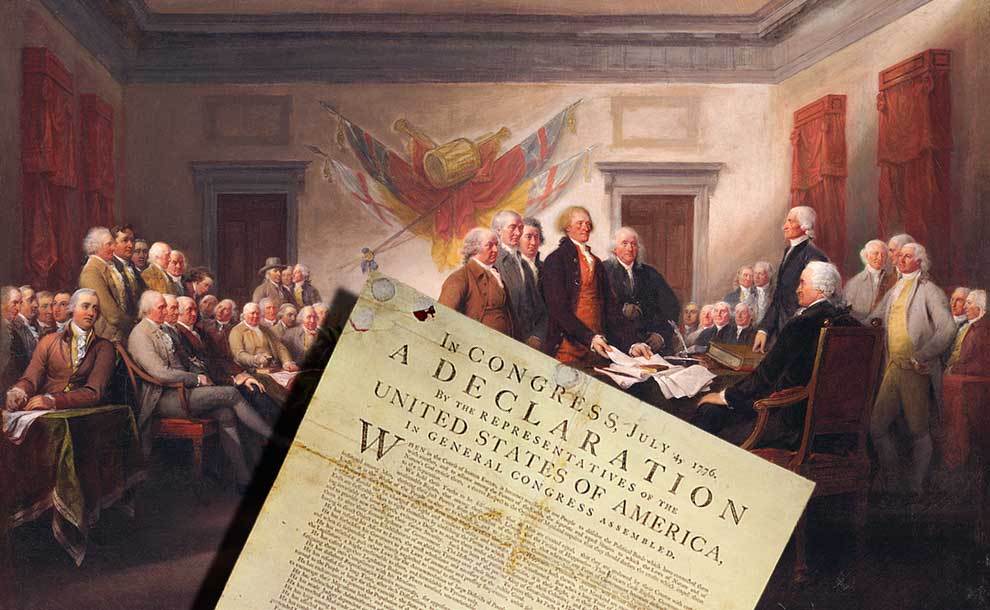
Today we conclude the Pennsylvania signers as well as third part of the B. Franklin, Printer and George Whitefield relationship that charted a path that had a lasting effect on America.
Out of all of the sources the more enlightening on this subject has been the book, The Faith and Vision of Benjamin Franklin by Eddie L. Hyatt. I downloaded an inexpensive digital copy from Amazon to reference. The book is concisely written with many well known, legitimate sources. Below there is also a list of some of the less mainline sources other than Wiki, Descendants, historical societies, etc.; that provided bits of interesting information to add to this.
https://www.nps.gov/articles/000/constitutionalconvention-september17.htm
https://www.learnreligions.com/christian-quotes-of-the-founding-fathers-700789
https://www.archives.gov/founding-docs/signers-factsheet
https://believersweb.org/george-whitefield-1714-1770-english-evangelist
B’s Vision For The People
Besides sponsoring regular events at Penn for Whitefield to use the facilities and facilitating other venues for appearances, B had a vision of what life should be like in the colonies.
It all started formulating in his mind due to the following. From B’s autobiography;
“In 1739 there arrived among us from Ireland the Reverend Mr. Whitfield who made himself remarkable there as an itinerant preacher. He was at first permitted to preach in some of our churches, but the clergy, taking a dislike to him, soon refused him their pulpits, and he was obliged to preach in the fields. The multitudes of all sects and denominations that attended his sermons were enormous, and it was a matter of speculation to me, who was one of the number, to observe the extraordinary influence of his oratory on his hearers. It was wonderful to see the change soon made in the manners of our inhabitants. From being thoughtless or indifferent about religion, it seemed as if all the world were growing religious so that one could not walk through the town in an evening without hearing psalms sung in different families of every street.”
The quote below is from Eddie Hyatt out of his book: The Faith & Vision of Benjamin Franklin: How the Skeptical Printer of Philadelphia Returned to His Puritan Roots & the Puritan Vision of a Christian America. Kindle Edition;
Whitefield emphasized that church membership, good works, family pedigree, and position in life were of no value in making one acceptable to God. He pointed out that these were “faulty foundations” upon which many had put their trust. What was necessary, Whitefield preached, was a new birth through faith in Jesus Christ. Although accounts of his meetings often describe the multitudes as standing and listening in rapt silence, accounts also reveal intense emotional responses experienced at times to his preaching, as well as spiritual manifestations, such as weeping, falling and crying aloud to God. On one occasion, after preaching to a huge throng gathered outdoors, Whitfield surveyed the crowd and noted the amazing response.
That statement echoes the words of Jesus Christ in various scriptures. However, just as it did with the Pharisees and Sadducees in the times of Christ, the religious authorities became angry and rejected attempts for Whitefield to preach in “their” churches. That did not deter him as the great outdoors awaited. More from Hyatt’s book;
On one occasion, after preaching to a huge throng gathered outdoors, Whitefield surveyed the crowd and noted the amazing response.
“Look where I would, most were drowned in tears. Some were struck pale as death, others wringing their hands, others lying on the ground, others sinking into the arms of their friends and most lifting up their eyes to heaven and crying out to God.“
That right there would be what we hillbillies call sending the Holy Ghost on down…
B was eight years older than Whitefield, but they hit it off as good buddies. George would stay at B’s home when visiting Philadelphia over the next 31 years until George died. He counted on B to assist him with printing his sermons and devotionals along with business matters. He asked advice about the orphanage he wanted to build in Georgia. B would not hear of it, he wanted it built in Philadelphia. Whitefield would not relent and kept preaching to raise money for the purpose. So B said he would not get any money from him.
B told the story that one night his curiosity got the better of him and he slipped in the back of an outdoor event and heard George’s pitch for donations for the planned orphanage. He said he resolved to give him nothing. As Whitefield preached on he wilted under the pressure. Per Hyatt’s book B stated;
“I had in my pocket a handful of copper money, three or four silver dollars, and five pistoles in gold. As he proceeded I began to soften, and concluded to give the copper. Another stroke of his oratory made me ashamed of that, and determined me to give the silver; and he finished so admirably that I emptied my pocket wholly into the collector’s dish, gold and all.”
😂
B got Holy Ghosted.
Ohio Vision
B had a vision for what life in America could be that included Christianity at its core. He proposed to Whitefield that they partner to establish a new colony in Ohio that would adhere to Christian values and be an example for all of the colonies by honoring God throughout its culture. From his letter to Whitefield,
“I imagine we could do it effectually and without putting the nation at too much expense. What a glorious thing it would be, to settle in that fine country a large strong body of religious and industrious people! What a security to the other colonies; and advantage to Britain, by increasing her people, territory, strength and commerce. Might it not greatly facilitate the introduction of pure religion among the heathen, if we could, by such a colony, show them a better sample of Christians than they commonly see in our Indian traders, the most vicious and abandoned wretches of our nation?“
Whitefield had obviously moved B back to his Puritan roots, which would mirror what most of the early settlers in the colonies would have desired. Franklin demonstrated repeatedly that he saw no conflict between faith and public affairs, in fact he stated throughout his life that he viewed it important and preferable for them to operate hand in glove. With the proposed venture with Whitefield, B wanted to finish his life on this final high note, that it would bring him pleasure and he felt certain God would bless it.
It did not happen as desired by B due to distances and complications in the lives of both men before Whitefield passed away in 1770. It also seems God had bigger plans for B over the ensuing two plus decades after George’s death. It was a period when the lessons learned and the inspiration gained from his friendship with Whitefield built a base of understanding to reference that moved him to do extraordinary things on behalf of God and our nation that changed world history forever.
So maybe B’s vision did happen; just on a much grander, God determined scale that began in His timing.
😉
Let’s move on to our last Pennsylvania signer.
John Morton
John Morton was born in 1724 or 1725 in Ridley County, PA of John Sr. and wife Mary (Archer). Both sides of his family originated from the Sweden/Finland area. His father died the year he was born. His mother later married John Sketchley, who was a strong influence on young John’s life as a child. He educated and raised him to be intelligent and moral as he was very involved in the Episcopal church. As an adult he oversaw books and maps as well as surveyed. He married Ann Justis of Chester County and through the years they had three sons and five daughters.
In 1756 Morton was elected as a representative of the Pennsylvania Assembly. After the local sheriff died a decade later, he served in the role for a couple of years before being reelected as a representative. Through the years there he served as a justice of the peace, sheriff, judge in several courts, and associate justice of the Pennsylvania Supreme Court. He was well noted for his common sense in all of his roles.
He was voted to represent the state in the First and Second Continental Congresses. It was his final vote that decided in favor of independence for Pennsylvania and he proudly signed the Declaration. He remained active in the Congress in 1776 and 1777 and later worked with an assigned committee on the formation of the Articles of Confederation. Throughout all of it he remained faithful in attendance and with his actions as a member of St. Paul’s Episcopal Church where he is buried. He passed away after falling ill on his farm in April of 1777. Several months later his widow, Ann, fled the area after the British won the Battle of Brandywine. In her haste to reach safety in New Jersey, many of Morgan’s important papers, documents and artifacts were left behind. The British burned them all and destroyed their home, so records were lost that could have added to his story.
John Morton was the first signer of the Declaration of Independence to pass away. His contributions to the independence movement are noteworthy as his vote in support decided the position of one the most influential states in the future republic. He worked tirelessly to bring about organization, common sense, and fairness to the process of governance. He will always be noted for promoting the theme of natural law into our founding documents. We give thanks today for this great American patriot.
Please remember Wolf’s rules for our community. In general that means to be respectful to each other and to pull no shenanigans that your mom might find offensive or otherwise cause jail time. That said, free speech is honored here.
Be blessed and go make something good happen!