This Rejoice & Praise God Sunday Open Thread, with full respect to those who worship God on the Sabbath, is a place to reaffirm our worship of our Creator, our Father, our King Eternal.
It’s also a place to read, post, and discuss news that is worth knowing and sharing. Please post links to any news stories that you use as sources or quote from.
In the QTree, we’re a friendly and civil lot. We encourage free speech and the open exchange and civil discussion of different ideas. Topics aren’t constrained, and sound logic is highly encouraged, all built on a solid foundation of truth and established facts.
We have a policy of mutual respect, shown by civility. Civility encourages discussions, promotes objectivity and rational thought in discourse, and camaraderie in the participants – characteristics we strive toward in our Q Tree community.
Please show respect and consideration for our fellow QTreepers. Before hitting the “post” button, please proofread your post and make sure your opinion addresses the issue only, and does not confront or denigrate the poster. Keep to the topic – avoid “you” and “your”. Here in The Q Tree, personal attacks, name-calling, ridicule, insults, baiting, and other conduct for which a penalty flag would be thrown are VERBOTEN.
In The Q Tree, we’re compatriots, sitting around the campfire, roasting hot dogs, making s’mores, and discussing, agreeing, and disagreeing about whatever interests us. This board will remain a home for those who seek respectful conversations.
Please also consider the Guidelines for posting and discussion printed here:
https://www.theqtree.com/2019/01/01/dear-maga-open-topic-20190101/
On this day and every day –
God is in Control
. . . and His Grace is Sufficient, so . . .
Keep Looking Up

Hopefully, every Sunday, we can find something here that will build us up a little . . . give us a smile . . . and add some joy or peace, very much needed in all our lives.
“This day is holy to the Lord your God;
do not mourn nor weep.” . . .
“Go your way, eat the fat, drink the sweet,
and send portions to those for whom nothing is prepared;
for this day is holy to our Lord.
Do not sorrow,
for the joy of the Lord is your strength.”


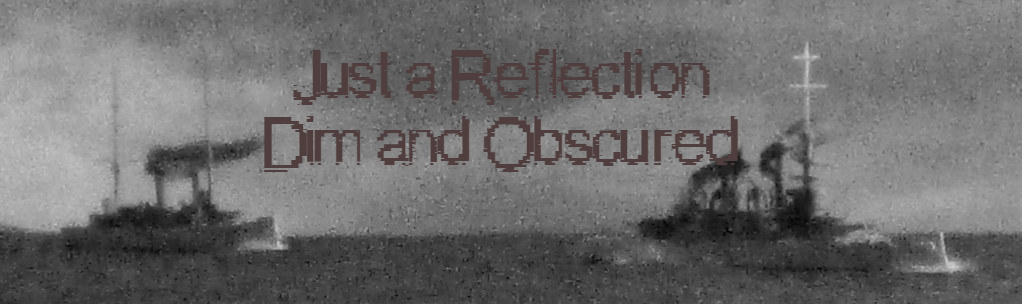
Just a Reflection . . . Dim and Obscured
In 1 Corinthians 13:8–13, the apostle Paul compares the Christian virtue of love to other highly prized spiritual gifts and finds them all lacking. Love is uniquely superior (verse 8). As Christians, we share in giving and receiving the grace of God’s love (see 1 John 4:8, 16). This earthly experience of God’s divine love gives us a taste of His perfect grace and glory. Through the love of Christ poured into our hearts (see Ephesians 3:17; Romans 5:5), we participate to a limited degree in the full perfection we will know and enjoy when we stand in God’s presence in eternity: “For now we see in a mirror dimly, but then face to face. Now I know in part; then I shall know fully, even as I have been fully known” (1 Corinthians 13:12, ESV).
Paul explains that spiritual gifts like prophecy, tongues, and knowledge are temporary and partial. Eventually, they “will become useless. But love will last forever! Now our knowledge is partial and incomplete, and even the gift of prophecy reveals only part of the whole picture! But when the time of perfection comes, these partial things will become useless” (1 Corinthians 13:8–10, NLT). In our current state of existence, the gifts of the Holy Spirit are valuable to us and to the church, but their worth will run out when we are face to face with the Lord in heaven. These gifts only give us an obscured, unfinished picture of our spiritual reality, and they will ultimately pass away.
Paul uses two illustrations to explain this truth. First, he employs the example of a child maturing into adulthood: “When I was a child, I talked like a child, I thought like a child, I reasoned like a child. When I became a man, I put the ways of childhood behind me” (1 Corinthians 13:11). Right now, we are like children playing with plastic toys that will wear out and become unusable. One day we will trade them in for the enduring, grown-up, perfection of eternity. Second, Paul contrasts looking at someone in a dull, dimly lit mirror with meeting that person face to face. In the Greco-Roman world, mirrors were fashioned out of polished metal discs that reflected a blurred, imperfect image, nothing like seeing someone up close, in vivid, eye-to-eye clarity.
Thus, now we see in a mirror dimly is Paul’s figure of speech for “now we have imperfect knowledge and understanding.” The New Living Translation renders the imagery like so: “Now we see things imperfectly, like puzzling reflections in a mirror, but then we will see everything with perfect clarity. All that I know now is partial and incomplete, but then I will know everything completely, just as God now knows me completely” (1 Corinthians 13:12, NLT). Flawless understanding and unrestricted knowledge of matters pertaining to God and His kingdom will only be achieved when we meet Jesus Christ in person.
The apostle John affirms that our knowledge of Jesus is partial now but will become clear when we see Him face to face: “Dear friends, we are already God’s children, but he has not yet shown us what we will be like when Christ appears. But we do know that we will be like him, for we will see him as he really is” (1 John 3:2, NLT).
Within the Scriptures, we have the complete revelation of God, but our understanding of it remains limited (see 1 Corinthians 8:1–3). As we grow in the faith, we undergo a process of spiritual maturation as individual believers (2 Peter 3:18) and together as the body of Christ (Ephesians 4:11–16). Paul calls this progressive development toward Christian maturity “the upward call of God in Christ Jesus” (Philippians 3:14, ESV). It is our heavenward journey of intimate fellowship with Jesus Christ.
Along the way, we must stay laser-focused on Jesus, who is the trailblazing forerunner of our quest (Hebrews 12:1–2). He demonstrates the way through His perfect obedience to the Father (John 4:34; 5:30; Luke 22:42). As the Author and Perfecter of our faith, He not only inspires us, but Christ also empowers us to grow toward our heavenly stature. He starts the good work in us and “will carry it on to completion until the day of Christ Jesus” (Philippians 1:6).
In the meantime, until the Lord returns or we reach heaven, we have limited understanding and knowledge—we see in a mirror dimly. But one day our onward and upward growth in ever-increasing degrees of Christian maturity will culminate in heavenly perfection as “we bear the image of the heavenly man” (1 Corinthians 15:49).
https://www.gotquestions.org/see-in-a-mirror-dimly.html