
Site rules stolen from our good friend PAVACA
There are Important Notifications from our host, Wolf Moon; the Rules of our late, good Wheatie; and, certain caveats from Yours Truly, of which readers should be aware. They are linked here. Note: Yours Truly has checked today’s post for any AI-generated content. To the best of her knowledge and belief, there is none. If readers wish to post any AI-generated content in the discussion thread for today’s post, they must cite their source. Thank you.
Do not forget to LABEL AI articles video and such.
AN INTERESTING VIDEO
Scientists Tested the Dead Sea Scrolls’ DNA — The Animal Skins Revealed Who Really [Might Have] Wrote Them (16 minutes)
The scrolls are not from one area. Most are goat skin and likely local. However some are sheepskin and the area would not support the grass needed to raise sheep. Most important, 2 fragments studied are cow skin indicating a third area.
The Hypothesis is these were scrolls hastily hidden [as indicated by the rough handling] because of Roman retaliation against the Jewish Revolt in 66 of the Common Era. Some (the sheepskin) may have been rescued from the burning of the Second Temple.
>>>>>>>>>>>>>>>>>>>>>>>>>
As most of you know, I worked as a chemist. However I really like archaeology and even took courses in the subject. But as the Egyptologist Barbara Mertz, who wrote mysteries under the name Elizabeth Peters, and David Ian Howe, who now is a podcaster, found out, it is really tough to get a job in that field. So I settled for chemistry because I wanted to eat.
I was watching this video and realized it had a more important lesson to teach than whether or not Monte Verde is a Pre-Clovis site. It teaches a lesson about REAL Science and TRUE scientists.
Dr. Todd Surovell, professor of anthropology at the University of Wyoming, who is being interviewed by his former student David Howe, is a sterling example of what a REAL SCIENTIST IS! He is unlike Mikey Mann of Hockey Stick fame or Ancel Keys and his landmark Seven Countries Study on cholesterol, both of whom came up with an hypothesis and then cherry-picked the data that supported it. Since both conclusions were useful to the Cabal, any attempt to refute them was shot down.
On top of that, this is just such a refreshing interview. No theatrics, just a discussion between two experts complete with good illustrations and photographs.
Monte Verde is no longer a Pre-Clovis site (50 minutes)
For decades, Monte Verde in southern Chile has been one of the most famous archaeological sites in the Americas. The site was widely accepted as 14,500 years old, making it one of the strongest pieces of evidence for human presence in the Americas before Clovis. But what if that interpretation was wrong? In this episode, I sit down with Dr. Todd Surovell, professor of anthropology at the University of Wyoming, to discuss new research that re-examines Monte Verde using modern geoarchaeological methods. The results suggest that the famous site may actually be much younger than previously believed, dating to the Holocene rather than the Ice Age. If true, this would mean that Monte Verde is not evidence for pre-Clovis humans in South America, and it could force archaeologists to reconsider one of the most influential discoveries in American archaeology.
Actual Paper:
A mid-Holocene age for Monte Verde challenges the timeline of human colonization of South America
A new tool I was not aware of before. It was developed in 1984 by David J. Huntley and colleagues.
optically stimulated luminescence
Optically stimulated luminescence (OSL) is a scientific technique used to determine the last time mineral grains were exposed to light, providing valuable dating information for geological and archaeological studies. By measuring the amount of luminescence emitted from minerals such as quartz or feldspar when stimulated with light, scientists can estimate the time elapsed since the grains were last exposed to sunlight or heat. OSL dating is an effective method for reconstructing the chronology of sedimentary deposits, making it a crucial tool for understanding Earth’s historical events.
A second tool used was Radiocarbon dating on organic material. And the clincher was a well known volcanic ash layer, “the Lepué Tephra, a regional stratigraphic marker dated to 11,000 years B.P.”
A rebuttal
Monte Verde, one of the earliest Indigenous sites in South America, is much younger than thought, study claims. But others call it ‘egregiously poor geological work.’ | Live Science
In a study published Thursday (March 19) in the journal Science, an international group of researchers led by Todd Surovell, an archaeologist at the University of Wyoming, reevaluated the age and formation of MV-II. They concluded that Monte Verde was most likely occupied in the Middle Holocene, around 4,200 to 8,200 years ago…
Dr. Todd Surovell, and Claudio Latorre, a paleoecologist at the Pontifical Catholic University of Chile, visited Monte Verde in 2023….
Monte Verde is key to the Kelp Highway Hypothesis
“…proposes that the first Americans reached the New World by following the coastline along Beringia and into the American continents, using edible seaweeds as a food resource…
Revising Clovis First
For the better part of a century, the main theory of human population of the Americas was that Clovis big game hunters came into North America at the end of the Pleistocene along an ice-free corridor between ice sheets in Canada, about 10,000 years ago.”
The alternate, earlier Clovis hypothesis: Is the Ice-Free Corridor an Early Pathway into Americas?
>>>>>>>>>>>>>>>>>>>>>>>>>
PARTIAL TRANSCRIPT
10 minutes — David Howe:
I don’t really see any good evidence for pre-Clovis in the Americas except in eastern Bruna in Alaska where the evidence is very clear there are sites older than Clovis something that I’ve mentioned often on this channel. Too when the subject of pre -Clovis is brought up, I often find pre-Clovis sites objectively to be very ephemeral and scant.
You can look at a Paleolithic site in France, a Paleolithic site in Siberia, a Paleolithic site in the Levant and see very stratified and defined tool assemblages, very defined technologies and very distinct cultures. And with that, following the Paleolithic tradition of sites in the old world, Clovis sites in North America often look very similar to that. They’re stratified. There’s defined tool cultures and it is a distinct culture that you can see that is kind of ubiquitous across North America and parts of South America. So with all that laid out, I asked Todd here, do you agree that pre-Clovis seems a lot more ephemeral usually and Clovis seems to be more sound?
Todd:
I would say pre-Clovis, the record of Pre-Clovis in the continental United States is very different than the record of Clovis and the record of everything that follows Clovis. So in many ways, we could just start with abundance. Yeah, there’s lots of Clovis sites. There’s thousands of Clovis projectile points. Tons of buried excavated Clovis sites. There are dozens of them. And they date in a very, very consistent time period. They’re found across the continent. And they look like normal archaeological sites produced by hunter gatherers, meaning they have chip stone, a lot of flakes, they have hearth features, they’re stratographically discreet, meaning identified components. We have human remains from those time periods. You have things like bison bone beds in the Clovis time period and from there on after.
Pre-Clovis is different. Every pre-Clovis site is a little different. Some of them have artifacts that look a lot like they could have been produced by nature and only those kinds of artifacts or cut marks on bone or other kind of bone modifications that possibly could have been produced by nature. Other ones look like maybe artifacts have moved down from younger deposits into older sediments giving the appearance of the sites being older than they actually are. In some of them there’s no artifacts, but other things like footprints at White Sands or at Paisley Caves in Oregon, there’s very few artifacts. There’s a lot of artifacts above the pre-Clovis in the Clovis. In the pre-Clovis the arguments are based on copillates, fossil feces that are argued to be human, cut marks on bone, but not the typical things we get in in hunter-gatherer archaeological sites. So yeah, it’s different. Pre-Clovis looks different.
[The argument by the pro Pre-clovis scientists is that the sites were along the coast and therefore under water. – GC]
19 minutes – Just before Covid, Todd became ‘obsessed’ with the ‘seaweed’ at Monte Verde. If it was there then it was a strong indication that humans were too. He wondered if the ‘seaweed’ was correctly identifed and came up with a chemical test to prove the specimens actually were seaweed. He reached out to Chilean Claudio Latorre to help with this project. And then they reached out to Tom Dillehay, to ask him if he wanted to collaborate on it. And Tom’s answer was that’s impossible because the seaweed burned up in a fire. It’s long gone. Nice idea, but it’s just not possible. “That was a bummer but Claudio and I were undeterred.” [HOW CONVENIENT -GC]
34:10 Howe:
… those two red arrows should technically sit below that Lepué Tephra layer, but it doesn’t. The [volcanic 11,000-year-old Lepué ] tephra layer is found above it at Monte Verde. So that means that all that brown stuff there in the middle with that little piece of water means that sometime between 8,000 and 4,000 years ago, that stuff was washed down the creek and put into that spot where Dillehay, originally excavated Monte Verde. So therefore, Monte Verde is not 14,500 years old. It is only 11,000 years old or younger. So, as I mentioned with the carbon dating stuff earlier, the wood was carbon dated to be 6,000 years older than the last time that soil was exposed to sunlight. It’s all muddled from down the creek and put there. Likewise with the gomphotheres and the extinct camels. Those are ice age animals. They were washed from up creek down and deposited onto this site in the cut bank there where Monte Verde was found.
So therefore, it’s just a bunch of stuff washed from up the creek down onto where Monte Verde was. So that means at the time when Tom Dillehay, [an archaeologist at Vanderbilt University — GC] excavated the site, it did look ice age in nature. It had ice age animals. It had ice age deposits and things like that. But we know now with the volcanic ash dating that it can’t be any older than 11,000 years old. And that means that those [arrow & spear – GC] points I talked about too, that Dillehay claims to be Paleo-indian or ice age in typology, are not. They’re actually, as they do look, very similar to Holocene and other archaic era points in the area. [They] were washed down the creek and put on top at the site here. Their mixed context with those ice age animals. So, it would make sense that you would excavate it at the time and see it as an ice age site, but it’s not.
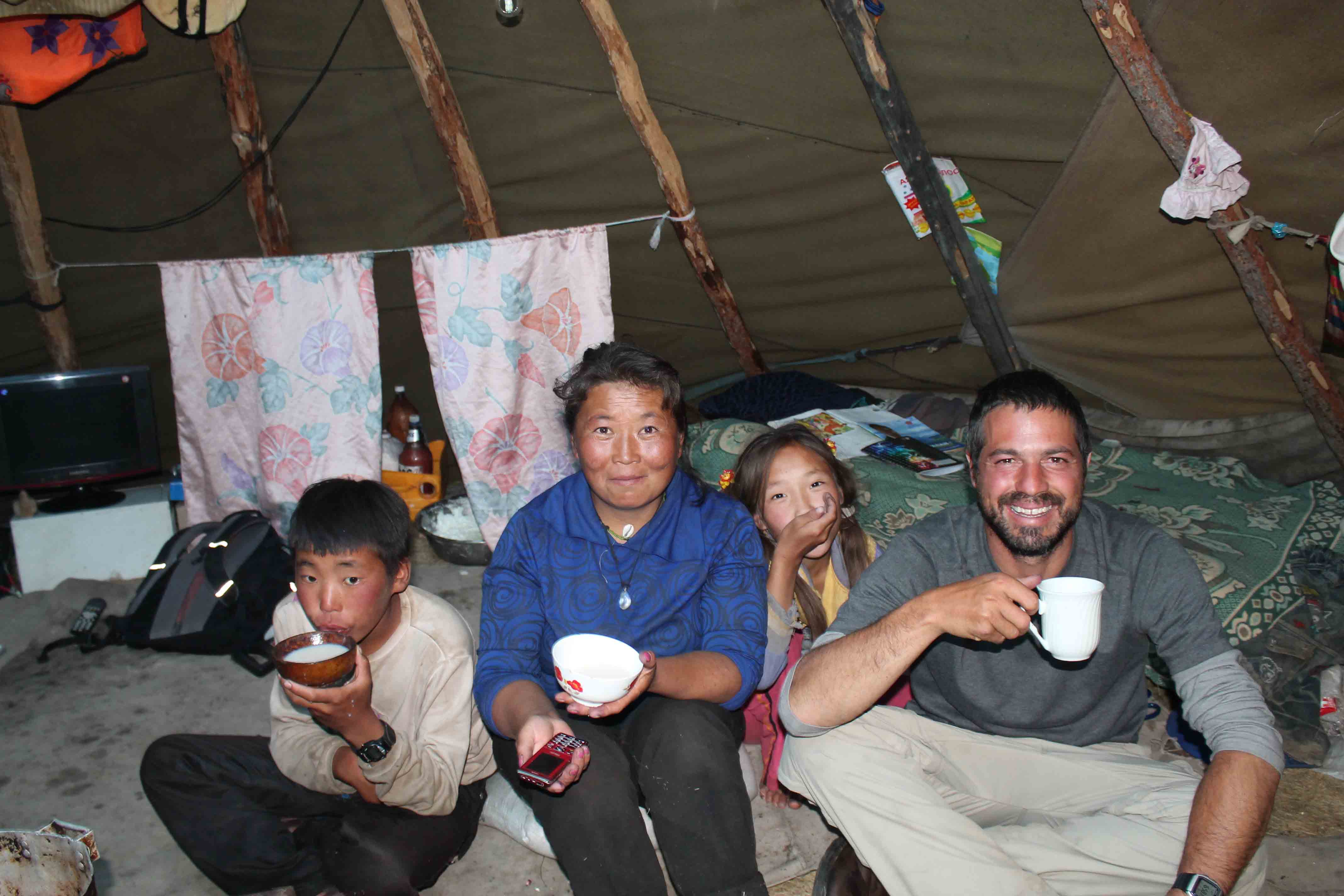
Doing fieldwork in Mongolia (Photo: Todd Surovell)
My work in Mongolia (Dukha Ethnoarchaeological Project) stems from work at the Barger Gulch site, a Folsom site in Middle Park, Colorado – this site was spectacular. The site was shallowly buried so we were able to open up big areas to look at space. This site really grabbed my attention. Because it was shallowly buried and we saw big clusters (of artifacts) over a large area, we really saw the opportunity to look at questions that hadn’t been explored a lot in Paleoindian archaeology… What I found was that people have developed models of how houses were used but they are very generalized. That further inspired me in this really simple idea of wanting to go and see people living a lifestyle similar to this and map them… LINK
[So Todd was very familiar with Folsom points among others. — GC]
Howe:
As well, we mentioned that twine and the stuff that was tied around the tent stakes that if it is twine that was tied around the tent stakes, sure that makes sense if it’s a Holocene era site. If it’s seaweed from a medicine bundle, it was seaweed chewed by people after the ice age, not during. And that twine too. If you see all the wood and the planks and stuff and the twine and the reeds that are up the creek of the site, a lot of that is just washed down the creek and wrapped around that possible tent stake and then fossilized over years becoming and looking like something like a tent stake. It’s either stuff washing down the creek wrapping around that wood or it’s stuff that maybe it was a tent stake and even if it was it doesn’t date to the ice age. It is Holocene in era. What this means here too, and just to reiterate, Monte Verde is no longer solid evidence for people in South America 14,500 years ago. Instead, it does though fit neatly into the middle Holocene era archaeology of Chile and the surrounding areas. It makes sense for that.
As such, the artifacts that I talked about do compare well to other Holocene era sites. So, all that said, this forces a re-evaluation of everything we know about the peopling of the Americas. Yes, other pre-Clovis sites in North America and some in South America might still have some validity, but sites like this, like Monte Verde — this is why intense scrutiny and skepticism when they come out is important. Because things like this can be found in Geo-archaeology. And other different types of sampling can be done to understand that they’re not exactly what they seem, especially when we only see clickbait titles in the news.
Whether or not this reopens the Clovis-first model or makes that the dominant model again, I doubt people will believe that. But it does open the doors to that being a possible claim again. So the bottom line here though, and I wrote this down, Monte Verde artifacts don’t prove Ice Age settlement. They’re from a much younger context. The Ice-free Corridor hypothesis was abandoned because of Monte Verde specifically. So the idea that people were coming across the Bering Land Bridge into the Americas was defunct and a lot of people say that it’s not true anymore because of Monte Verde specifically. However, Monte Verde is not an ice age site at all. Forget it exists. It’s just a later Holocene era site. That stuff might still be true.
So, with everything I just laid out with the methods and the results of this paper, let me just ask Todd, what was your goal with this paper? What were you trying to accomplish?
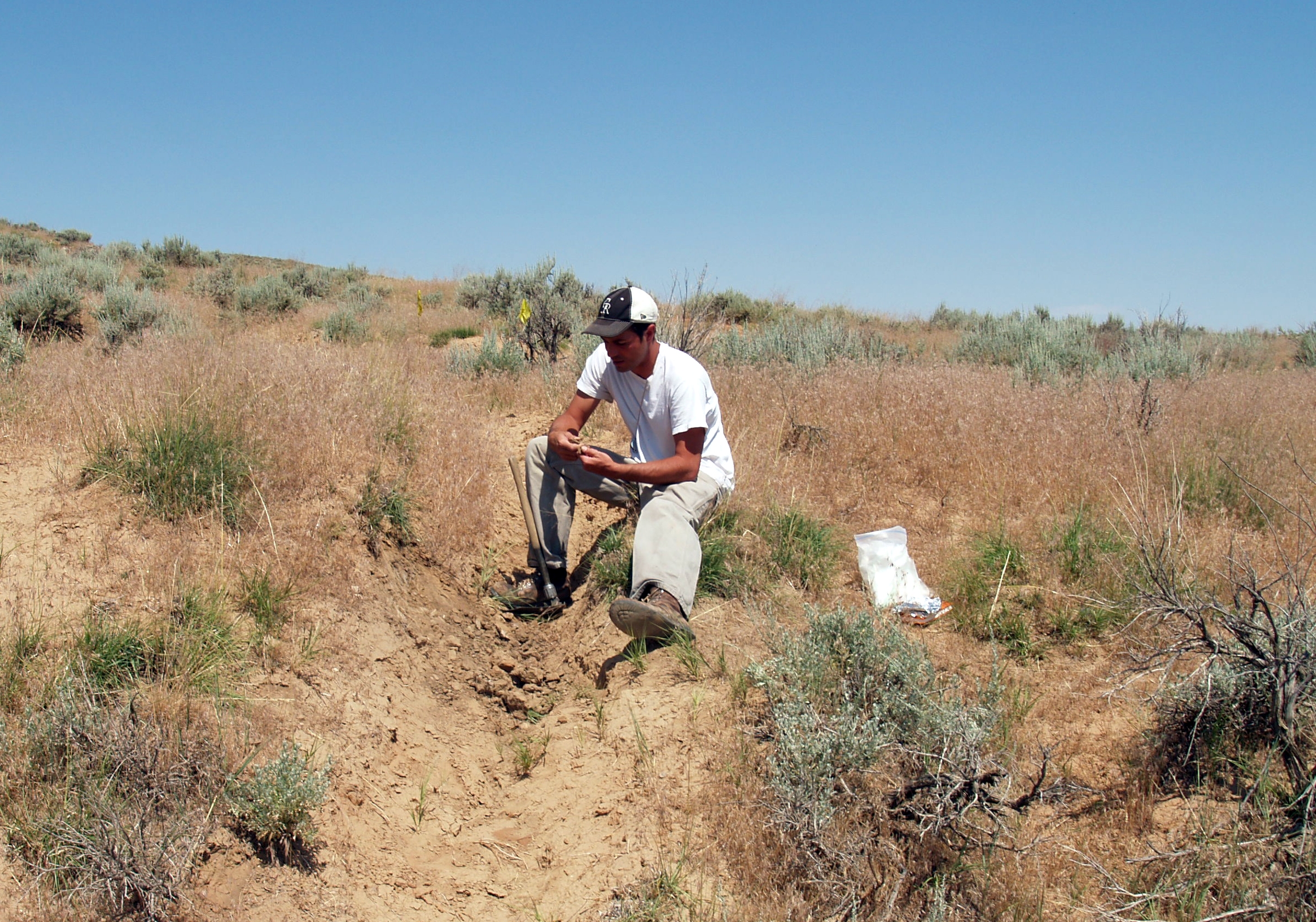
Dr. Todd Surovell at the Barnes Site, Hot Springs County, Wyoming (Photo: Todd Surovell)
The University of Alberta Association of Graduate Anthropology Students will be hosting the 24th Annual Richard Frucht Memorial Lecture Seriesfrom March 2-4, 2016. The distinguished speaker for this year’s conference is Dr. Todd Surovell of the University of Wyoming. I had a chance to interview Dr. Surovell about his research ahead of his upcoming visit to Alberta and he offered some fascinating insights into North American colonization, the extinction of North American megafauna, and his observations of household space use by Mongolian reindeer herders as a means to inform archaeological interpretations…
38:05 — Todd:
What’s my goal? Okay, Let me answer that [in] a couple ways. Yeah. Look, science is the pursuit of truth, right? I just want to know when people arrive in the Americas. It’s kind of a dumb simple question but one that’s vexed us for a long time. So [on] the one hand I want to know and knowing the age of this site helps us to answer that question.
I think there are a couple lessons here.
One, sometimes science gets it wrong but science is a really remarkable self-corrective process. In the long run in my opinion it always gets it right. And in what this study really shows is the value of independent evaluation or independent replication.
You know that in laboratory science that’s normal. You do some experiment on a bench in your lab. You write up the methods. Anybody else with a lab bench and that equipment and those materials can do the same experiment and replicate (or not) your results.
In archaeology, we are really bad at this. We’re really bad at allowing this. There’s a culture of ownership of sites, of ownership of collections that tends to prevent this kind of work, right? And again, I’m not even saying we’re right. All I’m saying is when we did try to do an independent replication, we failed and we came up with another story. Our work also should be subject to the same process. Other people should go in and do it. But in general, when you’re making extreme claims that are paradigm changing, those especially should be subject to independent verification. That is not what happened in 1997. Those people were not allowed to collect samples anywhere they want. They were not allowed to do excavations. They were not given unfettered access to the collections.
That’s the case at many pre-Clovis sites. And I really think we need to change the culture of archaeology. And this [Monte Verde — GC] is an excellent example of this. Maybe this is not the right parallel to make, but I’m sure you’re familiar with the case of Piltdown Man, right? It was supposed to change the story of human evolution, and was supposed to be the missing link between apes and humans. Turns out the whole thing was a forgery. You know why it took something like 40 years to figure that out? Because the scientists at the Natural History Museum in London who controlled the specimen would not allow access to it. And it wasn’t until he [Probably Sir Arthur Smith Woodward — GC] passed away that scientists got access to it and very quickly it was discovered the entire thing was a fake.
I’m not saying Monte Verde is a fake, but what I am saying is that when you put sites and collections under lock and key and prevent independent evaluation, it slows the progress of science, you know? So to me, like that’s the most important lesson out of this. Yeah, Monte Verde may not be as revolutionary as we thought it was, but it really should be a lesson to our discipline. It’s time to change how we do things.

Excavations at the La Prele Mammoth site, Converse County, Wyoming (Photo: Todd Surovell) From: Paleoindian Archaeology, Pleistocene Extinctions and Mongolian Use of Space: An Interview with Dr. Todd Surovell
41:18 — Howe:
It seems to me like a lot of pre-Clovis sites and things like that, even if there’s a piece of evidence, say its debitage, a bone, or something ephemeral, it always gets eaten up and swallowed by mainstream media. And I’ve seen like Sain was on ESPN news. I was saying that was really like a banner at the bottom unless I’m in a picture of it. But like Sain for example or Topper comes to CNN and then it [has] archaeologists baffled. Monte Verde was a site like this. So for people that are going to watch this video of me interviewing you here. Coming to be like well that can’t be true like Monte Verde is the site that makes like what? Do you see where I’m going with that?
41:40 –Todd:
I do. Yeah.
Look I told you in 1994 Tom Dillehay gave an incredibly compelling talk to me about Monte Verde that inspired my entire career. 30 years later, I decided he was wrong. Whether you think I’m right or wrong, I encourage you to figure out a way to evaluate what I’m saying. Right? You know, become an archaeologist. You can look at the data we’ve published. You can look at that and you can evaluate it yourself. You can look at all the data that has been published on Monte Verde, there’s a huge amount, and become an archaeologist. Get a permit, collect your own samples. I encourage that. I have no ownership of this, nor do I want any. Please test everything we’ve done. That’s the simple answer. Okay.
But what I want to say when you mentioned like Sain showing up on ESPN, the ESPN crawl or whatever about how all these sites are splashed across the pages of the New York Times and there, you know, they make the nightly news and things like that. In my experience, when scientific claims reach that level of publicity, they’re usually Bull Schiff. I’m not saying they’re always. Certainly, groundbreaking discoveries do happen. But let me put it to you this way. In terms of like thinking about finding the oldest site in the Americas, we’ve been looking now for a long damn time. You know, if we talk about since Folsom, nearly 100 years, but we were looking long before that. So, let’s say we’ve been looking for the oldest site for 150 years. In that process, we’ve investigated, I would say somewhere between 50 and 100 thousand sites.
It seems like with a sample of that size, you ought to be pretty close to the damn answer, right? And that you really shouldn’t expect something to come along that’s just going to blow everything out of the water that’s unlike anything we’ve ever seen. It’s just incredibly unlikely at this point. It was likely in 1928 and it sure happened then, but it’s really not likely anymore. I’m not saying it’s impossible, but it’s really, really unlikely. So, when you see these really extreme claims, your first position should be skepticism. I’m not saying disbelief. I’m saying skepticism.
44:00 – Howe:
Sure.
If you’re familiar with my channel, you know I don’t often talk about this. It’s not really in my wheelhouse. It’s not really something I like talking about, but it’s just something that I think is important to mention here. Monte Verde is something I see discussed all the time among pseudo-archchaeologists. But not just pseudo-archchaeologists but advocational archaeologists, alternative archaeologists, alternative historians, people on the internet, people in my comment sections like you will point out that Monte Verde is the smoking gun that establishes Clovis-first as gone or negates the Bering Land Bridge theory and all that. So, I asked Todd here as an establishment Clovis-first, Clovis mafia archaeologist, why should these people listen to you and why is this research important for them to take into their understanding even if they don’t agree with it? Anything else you want to say to that?
Todd:
I guess to the Hancock people.
I’m not super educated about the Hancock stuff, but I saw the part I guess in the discussion with Flint Dibble where he says there’s still people questioning whether Clovis is first and that’s been settled for a long time. [Response to Joe Rogan Experience #2136 -Graham Hancock & Flint Dibble From Powerful JRE in the comments –GC]
Look, if you read the popular accounts, the Wikipedia pages, the archaeology textbooks, seems like it’s been settled for a long time. I will tell you being a professional working in this discipline, this is my specialty. And there are a lot of us who have long felt it hasn’t been settled. Talking to the people with true expertise people who really dig sites of this age. People who go and look for them, this has not [been] settled. It isn’t, and I can show you example after example from the scientific literature, legit stuff published before Monte Verde and since Monte Verde making arguments that Clovis-first is still very much alive and well. And by the way, for really good reason because the vast majority of evidence supports it. There’s just these weird little anomalous things that don’t.
I don’t know what to say about Hancock. I hope criticizing me becomes a standard part of his discussion now. I don’t mind that at all.
46:20 – Howe
So, with everything we just laid out, this will obviously cause a firestorm in the news and at least if not the news, the archaeological community and might send shock waves to be honest. So with all that said, I asked Todd, can you speak to that? And why are you in the news? And why should people listen to you?
46:30 — Todd
A major field of science got it wrong for a quarter century. Not only got it wrong, but was pretty convinced they had it right. This was almost portrayed to be unquestionable fact of science and we got it wrong. So, I think have a skeptical mind. Don’t believe experts. I am one. So, I understand the irony there, but have a skeptical mind.
47:05 — Howe
With all of that said, I’ll give you my opinion based on what I’ve seen here and the stuff in these graphs and the stuff in the pictures and all the excavations and all the sampling work I saw that Todd showed me. It does seem that Monte Verde is no longer a viable pre-Clovis site. However, as Todd said, [we will] leave that up to you. That is up to you to determine if you want to replicate this again. If you want to do the sampling and the site stuff, become an archaeologist, test it out yourself, see what you think.
And hopefully, as I said with most stuff, and I say this with every huge article that comes out, and as Todd pointed out, this stuff can be clickbait, huge headline, first people’s dates pushed back stuff is often because a few weeks later or a few months later, a rebuttal will come out that says the complete opposite. But the rebuttal, of course, doesn’t get the media attention and the clicks that it deserves, because the other stuff is more sensationalized. And I get that. My whole career works off of making clickbait titles. You probably clicked on this video for that same thing. So, we’re all guilty of it. It’s just kind of how the world works.
But when you look at the science and you see the science that’s packed into this stuff, make your own decisions. And I hope that you read. I hope that you take into consideration the stuff that Todd said, take into consideration stuff that you know about the People [of] Americas already and form your own opinion like I have now.
… And if you have comments, questions, or concerns, please, please put them in the comment section. I’ll send them to Todd for him to look at or he can look them up on my YouTube channel if he wants to. If you want to contact Dr. Todd Surovell, he is a professor of anthropology at the University of Wyoming and you can find his contact information there and I’ll put it in the description.
So, with all that, thank you very much for watching. Please leave those questions and comments in there. And if you have questions about other Clovis sites or other pre-Clovis sites that you think might be possibly incorrect or false or misleading, put those in the comments and let us know. Thank you very much.
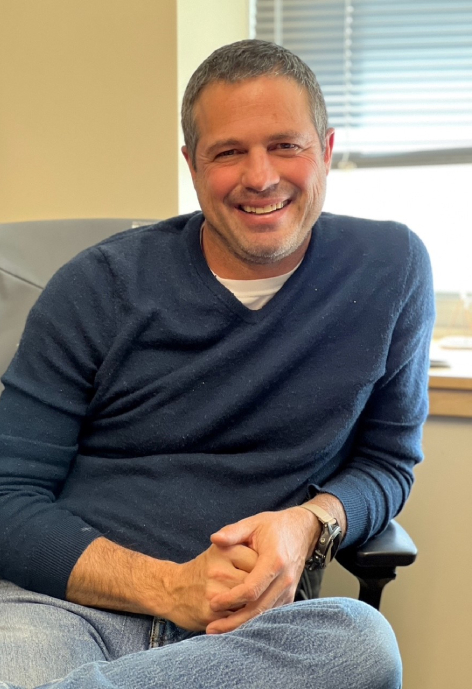
Dr. Todd Surovell, professor of anthropology at the University of Wyoming
From Youtube – Time codes:
0:00 Intro Credits
1:13 Why archaeology is about to change
3:41 INTRO
3:45 Clovis-first vs coastal migration theories
5:45 BACKGROUND
5:48 Dr. Todd Surovell and Monte Verde
7:37 Todd’s Interest in the Site
9:12 Paleoindian arch and Clovis First
10:26 Clovis vs. Pre-clovis debate
12:54 Why Monte Verde caused a scientific revolution
15:35 Special Investigation in the 90s
16:33 Why MV was groundbreaking
17:41 The importance of the Folsom and Clovis discoveries
18:49 How the new research began / Setup
21:00 The key hypothesis: redeposited materials
26:28 Monte Verde Site Recap
28:53 METHODS AND MATERIALS
29:39 Radiocarbon, OSL, and Volcanic ash dating work
30:50 The evidence suggesting Monte Verde is younger
31:57 RESULTS
4:06 Why MV is not Prev-Clovis
38:05 DISCUSSION
38:08 Paper goal / What this means for the peopling of the Americas
38:37 The role of skepticism and replication in science
41:11 Media hype and controversial archaeological discoveries
44:10 Clovis-first debate and alternative archaeology (Hancock)
46:23 Conclusion
46:40 Why this study will cause shockwaves in archaeology
47:15 Final thoughts


































LIKE!!!
By the way, I turned off the Like Buttons for now, while I’m working on restoring them.
BUT WAIT. I turned them back on.
Yes!!!
OK, I got likes to work again by rolling back the plugin by one version.
I have also installed a code snippet that may help guests like again. This is undertain.
Always try fresh pages to see if this stuff works. Reload any pages to test.
Thank you for all your efforts!
You’re welcome!
Hopefully this will work for a while.
I will need to inform the plugin authors of what I’ve found.
Thanks, Wolf! I had to login again, but now it works.
You’re welcome!
Perhaps the login trick will work for the guests.
Never heard of a ‘goldendoodle’ before.
Apparently it’s a designer dog mix between a Golden Retriever and a Poodle.
That one looked bigger than I expected.
https://en.wikipedia.org/wiki/Goldendoodle
I remember reading that the guy who created this cross has deep regrets. And i kind of agree.
The idea is that the coat of poodles doesn’t trigger allergies as much as other dogs.
Standard poodles have more of a guard dog personality.
Pretty much the opposite of goldens.
Which is why the cross — you want everything about the golden except the allergenic coat.
Union Pacific:
https://www.up.com/about-us/history/heritage-fleet/commemorative/4547
Just to be clear, this is full-sized rolling stock for regular railroad tracks.
Wow, so not just a model.
So too big for Lionel standard gauge track then.
Whooo Hooooo!
Kate Linthicum:
Project for Immigration Reform:
^^^^ like this!
I just liked your comment. Can you like mine? You may need to refresh the page.
“You are not allowed to vote for this comment” red notice. Thank you for thinking of me.
Same after a page refresh.
Thanks. That means that we have the problem partially fixed – for registered members only.
That’s very helpful, though – it means that everybody became a guest. I will give that information to the plugin authors.
They may be able to find a much earlier version where liking worked for guests when it was permitted. I believe that a WP core update broke it.
Don’t change a thing.
The ‘like’ button is working fine for me now 😂
We’re on the path to a fix now!
The problem has been officially submitted to the plugin authors with a full explanation and lots of useful information. We may actually see a fix in the next version!
That would be nice. There are so many here who I would like without interrupting their flow.
Hey, it’s working! 👍😁
“The U.S. is quietly deporting thousands of migrants to Mexico who have no connection to that country.”
_____________
No connection?
I’ve never been to Mexico. That’s real ‘no connection’.
But the alien invaders came in through Mexico.
So regardless of where they originated, they have a much stronger connection to Mexico than I do. I have none, if you will recall, casting your memory back, to a few sentences earlier.
And Mexico let them in to begin with, so Mexico has a connection to them, too.
So I’m gonna file this one under I.T.P.N.O.
It’s their problem, not ours.
Rapid Response 47:
YES!!!
OK!!!
Those are impressive qualifications!
Hire him! 😂
“Trump taps JD Vance to go on road to Vegas with Rubio”
LOL!!!
Like! 😂
Eric Daugherty:
Hey, the “like button” problem is gone!
It probably went away with the like button…
I turned the like button back on, after the second major attempt to fix things WORKED. The first thing may help other problems – hopefully.
Working now. LIKE! 👍😂
For many months I didn’t log in to read at the tree. So I didn’t use the thumbs up feature. Which I sort of missed, but it was a lot faster to get through the comments without it.
Now that I am logging in again I “get to” do likes.
And experience the neurological disruption of the spastic notifier bell.
I didn’t realize how nice it was to NOT have that bell
until it was actively scrambling my brain again.
“For many months I didn’t log in to read at the tree.”
____________
I remember, I was wondering what happened to you!
Votehub:
““…proposes that the first Americans reached the New World by following the coastline along Beringia and into the American continents, using edible seaweeds as a food resource…”
_____________
Because they didn’t like fish?
If I’m at the coast anyway, and I can choose to eat some nasty seaweed on the one hand, or fresh fish on the other, well, Ima choose the fresh fish every time.
[I really just wanted an excuse to say ‘Ima choose’ 🤣 ]
I just liked this comment again!
Department of Education under Trump just took its ‘largest’ step closer to shutting down
“The case for term limits”
“captive dreamer”
More than 60 years old… hmm… let’s see… 2026 – 61 years (one more than 60) = 1965.
Kennedy’s Immigration Act was 1965…
Thanks Gail.
Make Science Great Again!
Nerd corner.
Andrej Karpathy
@karpathy
13h
Software horror: litellm PyPI supply chain attack.
Simple
pip install litellmwas enough to exfiltrate SSH keys, AWS/GCP/Azure creds, Kubernetes configs, git credentials, env vars (all your API keys), shell history, crypto wallets, SSL private keys, CI/CD secrets, database passwords.LiteLLM itself has 97 million downloads per month which is already terrible, but much worse, the contagion spreads to any project that depends on litellm. For example, if you did
pip install dspy(which depended on litellm>=1.64.0), you’d also be pwnd. Same for any other large project that depended on litellm.Afaict the poisoned version was up for only less than ~1 hour. The attack had a bug which led to its discovery – Callum McMahon was using an MCP plugin inside Cursor that pulled in litellm as a transitive dependency. When litellm 1.82.8 installed, their machine ran out of RAM and crashed. So if the attacker didn’t vibe code this attack it could have been undetected for many days or weeks.
Supply chain attacks like this are basically the scariest thing imaginable in modern software. Every time you install any depedency you could be pulling in a poisoned package anywhere deep inside its entire depedency tree. This is especially risky with large projects that might have lots and lots of dependencies. The credentials that do get stolen in each attack can then be used to take over more accounts and compromise more packages.
Classical software engineering would have you believe that dependencies are good (we’re building pyramids from bricks), but imo this has to be re-evaluated, and it’s why I’ve been so growingly averse to them, preferring to use LLMs to “yoink” functionality when it’s simple enough and possible.
How a Poisoned Security Scanner Became the Key to Backdooring LiteLLM
Written by Stephen Thoemmes
On March 24, 2026, two versions of the
litellmPython package on PyPI were found to contain malicious code. The packages (versions 1.82.7 and 1.82.8) were published by a threat actor known as TeamPCP after they obtained the maintainer’s PyPI credentials through a prior compromise of Trivy, an open source security scanner used in LiteLLM’s CI/CD pipeline.The malicious versions were available for approximately three hours before PyPI quarantined the package. LiteLLM is downloaded roughly 3.4 million times per day.
Snyk has been tracking this incident. If you’re a Snyk customer, you may have already seen the in-app banner alert and received an email notification. The vulnerability record is SNYK-PYTHON-LITELLM-15762713, and status updates are on the Snyk Trust Center.
https://snyk.io/articles/poisoned-security-scanner-backdooring-litellm/