Dear MAGA: 20230108 Open Topic

This Rejoice & Praise God Sunday Open Thread, with full respect to those who worship God on the Sabbath, is a place to reaffirm our worship of our Creator, our Father, our King Eternal.

It’s also a place to read, post, and discuss news that is worth knowing and sharing. Please post links to any news stories that you use as sources or quote from.

In the QTree, we’re a friendly and civil lot. We encourage free speech and the open exchange and civil discussion of different ideas. Topics aren’t constrained, and sound logic is highly encouraged, all built on a solid foundation of truth and established facts.

We have a policy of mutual respect, shown by civility. Civility encourages discussions, promotes objectivity and rational thought in discourse, and camaraderie in the participants – characteristics we strive toward in our Q Tree community.

Please show respect and consideration for our fellow QTreepers. Before hitting the “post” button, please proofread your post and make sure your opinion addresses the issue only, and does not confront or denigrate the poster. Keep to the topic – avoid “you” and “your”. Here in The Q Tree, personal attacks, name-calling, ridicule, insults, baiting, and other conduct for which a penalty flag would be thrown are VERBOTEN.

In The Q Tree, we’re compatriots, sitting around the campfire, roasting hot dogs, making s’mores, and discussing, agreeing, and disagreeing about whatever interests us. This board will remain a home for those who seek respectful conversations.

Please also consider the Guidelines for posting and discussion printed here: 
https://www.theqtree.com/2019/01/01/dear-maga-open-topic-20190101/


On this day and every day –

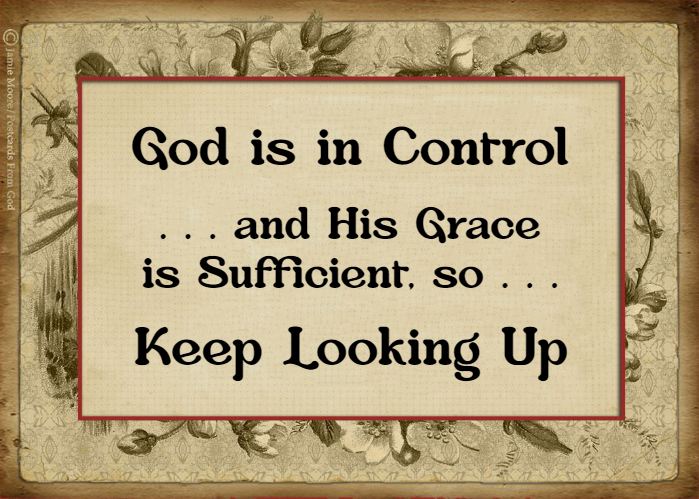
God is in Control
. . . and His Grace is Sufficient, so . . .
Keep Looking Up


Hopefully, every Sunday, we can find something here that will build us up a little . . . give us a smile . . . and add some joy or peace, very much needed in all our lives.

“This day is holy to the Lord your God;
do not mourn nor weep.” . . .
“Go your way, eat the fat, drink the sweet,
and send portions to those for whom nothing is prepared;
for this day is holy to our Lord.
Do not sorrow,
for the joy of the Lord is your strength.”

Philippians 4:8 is a well-known verse that admonishes believers to think about “whatever is true, whatever is noble, whatever is right, whatever is pure, whatever is lovely, whatever is admirable, . . . excellent, or praiseworthy.” This command suggests that believers can control their thoughts and that their thought life should be characterized by what is good and uplifting.

Philippians might be characterized as a very positive book. There are some rebukes for a couple of individuals and hints that the church might not be as unified as it should be, but most of the book is a positive statement of what the church should do rather than a rebuke of what they are failing to do or an exhortation to stop doing something.

In chapter 1, Paul speaks of his imprisonment and his assurance that this will further the gospel, and he encourages the church to live in a manner worthy of the gospel, no matter what happens to him or to them.

In chapter 2, Paul points to Christ as the ultimate example of one who put the interests of others first, and the Philippians are encouraged to adopt that same attitude and live it out.

Chapter 3 warns the church to avoid teachers who would attempt to add works to the grace of Christ for salvation and then contrasts false teachers with true believers who, like Paul, put no confidence in the flesh.

In the final chapter, Paul gives a list of things he wants the Philippians to do, but this kind of admonishment has been evident throughout the whole letter:

– Stand firm in the Lord (verse 1)

– Rejoice in the Lord always (verse 4)

– Let your gentleness be evident to all (verse 5)

– Do not be anxious about anything, but pray about everything (verse 6)

– And then, verse 8: “Finally, brothers and sisters, whatever is true, whatever is noble, whatever is right, whatever is pure, whatever is lovely, whatever is admirable—if anything is excellent or praiseworthy—think about such things.”

Paul could probably have gone on for several more chapters admonishing and encouraging the Philippians to right living, but he sums it up with a catchall that encompasses every positive thing that he could have listed. While it might be valuable to analyze the meaning of each term that he uses in the list of things to think about, the desired effect is cumulative. The point is not to compare and contrast the various categories of things a Christian should think about, but to make a list covering everything good, positive, biblical, godly, encouraging, etc.—and exclude everything that is not.

We live in a world that is constantly bombarding us with messages, images, and worldviews that are incompatible with a biblical worldview and biblical guidelines for godly behavior. Even Christians can begin to think in secular, rather than biblical, categories if the popular, secular culture begins to inform their values. Paul reminds us that we must constantly reject those things that do not draw us closer to God and consciously focus on the things that do. We have the ability to choose what we think about.

Thinking about whatever is true, honorable, right, pure, lovely, commendable, excellent, and worthy of praise applies to every area of life, but would seem to be especially appropriate for evaluating the consumption of popular media—music, TV, movies, and literature. This does not mean that everything we watch, read, or listen to must be overtly Christian in nature, but it does mean that it should draw our hearts closer to God and increase our desire to obey Him, to fellowship with other believers, and to share the gospel. If the subject of our thoughts does not do these things, then it does not pass the test of Philippians 4:8. It seems likely that, if Christians took this verse seriously, our media consumption habits would have to change.


High Hopes works, too!

“May the God of hope fill you with all joy and peace in believing, so that by the power of the Holy Spirit you may abound in hope.” Romans 15:13


So, for the coming year –
Accentuate the Positive

Eliminate the Negative
Have High Hopes,

and always, always,
Keep Looking Up!

Dear MAGA: 20230101 Open Topic

This Rejoice & Praise God Sunday Open Thread, with full respect to those who worship God on the Sabbath, is a place to reaffirm our worship of our Creator, our Father, our King Eternal.

It’s also a place to read, post, and discuss news that is worth knowing and sharing. Please post links to any news stories that you use as sources or quote from.

In the QTree, we’re a friendly and civil lot. We encourage free speech and the open exchange and civil discussion of different ideas. Topics aren’t constrained, and sound logic is highly encouraged, all built on a solid foundation of truth and established facts.

We have a policy of mutual respect, shown by civility. Civility encourages discussions, promotes objectivity and rational thought in discourse, and camaraderie in the participants – characteristics we strive toward in our Q Tree community.

Please show respect and consideration for our fellow QTreepers. Before hitting the “post” button, please proofread your post and make sure your opinion addresses the issue only, and does not confront or denigrate the poster. Keep to the topic – avoid “you” and “your”. Here in The Q Tree, personal attacks, name-calling, ridicule, insults, baiting, and other conduct for which a penalty flag would be thrown are VERBOTEN.

In The Q Tree, we’re compatriots, sitting around the campfire, roasting hot dogs, making s’mores, and discussing, agreeing, and disagreeing about whatever interests us. This board will remain a home for those who seek respectful conversations.

Please also consider the Guidelines for posting and discussion printed here: 
https://www.theqtree.com/2019/01/01/dear-maga-open-topic-20190101/


On this day and every day –

God is in Control
. . . and His Grace is Sufficient, so . . .
Keep Looking Up


Hopefully, every Sunday, we can find something here that will build us up a little . . . give us a smile . . . and add some joy or peace, very much needed in all our lives.

“This day is holy to the Lord your God;
do not mourn nor weep.” . . .
“Go your way, eat the fat, drink the sweet,
and send portions to those for whom nothing is prepared;
for this day is holy to our Lord.
Do not sorrow,
for the joy of the Lord is your strength.”


A Time for Reflection

One of the “appointed feasts of the LORD” given to Israel in the Hebrew Tanakh (Old Testament) is known today as Rosh Hashanah, literally “Head of the Year.” We read about Rosh Hashanah in the Torah, the Jewish Law found in the first five books of the Tanakh. “And the LORD spoke to Moses, saying, ‘Speak to the people of Israel, saying, In the seventh month, on the first day of the month, you shall observe a day of solemn rest, a memorial proclaimed with blast of trumpets, a holy convocation. You shall not do any ordinary work, and you shall present a food offering to the LORD’” (Leviticus 23:23–25).

Rosh Hashanah, or the Jewish New Year, is also known as Yom Teruah or the Day of Trumpets. The word teruah means “to shout or make a noise,” so this holiday is marked by the blowing of the shofar or ram’s horn in Jewish synagogues around the world. Rosh Hashanah falls on the first day of the Hebrew month of Tishri on the Jewish calendar, which usually corresponds to September or October. It always falls on the seventh new moon of the Jewish year. After the destruction of the Jewish temple in Jerusalem in AD 70, even though this feast day falls on the seventh month of the Jewish religious calendar, it began to be called Rosh Hashanah and became the beginning of the Jewish civil calendar.

Rosh Hashanah begins a ten-day period leading up to the holiest day of the Jewish calendar, Yom Kippur, the Day of Atonement. These ten days are called the yomim nora’im or Days of Awe in modern Judaism. The sounding of the shofar on Rosh Hashanah is a wake-up blast and a sobering reminder that the time is near for the Day of Atonement. It is a call to teshuvah, which is repentance and turning back to the LORD. These ten days are ones of great introspection, heart-searching and self-examination. The sound of the shofar for the Jew was, and still continues to be, a call to examine one’s life, to make amends with all those one may have wronged in the previous year, and to ask forgiveness for any vows one may have broken. So the primary theme of Rosh Hashanah is one of repentance.

During Rosh Hashanah a common greeting/blessing is “May your name be inscribed”—a wish for one’s name to be written in the book of life. Jewish people enjoy sweets on Rosh Hashanah: treats made with apples, honey, raisins, figs, and pomegranates. Eating sweet things symbolizes the desire for a “sweet” year; also included is the idea that the enjoyment of sweet things can help counter the sorrow associated with repentance. In the eating of pomegranates, some Rosh Hashanah celebrants express the wish that their good deeds will be as numerous as the seeds of the pomegranate. Others eat portions of the head of a fish or a sheep, symbolizing the desire to be “the head, not the tail” (see Deuteronomy 28:13).

According to rabbinic tradition, on Rosh Hashanah the destiny of the righteous and the wicked are sealed. The righteous are written into the Book of Life, and the wicked are written into the Book of Death, but most people won’t be written into either book. These are given the ten days until Yom Kippur to exercise repentance and self-examination and then seal their fate. Then, on the Day of Atonement, everyone has his or her name inscribed into one of the two books.

Like all of the Lord’s appointed days in the Tanakh, Rosh Hashanah points Christians to an even greater reality. For those who have placed their faith in the Jewish Messiah, Jesus, we understand the true meaning of the call to repentance and of turning our hearts toward God. The God of the Bible indeed has a Book of Life and a Book of Death. The Bible clearly warns us that on the Day of Judgment, which is yet to come, anyone’s name not found in the Book of Life will reside in the lake of fire for all eternity (Revelation 20:15).

For those who have placed their trust in the atoning work of Jesus through His life, death, burial, and resurrection (2 Corinthians 5:21), their names are already written into the Lamb’s Book of Life. And now, even we believers in Jesus listen for that trumpet call, “For the Lord himself will descend from heaven with a cry of command, with the voice of an archangel, and with the sound of the trumpet of God. And the dead in Christ will rise first. Then we who are alive, who are left, will be caught up together with them in the clouds to meet the Lord in the air, and so we will always be with the Lord. Therefore encourage one another with these words” (1 Thessalonians 4:16–18).


We could profit by taking a few notes from the observance of Rosh Hashanah and the days after and applying them to our lives on and after our celebration of the New Year. We should be looking to the Lord on New Year’s Day and the days after, because the appearance of Jesus in His Second Coming draws closer. We should examine our lives at this time for faith, obedience and, for repentance and forgiveness for the times we have fallen short of the mark. New Years is also an appropriate time to thank God for all His blessings during the past year and a time for looking forward to His blessings to come.

May 2023 be a blessed New Year for us all!


And for the coming year . . .

The unexpected kindness from an unexpected place,
A hand outstretched in friendship, a smile on someone’s face.
A word of understanding spoken in a time of trial
Are unexpected miracles that make life more worthwhile.
We know not how it happened that in our hour of need,
Someone out of nowhere proved to be a friend indeed.
For God has many messengers we fail to recognize,
But He sends them when we need them,
And His ways are wondrous and wise.
So keep looking for your angel and keep listening to hear,
For on life’s busy, crowded streets you’ll find God’s presence near.

Helen Steiner Rice

Dear MAGA: 20221225 Open Topic

This Rejoice & Praise God Sunday Open Thread, with full respect to those who worship God on the Sabbath, is a place to reaffirm our worship of our Creator, our Father, our King Eternal.

It’s also a place to read, post, and discuss news that is worth knowing and sharing. Please post links to any news stories that you use as sources or quote from.

In the QTree, we’re a friendly and civil lot. We encourage free speech and the open exchange and civil discussion of different ideas. Topics aren’t constrained, and sound logic is highly encouraged, all built on a solid foundation of truth and established facts.

We have a policy of mutual respect, shown by civility. Civility encourages discussions, promotes objectivity and rational thought in discourse, and camaraderie in the participants – characteristics we strive toward in our Q Tree community.

Please show respect and consideration for our fellow QTreepers. Before hitting the “post” button, please proofread your post and make sure your opinion addresses the issue only, and does not confront or denigrate the poster. Keep to the topic – avoid “you” and “your”. Here in The Q Tree, personal attacks, name-calling, ridicule, insults, baiting, and other conduct for which a penalty flag would be thrown are VERBOTEN.

In The Q Tree, we’re compatriots, sitting around the campfire, roasting hot dogs, making s’mores, and discussing, agreeing, and disagreeing about whatever interests us. This board will remain a home for those who seek respectful conversations.

Please also consider the Guidelines for posting and discussion printed here: 
https://www.theqtree.com/2019/01/01/dear-maga-open-topic-20190101/


On this day and every day –

God is in Control
. . . and His Grace is Sufficient, so . . .
Keep Looking Up


Hopefully, every Sunday, we can find something here that will build us up a little . . . give us a smile . . . and add some joy or peace, very much needed in all our lives.

“This day is holy to the Lord your God;
do not mourn nor weep.” . . .
“Go your way, eat the fat, drink the sweet,
and send portions to those for whom nothing is prepared;
for this day is holy to our Lord.
Do not sorrow,
for the joy of the Lord is your strength.”

Glory to God in the Highest!

And it came to pass in those days that a decree went out from Caesar Augustus that all the world should be registered. This census first took place while Quirinius was governing Syria. So all went to be registered, everyone to his own city.

Joseph also went up from Galilee, out of the city of Nazareth, into Judea, to the city of David, which is called Bethlehem, because he was of the house and lineage of David, to be registered with Mary, his betrothed wife, who was with child. So it was, that while they were there, the days were completed for her to be delivered. And she brought forth her firstborn Son, and wrapped Him in swaddling cloths, and laid Him in a manger, because there was no room for them in the inn.

Now there were in the same country shepherds living out in the fields, keeping watch over their flock by night. And behold, an angel of the Lord stood before them, and the glory of the Lord shone around them, and they were greatly afraid. Then the angel said to them, “Do not be afraid, for behold, I bring you good tidings of great joy which will be to all people. For there is born to you this day in the city of David a Savior, who is Christ the Lord. And this will be the sign to you: You will find a Babe wrapped in swaddling cloths, lying in a manger.”

And suddenly there was with the angel a multitude of the heavenly host praising God and saying: “Glory to God in the highest, and on earth peace, among men of good will!”

So it was, when the angels had gone away from them into heaven, that the shepherds said to one another, “Let us now go to Bethlehem and see this thing that has come to pass, which the Lord has made known to us.” And they came with haste and found Mary and Joseph, and the Babe lying in a manger.

Now when they had seen Him, they made widely known the saying which was told them concerning this Child. And all those who heard it marveled at those things which were told them by the shepherds. But Mary kept all these things and pondered them in her heart. Then the shepherds returned, glorifying and praising God for all the things that they had heard and seen, as it was told them. 

Luke 2:1-20

Dear MAGA: 20221218 Open Topic

This Rejoice & Praise God Sunday Open Thread, with full respect to those who worship God on the Sabbath, is a place to reaffirm our worship of our Creator, our Father, our King Eternal.

It’s also a place to read, post, and discuss news that is worth knowing and sharing. Please post links to any news stories that you use as sources or quote from.

In the QTree, we’re a friendly and civil lot. We encourage free speech and the open exchange and civil discussion of different ideas. Topics aren’t constrained, and sound logic is highly encouraged, all built on a solid foundation of truth and established facts.

We have a policy of mutual respect, shown by civility. Civility encourages discussions, promotes objectivity and rational thought in discourse, and camaraderie in the participants – characteristics we strive toward in our Q Tree community.

Please show respect and consideration for our fellow QTreepers. Before hitting the “post” button, please proofread your post and make sure your opinion addresses the issue only, and does not confront or denigrate the poster. Keep to the topic – avoid “you” and “your”. Here in The Q Tree, personal attacks, name-calling, ridicule, insults, baiting, and other conduct for which a penalty flag would be thrown are VERBOTEN.

In The Q Tree, we’re compatriots, sitting around the campfire, roasting hot dogs, making s’mores, and discussing, agreeing, and disagreeing about whatever interests us. This board will remain a home for those who seek respectful conversations.

Please also consider the Guidelines for posting and discussion printed here: 
https://www.theqtree.com/2019/01/01/dear-maga-open-topic-20190101/


On this day and every day –

God is in Control
. . . and His Grace is Sufficient, so . . .
Keep Looking Up


Hopefully, every Sunday, we can find something here that will build us up a little . . . give us a smile . . . and add some joy or peace, very much needed in all our lives.

“This day is holy to the Lord your God;
do not mourn nor weep.” . . .
“Go your way, eat the fat, drink the sweet,
and send portions to those for whom nothing is prepared;
for this day is holy to our Lord.
Do not sorrow,
for the joy of the Lord is your strength.”

The Star of Bethlehem

The star of Bethlehem is associated with the birth of Christ and the visit of the magi (wise men) as recorded in Matthew 2:1–12. The text implies the star of Bethlehem appeared only to the magi in the East (most likely the area of Persia, or modern-day Iran). There is no biblical record of anyone else observing the star of Bethlehem.

The magi in the East saw something in the heavens—the star of Bethlehem—that alerted them to the fact that the Jewish Messiah was born. The magi do not call the star of Bethlehem by that name; in Matthew 2:2 they refer to it as being “His star,” since it was a sign to them that a king was born. The star prompted the magi to travel to Jerusalem, the capital of Israel. This would be the logical place to start looking for the birth of the King of the Jews for someone who did not know of Micah’s prophecy about Bethlehem.

In Jerusalem, the magi visited King Herod and were told that the new king they were looking for would be born in Bethlehem, not in Jerusalem (Matthew 2:5). The wise men left Herod’s palace, and the star of Bethlehem appeared to them once again. In fact, the star “went ahead of them until it stopped over the place where the child was. When they saw the star, they were overjoyed” (verses 9–10). The star of Bethlehem, apparently mobile, led the magi to the precise place where they could find Jesus.

Modern portrayals of the Christmas nativity scene usually show the wise men visiting Jesus on the night of His birth. That is likely not what truly occurred. King Herod discovered from the magi the “exact time” the star of Bethlehem had first appeared to them (Matthew 2:7), and he later ordered all male children two years old and under in Bethlehem to be killed (verse 16). Herod obviously thought the star of Bethlehem had first appeared when Christ was born; if he was right, then Jesus could have been up to two years old when the star of Bethlehem later guided the magi through the streets of Bethlehem. The Greek word translated “young child” in Matthew 2:9 can mean anything from a newborn infant to a toddler.

So, the magi may have first observed the star of Bethlehem the night of Jesus’ birth, or they may have first seen it up to two years beforehand. Either way, they found Jesus still in Bethlehem when they arrived. Joseph and Mary almost surely stayed in Bethlehem until Mary could travel again. In fact, they probably stayed there for the 40 days necessary to complete Mary’s purification. From Bethlehem, they could easily make the five-mile trip to Jerusalem for the sacrifice for Mary’s purification (Luke 2:22). The fact that the magi came to a “house” (Matthew 2:11) rather than the stable makes sense because Joseph naturally would have moved his family to a more protected place as soon as possible—the morning after Jesus was born, in all probability.

After seeing the star of Bethlehem, the magi traveled to Jerusalem to look for the Messiah. The question arises, how would Persian magi know about the Jewish Messiah? Undoubtedly, they would have been exposed to the writings of the Jewish prophet Daniel, who had been the chief of the court seers in Persia. Daniel 9:24–27 is a prophecy that gives a timeline for the birth of the Messiah. Also, they may have been aware of the words of the pagan prophet Balaam (who was from the town of Pethor on the Euphrates River near Persia) in Numbers 24:17. Balaam’s prophecy specifically mentions “a star” and “a scepter” rising out of Jacob.

What exactly was the star of Bethlehem? The Greek word translated “star” in the text is the word aster, which is the normal word for a star or celestial body. The word is used 24 times in the New Testament, and most of the time it refers to a celestial body. It can be used to denote angels, as in Revelation 12:4, where aster seems to refer to the fallen angels who followed Satan’s rebellion. Basic rules of biblical interpretation state that we should take the normal sense of a word unless there is compelling evidence to suggest otherwise. In that case, the star of Bethlehem should be considered an actual heavenly body. Many Bible scholars suggest a natural explanation for the star of Bethlehem, their theories ranging from a supernova to a comet to an alignment of planets. Something in the heavens provided a brighter-than-normal light in the sky.

However, there is evidence to suggest that the star of Bethlehem was not a natural stellar phenomenon, but something unexplained by science. First, the fact that the star of Bethlehem seemed to appear only to the magi indicates that this was no ordinary star. Also, celestial bodies normally move from east to west due to the earth’s rotation, yet the star of Bethlehem led the magi from Jerusalem south to Bethlehem. Not only that, but it led them directly to the place where Joseph and Mary were staying, stopping overhead. There is no natural stellar phenomenon that can do that.

So, if the normal usage of the word star doesn’t fit the context, what does? The star of Bethlehem in Matthew 2:1–12 was likely an angel or a manifestation of the Shekinah Glory. The Shekinah, which literally means “dwelling of God,” was the visible presence of the Lord. Prior to this, the most notable appearance of the Shekinah was the pillar of cloud that led the Israelites by day and the pillar of fire that led them by night (Exodus 13:21). The Shekinah can obviously lead people to specific locations, and it was seen later in connection with Christ’s ministry (e.g., Matthew 17:5; Acts 1:9). Either an angel or the Shekinah would fit the evidence. It shouldn’t surprise us that God would use a miraculous sign to signal the advent of His Son into the world. Those with eyes to see joyfully beheld His glory.

Dear MAGA: 20221211 Open Topic

This Rejoice & Praise God Sunday Open Thread, with full respect to those who worship God on the Sabbath, is a place to reaffirm our worship of our Creator, our Father, our King Eternal.

It’s also a place to read, post, and discuss news that is worth knowing and sharing. Please post links to any news stories that you use as sources or quote from.

In the QTree, we’re a friendly and civil lot. We encourage free speech and the open exchange and civil discussion of different ideas. Topics aren’t constrained, and sound logic is highly encouraged, all built on a solid foundation of truth and established facts.

We have a policy of mutual respect, shown by civility. Civility encourages discussions, promotes objectivity and rational thought in discourse, and camaraderie in the participants – characteristics we strive toward in our Q Tree community.

Please show respect and consideration for our fellow QTreepers. Before hitting the “post” button, please proofread your post and make sure your opinion addresses the issue only, and does not confront or denigrate the poster. Keep to the topic – avoid “you” and “your”. Here in The Q Tree, personal attacks, name-calling, ridicule, insults, baiting, and other conduct for which a penalty flag would be thrown are VERBOTEN.

In The Q Tree, we’re compatriots, sitting around the campfire, roasting hot dogs, making s’mores, and discussing, agreeing, and disagreeing about whatever interests us. This board will remain a home for those who seek respectful conversations.

Please also consider the Guidelines for posting and discussion printed here: 
https://www.theqtree.com/2019/01/01/dear-maga-open-topic-20190101/


On this day and every day –

God is in Control
. . . and His Grace is Sufficient, so . . .
Keep Looking Up


Hopefully, every Sunday, we can find something here that will build us up a little . . . give us a smile . . . and add some joy or peace, very much needed in all our lives.

“This day is holy to the Lord your God;
do not mourn nor weep.” . . .
“Go your way, eat the fat, drink the sweet,
and send portions to those for whom nothing is prepared;
for this day is holy to our Lord.
Do not sorrow,
for the joy of the Lord is your strength.”

Our Chief Cornerstone

In Matthew 21:44, Jesus says, “He who falls on this stone will be broken to pieces, but he on whom it falls will be crushed.” The meaning of this statement lies in the context of the verse and the larger conversation Jesus was having.

Jesus was teaching in the temple courts when the chief priests and elders approached Him and demanded to know the source of His authority. In response, Jesus asked them about John the Baptist—was he a prophet of God or not? The religious leaders, fearing the people’s response to their answer, refused to reveal their true opinion on the matter. In turn, Jesus refused to reveal the source of His authority (Matthew 21:23-27). In doing so, Jesus made it clear that the Jewish leaders themselves had no authority to judge Him.

Jesus then related two parables concerning vineyards. In the first, Jesus told of two sons who were told by their father to go work in the vineyard. The first son initially refused but later changed his mind and went to work. The second son promised to work, but he never went to the vineyard. Jesus applied this to the religious leaders of Israel, who were like the second son—they expressed agreement with the Father but then were disobedient. The sinners who responded to John the Baptist’s message were like the first son—they seemed unlikely candidates for heaven, but they repented and will enter the kingdom (verses 28-32).

In the second parable, Jesus tells of a landowner who, at harvest time, sent some servants to his vineyard to collect the fruit. However, the farmers who were tending the vineyard were a wicked lot, and when the servants arrived, the farmers beat some of them and killed others. Finally, the landowner sent his own son to collect the fruit, expecting that the farmers would show him respect. But the farmers treated the son worst of all, throwing him out of the vineyard and killing him (Matthew 21:33-39).

Jesus then asks a question: “When the owner of the vineyard comes, what will he do to those tenants?” (Matthew 21:40). The chief priests and elders respond, “He will bring those wretches to a wretched end” (Matthew 21:41). Jesus then presses His point home with a quotation from Psalm 118: “The stone the builders rejected has become the capstone; the Lord has done this, and it is marvelous in our eyes” (Matthew 21:42). After a warning that the religious leaders will not inherit the kingdom (Matthew 21:43), we come to the statement in question, which is the culmination of a series of dire pronouncements aimed at the chief priests and elders.

Jesus begins with a question about John the Baptist in Matthew 21:25, but by the end of the conversation, Jesus is plainly speaking of Himself, referring to a “father” sending his “son” who was killed (Matthew 21:37). He then immediately quotes a Messianic prophecy (Matthew 21:42), in effect claiming to be the long-awaited Messiah. The progression is logical: a rejection of John leads one naturally to a rejection of Christ, to whom John pointed (John 1:29, 3:30).

The stone, which “the builders rejected” in verse 42, is Jesus. Although rejected, He nevertheless becomes the “chief cornerstone” (NKJV). See also Acts 4:11; Ephesians 2:20; and 1 Peter 2:6-8. The builders’ rejection of the stone is a reference to Christ’s crucifixion. The Lord’s choice of the stone to be the cornerstone is a reference to Christ’s resurrection. God chose His Son, despised and rejected by the world, to be the foundation of His church (1 Corinthians 3:11). “See, I lay a stone in Zion, a tested stone, a precious cornerstone for a sure foundation” (Isaiah 28:16).

Now, there are consequences for coming into contact with a stone. If you trip over the edge of a rock and fall on it, you may break some bones. If a large enough rock falls on top of you, you may be killed. Jesus uses these truths to deliver a warning to the Jewish leaders.

The stone in verse 44 is also Jesus. In saying that those who fall on this stone “will be broken to pieces,” Jesus is warning against opposing Him. Defying Jesus is like beating one’s head against a solid rock—a foolish action. In saying that those upon whom the stone falls “will be crushed,” Jesus is warning against ignoring Him or trivializing Him. Apathy towards Jesus is like standing in the way of a falling rock—another foolish action. “I am here to do God’s work,” Jesus essentially says. “The foundation for the church will be laid. It is unwise to oppose Me because God’s work is not inconsequential.”

Rejection of the Savior is fatal. Unfortunately, many do reject Him. “He will be a stone that causes men to stumble and a rock that makes them fall” (Isaiah 8:14). To persistently reject the Savior is to court judgment so severe that the only thing left will be dust. The prophet Daniel gives a similar picture of the Messiah, likening Him to a rock “cut out, but not by human hands,” which smashes into the nations of the world and completely obliterates them (Daniel 2:31-45).

Matthew 21:44 is a call to faith, an appeal to open one’s eyes and see that Jesus is indeed the Son of God sent into the world. The verse is also a strict warning against rejecting Jesus Christ. He is the sure Rock of salvation for those who believe, but an immovable stumbling stone for those who do not.


For since in the wisdom of God the world through its wisdom did not know Him, God was pleased through the foolishness of what was preached to save those who believe. Jews demand signs and Greeks look for wisdom, but we preach Christ crucified: a stumbling block to Jews and foolishness to Gentiles, but to those whom God has called, both Jews and Greeks, Christ the power of God and the wisdom of God. For the foolishness of God is wiser than human wisdom, and the weakness of God is stronger than human strength.

Dear MAGA: 20221204 Open Topic

This Rejoice & Praise God Sunday Open Thread, with full respect to those who worship God on the Sabbath, is a place to reaffirm our worship of our Creator, our Father, our King Eternal.

It’s also a place to read, post, and discuss news that is worth knowing and sharing. Please post links to any news stories that you use as sources or quote from.

In the QTree, we’re a friendly and civil lot. We encourage free speech and the open exchange and civil discussion of different ideas. Topics aren’t constrained, and sound logic is highly encouraged, all built on a solid foundation of truth and established facts.

We have a policy of mutual respect, shown by civility. Civility encourages discussions, promotes objectivity and rational thought in discourse, and camaraderie in the participants – characteristics we strive toward in our Q Tree community.

Please show respect and consideration for our fellow QTreepers. Before hitting the “post” button, please proofread your post and make sure your opinion addresses the issue only, and does not confront or denigrate the poster. Keep to the topic – avoid “you” and “your”. Here in The Q Tree, personal attacks, name-calling, ridicule, insults, baiting, and other conduct for which a penalty flag would be thrown are VERBOTEN.

In The Q Tree, we’re compatriots, sitting around the campfire, roasting hot dogs, making s’mores, and discussing, agreeing, and disagreeing about whatever interests us. This board will remain a home for those who seek respectful conversations.

Please also consider the Guidelines for posting and discussion printed here: 
https://www.theqtree.com/2019/01/01/dear-maga-open-topic-20190101/


On this day and every day –

God is in Control
. . . and His Grace is Sufficient, so . . .
Keep Looking Up


Hopefully, every Sunday, we can find something here that will build us up a little . . . give us a smile . . . and add some joy or peace, very much needed in all our lives.

“This day is holy to the Lord your God;
do not mourn nor weep.” . . .
“Go your way, eat the fat, drink the sweet,
and send portions to those for whom nothing is prepared;
for this day is holy to our Lord.
Do not sorrow,
for the joy of the Lord is your strength.”

Safe and Secure

At the Festival of Dedication, the Jews asked Jesus to tell them plainly if He was the Messiah. His response was not “Yes” or “No” but rather, “I did tell you, but you do not believe. The works I do in my Father’s name testify about me” (John 10:25). But then Jesus continued with a reason why they did not believe: “You do not believe because you are not my sheep. My sheep listen to my voice; I know them, and they follow me. I give them eternal life, and they shall never perish; no one will snatch them out of my hand. My Father, who has given them to me, is greater than all; no one can snatch them out of my Father’s hand. I and the Father are one” (John 10:26–30).

Jesus states that the eternal life He offers is permanent. He holds His sheep—believers—in His hand, and no one can snatch them out of His hand. Jesus’ sheep were given to Him by the Father, who is greater than all and who also holds the sheep in His hand. No one can snatch believers out of the Father’s hand, either. Believers are eternally secure, held by the power of God.

In an extended metaphor, Jesus compares believers to sheep. A sheep without a shepherd can easily be snatched from the fold. “To snatch” refers to attacking, scattering, and stealing sheep like a wolf (John 10:12). There are people who claim to have truth but are really seeking to deceive believers (Matthew 24:5). The devil is described as a roaring lion seeking whom he may devour (1 Peter 5:8) and as a thief who comes to steal, kill, and destroy (John 10:10). Yet believers are part of Jesus’ flock and cannot be taken away by spiritual wolves, lions, or anything else because Jesus is the Good Shepherd protecting His sheep (John 10:11). Those who belong to Christ are safe from anyone or anything seeking their destruction: no one can snatch them out of the Father’s hand.

Jesus is God, and no one can take the sheep out of Jesus’ hand, either (John 10:28). Romans 8:38–39 assures us, “For I am convinced that neither death nor life, neither angels nor demons, neither the present nor the future, nor any powers, neither height nor depth, nor anything else in all creation, will be able to separate us from the love of God that is in Christ Jesus our Lord.” Absolutely nothing can separate a child of God from the Father’s love, and absolutely nothing can take that believer’s salvation away.

A believer’s eternal security is purchased by Christ, promised by the Father, and sealed by the Holy Spirit. It is given and maintained by God’s hand, and it is permanent and irrevocable. The eternal life granted by Jesus to His “sheep” cannot and will never be stolen, revoked, or lost. A Christian who has trusted in Jesus Christ as the Savior is declared righteous before God for all eternity (John 3:16; Acts 16:31; Romans 5:1) and cannot lose his salvation. The Good Shepherd protects His sheep and ensures that no one and nothing snatches them from the fold.


“Great is Thy faithfulness,” O God my Father,
There is no shadow of turning with Thee;
Thou changest not, Thy compassions, they fail not
As Thou hast been Thou forever wilt be.

Summer and winter, and springtime and harvest,
Sun, moon and stars in their courses above,
Join with all nature in manifold witness
To Thy great faithfulness, mercy and love.

Pardon for sin and a peace that endureth,
Thine own dear presence to cheer and to guide;
Strength for today and bright hope for tomorrow,
Blessings all mine, with ten thousand beside!

“Great is Thy faithfulness!” “Great is Thy faithfulness!”
Morning by morning new mercies I see;
All I have needed Thy hand hath provided—
“Great is Thy faithfulness,” Lord, unto me!

Dear MAGA: 20221127 Open Topic

This Rejoice & Praise God Sunday Open Thread, with full respect to those who worship God on the Sabbath, is a place to reaffirm our worship of our Creator, our Father, our King Eternal.

It’s also a place to read, post, and discuss news that is worth knowing and sharing. Please post links to any news stories that you use as sources or quote from.

In the QTree, we’re a friendly and civil lot. We encourage free speech and the open exchange and civil discussion of different ideas. Topics aren’t constrained, and sound logic is highly encouraged, all built on a solid foundation of truth and established facts.

We have a policy of mutual respect, shown by civility. Civility encourages discussions, promotes objectivity and rational thought in discourse, and camaraderie in the participants – characteristics we strive toward in our Q Tree community.

Please show respect and consideration for our fellow QTreepers. Before hitting the “post” button, please proofread your post and make sure your opinion addresses the issue only, and does not confront or denigrate the poster. Keep to the topic – avoid “you” and “your”. Here in The Q Tree, personal attacks, name-calling, ridicule, insults, baiting, and other conduct for which a penalty flag would be thrown are VERBOTEN.

In The Q Tree, we’re compatriots, sitting around the campfire, roasting hot dogs, making s’mores, and discussing, agreeing, and disagreeing about whatever interests us. This board will remain a home for those who seek respectful conversations.

Please also consider the Guidelines for posting and discussion printed here: 
https://www.theqtree.com/2019/01/01/dear-maga-open-topic-20190101/


On this day and every day –

God is in Control
. . . and His Grace is Sufficient, so . . .
Keep Looking Up


Hopefully, every Sunday, we can find something here that will build us up a little . . . give us a smile . . . and add some joy or peace, very much needed in all our lives.

“This day is holy to the Lord your God;
do not mourn nor weep.” . . .
“Go your way, eat the fat, drink the sweet,
and send portions to those for whom nothing is prepared;
for this day is holy to our Lord.
Do not sorrow,
for the joy of the Lord is your strength.”

Be Ready

We don’t know what hour Jesus is coming or that our lives may be demanded of us this very day. In order to live confident lives of faith, we need to have the assurance that our names are indelibly inscribed in The Book of Life.

To be fully ready, we must know that we are ready or, as Peter puts it in 2nd Peter, we must make our calling and election sure.

Second Peter 1:10–11 says, “Therefore, my brothers and sisters, make every effort to confirm your calling and election. For if you do these things, you will never stumble, and you will receive a rich welcome into the eternal kingdom of our Lord and Savior Jesus Christ” The clear command is to “make your calling and election sure,” or, from the NIV, “make every effort to confirm your calling and election.”

A believer’s “calling” is God’s drawing him to salvation. Peter alludes to this calling earlier in the same chapter when he speaks of God “who called us by his own glory and goodness” (2 Peter 1:3). A believer’s “election” is God’s selection of him to be saved from before time began. God is the one who calls and elects, so the believer’s calling and election are already “sure” from God’s point of view; therefore, the command for believers to diligently make their calling and election sure must refer to the believers’ point of view. God wants us to have assurance of our salvation, and the best way to do that is to be pursuing godly virtues and actively growing in the Christian life.

Second Peter 1:5–7 lists godly qualities that believers should add to their faith—goodness, knowledge, self-control, perseverance, godliness, mutual affection, and love. Those qualities are the “these things” of verse 10, and the reader is urged thereby to “make your calling and election sure.” In doing “these things,” one will never stumble and is promised “a rich welcome into the eternal kingdom” (verse 11).

On the surface 2 Peter 1 seems to affirm that one’s salvation depends on having the qualities listed in verses 5–7. On closer inspection, however, it becomes apparent that Peter is addressing those who already have “faith,” which he lists as the first quality. Also, Peter presumes that some of those who did not demonstrate these qualities had in fact been saved, for “whoever does not have them is nearsighted and blind, forgetting that they have been cleansed from their past sins” (2 Peter 1:9). So, being cleansed from past sin does not automatically mean a person will grow in goodness, knowledge, etc., but, if he doesn’t “possess these qualities in increasing measure” (verse 8), he is spiritually short-sighted and forgetful of God’s grace.

1:3. The readers’ “godly life” is somehow being threatened by their circumstances, and we know from Peter’s previous epistle that they have been suffering (1 Peter 1:6); the apostle is therefore providing reassurance that they have all the resources they need to persevere within their knowledge of God (the One who called them).

1:4. Peter adds that God’s “glory and goodness” entails “very great and precious promises” through which his readers “may participate in the divine nature, having escaped the corruption in the world caused by evil desires.” God’s goal is to produce a holy people for Himself (see 1 Peter 1:15–16). Believers should have the same goal to become that holy people.

1:5–7. It’s clear that Peter presumes that his readers have already exercised faith and that these qualities are to be added to their faith. These same virtues allow believers to participate in the divine nature (verse 4) and thus distinguish themselves as a holy people. In his epistle, James explains how these qualities “add” to faith and enable one to become “a friend of God” (James 2:22–23).

1:8. Here is mentioned a fruitful “knowledge” of Christ (compare verse 3) that will enable believers to display God’s character effectively. This comes through maintaining a close relationship with Christ—Jesus called it “abiding” in Him (John 15).

1:9. When the qualities listed in verses 5–7 are not present in a believer, it betrays the fact that he’s forgotten his true identity in Christ. Believers have been “cleansed from . . . past sins,” and we must not forget it. By persisting in sin, believers are “blinded” to their new identity as a holy people for God (compare 1 Peter 4:1–6 and Romans 6:1–2).

1:10. In light of all that comes before, we should see to “make your calling and election sure” as a call to “shore up” our righteous character as a holy people. The word translated “to make sure” can mean either to “verify” (in the sense of assuring oneself of something that may not be true) or to “guarantee” or “protect” something that is already true. It is the latter meaning in view here: we are told to “shore up” our “calling and election” to be holy as God is holy by exhibiting the list of behaviors in verses 5–7, so we do not “fall” (compare 2 Peter 3:17) into past sinful behavior (see 1 Peter 4:1–6).

1:11. Those who successfully display the qualities in verses 5–7 are the ones who are assured of their salvation and can go through this world confident that they will “receive a rich welcome” as friends of God and co-heirs with Christ.

In summary, to make one’s calling and election sure is to live out the Christian life in the power of the Holy Spirit. It is to do more than simply pay lip service to Christ. Those who profess salvation but never grow in their walk with God will suffer a lack of assurance, always wondering if they are really saved or not. Those who grow ever more like Christ will be “sure” of their calling and election. They’ll know they have eternal life (see 1 John 5:13); they’ll be living testimonies of the power of God to change lives.

So, BE READY, and KNOW that you’re ready!!!

Dear MAGA: 20221120 Open Topic

This Rejoice & Praise God Sunday Open Thread, with full respect to those who worship God on the Sabbath, is a place to reaffirm our worship of our Creator, our Father, our King Eternal.

It’s also a place to read, post, and discuss news that is worth knowing and sharing. Please post links to any news stories that you use as sources or quote from.

In the QTree, we’re a friendly and civil lot. We encourage free speech and the open exchange and civil discussion of different ideas. Topics aren’t constrained, and sound logic is highly encouraged, all built on a solid foundation of truth and established facts.

We have a policy of mutual respect, shown by civility. Civility encourages discussions, promotes objectivity and rational thought in discourse, and camaraderie in the participants – characteristics we strive toward in our Q Tree community.

Please show respect and consideration for our fellow QTreepers. Before hitting the “post” button, please proofread your post and make sure you’re addressing the issue only, and not trying to confront the poster. Keep to the topic – avoid “you” and “your”. Here in The Q Tree, personal attacks, name-calling, ridicule, insults, baiting, and other conduct for which a penalty flag would be thrown are VERBOTEN.

In The Q Tree, we’re compatriots, sitting around the campfire, roasting hot dogs, making s’mores, and discussing, agreeing, and disagreeing about whatever interests us. This board will remain a home for those who seek respectful conversations.

Please also consider the Guidelines for posting and discussion printed here: 
https://www.theqtree.com/2019/01/01/dear-maga-open-topic-20190101/


On this day and every day –

God is in Control
. . . and His Grace is Sufficient, so . . .
Keep Looking Up

Mercy and Grace

Mercy and grace are closely related. While the terms have similar meanings, grace and mercy are not exactly the same. Mercy has to do with kindness and compassion; it is often spoken of in the context of God’s not punishing us as our sins deserve. Grace includes kindness and compassion, but also carries the idea of bestowing a gift or favor. It may help to view mercy as a subset of grace. In Scripture, mercy is often equated with a deliverance from judgment (e.g., Deuteronomy 4:30–31; 1 Timothy 1:13), and grace is always the extending of a blessing to the unworthy.

According to God’s Word, we have all sinned (Ecclesiastes 7:20; Romans 3:23; 1 John 1:8). As a result of that sin, we all deserve death (Romans 6:23) and eternal judgment in the lake of fire (Revelation 20:12–15). Given what we deserve, every day we live is an act of God’s mercy. If God gave us all what we deserve, we would all be, right now, condemned for eternity. In Psalm 51:1–2, David cries out, “Have mercy on me, O God, according to your unfailing love; according to your great compassion blot out my transgressions. Wash away all my iniquity and cleanse me from my sin.” Pleading for God’s mercy is asking Him to show kindness and withhold the judgment we deserve.

We deserve nothing good from God. God does not owe us any good thing. What good we experience is a result of the grace of God (Ephesians 2:5). Grace is simply defined as “unmerited favor.” God favors us—He shows us approval and kindness—in blessing us with good things that we do not deserve and could never earn. Common grace refers to the blessings that God bestows on all of mankind regardless of their spiritual standing before Him, while saving grace is that special blessing whereby God bestows unmerited divine assistance upon His elect for their regeneration and sanctification.

Mercy and grace are evident in the salvation that is available through Jesus Christ. We deserved judgment, but in Christ we receive mercy from God and are delivered from judgment. In Christ we receive eternal salvation, forgiveness of sins, and abundant life (John 10:10)—all gifts of grace. Our response to the mercy and grace of God should be to fall on our knees in worship and thanksgiving. Hebrews 4:16 declares, “Let us then approach the throne of grace with confidence, so that we may receive mercy and find grace to help us in our time of need.”


A man had two sons. The younger son asked his father to give him his inheritance, and his father obliged. The younger son then left home and went to live in a ‘far country’, where he squandered all the money his father had given him.

When all his money had gone, he found himself starving. He realized that his father’s servants had bread enough to eat, and yet he had none. So he went home to beg for his father’s forgiveness, and ask his father to take him in under his roof as one of his hired servants.

When his father saw him coming, he ran to him, kissed him, and ordered his servants to fetch his best robe, and put it on his son, and to put a ring on his hand and shoes on his son’s feet. He then ordered them to prepare a fatted calf for their meal, so they can eat and celebrate his son’s return.

Mercy is not giving his son the punishment he deserved.

Grace is giving his son the honor he did not deserve.


Dear MAGA: 20221113 Open Topic

This Rejoice & Praise God Sunday Open Thread, with full respect to those who worship God on the Sabbath, is a place to reaffirm our worship of our Creator, our Father, our King Eternal.

It’s also a place to read, post, and discuss news that is worth knowing and sharing. Please post links to any news stories that you use as sources or quote from.

In the QTree, we’re a friendly and civil lot. We encourage free speech and the open exchange and civil discussion of different ideas. Topics aren’t constrained, and sound logic is highly encouraged, all built on a solid foundation of truth and established facts.

We have a policy of mutual respect, shown by civility. Civility encourages discussions, promotes objectivity and rational thought in discourse, and camaraderie in the participants – characteristics we strive toward in our Q Tree community.

Please show respect and consideration for our fellow QTreepers. Before hitting the “post” button, please proofread your post and make sure you’re addressing the issue only, and not trying to confront the poster. Keep to the topic – avoid “you” and “your”. Here in The Q Tree, personal attacks, name-calling, ridicule, insults, baiting, and other conduct for which a penalty flag would be thrown are VERBOTEN.

In The Q Tree, we’re compatriots, sitting around the campfire, roasting hot dogs, making s’mores, and discussing, agreeing, and disagreeing about whatever interests us. This board will remain a home for those who seek respectful conversations.

Please also consider the Guidelines for posting and discussion printed here: 
https://www.theqtree.com/2019/01/01/dear-maga-open-topic-20190101/


On this day and every day –

God is in Control
. . . and His Grace is Sufficient, so . . .
Keep Looking Up


God’s Grace

The gospel message is the good news of God’s grace, so it is important to know what grace is and to constantly seek to get a better view of what grace does in our lives.

Grace is an essential part of God’s character. Grace is closely related to God’s benevolence, love, and mercy. Grace can be variously defined as “God’s favor toward the unworthy” or “God’s benevolence on the undeserving.” In His grace, God is willing to forgive us and bless us abundantly, in spite of the fact that we don’t deserve to be treated so well or dealt with so generously.

To fully understand grace, we need to consider who we were without Christ and who we become with Christ. We were born in sin (Psalm 51:5), and we were guilty of breaking God’s holy laws (Romans 3:9–20, 23; 1 John 1:8–10). We were enemies of God (Romans 5:6, 10; 8:7; Colossians 1:21), deserving of death (Romans 6:23a). We were unrighteous (Romans 3:10) and without means of justifying ourselves (Romans 3:20). Spiritually, we were destitute, blind, unclean, and dead. Our souls were in peril of everlasting punishment.

But then came grace. God extended His favor to us. Grace is what saves us (Ephesians 2:8). Grace is the essence of the gospel (Acts 20:24). Grace gives us victory over sin (James 4:6). Grace gives us “eternal encouragement and good hope” (2 Thessalonians 2:16). Paul repeatedly identified grace as the basis of his calling as an apostle (Romans 15:15; 1 Corinthians 3:10; Ephesians 3:2, 7). Jesus Christ is the embodiment of grace, coupled with truth (John 1:14).

The Bible repeatedly calls grace a “gift” (e.g., Ephesians 4:7). This is an important analogy because it teaches us some key things about grace:

First, anyone who has ever received a gift understands that a gift is much different from a loan, which requires repayment or return by the recipient. The fact that grace is a gift means that nothing is owed in return.

Second, there is no cost to the person who receives a gift. A gift is free to the recipient, although it is not free to the giver, who bears the expense. The gift of salvation costs us sinners nothing. But the price of such an extravagant gift came at a great cost for our Lord Jesus, who died in our place.

Third, once a gift has been given, ownership of the gift has transferred and it is now ours to keep. There is a permanence in a gift that does not exist with loans or advances. When a gift changes hands, the giver permanently relinquishes all rights to renege or take back the gift in future. God’s grace is ours forever.

Fourth, in the giving of a gift, the giver voluntarily forfeits something he owns, willingly losing what belongs to him so that the recipient will profit from it. The giver becomes poorer so the recipient can become richer. This generous and voluntary exchange from the giver to the recipient is visible in 2 Corinthians 8:9: “You know the grace of our Lord Jesus Christ, that though he was rich, yet for your sake he became poor, so that you through his poverty might become rich.”

Finally, the Bible teaches that grace is completely unmerited. The gift and the act of giving have nothing at all to do with our merit or innate quality (Romans 4:4; 11:5–6; 2 Timothy 1:9–10). In fact, the Bible says quite clearly that we don’t deserve God’s salvation. Romans 5:8–10 says, “God demonstrates his own love for us in this: While we were still sinners, Christ died for us. . . . While we were God’s enemies, we were reconciled to him through the death of his Son.”

Grace does not stop once we are saved; God is gracious to us for the rest of our lives, working within and upon us. The Bible encourages us with many additional benefits that grace secures for every believer:

• Grace justifies us before a holy God (Romans 3:24; Ephesians 1:6; Titus 3:7).

• Grace provides us access to God to communicate and fellowship with Him (Ephesians 1:6; Hebrews 4:16).

• Grace wins for us a new relationship of intimacy with God (Exodus 33:17).

• Grace disciplines and trains us to live in a way that honors God (Titus 2:11–14; 2 Corinthians 8:7).

• Grace grants us immeasurable spiritual riches (Proverbs 10:22; Ephesians 2:7).

• Grace helps us in our every need (Hebrews 4:16).

• Grace is the reason behind our every deliverance (Psalm 44:3–8; Hebrews 4:16).

• Grace preserves us and comforts, encourages, and strengthens us (2 Corinthians 13:14; 2 Thessalonians 2:16–17; 2 Timothy 2:1).

Grace is actively and continually working in the lives of God’s people. Paul credited the success of his ministry not to his own substantial labors but to “the grace of God that was with me” (1 Corinthians 15:10). Grace is the ongoing, benevolent act of God working in us, without which we can do nothing (John 15:5). Grace is greater than our sin (Romans 5:20), more abundant than we expect (1 Timothy 1:14), and too wonderful for words (2 Corinthians 9:15).

As the recipients of God’s grace, Christians are to be gracious to others. Grace is given to us to serve others and to exercise our spiritual gifts for the building up of the church (Romans 12:6; Ephesians 3:2, 7; 4:7; 1 Peter 4:10).

Dear KMAG: 20221106 Open Topic

This Rejoice & Praise God Sunday Open Thread, with full respect to those who worship God on the Sabbath, is a place to reaffirm our worship of our Creator, our Father, our King Eternal.

It’s also a place to read, post, and discuss news that is worth knowing and sharing. Please post links to any news stories that you use as sources or quote from.

In the QTree, we’re a friendly and civil lot. We encourage free speech and the open exchange and civil discussion of different ideas. Topics aren’t constrained, and sound logic is highly encouraged, all built on a solid foundation of truth and established facts.

We have a policy of mutual respect, shown by civility. Civility encourages discussions, promotes objectivity and rational thought in discourse, and camaraderie in the participants – characteristics we strive toward in our Q Tree community.

Please show respect and consideration for our fellow QTreepers. Before hitting the “post” button, please proofread your post and make sure you’re addressing the issue only, and not trying to confront the poster. Keep to the topic – avoid “you” and “your”. Here in The Q Tree, personal attacks, name-calling, ridicule, insults, baiting, and other conduct for which a penalty flag would be thrown are VERBOTEN.

In The Q Tree, we’re compatriots, sitting around the campfire, roasting hot dogs, making s’mores, and discussing, agreeing, and disagreeing about whatever interests us. This board will remain a home for those who seek respectful conversations.

Please also consider the Guidelines for posting and discussion printed here: 
https://www.theqtree.com/2019/01/01/dear-maga-open-topic-20190101/


On this day and every day –

God is in Control
. . . and His Grace is Sufficient, so . . .
Keep Looking Up

God’s Mercy

God being merciful basically means that, when we deserve punishment, He doesn’t punish us, and in fact blesses us instead. Mercy is the withholding of a just condemnation. Throughout the Bible, God gives many illustrations of His mercy. God fully demonstrates His mercy in Jesus Christ.

God was merciful to the wayward Solomon in 1 Kings 11:13. God was merciful to Israel in captivity (Psalm 106:45; Nehemiah 9:31). David illustrated God’s mercy when he showed kindness to Mephibosheth (2 Samuel 9:7). God’s mercy was illustrated every year on the Day of Atonement, when the high priest entered the Holiest Place and sprinkled the blood of the sacrifice before the mercy seat (Leviticus 16:14).

Another illustration of God’s mercy is found in Matthew 18:23–27. In this parable, Jesus describes a rich ruler who was owed a large sum of money. The ruler ordered that money be collected, but then the debtor came and begged for mercy. The ruler, in turn, graciously forgives the debt. Here’s the point: we owed God a debt we could never repay, and He has freely forgiven us that debt in Christ! Interestingly, after the ruler in the parable forgives the debt, the person who owed the money refuses to forgive someone else. The ruler then judges that ungrateful person. God requires us to be merciful and forgiving to others here on earth (see Matthew 6:15). We who have been forgiven so much have no right to withhold forgiveness from others.

Mercy is coupled with other attributes of God in Psalm 86:15, “You, O Lord, are a God merciful and gracious, slow to anger and abounding in steadfast love and faithfulness” (ESV). God’s mercy is rooted in His love for us. He is merciful, in large part, because He is love (1 John 4:8). As sinners, we deserve punishment (Romans 3:23). God’s righteousness requires punishment for sin—He wouldn’t be holy otherwise. Since God does love us and is merciful, He sent His Son (John 3:16). The fullness of His mercy is seen in Matthew 27. Jesus is brutally beaten and murdered on our behalf; Jesus received our just condemnation, and we received God’s mercy.

Because of His love for us, God wants us to be with Him. His mercy is required for that to take place; there is an inseparable connection between God’s love and mercy. Jesus laid down His life and became the sacrificial lamb (Isaiah 53:7; John 1:29) so that God’s mercy could be extended to us. Instead of punishing us for our sin, God allowed His Son to take the condemnation in our place. That is the ultimate act of God’s mercy (see Ephesians 2:4–5). To our eternal benefit, “mercy triumphs over judgment” (James 2:13b).


Have mercy upon me, O God,
According to Your lovingkindness;
According to the multitude of Your tender mercies,
Blot out my transgressions.
Wash me thoroughly from my iniquity,
And cleanse me from my sin.

For I acknowledge my transgressions,
And my sin is always before me.
Against You, You only, have I sinned,
And done this evil in Your sight—
That You may be found just [a]when You speak,
And blameless when You judge.

Behold, I was brought forth in iniquity,
And in sin my mother conceived me.
Behold, You desire truth in the inward parts,
And in the hidden part You will make me to know wisdom.

Purge me with hyssop, and I shall be clean;
Wash me, and I shall be whiter than snow.
Make me hear joy and gladness,
That the bones You have broken may rejoice.
Hide Your face from my sins,
And blot out all my iniquities.

Create in me a clean heart, O God,
And renew a steadfast spirit within me.
Do not cast me away from Your presence,
And do not take Your Holy Spirit from me.

Restore to me the joy of Your salvation,
And uphold me by Your generous Spirit.
Then I will teach transgressors Your ways,
And sinners shall be converted to You.

Psalm 51:1-13


Let us seek the Joy of our Salvation and use that joy to remind us to Keep Looking Up.