Dear MAGA: 20230402 Open Topic

This Rejoice & Praise God Sunday Open Thread, with full respect to those who worship God on the Sabbath, is a place to reaffirm our worship of our Creator, our Father, our King Eternal.

It’s also a place to read, post, and discuss news that is worth knowing and sharing. Please post links to any news stories that you use as sources or quote from.

In the QTree, we’re a friendly and civil lot. We encourage free speech and the open exchange and civil discussion of different ideas. Topics aren’t constrained, and sound logic is highly encouraged, all built on a solid foundation of truth and established facts.

We have a policy of mutual respect, shown by civility. Civility encourages discussions, promotes objectivity and rational thought in discourse, and camaraderie in the participants – characteristics we strive toward in our Q Tree community.

Please show respect and consideration for our fellow QTreepers. Before hitting the “post” button, please proofread your post and make sure your opinion addresses the issue only, and does not confront or denigrate the poster. Keep to the topic – avoid “you” and “your”. Here in The Q Tree, personal attacks, name-calling, ridicule, insults, baiting, and other conduct for which a penalty flag would be thrown are VERBOTEN.

In The Q Tree, we’re compatriots, sitting around the campfire, roasting hot dogs, making s’mores, and discussing, agreeing, and disagreeing about whatever interests us. This board will remain a home for those who seek respectful conversations.

Please also consider the Guidelines for posting and discussion printed here: 
https://www.theqtree.com/2019/01/01/dear-maga-open-topic-20190101/


On this day and every day –

God is in Control
. . . and His Grace is Sufficient, so . . .
Keep Looking Up


Hopefully, every Sunday, we can find something here that will build us up a little . . . give us a smile . . . and add some joy or peace, very much needed in all our lives.

“This day is holy to the Lord your God;
do not mourn nor weep.” . . .
“Go your way, eat the fat, drink the sweet,
and send portions to those for whom nothing is prepared;
for this day is holy to our Lord.
Do not sorrow,
for the joy of the Lord is your strength.”


Blessed . . . in Perilous Times

HERE WE ARE: But know this, that in the last days perilous times will come: Men will be lovers of themselves, lovers of money, boasters, proud, blasphemers, disobedient to parents, unthankful, unholy, unloving, unforgiving, slanderers, without self-control, brutal, despisers of good, traitors, headstrong, haughty, lovers of pleasure . . . 2 Timothy 3:1-4

. . . and having the man, President Trump, who we hope God has put in a place of leadership to bring honesty, truth, patriotism and love of God back to our country, facing the prospect of being maliciously charged with nonexistent crimes by a corrupt and evil liberal establishment, in order to neutralize his future leadership.

WHAT ARE WE TO DO? Well, simply put, we need to feel blessed.

WHAT? How can this be? With all that’s going wrong in our country and in the world at this time, we’re supposed to feel happy? What type of naïve fools do you think we are, anyway?

Please read on.


Quite possibly, the most frequently used word in the Christian’s vocabulary is blessed. “Have a blessed day,” “blessed to be a blessing,” and “God bless you” are just a few of the ways we put it to use. It’s even common among unbelievers to describe themselves as “blessed.” Some people think of blessed as a spiritual term for “good fortune,” like when we receive something good, the desired outcome, or an exceptional comfort. But what does it really mean to be blessed?

Mary, the mother of Jesus, was “blessed among women” (Luke 1:42–45, 48), it was the Lord God who had blessed and favored her.

While material blessings are certainly included in God’s favor, the Bible ascribes a much fuller meaning to the word blessed.

Perhaps the most well-known use of the word blessed in the Bible is found in the Beatitudes (Matthew 5:3–12; Luke 6:20–23). Jesus used the term blessed in the framework of the Beatitudes to describe the inner quality of a faithful servant of God. This blessedness is a spiritual state of well-being and prosperity—a deep, joy-filled contentment that cannot be shaken by poverty, grief, famine, persecution, war, or any other trial or tragedy we face in life. In human terms, the situations depicted in the Beatitudes are far from blessings, but because God is present with us through these difficult times, we are actually blessed by Him in them.

The true servant of God is blessed, regardless of circumstances, because God has favored him or her with a fully satisfied soul (Psalm 63:1–5; John 4:14). The material things we crave can never bring genuine happiness or contentment. True fulfillment can only be found in a relationship with God through His Son, Jesus Christ (Romans 5:1–2).

From the time God first created humans, He blessed them (Genesis 1:22; 5:2; 12:3) and has continued to do so throughout history (Genesis 26:3; Deuteronomy 7:13; Job 42:12; Judges 13:24). Because of Christ’s work of redemption on the cross, we can now receive the full blessings of God through faith in Him: “Praise be to the God and Father of our Lord Jesus Christ, who has blessed us in the heavenly realms with every spiritual blessing in Christ” (Ephesians 1:3). We are blessed because our sins are forgiven and can no longer be counted against us (Psalm 32:1–2).

The Bible measures blessedness differently from how people of the world measure it: “Blessed is the one who perseveres under trial because, having stood the test, that person will receive the crown of life that the Lord has promised to those who love him” (James 1:12). To those who rest in God, He grants an inner state of joy that is unaffected by external trials. What is this promised “crown of life?” It is the never-ending, victorious life in the world to come, where all trials will be ended. The marvelous blessings we experience now are minor compared to the benefits God has stored up for us in His eternal kingdom (1 Corinthians 2:9).

The one who is blessed trusts in God’s love, no matter what: “Can anything ever separate us from Christ’s love? Does it mean he no longer loves us if we have trouble or calamity, or are persecuted, or hungry, or destitute, or in danger, or threatened with death? . . . No, despite all these things, overwhelming victory is ours through Christ, who loved us. And I am convinced that nothing can ever separate us from God’s love. Neither death nor life, neither angels nor demons, neither our fears for today nor our worries about tomorrow—not even the powers of hell can separate us from God’s love. No power in the sky above or in the earth below—indeed, nothing in all creation will ever be able to separate us from the love of God that is revealed in Christ Jesus our Lord” (Romans 8:35–39, NLT).

Blessed speaks of our inner state of well-being, the prosperity of our souls in Christ. Blessedness comes from unhindered fellowship with God the Father through our Lord Jesus. To be blessed is to experience the full impact of God’s presence in our lives now and for all eternity.

*https://www.gotquestions.org/mean-to-be-blessed.html.


Dear MAGA: 20230326 Open Topic

This Rejoice & Praise God Sunday Open Thread, with full respect to those who worship God on the Sabbath, is a place to reaffirm our worship of our Creator, our Father, our King Eternal.

It’s also a place to read, post, and discuss news that is worth knowing and sharing. Please post links to any news stories that you use as sources or quote from.

In the QTree, we’re a friendly and civil lot. We encourage free speech and the open exchange and civil discussion of different ideas. Topics aren’t constrained, and sound logic is highly encouraged, all built on a solid foundation of truth and established facts.

We have a policy of mutual respect, shown by civility. Civility encourages discussions, promotes objectivity and rational thought in discourse, and camaraderie in the participants – characteristics we strive toward in our Q Tree community.

Please show respect and consideration for our fellow QTreepers. Before hitting the “post” button, please proofread your post and make sure your opinion addresses the issue only, and does not confront or denigrate the poster. Keep to the topic – avoid “you” and “your”. Here in The Q Tree, personal attacks, name-calling, ridicule, insults, baiting, and other conduct for which a penalty flag would be thrown are VERBOTEN.

In The Q Tree, we’re compatriots, sitting around the campfire, roasting hot dogs, making s’mores, and discussing, agreeing, and disagreeing about whatever interests us. This board will remain a home for those who seek respectful conversations.

Please also consider the Guidelines for posting and discussion printed here: 
https://www.theqtree.com/2019/01/01/dear-maga-open-topic-20190101/


On this day and every day –

God is in Control
. . . and His Grace is Sufficient, so . . .
Keep Looking Up


Hopefully, every Sunday, we can find something here that will build us up a little . . . give us a smile . . . and add some joy or peace, very much needed in all our lives.

“This day is holy to the Lord your God;
do not mourn nor weep.” . . .
“Go your way, eat the fat, drink the sweet,
and send portions to those for whom nothing is prepared;
for this day is holy to our Lord.
Do not sorrow,
for the joy of the Lord is your strength.”


Choose Life

God sets life and death before His people, Israel, at the borders of the Promised Land. As all people do, the children of Israel had a choice: they could obey God or disobey Him. One choice would lead to life, and the other choice would lead to death.

Deuteronomy is Moses’ farewell address to the people of Israel at the end of his life. The people had been “wandering” in the wilderness for approximately 40 years as the generation of unbelieving Israelites who had refused to enter the land died off (Numbers 14). The only ones who survived were under 20 years old at the time of Israel’s refusal, and there are many other Israelites who were born during the ensuing years so they had not personally witnessed the plagues in Egypt, the parting of the Red Sea, or the spectacular display of God’s power and glory at the giving of the Law. Moses reminds them of these things and of what God expects from them.

In Deuteronomy 28, Moses outlines the blessings for obedience and the curses for disobedience. In chapters 29 and 30, he further warns the people about what will happen if they abandon their covenant with the Lord but also promises that, when they do, they can be forgiven if they return to Him in repentance. In Deuteronomy 30, Moses promises that, when they repent, “the Lord your God will put all these curses on your enemies who hate and persecute you. You will again obey the Lord and follow all his commands I am giving you today. Then the Lord your God will make you most prosperous in all the work of your hands and in the fruit of your womb, the young of your livestock and the crops of your land. The Lord will again delight in you and make you prosperous, just as he delighted in your ancestors, if you obey the Lord your God and keep his commands and decrees that are written in this Book of the Law and turn to the Lord your God with all your heart and with all your soul” (verses 7–10).

Then Moses calls on the people to renew the covenant and personally commit to follow the Lord. It is in this context that he says, “Now what I am commanding you today is not too difficult for you or beyond your reach. It is not up in heaven, so that you have to ask, ‘Who will ascend into heaven to get it and proclaim it to us so we may obey it?’ Nor is it beyond the sea, so that you have to ask, ‘Who will cross the sea to get it and proclaim it to us so we may obey it?’ No, the word is very near you; it is in your mouth and in your heart so you may obey it.

See, I set before you today life and prosperity, death and destruction. For I command you today to love the Lord your God, to walk in obedience to him, and to keep his commands, decrees and laws; then you will live and increase, and the Lord your God will bless you in the land you are entering to possess. But if your heart turns away and you are not obedient, and if you are drawn away to bow down to other gods and worship them, I declare to you this day that you will certainly be destroyed. You will not live long in the land you are crossing the Jordan to enter and possess” (Deuteronomy 30:11–18).

Simply put, if Israel obeys and follows the Lord, they will have life and blessing. If they disobey and forsake Him, they will experience death and destruction. God set before His people a choice: life or death, based on the conditions of the Old Covenant. We see the consequences of death and destruction playing out in the rest of the Old Testament with very few bright spots.

Although the terms of the Old Covenant were specifically for Israel in the Promised Land and are not applied to all humanity today, the choice is still very much the same. God still sets life and death before us. Romans 6:23 tells us that “the wages of sin is death, but the gift of God is eternal life in Christ Jesus our Lord.” Those who accept Christ by faith will experience eternal life and blessing, while those who reject Him will experience eternal death and destruction (John 3:18). There is a clear choice with eternal consequences.

The choice is ours . . . life or death.

Dear MAGA: 20230319 Open Topic

This Rejoice & Praise God Sunday Open Thread, with full respect to those who worship God on the Sabbath, is a place to reaffirm our worship of our Creator, our Father, our King Eternal.

It’s also a place to read, post, and discuss news that is worth knowing and sharing. Please post links to any news stories that you use as sources or quote from.

In the QTree, we’re a friendly and civil lot. We encourage free speech and the open exchange and civil discussion of different ideas. Topics aren’t constrained, and sound logic is highly encouraged, all built on a solid foundation of truth and established facts.

We have a policy of mutual respect, shown by civility. Civility encourages discussions, promotes objectivity and rational thought in discourse, and camaraderie in the participants – characteristics we strive toward in our Q Tree community.

Please show respect and consideration for our fellow QTreepers. Before hitting the “post” button, please proofread your post and make sure your opinion addresses the issue only, and does not confront or denigrate the poster. Keep to the topic – avoid “you” and “your”. Here in The Q Tree, personal attacks, name-calling, ridicule, insults, baiting, and other conduct for which a penalty flag would be thrown are VERBOTEN.

In The Q Tree, we’re compatriots, sitting around the campfire, roasting hot dogs, making s’mores, and discussing, agreeing, and disagreeing about whatever interests us. This board will remain a home for those who seek respectful conversations.

Please also consider the Guidelines for posting and discussion printed here: 
https://www.theqtree.com/2019/01/01/dear-maga-open-topic-20190101/


On this day and every day –

God is in Control
. . . and His Grace is Sufficient, so . . .
Keep Looking Up


Hopefully, every Sunday, we can find something here that will build us up a little . . . give us a smile . . . and add some joy or peace, very much needed in all our lives.

“This day is holy to the Lord your God;
do not mourn nor weep.” . . .
“Go your way, eat the fat, drink the sweet,
and send portions to those for whom nothing is prepared;
for this day is holy to our Lord.
Do not sorrow,
for the joy of the Lord is your strength.”


Help My Unbelief

In seeking the Lord’s help, a man came to Jesus once, fell to his knees weeping, and said, “I believe; help my unbelief” (Mark 9:24, ESV). The man’s request, startling in its paradoxical phrasing, is quite thought-provoking. How can the man say he believes and at the same time ask for help in overcoming unbelief?

The full context of the man’s prayer, “I believe; help my unbelief!” helps make his meaning clearer. Jesus had just returned from the mount of transfiguration when He came upon a large crowd surrounding His disciples. An argument was taking place, and people were stirred up. Jesus asked what was going on, and a man from the crowd explained that the disciples had been trying to cast a demon out of his son but had failed in their attempt. Jesus said, “You unbelieving generation, . . . how long shall I stay with you? How long shall I put up with you? Bring the boy to me” (Mark 9:19).

The boy was brought to Jesus, but “when the spirit saw Jesus, it immediately threw the boy into a convulsion. He fell to the ground and rolled around, foaming at the mouth” (Mark 9:20). After the boy’s father further explained his son’s condition, he said to Jesus, “If you can do anything, take pity on us and help us” (verse 22). Jesus assured the man that “everything is possible for one who believes” (verse 23). “Immediately the boy’s father exclaimed, ‘I do believe; help me overcome my unbelief!’” (verse 24).

Upon hearing the man’s request, “I believe; help my unbelief!” Jesus immediately spoke to the unclean spirit and permanently cast it out of the boy. Later, Jesus’ disciples inquired why they were unable to cast the demon out. Jesus told them, “This kind can come out only by prayer” (Mark 9:29).

The dominant theme in this passage is faith and doubt. Jesus’ initial response to hearing of the boy’s condition expresses His disappointment in a lack of faith: “You unbelieving generation, how long shall I stay with you? How long shall I put up with you?” The boy’s father initially seems to display a lack of faith as well. He asks Jesus to do something for the boy “if you can” (Mark 9:22). Jesus picks up on this doubt, repeating the man’s conditional statement (verse 23). In essence, He responds by saying, “What do you mean, IF I can?” He goes on to assure the man that anything is possible if he has faith. (On at least two previous occasions, Jesus had linked healing to faith in Him—Mark 5:34 and 36).

It appears that the only thing preventing the man’s son from being healed is his faith, and he realizes that he has already betrayed a lack of faith. He wants to express faith but at the same time be genuine. So he says, “I do believe; help me overcome my unbelief!” (verse 24). In essence, he says, “My faith is far from perfect. I may not have enough faith. If my faith is not enough, please help me to have enough.” It could be put like this: “I do have faith! Please help me to have even more.” Jesus is pleased with this response and heals the boy.

Most Christians can identify with this man. It is the acknowledgement of our inadequacy that we should recognize in our lives. This is true at the point of salvation. Salvation comes to inadequate sinners who realize their need and ask for forgiveness. It is impossible for “righteous” people to be saved (see Luke 18:9–14).

In the same way, Christians know what the Bible says, and we do trust God to take care of and direct our lives, but often we are faced with something that seems to overpower our faith. We don’t seem to have enough faith to follow Him in that moment, so we ask for more faith. We acknowledge that even our faith comes from God. It is His work in our lives that enables us to believe and obey.

As always, we can ask for what we need. When we doubt, we can ask for more faith. When we are wavering in our resolve to follow, we can ask for more resolve. When we are unwilling to obey, we can ask to be made willing. An unbeliever has no interest in having more faith or being made willing to obey. The believer knows that his faith and obedience are always deficient, and he will frequently ask God to enable him to live the life that pleases God. If left to our own strength and our own faith, we would never make it.

“I believe; help my unbelief” is at once a statement of faith and an admission that our faith is far from perfect.


Dear MAGA: 20230312 Open Topic

This Rejoice & Praise God Sunday Open Thread, with full respect to those who worship God on the Sabbath, is a place to reaffirm our worship of our Creator, our Father, our King Eternal.

It’s also a place to read, post, and discuss news that is worth knowing and sharing. Please post links to any news stories that you use as sources or quote from.

In the QTree, we’re a friendly and civil lot. We encourage free speech and the open exchange and civil discussion of different ideas. Topics aren’t constrained, and sound logic is highly encouraged, all built on a solid foundation of truth and established facts.

We have a policy of mutual respect, shown by civility. Civility encourages discussions, promotes objectivity and rational thought in discourse, and camaraderie in the participants – characteristics we strive toward in our Q Tree community.

Please show respect and consideration for our fellow QTreepers. Before hitting the “post” button, please proofread your post and make sure your opinion addresses the issue only, and does not confront or denigrate the poster. Keep to the topic – avoid “you” and “your”. Here in The Q Tree, personal attacks, name-calling, ridicule, insults, baiting, and other conduct for which a penalty flag would be thrown are VERBOTEN.

In The Q Tree, we’re compatriots, sitting around the campfire, roasting hot dogs, making s’mores, and discussing, agreeing, and disagreeing about whatever interests us. This board will remain a home for those who seek respectful conversations.

Please also consider the Guidelines for posting and discussion printed here: 
https://www.theqtree.com/2019/01/01/dear-maga-open-topic-20190101/


On this day and every day –

God is in Control
. . . and His Grace is Sufficient, so . . .
Keep Looking Up


Hopefully, every Sunday, we can find something here that will build us up a little . . . give us a smile . . . and add some joy or peace, very much needed in all our lives.

“This day is holy to the Lord your God;
do not mourn nor weep.” . . .
“Go your way, eat the fat, drink the sweet,
and send portions to those for whom nothing is prepared;
for this day is holy to our Lord.
Do not sorrow,
for the joy of the Lord is your strength.”

Christian Behavior

When we talk about “Christian” behavior, we’re talking about the behavior of those who have accepted, by faith, Jesus Christ as their Savior and are indwelt with His Holy Spirit (Romans 8:9), making it possible for them to serve God. Examples of Christian behavior are woven throughout Scripture. Our Savior Himself spoke at length about the way we’re to behave toward others, friends and enemies. More than that, the life He lived, accentuated by His love and compassion for the lost, provides the consummate example of what Christian behavior should look like.

Christians are “God’s workmanship, created in Christ Jesus to do good works” (Ephesians 2:10). And these last four words “to do good works” epitomize the behavior that glorifies God and makes Christ real to others. Granted, there are obstacles in our daily lives that can encumber our minds and hinder our spiritual progress, but only if we let them.

Nonetheless, Christians are called to live lives that are “holy and pleasing to God” (Romans 12:1), and exemplary Christian behavior that allows us to fully commit ourselves to serving the Lord is made possible as we are empowered by the Holy Spirit who enables us to do the Father’s will (Romans 8:9). Indeed, “the eyes of the LORD range throughout the earth to strengthen those whose hearts are fully committed to Him” (2 Chronicles 16:9).

Christians are a chosen people, belonging to God so that we may declare His praises (1 Peter 2:9). To “declare His praises,” then, it is essential that we spend time in His Word not just so we can learn how to behave in Christian fashion, but also so we can battle against the schemes of Satan. As the apostle Paul pointed out, without this biblical knowledge we’re not only subject to buying in to every new teaching that comes along, but we can also fall prey to “the cunning and craftiness of men in their deceitful scheming” (Ephesians 4:14).

However, knowledge alone is not enough; we’re called to do more than to know and believe. Christians are to be “doers of the Word” (James 1:22). As the apostle James informs us, we’re deceiving ourselves if we think we’re spiritual by only hearing the Word. Hearing is not the same as doing. “Faith by itself, if it is not accompanied by action, is dead” (James 2:17, 26). Faith must be demonstrated by actions.

The “actions” that glorify our Father in heaven are those that bear much fruit (John 15:8). This is, in fact, how we show we’re His disciples. Indeed, the fruit of the Spirit—love, joy, peace, patience, kindness, goodness, faithfulness, gentleness, and self-control (Galatians 5:22-23)—should be the hallmark of Christian behavior, especially love. Yet our tendency is to sometimes look down on unbelievers or those whose lifestyles are not in sync with our Christian faith, and this is where the Christian life can be challenging.

It’s easy to show love to those who walk as we do. It’s not always so easy to be kind to those who ridicule our beliefs, show contempt for our Savior, or make a mockery of the institutions that Christians hold sacred. Yet Christ taught us to love our enemies and to pray for those who persecute us. Recall how He dealt with the woman caught in adultery. Her captors wanted her dead; our Savior showed compassion even though He was the One who would have to die for her (and our) sinful behavior (John 8:11). Jesus Christ came into the world to save sinners (1 Timothy 1:15), not to condemn them (John 3:17), and if Christ did not come to condemn sinners, neither should Christians.

Christian behavior includes heeding Jesus’ call for us to be His witnesses to “the ends of the earth” (Acts 1:8). We’re to share the gospel, which Paul defined as the death, burial, and resurrection of Christ (1 Corinthians 15:1-4). The validity of our witness is in how we live our lives. In the second half of Ephesians (chapters 4-6), Paul discusses Christian behavior which can best be summed up in these few words: “Be imitators of God…and live a life of love, just as Christ loved us and gave Himself up for us” (Ephesians 5:1-2).

Paul urged the Romans to “offer your bodies as living sacrifices” (Romans 12:2). This, ultimately, is the essence of true Christian behavior – surrendering our hearts and yielding our bodies to Christ so He might continue God’s work through us. We’re to be beacons of light in a dark world, using our spiritual gifts to advance His kingdom. It’s living here on earth the way Jesus lived when He was here. It also means living to please one Person – God.

We do this when we abide in His Word and then live it out as we are enabled by His Spirit, just as our Savior did until He took His last breath. As He was dying on the cross, Christ looked out at His executioners and asked His Father to forgive them (Luke 23:34). Jesus was doing more than fulfilling prophecy and making “intercession for the transgressors” (Isaiah 53:12), He was practicing what He preached (Luke 6:27-28).


Love, joy, peace, patience, kindness, goodness, faithfulness, gentleness, and self-control . . .
a very, very good place to start.

Have we . . . are we . . . will we?


So whether you eat or drink,

or whatever you do,

do it all for the glory of God.

Dear MAGA: 20230305 Open Topic

This Rejoice & Praise God Sunday Open Thread, with full respect to those who worship God on the Sabbath, is a place to reaffirm our worship of our Creator, our Father, our King Eternal.

It’s also a place to read, post, and discuss news that is worth knowing and sharing. Please post links to any news stories that you use as sources or quote from.

In the QTree, we’re a friendly and civil lot. We encourage free speech and the open exchange and civil discussion of different ideas. Topics aren’t constrained, and sound logic is highly encouraged, all built on a solid foundation of truth and established facts.

We have a policy of mutual respect, shown by civility. Civility encourages discussions, promotes objectivity and rational thought in discourse, and camaraderie in the participants – characteristics we strive toward in our Q Tree community.

Please show respect and consideration for our fellow QTreepers. Before hitting the “post” button, please proofread your post and make sure your opinion addresses the issue only, and does not confront or denigrate the poster. Keep to the topic – avoid “you” and “your”. Here in The Q Tree, personal attacks, name-calling, ridicule, insults, baiting, and other conduct for which a penalty flag would be thrown are VERBOTEN.

In The Q Tree, we’re compatriots, sitting around the campfire, roasting hot dogs, making s’mores, and discussing, agreeing, and disagreeing about whatever interests us. This board will remain a home for those who seek respectful conversations.

Please also consider the Guidelines for posting and discussion printed here: 
https://www.theqtree.com/2019/01/01/dear-maga-open-topic-20190101/


On this day and every day –

God is in Control
. . . and His Grace is Sufficient, so . . .
Keep Looking Up


Hopefully, every Sunday, we can find something here that will build us up a little . . . give us a smile . . . and add some joy or peace, very much needed in all our lives.

“This day is holy to the Lord your God;
do not mourn nor weep.” . . .
“Go your way, eat the fat, drink the sweet,
and send portions to those for whom nothing is prepared;
for this day is holy to our Lord.
Do not sorrow,
for the joy of the Lord is your strength.”

Jesus said the greatest commandment is to “love the Lord your God with all your heart and with all your soul and with all your strength and with all your mind” (Luke10:27; Mark 12:30; Matthew 22:37). Repeatedly throughout the Bible, God commands His people to love Him with all their hearts and serve Him alone (Deuteronomy 6:5; 11:1; Joshua 23:11). But can love be commanded? How can we make ourselves love someone?

Since love is commanded, then it must be within our power, in Christ, to love. Love, therefore, is a decision we make. Yes, love will often be accompanied by feelings, but emotion is not the basis of love. In any given situation, we can choose to love, regardless of how we feel.

The Greek word for “love” used in reference to God is agápē, which means “benevolence, delight, preference, or good will.” This is the kind of love God has for us (Zephaniah 3:17; John 3:16). First John 4:19 says, “We love because He first loved us.” Since God is love and we are created in His image, we can love as He does (1 John 4:16). He has placed His capacity to love within our hearts. He then teaches us how to love by demonstrating what real love looks like (John 15:13).

Loving God begins with a decision. It is a purposeful setting of our affections (Colossians 3:2). We cannot truly love God until we know Him. Even the faith to believe in God is a gift from Him (Ephesians 2:8–9). When we accept His gift of eternal life through Christ, God gives us His Holy Spirit (Luke 11:13; 1 Corinthians 6:19). The Spirit of God dwelling within a believing heart begins to produce the traits of God, the first of which is love (Galatians 5:22). God Himself enables us to love Him as He deserves to be loved (1 John 4:7).

As we grow in knowledge and understanding of who God is, we begin to love the characteristics that define Him, such as wisdom, truth, righteousness, and purity (Psalm 11:7; 90:12; Hebrews 1:9; 1 Timothy 6:11). And we begin to find the opposite of those traits repulsive (Proverbs 8:13; Psalm 97:10). Spending time with God causes our hearts to hunger for holiness, and we find satisfaction only in more of Him, because He is the perfect embodiment of everything we long for. Learning to worship Him “in spirit and in truth” (John 4:24) allows us to experience the pleasurable emotions of love. Emotion does not create love, but, when we choose to love, the emotion comes. A. W. Tozer said, “Flowers and bird songs do not make spring; but when spring comes, they come with it.”

One obstacle to loving God is love of this world’s sinful ways. We cannot serve two masters (Matthew 6:24), and neither can we love God and the world at the same time. “Do not love the world or anything in the world. If anyone loves the world, love for the Father is not in them” (1 John 2:15). Many believers today need to heed the word given to the Ephesian church: “You have forsaken the love you had at first” (Revelation 2:4). The call is for a conscious returning of the affections to God alone.

Another obstacle to loving God is the mind. Our minds continually set themselves up against the knowledge of God and challenge the faith that has made its home within our spirits (2 Corinthians 10:5). Doubt, anger, misunderstanding, and false doctrine can all rob us of life’s highest pleasure, intimacy with God (Philippians 3:8). These obstacles can be overcome through repentance and a determination to seek God above all else (Matthew 6:33; Jeremiah 29:13). In order to truly love God, we must stop insisting that God explain Himself to our satisfaction. We have to crucify our pride and our right to approve of His ways and allow Him to be God in our lives. When we humbly recognize that He alone is worthy of our love and worship, we can abandon ourselves to loving Him for who He is.


The essence of what it means to love God is to be satisfied in Him. In Him — in God Himself, as the glorious Person that He is — admiring and enjoying all He is, and giving Him our worship and praise. And it is this enjoyment of God that makes all of our other responses truly glorifying to Him, including thanking Him for all His gifts, blessings, mercy and grace, believing His Word, and obeying His commands.

We need to have an authentic love for God that starts with God-oriented affections, desires, and thoughts, that permeates our speaking and behavior, and then influences the way we spend our money and how we dress, and drive, and our forms of entertainment. Whether we’re eating or singing, jogging or blogging, texting or drawing, love for Yahweh — the one true triune God — is to be in action and seen.


Dear MAGA: 20230226 Open Topic

This Rejoice & Praise God Sunday Open Thread, with full respect to those who worship God on the Sabbath, is a place to reaffirm our worship of our Creator, our Father, our King Eternal.

It’s also a place to read, post, and discuss news that is worth knowing and sharing. Please post links to any news stories that you use as sources or quote from.

In the QTree, we’re a friendly and civil lot. We encourage free speech and the open exchange and civil discussion of different ideas. Topics aren’t constrained, and sound logic is highly encouraged, all built on a solid foundation of truth and established facts.

We have a policy of mutual respect, shown by civility. Civility encourages discussions, promotes objectivity and rational thought in discourse, and camaraderie in the participants – characteristics we strive toward in our Q Tree community.

Please show respect and consideration for our fellow QTreepers. Before hitting the “post” button, please proofread your post and make sure your opinion addresses the issue only, and does not confront or denigrate the poster. Keep to the topic – avoid “you” and “your”. Here in The Q Tree, personal attacks, name-calling, ridicule, insults, baiting, and other conduct for which a penalty flag would be thrown are VERBOTEN.

In The Q Tree, we’re compatriots, sitting around the campfire, roasting hot dogs, making s’mores, and discussing, agreeing, and disagreeing about whatever interests us. This board will remain a home for those who seek respectful conversations.

Please also consider the Guidelines for posting and discussion printed here: 
https://www.theqtree.com/2019/01/01/dear-maga-open-topic-20190101/


On this day and every day –

God is in Control
. . . and His Grace is Sufficient, so . . .
Keep Looking Up


Hopefully, every Sunday, we can find something here that will build us up a little . . . give us a smile . . . and add some joy or peace, very much needed in all our lives.

“This day is holy to the Lord your God;
do not mourn nor weep.” . . .
“Go your way, eat the fat, drink the sweet,
and send portions to those for whom nothing is prepared;
for this day is holy to our Lord.
Do not sorrow,
for the joy of the Lord is your strength.”

Faith . . . a Gift from God

God uses faith to bring salvation to His people. God gives faith because of His grace and mercy, because He loves us (Ephesians 4—5). Faith comes from God in the form of a gift (Ephesians 2:8).

A gift is not earned by some good deed or kind word, and it is not given because the giver expects a gift in return—under any of those conditions, a gift would not be a gift. The Bible emphasizes that faith is a gift because God deserves all of the glory for our salvation. If the receiver of faith could do anything whatsoever to deserve or earn the gift, that person would have every right to boast (Ephesians 2:9). But all such boasting is excluded (Romans 3:27). God wants Christians to understand they have done nothing to earn faith, it’s only because of what Christ did on the cross that God gives anyone faith (Ephesians 2:5, 16). Receiving faith is a non-work (see Romans 4—Abraham’s salvation was dependent on faith in God, as opposed to any work he performed).

Suppose someone anonymously sent you a check for $1,000,000. The money is yours if you want it, but you still must endorse the check. In no way can signing your name be considered earning the million dollars—the endorsement is a non-work. You can never boast about becoming a millionaire through sheer effort or your own business savvy. No, the million dollars was simply a gift, and signing your name was the only way to receive it. Similarly, exercising faith is the only way to receive the generous gift of God, and faith cannot be considered a work worthy of the gift.

By knowing our saving faith comes from God alone, it should encourage Christians to “not think of yourself more highly than you ought,” but remember God decides the measure of faith each one receives (Romans 12:3). The apostle Paul gives an example of the godly humility believers should have when they contemplate their own faith: “Even though I was once a blasphemer and a persecutor and a violent man, I was shown mercy because I acted in ignorance and unbelief. The grace of our Lord was poured out on me abundantly, along with the faith and love that are in Christ Jesus” (1 Timothy 1:13–14). Paul understood faith in Christ was given to him because of God’s grace in spite of his own sinful life (1 Corinthians 4:7).

The Bible specifies the way, or the means, that God gives faith to people. “Faith comes from hearing the message, and the message is heard through the word about Christ” (Romans 10:17). It is the Word of God that produces faith. Someone could receive faith while hearing a sermon teaching the gospel, someone else by reading about Jesus in the Bible—any time the true gospel of Jesus is communicated, there is potential for faith. This is why it’s of paramount importance for believers everywhere to act with Christ as our Great Example.

“You are light for the world. Let your light shine in front of people. Then they will see the good that you do and praise your Father in heaven” (Matthew 5:14-16), and “In your hearts revere Christ as Lord. Always be prepared to give an answer to everyone who asks you to give the reason for the hope that you have. But do this with gentleness and respect” (1 Peter 3:15).  Faith is not the product of a preacher’s compelling presentation, his eloquence, or even his theological soundness—faith is given through the message about Jesus. This is the means God has chosen.

Anyone who wants more faith should ask God for it. God freely gives what is good to all who ask (Luke 11:9–12), and it’s good to ask for an increase of faith (Luke 17:5; Mark 9:24). Jesus prayed for Peter’s faith to be strengthened (Luke 22:32). As with any gift from God, it is our responsibility to exercise the gift and not become complacent, lazy, or apathetic (Romans 12:1–2, 6–8).

Christians can find comfort and peace of mind knowing their faith is from God, because He has said He will finish the good work He started (Philippians 1:6). God is the Author and the Perfecter of faith (Hebrews 12:2a; Romans 8:29–30).


Jesus said to him, “Thomas, because you have seen Me, you have believed. Blessed are those who have not seen and yet have believed.” John 20:29


It bears repeating . . . we come naked and dirty; God provides all else.

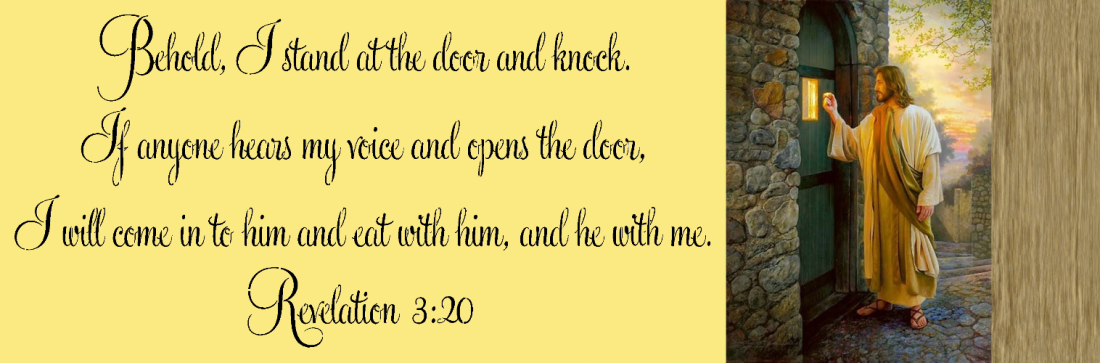
The Door

I stood at the door, naked and dirty
To try to see if I could get in
I timidly knocked, you could barely hear
With noise all around, the bustle and din

In but a moment, the door opened wide
A gentle voice said “I know where you’ve been
All of us here have been waiting for you
Welcome, dear friend, I forgive all your sin”

He gave a white robe and said “Now you’re clean
Enter with confidence, you’re now our kin
Blest of my Father, you’re safe in His hand
Your promised peace and joy now begins

I came with nothing and was given all
I came here lost never thinking I’d win
All glory to God! Praise Him forever!
I was cursed outside, but now blest within

Dear MAGA: 20230219 Open Topic

This Rejoice & Praise God Sunday Open Thread, with full respect to those who worship God on the Sabbath, is a place to reaffirm our worship of our Creator, our Father, our King Eternal.

It’s also a place to read, post, and discuss news that is worth knowing and sharing. Please post links to any news stories that you use as sources or quote from.

In the QTree, we’re a friendly and civil lot. We encourage free speech and the open exchange and civil discussion of different ideas. Topics aren’t constrained, and sound logic is highly encouraged, all built on a solid foundation of truth and established facts.

We have a policy of mutual respect, shown by civility. Civility encourages discussions, promotes objectivity and rational thought in discourse, and camaraderie in the participants – characteristics we strive toward in our Q Tree community.

Please show respect and consideration for our fellow QTreepers. Before hitting the “post” button, please proofread your post and make sure your opinion addresses the issue only, and does not confront or denigrate the poster. Keep to the topic – avoid “you” and “your”. Here in The Q Tree, personal attacks, name-calling, ridicule, insults, baiting, and other conduct for which a penalty flag would be thrown are VERBOTEN.

In The Q Tree, we’re compatriots, sitting around the campfire, roasting hot dogs, making s’mores, and discussing, agreeing, and disagreeing about whatever interests us. This board will remain a home for those who seek respectful conversations.

Please also consider the Guidelines for posting and discussion printed here: 
https://www.theqtree.com/2019/01/01/dear-maga-open-topic-20190101/


On this day and every day –

God is in Control
. . . and His Grace is Sufficient, so . . .
Keep Looking Up


Hopefully, every Sunday, we can find something here that will build us up a little . . . give us a smile . . . and add some joy or peace, very much needed in all our lives.

“This day is holy to the Lord your God;
do not mourn nor weep.” . . .
“Go your way, eat the fat, drink the sweet,
and send portions to those for whom nothing is prepared;
for this day is holy to our Lord.
Do not sorrow,
for the joy of the Lord is your strength.”

Joy . . . a Choice, a Struggle

The joy of the Lord is the gladness of heart that comes from knowing God, abiding in Christ, and being filled with the Holy Spirit.

When Jesus was born, the angels announced “good tidings of great joy” (Luke 2:10). All who find Jesus know, with the shepherds of the nativity, the joy He brings. Even before His birth, Jesus had brought joy, as attested to in Mary’s song (Luke 1:47) and by John’s response to hearing Mary’s voice as he “leaped for joy” in his mother’s womb (Luke 1:44).

Jesus exemplified joy in His ministry. He was no glum ascetic; rather, His enemies accused Him of being too joyful on occasion (Luke 7:34). Jesus described Himself as a bridegroom enjoying a wedding feast (Mark 2:18–20); He “rejoiced in the Holy Spirit” (Luke 10:21); He spoke of “my joy” (John 15:11) and promised to give His disciples a lifetime supply of it (John 16:24). Joy is reflected in many of Jesus’ parables, including the three stories in Luke 15, which mention “rejoicing in the presence of the angels” (Luke 15:10) and end with a joyful shepherd, a joyful woman, and a joyful father.

Nehemiah told the repentant Israelites that the joy of the Lord would be their strength (Nehemiah 8:10). The early church was characterized by gladness and the joy of the Lord (Acts 2:46; 13:52), and “joy in the Holy Spirit” is a distinguishing mark of the kingdom of God (Romans 14:17). Those who are part of the kingdom share in the kingdom’s delight.

Joy is part of the fruit of the Spirit (Galatians 5:22-23). In fact, it is our Christian duty to rejoice in the Lord (Philippians 3:1; 4:4; 1 Thessalonians 5:16). In Christ, the believer is “filled with an inexpressible and glorious joy” (1 Peter 1:8).

Because of its supernatural origin, the joy of the Lord—our gladness of heart—is present even through the trials of life. We know we are children of God, and no one can snatch us away from Him (John 10:28–29). We are heirs to “an inheritance that can never perish, spoil or fade,” and no one can steal it from us (1 Peter 1:4; Matthew 6:20). We see the Author and Finisher of our faith, and, let the enemy rage ever so much, we know who wins in the end (Hebrews 12:2; Psalm 2).

Faith is the victory that overcomes the world, and the joy of the Lord is our strength. Adverse circumstances, instead of hindering our faith, can actually enhance our joy. Paul and Silas knew adversity as they sat with their feet in the stocks in a Philippian jail cell. Their legal rights had been violated. They had been arrested without cause and beaten without a trial. At midnight, since they couldn’t sleep, they sang—loudly—the praises of the Lord they were serving (Acts 16:25). A miracle soon followed (verse 26).

The apostles in Jerusalem were arrested—twice—and ordered not to preach in Jesus’ name. The second time they faced the court, they were beaten. Unfazed, they returned home “rejoicing because they had been counted worthy of suffering disgrace for the Name” and ready to preach some more (Acts 5:41). Of course, the apostles were only following the example of our Lord, who had “for the joy set before him . . . endured the cross, scorning its shame” (Hebrews 12:2).

The joy of the Lord may be a mystery to the one who does not possess it. But, for the believer in Christ, the joy of the Lord comes as naturally as grapes on a vine. As we abide in Christ, the True Vine, we, the branches, are full of His strength and vitality, and the fruit we produce, including joy, is His doing (John 15:5).


Where’s the Beef? Joy?  Do you feel it?  Do I feel it?  If not, perhaps an adjustment of perspective is sorely needed.

We are on this Earth for a very short time . . . an infinitesimally short period of time when compared to eternity.  And God’s Word has told us to live with joy during the troubles of this world and to look forward to the glories that will follow:

But understand this, that in the last days there will come times of difficulty. For people will be lovers of self, lovers of money, proud, arrogant, abusive, disobedient to their parents, ungrateful, unholy, heartless, unappeasable, slanderous, without self-control, brutal, not loving good, treacherous, reckless, swollen with conceit, lovers of pleasure rather than lovers of God, having the appearance of godliness, but denying its power.  2 Timothy 3:1-17

For all that is in the world—the desires of the flesh and the desires of the eyes and pride of life—is not from the Father but is from the world.  1 John 2:16

Do not be conformed to this world, but be transformed by the renewal of your mind, that by testing you may discern what is the will of God, what is good and acceptable and perfect.  Romans 12:2

Rejoice in the Lord always. Again I will say, rejoice! Let your gentleness be known to all men. The Lord is at hand. Be anxious for nothing, but in everything by prayer and supplication, with thanksgiving, let your requests be made known to God; and the peace of God, which surpasses all understanding, will guard your hearts and minds through Christ Jesus. Philippians 4:4-7

“I have said these things to you, that in me you may have peace. In the world you will have tribulation. But take heart; I have overcome the world.”  John 16:33

 “Let not your hearts be troubled. Believe in God; believe also in me. In my Father’s house are many rooms. If it were not so, would I have told you that I go to prepare a place for you? And if I go and prepare a place for you, I will come again and will take you to myself, that where I am you may be also.”  John 14:1-3

Then I saw a new heaven and a new earth, for the first heaven and the first earth had passed away, and the sea was no more. And I saw the holy city, new Jerusalem, coming down out of heaven from God, prepared as a bride adorned for her husband. And I heard a loud voice from the throne saying, “Behold, the dwelling place of God is with man. He will dwell with them, and they will be his people, and God himself will be with them as their God. He will wipe away every tear from their eyes, and death shall be no more, neither shall there be mourning, nor crying, nor pain anymore, for the former things have passed away.” Revelation 21:1-27

Then the angel showed me the river of the water of life, bright as crystal, flowing from the throne of God and of the Lamb through the middle of the street of the city; also, on either side of the river, the tree of life with its twelve kinds of fruit, yielding its fruit each month. The leaves of the tree were for the healing of the nations. No longer will there be anything accursed, but the throne of God and of the Lamb will be in it, and his servants will worship him. They will see his face, and his name will be on their foreheads. And night will be no more. They will need no light of lamp or sun, for the Lord God will be their light, and they will reign forever and ever.  Revelation 22:1-5

Amen: Blessing, and glory, and wisdom, and thanksgiving, and honor, and power, and might, be unto our God for ever and ever. Amen.

The Joy of the Lord is here.  However, we’ve got to realize it’s ours, recognize it and then lay ahold of it firmly.  It’s a choice. It’s our choice.


Psalm 97:11-12 Light is sown for the righteous, and gladness for the upright in heart. Rejoice in the Lord, ye righteous; and give thanks at the remembrance of his holiness.

Revelation 21:23 And the city had no need of the sun, neither of the moon, to shine in it: for the glory of God did lighten it, and the Lamb is the light thereof.

Sunshine in My Soul
Eliza E. Hewitt, pub.1887

There’s sunshine in my soul today,
More glorious and bright
Than glows in any earthly sky,
For Jesus is my light.

There’s music in my soul today,
A carol to my King;
And Jesus, listening, can hear
The song I cannot sing.

There’s springtime in my soul today,
For when the Lord is near
The dove of peace sings in my heart,
The flowers of grace appear.

There’s gladness in my soul today,
And hope, and praise, and love,
For blessings which He gives me now,
For joys laid up above.

O there’s sunshine, blessed sunshine,
While peaceful, happy moments roll;
When Jesus shows His smiling face
There’s sunshine in my soul.


.

Dear MAGA: 20230212 Open Topic

This Rejoice & Praise God Sunday Open Thread, with full respect to those who worship God on the Sabbath, is a place to reaffirm our worship of our Creator, our Father, our King Eternal.

It’s also a place to read, post, and discuss news that is worth knowing and sharing. Please post links to any news stories that you use as sources or quote from.

In the QTree, we’re a friendly and civil lot. We encourage free speech and the open exchange and civil discussion of different ideas. Topics aren’t constrained, and sound logic is highly encouraged, all built on a solid foundation of truth and established facts.

We have a policy of mutual respect, shown by civility. Civility encourages discussions, promotes objectivity and rational thought in discourse, and camaraderie in the participants – characteristics we strive toward in our Q Tree community.

Please show respect and consideration for our fellow QTreepers. Before hitting the “post” button, please proofread your post and make sure your opinion addresses the issue only, and does not confront or denigrate the poster. Keep to the topic – avoid “you” and “your”. Here in The Q Tree, personal attacks, name-calling, ridicule, insults, baiting, and other conduct for which a penalty flag would be thrown are VERBOTEN.

In The Q Tree, we’re compatriots, sitting around the campfire, roasting hot dogs, making s’mores, and discussing, agreeing, and disagreeing about whatever interests us. This board will remain a home for those who seek respectful conversations.

Please also consider the Guidelines for posting and discussion printed here: 
https://www.theqtree.com/2019/01/01/dear-maga-open-topic-20190101/


On this day and every day –

God is in Control
. . . and His Grace is Sufficient, so . . .
Keep Looking Up


Hopefully, every Sunday, we can find something here that will build us up a little . . . give us a smile . . . and add some joy or peace, very much needed in all our lives.

“This day is holy to the Lord your God;
do not mourn nor weep.” . . .
“Go your way, eat the fat, drink the sweet,
and send portions to those for whom nothing is prepared;
for this day is holy to our Lord.
Do not sorrow,
for the joy of the Lord is your strength.”

A New Beginning

The New Jerusalem, which is also called the Tabernacle of God, the Holy City, the City of God, the Celestial City, the City Foursquare, and Heavenly Jerusalem, is literally heaven on earth. It’s referred to in the Bible in several places (Galatians 4:26; Hebrews 11:10; 12:22–24; and 13:14), but it’s most fully described in Revelation 21.

In Revelation 21, the recorded history of man is at its end. All of the ages have come and gone. Christ has gathered His church in the Rapture (1 Thessalonians 4:15–17). The Tribulation has passed (Revelation 6—18). The battle of Armageddon has been fought and won by our Lord Jesus Christ (Revelation 19:17–21). Satan has been chained for the 1,000-year reign of Christ on earth (Revelation 20:1–3). A new, glorious temple has been established in Jerusalem (Ezekiel 40—48). The final rebellion against God has been quashed, and Satan has received his just punishment, an eternity in the lake of fire (Revelation 20:7–10.) The Great White Throne Judgment has taken place, and mankind has been judged (Revelation 20:11–15).

In Revelation 21:1 God does a complete make-over of heaven and earth (Isaiah 65:17; 2 Peter 3:12–13). The new heaven and new earth are what some call the “eternal state” and will be “where righteousness dwells” (2 Peter 3:13). After the re-creation, God reveals the New Jerusalem. John sees a glimpse of it in his vision: “The Holy City, the new Jerusalem, coming down out of heaven from God, prepared as a bride beautifully dressed for her husband” (Revelation 21:2). This is the city that Abraham looked for in faith (Hebrews 11:10). It is the place where God will dwell with His people forever (Revelation 21:3). Inhabitants of this celestial city will have all tears wiped away (Revelation 21:4).

The New Jerusalem will be fantastically huge. John records that the city is nearly 1,400 miles long, and it is as wide and as high as it is long—the New Jerusalem being in equal in length, width, and height (Revelation 21:15–17). The city will be dazzling in every way. It’s lighted by the glory of God (verse 23). Its twelve foundations, bearing the names of the twelve apostles, are “decorated with every kind of precious stone” (verse 19). It has twelve gates, each a single pearl, bearing the names of the twelve tribes of Israel (verses 12 and 21). The street will be made of pure gold (verse 21).

The New Jerusalem will be a place of unimagined blessing. The curse of the old earth will be gone (Revelation 22:3). In the city are the tree of life “for the healing of the nations” and the river of life (verses 1–2). It is the place that Paul spoke of: “In the coming ages [God] might show the incomparable riches of his grace, expressed in his kindness to us in Christ Jesus” (Ephesians 2:7). The New Jerusalem is the ultimate fulfillment of all God’s promises. The New Jerusalem is God’s goodness made fully manifest.

Who are the residents of the New Jerusalem? The Father and the Lamb are there (Revelation 21:22). Angels are at the gates (verse 12). But the city will be filled with God’s redeemed children. The New Jerusalem is the righteous counter to the evil Babylon (Revelation 17), destroyed by God’s judgment (Revelation 18). The wicked had their city, and God has His.

To which city do you belong? Babylon the Great or the New Jerusalem? If you believe that Jesus, the Son of God, died and rose again and have asked God to save you by His grace, then you are a citizen of the New Jerusalem. “God raised [you] up with Christ and seated [you] with him in the heavenly realms in Christ Jesus” (Ephesians 2:6). You have “an inheritance that can never perish, spoil or fade” (1 Peter 1:4).

If you have not yet trusted Christ as your Savior, then we urge you to receive Him. The invitation is extended: “The Spirit and the bride say, ‘Come!’ And let the one who hears say, ‘Come!’ Let the one who is thirsty come; and let the one who wishes take the free gift of the water of life” (Revelation 22:17).


Remember . . . despite these explicit descriptions of New Jerusalem, characteristics that we can partially envision but not yet fully grasp the enormity and grandeur . . . despite reading about God’s glory as light, the size, the gold streets, the jeweled foundations, the enormous pearl gates and the angels . . . despite all of this . . .

No eye has ever seen or no ear has ever heard
or no mind has ever thought of the wonderful things
God has made ready for those who love Him. 
1 Corinthians 2:9

In other words, it’s impossible for us even imagine the wonders that God has in store for us . . .

for

Dear MAGA: 20230205 Open Topic

This Rejoice & Praise God Sunday Open Thread, with full respect to those who worship God on the Sabbath, is a place to reaffirm our worship of our Creator, our Father, our King Eternal.

It’s also a place to read, post, and discuss news that is worth knowing and sharing. Please post links to any news stories that you use as sources or quote from.

In the QTree, we’re a friendly and civil lot. We encourage free speech and the open exchange and civil discussion of different ideas. Topics aren’t constrained, and sound logic is highly encouraged, all built on a solid foundation of truth and established facts.

We have a policy of mutual respect, shown by civility. Civility encourages discussions, promotes objectivity and rational thought in discourse, and camaraderie in the participants – characteristics we strive toward in our Q Tree community.

Please show respect and consideration for our fellow QTreepers. Before hitting the “post” button, please proofread your post and make sure your opinion addresses the issue only, and does not confront or denigrate the poster. Keep to the topic – avoid “you” and “your”. Here in The Q Tree, personal attacks, name-calling, ridicule, insults, baiting, and other conduct for which a penalty flag would be thrown are VERBOTEN.

In The Q Tree, we’re compatriots, sitting around the campfire, roasting hot dogs, making s’mores, and discussing, agreeing, and disagreeing about whatever interests us. This board will remain a home for those who seek respectful conversations.

Please also consider the Guidelines for posting and discussion printed here: 
https://www.theqtree.com/2019/01/01/dear-maga-open-topic-20190101/


On this day and every day –

God is in Control
. . . and His Grace is Sufficient, so . . .
Keep Looking Up


Hopefully, every Sunday, we can find something here that will build us up a little . . . give us a smile . . . and add some joy or peace, very much needed in all our lives.

“This day is holy to the Lord your God;
do not mourn nor weep.” . . .
“Go your way, eat the fat, drink the sweet,
and send portions to those for whom nothing is prepared;
for this day is holy to our Lord.
Do not sorrow,
for the joy of the Lord is your strength.”


The End of the World

The event usually referred to as “the end of the world” (eschaton) is described in 2 Peter 3:10: “The heavens will disappear with a roar; the elements will be destroyed by fire, and the earth and everything in it will be laid bare.” This is the culmination of a series of events called “the day of the Lord,” the time when God will intervene in human history for the purpose of judgment. At that time, all that God has created, “the heavens and the earth” (Genesis 1:1), He will destroy.

The timing of this event, according to most Bible scholars, is at the end of the 1000-year period called the millennium. During these 1000 years, Christ will reign on earth as King in Jerusalem, sitting on the throne of David (Luke 1:32-33) and ruling in peace but with a “rod of iron” (Revelation 19:15). At the end of the 1000 years, Satan will be released, defeated again, and then cast into the lake of fire (Revelation 20:7-10). Then, after a final judgment by God, the end of the world described in 2 Peter 3:10 occurs. The Bible tells us several things about this event.

First, it will be cataclysmic in scope. The “heavens” refers to the physical universe – the stars, planets, and galaxies—which will be consumed by some kind of tremendous explosion that will consume and obliterate all matter as we know it. All the elements that make up the universe will be melted in the “fervent heat” (2 Peter 3:12). This will also be a noisy event, described in different Bible versions as a “roar” (NIV), a “great noise” (KJV), a “loud noise” (CEV), and a “thunderous crash” (AMP). There will be no doubt as to what is happening. Everyone will see and hear it because we are also told that “the earth and everything in it will be laid bare.”

Then God will create a “new heaven and a new earth” (Revelation 21:1), which will include the “New Jerusalem” (v. 2), the capital city of heaven, a place of perfect holiness, which will come down from heaven to the new earth. This is the city where the saints—those whose names were written in the “Lamb’s book of life” (Revelation 13:8)—will live forever. Peter refers to this new creation as “the home of righteousness” (2 Peter 3:13).

Perhaps the most important part of Peter’s description of that day is his question in verses 11-12: “Since everything will be destroyed in this way, what kind of people ought you to be? You ought to live holy and godly lives as you look forward to the day of God and speed its coming.” Christians know what is going to happen, and we should live in a way that reflects that understanding. This life is passing away, and our focus should be on the new heavens and earth to come. Our “holy and godly” lives should be a testimony to those who do not know the Savior, and we should tell others about Him so they can escape the terrible fate that awaits those who reject Him. We wait in eager anticipation for God’s “Son from heaven, whom He raised from the dead, even Jesus who delivers us from the wrath to come” (1 Thessalonians 1:10).

Do not love the world or the things in the world. If anyone loves the world, the love of the Father is not in him. For all that is in the world—the desires of the flesh and the desires of the eyes and pride in possessions—is not from the Father but is from the world. And the world is passing away along with its desires, but whoever does the will of God abides forever.  1 John 2:15-17


But . . . until that time . . .

As you therefore have received Christ Jesus the Lord, so walk in Him, rooted and built up in Him and established in the faith, as you have been taught, abounding in it with thanksgiving.

Seek those things which are above, where Christ is, sitting at the right hand of God. Set your mind on things above, not on things on the earth. 

For you died, and your life is hidden with Christ in God. When Christ who is our life appears, then you also will appear with Him in glory.

Dear MAGA: 20230129 Open Topic

This Rejoice & Praise God Sunday Open Thread, with full respect to those who worship God on the Sabbath, is a place to reaffirm our worship of our Creator, our Father, our King Eternal.

It’s also a place to read, post, and discuss news that is worth knowing and sharing. Please post links to any news stories that you use as sources or quote from.

In the QTree, we’re a friendly and civil lot. We encourage free speech and the open exchange and civil discussion of different ideas. Topics aren’t constrained, and sound logic is highly encouraged, all built on a solid foundation of truth and established facts.

We have a policy of mutual respect, shown by civility. Civility encourages discussions, promotes objectivity and rational thought in discourse, and camaraderie in the participants – characteristics we strive toward in our Q Tree community.

Please show respect and consideration for our fellow QTreepers. Before hitting the “post” button, please proofread your post and make sure your opinion addresses the issue only, and does not confront or denigrate the poster. Keep to the topic – avoid “you” and “your”. Here in The Q Tree, personal attacks, name-calling, ridicule, insults, baiting, and other conduct for which a penalty flag would be thrown are VERBOTEN.

In The Q Tree, we’re compatriots, sitting around the campfire, roasting hot dogs, making s’mores, and discussing, agreeing, and disagreeing about whatever interests us. This board will remain a home for those who seek respectful conversations.

Please also consider the Guidelines for posting and discussion printed here: 
https://www.theqtree.com/2019/01/01/dear-maga-open-topic-20190101/


On this day and every day –

God is in Control
. . . and His Grace is Sufficient, so . . .
Keep Looking Up


Hopefully, every Sunday, we can find something here that will build us up a little . . . give us a smile . . . and add some joy or peace, very much needed in all our lives.

“This day is holy to the Lord your God;
do not mourn nor weep.” . . .
“Go your way, eat the fat, drink the sweet,
and send portions to those for whom nothing is prepared;
for this day is holy to our Lord.
Do not sorrow,
for the joy of the Lord is your strength.”


The End of all Things

The Bible consistently warns us that this world will not last forever. “Heaven and earth will pass away,” Jesus said in Matthew 24:35. His statement was in the context of end times’ prophecies and the eternal nature of Jesus’ words: “My words will never pass away.” This means that trusting Jesus is wiser than trusting anything in this world.

Jesus also refers to the passing away of heaven and earth in Matthew 5:18. In Revelation 21:1, John writes of a new heaven and a new earth in the eternal state, having seen that “the first heaven and the first earth had passed away” (cf. Isaiah 65:17 and 2 Peter 3:13). To “pass away” is to disappear or be no more. This refers to the physical heaven and earth—the material world and all it contains—but not to the spirits/souls of the inhabitants of those places. Scripture is clear that people will outlast the current material universe, some in God’s presence receiving grace rewards, and some away from God’s presence, receiving just punishment, and that the current universe will be replaced by another that will never know the contamination of sin.

The method of this world’s destruction is revealed in 2 Peter 3:10–12: “The day of the Lord will come like a thief. The heavens will disappear with a roar; the elements will be destroyed by fire. . . . That day will bring about the destruction of the heavens by fire, and the elements will melt in the heat.”

The prophet Isaiah foretold the passing away of heaven and earth, too. “All the stars in the sky will be dissolved and the heavens rolled up like a scroll; all the starry host will fall like withered leaves from the vine, like shriveled figs from the fig tree” (Isaiah 34:4). The Lord assures His people that, even as the heaven and earth are passing away, His salvation is secure: “The heavens will vanish like smoke, the earth will wear out like a garment and its inhabitants die like flies. But my salvation will last forever, my righteousness will never fail” (Isaiah 51:6).

Knowing that heaven and earth will pass away gives us perspective in life. This world is not our home. “We are looking forward to a new heaven and a new earth, where righteousness dwells” (2 Peter 3:13). Jesus tells us to have the proper priorities: “Do not store up for yourselves treasures on earth. . . . But store up for yourselves treasures in heaven” (Matthew 6:19–20). And Peter, after reminding us of the temporary nature of this world, says, “Dear friends, since you are looking forward to this, make every effort to be found spotless, blameless and at peace with him” (2 Peter 3:14).


But . . . until that time . . .


As you therefore have received Christ Jesus the Lord, so walk in Him, rooted and built up in Him and established in the faith, as you have been taught, abounding in it with thanksgiving.
Seek those things which are above, where Christ is, sitting at the right hand of God. Set your mind on things above, not on things on the earth. For you died, and your life is hidden with Christ in God. When Christ who is our life appears, then you also will appear with Him in glory.