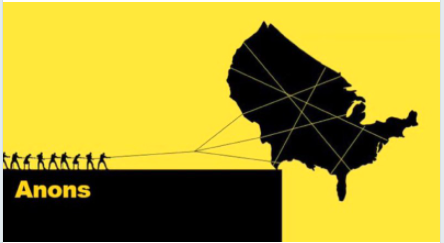
Are we there yet? Are we at the precipice?
4641
Sep 09, 2020 7:01:53 PM EDT
Q !!Hs1Jq13jV6
ID: 18740b
No. 10581812
THE SWAMP RUNS DEEP.
Sometimes you cannot tell people the truth.
You must show them.
Only then, at the PRECIPICE, will people find the will to change [to participate].
We, the People, have been betrayed for a very long time.
WILL YOU STAND?
FOR GOD AND COUNTRY.
FOR FREEDOM.
FOR HUMANITY.
WHERE WE GO ONE WE GO ALL !!!
Q
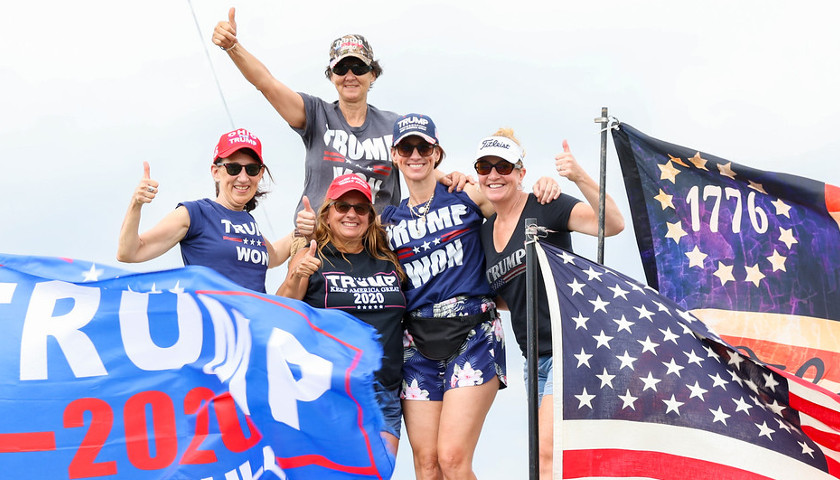
Given the events of the week, both real and invented narratives, it’s a good time for a rally.
For those feeling the weight of the world given what we are seeing and hearing, here’s a reminder that we are America.
How will we respond?
America really needs to save herself. We need a leader to remind us how.
Hopefully, the boss will lower some sort of boom tonight.
Cullman, Alabama
History
Before European settlement, the area that today includes Cullman was originally in the territory of the Cherokee Nation. The region was traversed by a trail known as the Black Warrior’s Path, which led from the Tennessee River near the present location of Florence, Alabama, to a point on the Black Warrior River south of Cullman. This trail figured significantly in Cherokee history, and it featured prominently in the American Indian Wars prior to the establishment of the state of Alabama and the relocation of several American Indian tribes, including the Creek people westward along the Trail of Tears. During the Creek War in 1813, General Andrew Jackson of the U.S. Army dispatched a contingent of troops down the trail, one of which included the frontiersman Davy Crockett.[5]
In the 1820s and the 1830s, two toll roads were built linking the Tennessee Valley to present-day Birmingham. In 1822, Abraham Stout was given a charter by the Alabama Legislature to open and turnpike a road beginning from Gandy’s Cove in Morgan County to the ghost town of Baltimore on the Mulberry Fork near Colony. The road passed near present-day Vinemont through Cullman, Good Hope, and down the current Interstate 65 corridor to the Mulberry Fork. The road was later extended to Elyton (Birmingham) in 1827. It then became known as Stout’s Road. Mace Thomas Payne Brindley was given a charter in 1833 to turnpike two roads, one running between Blount Springs to Somerville by way of his homestead in present-day Simcoe, and the second road passing west of Hanceville and east of Downtown Cullman to join Stout’s Road north of the city. What later became the Brindley Turnpike became an extension of Stout’s Road to Decatur. Cullman later became located between the juncture of the two roads, and they predated the corridor of U.S. Route 31.
During the Civil War, the future location of Cullman was the site of the minor Battle of Day’s Gap. On April 30, 1863, Union forces under the command of Colonel Abel Streight won a victory over forces under Confederate General Nathan Bedford Forrest. This battle was part of a campaign and chase known collectively as Streight’s Raid. Although Streight got the upper hand in this battle, Forrest would have the last laugh. In one of the more humorous moments of the war, Streight sought a truce and negotiations with Forrest in present-day Cherokee County near present-day Gaylesville. Although Streight’s force was larger than Forrest’s, while the two were negotiating, Forrest had his troops march repeatedly in a circuitous route past the site of the talks. Thinking himself to be badly outnumbered, Streight surrendered to Forrest.[6]Colonel John G. Cullmann, founder of Cullman (1823–1895)
Cullman itself was founded in 1873 by Colonel John G. Cullmann, a German immigrant.[7] Cullmann had been an advocate of democratic reforms in his native Bavaria, having fought and acquired his honorific title “Colonel” during the Revolutions of 1848–49. After the failure of the revolution, Cullmann found himself in financial ruin. In the years to follow, he would try to re-establish himself in business, but after several setbacks, including a great financial loss in the First Schleswig War, he would remain unsuccessful. As time went on and Prussia, under King Wilhelm I and his Minister President Otto von Bismarck, began to exert more influence in the German region (eventually unifying Germany under Prussian rule in 1871), Cullmann began to believe that his political ideals were fundamentally incompatible with those of the German Government. As a result, he decided to emigrate from his homeland. Settling first in London due to fears that he would be forced to join in the ongoing American Civil War, Cullman eventually came to America in 1865. He moved to Alabama in 1871 and, in 1873, negotiated an agreement to act as agent for a tract of land 349,000 acres (1,410 km2) in size, owned by the Louisville and Nashville Railroad Company, on which he established a colony for German immigrants.[8][9]
Five German families moved to the area in March 1873; in 1874, the town was incorporated and named after Colonel Cullmann (with the town name being Americanized to ‘Cullman’ with one ‘n’). Over the next 20 years, Cullmann encouraged around 100,000 Germans to immigrate to the United States, with many settling in the Cullman area. Cullmann drew on his military engineering training in laying out and planning the town. During this period, Cullman underwent considerable growth. German continued to be widely spoken, and Cullmann himself was the publisher of a German-language newspaper. When Cullmann died in 1895, at the age of 72, his funeral was marked by the attendance of Governor William C. Oates.[8] The site Cullmann selected for his headquarters is now his gravesite.
German immigrants also founded St. Bernard’s Monastery, on the grounds of which is the Ave Maria Grotto, containing 125 miniature reproductions of some of the most famous religious structures of the world. It is Cullman’s principal tourist attraction.[10]
During the 1890s, and still to this day, Cullman was reported to be a sundown town, where African Americans were not allowed to live.[11][12][13] The Ku Klux Klan would maintain a presence in the county throughout the civil rights movement, erecting signs that deterred African Americans from being within the county at night. This subsequently led to a rise in population of Colony, Alabama which was a safe haven for the discriminated.
For many years Cullman was a college town, with Saint Bernard College serving as the home of several hundred students. In the mid-1970s, St. Bernard briefly merged with Sacred Heart College (a two-year Benedictine women’s college), to become Southern Benedictine College. That college closed in 1979, and it now operates as St. Bernard Preparatory School. The former site of Sacred Heart College is now the Sacred Heart Monastery, which serves as a retreat center operated by the Benedictine Sisters of Sacred Heart Monastery.[14]
During the 20th century, Cullman developed a more diverse economy, including several manufacturing and distribution facilities. The City of Cullman regularly ranks as a top ‘micropolitan’ city in the nation.[15]
Cullman gained national attention in early 2008, when a special election was held to fill a vacancy in the Alabama House of Representatives. The district that included Cullman elected James C. Fields, an African-American, in that special election.[16]
Cullman’s German heritage was repressed during World War I and World War II, while the United States was fighting Germany. This was reversed in the 1970s, with renewed interest in the city’s history and heritage. Today, Cullman holds an annual Oktoberfest.[17] An honorary “Bürgermeister” is elected for each Oktoberfest. For many years the Oktoberfest did not include alcohol because Cullman was dry, but starting in 2011 the Oktoberfest was able to offer beer.[18]2011 tornado damage
Downtown was significantly damaged by an EF4 tornado during the 2011 Super Outbreak. Hitting on April 27, it destroyed many buildings in downtown and in an east-side residential area, but causing no fatalities. The twister moved northeast towards Arab and Guntersville, killing two Cullman County residents and at least four others.[19] Cullman has since rebuilt and revitalized the downtown area. New zoning laws and alcohol ordinances have allowed for greater expansion and growth in the downtown Cullman area.[15]
About Save America
Over the past four years, President Donald Trump’s administration delivered for Americans of all backgrounds like never before. Save America is about building on those accomplishments, supporting the brave conservatives who will define the future of the America First Movement, the future of our party, and the future of our beloved country. Save America is also about ensuring that we always keep America First, in our foreign and domestic policy. We take pride in our country, we teach the truth about our history, we celebrate our rich heritage and national traditions, and of course, we respect our great American Flag.
- We are committed to defending innocent life and to upholding the Judeo-Christian values of our founding.
- We believe in the promise of the Declaration of Independence, that we are all made EQUAL by our Creator, and that must all be TREATED equal under the law.
- We know that our rights do not come from government, they come from God, and no earthly force can ever take those rights away. That includes the right to religious liberty and the right to Keep and Bear Arms.
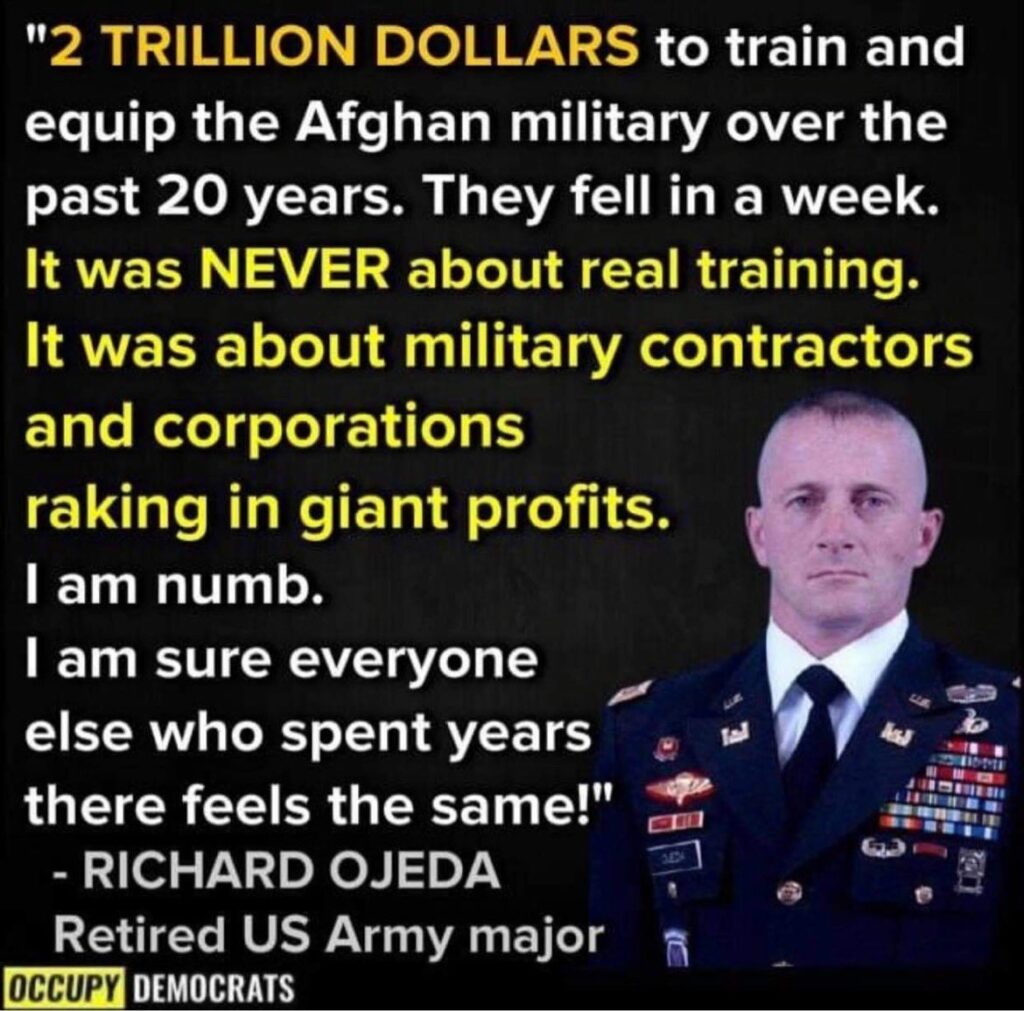
- We believe in rebuilding our previously depleted military and ending the endless wars our failed politicians of the past got us into for decades.
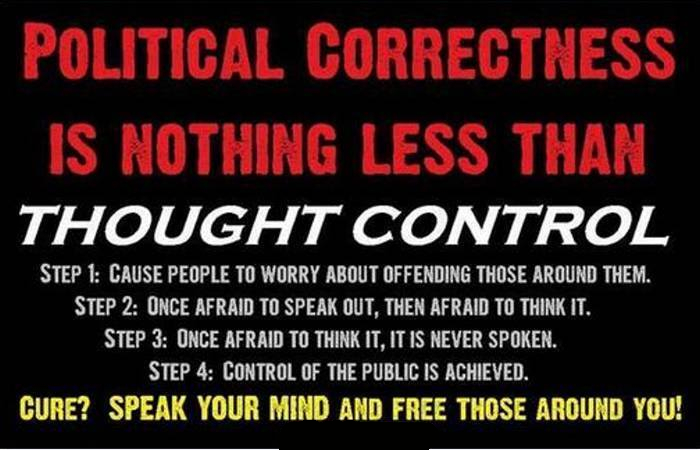
- We embrace free thought, we welcome robust debate, and we are not afraid to stand up to the oppressive dictates of political correctness.
- We know that the rule of law is the ultimate safeguard of our freedoms, and we affirm that the Constitution means exactly what it says AS WRITTEN.
- We support fair trade, low taxes, and fewer job-killing regulations, and we know that America must always have the most powerful military on the face of the Earth.
- We believe in Law and Order, and we believe that the men and women of law enforcement are HEROES who deserve our absolute support.
- We believe in FREE SPEECH and Fair Elections. We must ensure fair, honest, transparent, and secure elections going forward – where every LEGAL VOTE counts.
Plans at this time are that I will be away from the keyboard when the rally happens, so please keep the thread lively. I’ll put some links here for better viewing as the day goes on and they become available.