“We do not believe any group of men adequate enough or wise enough to operate without scrutiny or without criticism. We know that the only way to avoid error is to detect it, that the only way to detect it is to be free to inquire. We know that in secrecy error undetected will flourish and subvert.” –J. Robert Oppenheimer
There are plenty of opportunities these days to worry about . . . particularly with respect to various events associated with next week’s election and the cloud of lies and duplicity associated with them. We’re getting more information that PTrump will gather more electoral votes than in 2016 . . . but what if he doesn’t? What if PTrump wins and the lying Democrats continue with their obstructionism in the House? What if we get the House back but Kevin McCarthy really is a Paul Ryan protege? What if the corrupt Executive leaders largely retain their positions? What if AG Barr really isn’t interested in prosecutions? What if Hillary, Obama and Biden escape justice? Worry, worry, worry.
As has been mentioned numerous times, the events of the future will happen in accordance with God’s plans . . . and God’s plans are perfect . . . and they are crafted so that all things work together for the good of those who love God . . . even though we don’t see it or may not even agree with it.
We don’t have to understand . . . we need to trust . . . and not worry. God’s got this, even if we witness the greatest travesty that politics in American has ever seen.
Tough to do? You bet . . . virtually impossible, but there it is.
“Do not worry about tomorrow, for tomorrow will worry about itself. Each day has enough trouble of its own.” — Matthew 6:34
I’m generally a glass-half-full kind of person. I trust God for the future. Yet I admit that I do secretly worry about what will happen when my three-year cancer treatment plan ends. I worry about my children who have already lost their father to cancer. I worry about my husband having another heart attack. I worry about my dad’s grief and loneliness after losing my mom and then my stepmom.
What secret worries linger in the back of your mind?
We can imagine Jesus lovingly shaking his head at all of our what-ifs, and asking the rhetorical question “Can any one of you by worrying add a single hour to your life?” Jesus teaches us not to waste time with such concerns but instead to “seek first the kingdom” of God. We can focus on living out the gospel, sharing it with others, and maximizing the time we are given.
Jesus challenges us to have faith and to trust that the Father knows exactly what we need. Rather than fret, we are invited to surrender our stress to Jesus. “Come to me, all you who are weary and burdened,” he says, “and I will give you rest” (Matthew 11:28).
Hello again Q-Tree Family! I hope you don’t mind being referred to as such for this place has really become such a home away from home for me & likely many others too. We are a refuge & respite from both “the last refuge” & the storm that swirls about. May God continue to bless us Every One!!!
Once again, this is a Self-Directed installment of much of what can recently be found at Flep’s Twitter page. He has neither asked me to do this, commented one way or another (that I’ve seen), nor requested me to stop. So I Am NOT speaking for Flep in Any Way, just passing along his Twitter activity while he is busy with election related activities.
You can find Flep’s page here:
https://twitter.com/Baba9773
Flep’s Twitter page so you can hopefully scroll his recent tweets
I may choose to post Every Tweet within a thread so sorry for any overlap. Also, depending on time & energy I may add interesting/informative replies. Any typed text here is my opinion. Hope you guys find this helpful, in the absence of Flep’s usual newsy & analytical posts…
I hope to get back to when I last shared tweets by Flep, so there may be A Lot of material here, since it’s been a few days. Hopefully there won’t be any duplicates but if twitter removed my re-tweets I won’t know, so please bear with me 🙂 Also, I’ve been working on this post for a few days, since I’m a bit under the weather & keep running out of gas. So, there may be more tweet overlap w/ Flep’s recent posts. I’ll try to separate the tweets, loosely, by dates going back in time so stuff near the top of this post Should Be more recent.
As I was working on this post Flep put up another election analysis post!!! Check it out here:
Late 10-27-20 note: because this post is getting unwieldy, my computer is causing probs, & I’m feeling sub-par, I will post it As Is & get back to OCD capture of Flep’s tweeting in the next installment…
Let’s Start with Fleps’s Media tab, where more of his original work can likely be found:
I’m going to check individual tweets from this thread to see if anything important leaps out to share here & I included a couple from one of the internal threads, my choice, not Flep’s retweets, fyi…
Well, here’s a disconcerting, but not completely unexpected, discovery!. I was thinking some of Flep’s tweets looked familiar so decided to check my last Flep Tweet Post here:
So I checked that previous post & the below thread was already shared there. Ok so I’m just forgetful, right…
Well, I Am forgetful but I’ve been using a re-tweet feature, the green broken box, to let me know when I’ve retweeted one of Flep’s tweets. In order to keep track of these Flep-related posts I’ve been retweeting Each one of Flep’s tweets that I share. That means the green box shows when I’ve retweeted one. Well, the entire thread below is NO LONGER SHOWING THAT I RETWEETED IT.
If you note my prior post was done FIVE days ago (was accurate when I started this post) & Twitter Already Removed those retweets that I’d done that day! This probably explains why there is barely Any outside twitter activity noted on Flep’s twitter threads. It’s Quite Possible that there was Much More Activity on his important info but that Twitter is Actively Suppressing It!
Since I already did the work in gathering the next thread info (again) I will leave it below. However, please note if you’ve already ready my Flep Post #2 you’ve already read that thread, though possibly not the reply comments/tweets at the end. They May represent new activity that Twitter hasn’t Yet Deleted or Suppressed–just wow!
Great thread. Also: Trump/RNC's legal win in August to lift PA's decades old consent decree was BIG. Reportedly, Trump/RNC has an army of poll watchers in PA to inspect every VBM ballot. Spoiled ballots could prove catastrophic for Biden/DNC in PA. https://t.co/Th5u42cQiZ
An RNC poll watcher was tossed/banned from a 'Satellite Election Center' in Philly. Trump/RNC sued, were denied, and have appealed. This doesn't restrict Trump and the RNC from monitoring the processing/counting of VBM ballots.
It’s funny, but a couple of times I’ve tried to get the above tweet to show but it appears to be being blocked, perhaps by the Chi-Nazi’s given the reference to China…here’s a text version of it, I hope:
I’m going to include the “quote” tweets from this thread in case anyone might want to use this Thread of Flep’s to track some of the Twitter suppression/censorship that’s happening.
These quote tweets were from the 1st tweet in the thread:
Thanks for sharing this @Baba9773 as since i heard of the PA ruling by SCOTUS i have been worried about shenanigans there. Good thread. https://t.co/vUKMtDPYE0
I like your confidence. Biden and the Democrats are in big trouble in PA. Polls don't reflect the no. of 'spoiled' VBM ballots expected which the state's top election official said could exceed 100k. Catastrophic fail by Biden/DNC to push VBM. Thread: https://t.co/2nkSrSCmqV
Several times I’ve attempted to post the below tweets & it hasn’t worked. So either Word Press or Twitter is suppressing them, or I’m having unknown computer probs…hmmm…
Right after the vote that confirmed Amy Coney Barrett, did anyone catch that Mitch McConnell set up the Senate to take up James Knepp II's nomination to be a judge for the northern district of Ohio once it returns to Washington on Nov. 9?
Please note that above twitter pages being embedded was never what I was attempting only a copy/paste of Flep’s individual re-tweets. I’ll see if I can find the correct retweets in the next installment, hopefully…
"I want every American child watching to understand that this is a very special and important ceremony.
We are fulfilling the duty that passes to each new generation to sustain the national traditions and virtues that make possible everything we have achieved." pic.twitter.com/eNIJ5zZU39
"Justice Barrett made clear she will issue rulings based solely upon a faithful reading of the law and the Constitution as written." pic.twitter.com/BmT4Xfjy3N
Justice Amy Coney Barrett "is one of our Nation's most brilliant legal scholars, and she will make an outstanding justice on the highest court in our land." pic.twitter.com/ovfmfXkp2e
"I am grateful for the confidence you have expressed in me, and I pledge to you and to the American people that I will discharge my duties to the very best of my ability." pic.twitter.com/jfQGNJwKLk
Court packing is opposed by a 2 to 1 margin in most battleground states. “Judicial Restraint” is the chosen judicial philosophy for voters by an enormous margin, beating “Judicial Activism” handily. https://t.co/34RXUMuIAp
— Rich Baris The People's Pundit (@Peoples_Pundit) October 27, 2020
CONFIRMED: Amy Coney Barrett is officially confirmed to the Supreme Court of the United States by a 52-48 vote by the Senate. She is the 115th Justice to serve on the Supreme Court.https://t.co/YQvABjlKx0pic.twitter.com/rVswaPvZxD
White House: UPDATE: The President participates in a swearing-in ceremony of The Honorable Amy Coney Barrett as Associate Justice of the Supreme Court of the United States at 9:00PM.
D Lead (VBM+IPEV) =302811; I tweeted this 2 days ago and it came true! What an incredible day. -52k in one day! D lead is now projected to be << 200k by E eve! Means Trump wins FL easily and by extension, the nation! pic.twitter.com/QW7r05zwev
D Lead (VBM+IPEV) =309834; was 354654 at 8am.-15k in 2 hrs and -45k in 8 hrs. What an incredible pace of collapse of the D lead. It is now projected to be << 200k by E eve! Means Trump wins FL and by extension, the nation! pic.twitter.com/pO2YHqWLvS
Last week, Joe Biden made perhaps the most shocking admission ever uttered in the history of presidential debates. On live television, Joe Biden confirmed his plan to ABOLISH the entire U.S. Oil Industry—that means NO fracking, NO jobs, and NO energy for Pennsylvania Families!
Interesting from NC interactive map by "Freeper" byecomey: *Rs doing better by 3 points with blacks than 2016 (when they were down from 2012!) *Rs doing better with women than 2016 *Rs doing better with SENIORS by 1.7% than 2016
This is the most important election in the history of our Country. With your vote, we will continue to bring back your jobs, lower drug prices, support our police, protect the #2A, defend our borders, and ensure more products are proudly stamped with the phrase MADE IN THE USA! pic.twitter.com/M0Ba8QR7Nl
(9) Overall, things looking really good for Trump. As I said yesterday, I do have crossover modeling in here by CD now so that it is more realistic. Didn't move the numbers that much, but it is baked in. I would say Trump is on track to win MN by +25K to +50K votes at this pt.
Our Economy is doing great, and is ready to set new records – best ever (Again!). Biden will destroy everything with his massive Tax Increases. Don’t let it happen!!!
The Fake News is talking about CASES, CASES, CASES. This includes many low risk people. Media is doing everything possible to create fear prior to November 3rd. The Cases are up because TESTING is way up, by far the most, and best, in the world. Mortality rate is DOWN 85% plus!
Mr. Terrell just wanted to commend you on the great job you are doing for President Trump!!! I am a African American conservative and I work for a Republican campaign. Would love to get out and campaign with you for President Trump!
Joe Biden insults Pennsylvanians who don't support him, calls them "chumps.” He has the same disdain for hard working Americans as Hillary had with her deplorables comment. pic.twitter.com/J0u36tR4a2
For the third time this year, the Trump administration’s efforts have guided an historic step forward in the Middle East. Yesterday’s announcement of normalized relations between Israel and Sudan is good news for peace-loving people everywhere.
D Lead (VBM+IPEV) = 370120; was 390115 at 8am. -20k in 6 hrs and -117k in last 3 days. It is now projected to end up below 150k by E eve! That means Trump wins FL easily. Winner of FL has won each of the last 6 elections pic.twitter.com/VAioa5TMCr
Though the above tweet looks like the first in a thread I couldn’t find linked tweets beyond a conversation of Flep w/ some others. Also some of these tweets may appear in Flep’s Monster Post linked near the top of my post. Sorry for any overlap but I’m not going to try to find duplicates or I may Never get this Post done! Just keep on scrolling & forgive me for pack-rat tendencies 🙂
Huge victory for election integrity from the Maine Supreme Court!
Marc Elias and the Democrats sued to allow ballots to be received up to 10 days *after* Election Day and eliminate signature matching, but the court ruled in our favor! (1/2)
For years, Joe Biden fought to cut your Social Security and Medicare—a fact which Joe falsely denied last night. This video (Joe Biden’s own words) was created by Bernie Sanders earlier this year to expose Joe Biden’s atrocious record and egregious lies! pic.twitter.com/womMTc70RP
"We have a warrior, and he's a good guy, but he loves to fight, and he loves this state, and he loves fighting for Florida, and he loves fighting for our country.
President @realDonaldTrump: We will cut taxes again for the middle class, Joe Biden will implement the largest tax hike in history if elected pic.twitter.com/tEl8FaKo2l
— Team Trump (Text TRUMP to 88022) (@TeamTrump) October 24, 2020
Joe Biden & Kamala Harris have repeatedly said they’re going to abolish fossil fuels & ban fracking. President @realDonaldTrump & I are not going to let that happen & we’re going to build on the record that for the first time in over 70 years, the US is a net exporter of energy! pic.twitter.com/rkIvYlyCl9
President @realDonaldTrump: Under Obama and Biden over 300,000 veterans died waiting for care from the VA, I took measures to never let that happen again pic.twitter.com/Dxh4RBqkJm
— Team Trump (Text TRUMP to 88022) (@TeamTrump) October 24, 2020
1) Interesting FL in person early vote #S *Sumter (where supposedly the seniors are voting against Trump) Currently it's 71 R-14 D (2016 68 Trump 29 Cankles)
*Hardee: 68 R 21 D (2016 69 Trump 29 Cankles) . So tiny drop for Trump, massive drop for Demented Perv Biteme
Don’t get me wrong, I’m the first guy to say you shouldn’t trust anything a national party leader says during an election. It’s their job to promote partisanship & their candidates. However these # are not shocking to me. Our @trafalgar_group polls have seen similar patterns. https://t.co/crMXlzfLbF
Joe Biden is a corrupt politician and he’s COMPROMISED. China is desperate for Biden to win because if Biden Wins, CHINA WINS – and China will OWN AMERICA. This corruption is EXACTLY why I decided to run for President in the first place…
Judge Barrett has demonstrated a deep understanding that a judge’s role is to interpret—not make—the law.
She won’t be a politician on the bench. She’ll make decisions as they should be decided, in an impartial manner and in accordance with the law and the Constitution. pic.twitter.com/AoKiGXtWiv
On Sunday, @POTUS & I will safely welcome frontline workers, military families, schoolchildren & trick-or-treaters for the annual @WhiteHouse#Halloween celebration. We look forward to seeing all of you for this year’s festivities! https://t.co/ax905gVIDR
One year ago, I traveled to the Capitol to address substance use disorder. One year later, I’m proud to share that $1.5 billion in new federal funding has been released to fight the opioid & methamphetamine crisis ravaging communities and breaking the hearts of families. #BeBesthttps://t.co/RJagWO94II
Joe Biden was very disrespectful to President Obama at last night’s debate when he said that he, Joe, “was Vice President, not President,” when trying to make excuses for their failed immigration policies. I wonder what “O” was thinking when he heard that one?
1) On this question of Joe Biden being somehow exonerated on the China deal, how so? WSJ news story correctly notes that his name isn't on documents. But those docs also suggest special care had been taken to make sure his name WASN'T visible.
On the 37th anniversary of the horrendous attack on our United States Marines, Sailors, and Soldiers in Beirut, we honor the 241 heroes who lost their lives that day. We will NEVER forget them. Semper Fi!
I strongly endorse Bishop Leon Benjamin for Virginia Congressional District 4. Conservative leader, Veteran & a person of great character, Leon supports our 2nd amendment, law & order & school choice. A vote for Leon Benjamin is a vote for America.https://t.co/6aeNrT1lXF
Joe Biden’s response to the H1N1 Swine Flu, far less lethal than Covid 19, was one of the weakest and worst in the history of fighting epidemics and pandemics. It was pathetic, those involved have said. Joe didn’t have a clue!
Biden said he is going to “transition out of (fracking) by 2025”. I hope Texas, Pennsylvania, Ohio, Oklahoma, North Dakota, and all of the rest were listening last night. High energy prices, massive jobs losses! Vote Trump.
HUGE win today for the United States and for peace in the world. Sudan has agreed to a peace and normalization agreement with Israel! With the United Arab Emirates and Bahrain, that’s THREE Arab countries to have done so in only a matter of weeks. More will follow! pic.twitter.com/UHB8H6oaZc
This morning, the Judiciary Committee reported Judge Barrett’s nomination to the Senate floor. Their unanimous recommendation was that she be confirmed.
This nomination will receive an up-or-down vote on the Senate floor in the next several days.
Just signed an order to support the workers of Delphi Corporation and make sure that we protect the pensions of all American workers! Obama-Biden FAILED American workers and FAILED the workers of Delphi. I ALWAYS put American workers FIRST!
JERUSALEM (AP) — Sudanese officials confirmed on Thursday that a senior U.S.-Israeli delegation flew to Sudan on a private jet this week to wrap up a deal that would make Sudan the third Arab country to normalize ties with Israel this year.
WOW…..NC GOP really came out for EV. The difference is now 14.2pt+D. This is far below what the Dems need going into election day. In comparison Obama(08) went into election day up 21pts and won by 14,000 votes. In 2012 up 16pts and 2016 Hillary up 16pts and lost.
By the way, that one week of "rising unemployment claims" Leslie Stahl cited during @60Minutes interview with @realDonaldTrump was just today revised down 56k, on top of falling 58k.
Lesley Stahl denies the economy before the pandemic was “record breaking,” accuses Mr. Trump of endangering people at his rallies and, incredibly, denies there is any “scandal” surrounding Joe Biden. This is one amazing q and a.
D Lead (VBM+IPEV) = 435958; was 462774 this am. -51k since yest am. Dem Lead is now projected to end up around 350k or less on election eve!! Trump comfortably wins FL if this trend continues. —–contd pic.twitter.com/fOHVP2tuZX
Joe Biden was fully engaged in his son's business deals, according to Tony Bobulinski, CEO of the holding company with Hunter. @mgoodwin_nyposthttps://t.co/ljswHcFJmL
The GREAT Bobby Bowden, one of the best coaches EVER in College Football, on his full recovery from Covid-19 “….America is the greatest country this side of heaven. I’ve had a chance to get a lot of wins in my life, but I really wanted to win this one because I wanted….
.@FoxNews Polls are totally FAKE, just like they were in 2016. I am leading in all of the states mentioned, which you will soon see. I thought Fox was getting rid of its pollster. Sadly, it never happened!
Really good polling numbers as people realize all that we have done. Rasmussen Approval Rating, just out, 52%. Approval Rating in the Republican Party, 96%. Thank you!
Obama is campaigning for us. Every time he speaks, people come over to our side. He didn’t even want to endorse Sleepy Joe. Did so long after primaries were over!
Finally! Suburban women are flocking over to us. They realize that I am saving the Suburbs – the American Dream! I terminated the Regulation that would bring projects and crime to Suburbia. Not on my watch! Biden will bring the Regulation back, but bigger and worse.
Wow. Today’s @nypost story on Joe Biden’s corruption is a monster. Many witnesses to a crime against our Country. This isn’t going away. Even the Lamestream Media is starting to say it must be covered!
Interesting that adding POTUS’ tweets here & retweeting them on twitter goes more smoothly than many other author’s items do. Perhaps twitter’s suppression mechanisms are a bit looser on POTUS than others. This next tweet is being particularly problematic to copy here, over the target?
image of the tweet from Flep’s timeline that won’t embed in this post, likely due to being suppressed/hidden
So that tweet is seemingly being suppressed. There was One Quote Tweet that I wanted to see if I could get to show but it lead to a whole interesting thread. Let’s see if that thread can show here!
She repeatedly cited the Senate GOP Report on Biden corruption@realDonaldTrump: “Do you think it’s OK for the mayor of Moscow’s wife to give him millions?”
Notice how tweet #4 in the thread above is obscured in tweet #5 below. That says to me that they are Heavily Suppressing that receipt info. Seems worth some re-tweets, hmmm…
I did more in 47 months than Biden did in 47 years. A VOTE for Republicans is a VOTE for SAFE communities, great JOBS, and a limitless FUTURE for ALL AMERICANS! https://t.co/gsFSgh2KPcpic.twitter.com/A7GSc2ET9c
The Radical Biden-Harris Agenda is projected to slash the typical American’s income by $6,500 per year. They will raise TAXES by $4 TRILLION DOLLARS – triggering a mass exodus of jobs out of America and into foreign countries. pic.twitter.com/pUVreuusxz
If I do not sound like a typical Washington politician, it’s because I’m NOT a politician. If I do not always play by the rules of the Washington Establishment, it’s because I was elected to fight for YOU, harder than anyone ever has before! https://t.co/gsFSghkmdM
Just don’t see any way Nancy Pelosi and Cryin’ Chuck Schumer will be willing to do what is right for our great American workers, or our wonderful USA itself, on Stimulus. Their primary focus is BAILING OUT poorly run (and high crime) Democrat cities and states….
Well, I didn’t make it back (yet) to where I first started sharing from Flep’s twitter timeline. Hopefully I can capture that further historical perspective in the next installment.
God Bless ALL Precious Q-Treepers! Keep fighting the Good Fight on behalf of God, guts, & Old Glory!
This Sanctuary Sunday Open Thread, with full respect to those who worship God on the Sabbath, is a place to reaffirm our worship of our Creator, our Father, our King Eternal.
It is also a place to read, post and discuss news that is worth knowing and sharing. Please post links to any news stories that you use as sources or quote from.
In the QTree, we’re a friendly and civil lot. We encourage free speech and the open exchange and civil discussion of different ideas. Topics aren’t constrained, and sound logic is highly encouraged, all built on a solid foundation of truth and established facts.
We have a policy of mutual respect, shown by civility. Civility encourages discussions, promotes objectivity and rational thought in discourse, and camaraderie in the participants – characteristics we strive toward in our Q Tree community.
Please show respect and consideration for our fellow QTreepers. Before hitting the “post” button, please proofread your post and make sure you’re addressing the issue only, and not trying to confront the poster. Keep to the topic – avoid “you” and “your”. Here in The Q Tree, personal attacks, name calling, ridicule, insults, baiting and other conduct for which a penalty flag would be thrown are VERBOTEN.
In The Q Tree, we’re compatriots, sitting around the campfire, roasting hot dogs, making s’mores and discussing, agreeing, and disagreeing about whatever interests us. This board will remain a home for those who seek respectful conversations.
Let’s not give the Internet Censors a reason to shut down this intellectual haven that Wolf has created for us.
The Storm is upon us. Please remember to Pray for our President.
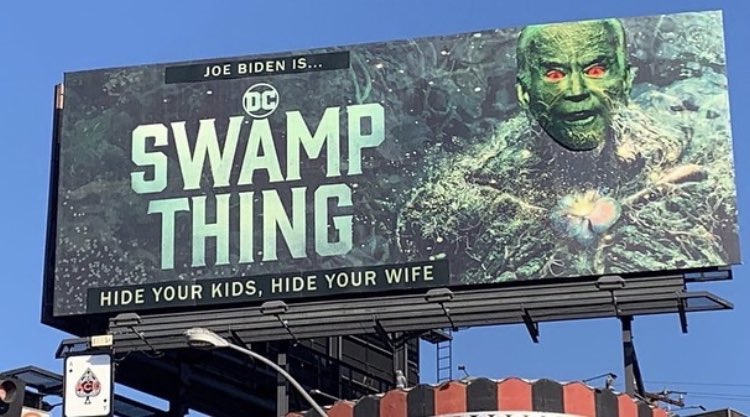
AND WHAT TIME IS IT? TIME TO DRAIN THE SWAMP!!!
It’s time to replace a failed and CORRUPT political establishment with a new government controlled by you, the American People. ~ Candidate Donald J. Trump
Also remember Wheatie’s Rules:
No food fights.
No running with scissors.
If you bring snacks, bring enough for everyone.
And,
On this day and every day –
God is in Control . . . and His Grace is Sufficient, so . . . Keep Looking Up
Hopefully, every Sunday, we can find something here that will build us up a little . . . give us a smile . . . and add some joy or peace, very much needed in all our lives.
“This day is holy to the Lord your God; do not mourn nor weep.” . . . “Go your way, eat the fat, drink the sweet, and send portions to those for whom nothing is prepared; for this day is holy to our Lord. Do not sorrow, for the joy of the Lord is your strength.”
Faith
The bedrock foundation of Christianity is faith; faith that Jesus, the Son of God, our Messiah, who died for our sin and rose again, is our personal Savior.
But, the question may be asked, “How strong must my faith be? What about those little doubts that creep in from time to time?”
The first thought I have on this question is that my faith comes from God; it is not my personal attribute. God gives faith in the form of a gift (Ephesians 2:8) (we don’t earn it or deserve it), because of His grace and mercy, and because He loves us.
Faith is not the product of a preacher’s compelling presentation, his eloquence, or even his theological soundness—faith is given through the message about Jesus. God gives us faith “by hearing, and hearing by the word of God”. This is the means God has chosen. It is through the Word of God that faith comes to us . . . and since that faith comes from God, it must be sufficient for His purpose.
The second thought I have is that we have a great illustration of the amount of faith required from the Old Testament and the Children of Israel, who were wandering in the desert for 40 years because of their lack of faith, their unbelief that God would bring them to the Promised Land as He had promised. This is related in Numbers 21:
4 Then they journeyed from Mount Hor by the Way of the Red Sea, to go around the land of Edom; and the soul of the people became very discouraged on the way. 5 And the people spoke against God and against Moses: “Why have you brought us up out of Egypt to die in the wilderness? For there is no food and no water, and our soul loathes this worthless bread.” 6 So the Lord sent fiery serpents among the people, and they bit the people; and many of the people of Israel died.
7 Therefore the people came to Moses, and said, “We have sinned, for we have spoken against the Lord and against you; pray to the Lord that He take away the serpents from us.” So Moses prayed for the people.
8 Then the Lord said to Moses, “Make a fiery serpent, and set it on a pole; and it shall be that everyone who is bitten, when he looks at it, shall live.” 9 So Moses made a bronze serpent, and put it on a pole; and so it was, if a serpent had bitten anyone, when he looked at the bronze serpent, he lived.
God judged the people by sending snakes, and many of them died. But the Israelites simply had to look up to that bronze snake in order not to die. How great a faith did the action of looking at that bronze snake take? All an Israelite had to do, in the hope of a promise from God that he can’t see, was look at the bronze serpent on the pole. That is the example, the preview, that God gave us in the Old Testament of us now, trusting in His Son, who was lifted up on a cross for our sins.
The third thought I have is from Matthew 17:14–20, where we see Christ’s disciples unable to exorcise a demon from a young boy, even though Jesus had previously given them the authority to do so. When they asked Jesus why they weren’t able to drive the demon out, Jesus replied, “Because you have so little faith. I tell you the truth, if you have faith as small as a mustard seed, you can say to this mountain, ‘move from here to there’ and it will move; Nothing will be impossible for you” (Matthew 17:14–20).
What Jesus is saying is that with very little faith, indeed, we (actually God) will do great things. The power of faith is all from God, and He will do great things on our behalf if we have but small amounts of faith.
Just as Moses lifted up the bronze snake in the desert, Jesus was lifted up on Calvary. In John 3:13, the Bible says “No one has ascended into heaven except he who descended from heaven, the Son of Man. And as Moses lifted up the bronze snake in the wilderness, so must the Son of Man be lifted up, that whoever believes in Him may have eternal life.”
John 3:16. “For God so loved the world that he gave his only Son that whoever believes in him should not perish but have eternal life.” That’s the significance of that Old Testament event. It is this, that we deserve to perish in hell because of our sin. But another has been put there in our place, Jesus Christ. He has paid the full price for our sin. Us too, all we need to do is by faith trust in the finished work of Jesus Christ and we will be saved.
Depends on how you define it, I suppose. If FG&C’s speculation of Wray getting not just fired but actually arrested had come to pass, we’d be in it. But right now I think we’re still just outside, on the edge of the real one.
Biden, on the other hand, sure managed to f*ck himself at the debate, simultaneously denying then advocating the plans to end the oil industry, and otherwise look like a dufus.
I guess he ran out of other family members to f*ck.
I’d say that qualifies as a good week!!
To be fair, I think his best moments (two of them) were when he upbraided Trump for talking about Red States versus Blue States, saying that it’s all America and we shouldn’t be making distinctions. Of course, he says things like that and it means good things to us, and bad things to him and his audience, simultaneously. (Never underestimate the utility of words and phrases with two meanings, e.g., “Peace” with both Communists and Muslims.)
A Reminder Of Today’s Big Issue.
Our movement is about replacing a failed and corrupt political establishment with a new government controlled by you, the American People...Our campaign represents a true existential threat, like they’ve never seen before.
Then-Candidate Donald J. Trump
Needs to happen, soon.
Lawyer Appeasement Section
OK now for the fine print.
Please note that our menu has changed, please listen to all of the options.
This is the WQTH Daily Thread. You know the drill. There’s no Political correctness, but civility is a requirement. There are Important Guidelines, here, with an addendum on 20191110.
We have a new board – called The U Tree – where people can take each other to the woodshed without fear of censorship or moderation.
And remember Wheatie’s Rules:
1. No food fights 2. No running with scissors. 3. If you bring snacks, bring enough for everyone. 4. The first rule of gun safety: Don’t let the government take your guns. 5. The gun is always loaded. 5a. If you actually want the gun to be loaded, like because you’re checking out a bump in the night, then it’s empty. 6. Never point the gun at anything you’re not willing to destroy. 7. Keep your finger off the trigger until ready to fire. 8. Be sure of your target and what is behind it. 9. Social Justice Warriors, ANTIFA pukes, BLM hypocrites, and other assorted varieties of Marxists can go copulate with themselves, or if insufficiently limber, may substitute a rusty wire brush suitable for cleaning the bore of a twelve or ten gauge.
(Hmm a few extras seem to have crept in.)
Coin of The Day
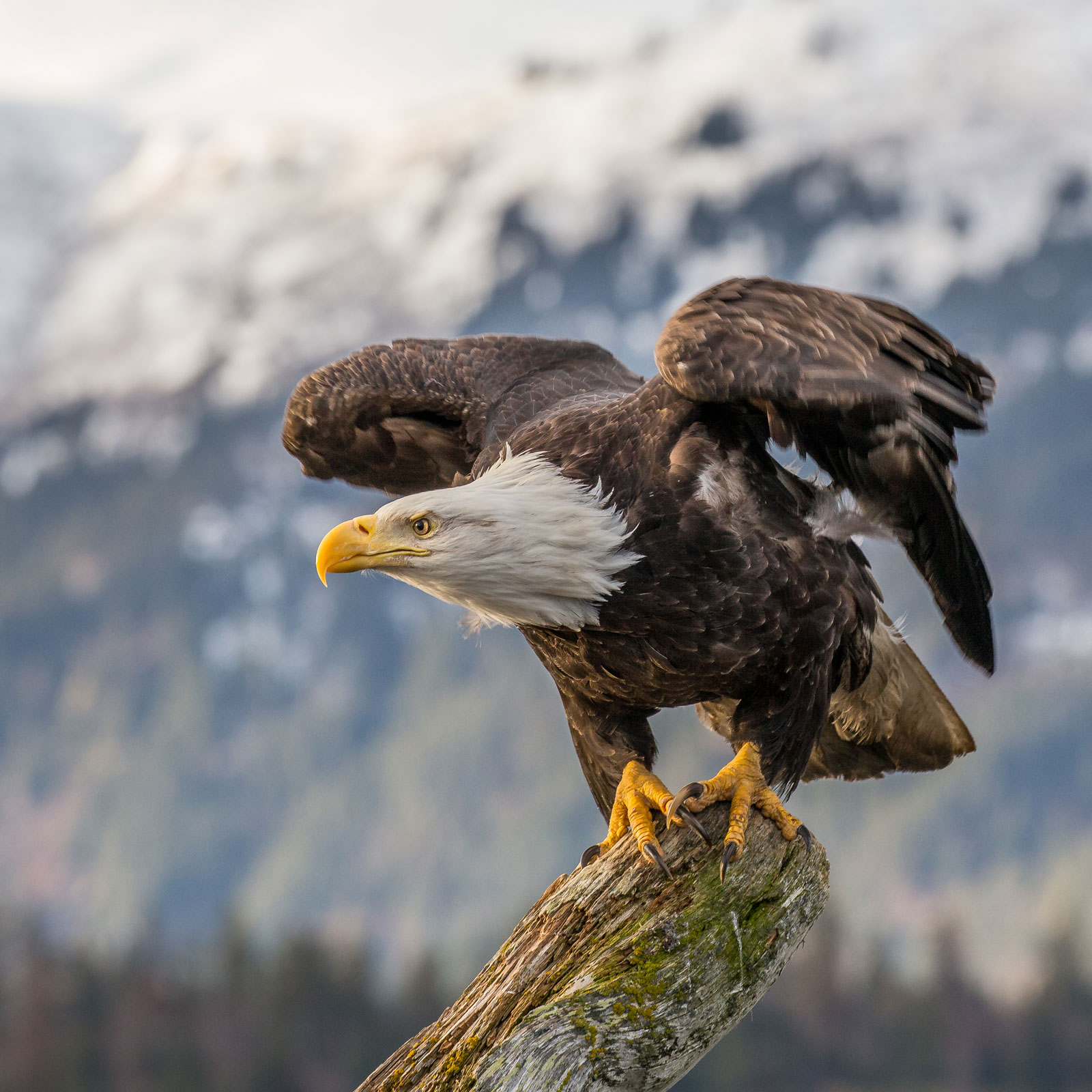
The Eagle
Let’s face it, eagles are cool.
You’re probably not surprised to see me say that, since I will, on rare occasions, post a picture of one.
But most people don’t know that’s actually the name of a denomination of US money. (OK, you do if you’ve been following these ramblings.)
The original mint act of April 2, 1792, Section 9:
And be it further enacted, that there shall be from time to time at the said mint, coins of gold, silver, and copper, of the following denominations, values and descriptions, viz. Eagles–each to be of the value of ten dollars or units, and to contain two hundred and forty seven grains and four eighths of a grain of pure, or two hundred and seventy grains of standard gold. Half eagles–each to be of the value of five dollars, and to contain one hundred twenty-three grains and six eighths of a grain of pure, or one hundred thirty five grains of standard gold. Quarter eagles–each to be of the value of two dollars and a half dollar, and to contain sixty-one grains and seven eighths of a grain of pure, or sixty-seven grains and four eighths of a grain of standard gold. Dollars or units…
Act of April 2, 1792, Section 9
So the ten dollar gold piece was to be called an eagle, at least legally, and we’d have ten mills to the cent, ten cents to the disme, ten dismes to the dollar, and ten dollars to the eagle.
We never put the word “mill” on a coin, not even the 5 mill coin, which was labeled the half cent. (And the half cent was discontinued in 1857.) We did put the word “disme” on one coin in 1792, the next time the word appeared, in 1837, the (presumably silent, but we don’t know for absolute certain) s had been dropped. But the denomination “eagle” has never appeared on a US coin.
Ironically, like the dollar, the eagle wasn’t issued very much in the beginning. Half eagles (and half dollars) were far more popular.
In 1795-1797, we issued about 13,000 of the following:
It was hard to even find a picture of this…DuckDuckGo mostly returned pictures of half eagles even when I asked for eagles. These are basically half million dollar coins in choice uncirculated MS-63, and even in dog-butt-ugly Fine-12 grade you’re looking at over thirty thousand dollars.
Once you’ve forked over thirty grand, of course, the coin is the most beautiful thing you’ve ever seen.
The next style was the “large eagle” on the reverse of the eagle, from 1797-1804.
Now we’re getting to coins that will “only” cost about 60 grand in choice uncirculated, providing you’re not fussy about which year is stamped on the coin. 1797s, 1798s, and 1804s will be much more expensive.
After that…nothing until 1838 (and that’s true for dollars too, except we started at least thinking about dollars in 1836 and even issued a thousand or so). There are basically two designs from there until 1933, both in variants with or without the motto “In God We Trust” but I’m going to leave that story until next week or risk finding myself having no coin to talk about.
These coins, already very infrequently issued, were subject to melting down when gold prices rose, a situation which was fixed in 1834 when we reduced the amount of gold in the coins, bringing them back in line with the current gold-silver market value ratio–I’ve discussed that before. In this case, unlike with the half eagle, there are no “common dates” that bring them under the price of a car, so even if you just want one of each design, good luck and bring your bucketload of cash and/or sell out to the Chinese.
But I’m going to drag out my soapbox on a related issue.
You can, today, buy “eagles” from the mint. But they aren’t these eagles. The word has been redefined to mean either a silver coin with an ounce of nearly pure silver in it, with a denomination of a dollar (but they’ll set you back thirty dollars), or gold coins…with a tenth, quarter, half, or full ounce of gold, denominated five, ten, twenty five, or fifty dollars. (Yes, the quarter ounce should either be a fifth of an ounce, or denominated twelve-and-a-half dollars. This is the government we’re talking about here, it doesn’t have to make sense anymore.) So “eagle” has lost its original meaning, at least when it comes to coins.
But in zoology, they’re still cool birds!
Standard disclaimer: I never show pictures of my coins, and in many cases don’t own anything remotely resembling the coins in these pictures. [This would be one of those cases.] Any prospective thieves should know I also collect other heavy metals–anything with a heavier nucleus would be unstable–and keep those a lot closer to me than the coins.
Obligatory PSAs/Reminders
Just one more thing, my standard Public Service Announcements. We don’t want to forget any of these!!!
How not to get your ass kicked by the police. Chris Rock in 2007
Granted an “ass kicking” isn’t the same as being shot, but both can result from the same stupid act. You may ultimately beat the rap, but you aren’t going to avoid the ride.
Remember Hong Kong!!! And remember the tens of millions who died under the “Great Helmsman” Chairman Mao.
https://youtube.com/watch?v=L3tnH4FGbd0%3F
I hope this guy isn’t rotting in the laogai somewhere!
中国是个混蛋 !!! Zhōngguò shì gè hùndàn !!! China is asshoe !!!
For my money the Great Helmsman is Hikaru Sulu (even if the actor is a dingbat).
1 “Thus says the Lord to His anointed, To Cyrus, whose right hand I have held— To subdue nations before him And loose the armor of kings, To open before him the double doors, So that the gates will not be shut: 2 ‘I will go before you And make the crooked places straight; I will break in pieces the gates of bronze And cut the bars of iron. 3 I will give you the treasures of darkness And hidden riches of secret places, That you may know that I, the Lord, Who call you by your name, Am the God of Israel. 4 For Jacob My servant’s sake, And Israel My elect, I have even called you by your name; I have named you, though you have not known Me. 5 I am the Lord, and there is no other; There is no God besides Me. I will gird you, though you have not known Me, 6 That they may know from the rising of the sun to its setting That there is none besides Me. I am the Lord, and there is no other; 7 I form the light and create darkness, I make peace and create calamity; I, the Lord, do all these things.’
In verse 1 we see that God is speaking through Isaiah to Cyrus who was the king of Babylon according to history and to Ezra 4:1-6. Cyrus then was a pagan king of a pagan government. But look at how God addresses King Cyrus of Persia: “His anointed.”
The God of heaven and the God of His people raised up a Persian king who would take over Babylon when the men and women whose parents had been taken into captivity were ready to return to Jerusalem. God sent Israel into captivity for 70 years and then raised up Cyrus, who would do God’s bidding in God’s timing to return the exiles, rebuild their temple and rebuild the city walls. We see in this Isaiah passage that God was in control of all things regarding His people at all times.
Every generation can put the name of their king, their president, and their prime minister in this passage. Romans 14 tells us that every government power is of God and does God’s bidding. A few years ago we could say that President Obama was God’s instrument doing God’s bidding. This year we can say that President Trump is God’s instrument doing God’s bidding. Whichever one you have trouble with, rest assured that God is in control doing His work through these national leaders.
In the book of Daniel we see great prophesies concerning kingdoms that were yet to come. As those prophesied nations rose and fell we could see God’s hand behind them all accomplishing His overall purposes in the earth. As cruel as the Roman government and its army was, God put them in place so in the fullness of time Jesus could come to earth.
As we read the book of Revelation we see that there are prophecies yet to be fulfilled. God is using every ruler of every country to bring about His divine plan for the fulfillment of all things. In the end we will see and know that God was in control doing His bidding through godless leaders and we will praise God forever for His great will.
Thank you Q-Tree family for warmly receiving yesterday’s post sharing some of Flep’s recent twitter activity. Here’s an another attempt to capture at least some of the essence of what our insightful news warrior is doing in the Twitterverse. Hope this collection of Flep’s twitter activity can be an encouragement to us all & a reminder to keep Flep, & all MAGA warriors, in prayer as they engage wily opponents on the current cultural battlefields online & in the real world.
For those of us on Twitter you can find Flep here:
https://twitter.com/Baba9773
Here is a tweet that Flep pinned to his profile in the last hour:
Today we’ll start at Flep’s twitter media tab to see some of what he’s been sharing. As a reminder, Twitter has been heavily censoring conservatives, Christians, Patriots, Republicans, & the Q-niverse. This means that we might not even be seeing some of Flep’s finest work for likely the most effective tweets are the ones being most heavily suppressed, hidden, & even deleted…
Here is a thread on the Pennsylvania ruling. I’ll post each tweet so there may be some overlap.
Hallo, you can read it here: @LarrySchweikart: 1) "Freeper" byecomey does a great job analyzing the purported DemoKKKrat advantage in NC. 2) The NC… https://t.co/1bJF5dE7oo Enjoy 🙂 🤖
"In Philadelphia, home to Temple U, Drexel, UPenn and LaSalle Univ, the 18-29 youth vote has gone from 23.1% 2016 and 12.5% in the midterms, to 11.7% in 2020 now."
Dr.Tony Fauci says we don’t allow him to do television, and yet I saw him last night on @60Minutes, and he seems to get more airtime than anybody since the late, great, Bob Hope. All I ask of Tony is that he make better decisions. He said “no masks & let China in”. Also, Bad arm!
Attitudinally, Wisconsin is not like Ohio or even Pennsylvania. Meaning, it's a tougher state in which to poll someone like Donald Trump. https://t.co/B6wrbvibW2
— Rich Baris The People's Pundit (@Peoples_Pundit) October 19, 2020
1) PENNSYLVANIA Voter Registration Dem-Rep Gap:
2008 Dems advantage over Repubs: 1,236,467 Obama won by: 620,478
2012 D adv over R: 1,135,173 Obama won by: 309,840
President @realDonaldTrump DESTROYS Biden for saying he didn't know about Hunter's corrupt business deals: "The only thing Joe Biden wants to do is get as much money for himself as possible." pic.twitter.com/mCZvIDrLmm
— Team Trump (Text TRUMP to 88022) (@TeamTrump) October 19, 2020
Last week, Judge Barrett proved she has the deep legal expertise, judicial temperament, and intellectual horsepower that Americans deserve to have on the Supreme Court. The Senate will turn to her nomination as soon as it comes out of committee later this week.
Contrary to media narrative, "race relations" and "climate change" are both in low single digits in our "most important voting issue" trackers across battleground states.
The economy (1), healthcare (2), coronavirus (3), and policing and safety (4) are the aggregate top issues. https://t.co/a9a8nbHkpn
— Rich Baris The People's Pundit (@Peoples_Pundit) October 20, 2020
Texas can reject mail-in ballots over mismatched signatures without giving voters a chance to appeal, the U.S. Fifth Circuit Court of Appeals has ruled. https://t.co/ykXsZffpBv
Governor Cuomo has shown tremendously poor leadership skills in running N.Y. Bad time for him to be writing and promoting a book, especially since he has done such a poor job with Covid and Crime. So many unnecessary deaths. The City & State have sunk to historic lows…
#Election2020 Trump appointee, @DNI_Ratcliffe on claims the Hunter Biden laptop is part of a Russian disinformation campaign, "we have shared no intelligence with Chairman Schiff, or any other member of congress, that Hunter Biden's laptop is part of some disinformation campaign.
Joe Biden actually said America is “systemically racist,” and police have an “implicit bias” against minorities. When asked if he’d support cutting funding for law enforcement he said, “Yes, absolutely.”
BREAKING: Hunter Biden associate’s emails reveal details of deal with fmr Moscow mayors wife to launder funds into the US in avoidance of sanctions, Devon Archer claimed firm received $200M – @OANN
See you tonight at 8 PM eastern on Fox! I’ll be interviewing Rudy for the full hour about the Biden scandal! Don’t miss it on Life, Liberty & Levin! If you can’t watch Live you can DVR the show! pic.twitter.com/I0ji3SBtf2
It's almost like Adam Schiff, the Dems & the media are all repeating false propaganda about "Russian disinfo" w/ ZERO EVIDENCE, to hide Joe Biden's corruption from the American people.
“Hunter Biden’s laptop is NOT part of some Russian disinformation campaign.” – @DNI_Ratcliffe pic.twitter.com/BTuDo5uQC9
So if there’s no evidence how can the head of the house intelligence committee go on TV and try to sell this as though it’s the gospel yet again?
Is there no accountability? How can someone like that be in charge of a committee when he simply lying & weaponizing his position? https://t.co/1nqPCfrmLh
Director of National Intelligence John Ratcliffe on Monday said that Hunter Biden’s laptop “is not part of some Russian disinformation campaign,”https://t.co/2nRvxXdPrd
Biden is Hiding–he says the American people aren't worthy of truth! Corporate owned and managed left wing media, radical dems, deep state, Wall Street, Big Tech and social media oligarchs have rigged this election, covering up for him, because that's who he works for! #MAGAhttps://t.co/DQbEjgTSH5
This is a Massive Ka-BQQM & indictment of those who pledged to serve & protect!
We've reached the point in our nation's history where one computer repair guy in Delaware has done more to stop corruption than the entire federal law enforcement community.
#FL#EarlyVoting update. As expected, only 2k increase in Dem lead due to postal day off. Dems are losing steam. Rs should be catching up this week by dropping off VBM ballots in person. We should know more by the weekend. pic.twitter.com/o8EwxjgX31
Hey Q-Tree family. We’ve all been missing Flep’s news roundups. Wolfmoon has reassured us a couple of times that Flep is hard at work in the fray on Twitter. He’s in the trenches on our behalf. So here’s a bit of what he’s doing on Twitter…Hope this encourages us all to stay engaged!
I’m just going down his twitter timeline as I see it…& maybe will add stuff from comments…
Sadly Twitter doesn’t exactly show stuff reverse chronologically & they likely hide the “biggies” that they don’t want to get traction…
On the Conservative Review Podcast, @RobertCahaly said he surveyed 200,000 new and infrequent voters. 58% of new and infrequent voters are voting for Trump.
— Team Trump (Text TRUMP to 88022) (@TeamTrump) October 18, 2020
Failed ObamaCare cost the average American family $5,000 more per year -over doubling our healthcare insurance costs AND canceled 35 Million American’s policies Obama’s 'Affordable' Care Act Greatly Increased Premiums & Lessened Choice See ObamaCare study: https://t.co/FGtuvUYTGK
Wow if you click on a POTUS tweet it’s pretty quick for the lefties to come out shrieking, truly unhinged & filled with rage, sadly…
The tears are of rage towards killers like Cuomo who tortured seniors like these in nursing homes. Many were separated needlessly for months or forced to be imprisoned with actively infected strangers and left to die alone. Meanwhile actual prisoners like Avenatti were freed. https://t.co/qZ1KAuy40u
Who are you voting for President? This is for my own research. Nobody's name is seen if you click on poll below. I can't even see it. The poll will get updated as people respond. RT and comment what state you live. (But only use poll for answer so as to be anonymous).
This one is John James, candidate for the Senate from Michigan. We hope & pray he beats Gary Peters (who used to be an R but changed to a D because that’s what everyone else was) by more than the margin of error & Democrat fraud–a Detroit specialty!
Fantastic video by Rudy Guliani. Summarizes 30 yrs of crimes by Hunter Biden representing his father, mob boss of Biden Crime Family Joe Biden. Clear from Hunter’s words he was Biden’s front man to extort millions, then had to kick back 50% to Joe. https://t.co/y73EaOQtVE
— Wayne Root – Wayne Allyn Root – TV & Radio Host (@RealWayneRoot) October 19, 2020
Here’s that video for those not on Twitter…
https://youtube.com/watch?v=9LuSpHJNPe0
from within the comments to the above tweet…another thread to explore…
I re-watched the video from the Chinese whistle blower and he says DOJ & Pelosi got copies of the hard drives and that Dems and Reps are implicated in shady dealings as well as Bloomberg. @realDonaldTrump got copies only because of another whistle blower. https://t.co/IuYNr4JKp7
22) I'm telling you, if they thought Cankles' campaign was a cluster you-know-what, the post-mortems on this one will see DemoKKKrat strategists exiled to horror spots . . .
1. Since the president is speaking in Nevada, and Fox is covering it Live (which is very important), my show — Life, Liberty & Levin — will air in progress as soon as the president is finished. My show will air for the entire hour at10 PM eastern!
BREAKING NEWS. My sources- as high up as it gets- watched videos on Hunter's laptops TODAY. Just told me point blank…no rumor…they saw Hunter raping & torturing little Chinese children…Chinese govt has the same videos…Biden is compromised. Blackmailed. Can NEVER be Prez.
— Wayne Root – Wayne Allyn Root – TV & Radio Host (@RealWayneRoot) October 19, 2020
Watch the @marklevinshow on @FoxNews at 10:00 P.M. He will importantly be talking about the corruption of Joe Biden. @SteveHiltonx and Larry Kudlow were great tonight!
This sounds impressive until you know the context: 1/ This youth vote is less than both their share of the electorate & less than what polls projected would be their share of the vote & total vote so far; 2/ Polls projected Dems would have a 50 point lead w/ new, young voters. https://t.co/8lsjy3PQSG
— Team Trump (Text TRUMP to 88022) (@TeamTrump) October 19, 2020
I like @CottoGottfried, but this reveals incredible naivety about how elections work. Early voting tells the other side how many votes you need on election day. This has always been a tactical problem w/ it. Those who think it can only be great don't know how elections can work. https://t.co/5ZoDLWSYbH
Here’s the truth, plain as day—Sen. Peters doesn’t want a debate. He wants to kill time while he directs his liberal allies & attack dogs to circulate a deceptively edited clip & continue to lie about me. We need the press to call a fair game, not roll over for internet gimmicks. pic.twitter.com/yTw1X3uVNi
Great polling news! Trump and Biden are tied in the three South Jersey congressional districts. Take out NJ01 which is heavily Democratic, and it looks like Trump has big leads in NJ02 and my district of #NJ03! Now let's all vote Republican and flip this district RED!!! https://t.co/slg4aZPNkA
Every. Single. Year. I hear this in North Carolina every single year. Registrations and EVs are very misleading, which caused Nate Cohen to do this.
GOP actually did better in EV in 2018, yet performed much worse vs. 2016. This year is not comparable to anything we've seen. pic.twitter.com/iGqgY1RPpM
— Rich Baris The People's Pundit (@Peoples_Pundit) October 18, 2020
"I tell people supporting Biden: Give me one accomplishment this man has given you in 47 years. They can't give me one. If you can't tell me what someone spent his 47 years in government doing, it means they have nothing to offer coming back to ask for 4 more years." pic.twitter.com/i4QQ7hT589
— Team Trump (Text TRUMP to 88022) (@TeamTrump) October 18, 2020
President @realDonaldTrump: When you vote for me, prosperity will surge, taxes will be cut and next year we will have the greatest economic year in the history of our country! pic.twitter.com/sHUcVMoofi
— Team Trump (Text TRUMP to 88022) (@TeamTrump) October 18, 2020
THREAD MN Early, VBM Statistics – 10/18 Evening Update. Thanks to all who have commented & said they like this analysis. RT & follow. Data from 10/18. @CottoGottfried@LarrySchweikart @TRElections@PollWatch2020 @quantuspolling@Politics_Polls@Barnes_Law @mattquigley4IL (1)
Also from "Freeper" bort on NC: "TargetSmart breaks down the “first time” voters in NC. They model the “1st time” voters as 44%/42% D/R which is quite a surprise. Probably a combination of Trump’s ground-game & student drop-off. Shockingly Republicans may win more 1st-time voters
Yet another reason why Trump will win: Kalifornia!! When was the last time Kalifornians lined up this way to greet a Republican? Enthusiasm matters. This is also the tip of the iceberg. No, Kal will stay blue, but difference will be seen in battleground states across USA. https://t.co/rWsVOmA97M
A couple seconds into the video below a woman on our left raises her hand to reach out while praying for President Trump. I saw some leftard meme claiming she was doing the Nazi salute. Forewarned. That style of prayer was pretty common in the Bible Belt when I lived there in the ’80’s.
President @realDonaldTrump in #Wisconsin lists his accomplishments for Black Americans: We got criminal justice reform done, opportunity zones done, and I funded HBCUs with more money than they were even looking for pic.twitter.com/6SsiEUtOBH
— Team Trump (Text TRUMP to 88022) (@TeamTrump) October 18, 2020
Not my Wall, which will soon be finished (and Mexico will pay for the Wall!). Totally unrelated, but I think Steve will be just fine. By the way, is this the same job hopping Tim O’Brien that headed Mini Mike Bloomberg’s humiliating 2 Billion Dollar Presidential run? Debate prep! https://t.co/cQfEtszRrB
Let’s make the Affordable Care Act affordable. By passing a legislative requirement to protect people with pre-existing conditions while expanding risk pools, allowing biz association plans and reforming the tort & regulatory hurdles that raise cost, we can get this done for MI. pic.twitter.com/T8v58tKo7l
Hunter Biden’s laptop is a disaster for the entire Biden family, but especially for his father, Joe. It is now a proven fact, and cannot be denied, that all of that info is the REAL DEAL. That makes it impossible for “50%, or 10%” Joe, to ever assume the office of the President!
Very proud of the @nypost, my former “hometown newspaper”. They have said and shown what everyone knows about Sleepy Joe Biden. He is a CORRUPT POLITICIAN!!!
Biden said in Detroit Friday that he’s going to build thousands of electric car charging stations across America That’d b the end of ethanol (and gasoline) Progressive policies like this & the green new deal would b crushing to Iowa agriculture
The United States shows more CASES than other countries, which the Lamestream Fake News Media pounces on daily, because it TESTS at such a high (and costly) level. No country in the world tests at this level. The more you TEST, the more CASES you will be reporting. Very simple!
Joe Biden is a corrupt politician, and everybody knows it. Now you have the proof, perhaps like never was had before on a major politician. Laptop plus. This is the second biggest political scandal in our history!
I don’t know this little guy’s story but that picture reminds me a lot of what Josiah was looking like after his first heart surgery. Given the cover on the chest it appears that this baby may have had some type of cardio-thoracic surgery & is in the post-op phase.
Three days ago, Fox News reported that Joe Biden was identified as a FINANCIAL BENEFICIARY in a deal worked out between Hunter and a Chinese energy company tied to the communist government.
On Saturday, President Donald Trump signed a law approving the use of 9-8-8 as the universal telephone number to reach the National Suicide Prevention Hotline!
#FL#EarlyVoting update. Dem Lead increase today is down to 9k only. Since no mail on Sunday, tomorrow's update will be even smaller, about 3k. And then we will see Rs bringing their VBM ballots to in-person locations starting tomorrow. So, Dems are unlikely to hit red line. pic.twitter.com/Lg4eYNhVtL
It appears that his media tweets are now from October 14 or earlier, so I’ll leave this cornucopia as is. This is a flavor of what Flep is engaged in online but it’s possible that some of his most powerful work is being hidden or buried or suppressed or deleted.
I was retweeting the ones I posted here to keep track as I was going back through Flep’s timeline. It seemed that that level of Twitter activity was/is being diminished based on the number of notifications I’ve gotten for the volume of retweets.
Jack remains a Chi-Com boot-licking election-interfering hack!
This Sanctuary Sunday Open Thread, with full respect to those who worship God on the Sabbath, is a place to reaffirm our worship of our Creator, our Father, our King Eternal.
It is also a place to read, post and discuss news that is worth knowing and sharing. Please post links to any news stories that you use as sources or quote from.
In the QTree, we’re a friendly and civil lot. We encourage free speech and the open exchange and civil discussion of different ideas. Topics aren’t constrained, and sound logic is highly encouraged, all built on a solid foundation of truth and established facts.
We have a policy of mutual respect, shown by civility. Civility encourages discussions, promotes objectivity and rational thought in discourse, and camaraderie in the participants – characteristics we strive toward in our Q Tree community.
Please show respect and consideration for your fellow QTreepers. Before hitting the “post” button, please proofread your post and make sure you’re addressing the issue only, and not trying to confront the poster. Keep to the topic – avoid “you” and “your”. Here in The Q Tree, personal attacks, name calling, ridicule, insults, baiting and other conduct for which a penalty flag would be thrown are VERBOTEN.
In The Q Tree, we’re compatriots, sitting around the campfire, roasting hot dogs, making s’mores and discussing, agreeing, and disagreeing about whatever interests us. This board will remain a home for those who seek respectful conversations.
Let’s not give the Internet Censors a reason to shut down this intellectual haven that Wolf has created for us.
The Storm is upon us. Please remember to Pray for our President.
AND WHAT TIME IS IT? TIME TO DRAIN THE SWAMP!!!
It’s time to replace a failed and CORRUPT political establishment with a new government controlled by you, the American People. ~ Candidate Donald J. Trump
Also remember Wheatie’s Rules:
No food fights.
No running with scissors.
If you bring snacks, bring enough for everyone.
And,
On this day and every day –
God is in Control . . . and His Grace is Sufficient, so . . . Keep Looking Up
Hopefully, every Sunday, you can find something here that will build you up a little . . . give you a smile . . . and add some joy or peace, very much needed in all our lives.
“This day is holy to the Lord your God; do not mourn nor weep.” . . . “Go your way, eat the fat, drink the sweet, and send portions to those for whom nothing is prepared; for this day is holy to our Lord. Do not sorrow, for the joy of the Lord is your strength.”
Bad Days
Have you ever had a really bad day? Well, that’s probably kind of a dumb question, the answer being “Of course I have”!
Well then, have you had a number of bad days? Well, again, I think most of us would answer “Duh”! Recently? Well, yeah.
I think we all, some more, some less have bad days. Even really bad days. Maybe even lots of ’em.
Maybe something at work, or at home, or between us and God . . . we’ve had bad days, are having bad days, and will have bad days.
So, what’re we gonna do about that? Just wallow in the situation and let time, the great healer, eventually have its effect?
Well, we don’t have to do that. As Christians, when we are beset with a plague of bad days, we are in a position to look at those days with a perspective that will reduce them to, well, hopefully next to nothing at all.
When we’re having a bad day, it helps to be reminded that God is on our side and that we are one of God’s beloved children, officially adopted into His family.
So if we’re having a bad day today, let’s sit back and remind ourselves of just what our Heavenly Father promises us.
Deuteronomy 31:6: Be strong and of good courage, do not fear nor be afraid of them; for the Lord your God, He is the One who goes with you. He will not leave you nor forsake you.
Psalm 55:22: Cast your burden on the Lord, and He shall sustain you; He shall never permit the righteous to be shaken.
Zephaniah 3:17: The Lord your God in your midst, the Mighty One, will save; He will rejoice over you with gladness, He will quiet you with His love, He will rejoice over you with singing.
1 John 5:4: For whatever is born of God overcomes the world. And this is the victory that has overcome the world — our faith.
Romans 8:37-39: Yet in all these things we are more than conquerors through Him who loved us. For I am persuaded that neither death nor life, nor angels nor principalities nor powers, nor things present nor things to come, nor height nor depth, nor any other created thing, shall be able to separate us from the love of God which is in Christ Jesus our Lord.
Well, that’s all good for holding a proper perspective, but the bad days don’t just get logically into our heads, they get deep into us at an emotional level, also.
John 16:33: I have told you all this so that you may have peace in me. Here on earth you will have many trials and sorrows. But take heart, because I have overcome the world.
John 14:27: I am leaving you with a gift—peace of mind and heart. And the peace I give is a gift the world cannot give. So don’t be troubled or afraid.
When we get caught up in that “Oh, poor me!” trap, I think the Psalms are the place to go. We’ll have a really difficult time hanging on to our precious little bundle of self pity while and after we read a few of our favorite Psalms. Praise and Thanksgiving Psalms work the best in these situations.
Try one:
Psalm 16 1 Watch over me, O God, for in You I put my trust. 2 O my soul, you have said to the Lord, “You are my Lord, my goodness is nothing apart from You.” 3 As for the saints who are on the earth, “They are the excellent ones, in whom is all my delight.” 4 Their sorrows shall be multiplied who hasten after another god; Their drink offerings of blood I will not offer, Nor take up their names on my lips. 5 O Lord, You are the portion of my inheritance and my cup; You uphold my lot. 6 The lines have fallen to me in pleasant places; Yes, I have a good inheritance. 7 I will bless the Lord who has given me counsel; My heart also instructs me in the night seasons. 8 I have set the Lord always before me; Because He is at my right hand I shall not be moved. 9 Therefore my heart is glad, and my glory rejoices; My flesh also will dwell securely in hope. 10 For You will not leave my soul in the abode of the dead, Nor will You allow Your Holy One to undergo corruption. 11 You will show me the path of life; In Your presence is fullness of joy; At Your right hand are pleasures forevermore.
When we stop and think that we praise and thank God for a future eternity of Peace and Joy in His presence, that singular fact has the effect of reducing our transient bad days to just a nit.
Just think of it . . . an eternity of Joy and Peace with God of such a quality that “Eye has not seen, nor ear heard, nor have entered into the heart of man the things which God has prepared for those who love Him.”
We won’t let a bad day distract us from God’s blessings. We are loved. We are not alone. God delights in us. We are victorious. In fact, we are more than a conqueror through Christ Jesus. So we will be encouraged and have a good day because “This is the day the Lord has made; we will rejoice and be glad in it.”
Maybe, and that would be ironic, because this time I actually do have something to talk about that has nothing to do with justice for the Deep State.
Or maybe it does, in a way, because the war for liberty is a constant in our lives, and what I’m about to talk about is an earlier battle.
So I have filler on the week when I don’t need it, but I’ll use it anyway.
The Battle Of Saratoga
On this day, October 17th, in 1777, what we now know as the Battle of Saratoga came to an end.
The British held New York (and New York was actually largely loyalist). They came up with looked like a good plan, to send troops north from New York, and south from Canada, to meet in the middle near Albany and cut the United States in half. Britain commanded the seas, so there’d be no way for the two halves of the country to communicate.
There were a lot of horrible SNAFUs, fortunately. The force in New York City had left to seize Philadelphia before the orders arrived, and they did succeed at that.
The northern force of 8000 men under General John Burgoyne, by contrast, was trying to do the right thing but just ran into snag after snag, some of which the patriots engineered, some of which were just Murphy in action.
Even before leaving Quebec, Burgoyne ran into difficulties. They expected to travel mainly over water, and thus hadn’t brought too many wagons and draft animals for the land parts of the route. In June, the governor of Quebec finally issued orders to procure the land transport, but the carts were freshly made out of green wood, and driven by civilians who were more likely to desert. Finally on June 13 Burgoyne set out. Burgoyne’s forces, with the invaluable support of Indians, quickly sailed up the river and up Lake Champlain, capturing Fort Cown Point (undefended) by June 30th. The Indian screening forces prevented American scouts from learning of the true size of the invading force. A series of mistakes on our part made it easy for the British to capture Fort Ticonderoga–which we had considered impregnable–on July 6.
This was a big enough disaster that the French, on the verge of joining the war on our side, decided to hold off.
Burgoyne consolidated his position and then moved on to Fort Edward. Again the Indians preceded him, but this time they became impatient and started indiscriminately raiding frontier families, which simply caused more locals to turn to the Patriot cause. Most famous of these fatalities was Jane McCrea, who had been engaged to a Loyalist; ironically her martyrdom ended up helping the American cause.
But Burgoyne was now deep in hostile territory, and he was realizing he had supply difficulties. He tried raiding the surrounding area for supplies, and a regiment, plus some Brunswick dragoons, under the command of Friedrich Baum went into what is now Vermont to obtain (i.e., steal) supplies. This force ran into 2000 men under John Stark at Bennington, and was enveloped and captured on August 16. That deprived Burgoyne of almost 1000 men and, of course, he didn’t get the supplies.
Burgoyne blamed the Indians and the Canadians who had come with his forces, and most of the Indians and Canadians left his camp; Burgoyne now had fewer than 100 Indian scouts, and now had no protection from the American rangers.
Now Burgoyne was realizing he’d not be done before winter. He had the choice to either retreat or push on to Albany; he chose the latter. A month of maneuverings with only two pitched battles followed, but one was an attack on Ticonderoga, well to the rear of the main British forces.
To cut out a lot of complexity, Burgoyne was finally defeated at Saratoga on October 17th, 1777. The plan to cut America in two had failed.
It would be hard to overstate the importance of this. For one thing, the French, when they learned of this, finally came into the war on our side. By declaring war on Britain, they were risking their own necks, and they didn’t want to jump in until we had really shown that we were in it to win it. And Saratoga did just that.
It shook the British up enough that they tried to negotiate a peace the next year, and repealed many of the acts that had goaded us into fighting. They even offered us self rule and representation in Parliament. That might have worked as late as 1775. It wasn’t enough in 1778. (The self-government offer was basically the blueprint for the later British Commonwealth–the Brits had learned their lesson by then.) After we rejected the offer the British reassessed their strategy, and turned to the south.
And so…a direct line can be drawn between October 17, 1777 and another event exactly four years later, October 17th, 1781, in Virginia. General Cornwallis, commander of the last significant British army on US soil, on that day began negotiations for surrender at Yorktown. That surrender took place on the 19th (meaning we can celebrate another anniversary this coming Monday), and the war was effectively over. The British government fell (i.e., their Prime Minister had to resign), and that was that. We just had to sign a peace treaty with the country that was now forced to acknowledge our independence.
Betsy Ross Flags? Fly ’em if you’ve got ’em. I do and I will.
Justice Must Be done.
Our movement is about replacing a failed and corrupt political establishment with a new government controlled by you, the American People...Our campaign represents a true existential threat, like they’ve never seen before.
Then-Candidate Donald J. Trump
Lawyer Appeasement Section
OK now for the fine print.
This is the WQTH Daily Thread. You know the drill. There’s no Poltical correctness, but civility is a requirement. There are Important Guidelines, here, with an addendum on 20191110.
We have a new board – called The U Tree – where people can take each other to the woodshed without fear of censorship or moderation.
And remember Wheatie’s Rules:
1. No food fights 2. No running with scissors. 3. If you bring snacks, bring enough for everyone. 4. Zeroth rule of gun safety: Don’t let the government get your guns. 5. Rule one of gun safety: The gun is always loaded. 5a. If you actually want the gun to be loaded, like because you’re checking out a bump in the night, then it’s empty. 6. Rule two of gun safety: Never point the gun at anything you’re not willing to destroy. 7. Rule three: Keep your finger off the trigger until ready to fire. 8. Rule the fourth: Be sure of your target and what is behind it.
(Hmm a few extras seem to have crept in.)
The Mandatory Coin
I’m going to skip this, this time; Saratoga is quite enough history to “chew on.”
Important Reminder
To conclude: My standard Public Service Announcement. We don’t want to forget this!!!
Remember Hong Kong!!!
https://youtube.com/watch?v=L3tnH4FGbd0%3F
I hope this guy isn’t rotting in the laogai somewhere!
中国是个混蛋 !!! Zhōngguò shì gè hùndàn !!! China is asshoe !!!
2 Corinthians 5:6-10 6 So we are always confident, knowing that while we are at home in the body we are absent from the Lord. 7 For we walk by faith, not by sight. 8 We are confident, yes, well pleased rather to be absent from the body and to be present with the Lord. 9 Therefore we make it our aim, whether present or absent, to be well pleasing to Him. 10 For we must all appear before the judgment seat of Christ, that each one may receive the things done in the body, according to what he has done, whether good or bad.
The Word of God reveals that Jesus Christ will one day judge every person who has ever lived.
Acts 10:42 And He commanded us to preach to the people, and to testify that it is He who was ordained by God to be Judge of the living and the dead.
At that time, unbelievers will be exiled from God’s presence, and believers will stand before Jesus with full comprehension of His extravagant grace.
True followers of the Savior, however, have nothing to fear, as this judgment is not for the purpose of determining salvation—that was settled the moment they first put their faith in the Son of God. And as Romans 8:1 reassures us, “Therefore there is now no condemnation for those who are in Christ Jesus.” Instead, the Lord will judge His own for the purpose of rewards.
In other words, though none of us can live a perfect life here on earth, we do not need to dread this face-to-face time of reckoning with our Savior. Christ’s judgment is not a punishment; it is a reminder that we are pardoned.
On that day, we will stand before the Lord, clothed in Christ’s righteousness and forgiven of every single sin. And we will at last fully comprehend the depth and breadth of His grace and love for us.