“We do not believe any group of men adequate enough or wise enough to operate without scrutiny or without criticism. We know that the only way to avoid error is to detect it, that the only way to detect it is to be free to inquire. We know that in secrecy error undetected will flourish and subvert.” –J. Robert Oppenheimer
This Sanctuary Sunday Open Thread, with full respect to those who worship God on the Sabbath, is a place to reaffirm our worship of our Creator, our Father, our King Eternal.
It’s also a place to read, post, and discuss news that is worth knowing and sharing. Please post links to any news stories that you use as sources or quote from.
In the QTree, we’re a friendly and civil lot. We encourage free speech and the open exchange and civil discussion of different ideas. Topics aren’t constrained, and sound logic is highly encouraged, all built on a solid foundation of truth and established facts.
We have a policy of mutual respect, shown by civility. Civility encourages discussions, promotes objectivity and rational thought in discourse, and camaraderie in the participants – characteristics we strive toward in our Q Tree community.
Please show respect and consideration for our fellow QTreepers. Before hitting the “post” button, please proofread your post and make sure you’re addressing the issue only, and not trying to confront the poster. Keep to the topic – avoid “you” and “your”. Here in The Q Tree, personal attacks, name-calling, ridicule, insults, baiting, and other conduct for which a penalty flag would be thrown are VERBOTEN.
In The Q Tree, we’re compatriots, sitting around the campfire, roasting hot dogs, making s’mores, and discussing, agreeing, and disagreeing about whatever interests us. This board will remain a home for those who seek respectful conversations.
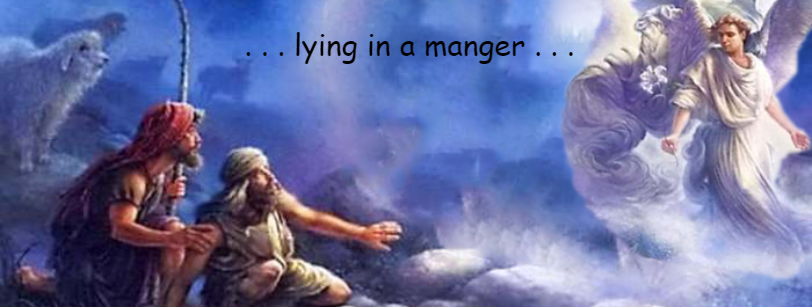
I’ve been intrigued by the possibility of Migdal Eder, the Tower of the Flock near Bethlehem, being the actual birthplace of Jesus, rather than at a nondescript location in Bethlehem. At any rate, I think it’s interesting to consider Migdal Eder as at least a possibility, bordering on a probability. The following is a short presentation of that issue.
Dating as far back as Origen (early church father, 3rd century AD), tradition pointed to Migdal Eder as the birth place of the Savior. Constantine and Justinian, Roman emperors, built monuments on the spot where Migdal Eder was supposed to be – Justinian’s Basilica of the Nativity still stands today.
OLD TESTAMENT PROPHECY
Jewish scholars (opinions based on Micah 4:8, other Scriptures, and oral tradition) considered Migdal Eder the place where the Messiah would be born.
(Just a quick aside in case you look up Micah 4:8. The verse uses the phrase “watchtower of the flock”; that is the translation of Migdal Eder. I won’t take the time to dissect this passage, but it’s definitely a reference to the coming of the Messiah.)
THE REAL STORY
Mary and Joseph couldn’t get a room in the inn, but she was about to give birth. Where would be the best place to go? Where they knew other births were happening – albeit sheep. There were practical reasons for going there, but the simple truth is THAT is where God wanted His Son to be born. Why?
Because the flock of Bethlehem, only a few miles from Jerusalem, were the sheep used for proper sacrifices at the Temple in Jerusalem. Those sheep born at Migdal Eder were destined to be slaughtered one day as part of the divine instructions for temple worship! They were born to die as sacrifices!
So there’s Mary giving birth to the Son of God, born as the one sacrifice for sins forever (Hebrews 10:12); chances were there were a dozen or so pregnant ewes also ready to give birth. And what did Joseph do? He took the new-born Child and wrapped Him in swaddling clothes, the same clothes used to wrap those all-important new-born lambs. He laid Him in the manger.
THE MANGER
The manger may have been a ‘feeding trough’ like we have always pictured it, but only full-term pregnant sheep would have been there. This wasn’t a barn to hold a bunch of animals, and the overwhelming majority of the flock of sheep would have been outside because the sheep in Bethlehem were kept outside 24 hours a day all year long. So Mary didn’t have to step over the donkey dung and sidestep the cows to give birth to the Son of God!
Also, the Greek word used for ‘manger’ in Luke 2 can be translated ‘stall’ (Luke13:15), ‘stable’ or even ‘crib’ – yes, a crib. In other words, Jesus may not necessarily have been placed in a feeding trough, but just laid down to sleep in the stall beside the other new-born lambs. Mary gave birth to a Lamb – THE Lamb – just like those pregnant ewes were doing. It was a clean place, a place designed to provide comfort and safety for these most-important lambs in all of Israel.
THE SHEPHERDS
Shepherds were the lowest of Jewish society. They were not trusted – their testimony not usually permitted in court. If anything was ever stolen, there was an assumption that a shepherd did it. They were like modern-day gypsies, travelling to and fro – for obvious reasons.
They were always ceremonially unclean – handling dead animals, assisting in the birth of new ones, dealing with all manner of issues in the wilderness that would cause them to become and remain unclean. Because of the nature of their job, they would not be able to take the time to become clean.
Many suggest that God offered to them the first news of the Messiah’s birth because of society’s poor treatment of them.
But these shepherds were different.
Ever wonder how they knew where to go find the Babe? (Every time I’ve asked this in a Bible study, someone answers: “the star”. Not so, the Magi were following the star – not the shepherds.) They would have had to spend all night searching behind every inn in Bethlehem, looking for Mary, Joseph, and Jesus. But they knew where to go, because they knew the prophecies of Scripture and the traditions of the Jewish scribes.
These shepherds were specially trained shepherds who took their jobs seriously. They were in charge of the flock in Bethlehem that supplied the Temple sacrifices. They knew the Law; they understood how important it was for the sacrificial lambs to be spotless and perfect. They would have protected those animals and would have especially made sure that the new-borns were taken care of. When the angels came and told them of the Messiah’s birth, they didn’t have to tell them where to go look, because they already knew where to look – at Migdal Eder!
THE PURPOSE
God is specific. He wouldn’t waste this opportunity to just let His Son be born in any old barn. The symbolism is so obvious and so strong. THE Lamb of God, the One who would be sacrificed for our sin, was born where THE ACTUAL lambs were born who were sacrificed for the sins of the Jews at the Jerusalem Temple as prescribed by God’s Law.
I’m not suggesting we throw away our nativity scenes. But I am concerned that our traditional view of the Savior’s birth in Bethlehem has robbed us of the tremendous spiritual truth of God’s foreshadowing His Son’s death by orchestrating His birth at Migdal Eder, the ‘tower of the flock’ at Bethlehem.
God is in Control . . . and His Grace is Sufficient, so . . . Keep Looking Up
Hopefully, every Sunday, we can find something here that will build us up a little . . . give us a smile . . . and add some joy or peace, very much needed in all our lives.
“This day is holy to the Lord your God; do not mourn nor weep.” . . . “Go your way, eat the fat, drink the sweet, and send portions to those for whom nothing is prepared; for this day is holy to our Lord. Do not sorrow, for the joy of the Lord is your strength.”
This Sanctuary Sunday Open Thread, with full respect to those who worship God on the Sabbath, is a place to reaffirm our worship of our Creator, our Father, our King Eternal.
It’s also a place to read, post, and discuss news that is worth knowing and sharing. Please post links to any news stories that you use as sources or quote from.
In the QTree, we’re a friendly and civil lot. We encourage free speech and the open exchange and civil discussion of different ideas. Topics aren’t constrained, and sound logic is highly encouraged, all built on a solid foundation of truth and established facts.
We have a policy of mutual respect, shown by civility. Civility encourages discussions, promotes objectivity and rational thought in discourse, and camaraderie in the participants – characteristics we strive toward in our Q Tree community.
Please show respect and consideration for our fellow QTreepers. Before hitting the “post” button, please proofread your post and make sure you’re addressing the issue only, and not trying to confront the poster. Keep to the topic – avoid “you” and “your”. Here in The Q Tree, personal attacks, name-calling, ridicule, insults, baiting, and other conduct for which a penalty flag would be thrown are VERBOTEN.
In The Q Tree, we’re compatriots, sitting around the campfire, roasting hot dogs, making s’mores, and discussing, agreeing, and disagreeing about whatever interests us. This board will remain a home for those who seek respectful conversations.
2 Peter 3: 10-11 But the day of the Lord will come like a thief. The heavens will disappear with a roar; the elements will be destroyed by fire, and the earth and everything done in it will be laid bare. Since everything will be destroyed in this way, what kind of people ought you to be?
How Should We Live Our Lives?
Galatians 2:20 I have been crucified with Christ. It is no longer I who live, but Christ who lives in me. And the life I now live in the flesh I live by faith in the Son of God, who loved me and gave himself for me.
Ephesians 4:29-32 Let no corrupting talk come out of your mouths, but only such as is good for building up, as fits the occasion, that it may give grace to those who hear. And do not grieve the Holy Spirit of God, by whom you were sealed for the day of redemption. Let all bitterness and wrath and anger and clamor and slander be put away from you, along with all malice. Be kind to one another, tenderhearted, forgiving one another, as God in Christ forgave you.
Colossians 1:10 So as to walk in a manner worthy of the Lord, fully pleasing to him, bearing fruit in every good work and increasing in the knowledge of God.
Romans 12:1-2 I appeal to you therefore, brothers, by the mercies of God, to present your bodies as a living sacrifice, holy and acceptable to God, which is your spiritual worship. Do not be conformed to this world, but be transformed by the renewal of your mind, that by testing you may discern what is the will of God, what is good and acceptable and perfect.
Micah 6:8 He has told you, O man, what is good; and what does the Lord require of you but to do justice, and to love kindness, and to walk humbly with your God?
Romans 12:1 I appeal to you therefore, brothers, by the mercies of God, to present your bodies as a living sacrifice, holy and acceptable to God, which is your spiritual worship.
Proverbs 3:5 Trust in the Lord with all your heart, and do not lean on your own understanding. Jeremiah 29:11
Colossians 3:12-17 Put on then, as God’s chosen ones, holy and beloved, compassionate hearts, kindness, humility, meekness, and patience, bearing with one another and, if one has a complaint against another, forgiving each other; as the Lord has forgiven you, so you also must forgive. And above all these put on love, which binds everything together in perfect harmony. And let the peace of Christ rule in your hearts, to which indeed you were called in one body. And be thankful. Let the word of Christ dwell in you richly, teaching and admonishing one another in all wisdom, singing psalms and hymns and spiritual songs, with thankfulness in your hearts to God. …
Matthew 6:33 But seek first the kingdom of God and his righteousness, and all these things will be added to you.
Romans 12:2 Do not be conformed to this world, but be transformed by the renewal of your mind, that by testing you may discern what is the will of God, what is good and acceptable and perfect.
John 15:8 By this my Father is glorified, that you bear much fruit and so prove to be my disciples.
Ephesians 4:25 Therefore, having put away falsehood, let each one of you speak the truth with his neighbor, for we are members one of another.
Philippians 2:14-15 Do all things without grumbling or questioning, that you may be blameless and innocent, children of God without blemish in the midst of a crooked and twisted generation, among whom you shine as lights in the world,
2 Peter 3:1-18 This is now the second letter that I am writing to you, beloved. In both of them I am stirring up your sincere mind by way of reminder, that you should remember the predictions of the holy prophets and the commandment of the Lord and Savior through your apostles, knowing this first of all, that scoffers will come in the last days with scoffing, following their own sinful desires. They will say, “Where is the promise of his coming? For ever since the fathers fell asleep, all things are continuing as they were from the beginning of creation.” For they deliberately overlook this fact, that the heavens existed long ago, and the earth was formed out of water and through water by the word of God, …
Ephesians 4:32 Be kind to one another, tenderhearted, forgiving one another, as God in Christ forgave you.
Hebrews 13:5 Keep your life free from love of money, and be content with what you have, for he has said, “I will never leave you nor forsake you.”
1 John 1:9 If we confess our sins, he is faithful and just to forgive us our sins and to cleanse us from all unrighteousness.
Proverbs 16:1-20:30 The plans of the heart belong to man, but the answer of the tongue is from the Lord. All the ways of a man are pure in his own eyes, but the Lord weighs the spirit. Commit your work to the Lord, and your plans will be established. The Lord has made everything for its purpose, even the wicked for the day of trouble. Everyone who is arrogant in heart is an abomination to the Lord; be assured, he will not go unpunished. …
Romans 8:28 And we know that for those who love God all things work together for good, for those who are called according to his purpose.
1 Corinthians 10:31 So, whether you eat or drink, or whatever you do, do all to the glory of God.
Mark 12:30-31 And you shall love the Lord your God with all your heart and with all your soul and with all your mind and with all your strength.’ The second is this: ‘You shall love your neighbor as yourself.’ There is no other commandment greater than these.”
Psalm 139:23 Search me, O God, and know my heart! Try me and know my thoughts!
Ephesians 4:29 Let no corrupting talk come out of your mouths, but only such as is good for building up, as fits the occasion, that it may give grace to those who hear.
1 John 3:1-10 See what kind of love the Father has given to us, that we should be called children of God; and so we are. The reason why the world does not know us is that it did not know him. Beloved, we are God’s children now, and what we will be has not yet appeared; but we know that when he appears we shall be like him, because we shall see him as he is. And everyone who thus hopes in him purifies himself as he is pure. Everyone who makes a practice of sinning also practices lawlessness; sin is lawlessness. You know that he appeared to take away sins, and in him there is no sin. …
Hebrews 12:12-16 Therefore lift your drooping hands and strengthen your weak knees, and make straight paths for your feet, so that what is lame may not be put out of joint but rather be healed. Strive for peace with everyone, and for the holiness without which no one will see the Lord. See to it that no one fails to obtain the grace of God; that no “root of bitterness” springs up and causes trouble, and by it many become defiled; that no one is sexually immoral or unholy like Esau, who sold his birthright for a single meal.
Psalm 119:1-176 Blessed are those whose way is blameless, who walk in the law of the Lord! Blessed are those who keep his testimonies, who seek him with their whole heart, who also do no wrong, but walk in his ways! You have commanded your precepts to be kept diligently. Oh that my ways may be steadfast in keeping your statutes! …
John 15:5 I am the vine; you are the branches. Whoever abides in me and I in him, he it is that bears much fruit, for apart from me you can do nothing.
2 Corinthians 5:17 Therefore, if anyone is in Christ, he is a new creation. The old has passed away; behold, the new has come.
Ephesians 6:10 Finally, be strong in the Lord and in the strength of his might.
Luke 9:23 And he said to all, “If anyone would come after me, let him deny himself and take up his cross daily and follow me.
Psalm 91:1-16 He who dwells in the shelter of the Most High will abide in the shadow of the Almighty. I will say to the Lord, “My refuge and my fortress, my God, in whom I trust.” For he will deliver you from the snare of the fowler and from the deadly pestilence. He will cover you with his pinions, and under his wings you will find refuge; his faithfulness is a shield and buckler. You will not fear the terror of the night, nor the arrow that flies by day, …
1 Corinthians 11:1 Be imitators of me, as I am of Christ.
Luke 10:30-37 Jesus replied, “A man was going down from Jerusalem to Jericho, and he fell among robbers, who stripped him and beat him and departed, leaving him half dead. Now by chance a priest was going down that road, and when he saw him he passed by on the other side. So likewise a Levite, when he came to the place and saw him, passed by on the other side. But a Samaritan, as he journeyed, came to where he was, and when he saw him, he had compassion. He went to him and bound up his wounds, pouring on oil and wine. Then he set him on his own animal and brought him to an inn and took care of him. …
Psalm 119:105 Your word is a lamp to my feet and a light to my path.
Matthew 6:26 Look at the birds of the air: they neither sow nor reap nor gather into barns, and yet your heavenly Father feeds them. Are you not of more value than they?
1 John 3:16 By this we know love, that he laid down his life for us, and we ought to lay down our lives for the brothers.
Matthew 4:4 But he answered, “It is written, “‘Man shall not live by bread alone, but by every word that comes from the mouth of God.’”
Philippians 4:4 Rejoice in the Lord always; again I will say, Rejoice.
Matthew 22:37 And he said to him, “You shall love the Lord your God with all your heart and with all your soul and with all your mind.
Ephesians 2:10 For we are his workmanship, created in Christ Jesus for good works, which God prepared beforehand, that we should walk in them.
Matthew 22:37-40 And he said to him, “You shall love the Lord your God with all your heart and with all your soul and with all your mind. This is the great and first commandment. And a second is like it: You shall love your neighbor as yourself. On these two commandments depend all the Law and the Prophets.”
Revelation 12:11 And they have conquered him by the blood of the Lamb and by the word of their testimony, for they loved not their lives even unto death.
Matthew 6:33-34 But seek first the kingdom of God and his righteousness, and all these things will be added to you. “Therefore do not be anxious about tomorrow, for tomorrow will be anxious for itself. Sufficient for the day is its own trouble.
James 1:17 Every good gift and every perfect gift is from above, coming down from the Father of lights with whom there is no variation or shadow due to change.
Philippians 4:13 I can do all things through him who strengthens me.
John 13:15 For I have given you an example, that you also should do just as I have done to you.
1 Peter 4:8 Above all, keep loving one another earnestly, since love covers a multitude of sins.
Philippians 2:3 Do nothing from rivalry or conceit, but in humility count others more significant than yourselves.
John 4:24 God is spirit, and those who worship him must worship in spirit and truth.”
Colossians 3:1-25 If then you have been raised with Christ, seek the things that are above, where Christ is, seated at the right hand of God. Set your minds on things that are above, not on things that are on earth. For you have died, and your life is hidden with Christ in God. When Christ who is your life appears, then you also will appear with him in glory. Put to death therefore what is earthly in you: sexual immorality, impurity, passion, evil desire, and covetousness, which is idolatry. …
John 10:10 The thief comes only to steal and kill and destroy. I came that they may have life and have it abundantly.
Luke 1:37 For nothing will be impossible with God.”
Colossians 2:1-23 For I want you to know how great a struggle I have for you and for those at Laodicea and for all who have not seen me face to face, that their hearts may be encouraged, being knit together in love, to reach all the riches of full assurance of understanding and the knowledge of God’s mystery, which is Christ, in whom are hidden all the treasures of wisdom and knowledge. I say this in order that no one may delude you with plausible arguments. For though I am absent in body, yet I am with you in spirit, rejoicing to see your good order and the firmness of your faith in Christ. …
Mark 16:15 And he said to them, “Go into all the world and proclaim the gospel to the whole creation.
Mark 10:45 For even the Son of Man came not to be served but to serve, and to give his life as a ransom for many.”
Colossians 1:1-29 Paul, an apostle of Christ Jesus by the will of God, and Timothy our brother, To the saints and faithful brothers in Christ at Colossae: Grace to you and peace from God our Father. We always thank God, the Father of our Lord Jesus Christ, when we pray for you, since we heard of your faith in Christ Jesus and of the love that you have for all the saints, because of the hope laid up for you in heaven. Of this you have heard before in the word of the truth, the gospel, …
Ephesians 5:18 And do not get drunk with wine, for that is debauchery, but be filled with the Spirit,
Galatians 5:22-23 But the fruit of the Spirit is love, joy, peace, patience, kindness, goodness, faithfulness, gentleness, self-control; against such things there is no law.
Psalm 119:1-127 Blessed are those whose way is blameless, who walk in the law of the Lord! Blessed are those who keep his testimonies, who seek him with their whole heart, who also do no wrong, but walk in his ways! You have commanded your precepts to be kept diligently. Oh that my ways may be steadfast in keeping your statutes! …
Galatians 5:22 But the fruit of the Spirit is love, joy, peace, patience, kindness, goodness, faithfulness,
Romans 8:13 For if you live according to the flesh you will die, but if by the Spirit you put to death the deeds of the body, you will live.
John 6:57 As the living Father sent me, and I live because of the Father, so whoever feeds on me, he also will live because of me.
Mark 12:30 And you shall love the Lord your God with all your heart and with all your soul and with all your mind and with all your strength.’
Matthew 11:29 Take my yoke upon you, and learn from me, for I am gentle and lowly in heart, and you will find rest for your souls.
Colossians 3:23 Whatever you do, work heartily, as for the Lord and not for men,
1 John 2:15-17 Do not love the world or the things in the world. If anyone loves the world, the love of the Father is not in him. For all that is in the world—the desires of the flesh and the desires of the eyes and pride in possessions—is not from the Father but is from the world. And the world is passing away along with its desires, but whoever does the will of God abides forever.
1 John 2:6 Whoever says he abides in him ought to walk in the same way in which he walked.
Matthew 10:37-39 Whoever loves father or mother more than me is not worthy of me, and whoever loves son or daughter more than me is not worthy of me. And whoever does not take his cross and follow me is not worthy of me. Whoever finds his life will lose it, and whoever loses his life for my sake will find it.
John 15:16 You did not choose me, but I chose you and appointed you that you should go and bear fruit and that your fruit should abide, so that whatever you ask the Father in my name, he may give it to you.
Psalm 37:4 Delight yourself in the Lord, and he will give you the desires of your heart.
Colossians 1:16 For by him all things were created, in heaven and on earth, visible and invisible, whether thrones or dominions or rulers or authorities—all things were created through him and for him.
Acts 17:28 For “‘In him we live and move and have our being’; as even some of your own poets have said, “‘For we are indeed his offspring.’
1 Corinthians 10:13 No temptation has overtaken you that is not common to man. God is faithful, and he will not let you be tempted beyond your ability, but with the temptation he will also provide the way of escape, that you may be able to endure it.
Matthew 28:20 Teaching them to observe all that I have commanded you. And behold, I am with you always, to the end of the age.”
Psalm 119:89 Forever, O Lord, your word is firmly fixed in the heavens.
Philippians 1:21 For to me to live is Christ, and to die is gain.
John 13:35 By this all people will know that you are my disciples, if you have love for one another.”
1 Peter 2:5 You yourselves like living stones are being built up as a spiritual house, to be a holy priesthood, to offer spiritual sacrifices acceptable to God through Jesus Christ.
Ephesians 5:25 Husbands, love your wives, as Christ loved the church and gave himself up for her,
Proverbs 19:21 Many are the plans in the mind of a man, but it is the purpose of the Lord that will stand.
1 Peter 2:21 For to this you have been called, because Christ also suffered for you, leaving you an example, so that you might follow in his steps.
John 14:6 Jesus said to him, “I am the way, and the truth, and the life. No one comes to the Father except through me.
1 Thessalonians 5:18 Give thanks in all circumstances; for this is the will of God in Christ Jesus for you.
Matthew 5:13-16 “You are the salt of the earth, but if salt has lost its taste, how shall its saltiness be restored? It is no longer good for anything except to be thrown out and trampled under people’s feet. “You are the light of the world. A city set on a hill cannot be hidden. Nor do people light a lamp and put it under a basket, but on a stand, and it gives light to all in the house. In the same way, let your light shine before others, so that they may see your good works and give glory to your Father who is in heaven.
Proverbs 13:20 Whoever walks with the wise becomes wise, but the companion of fools will suffer harm.
1 Timothy 4:7 Have nothing to do with irreverent, silly myths. Rather train yourself for godliness;
Proverbs 22:6 Train up a child in the way he should go; even when he is old he will not depart from it.
2 Timothy 2:2 And what you have heard from me in the presence of many witnesses entrust to faithful men who will be able to teach others also.
Hebrews 13:7 Remember your leaders, those who spoke to you the word of God. Consider the outcome of their way of life, and imitate their faith.
Proverbs 18:21 Death and life are in the power of the tongue, and those who love it will eat its fruits.
1 Timothy 4:12 Let no one despise you for your youth, but set the believers an example in speech, in conduct, in love, in faith, in purity.
We live, such that when all is done, we may give all the glory to God.
Jeremiah 29:11 For I know the plans I have for you, declares the Lord, plans for welfare and not for evil, to give you a future and a hope. John 3:16-17 For God so loved the world, that he gave his only Son, that whoever believes in him should not perish but have eternal life. For God did not send his Son into the world to condemn the world, but in order that the world might be saved through him. Hebrews 4:15 For we do not have a high priest who is unable to sympathize with our weaknesses, but one who in every respect has been tempted as we are, yet without sin. Romans 5:8 But God shows his love for us in that while we were still sinners, Christ died for us.
Ephesians 2:6-7 And God raised us up with Christ and seated us with him in the heavenly realms in Christ Jesus, in order that in the coming ages he might show the incomparable riches of his grace, expressed in his kindness to us in Christ Jesus.
On this day and every day –
God is in Control . . . and His Grace is Sufficient, so . . . Keep Looking Up
Hopefully, every Sunday, we can find something here that will build us up a little . . . give us a smile . . . and add some joy or peace, very much needed in all our lives.
“This day is holy to the Lord your God; do not mourn nor weep.” . . . “Go your way, eat the fat, drink the sweet, and send portions to those for whom nothing is prepared; for this day is holy to our Lord. Do not sorrow, for the joy of the Lord is your strength.”
This Sanctuary Sunday Open Thread, with full respect to those who worship God on the Sabbath, is a place to reaffirm our worship of our Creator, our Father, our King Eternal.
It’s also a place to read, post, and discuss news that is worth knowing and sharing. Please post links to any news stories that you use as sources or quote from.
In the QTree, we’re a friendly and civil lot. We encourage free speech and the open exchange and civil discussion of different ideas. Topics aren’t constrained, and sound logic is highly encouraged, all built on a solid foundation of truth and established facts.
We have a policy of mutual respect, shown by civility. Civility encourages discussions, promotes objectivity and rational thought in discourse, and camaraderie in the participants – characteristics we strive toward in our Q Tree community.
Please show respect and consideration for our fellow QTreepers. Before hitting the “post” button, please proofread your post and make sure you’re addressing the issue only, and not trying to confront the poster. Keep to the topic – avoid “you” and “your”. Here in The Q Tree, personal attacks, name-calling, ridicule, insults, baiting, and other conduct for which a penalty flag would be thrown are VERBOTEN.
In The Q Tree, we’re compatriots, sitting around the campfire, roasting hot dogs, making s’mores, and discussing, agreeing, and disagreeing about whatever interests us. This board will remain a home for those who seek respectful conversations.
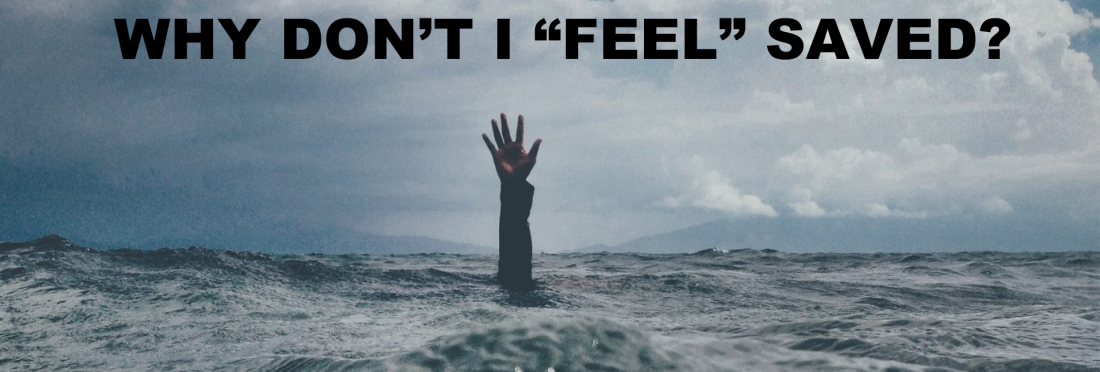
Assurance of salvation is of utmost importance for the Christian. When a believer does not “feel” saved it can cause severe anxiety. Many of us have struggled deeply with this issue. At times it may be almost crippling, spending hours in God’s Word to find what it means to be assured in Christ. The “I never knew you” verse from Matthew 7 may rest heavily on our minds. “Not everyone who says to me, ‘Lord, Lord,’ will enter the kingdom of heaven, but only the one who does the will of my Father who is in heaven. Many will say to me on that day, ‘Lord, Lord, did we not prophesy in your name and in your name drive out demons and in your name perform many miracles?’ Then I will tell them plainly, ‘I never knew you. Away from me, you evildoers!’ Matthew 7:21-23
So, what do we do when we don’t “feel” saved?
Understanding The Realities
When we’re struggling with assurance, we’re struggling with our own hearts to know whether or not we are a Christian. Frequently, our underlying assumption may be that our assurance is directly connected to our feelings and emotions. In other words, our belief is “If I don’t feel saved, then I must not be saved.” A problem with approaching assurance in this manner is that it allows our emotions, which shift and sway daily, to govern what’s true. As people, we are far more fickle and frail than we’d like to believe. Our emotions and feelings can change on a dime. In light of this, why would we allow what we feel to shape what we believe about our status in Christ?
Ultimately our assurance lies in the promises of God in Christ, not in our particular feelings on a specific day.
Saint and Sinner
As a believer, our never-ending battle with sin is a big cause of a lack of assurance. How many times have we promised ourselves that “I will never sin in this way again,” only to fall once again the next day? Many of us fight this battle. The Apostle Paul wrote, “For I do not do the good I want, but the evil I do not want is what I keep on doing” (Romans 7:19) about his battle with sin. It can be so disheartening to one day we find delight in obedience, only to then find pleasure in sin the next. This experience can open up a flood of inner turmoil: “Am I genuine?” and “Would a real Christian struggle this much?”
Romans 7 tells us that as Christians we are simultaneously saint and sinner. As we pilgrims travel through the Christian life, we continually struggle with sin and failure. But in all of our battle with our flesh, Romans 8:1 brings us great gospel hope: There is therefore now no condemnation for those who are in Christ Jesus. “No article of faith is more difficult to believe than ‘I believe in the forgiveness of sins,’” preached Martin Luther. But the good news of the gospel is that our status in Christ is not contingent upon our best days of obedience or worst days of failure, but rather upon the perfect work of Christ on our behalf.
Outward and Upward
There’s a great Latin phrase that brings comfort to a weary heart and soul: extra nos. It means, “outside ourselves” and serves to remind us where our salvation truly lies. Often, what can cause a great deal of personal anxiety in terms of assurance is constant introspection. Certainly, there are times to look within, but when we long to find security in ourselves, we will constantly come up short. Assurance of salvation will never be found in measuring our obedience, the amount of sins we have overcome, or how holy we think we are. God’s moral standard in His Law is far too high (i.e., perfect) for us to think we can find comfort in our works.
Our assurance lies extra nos; namely, that we are saved by grace alone, through faith alone, on account of Christ alone (Titus 3:4-7). When we long for the comfort of being assured that we are saved, looking at our good works (or lack thereof) is like a mirage in a desert—it always promises but never delivers. Instead, the focus of the Christian life is outward and upward. When our souls are troubled and begin to doubt, comfort lies outside of ourselves in the grace of God given in Christ (Psalm 42).
Christ Alone
The great hymn writer Horatius Bonar gives us great words in the hymn Not What My Hands Have Done.
“Not what my hands have done can save my guilty soul; Not what my toiling flesh has borne can make my spirit whole. Not what I feel or do can give me peace with God; Not all my prayers, and sighs and tears can bear my awful load.
Thy work alone, O Christ, can ease this weight of sin Thy blood alone O Lamb of God, can give me peace within. Thy love to me O God, not mine, O Lord, to Thee Can rid me of this dark unrest, And set my spirit free!”
*https://theocast.org/why-dont-i-feel-saved/
Some thoughts –
God made Adam and Eve the way He did, fully knowing that they would disobey His single requirement that they not eat from the Tree of Knowledge of Good and Evil. And yet “God saw all that he had made, and it was very good.”
Ages before God “knit us in the womb”, He knew He would draw us to Himself as Christians, and He knew all of the successes and failures that we would experience in our lives. After all, God chose to make us the way He did. Our successes and failures are part of God’s plan for our lives, and, specifically, for our Christian walk. We don’t understand this now, but God assures us that “all things work together for good to them that love God, to them who are the called according to his purpose.” Romans 8:28
We Christians are not adopted into God’s family as children because we attended church with our folks twice on Sunday and on Wednesday evenings, or because we went to a revival meeting with friends, or responded to our pastor’s invitation and said a prayer with him in front of the congregation, or because we’re a member of a local church, or because we routinely participate in some rites our church thinks are the duty of practicing Christians.
We are God’s children because God gave His Son, Jesus, to die as full payment for our sins, to absolve us of guilt, and to count us as righteous. He raised Jesus from the dead as a promise to us to be raised from the dead at the last day. And Jesus now sits at the right hand of the Father, interceding on our behalf.
We are God’s children because God then drew us to Himself, and He will never let even one of us slip from His loving arms. All God asks of us is that we believe . . . that we have faith in His Son. And, as incomprehensible as this may sound, even the faith that we have is a gift from God (Ephesians 2:8) and is given by God’s mercy (Romans 9:15-16), by God’s election, and not by any works of ours (Romans 9:11).
All of God and none of me!
Some verses to think about –
No one can come to me unless the Father who sent me draws him; and I will raise him up at the last day. John 6:44
And this is the will of Him who sent Me, that I shall lose none of those He has given Me, but raise them up at the last day. John 6:39
For it is My Father’s will that everyone who looks to the Son and believes in Him shall have eternal life, and I will raise him up at the last day.” John 6:40
Everyone the Father gives Me will come to Me, and the one who comes to Me I will never drive away. John 6:37
For You granted Him authority over all people, so that He may give eternal life to all those You have given Him. John 17:2
For God so loved the world, that he gave his only begotten Son, that whosoever believes in him should not perish, but have everlasting life. For God sent not his Son into the world to condemn the world; but that the world through him might be saved. He that believes on him is not condemned: but he that believes not is condemned already, because he hath not believed in the name of the only begotten Son of God. John 3:16-18
Jesus said unto her, I am the resurrection, and the life: he that believes in me, though he were dead, yet shall he live: And whosoever lives and believes in me shall never die. Believest thou this? John 11:25-26
For if, when we were enemies, we were reconciled to God by the death of his Son, much more, being reconciled, we shall be saved by his life. Romans 5:10
He that spared not his own Son, but delivered him up for us all, how shall he not with him also freely give us all things? Romans 8:32
He that believes on the Son hath everlasting life: and he that believes not the Son shall not see life; but the wrath of God abides on him. John 3:36
On this day and every day –
God is in Control . . . and His Grace is Sufficient, so . . . Keep Looking Up
Hopefully, every Sunday, we can find something here that will build us up a little . . . give us a smile . . . and add some joy or peace, very much needed in all our lives.
“This day is holy to the Lord your God; do not mourn nor weep.” . . . “Go your way, eat the fat, drink the sweet, and send portions to those for whom nothing is prepared; for this day is holy to our Lord. Do not sorrow, for the joy of the Lord is your strength.”
This Sanctuary Sunday Open Thread, with full respect to those who worship God on the Sabbath, is a place to reaffirm our worship of our Creator, our Father, our King Eternal.
It’s also a place to read, post, and discuss news that is worth knowing and sharing. Please post links to any news stories that you use as sources or quote from.
In the QTree, we’re a friendly and civil lot. We encourage free speech and the open exchange and civil discussion of different ideas. Topics aren’t constrained, and sound logic is highly encouraged, all built on a solid foundation of truth and established facts.
We have a policy of mutual respect, shown by civility. Civility encourages discussions, promotes objectivity and rational thought in discourse, and camaraderie in the participants – characteristics we strive toward in our Q Tree community.
Please show respect and consideration for our fellow QTreepers. Before hitting the “post” button, please proofread your post and make sure you’re addressing the issue only, and not trying to confront the poster. Keep to the topic – avoid “you” and “your”. Here in The Q Tree, personal attacks, name-calling, ridicule, insults, baiting, and other conduct for which a penalty flag would be thrown are VERBOTEN.
In The Q Tree, we’re compatriots, sitting around the campfire, roasting hot dogs, making s’mores, and discussing, agreeing, and disagreeing about whatever interests us. This board will remain a home for those who seek respectful conversations.
In writing to his “dear children” in the Lord, the apostle John tells them that “the one who is in you is greater than the one who is in the world” (1 John 4:4). The contrast here is between the Spirit of Christ and the spirit of antichrist; in short, God is greater than Satan.
First John 4 begins with an exhortation for believers to test the spirits of prophets or teachers: “Beloved, do not believe every spirit, but test the spirits, whether they are of God; because many false prophets have gone out into the world” (1 John 4:1). What a prophet or teacher proclaims reveals whether he is of God or a false prophet of the world. John tells us how to recognize a false prophet: “Every spirit that does not acknowledge Jesus is not from God. This is the spirit of the antichrist” (verse 3). Anyone who teaches or proclaims falsehood about Jesus, such as denying His divinity, is a false prophet. These false prophets are actually speaking in the spirit of the antichrist on behalf of “the one who is in the world,” Satan.
The word antichrist means “against Christ.” Satan is the ultimate spirit against Christ. He is the father of lies and is against truth (John 8:44). He is called “the ruler of this world” (John 12:31; 14:30; 16:11) and “the god of this world” (2 Corinthians 4:4). He is “the spirit who is now at work in those who are disobedient” (Ephesians 2:2). Satan uses false prophets to lead people away from Christ by deceiving them with a false view of Jesus. Twisting who Jesus is perverts the gospel. It keeps people in the bondage of sin and in darkness. Yet Satan is not as powerful as God, and John reminds the believers in 1 John 4:4 that greater is He that is in believers than he that is in the world.
The bodies of believers are the temples of the Holy Spirit who dwells within them (1 Corinthians 6:19). John encourages those in whom God lives: “You are from God” (1 John 4:4, ESV). They are not of the world. John reassures them that they have “overcome” those who teach false doctrine and who can rightly be called “antichrists.”
John uses the concept of “overcoming” five other times in 1 John: believers have overcome the evil one (1 John 2:13, 14) and have overcome the world (three times in 1 John 5:4–5). The same Spirit who raised Jesus from the dead now indwells believers in Christ (Romans 8:11). The Holy Spirit is far stronger than Satan or any of his minions, the Spirit’s wisdom is greater than any of Satan’s schemes, and the Spirit’s protection is more than enough to thwart any of Satan’s attacks. Because he who is in us is greater than he who is in the world, we have confidence in God and at the same time put no confidence in the flesh. The power is not ours but the Holy Spirit’s.
By these encouragements believers can have peace and rejoice because Jesus has “overcome the world” (John 16:33). Believers need not fear Satan; rather, they trust in the Lord and obey Him. By the living Spirit of God within them, believers can overcome the lies and temptations of the powers of darkness. Those who are of God can boldly say, “Greater is He who is in me than he who is in the world.”
This discussion brings a couple of thoughts to mind.
There used to be, and perhaps still are, some individuals travelling around holding seminars to make us more aware of the power of satan and his minions. Then, if we pray a specially worded prayer or invoke the power of certain passages in God’s Word, we could be protected from satan’s power. I had skepticism then, and have it now when someone tells me I need more than the presence of God by His Holy Spirit, actually dwelling inside me, to ward off attacks by satan or his underlings. God has provided us what we need and we should rest assured in the palm of His hand.
The second thought is that of people who say that because we are adopted into God’s family, we now have the power to command the powers of darkness or to invoke certain promises from God’s Word that will then require God to act on our behalf. As pertains to commanding the powers of darkness, we are nothing. God the Father, the Son and the Holy Spirit are everything. God has already promised to keep us safely in His care . . . our job, if you will, is to believe and trust what God is telling us . . . that is how we resist the devil. This should actually give us great comfort as opposed to figuring out how we can directly act to bind the devil. It is not for nothing that God’s Word tells us “Behold, God is my salvation; I will trust, and not be afraid: for the LORD JEHOVAH is my strength and my song; he also is become my salvation.”
On this day and every day –
God is in Control . . . and His Grace is Sufficient, so . . . Keep Looking Up
Hopefully, every Sunday, we can find something here that will build us up a little . . . give us a smile . . . and add some joy or peace, very much needed in all our lives.
“This day is holy to the Lord your God; do not mourn nor weep.” . . . “Go your way, eat the fat, drink the sweet, and send portions to those for whom nothing is prepared; for this day is holy to our Lord. Do not sorrow, for the joy of the Lord is your strength.”
This Sanctuary Sunday Open Thread, with full respect to those who worship God on the Sabbath, is a place to reaffirm our worship of our Creator, our Father, our King Eternal.
It’s also a place to read, post, and discuss news that is worth knowing and sharing. Please post links to any news stories that you use as sources or quote from.
In the QTree, we’re a friendly and civil lot. We encourage free speech and the open exchange and civil discussion of different ideas. Topics aren’t constrained, and sound logic is highly encouraged, all built on a solid foundation of truth and established facts.
We have a policy of mutual respect, shown by civility. Civility encourages discussions, promotes objectivity and rational thought in discourse, and camaraderie in the participants – characteristics we strive toward in our Q Tree community.
Please show respect and consideration for our fellow QTreepers. Before hitting the “post” button, please proofread your post and make sure you’re addressing the issue only, and not trying to confront the poster. Keep to the topic – avoid “you” and “your”. Here in The Q Tree, personal attacks, name-calling, ridicule, insults, baiting, and other conduct for which a penalty flag would be thrown are VERBOTEN.
In The Q Tree, we’re compatriots, sitting around the campfire, roasting hot dogs, making s’mores, and discussing, agreeing, and disagreeing about whatever interests us. This board will remain a home for those who seek respectful conversations.
“Be joyful always; pray continually; give thanks in all circumstances, for this is God’s will for you in Christ Jesus.” (First Thessalonians 5:16-18) Give thanks in ALL circumstances . . . yes, even in what we might consider as bad circumstances. Thankfulness should be a way of life for us, naturally flowing from our hearts and mouths.
Psalm 136:1 says, “Give thanks to the Lord, for he is good. His love endures forever.” We are thankful: God’s constant goodness and His steadfast love. When we recognize the nature of our depravity and understand that, apart from God, there is only death (John 10:10; Romans 7:5), our natural response is to be grateful for the life He gives.
Psalm 30 gives praise to God for His deliverance. David writes, “I will exalt you, O Lord, for you lifted me out of the depths and did not let my enemies gloat over me. O Lord my God, I called to you for help, and you healed me. O Lord, you brought me up from the grave; you spared me from going down into the pit. . . . You turned my wailing into dancing; you removed my sackcloth and clothed me with joy, that my heart may sing to you and not be silent. O Lord my God, I will give you thanks forever” (Psalm 30:1-12). David gives thanks to God following an obviously difficult circumstance. This psalm of thanksgiving, we not only praise God in the moment but remember God’s past faithfulness. It is a statement of God’s character, which is so wonderful that praise is the only appropriate response.
We are also thankful to God in the midst of difficult circumstances. Psalm 28 depicts David’s distress. It is a cry to God for mercy, protection, and justice. After David cries out to God, he writes, “Praise be to the Lord, for he has heard my cry for mercy. The Lord is my strength and my shield; my heart trusts in him, and I am helped. My heart leaps for joy, and I will give thanks to him in song” (Psalm 28:6-7). In the midst of hardship, David remembers who God is and, as a result of knowing and trusting God, gives thanks. Job had a similar attitude of praise, even in the face of death: “The LORD gave and the LORD has taken away; may the name of the LORD be praised” (Job 1:21).
Paul, heavily persecuted, wrote, “Thanks be to God, who always leads us in triumphal procession in Christ and through us spreads everywhere the fragrance of the knowledge of him” (2 Corinthians 2:14). The writer of Hebrews says, “Therefore, since we are receiving a kingdom that cannot be shaken, let us be thankful, and so worship God acceptably with reverence and awe” (Hebrews 12:28). Peter gives a reason to be thankful for “grief and all kinds of trials,” saying that, through the hardships, our faith “may be proved genuine and may result in praise, glory and honor when Jesus Christ is revealed” (1 Peter 1:6-7).
We, the people of God, are thankful people, for we realize how much we have been given. One of the characteristics of the last days is a lack of thanksgiving, according to 2 Timothy 3:2. Wicked people will be “ungrateful.”
We are thankful because God is worthy of our thanksgiving. It is only right to credit Him for “every good and perfect gift” He gives (James 1:17). When we are thankful, our focus moves off selfish desires and off the pain of current circumstances. Expressing thankfulness helps us remember that God is in control. Thankfulness, then, is not only appropriate; it’s actually healthy and beneficial to us. It reminds us of the bigger picture – that we belong to God, and that we have been blessed with every spiritual blessing (Ephesians 1:3). Truly, we have an abundant life (John 10:10), and gratefulness is fitting.
By His divine power, God has given us everything we need for life and godliness, through the knowledge of Him who called us by His own glory and goodness. (2 Peter 1:3)
Thank God for His Blessings
We look at our country these days and see All the bad things that happen to be: Lies, corruption, thievery and fraud, But we’ve seen the Light and so we thank God.
Thank God that we have enough to eat, That we don’t have to live on the street, That we have water, are secure and warm, In wind and rain, we’re safe from the storm.
Thank God for our friends and family That we choose work, there’s no slavery That after work we can rest or play, And feel some contentment for our day.
We tend to lose sight that we’re truly blessed, Living in comfort, not poor and oppressed, While life’s twists happen and we feel deprived, Others on this earth must fight to survive.
Our churches and homes may be burned down, And we could be burned, tortured or drowned. Worshipping God will threaten our death – “All praises to Him” at our last breath.
No food, dirty water, oppressive heat, Sickness, disease, and filthy, dusty streets, Babies and kids, bloated stomachs and flies, Grotesque skeletons, no hope in their eyes.
Or living inside wearing old gloves and coats, Bone-chilling cold, all alone and remote. Old and sickly, no medicine anywhere, Dying alone with nobody to care.
There are ways to help the poor, to be sure, Though it’s unlikely that there’ll be a cure. We should help in many different ways, ‘Cause the poor will be with us all our days.
From these situations, we can all learn To look at our problems with less concern, And realize as our lives pass by, But for the grace of God go I.
We truly thank God for all our wealth, Our work, our families, and good health. On top of these blessings, there’s a big plus – Our riches in heaven wait for us.
For God’s our Provider, blessings from Him Have met all our needs and freed us from sin. He’s given us all, including His Son. Praise God forever! May His will be done!
On this day and every day –
God is in Control . . . and His Grace is Sufficient, so . . . Keep Looking Up
Hopefully, every Sunday, we can find something here that will build us up a little . . . give us a smile . . . and add some joy or peace, very much needed in all our lives.
“This day is holy to the Lord your God; do not mourn nor weep.” . . . “Go your way, eat the fat, drink the sweet, and send portions to those for whom nothing is prepared; for this day is holy to our Lord. Do not sorrow, for the joy of the Lord is your strength.”
This Sanctuary Sunday Open Thread, with full respect to those who worship God on the Sabbath, is a place to reaffirm our worship of our Creator, our Father, our King Eternal.
It’s also a place to read, post, and discuss news that is worth knowing and sharing. Please post links to any news stories that you use as sources or quote from.
In the QTree, we’re a friendly and civil lot. We encourage free speech and the open exchange and civil discussion of different ideas. Topics aren’t constrained, and sound logic is highly encouraged, all built on a solid foundation of truth and established facts.
We have a policy of mutual respect, shown by civility. Civility encourages discussions, promotes objectivity and rational thought in discourse, and camaraderie in the participants – characteristics we strive toward in our Q Tree community.
Please show respect and consideration for our fellow QTreepers. Before hitting the “post” button, please proofread your post and make sure you’re addressing the issue only, and not trying to confront the poster. Keep to the topic – avoid “you” and “your”. Here in The Q Tree, personal attacks, name-calling, ridicule, insults, baiting, and other conduct for which a penalty flag would be thrown are VERBOTEN.
In The Q Tree, we’re compatriots, sitting around the campfire, roasting hot dogs, making s’mores, and discussing, agreeing, and disagreeing about whatever interests us. This board will remain a home for those who seek respectful conversations.
“The entrance of Your words gives light; it gives understanding to the simple” (Ps. 119:130)
“The Lord is my light and my salvation, whom shall I fear?” (Ps. 27:1)
In the first few verses of Genesis, one of the very first things God (the Word, Jesus Christ) does in creating the earth is to bring physical light.
“The earth was without form and void; and darkness was on the face of the deep. And the spirit of God was hovering over the face of the waters. Then God said, ‘Let there be light’ and there was light. And God saw the light, that it was good; and God divided the light from the darkness” (Gen. 1:2-4).
Then, in the last few verses of the bible, John explains that after God has set up His kingdom and recreated a spiritual heaven and earth, that “they need no lamp nor light of the sun, for the Lord God gives them light” (Rev. 22:5). The physical celestial lights that God created for man in the current cosmos—sun, moon, and stars—are no longer necessary because we will have the Light with us and God’s glory will be all that is needed to see.
During His ministry, Jesus told His disciples (and us, by extension), “You are the light of the world…let your light shine before men, that they may see your good works and glorify your Father in heaven” (Matt. 5:14, 16). Typically, what I’ve heard said about that verse is that it’s about how we’re meant to live righteous lives and be examples of God’s way. And that’s true.
But what does that really mean and require of us? There are a few insights about light that help to see even deeper meaning to that verse in Matthew . . . reminders that should enhance our understanding of the type of light we are meant to be.
Light illuminates . . . maybe another way of putting it is that it reveals.
The Hebrew word that’s used in that very first Genesis verse referenced above (ore, H216) means illumination, bright, or clear. In Jesus’s command in Matthew 5, the Greek word used (phos, G5457) also means to shine or make manifest (a.k.a. clear, plain, apparent). Both imply an enlightening or uncovering of something that was there but hadn’t previously been seen or understood.
Jesus used this type of verbiage during His ministry, particularly when speaking of His role in revealing the Father to His disciples and declaring the gospel (Matt. 11:25-27, John 14:6-10). Interestingly, the word translated “reveal” in these verses is apokalupto, also translated “revelation” (as in the book of Revelation).
God consistently uses the theme of light and darkness as an analogy for His calling and the need to separate ourselves from this present world. Peter tells us, “But you are a chosen generation, a royal priesthood, a holy nation, His own special people, that you may proclaim the praises of Him who called you out of darkness into His marvelous light” (I Pet. 2:9).
John states this even more clearly: “God is light and in Him there is no darkness at all” (I John 1:5). Darkness is not a thing in and of itself—it is the absence of light, and even a tiny light helps negate absolute darkness. Darkness symbolizes the absence of God, which is why the very first thing that God did during Genesis is to bring light. It symbolically combated the darkness, where Satan works, and began to illuminate God’s creation. A similar thing happens to us when God begins to work in our minds.
“But even if our gospel is veiled, it is veiled to those who are perishing, whose minds the god of this age has blinded, who do not believe, lest the light of the gospel of the glory of Christ, who is the image of God, should shine on them…For it is the God who commanded light to shine out of darkness, who has shone in our hearts to give the light of the knowledge of the glory of God in the face of Jesus Christ” (II Cor. 4:3-6).
Are we reflecting the illumination of our Creator, bringing a tiny light to the darkness of this world? Whether through honesty, graciousness, patience, positivity, or myriad other qualities, it’s a question worth asking ourselves. I don’t mean things like overt evangelizing, but rather considering whether our co-workers or peers would think of us in this manner regardless of what they think about our beliefs.
Why does that even matter? Well, because the light we reflect is God’s, not ours.
Like the moon, the light we reflect comes 100% from another source . . . it’s not actually about us or our light, because we can’t do anything on our own.
It’s meaningful that, of all the dozens of different descriptors and names assigned to God and the Son throughout the bible, it’s that Greek word phos that’s used to describe the Son from before man’s beginning.
“In the beginning was the Word, and the Word was with God, and the Word was God….All things were made through Him…In Him was life, and the life was the light of [or brought life to] men. And the light [phos again] shines in the darkness, and the darkness did not comprehend it” (John 1:1, 3-5).
Jesus literally says, “I am the Light of the world” (John 8:12), and this role of His is prophesied in Isaiah 10:17 as well. Jesus was the Light pointing the way to God and illuminating the path to get there (Matt. 4:16, John 8:12, John 12:35-37).
John gives an unambiguous litmus test we can apply to ourselves, saying “God is light and in Him is no darkness at all. If we say that we have fellowship with Him and walk in darkness, we lie and do not practice the truth” (I John 1:5-7).
This imagery was made clear from the early stages of God’s interaction with His chosen people. He (the Word) led the Israelites as a pillar of fire by night, giving them light in the darkness and illuminating the path out of Egypt (Ex. 13:21, Neh. 9:12). In the tabernacle and then the temple, a lamp burned oil continually, the flame symbolic of God’s presence (Ex. 27:20-21).
So what does it mean for us to reflect God’s light? At its heart it means that when people see us and interact with us, it should be like an interaction with our Father—they should “get” what He’s like.
“And do not be conformed to this world, but be transformed by the renewing of your mind” (Rom. 12:2) “Be we all, with unveiled face, beholding as in a mirror the glory of the Lord, are being transformed into the same image from glory to glory, just as by the spirit of the Lord” (II Cor. 3:18) “If indeed you have heard Him and have been taught by Him…put off…the old man which grows corrupt…and be renewed in the spirit of your mind, and that you put on the new man which was created according to God, in true righteousness and holiness” (Eph. 4:21-24) “…You have put off the old man with his deeds, and have put on the new man who is renewed in knowledge according to the image of Him who created him” (Col. 3:9-10) “Let your light so shine before men, that they may see your good works and glorify your Father in heaven” (Matt. 5:16)
These verses and many more make it clear that we are supposed to be being remade in His image from a spiritual and mental standpoint. If we are, then that is what people should see; if it’s not, then God may not recognize us when the time comes.
That’s one of the reasons that Jesus warned His disciples, “Many will say to Me in that day, ‘Lord, Lord, have we not prophesied in Your name?…And then I will declare to them, ‘I never knew you; depart from Me, you who practice lawlessness!” (Matt. 7:22-23). If we are a reflection of His image and reflecting His light, that’s simply not possible—it would be like each of us looking in the mirror and not recognizing ourselves. And if it’s the case it means we’ve likely become disconnected from Him along the way.
All light needs a constant power source to keep working. No light in our physical world is self-sustaining, and neither is ours. No matter the type of light—lamp, flame, solar-powered, even the sun itself—if lights get disconnected from their power source, they eventually lose charge, weaken, fade, and die or burn out. Likewise, we have to continuously recharge our connection by replenishing the oil in our lamps: God’s Spirit.
We looked at a bit of II Cor. 4 earlier, but letting Paul finish his thought ties this theme of our power source together nicely.
“For it is the God who commanded light to shine out of the darkness, who has shone in our hearts to give the light of the knowledge of the glory of God in the face of Jesus Christ. But we have this treasure in earthen vessels, that the excellence of the power may be of God and not of us” (2 Cor 4:6-7)
God gives His people a measure of His spirit to carry within us, which is the oil that should be feeding the light we reflect. But that little light is not yet infinite or eternal if we don’t tend to it—the five foolish virgins discovered this in Jesus’s parable when they ran out of oil (Matt. 25:1-13). This is another sobering example where Jesus says “I do not know you”, because the five foolish virgins had lost connection to their light’s power source and were no longer reflecting the Light.
Paul makes clear that not only are we to be reflecting God’s light, but it should be becoming part of us—it’s literally a portion of our inheritance. He writes the Colossians that they should give thanks to God our Father, “who has qualified us to be partakers of the inheritance of the saints in the light…He has delivered us from the power of darkness and conveyed us into the kingdom” (Col. 1:12). Because He is light and we are His children, our inheritance is His light. We, like Esau, are at risk of losing out on our inheritance if we run out of oil.
But we need to be worried not only about becoming disconnected from our power source, but also because there’s another danger that can affect whether we’re reflecting God’s light.
Even when we have God’s Spirit and are reflecting His light, we have to watch out for the impact of our society’s norms, values, and distractions. It’s almost impossible to be completely unaffected by the world we live in, so we have constantly be alert.
Personally, I think that’s really what Paul was talking about when he told the Corinthians, “Do not be unequally yoked together with unbelievers. For what fellowship has righteousness with lawlessness? And what communion has light with darkness?” (II Cor. 6:14). He wasn’t telling them to remove themselves from society altogether and live out in the desert. And maybe he was speaking about marriages, as many people think.
But I also think this has to do with close relationships and how we choose to spend our time. There’s a reason we closely monitor the friends our kids have and who they’re spending time with—we know that the company we keep ends up becoming who we are. But sometimes we forget to put that into practice in our own lives.
This is a common theme for Paul, because after writing the Corinthians, he tells the Ephesians something similar. He starts by telling them to be imitators of God and then finishes:
“For you were once darkness, but now you are light in the Lord. Walk as children of light…and have no fellowship with the unfruitful works of darkness, but rather expose them…but all things that are exposed are made manifest by the light, for whatever makes manifest is light” (Eph. 5:8-13)
God gives a warning to those who “call evil good, and good evil; who put darkness for light, and light for darkness” (Is. 5:20). It’s easy to read this and think of other people, of those not called. But God wasn’t talking to pagans or Gentiles in this passage…He was talking to His people! And it doesn’t just mean literally substituting evil for God’s way—it can also include putting our own traditions above God’s laws or intents, or our own priorities over His desires.
Jesus addresses this idea of the lamp getting affected by its surroundings. He told His disciples, “The lamp of the body is the eye. If therefore your eye is good, your whole body will be full of light. But if your eye is bad, your whole body will be full of darkness…no one can serve two masters…you cannot serve God and mammon (money)” (Matt. 6:22-24).
Conclusion: What does it mean to “let your light shine”? Are we reflecting the Light? God’s light is a metaphor for our physical life as well—without light, nothing living can survive. One of the last pieces of God’s wrath that this world will endure is complete darkness, which will prevent anything from growing and be a breeding ground for fear and hate, a representation of this world’s true state without God (Rev. 16:10-11).
Even then, they’ll reject God and turn to fight the returning Messiah. Jesus explained why this is to His disciples:
“And this is their condemnation, that the light has come into the world, and men loved darkness rather than light, because their deeds were evil. For everyone practicing evil hates the light and does not come to the light, lest his deeds be exposed. But he who does the truth comes to the light, that his deeds may be clearly seen, that they have been done in God” (John 3:19-21)
When Jesus struck Paul blind on the road to Damascus, He told him that he was being sent to both Jews and Gentiles “to open their eyes, to turn them from darkness to light…that they may receive forgiveness of sins and an inheritance among those who are sanctified by faith in Me” (Acts 26:18).
These are the stakes for us, and this is the light we’re meant to reflect as a “city on a hill”. Are we reflecting the Light, or has our light dimmed?
“The city had no need of the sun or of the moon to shine in it, for the glory of God illuminated it. The Lamb is its light. And the nations of those who are saved shall walk in its light” (Rev. 21:23-24)
God is in Control . . . and His Grace is Sufficient, so . . . Keep Looking Up
Hopefully, every Sunday, we can find something here that will build us up a little . . . give us a smile . . . and add some joy or peace, very much needed in all our lives.
“This day is holy to the Lord your God; do not mourn nor weep.” . . . “Go your way, eat the fat, drink the sweet, and send portions to those for whom nothing is prepared; for this day is holy to our Lord. Do not sorrow, for the joy of the Lord is your strength.”
This Sanctuary Sunday Open Thread, with full respect to those who worship God on the Sabbath, is a place to reaffirm our worship of our Creator, our Father, our King Eternal.
It’s also a place to read, post, and discuss news that is worth knowing and sharing. Please post links to any news stories that you use as sources or quote from.
In the QTree, we’re a friendly and civil lot. We encourage free speech and the open exchange and civil discussion of different ideas. Topics aren’t constrained, and sound logic is highly encouraged, all built on a solid foundation of truth and established facts.
We have a policy of mutual respect, shown by civility. Civility encourages discussions, promotes objectivity and rational thought in discourse, and camaraderie in the participants – characteristics we strive toward in our Q Tree community.
Please show respect and consideration for our fellow QTreepers. Before hitting the “post” button, please proofread your post and make sure you’re addressing the issue only, and not trying to confront the poster. Keep to the topic – avoid “you” and “your”. Here in The Q Tree, personal attacks, name-calling, ridicule, insults, baiting, and other conduct for which a penalty flag would be thrown are VERBOTEN.
In The Q Tree, we’re compatriots, sitting around the campfire, roasting hot dogs, making s’mores, and discussing, agreeing, and disagreeing about whatever interests us. This board will remain a home for those who seek respectful conversations.
You shall not add to the word that I command you, nor take from it, that you may keep the commandments of the Lord your God that I command you. Deut 4:2
For the time will come when they will not endure sound doctrine, but according to their own desires, because they have itching ears, they will heap up for themselves teachers; and they will turn their ears away from the truth, and be turned aside to fables. 2 Tim 4:3
I am astonished that you are so quickly deserting the one who called you in the grace of Christ and are turning to a different gospel – not that there is another gospel, but there are some who are confusing you and want to pervert the gospel of Christ. But even if we or an angel from heaven should proclaim to you a gospel contrary to what we proclaimed to you, let that one be accursed! As we have said before, so now I repeat, if anyone proclaims to you a gospel contrary to what you received, let that one be accursed! Gal 1:6-9
Now, brothers and sisters, I want to remind you of the gospel I preached to you, which you received and on which you have taken your stand. By this gospel you are saved, if you hold firmly to the word I preached to you. Otherwise, you have believed in vain. For what I received I passed on to you as of first importance: that Christ died for our sins according to the Scriptures, that he was buried, that he was raised on the third day according to the Scriptures, and that he appeared to Cephas, and then to the Twelve. After that, he appeared to more than five hundred of the brothers and sisters at the same time. 1 Cor 15:1–6
I warn everyone who hears the words of the prophecy of this book: if anyone adds to them, God will add to that person the plagues described in this book; if anyone takes away from the words of the book of this prophecy, God will take away that person’s share in the tree of life and in the holy city, which are described in this book. Rev 2:18-19
Safety and peace: it’s for those we plead, But when all’s said and done, it’s revival we need.
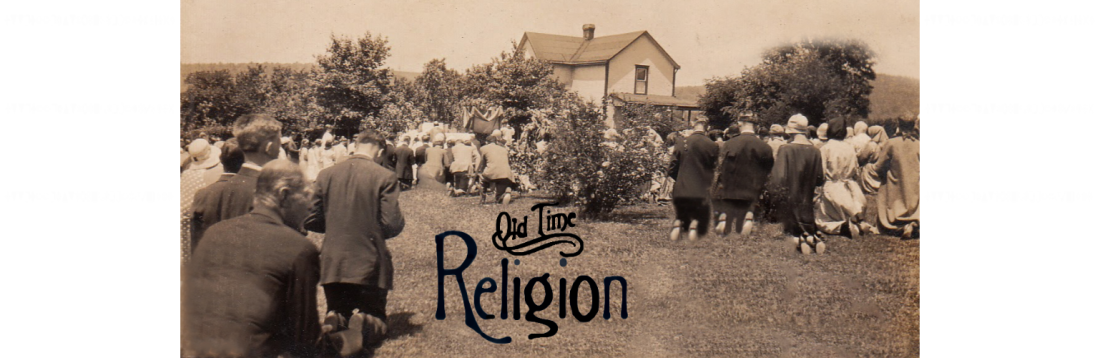
Away with such an old-time Christianity!
Charles Ebert Orr – 1844-1913
Satan has robed a harlot, named her ‘Christianity’, and succeeded in imposing her upon many. They are fondling with her. She indulges them in sensuality, while encouraging them to hope for a blissful immortality. The kings of the earth have committed fornication with her. They are reveling, feasting and banqueting with her–crazed by her seductive charms. She has neither purity, peace, nor power. Her robes are defiled by sin. She scoffs at pure Christianity, and calls her old-fashioned.
The Old Brown Church
This strange young woman is using every device to allure souls into her wanton chamber. She is most subtle of heart. She “flatters with her words. In the twilight, in the evening, in the black and dark night–she walks in the streets, and lies in wait at every corner, that she might catch and kiss him who is void of understanding.” With a beguiling, impudent face, she says to him: “I have peace offerings with me; I have decked my bed with tapestry and fine linen of Egypt. I have perfumed my bed with myrrh, aloes, and cinnamon. Come let us take our fill of love until the morning; let us enjoy each other’s caresses.”
Full Gospel Revival
Such is the mirthful, shallow, frivolous Christianity of the popular present-day religions! The generality of professors (we speak in love) desire a Christianity which will go with them to the halls of pleasure; which will dine with them at their rich banquets; which will smile on them as they walk in the ways of sin and worldliness–calming their fears with her flattering words of ‘peace, peace’.
Primitive Christianity, they consider, was good enough for primitive days–but she would be a horrid old maid in these days of progress. In this fast-moving age, the Christianity that crowned the life of Christ and the holy apostles is altogether too antiquated.
Primitive Christianity drew men from the world; she crucified their lusts; she taught them to practice self-denial; she brought them in humility to her feet; she led them in the paths of virtue and holiness; she upbraided them for sin; she told them of the vengeance and wrath of God against every evil.
Goin’ Down To The River
The Christian world today, in general, is saying, “Away with such an old-time Christianity! She has no charms for us! She is too common and plain–too grave and sober! We will not walk with her! Give us the mirthful and dashing young harlot–that we may walk with her amid the pleasures of the world, and with her gratify our lusts! She never chides us for sin, nor troubles us about the anger of God nor the torments of Hell. She invites us into her bosom and gives us a sweet opiate drink of ‘stolen waters’, and bids us take our fill of love.
Camp Meeting
We desire to tear off the sacrilegious robes of the harlot of false Christianity–and expose her shame to the gaze of every honest soul.
Dear reader, “Do not go after her! Do not let your heart incline to her ways! Do not go astray in her paths. For she has cast down many wounded–yes, many strong men have been slain by her. Her house is the way to Hell, going down to the chambers of death!”
Big Tent Revival
Seek the LORD while He may be found; call on Him while He is near. Let the wicked man forsake his own way and the unrighteous man his own thoughts; let him return to the LORD, that He may have compassion, and to our God, for He will freely pardon.
Faith of our fathers, living still, In spite of dungeon, fire and sword; O how our hearts beat high with joy Whenever we hear that glorious Word!
Faith of our fathers, holy faith! We will be true to thee till death.
Faith of our fathers, we will strive To win all nations unto Thee; And through the truth that comes from God, We all shall then be truly free.
Faith of our fathers, holy faith! We will be true to thee till death.
Faith of our fathers, we will love Both friend and foe in all our strife; And preach Thee, too, as love knows how By kindly words and virtuous life.
Faith of our fathers, holy faith! We will be true to thee till death…
On this day and every day –
God is in Control . . . and His Grace is Sufficient, so . . . Keep Looking Up
Hopefully, every Sunday, we can find something here that will build us up a little . . . give us a smile . . . and add some joy or peace, very much needed in all our lives.
“This day is holy to the Lord your God; do not mourn nor weep.” . . . “Go your way, eat the fat, drink the sweet, and send portions to those for whom nothing is prepared; for this day is holy to our Lord. Do not sorrow, for the joy of the Lord is your strength.”
This Sanctuary Sunday Open Thread, with full respect to those who worship God on the Sabbath, is a place to reaffirm our worship of our Creator, our Father, our King Eternal.
It’s also a place to read, post, and discuss news that is worth knowing and sharing. Please post links to any news stories that you use as sources or quote from.
In the QTree, we’re a friendly and civil lot. We encourage free speech and the open exchange and civil discussion of different ideas. Topics aren’t constrained, and sound logic is highly encouraged, all built on a solid foundation of truth and established facts.
We have a policy of mutual respect, shown by civility. Civility encourages discussions, promotes objectivity and rational thought in discourse, and camaraderie in the participants – characteristics we strive toward in our Q Tree community.
Please show respect and consideration for our fellow QTreepers. Before hitting the “post” button, please proofread your post and make sure you’re addressing the issue only, and not trying to confront the poster. Keep to the topic – avoid “you” and “your”. Here in The Q Tree, personal attacks, name-calling, ridicule, insults, baiting, and other conduct for which a penalty flag would be thrown are VERBOTEN.
In The Q Tree, we’re compatriots, sitting around the campfire, roasting hot dogs, making s’mores, and discussing, agreeing, and disagreeing about whatever interests us. This board will remain a home for those who seek respectful conversations.
In the book of Acts, the apostle Paul speaks of God’s feelings about King David: “After removing Saul, he made David their king. He testified concerning him: ‘I have found David son of Jesse, a man after my own heart; he will do everything I want him to do’” (Acts 13:22). An obvious question is how could God still call David a man after His own heart when David committed such terrible sins, including adultery and murder?
We learn much of David’s character in the book of Psalms. David’s life was a portrait of success and failure, and the biblical record highlights the fact that David was far from perfect. But what made David a cut above the rest was that his heart was pointed toward God. He had a deep desire to follow God’s will and do “everything” God wanted him to do. He was a man after God’s own heart.
Part of why David is called a man after God’s own heart is that he had absolute faith in God. This point is illustrated in 1 Samuel 17 where David as a young shepherd boy fearlessly slew the Philistine, Goliath. Shortly before the duel, we see direct evidence of David’s faith when David says, “‘The LORD who delivered me from the paw of the lion and from the paw of the bear will deliver me from the hand of this Philistine.’ And Saul said to David, ‘Go, and the LORD be with you!’” (verse 37).
David was fully aware that God was in control of his life, and he had faith that God would deliver him from impending danger. How else would one venture into a potentially fatal situation with such calm and confidence? David knew early on in life that God was to be trusted and obeyed. As we see in Scripture, David’s faith pleased God, and God rewards David for his faithfulness.
Another reason David was a man after God’s own heart is that he absolutely loved God’s Law. In Psalms, David repeatedly mentioned how much he loved God’s perfect Word. We find a beautiful example of this in Psalm 119:47–48: “For I delight in your commands because I love them. I lift up my hands to your commands, which I love, and I meditate on your decrees.”
It’s not hard to see his complete adoration for God’s Word. Also, notice how David “meditates” on God’s statutes. God granted David understanding and wisdom through daily meditation. We would do well to not only read God’s Word but also think about it throughout the day, for God loves us to think about Him. “Blessed are they who keep his statutes and seek him with all their heart. They do nothing wrong; they walk in his ways” (Psalm 119:2–3).
David was a man after God’s own heart in that he was truly thankful. “I wash my hands in innocence, and go about your altar, O LORD, proclaiming aloud your praise and telling of all your wonderful deeds” (Psalm 26:6–7). David’s life was marked by seasons of great peace and prosperity as well as times of fear and despair. But through all of the seasons in his life, he never forgot to thank the Lord for everything that he had. It is truly one of David’s finest characteristics. “Enter his gates with thanksgiving, and his courts with praise! Give thanks to him; bless his name!” (Psalm 100:4, ESV). As followers of Jesus Christ, we would do well to follow David’s lead of offering praise through thanksgiving to our Lord.
After he sinned, David was truly repentant. David’s sin with Bathsheba is recorded in 2 Samuel 11:2–5. The mighty fall hard, and David’s fall included adultery, lying, and murder. He had sinned against God, and he admits it in 2 Samuel 12:13: “David said to Nathan, ‘I have sinned against the LORD.’ And Nathan said to David, ‘The LORD also has put away your sin; you shall not die.’”
But admitting our sin and asking for forgiveness is only half of the equation. The other half is repentance, and David did that as well. Psalm 51 is David’s prayer of repentance to God: “Have mercy on me, O God, according to your steadfast love; according to your abundant mercy blot out my transgressions. Wash me thoroughly from my iniquity, and cleanse me from my sin!” (Psalm 51:1–2).
In conclusion, David was a man after God’s own heart because he demonstrated his faith and was committed to following the Lord. Yes, his faith was tested on a grand scale, and he failed at times. But after his sin he sought and received the Lord’s forgiveness. In the final analysis, David loved God’s Law and sought to follow it exactly. As a man after God’s own heart, David is a role model for all of us.
God is in Control . . . and His Grace is Sufficient, so . . . Keep Looking Up
Hopefully, every Sunday, we can find something here that will build us up a little . . . give us a smile . . . and add some joy or peace, very much needed in all our lives.
“This day is holy to the Lord your God; do not mourn nor weep.” . . . “Go your way, eat the fat, drink the sweet, and send portions to those for whom nothing is prepared; for this day is holy to our Lord. Do not sorrow, for the joy of the Lord is your strength.”
This Sanctuary Sunday Open Thread, with full respect to those who worship God on the Sabbath, is a place to reaffirm our worship of our Creator, our Father, our King Eternal.
It’s also a place to read, post, and discuss news that is worth knowing and sharing. Please post links to any news stories that you use as sources or quote from.
In the QTree, we’re a friendly and civil lot. We encourage free speech and the open exchange and civil discussion of different ideas. Topics aren’t constrained, and sound logic is highly encouraged, all built on a solid foundation of truth and established facts.
We have a policy of mutual respect, shown by civility. Civility encourages discussions, promotes objectivity and rational thought in discourse, and camaraderie in the participants – characteristics we strive toward in our Q Tree community.
Please show respect and consideration for our fellow QTreepers. Before hitting the “post” button, please proofread your post and make sure you’re addressing the issue only, and not trying to confront the poster. Keep to the topic – avoid “you” and “your”. Here in The Q Tree, personal attacks, name-calling, ridicule, insults, baiting, and other conduct for which a penalty flag would be thrown are VERBOTEN.
In The Q Tree, we’re compatriots, sitting around the campfire, roasting hot dogs, making s’mores, and discussing, agreeing, and disagreeing about whatever interests us. This board will remain a home for those who seek respectful conversations.
Doxologies refer first to something that God has done or will do, and then they ascribe attributes to God that account for that action, or are expressed in the action. So, for example, we might say, “Now to Him who fashioned the intricacies of the human eye and every molecule and atom in it — to Him belong infinite, inscrutable wisdom and skill.” Or we might say, “Now to Him who adopts dirty, abandoned, rebellious children into his family — to Him belong compassion and boundless mercy.”
In other words, the attributes that we ascribe to God are the ones that account for the action we are praising, or that come to expression in the action we are praising. His wisdom and skill are expressed in making the eye. His compassion and mercy are expressed in adopting of unworthy foundlings. These attributes account for the actions we are celebrating. So it is in Jude 1:24-25.
“Now to Him who is able to keep you from stumbling and to present you blameless before the presence of His glory with great joy, to the only God, our Savior, through Jesus Christ our Lord, be glory, majesty, dominion, and authority, before all time and now and forever. Amen.”
Jude is celebrating three things:
God keeps us from stumbling.
He presents us before the glory of God blameless.
And He presents us before the glory of God with great happiness.
And then Jude says: What came to expression in these three acts of God was God’s glory and majesty and power and authority. That’s what it takes to keep us as Christians for our years. This perseverance was the effect of God’s glory and majesty and power and authority.
Considering the Measurement
Do we have any idea of the degree (the measure) of divine glory and majesty and power and authority that it took to give us spiritual life when we were dead (Ephesians 2:5), and to keep us spiritually alive moment by moment for our years, and to stir up that spiritual life in such ways that it resisted sins and loved holiness and pursued spiritual fruit in the life of the church?
Do we know the degree of glory and majesty and power and authority that took? No. We don’t. We have no terms of measurement for such glory and majesty and power and authority. How do we quantify a Spirit creating and sustaining spirit? Or a Spirit acting on spirit to sustain the life of that spirit?
God creates spiritual life when we are dead. “That which is born of the Spirit is spirit” (John 3:6). We had no spiritual life. Then the Spirit acted in us. And now we are spiritually alive. We are spirit. This is not spirit like the demons are spirit. This is Holy Spirit. This is eternal, spiritual, God-created, and God-sustained spiritual life.
Our Life Is God’s Work
This spiritual life that we have is not ours intrinsically. It is not ours autonomously. We have this life to the degree that we have the Holy Spirit in us, and to the degree that we are united to Christ — which are interwoven realities. It is not the kind of spiritual life that we would have if the Spirit left us or we were not united to Christ. We would not be alive if we were not united to Christ by the Spirit. Our life is Christ’s life. The Spirit’s life.
The giving of this life, and the moment by moment sustaining and keeping of this life, and the stirring up of this life so that it treasures holiness and ministry is a work of God. If the decisive cause of our faithfulness to Christ must come from us, it will not come, because it is not there.
We bring nothing decisive to our creation. And we bring nothing decisive to the ongoing existence of this divine spiritual life in us. We exist as Christians by it. We did not create it. We don’t keep it in being. Not any more than the universe came into existence by its own power or is upheld by its own power (Hebrews 1:3).
Jude is clearly amazed at what it takes to sustain spiritual life — to keep it from collapsing and to bring it to glory blameless and happy. He must sense that what it takes to keep us believing — to keep us alive — is very great. So how do we join him in this God-exalting amazement?
Two Ways to Measure What It Takes
How do we then measure what it took for God to bring my spiritual life into being and keep me alive and holy and happy to the day of Christ? There are only two ways that I can see that we can measure what it takes to accomplish the preservation of our spiritual life?
One is to think about the fact that creating and sustaining spiritual life is something we cannot do at all, and that God alone does it. And the difference between nothing and anything is infinite. Let me put it this way: If God says to us: Create a being with divine spiritual life and sustain it, we will say, “We can’t.” And we will be right. We absolutely can’t. Then He does it with a word or a thought.
The difference between our absolute inability — our nothing — and His absolute ability — His everything — is immeasurable. Indeed it is immeasurably great. That’s the first way we can measure what it took to give us life and preserve it blameless and joyful to the day of Christ. We know we can’t do it and He can. The measurement of what it took to create us and keep us alive is the distance between us and God. It is an infinite wonder that God creates and sustains our spiritual life — that we are still Christians.
And the second way we know the measurement of what it took for God to sustain our spiritual life blameless and joyful before the glory of God is that He reveals it to us in verse 25: it took glory and majesty and power and authority. If the first computation of the infinite difference between our contribution and God’s contribution to our spiritual life does not make sense, then just take God’s word for it. Our creation and our preservation takes divine glory and majesty and power and authority. And any amount of divine glory and majesty and power and authority is infinitely greater than what we bring to our creation and preservation.
How God Keeps Us
How does God keep us
when Paul’s strategies of not losing heart (2 Corinthians 4) seem remote,
and when the language to articulate the gospel with words one more time won’t come,
and when we’re depressed not just because our church has false converts, but you fear you may be one,
and when you can remember countless times when you gave no evidence of trusting the power of the gospel to convert a neighbor, let alone a terrorist,
and when Spirit-empowered, gospel-driven, faith-fueled effort seems as likely as flying by flapping your arms,
and when the fuel tank of death-defying devotion to world missions seems empty,
and when your treasure is held out to you and God says, “You can’t have it,”
and when the crown jewel of the new Jerusalem that you are trying to lead is cut in slivers by an airplane propeller, or by the seduction of the prophetess Jezebel?
How does God keep us — keep us alive, keep us believing, keep us serving?
Called, Loved, Kept
Notice that Jude’s letter begins and ends with the assurance that God is decisively our keeper. We have already seen the end. Verse 24: “Now unto him who is able (who is strong) to keep you. . . .” Now look at the beginning: Verse 1: “Jude, a servant of Jesus Christ and brother of James, to those who are called, beloved in God the Father, and kept for Jesus Christ.” We are called. We are loved. And we are kept. The love of God moves him to call his elect to himself out of death and unbelief. And those whom he calls he keeps.
This is exactly what Paul teaches: God keeps those whom he calls. None is lost. “He will sustain you to the end, guiltless in the day of our Lord Jesus Christ. God is faithful, by whom you were called” (1 Corinthians 1:8-9). The called are sustained guiltless in the last day. The keeping is implicit in the call. That is what Jude means in verse 24. Then Paul says it again in Romans 8:30: “Those whom he predestined he also called, and those whom he called he also justified, and those whom he justified he also glorified.” None of the called is lost. The called are kept. That is a rock-solid teaching of Paul and Jude.
Jude’s Warning
So Jude establishes first and last the decisive work of God in keeping his own. And in between, he warns against the false teachers (verse 4) who “pervert the grace of our God into sensuality,” and who presume that they are saved but (verse 5) are “destroyed because they don’t believe.” So these professing Christians are not called and they are not kept. And the evidence that they are not called and not kept is that don’t crave Christ, they crave physical sensations. They don’t prize the God of grace; they prostitute the grace of God.
Then after those many warnings, Jude tells us what we must do for ourselves (verses 20–21) and for those we love (verses 22–23), in order to go on being kept by God. I’m only going to deal with what we do for ourselves because this brings out the paradox of the Christian life most clearly. Verses 20–21:
“But you, beloved, building yourselves up in your most holy faith and praying in the Holy Spirit, keep yourselves in the love of God, waiting for the mercy of our Lord Jesus Christ that leads to eternal life.”
“I worked harder than any of them, though it was not I, but the grace of God that is with me” (1 Corinthians 15:10). Or as Paul says in Philippians 2:12-13, “Work out your own salvation with fear and trembling, for it is God who works in you, both to will and to work for His good pleasure.”
Keep Yourselves in the Love of God
Here in Jude, it goes like this: “Keep yourselves in the love of God (verse 21), for God is the One who keeps you in His love.” The order and logic are supremely important. Verse 1: the love of God called us; the love of God will keep us. Therefore, keep ourselves in the love of God. Keep ourselves in God’s prior commitment to keep us.
And what does that mean? “Keep yourselves in the love of God” (verse 21) is the main verb — the only imperative verb in verses 20–21, and the other three verbs are supporting participles — they define how Jude understands keeping ourselves in the love of God. Verse 20: 1) “building yourselves up in your most holy faith;” 2) “praying in the Holy Spirit;” 3) (verse 21) “waiting for the mercy of our Lord Jesus Christ that leads to eternal life.”
The key words in those phrases are “faith,” “prayer,” and “waiting.” So, keep ourselves in the love of God — keep ourselves in the omnipotent commitment of God’s love to keep us, by trusting that omnipotent commitment, by praying for its daily application to the specifics of our lives, and by waiting patiently for God to finish His merciful work. We pray for God to keep us (“Preserve me O God!”). We trust the promise that He will (“for in you I take refuge”). And we wait for His mercy.
God Is Not Robbed
And in none of this do we rob Him of the glory and majesty and power and authority by which He decisively, faithfully, omnipotently keeps us. Because even our praying is His doing — it is by the Spirit that you pray (verse 20). And our faith is His doing, not our own, “it is the gift of God” (Ephesians 2:8). Our praying for His keeping, and our trusting in His keeping, is His keeping.
The glory and the majesty of His keeping consists very much in the power and the authority that He has to keep us through the means of our keeping ourselves in the love of God. We are not robots. And we are not autonomous. We are a new creation, a new race. Our coming into being and our being sustained is unlike anything the world can ever experience. It is a mystery. A daily miracle. We are those who by prayer and trust keep ourselves in the commitment of God’s love to keep us praying and trusting.
God Fulfills the New Covenant
God’s act to keep you praying and trusting so that you remain in his love and are kept blameless and joyful for the glory of God — that act is the fulfillment of the new covenant. “I will make with them an everlasting covenant, that I will not turn away from doing good to them. And I will put the fear of me in their hearts, that they may not turn from me” (Jeremiah 32:40). The new-covenant promise is that God will act so decisively for his newborn elect that they will not turn from him. They will be kept. They will pray and they will trust and they will keep themselves in the love of God. He will see to it. Our praying and trusting him to keep us is His keeping us. This is God’s new-covenant promise.
And this new-covenant fulfillment in our lives was secured, purchased by the blood of Jesus Christ. “This cup is the new covenant in my blood” (1 Corinthians 1:25). When Jesus died for us, all the promises of God became Yes in him (2 Corinthians 1:20). “I will see to it that my own will not turn from me into destruction (Jeremiah 32:40). I will keep them from falling.” That is a blood-bought, new-covenant promise.
And that is the ultimate reason why Jude 25 says, “To the only God, our Savior, through Jesus Christ our Lord, be glory, majesty, dominion, and authority.” The glory and majesty and power and authority that it takes to keep you and me alive in Christ — to keep us praying and trusting, to keep us in the love of God — was secured for us sinners, when Christ died for us. Therefore the glory and majesty and dominion and authority that keeps us from falling and presents us blameless and joyful to God is through the blood of Jesus Christ — the blood of the covenant. And therefore when we ascribe glory and majesty and dominion and authority to God we do it through Jesus Christ.
Don’t Underestimate the Power of the Gospel
We must not underestimate the power of the blood of Christ to keep us from falling. It’s power was at work “before all time” (Revelation 13:8), it is at work “now,” and it will be at work “forever.” Our keeping began before creation, it is happening now, and it will never end.
He will not let your foot be moved; he who keeps you will not slumber. Behold, he who keeps Israel will neither slumber nor sleep.
The Lord is your keeper; the Lord is your shade on your right hand. The sun shall not strike you by day, nor the moon by night.
The Lord will keep you from all evil; he will keep your life. The Lord will keep your going out and your coming in from this time forth and forevermore.” (Psalm 121:3-8)
He sealed that promise with the blood of his Son. Therefore, keep ourselves in the love of God.
Resource by John Piper
On this day and every day –
God is in Control . . . and His Grace is Sufficient, so . . . Keep Looking Up
Hopefully, every Sunday, we can find something here that will build us up a little . . . give us a smile . . . and add some joy or peace, very much needed in all our lives.
“This day is holy to the Lord your God; do not mourn nor weep.” . . . “Go your way, eat the fat, drink the sweet, and send portions to those for whom nothing is prepared; for this day is holy to our Lord. Do not sorrow, for the joy of the Lord is your strength.”
This Sanctuary Sunday Open Thread, with full respect to those who worship God on the Sabbath, is a place to reaffirm our worship of our Creator, our Father, our King Eternal.
It’s also a place to read, post, and discuss news that is worth knowing and sharing. Please post links to any news stories that you use as sources or quote from.
In the QTree, we’re a friendly and civil lot. We encourage free speech and the open exchange and civil discussion of different ideas. Topics aren’t constrained, and sound logic is highly encouraged, all built on a solid foundation of truth and established facts.
We have a policy of mutual respect, shown by civility. Civility encourages discussions, promotes objectivity and rational thought in discourse, and camaraderie in the participants – characteristics we strive toward in our Q Tree community.
Please show respect and consideration for our fellow QTreepers. Before hitting the “post” button, please proofread your post and make sure you’re addressing the issue only, and not trying to confront the poster. Keep to the topic – avoid “you” and “your”. Here in The Q Tree, personal attacks, name-calling, ridicule, insults, baiting, and other conduct for which a penalty flag would be thrown are VERBOTEN.
In The Q Tree, we’re compatriots, sitting around the campfire, roasting hot dogs, making s’mores, and discussing, agreeing, and disagreeing about whatever interests us. This board will remain a home for those who seek respectful conversations.
John 3:16 King James: For God so loved the world, that he gave his only begotten Son, that whosoever believeth in him should not perish, but have everlasting life. Douay-Rheims: For God so loved the world, as to give his only begotten Son; that whosoever believeth in him, may not perish, but may have life everlasting. New Revised Standard: For God so loved the world that he gave his only Son, so that everyone who believes in him may not perish but may have eternal life.
“Do you believe in Jesus?” is asking far more than “Do you believe that Jesus Christ existed/exists?” The true meaning of the question is “Do you believe Jesus Christ is who the Bible says He is, and are you trusting Him as your Savior?”
So, do you believe in Jesus?
Do you believe that Jesus is God in human form (John 1:1, 14)? Do you believe that Jesus died on the cross to pay the penalty for your sins (1 Corinthians 15:3; 2 Corinthians 5:21), for which you deserve eternal separation from God (Romans 6:23)? Do you believe that the sacrifice of Jesus, God incarnate, is the only adequate payment for your sins (1 John 2:2; John 14:6; Acts 4:12)?
Do you believe these things? If so, great, but believing the facts about Jesus is only part of the equation. Biblical faith/belief is far more than believing certain things to be true. Biblical saving faith is also trusting/relying on those facts.
A chair is a good illustration. You can look at a chair and believe it is made of materials strong enough to support your weight, and you can believe that it was assembled correctly. But that is not biblical faith. Biblical faith is sitting in the chair. It is actually relying on the chair to hold your weight off the ground.
Are you trusting that Jesus is your Savior? Are you relying on His death as the full payment for your sin debt? Are you depending on His resurrection as the guarantee that you, too, will be raised to eternal life after death? Not that it could ever happen, but if the “chair” of Jesus Christ were pulled out from beneath you, spiritually speaking, would you hit the ground, or are you also relying on things in addition to the chair?
If you understand and believe what the Bible says about Jesus, and if you are trusting in those truths as the basis for salvation—you are saved! You “believe in Jesus” in the biblical sense.
Trusting . . . A Closer Look.
The expression “trust in Jesus” holds a multi-layered meaning. In one sense, trusting in Jesus means believing in Him for salvation (John 3:16). We believe who He is—God in human form—and put our faith in Him as Savior. And we believe what He has done—that He died for our sins and rose from the dead. Since we cannot save ourselves from sin and death (Romans 3:10–20), we trust in Jesus to save us (John 11:25). We cannot receive eternal life and live forever in the presence of God until we’ve trusted in Jesus as Savior and accepted His forgiveness (Ephesians 1:7).
Subsequent to salvation, trusting in Jesus means committing or dedicating ourselves entirely to Him. When we are born again, we become followers of Jesus Christ. As His followers, we put complete confidence in Him and His Word. To trust in Jesus means to believe everything He said and accept His Word as true: “So Jesus said to the Jews who had believed him, ‘If you abide in my word, you are truly my disciples, and you will know the truth, and the truth will set you free’” (John 8:31–32, ESV). The more we know and abide in the words of Jesus, the more we will obey Him, and the more our confidence in Him will grow as we experience freedom in Christ.
A trustworthy promise Jesus gave us in His Word was to come to Him to find rest: “Come to me, all you who are weary and burdened, and I will give you rest. Take my yoke upon you and learn from me, for I am gentle and humble in heart, and you will find rest for your souls. For my yoke is easy and my burden is light” (Matthew 11:28–30). A yoke is a wooden harness used to join the necks of two draft animals. Together, the beasts can more effectively pull a heavy load. In the time when Jesus spoke these words, farmers would often pair a young, inexperienced, but vigorous animal with an older, weaker, but seasoned animal. The younger animal would learn from the more experienced one, and the older would benefit from the younger one’s strength to help carry the load.
Resting in Jesus, another way of expressing trust, is a state of leaning on Jesus for strength and learning from Him. He shares the load as we journey together. When we are tired and overburdened, we can come alongside Jesus and find rest for our souls. In this way, we trust in Jesus, by relying on Him for everything in our lives, especially when we are weary and burdened down. Jesus is the believer’s Sabbath-rest (Hebrews 4:1–11).
Jesus understands our weaknesses and knows we will struggle to trust in Him. That is why Scripture says, “Do not be anxious about anything, but in every situation, by prayer and petition, with thanksgiving, present your requests to God. And the peace of God, which transcends all understanding, will guard your hearts and your minds in Christ Jesus” (Philippians 4:6–7). When we take our anxious hearts to God in prayer, He offers us peace. His presence is peace. The passage does not say He’ll always give us what we’re asking for, but it does promise peace to guard our hearts and minds. To trust in Jesus means to come to Him and believe He has good and trustworthy plans for our lives and our future. We don’t have to fret about tomorrow. When we trust in Jesus, He pours out His peace on us.
Our trust in Jesus grows through experience (2 Corinthians 1:10) as we see God working all things in our lives—both the good and bad—for His purpose (Romans 8:28). Jesus wants us to live by faith in Him (2 Corinthians 5:7; Galatians 2:20), and so the Christian life becomes a testing and training ground in trust: “Consider it pure joy, my brothers and sisters, whenever you face trials of many kinds, because you know that the testing of your faith produces perseverance. Let perseverance finish its work so that you may be mature and complete, not lacking anything” (James 1:2-4).
Jesus said, “Do not let your hearts be troubled. Trust in God; trust also in me” (John 14:1). We may know that Jesus loves us and promises always to be with us (Matthew 28:20), but we can’t see Him, and, during times of trouble, doubt and fear can creep in and make it difficult to apply that knowledge. Peter encourages us that we can trust in Jesus even when we cannot see Him: “In all this you greatly rejoice, though now for a little while you may have had to suffer grief in all kinds of trials. These have come so that the proven genuineness of your faith—of greater worth than gold, which perishes even though refined by fire—may result in praise, glory and honor when Jesus Christ is revealed. Though you have not seen him, you love him; and even though you do not see him now, you believe in him and are filled with an inexpressible and glorious joy” (1 Peter 1:6–8).
Even though we can’t see Jesus with our physical eyes, the Holy Spirit enables us to see Jesus with the eyes of our hearts (Ephesians 1:18–20). Ultimately, our inability to see Jesus physically makes our trust in Him even more secure. That is why Jesus said, “Blessed are those who have not seen and yet have believed” (John 20:29).
The apostle Paul captured what it means for a believer to trust in Jesus: “For our light and momentary troubles are achieving for us an eternal glory that far outweighs them all. So we fix our eyes not on what is seen, but on what is unseen, since what is seen is temporary, but what is unseen is eternal” (2 Corinthians 4:17–18).
Jesus is teaching us to trust Him in all things at all times with all of our heart (Proverbs 3:5–6) so that our faith becomes unshakable: “Trust in the LORD forever, for the LORD, the LORD himself, is the Rock eternal” (Isaiah 26:4). As we learn to trust in Jesus more, we identify more with the psalmist’s description of a believer at rest in the arms of God: “I have calmed and quieted myself, I am like a weaned child with its mother; like a weaned child I am content” (Psalm 131:2).
On this day and every day –
God is in Control . . . and His Grace is Sufficient, so . . . Keep Looking Up
Hopefully, every Sunday, we can find something here that will build us up a little . . . give us a smile . . . and add some joy or peace, very much needed in all our lives.
“This day is holy to the Lord your God; do not mourn nor weep.” . . . “Go your way, eat the fat, drink the sweet, and send portions to those for whom nothing is prepared; for this day is holy to our Lord. Do not sorrow, for the joy of the Lord is your strength.”