
This Rejoice & Praise God Sunday Open Thread, with full respect to those who worship God on the Sabbath, is a place to reaffirm our worship of our Creator, our Father, our King Eternal.
It’s also a place to read, post, and discuss news that is worth knowing and sharing. Please post links to any news stories that you use as sources or quote from.
In the QTree, we’re a friendly and civil lot. We encourage free speech and the open exchange and civil discussion of different ideas. Topics aren’t constrained, and sound logic is highly encouraged, all built on a solid foundation of truth and established facts, and not by agenda-driven accusations and pronouncements.
We have a policy of mutual respect, shown by civility. Civility encourages discussions, promotes objectivity and rational thought in discourse, and camaraderie in the participants – characteristics we strive toward in our Q Tree community.
Please show respect and consideration for our fellow QTreepers. Before hitting the “post” button, please proofread your post and make sure your opinion addresses the issue only, and does not confront or denigrate the poster. Keep to the topic – avoid “you” and “your”. Here in The Q Tree, personal attacks, name-calling, ridicule, insults, baiting, and other conduct for which a penalty flag would be thrown are VERBOTEN.
In The Q Tree, we’re compatriots, sitting around the campfire, roasting hot dogs, making s’mores, and discussing, agreeing, and disagreeing about whatever interests us. This board will remain a home for those who seek respectful conversations.
Please also consider the Guidelines for posting and discussion printed here:
https://www.theqtree.com/2019/01/01/dear-maga-open-topic-20190101/
On this day and every day –
God is in Control
. . . and His Grace is Sufficient, so . . .
Keep Looking Up

Hopefully, every Sunday, we can find something here that will build us up a little . . . give us a smile . . . and add some joy or peace, very much needed in all our lives.
“This day is holy to the Lord your God;
do not mourn nor weep.” . . .
“Go your way, eat the fat, drink the sweet,
and send portions to those for whom nothing is prepared;
for this day is holy to our Lord.
Do not sorrow,
for the joy of the Lord is your strength.”


Christian Nationalism
In the exaggeration and melodrama of modern communication, Christian nationalism is most often employed as a derogatory term. Despite its occurrence in a variety of media contexts, the term Christian nationalism remains difficult to define. Those who use the term are generally the only ones who can explain what they mean by it. And what they mean by it may be completely different from the meaning assigned by others.
Some related terms are easier to define. Patriotism is “love of one’s own country” (Merriam-Webster.com) Nationalism is “loyalty and devotion to a nation especially as expressed in a glorifying of one nation above all others and a stressing of the promotion of its culture and interests” (ibid.). Based on these definitions, one would think that a Christian nationalist would simply be a Christian who loves and is proud of his country—a nationalist who happens to be a Christian. But the working definition of Christian nationalist is usually something far different. For example, according to Jared Sexton, Christian nationalists are to be blamed for “suffering inflicted on refugees, boldfaced white supremacy and cruelty, attacks on gay and transgender Americans, open anti-Semitism, the destruction of Roe v. Wade,” and more (Sexton, J., “Christian Nationalism’s Popularity Should Be a Wake Up Call,” www.time.com, 01/28/23, accessed 7/26/24).
Sociologists Andrew Whitehead and Samuel Perry give the basic definition of Christian nationalism as “an ideology that idealizes and advocates a fusion of American civic life with a particular type of Christian identity and culture.” But then they assert that this so-called Christian culture “includes assumptions of nativism, white supremacy, patriarchy and heteronormativity, along with divine sanction for authoritarian control and militarism. It is as ethnic and political as it is religious. Understood in this light, Christian nationalism contends that America has been and should always be distinctively ‘Christian’ . . . from top to bottom—in its self-identity, interpretations of its own history, sacred symbols, cherished values, and public policies—and it aims to keep it this way” (Whitehead, A., and Perry, S., Taking America Back for God: Christian Nationalism in the United States, Oxford University Press, 2020, xi-x, 10).
Author Michelle Goldberg claims that “the ultimate goal of Christian nationalist leaders isn’t fairness. It’s dominion. The movement is built on a theology that asserts the Christian right to rule” (Kingdom Coming: The Rise of Christian Nationalism, W.W. Norton, 2006, p. 7).
Matthew McCullough tones down the definition of American Christian Nationalism, stating it is “an understanding of American identity and significance held by Christians wherein the nation is a central actor in the world-historical purposes of the Christian God” (The Cross of War: Christian Nationalism and U.S. Expansion in the Spanish-American War, quoted in www.thegospelcoalition.org/article/christian-nationalism-patriotism, accessed 8/15/24).
People accused of being “Christian nationalists” rarely, if ever, call themselves that, a fact that hints at the defamatory nature of the term. According to some, a Christian nationalist is the perfect bogeyman: an anti-democratic, bigoted, Bible-thumping racist who wishes to force Christianity on everyone. Such caricatures are sometimes employed as polemic tools. As one writer put it, “Christian nationalism is an amorphous concept that is primarily used to tar Christians who are motivated by their faith to advocate for policies that critics don’t like” (Hall, M. D., “Theology of Politics: Christian Nationalism,” 2/8/22, www.standingforfreedom.com/white-paper/tilting-at-windmills-the-threat-of-christian-nationalism, accessed 8/15/24).
What does the Bible say about Christian nationalism? Nothing, directly, since the term is not found in the Bible. Of course, the type of Christian nationalism defined by Whitehead and Perry, above, would directly conflict with the teachings of Scripture. There is nothing remotely Christian about “white supremacy” or belief in a “divine sanction for authoritarian control and militarism.”
Christians are obligated to individually submit to the will of God (Romans 12:1) and to support one another along those lines (John 15:12). In practice, this means advocating for government actions consistent with a Christian worldview (Proverbs 14:34). At the same time, a believer’s primary mission is not earthly, let alone political (John 18:36). In fact, the main descriptor for a Christian’s relationship to government is “submission” (Romans 13:1), not “domination.” Perspectives such as Christian dominionism or Kingdom Now theology may invite accusations of “Christian nationalism,” though such perspectives are not reflected in Scripture.
One can be a nationalist without compromising biblical principles. There is nothing wrong with having a sense of loyalty and commitment to one’s country or believing that one’s country ought to self-govern, pursue self-interests, and encourage shared cultural attributes. Appreciation for one’s culture, language, traditions, music, history, or achievements is a fine thing. The same holds true for efforts to sustain those legacies. That is why nationalism is rarely used disparagingly without qualification: to become an aspersion, the term is given heft, becoming white nationalism or Christian nationalism.
It is not wrong for a Christian to be nationalist. What’s inappropriate is promoting an idolatrous, idealized version of one’s country or cultivating unhealthy factionalism. Christians should not seek to control, oppress, subject, or dominate. Christians are called to be lights in a dark world and perform good works that glorify their Father in heaven (Matthew 5:14–16).
Critics will often claim “Christian nationalism” whenever they perceive the slightest connection between a person’s faith and his or her political or social views. From that perspective, any desire to see laws reflecting godly morality is to be resisted, and any move to protect Christian expressions of faith in public life should be rejected. This strategy is often used against pro-life or pro-Israel sentiments or support for biblical sexuality. At times, any politically conservative stance conflicting with progressive morality is waved away as “Christian nationalism” or conflated with white nationalism.
Many people identify as “Christian.” With careful context, reasonable persons can also identify as “nationalists.” Modern culture uses the term Christian nationalism to imply something well beyond a simple overlap of those terms, however. Attitudes that follow biblical principles can’t be fairly described using the popular definition of Christian nationalism (e.g., Whitehead and Perry’s); the attitudes that the label commonly implies are not part of a biblical worldview.
https://www.gotquestions.org/Christian-nationalism.html


































It’s Pleasant Valley Sunday.
I loved the Monkees!!
Mickey Dolans, the drummer, was my favorite!
I had a teenage crush on Davey Jones LOL
so did my sister…lol
He was cute, but much too short 😉 😉
Funny thing about that…..at one point, a young singer/songwriter was busking around England using a form of his actual birthname — but had to give it up when he got a record deal because Davy Jones had already “claimed it” quite young (when he was in a production of “Oliver”). So the other guy had to come up with a different name and became David Bowie.
And, of course, one of those other weird factoids about the Monkees is that they actually had Jimi Hendrix as an opening act for part of a tour.
That’s wild! I think that Mike Nesmith was the only actual musician in the Monkees the others were basically actors playing at musicianship…
Weren’t they a made for TV band?
That sounds about right but I’m not completely sure…
They were a made-for-TV band, but they actually composed their later albums.
Thx, I read your wiki link for details…
Peter Tork was the multi-instrumentalist. Nesmith could play and Jones could sing.
https://en.wikipedia.org/wiki/The_Monkees
From your link they all had more musical chops than I’d known:
They all became accomplished musicians along the way, but Tork (and some Nesmith) started with more instruments, and Jones (and some Nesmith) started more with vocals.
During the early years, they’d have the famous LA backing band “The Wrecking Crew” playing on their albums.
https://en.wikipedia.org/wiki/The_Wrecking_Crew_(music)
nice 🙂
Thank you for this article, bakocarl. It covers all the aspects of Christian nationalism that I have spoken against. IMO, trying to convince people that those who love their country and are Christians should be able to use the term “Christian nationalism” in a positive way is a losing proposition that is not worth the effort and that will turn a lot of people away.
The term already has a negative connotation, sometimes unjustifiably and sometimes justifiably, as the article points out regarding such beliefs as dominionism. Those who want to paint Christians and patriots in a negative light will not change their opinions and will use the term to divide people who might otherwise be united. This is crucial when it comes to elections. It is much more important just to live out one’s love for country and love for God. That is how to win people, and it has happened throughout both Trump administrations without getting in people’s face with terminology that they find objectionable and that makes them feel boxed in and controlled.
And we are not going to be able to change that. IMO there is no reason to try; the term itself is not important.
“Modern culture uses the term Christian nationalism to imply something well beyond a simple overlap of those terms, however.”
_______________
On the other hand, modern culture corrupts every good thing, and normal Americans have been in full retreat, never taking a stand, for going on 5 decades now.
Where has that gotten us?
Almost lost us our country, until someone old enough to remember how America ought to be, and with balls big enough to bring America back, was put in charge.
I’m with you.
Piss on ’em. Take back the language.
agreed. THEY do have to or were ever made to apologize for they think they are. but the normal people, Christian folks who love God & country are not supposed to be proud of that–as it MIGHT offend the others. they don’t care if they offend US though.
we have to accept everyone for who they “are” but the reverse is not true.
So True!
Just do it with discernment. I’m not ready to declare myself a “rainbow person”!
I’m watching the Demmunists building up the infrastructure to try to take back Ohio, and their first order of business is to back off from all language that is “at risk” of appearing extreme, goofy, or reminiscent in any way of why they’re out of power. They know that their language errors – things like pronouns and all the intersectional clap-trap – are extremely toxic. They have the media on their side, and they’re shutting up, waiting for Republican language mistakes to be magnified and twisted.
It’s chess. Sometimes being brazen works, but usually as part of a deception – large or small. Trump is better at it than almost anybody – but by the same token, almost nobody is Trump-level.
If we really want to get to a place where being labeled a “Christian nationalist” is a desirable thing, then we have to get to a point where we control the definition, one way or another. Taking down SPLC is a brilliant move in that direction, but it’s not the only necessary move. There are several other needed moves, and I’m not going to talk about that strategy.
But we are getting closer, IMO.
How about just call me a nationalistic Christian?
I will go further. American Christian. 🇺🇸
No way to criticize it safely.
That will pour burning coals on their heads! 😉
Perfect.
They’re so tricky. Because they’ve got the Original Trickster in them! Every offering they make is a false offering – in more ways than one can immediately detect!
I like that much better!
New coinage, without the ‘national’ baggage.
‘Merica!
Words matter…
AMERICAN CHRISTIAN
why are WE playing into label games?
I’m an American; I’m a woman; I’m a child of Christ; I’m a mother; I’m a college graduate; and so on.
there is no one label that identifies ME.
the labels THEY created are to separate us all, so they can turn us against one another.


Good point. We don’t need the label(s).
As Ayn Rand put it, I AM A UNIQUE INDIVIDUAL!
When I went to talk to my congressman at his local office, I was asked “WHAT GROUP DO YOU REPRESENT?”
Think about it.
That is COMMUNISM in thought where the group is all important and the individual is nothing. (Do you really think my opinion was actually listened to?)
The Supreme Court SOLIDIFIED that point of view with their decision in Citizens United v. Federal Election Commission (3 minute video)
Well stated.
I think they would like nothing better than for us to fight for terminology that will be offputting to some. It would be a huge strategic error and a distraction. That’s why none of the people in positions of power, who are highly intelligent and are making significant changes, fight for things like this.
Trump’s team really figured this out in 2023, IMO.
I’m not suggesting some public declaration of Christian nationalism, just not running away from their language police.
If someone asks me or thinks they’re going to play ‘gotcha!’ with words, I am 100% prepared to defend “Christian” and ‘nationalist’ and then ask them why they think either one is bad.
If they argue either one is bad individually, I win easily.
And if neither one is bad individually, why would they be bad together?
Yes, absolutely defend the terms.
Because they already are. There is a movement that uses that exact terminology that wants to control who can hold office (Christians, by their definition) and thinks this is somehow necessary for God’s plan. It is heretical, it turns people away, and it would destroy this country.
I don’t know how to help people understand this. It’s real, and I want nothing to do with it.
The Left would love to tie us to something like that, and I think that’s what they are trying to do. And Christians who are all about “defending God and country” (rightly so) get all worked up and play right into the Left’s hands. I’m sounding the alarm, but sometimes it seems that very few can hear it.
“Because they already are.”
____________
But that’s just it, they’re not, and they can’t be, logically, which is why it is such an easy thing to defend.
It’s like saying peanuts are good, and butter is good, but peanut butter is bad — because some group (who we may or may not agree with on a whole variety of issues, like any other group) decided to call themselves the Peanut Butters.
It makes no sense.
.
“There is a movement that uses that exact terminology that wants to control who can hold office (Christians, by their definition) and thinks this is somehow necessary for God’s plan.”
____________
I don’t know anything about them, I don’t think I’ve even heard of them, outside of references here.
I looked it up on Wiki, an obviously hostile source, and it was not nearly as hostile as I expected. It appears to be worldwide, with different beliefs and ideas depending on the country.
.
“It is heretical, it turns people away, and it would destroy this country.”
____________
Here is the opening paragraph at Wiki:
…………………
Christian nationalism is an ideology that espouses a form of religious nationalism that focuses on promoting the Christian views of its followers in order to achieve prominence or dominance in political, cultural, and social life. In countries with a state church, Christian nationalists seek to preserve the status of a Christian state.
…………………
If any other group was promoting such ideas, according to their values and beliefs, wouldn’t it be celebrated?
It goes on to give brief descriptions of Christian nationalists in 14 different countries.
This doesn’t sound very radical:
“Brazil
In Brazil, Christian nationalism, a result of a Catholic-Evangelical coalition, has a goal of curbing the influence of “moral relativism, social liberalism, alleged neo-Marxism in its various forms, and LBGTQ rights”.
A 2024 Pew Research Center survey found that 13% of Brazilians self-identified as “religious nationalists”.”
.
Canada gets a little goofy with Nick Fuentes and Alex Jones, but aside from that, look at the rest:
“Canada
The COVID-19 pandemic saw a rise in Christian nationalist activity with many groups using anti-lockdown sentiments to expand their reach to more people. The group Liberty Coalition Canada has garnered support from many elected politicians across Canada. In their founding documents, they argue that “it is only in Christianized nations that religious freedom has ever flourished”.
Their rallies have attracted the support of Alex Jones and Canada First, a spin-off of Nick Fuentes’ group America First. Many of Liberty Coalition Canada’s leaders are pastors who have racked up millions in potential fines for violating COVID protocols and in many cases express ultra-conservative views.
A 2024 Pew Research Center survey found that 3% of Canadians self-identified as “religious nationalists”. ”
“Ghana
In Ghana, Christian nationalists seek to uphold what they see as “traditional markers of Ghanaian identity including, Christianity, social conservatism, and antagonism to ‘progressive’ ‘Western’ ideas, such as LGBTQ+ equality”.
A 2024 Pew Research Center survey found that 17% of Ghanaians self-identified as “religious nationalists”.”
.
Check out the Wiki link above. The one for America is fairly long, naturally.
Some countries supposedly have links to “neo-fascism” or “neo-nazis”, but the Left says that about anyone they disagree with (literally), and in reality, it is the Left that is fascist and totalitarian.
The Nazis (National Socialists) were on the Left side of the political spectrum.
The entry for America didn’t contain a single reference to ‘neo-fascism’ or ‘fascism’ or ‘Nazi’ anything.
It contained the usual Leftist phobias about white supremacy (which they would never ascribe to BLM or islamists or radical feminists), xenophobia, misogyny, patriarchy, etc., but overall, it looks fairly innocuous, considering the source.
……………………..
America
Christian nationalism asserts that the United States is a country founded by and for Christians. Christian nationalists in the United States advocate “a fusion of identitarian Christian identity and cultural conservatism with American civic belonging”.
It has been noted to bear overlap with Christian fundamentalism, white supremacy, Christian supremacy, the Seven Mountain Mandate movement, and dominionism.
Most researchers have described Christian nationalism as “authoritarian” and “boundary-enforcing”, but recent research has focused on how libertarian, small-government ideology and neoliberal political economics have become part of the American Christian political identity.
Christian nationalism also overlaps with but is distinct from theonomy, with it being more populist in character. Theocratic Christians seek to have the Bible inform national laws and have religious leaders in positions of government; while in America, Christian nationalists view the country’s founding documents as “divinely inspired” and supernaturally revealed to Christian men to preference Christianity, and are willing to elect impious heads of state if they support right-wing causes.
Christian nationalism supports the presence of Christian symbols in the public square, and state patronage for the practice and display of religion, such as Christmas as a national holiday, school prayer, singing “God Bless America”, the exhibition of nativity scenes during Christmastide, and the Christian cross on Good Friday.
During the Cold War, church attendance reached a highpoint in the 1950s, which was also when the United States added phrases like ‘Under God’ in the Pledge of Allegiance and on currency, described at the time as a “civil religion” that was motivated in part to show distance from communism.
Christian nationalism also influenced the constitution of the Confederacy, which mentioned God overtly in contrast with the US Constitution.
Christian nationalism has been linked to prejudice towards minority groups. Academics Li Ruiqian and Paul Froese have defined it as a belief that “celebrate[s] and privilege[s] the sacred history, liberty, and rightful rule of white conservatives”.
Christian nationalism prioritizes an ethno-cultural, ethno-religious, and ethno-nationalist framing around fear of “the other”, those being immigrants, racial, and sexual minorities. Studies have associated Christian nationalism with xenophobia, homophobia, misogyny, political tolerance of racists, opposition to interracial unions, support for gun rights, pronatalism, and restricting the civil rights of those who fail to conform to traditional ideals of whiteness, citizenship, and Protestantism.
The Christian nationalist belief system includes elements of patriarchy, white supremacy, nativism, and heteronormativity. It has been associated with a “conquest narrative”, premillennial apocalypticism, and of frequent “rhetoric of blood, specifically, of blood sacrifice to an angry God”.
American Christian nationalism is based on a worldview that America is superior to other countries, and that such superiority is divinely established. It posits that only Christians are “true Americans”. Christian nationalism also bears overlap with the American militia movement.
The 1992 Ruby Ridge standoff and the 1993 Waco siege served as a catalyst for the growth of militia activity among Christian nationalists.
Christian nationalists believe that the US is meant to be a Christian nation, and that it was founded as a Christian nation, and want to “take back” the US for God.
Christian nationalists feel that their values and religion are threatened and marginalized, and fear their freedom to preach their moral values will be no longer dominant at best or outlawed at worst.
Experimental research found that support of Christian nationalism increased when Christian Americans were told of their demographic decline.
Studies have shown Christian nationalists to exhibit higher levels of anger, depression, anxiety, and emotional distress.
It has been theorized that Christian nationalists fear that they are “not living up to” God’s expectations, and “fear the wrath and punishment” of not creating the country desired by God.
……………………..
You still are not grasping it. This was front and center during the 2016 election, leading up to the primaries. I’ve talked about it many times, at length, here, with links, and will not take the time to explain it again. Others also were talking about it.
Instead of going to the source I provided that explains doctrines like this, including dominionism and “kingdom” ones, which are related to Christian nationalism, you went to Wiki.
I’m providing knowledge and experience (from 2016 forward), as well as a link that explains the beliefs and their heretical nature, completely unlike your peanut butter analogy.
It’s not about giving in or not standing for something and letting the Left “steal” something from us. I’ve also explained this.
As I said before, I’m sounding the alarm but people who do not wish to hear it, will not.
“The Left would love to tie us to something like that, and I think that’s what they are trying to do. And Christians who are all about “defending God and country” (rightly so) get all worked up and play right into the Left’s hands. I’m sounding the alarm, but sometimes it seems that very few can hear it.”
_______________
I understand your concern, but they can (and will) do that about anything.
So the only way we can be ‘safe’ is if we don’t stand for anything or associate ourselves with anything.
Finally, it seems like most people are getting “sick of running from these wimps”, as Ajax would say 😁
.
Correct. But “Christian nationalism,” as a term, was never a thing among right-believing Christians. Someone is using it against us. Wolf mentions the SPLC, and I’ve seen it used in relation to groups who espouse Christianity but have heretical beliefs. I want no part of either of those, so I have no problem rejecting the term.
It’s relatively easy to observe what is being done when this happens to others. I would like us to be able to see that they are doing it to us. They have invented a term that we never identified with, and they will try to use it to divide us for their political advantage. Wisdom dictates that we say no, stop allowing them to lead us into taking offense, and choose our battles carefully.
I agree.
Basing ones actions on those who oppose our stance is a losing strategy.
Instead, one must stand ones ground, and let those opposing OUR ground do their best to oppose US!
We begin with the GOOD.
They begin with EVIL.
The responsibility of the TDS ignorance ISN’T our job to fix – it’s THEIR job to come to the light.
We want ALLIES, and to the extent that we try to convert ENEMIES (deluded at best, entrenched evil at worst) to join us, the effort is largely a waste of time.
We haven’t the time to waste, when it’s much more prudent to wake up the sleepy masses who haven’t yet engaged.
It’s a purely practical matter, to enlist those on the sidelines who are most likely to get in the game.
Lefties and Karens and Snakes – let them self-destruct, if that’s their lot.
I hope not, of course, but their decisions and actions are theirs alone.
OUR decisions and actions are likewise ours alone.
This is war. My sympathies are for Patriots, and soon-to-be-again Patriots.
WE are the majority, by far.
WE must begin with US.
I agree with your sentiments. What I don’t agree with is the idea that they’re trying to change something that is important to us and inherent to Christian faith. I have never used or identified with the term “Christian nationalist.” It is not Scriptural. I had never heard of it before 2016. No one I know has ever used the term or identified with it, nor has anyone I’ve communicated with online. It is two things:
• It is identified with fringe groups who think there should be a litmus test for officeholders and that those people must be Christian—according to their definition, of course. If enough Christians had subscribed to this view, we would have lost the 2016 election and the country. Not only would Donald Trump not have qualified because he wasn’t “Christian” enough, but a different Republican nominee like Ted Cruz would have lost to Hillary. ➡️ This movement is not an invention of the Left, but the Left is trying to force us to identify with it.
• It is being used by those who want to divide us. People on our side are being played. *They* know that people feel strongly about their faith and their country, and *they* are trying to make that a point of weakness rather than strength by inducing Christian patriots to fall into the trap of identifying with, and even championing, something that will turn away hordes of voters who are patriots but either are not Christians, yet, or who do not subscribe to being controlled by the “brand” of Christianity being forced on them.
We lose nothing by refusing to play their games. They are not taking our faith, the definitions of the words, our right to speak and worship, or anything. IMO we should sit back and watch them try and fail, again, to label us and to use that to defeat us.
Stubbornly folding our arms and insisting that we must “take the terminology back,” when a number of people (including me) never used that terminology in the first place and know what that movement is,*** would spell doom. The Left knows what it is and is chomping at the bit to get us to align with it. Our not participating in that is not giving the Left power; it is seeing what they’re doing and outplaying them. It is strength, not weakness.
***The number of heresies and aberrations and new “tenets” of Christianity invented by mankind is staggering. A lot of information may be found here: https://www.gotquestions.org/questions_false-doctrine.html
Well said.
IMO, both offending with and defending “Christian nationalism” are losing propositions, just as much as both offending with and defending “Jewish globalism” are losing propositions.
All four of these propositions and the terms themselves are tar babies (much like the word “tar baby” itself is a tar baby, which is quite ironic). IMO they are designed at a very fundamental level to create conflict – which is why these terms tend to be embraced by the divisive people that many others love to hate.
Note that in all cases, separating the terms disarms the IED.
If anyone asks me if I am a “Christian nationalist,” I say, “well, I am a Christian, and I am a nationalist. So what?”
I’m tired of giving up ground to these puerile morons using language like a club. Screw them.
“screw them”? not even if it meant saving the planet.
Lol.
That is EXACTLY what you have to do.
The TRAP is that our enemies (including SPLC and ADL) have defined the combination to be a negative that is not us. And now we realize that those enemies actually FUNDED negative examples of the combination! Evil!
The word “nationalist” is a general term; the better word, “American,” is specific. Big difference.
The better we (er, Wolf!) pinpoint the most accurate language, the better we can establish our position with crystal clarity.
“For God and Country”
“For American Christians”
I hope that FG&C is well, and is enjoying the show. We clashed a couple times, but never vituperatively.
I miss so many who’ve engaged here before – as I know many feel the same.
We’re getting to the good stuff now – and I hope there are many who lurk and read, whether having posted or not, and so, take comfort that indeed, we will overcome.
whatever happened to “For God and Country”…???
AFAIK, there was a big argument, but it couldn’t be resolved.
As a pilot, he was used to being in command : an Alpha, of course, but he dipped in the sauce a bit too much sometimes.
I wasn’t there for the denouement, but the crescendo of arguments made him take a permanent break.
I speak in generalities – I’m sure that other Treepers know more specifically what eventuated, but I wasn’t there for the split.
Can’t say more, and I’ve only surmised in general what happened.
FG&C was a Captain – not a lieutenant or sergeant, but a CAPTAIN. Tough to engage others’ perspectives, yet the Q Tree wasn’t ever a battlefield.
FWIW…
thanks! you’re right, now that I’m reading it.
makes me sad sometimes…”users” come and go and we don’t really know them or why they no longer post here.
FG&C did not follow the rules:
Things got heated and he could not stay civil.
He was also allowed back in eventually but I think he ended up choosing to go of his own accord at some point.
The prospect of a J6 witch hunt weighed on his mind.
Makes sense since that seemed to be actually happening to some people 🙁
His ‘official’ gripe was that there weren’t enough comments per day. That made no sense to me and it still doesn’t.
It is what it is, and it’s his loss.
Yes. His loss…& ours a bit…
I still miss him.
And, of course, there are many more memories of what happened than I personally recall.
It was a smudgy time.
I miss him too. I hope he chimes in again at some point. I valued his perspective on many things…
No, He came back after D-pat’s death but a short time later, because of his attitude, he was put on permanent moderation of his comments by Wolf.
At that point he chose to go.
OK, it all becomes a bit blurry after a while…
I continue to believe that if we called ourselves “Kitten-loving Chocolate Lovers” or any other name, they would rebrand it as “racist, discriminatory against puppies, vanilla-haters,” whatever they could to make it a negative term.
The Tea Party is one example. The Boston Tea Party is a great historical story. The Tea Party movement wanted similar things; relief from oppressive taxes without proper representation being the main thing.
The Tea Party quickly became synonymous with bigotry, racism, white supremacy, etc., because the leftists “said so.”
We are always giving ground. ALWAYS. They back us up inch by inch. If we gain a foot, they back us up 14 inches. Incrementally, they take the ground, until we are in a corner, back to a wall.
I for one say, “NO MORE.”
Exactly.
Did you ever see the movie “Roadhouse” with Patrick Swayze?
In training the others of his crew, he exhorted them to always “be nice.”
Until, of course, when Swayze’s character gave the go ahead, then THAT was the time to be NOT NICE.
This is where we are now. Ignoring smears, taking to task the traitors and brown-shirts, and primarying effete politicians.
“Hurty words” ain’t workin’ no more! And their slings of “-phobias” are inverted: it is THEY who have the “-philias,” casting the opposite of reality.
For June, the Boston Copley Library is hosting NINETEEN episodes of “Drag Queen Story Hour” … for CHILDREN!
The sickness (grooming) continues apace.
I love that movie! Patrick Swayze was so fine.
Yes. That is my point. There is no reason to fight a battle over one specific two-letter phrase that never meant what people on our side think it meant.
I never considered myself a “Christian nationalist”: I had never heard of the term before I learned about extremists within Christendom who held heretical beliefs and who embraced that term. So it’s not about “taking the language back.” That was never my language. I have abhored it from the get-go.
SPLC: Please defend this chocolate covered poop with Nazi nuts at the center, because you have to defend chocolate per your rules.
I didn’t know this was possible.
Yeah, that’s interesting, isn’t it.
Digital money continues to bother me, and bothers me more in new ways all the time – even the old digital money like “bank accounts”!
Money in a bank does not belong to us.
That’s what I think now, and have always thought. This only confirms it.
Knowing the banks loan out depositors money, while only maintaining a fraction of the deposit on hand, validates, our deposit is NO longer ours.
There is a lot to be said for holding cash.

we live on over a hundred acres of woods.
we’ve told the kids there’s treasure in those woods…
then we told them to study the movie The Goonies to find clues…
LOLOLOL
is it true?
m-a-y-b-e
LOLOLOLOL
Have always believed it possible. Notable, he says crypto, not Bitcoin.
IIRC, US LE has seized bad guys crypto in the States. Including Bitcoin.
Crypto / Bitcoin access, exists only via computers. So, ALL crypto, Bitcoin is vulnerable, to hacking, theft, seizure.
>>> Further, the system(s) Bitcoin is tracked, managed on, is on computers. Block chain technology used in its management. Block chain technology, which I don’t understand, nor interested in learning.
Back to my point here. It IS All on computers. Access obviously for users, AND bad guys AND LE alike.
Bitcoin, crypto security is not invincible.
Digital money is an illusion. Relying on it is dangerous.
yeah that guy they found with $40 million in GOLD BARS didn’t a huge cryptowallet or whatever did he? nope. tangible gold bars.
Exactly.
LOL. Yeah, there’s that!
The Bee stings again!
The Bee has been on fire the last couple of days!
BUSTED: Trump White House Catches The New York Times Spreading an INSANE Lie About VP JD Vance as Paper Desperately Tries to Pit Him Against the President
I’m not even going to post what they said; it’s just dumb. IMO the fact that they’re attacking Vance is a very good sign.
Good GRIEF, these COMMIES!
COMMIES is correct. Remember Duranty’s & NYT SUPPORT of Stalin’s genocide aka covering up the Holodomor.
Covering up commie horrors – it’s what they do!
Yup, An enemy within the gate.
Hit pieces reporting JD not inline with Trump AND JD – Marco more electability, seem to be increasing. Its what Pravda News arm of the DNC does.
JD Trump hit pieces will not stop until 20 Jan 2029.
JD Marco hit pieces will continue until one decides to run for president AND the other fully supports.
This is more to getting at PDT and trying to undermine him. Trying to sow seeds of discontent. He already vetted both and selected JD to be his running mate and VP.
JD passed the test. Marco had baggage that has since been cleaned up by his actions in his role. Most everybody on here had no trust in Marco before he actually did the job. I predict PDT will stand back and let them decide, which they will do since they are great friends and patriots.Combined after PDT they would be a force for America First principles for 16 years and running. That would set our nation’s future for a century or more.
I maintain that J.D. scares the shit out of these Commies, while Marco Rubio does not. Marco’s almost never attacked. Why is that? Gotta wonder.
I personally think if Marco runs, the left will pull something disqualifying about him out of their back pocket.
J.D. is squeaky clean, articulate, handsome (even leftist women and gay dudes were swooning over his blue eyes during the VP debate), and well-versed in Trumpism. He’s the KILLER candidate for 2028, and the Left knows it.
his wife is concerning
I’m not worried about her at all.
Have you ever noticed how she looks at J.D.? Lol, she’s enthralled. She gave up her career, stays home with her three kids, and she’s pregnant again. Nope, not worried about her.
will her family try to exert pressure?
Won’t work on JD – nothing inappropriate. But he already married the family. No problems so far.
good to know. he’s previously been unknown to me.
JD unknown to most everyone outside of Ohio, prior to Trump drafting JD.
JD another Trump grand slam.
Usha, a JD grand slam.
Not by me. Across the board, Usha is outstanding.
Libtards likely the ones rightfully concerned.
Some of the stuff I grabbed in 2016
“Gang-Of-Eight” Rubio was for illegal alien amnesty, voting with Democrats to block amendments that would have forced border security first.
http://www.washingtonexaminer.com/marco-rubio-votes-with-democrats-to-kill-border-security-before-legalization/article/2531808
There is a 555 page report on Rubio dirty dealings –
Dirt on Rubio
http://www.marcorubioamnestyman.com/
Rubio voted for a ban on guns in parks so that is just one more thing that Rubio has done
“The Senator’s three houses, various lady friends, assorted con artist pals and piles of unexplained income”
http://observer.com/2016/01/poor-little-rich-boy/
Dirty business – http://observer.com/2016/01/poor-little-rich-boy/
Rubio and Amnesty – http://marcorubioamnestyman.com/
It is actually even worse than shady credit cards. His brother in-law was part drug ring. http://www.tampabay.com/news/politics/stateroundup/the-drug-smuggling-ring-that-brought-anguish-to-marco-rubios-family/2257721
When his brother in-law got out of jail, Rubio used his influence as House Majority Whip to get him a real estate license without disclosing they were related (conflict of interest)
http://ipledgeallegiancetotheflagocpi.blogspot.com/2015/12/rubio-used-office-to-help-drug.html
So much info……is anyone in politics really clean?
POTUS is about as close as you come and they still trashed him.
He completely upends their fraud & control systems & calls out their naked emporer!
How are you doin’, Carl?
Hopefully everything is going smoothly.
Amen 🙏
The bowel recovery seems to be progressing well . . . slowly, but well.
that’s great news!!
Good to hear (the well part, not the slowly)!!!
PTL!
Just a note – I have to do a WordPress update, and I expect at the very least there will be features we all don’t like, not to mention bugs and annoyances and problems with plugins.
Hold onto your beers! The bar is going to shake a bit!
So far, things look OK in the aftermath.
I can’t feel my tentacles!!
Sounds like a problem the fiancee may be able to fix……



You sure are spicy this morning. 😉
And only one cup of coffee 😎
LOL!!!
LOL!!!
Sounds like a personal problem.
If something changed viewing the daily or commenting, Slow Guy missed it.  .
.
Fiddlin with the next Simply Saturday author edit view. Very minor appearance and layout. Functions appear same. 
Good – I saw the same thing. It was not using the same fonts, etc. That will likely be fixed as a bug.
Thank you.
Thank you, Carl!!! Love of God and love of country are perfectly acceptable to me!!!
Yes! Compatible and scriptural.
Surprised that people feel they must shrink their vocabularies in accordance with the desires of evil doers to avoid causing a ruckus or distraction, That is NOT something our founding fathers or Donald Trump would agree to do. But maybe times have changed…
Just not for me. Damn the torpedoes…
Amen.
And lose elections, and the country. I think it’s that serious.
It’s not about shrinking our vocabulary. The term “nationalist” retains its meaning, and the term “Christian” retains its meaning. As for combining the two terms, there are people within Christendom who hold heretical beliefs who embrace the combination of the two words. I have never identified with them, and they do not control my vocabulary, just as the Left doesn’t. They also do not represent me. They are fringe groups who, if given prominence, will destroy the country because the Left will use them.
https://www.malone.news/p/the-executive-order-that-may-change
The Executive Order That May Change the Vaccine Debate Forever
Trump moves to break the Public Health Monopoly
This is extremely important:
This is Defanging the entrenched bureaucracy that has seized control of the USA.
Remember the UNELECTED UN-FIRABLE Senior Executive Service that acts as the tollgate between the presidentially appointed cabinet members and the bureaucracy?
Jimmy Carter, architect of the last major civil service reform
Powerful, Unaccountable Senior Executive Service
Agree – this is big!
Excellent clarification!
BIG!!!
https://www.malone.news/p/the-seven-techniques-of-the-pandemic
The Seven Techniques of the Pandemic Grift
A framework for spotting the structure when the next one starts.
I like the yellow streak under the dog’s raised leg. 😂
very realistic!
At least the statue wasn’t castrated.
LOL…they wouldn’t touch a dog’s private parts–they hate them. they’d just kill them outright.
That’s a huge improvement. It provides a spark of humanity, even if it it a peeing dog. 😅
hmmmm…it IS a BLACK dog…lol.
is that a significant change in public opinion? LOLOL
Thanks Carl. Very interesting.
I am a Christian, and probably a nationalist. I don’t want to “impose Christianity” on anyone. I DO, however, want to impose Judeo/Christian ethics, morals, and values on the public in America. Just like our Founders and many subsequent American leaders appeared to want to do. The TEN COMMANDMENTS appear on the Supreme Court building. There’s a statue of Moses on the building. The Judeo/Christian symbols are all over it. Isn’t it funny how no one ever protests that?
America was founded by Christians, or those so influenced by Judeo/Christian thought that their “beliefs” made no material difference in their ideas. The whole Western world has been so shaped by Christian thought that we live it whether we know it or not. Read Dominion by Tom Holland if you don’t believe me. The pre-Christian world looked nothing like it does today.
If ancient paganistic behavior was the batter, and Judeo/Christian morals and ethics were home plate, everyone born in the West today starts their life rounding third base. We are literally born into a world that was fundamentally shaped by the Bible. It’s inescapable; it’s so ingrained it’s akin to breathing. You don’t notice you’re doing it until you try to stop.
Yes! It’s quite ironic that most of today’s somewhat “anti-Christian” leftist youth espouse values that would look extremely Christian in the pagan world of yore – and if rounded up by those pagans, they would be disposed of in whatever manner was appropriate for Christians!
Note that SPLC – yes, that quite moral organization – was largely behind the creation of the “Christian nationalist” boogeyman.
Very well stated! 👍 💯
Thanks!
America needs more entertainers like Vanilla Ice!
“Vanilla Ice was asked by TMZ on Friday about how political America’s birthday has felt since country singer Martina McBride and rock artist Bret Michaels dropped out, citing concerns that the event was not as “nonpartisan” as advertised.
“I don’t take anything too serious, I don’t think anybody else should. I think that we should just dance,” he said. “Y’know it’s life, liberty and the pursuit of happiness and you gotta get out and pursue it with dance.”
“It’s all about just us making it this far … I don’t think that it should be about any political thing or anything like that — I don’t even vote, so I don’t even care,” he said. “And if Biden called up and he said, ‘My daughter’s getting married, we need Vanilla Ice,’ I’d go play! It’s not a big thing. You play for your fans. You know, we don’t get a chance to pick our fans, they pick us. And I’ll go play for Putin and I’ll play in Iran if you want. It don’t matter. There’s fans everywhere. Music is not political, man, it’s universal.”
“It’s all about enjoying the great times of 250 years, man, from George Washington to now and all the presidents and everybody in between. This is a magical event that’s going to happen and very rare,” the “Ninja Rap” singer said. “We’re going to turn everybody into a teenager for the night. Proud to be an American and proud and honored for this event.”
“I’m tired of all the news channels dividing this country,” his caption read. “We are all one. This is not a political platform.””
MORE LIKE HIM, PLEASE.
https://www.oann.com/newsroom/vanilla-ice-defends-great-american-state-fair-performance-im-here-to-party-with-america/
RESPECT!!!
Refreshing perspective.
I was taken back a bit, when I read, Martina McBride refused to participate America 250 celebration.
NOT because it’s MM, why would Any American, Not Celebrate America 250!
hollywood…
I hear you. Very disappointed by her antics here.
She is a BLM/O’Satan supporter. Not surprising.
agreed!
the whole gotta see what pushback i might get. that right there tells me more about WHO THEY ARE then celebrating who WE are as Americans. why can’t they celebrate the COUNTRY? why do they choose sides…it’s not about that!
Sean Hannity used to use her “Independence Day” song for his radio show. I was surprised when I learned that the song is not about American independence but about a woman’s independence from an abuser.
Wiki:
It was literally yesterday, I listened / watched MM Impendence Day video.
Like many, likely most, thought MM “Independence Day”, celebrated America’s Independence.
I always knew that’s what is was about. I was always surprised when people used it for American independence. It was an interesting analogy she used.
I don’t know which is more depraved – the women in the story, the Iranian ‘doc’, or the NY Post that printed it.
https://nypost.com/2026/05/30/us-news/the-hamptons-hottest-new-status-symbol-is-a-tighter-vagina/
i dunno. why is it the woman’s responsibility to get a tighter vagina? why not find men with larger penises?
just asking…

LOLOLOL…you brought it up…
LOL!!!
‘brought it up’
Is that related to ‘getting it …
Oh, never mind.


SEE?????
it’s all your fault…LOLOLOL




Well I did have a prostatectomy recently……
Still working on it…
LOL

Cant get past, click on such an ignorant headline. It ALL needs to be flushed.
Reads like an infomercial!
Seriously, this is just one more example of plastic surgery that is guaranteed to age badly. Women need to RUN FROM THE KNIFE on this one. They will curse the day they did this.
Thank you.
Looked up this Dr. Amir Marashi, the gynecologist who performs the procedures. Here’s his website: https://nycgyno.com/
He is Iranian — born in Iran in 1979. Later moved to the UK, then to the US.
He also has an office Houston, TX.
Wide range of procedures offered.
Should have stayed in Iran. Guys can have multiple wives there so there’s more ‘patients’ to treat.

Brutal!
That is how anyone should argue with self-serving moral hypocrisy. Straightforward flame-throwing truth-telling scorched-earth facts. The smoke rising from the hole in the ground where your opponent once stood should be the only evidence of a debate.
I definitely want you on my side if sh*t goes down!
Some perspective on the 250 stuff, although I have not verified it.
’nuff said.
anything created by Congress is not America first.
nonprofit? i’d need proof of that…lol
nonprofits are robbing the country blind…lol
Cactus
May 31, 2026 10:31 am
JMO.
Hey, not-so-supreme-court Justice Roberts ……….. can you hear us now? How about getting rid of these lower treasonous jurist for conflict of interests, pronto, and reversing their fraudulent decisions……. they are your responsibility as head of the Judicial Branch.
“Trump Demands Criminal Charges Against Obama Judge Who Blocked Kennedy Center Renovations — Exposes Radical Wife’s Ties to Eric Holder, Russia Hoax, Jan. 6 Committee, Biden, and E. Jean Carroll Firm; For failing to disclose his severe conflict of interest!
Trump went on to explain that Cooper’s wife, Amy Jeffress, is a Democrat activist who has been deeply embroiled in efforts to take the president down.
“Cooper’s wife, Amy Jeffress, who doesn’t use the ‘Cooper’ name because they, as a couple, don’t want people to know that she has a Conflict of Interest with an important Judge, is a Radical Left Democrat, who worked as a Federal Prosecutor and Counselor to Obama Attorney General, Eric Holder, worked behind the scenes for the January 6th Unselect Committee of Political Hacks and Thugs, Dirty Cop FBI attorney Lisa Page in the Hillary Clinton Email Scandal, RUSSIA RUSSIA RUSSIA Hoax, and her Millions of Dollars Settlement, even though she was ‘guilty as hell,’ and is currently representing Sleepy Joe Biden on the release of his audio tapes, and more,” Trump wrote. Trump continued,
“She also works for the same Legal Firm that represented E. Jean Carroll who received a decision against me, now under appeal, that was shocking to the entire World. Amy is totally wired into the Left System, from her husband down, and it is impossible for me to be treated fairly.”
MAGA / America First isn’t just our motto, it is our duty!
The purpose of SCOTUS is judicial review. I don’t know of any constitutional or statutory authority that gives its chief justice the power to act in such a manner. Some judges are elected and some are appointed. Judges can recuse themselves from cases and they can be impeached, but I’ve never heard of SCOTUS removing them.
Congress can eliminate specific courts as well, by not funding them.
Sounds like a better method than impeachment at this time…. IF the Congress critters have the stones to actually do it.
H/t Filly
Wolf Moon
**** So, Yours Truly is working on the Health Friday post for 5 June.
Apparently, WP Editor has made a few “changes” in the author-posting work area page.
The “default font” for the post title now appears to be a “Times New Roman” type, at 16 point size (smaller default size compared to previously.)
The “default font” for the text of the post now appears to be a “Times New Roman” type, at 11 point size (smaller default size compared to previously).
If the writer wants to display larger font size, one has to go to “Settings”, then to “block”, then manually change the font size for every paragraph / sentence, etc., they select.
Thank you for the heads up. Sounds painful. Not looking forward to it.
FOR FAMILY, FRIENDS, AND ALL IN NEED OF PRAYER
PRAISE AND WORSHIP
HEALING PEACE | Soaking Spring Worship Piano & Powerful Scriptures with Birds and Blooming Paths
_____________________________________
EACH DAY WE TAKE UP THE OFFENSIVE WEAPON OF THE WORD OF GOD – THE SWORD OF THE SPIRIT – ONE VERSE OPENS THE DOOR TO THE CONTEXT OF THE CHAPTER MESSAGE
Verse of the Day for Sunday, May 31, 2026
✟
“The wicked flee when no man pursueth: but the righteous are bold as a lion.”
Proverbs 28:1 (KJV)
COMMENTARY FOR PROVERBS 28
1 Sin makes men cowards. Whatever difficulties the righteous meet in the way of duty, they are not daunted. #2|. National sins disturb the public repose. #3|. If needy persons get opportunities of oppressing, their extortion will be more severe than that of the more wealthy. #4|. Wicked people strengthen one another in wicked ways. #5|. If a man seeks the Lord, it is a good sign that he understands much, and it is a good means of understanding more. #6|. An honest, godly, poor man, is better than a wicked, ungodly, rich man; has more comfort in himself, and is a greater blessing to the world. #7|. Companions of riotous men not only grieve their parents, but shame them. #8|. That which is ill got, though it may increase much, will not last long. Thus the poor are repaid, and God is glorified. #9|. The sinner at whose prayers God is angry, is one who obstinately refuses to obey God’s commands. #10|. The success of ungodly men is their own misery. #11|. Rich men are so flattered, that they think themselves superior to others. #12|. There is glory in the land when the righteous have liberty. #13|. It is folly to indulge sin, and excuse it. He who covers his sins, shall not have any true peace. He who humbly confesses his sins, with true repentance and faith, shall find mercy from God. The Son of God is our great atonement. Under a deep sense of our guilt and danger, we may claim salvation from that mercy which reigns through righteousness unto eternal life, by Jesus Christ our Lord. #14|. There is a fear which causes happiness. Faith and love will deliver from the fear of eternal misery; but we should always fear offending God, and fear sinning against him. #15|. A wicked ruler, whatever we may call him, this scripture calls a roaring lion, and a ranging bear. #16|. Oppressors want understanding; they do not consult their own honour, ease, and safety. #17|. The murderer shall be haunted with terrors. None shall desire to save him from deserved punishment, nor pity him. 18|. Uprightness will give men holy security in the worst times; but the false and dishonest are never safe. #19|. Those who are diligent, take the way to live comfortably. #20|. The true way to be happy, is to be holy and honest; not to raise an estate suddenly, without regard to right or wrong. #21|. Judgment is perverted, when any thing but pure right is considered. #22|. He that hastens to be rich, never seriously thinks how quickly God may take his wealth from him, and leave him in poverty. #23|. Upon reflection, most will have a better opinion of a faithful reprover than of a soothing flatterer. 24|. Here is the wickedness of those who think it no sin to rob their parents, by wheedling them or threatening them, or by wasting what they have, and running into debt. #25|. Those make themselves always easy, that live in continual dependence upon God and his grace, and live by faith. #26|. A fool trusts to his own strength, merit, and righteousness. And trusts to his own heart, which is not only deceitful above all things, but which has often deceived him. #27|. A selfish man not only will not look out for objects of compassion, but will look off from those that call for his attention. #28|. When power is put into the hands of the wicked, wise men decline public business. If the reader will go diligently over this and the other chapters, in many places where at first he may suppose there is least of Christ, still he will find what will lead to him.
Commentary by Matthew Henry, 1710.
____________________________________________
Finding Rest in Your Heaviest Moments | Verse of the Day – May 30, 2026 (Morning Prayer)
_____________________________________________
Thank You, Jesus, for blessings received and prayers answered !!!
WE ARE FIGHTING A SPIRITUAL WAR OF GOOD VERSUS EVIL
PRAYING ON THE ARMOR OF GOD
Father God, I now follow your command to put on the full armor of God, because my battle is not against flesh and blood but against rulers, authorities, the powers of this dark world and against spiritual forces of evil in the unseen world.
I first pray on the Belt of Truth that it may be buckled around my waist, may I be centered and encircled by your truth dear Lord. Hem me inside all that is true and right, and may I be protected and held up by the truth of your living word, in my Lord Jesus name.
I pray on the Breastplate of righteousness, please protect my vital organs and my inner man, cover my integrity, my spirit, and my soul. Guard my heart for it is the wellspring of life, please strengthen and guard the most vulnerable places in my life with that which is right, good, and noble that I might not receive a fatal blow from the enemy, in my Lord Jesus name.
I pray on the Gospel Shoes of Peace. I choose to stand in the shoes of your good news, and on the firm foundation of my Lord and Savior Jesus Christ, the solid eternal rock. All other ground is sinking sand, I pray that I will not slip or fall, but that my feet would be firmly fitted on your lordship, my Lord Jesus. I choose to stand on you, so that the peace of God, which transcends all understanding will guard my heart and mind in Christ Jesus, the eternal Rock of Ages. I receive your holy peace now my Lord, from the sole of my feet to the crown of my head, in my Lord Jesus name.
I pray the Shield of Faith into my hand now. As I take up the shield of faith, I ask that you might extinguish every dart and arrow that is launched from the enemy to take me down spiritually, physically, mentally, emotionally, and every attempt of the enemy to destroy my joy. I ask that my faith in you would make it flame out. Extinguish every flaming arrow that would come against me, my life, my family, my home, or my ministry. May my faith always be out in front of me like a shield. Give me the courage to “faith my fears” by choosing to walk by faith and not by sight, in my Lord Jesus name.
I pray on the Helmet of Salvation, that you might protect my mind from the thoughts that can lead me astray. I choose to take every thought captive, and arrest all intentioned ideas and motives that would harm others, or distract me from your holy will for me. I submit every captured thought to the Lordship of my Lord Jesus Christ, and ask that you would imprison those thoughts that are not of you my Lord. Transform my mind and renew my thinking that I may think God thoughts, and have a sober mind that is focused on your glory. Please protect me from being double minded that I may allow my mind, I reject to live an earthly life, because I choose to live a holy one, governed by you My Lord Jesus, the prince of peace, please have my mind to be saturated with the holy mind of Christ, in my Lord Jesus name.
Finally, I take up the Sword of the Spirit which is the holy word of God, I pray this powerful offensive weapon into my hand, and ask that your holy word would be fitting for every encounter I face. As the enemy gets close to me, please give me the insight, wisdom, and skill to wield the word of God to drive away the enemy, in my Lord Jesus name.
May the enemy and his team flee from me, upon hearing the word of God spoken by the power and direction of the Holy Spirit. Give me the sword of the spirit to cut through the wiles of the devil, so that I may discern the schemes of the enemy when he is near.
With all kinds of prayers, supplication, and intercession I pray to you my Lord God as the one who fights my battles. Now that I’m in your holy powerful armor, I walk away covered and ready to face my day as you go before me, and please protect me in the midst of the spiritual warfare in this unseen world, in my Lord Jesus name.
Thank you my Lord, for the spiritual weapons of armor and prayer that you have given me. It is written no weapon formed against me shall prosper, and you will refute every tongue that accuses me.
Thank you Father God, my Lord Jesus and the Holy Spirit, that I am more than a conqueror in my Lord Jesus. I pray all of this in the mighty name of my Lord God and Savior Jesus Christ, Amen.
PLEASE PRAY FOR ABUSED, MISSING, AND TRAFFICKED CHILDREN
BE MY VOICE

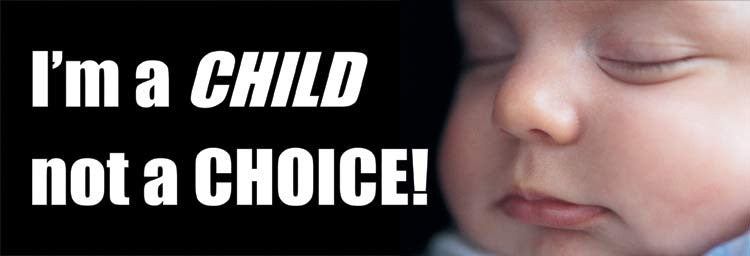
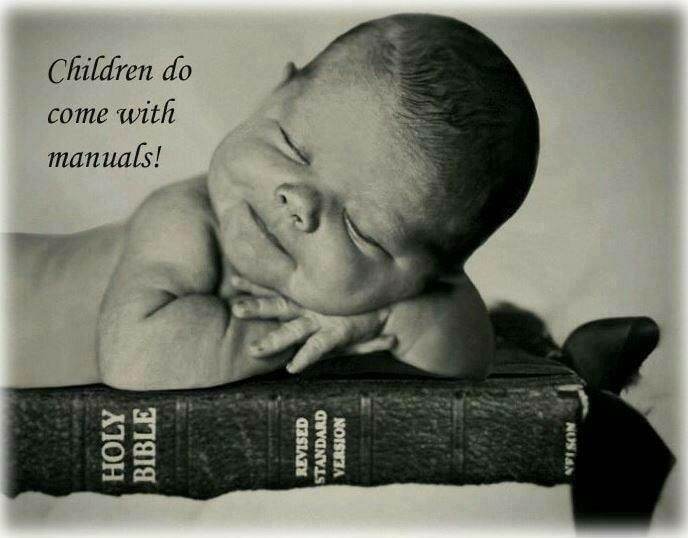
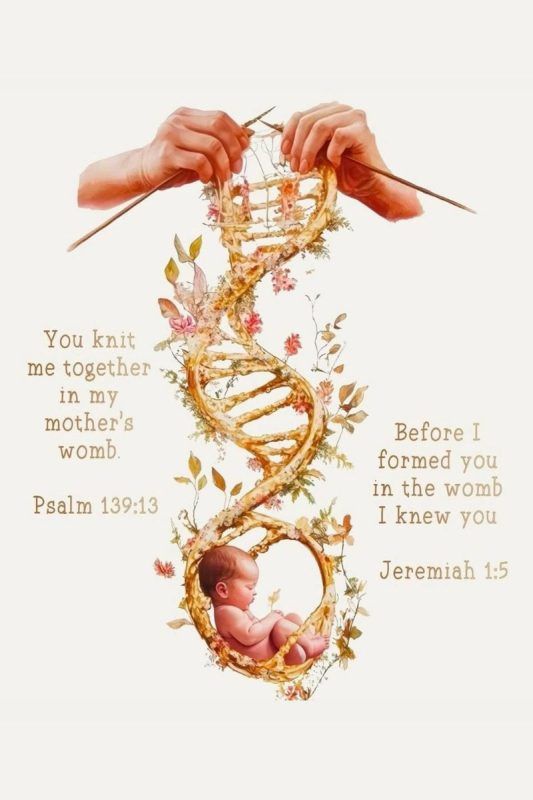

CHILD NOT CHOICE
JESUS LOVES THE LITTLE CHILDREN
St. Michael the Archangel, defend us in battle, be our protection against the wickedness and snares of the devil. May God rebuke him we humbly pray; and do thou, O Prince of the Heavenly host, by the power of God, cast into hell Satan and all the evil spirits who prowl about the world seeking the ruin of souls.
Amen.
PLEASE PRAY FOR ONE ANOTHER
MAPA = MAKE AMERICA PRAY AGAIN
STRENGTHEN MY HEART
Have mercy on me, my Lord and my God;For I am distressed – in chains I am shod;My tears flow like rivers – raging from strain;My heart is pierced – my throat aches in pain!
My life spent in sorrow – and in deep regret;My sins are before me – I cannot forget;In repentance I seek You – for right relief;Your loving kindness is – my refuge – belief!
Lord – affliction – has broken down my strength;From helplessness, stress – I suffer at length;My foes have encompassed me – all around;They ravage me daily – destruction bound!
I trust in You, Lord – take comfort in You;Come to my aid – Lord – Refresh me anew;My life is in Your hands – if it be Your Will;Calm the waters – from their raging – be still!
Feed me – knead me – with Your nourishing grace;Through faith without fear – my weakness erase;Infuse me with courage – and strengthen me;Help me be steadfast – a stronghold like Thee!
Let me be glad and rejoice in Your love;Assured in Your goodness sent from above;Let me not – for one moment – be fearful;Keep me far from unsure – doubtful – tearful!
Free me from distress – of body and mind;Help me walk self-assured – no longer blind;With my life in Your hands – deliver me;From the throes of my foes – let me be free!
Strengthen My Heart – as only You know how;Pour forth Your knowledge – understanding now;Send in Your angels – with reinforcements;Lift up my spirit – in inch increments!
Send forth Your Spirit – to enlighten me;With knowledge – understanding – wisdom be;A tower of strength – instilled in my heart;Let not Your Spirit – from me ere depart!
Strengthen My Heart – my Lord and my King;Let the indwelling Spirit – His power bring;Your justice – Oh Lord – from on high rain down;Let Your Heavenly Grace – be forever my crown!
D01: 09/30/2013
STRENGTHEN MY HEART
Have mercy on me, my Lord and my God;
For I am distressed – in chains I am shod;
My tears flow like rivers – raging from strain;
My heart is pierced – my throat aches in pain!
My life spent in sorrow – and in deep regret;
My sins are before me – I cannot forget;
In repentance I seek You – for right relief;
Your loving kindness is – my refuge – belief!
Lord – affliction – has broken down my strength;
From helplessness, stress – I suffer at length;
My foes have encompassed me – all around;
They ravage me daily – destruction bound!
I trust in You, Lord – take comfort in You;
Come to my aid – Lord – Refresh me anew;
My life is in Your hands – if it be Your Will;
Calm the waters – from their raging – be still!
Feed me – knead me – with Your nourishing grace;
Through faith without fear – my weakness erase;
Infuse me with courage – and strengthen me;
Help me be steadfast – a stronghold like Thee!
Let me be glad and rejoice in Your love;
Assured in Your goodness sent from above;
Let me not – for one moment – be fearful;
Keep me far from unsure – doubtful – tearful!
Free me from distress – of body and mind;
Help me walk self-assured – no longer blind;
With my life in Your hands – deliver me;
From the throes of my foes – let me be free!
Strengthen My Heart – as only You know how;
Pour forth Your knowledge – understanding now;
Send in Your angels – with reinforcements;
Lift up my spirit – in inch increments!
Send forth Your Spirit – to enlighten me;
With knowledge – understanding – wisdom be;
A tower of strength – instilled in my heart;
Let not Your Spirit – from me ere depart!
Strengthen My Heart – my Lord and my King;
Let the indwelling Spirit – His power bring;
Your justice – Oh Lord – from on high rain down;
Let Your Heavenly Grace – be forever my crown!
D01: 09/30/2013
BE WITH ME, JESUS
Be with me – take not – Your presence from me;Let Your Spirit dwell – in me – let Him be;My strength and solace – in turmoil of heart;From me, Oh Lord – let Him never depart!
Without You, Lord – there is no breath of life;Without You, Lord – the sorrow – it is rife;Happiness eludes me – from my soul – it is gone;Your peace in me – is vacant – totally withdrawn!
Hide not Your face from me – show me Your love;Touch my heart with Your grace – sent from above;Abandon me not – in my hour of need;In Your great love, Lord – I am blessed indeed!
Fill me with your Spirit – right to the brim;Let not hopelessness enter – faith be dimRenew me – redo me – all over again;Today – tomorrow – forever – Amen!
Infuse me – use me – for Your Glory, Lord;Let me not forget – the truth in Your Word;Raise me up, Lord – both steadfast and strong;Be with me, Lord – where You only belong!
Strengthen me – Lord – oh, please hear my cry;I don’t need to know the what, where or why;I trust in Your judgment – Your mercy, Lord;I trust in the truth revealed in Your Word!
I trust in Your Love poured out on the Tree;I trust in Your Promise to always be;Faithful and true for eyes that can see;There for us all – who trust in Thee!
Be with me – Lord – refresh me – renew me;This pain and discomfort – really threw me;Jesus, come quickly – come quickly, I pray;Let this doubt not take hold – unravel – fray!
Oh, precious, incorruptible Blood of the Lamb;Encompass me – protect me – the sinner I am;Enthrall me – befall me – change me within;Blot my sin – from Thy sight – let it begin!
Wherein and where out – let the demon flee;Far away – to the dry place – let it be;Confined in the spaces – to do no harm;To cause no distress – disruption – alarm!
Wash me – and cleanse me – pure white as snow;Be near me – cheer me – wherever I go;Lift my distress – give me some rest – I pray;Be with me, Jesus – and love me Your Way!
D01: 07/14/2013
BE WITH ME, JESUS
Be with me – take not – Your presence from me;
Let Your Spirit dwell – in me – let Him be;
My strength and solace – in turmoil of heart;
From me, Oh Lord – let Him never depart!
Without You, Lord – there is no breath of life;
Without You, Lord – the sorrow – it is rife;
Happiness eludes me – from my soul – it is gone;
Your peace in me – is vacant – totally withdrawn!
Hide not Your face from me – show me Your love;
Touch my heart with Your grace – sent from above;
Abandon me not – in my hour of need;
In Your great love, Lord – I am blessed indeed!
Fill me with your Spirit – right to the brim;
Let not hopelessness enter – faith be dim;
Renew me – redo me – all over again;
Today – tomorrow – forever – Amen!
Infuse me – use me – for Your Glory, Lord;
Let me not forget – the truth in Your Word;
Raise me up, Lord – both steadfast and strong;
Be with me, Lord – where You only belong!
Strengthen me – Lord – oh, please hear my cry;
I don’t need to know the what, where or why;
I trust in Your judgment – Your mercy, Lord;
I trust in the truth revealed in Your Word!
I trust in Your Love poured out on the Tree;
I trust in Your Promise to always be;
Faithful and true for eyes that can see;
There for us all – who trust in Thee!
Be with me – Lord – refresh me – renew me;
This pain and discomfort – really threw me;
Jesus, come quickly – come quickly, I pray;
Let this doubt not take hold – unravel – fray!
Oh, precious, incorruptible Blood of the Lamb;
Encompass me – protect me – the sinner I am;
Enthrall me – befall me – change me within;
Blot my sin – from Thy sight – let it begin!
Wherein and where out – let the demon flee;
Far away – to the dry place – let it be;
Confined in the spaces – to do no harm;
To cause no distress – disruption – alarm!
Wash me – and cleanse me – pure white as snow;
Be near me – cheer me – wherever I go;
Lift my distress – give me some rest – I pray;
Be with me, Jesus – and love me Your Way!
D01: 07/14/2013
Psalm 91. The most powerful prayer from the Bible. God’s protection, healing
#psalm91 #psalms #prayer
Pray Everyday
https://rumble.com/v57jz8d-psalm-91.the-most-powerful-prayer-from-the-bible.-gods-protection-healing-p.html
Sleep Well with Psalms. Psalm 91, Psalm 121, Psalm 3, Psalm 4, Psalm 139.
#faith #god #psalms
prayeveryday777
https://rumble.com/v57jvfg-sleep-well-with-psalms.-psalm-91-psalm-121-psalm-3-psalm-4-psalm-139.faith-.html
______________________________
HAVE A VERY BLESSED DAY !!! ❤️❤️❤️
https://www.malone.news/p/sunday-strip-like-sun-but-small
It’s that climate-con time of year!
https://www.midwesterndoctor.com/p/the-respiratory-and-sinus-treatments
The Sinus and Respiratory Treatments You Were Never Told About
I haven’t checked the facts about Lego, but this makes sense.
Hey, folks, did you know that GOOGLE apparently has a scientific “research and development” division?
And that GOOGLE has submitted a proposal TO THE EPA for the “research and development division of GOOGLE to release UP TO 64 MILLION WOHLBACHIA PIPIENTIS TREATED MOSQUITOS in Florida and in California over the next couple of years?
https://www.2ndsmartestguyintheworld.com/p/frankenmosquitos-horror-show-update
31 May 2026
Notice that GOOGLE approached the EPA, not the FDA, with this proposal. And, by the way, the proposal was entered into the Federal Register. So it’s legit — not “fake news.” The Fleetwood link in the article above has the link to the Federal Register information on the proposal.
FRANKENMOSQUITO HORROR SHOW UPDATE: Google to Release 64 Million Bacteria-Infected Mosquitoes Across California and Florida Over the Next Two Years
AND did you know that WE the PEOPLE get to say HELL NO in comments in the Federal Resister during comment time. (Not that it does nay good, they just come up with a different method to get what ‘They’ want.)
👉This document has a comment period that ends in 5 days. (06/05/2026)
Only 252 comments so far.
https://www.federalregister.gov/documents/2026/05/06/2026-08808/pesticide-experimental-use-permit-receipt-of-application-comment-request-december-2025
How WMP’s Wolbachia method works from World Mosquito Program
https://www.worldmosquitoprogram.org › work › how-it-works
…
Wolbachia pipientis: an expanding bag of tricks to explore for disease control2010
Paging Governor DeSantis. Sounds like experimentation on humans to me.
How the Amish Took Over American Furniture Without the Internet
Duchess, Many Thanks for posting this wonderful video!
I purchased a Cedar hope chest for my oldest daughter when she graduated HS in 1999 from an Amish furniture maker in Upstate NY. It’s a beautiful piece of furniture.
TERROR: Passenger STORMS US Commercial Flight Cockpit Multiple Times in Horrific Hijacking Attempt…
And it barely makes the news…
A 75-year-old mentally unstable person, not a foreign actor, as far as I know. But the danger is still real.
Bessent: This was Iran’s BIG mistake
 Amazing, they found their ID!
they just needed the right incentive to GET one…lol
Well they never needed it to vote in some states.
TheLastRefuge
@TheLastRefuge2
I’m going to say this again, real simple. And I will keep saying it until enough people realize what it means.
Why Doesn’t the FBI and DHS stop this violent, organized, national activity?
Don’t make it complicated. Just look at things as they are, as they present themselves to be, and ask the most obvious questions.
“Domestic Tranquility?” Why are violence and chaos permitted?
How can a group within America openly threaten police, use violence against police, throw Molotov cocktails, bricks and explosive fireworks at police. Use batons, shields, bats and physical violence against police and federal law enforcement; destroy vehicles, set cars on fire, destroy property, trash and block the streets and create chaos, completely without consequence?
It doesn’t matter where it is happening, that’s irrelevant. Think plainly and simply.
How does any individual or group get to do this without being arrested?
It doesn’t make sense, unless….
…. Unless…. The group conducting the violence cannot be arrested.
Day after day; night after night, in most major metropolitan areas around the nation, the group known as “Antifa” operate with impunity. They are organized; they are funded; they communicate locally, regionally and nationally. They mobilize in designated and coordinated areas of operation, and they are exceptionally violent and dangerous.
So how is it they can operate?
They build encampments outside federal facilities and openly fight with federal officials and law enforcement. Yet, nothing is done. Why not?
If the FBI did not support Antifa, quite simply Antifa would not exist. They are right there, highly visible, doing illegal things on camera, repeatedly, all over the country, and the FBI doesn’t lift a finger to stop them. Why?
The only thing that makes sense is that the FBI wants this activity to take place.
If they did not want it to take place, they would stop it and arrest the lawbreakers who are attacking federal buildings and officers.
The visuals of trashed streets, barricades, smoke bombs, riots, semi-frequent baton clashes in the streets, etc. etc. must serve some purpose for the FBI and DHS or they would stop it.
This is not misdemeanor behavior.
Arrest the participants and put them into federal prisons. This is not complicated.
The FBI and DHS support Antifa. If they did not support them, the FBI and DHS would stop them.
Remember this.
https://x.com/TheLastRefuge2/status/2061155698084339888
True.
IMO he presents an unsophisticated point of view that places blame.
Only if you’re thinking like a high school student. I do not think the FIB in its current form wants this activity to take place. I don’t have the legal expertise to know all the complicated factors involved, but I have enough experience reading about these kinds of things, and enough imagination, to know that it’s never as simple as we think and that we not only don’t know that we don’t know, but we don’t know what we don’t know.
He has written several posts lately that have cast doubt on the motives of people in this administration. IMO they come across as self-serving.
Cant argue against that.
Nor can I comprehend why rioters are allowed to day after day. Night after night. Riot. Destroy. Set up illegal camps, barriers, obstruct traffic…
If nothing else, Federal property is being destroyed.
ALL of it unacceptable. Rarely hear much of anything from Feds at any level.
I agree. I could list a number of factors that I think might be in play, but I don’t want to open that can of worms!
Some people think that, no matter the consequences—short term or long term—something must be done, right now, even if it would be more destructive to the long-term goals for the country than the rioting itself.
It probably comes down to whether one trusts the people in this administration. I trust that they are doing the best they can, although no one is perfect. But I know that they know a lot more than I do about situations and how they must be handled. I think they are walking a tightrope all the time. We wish it were merely about law and order, and that’s how it should be, but it isn’t, at least not at the moment.
I am willing to let Pres. Trump and his people handle things as they try to save the country.
In agreement with that statement. In the end who do we trust, the grifters/influencer or PDJT?
Yes. PDJT gets things done, but he has opposition from multiple directions at once. I have no doubt that, if it were possible and expedient, the riots would have been stopped before now. One has only to look at what they have done to him and how they have tried to block this administration from meeting its goals to understand that there’s more to this story than “the FIB wants this to take place.”
And if the thinking is that the FIB wants it to take place because it is gathering information, that doesn’t really fit with the rest of the ocmmentary.
👍 We don’t know what we don’t know.
And neither does SD, no matter what he thinks.
Arresting the street soldiers… The PAID street soldiers does nothing. What you want is to INDICT the ENTIRE NETWORK esp the top actors.
Something to think about.
Is that network tied to Russia, Russia, Russia and TREASON?
Is it tied to election fraud?
Is it tied to the UK and Canada?
AND logic probably applies here too 
In agreement and I’ll add, this causes more discord with the current FIB director.
Is this his ultimate motive?
Good question. If so, it is despicable to try to sow discord within the administration.
“I do not think the FIB in its current form wants this activity to take place.”
:0) I disagree with your opinion These Truths.
I got lost in the Kyle Rittenhouse event from the evening that it occurred. But I was into the Kenosha Riots long before Rittenhouse came on the scene. The FBI was involved, before, during and after the Kenosha Riots gained public attention.
The FBI was filming, using drones with high definition imaging capabilities. At the time, Kenosha was part of the BLM railroad for their street armies. The FBI did nothing as buildings burned. The evidence of that was presented at the Rittenhouse trial.
As to your opinion, on Sundance’s posts, I disagree. I think Sundance is a fine news aggregator and editorialist aka blogger. IMO the posts come across as interesting and well worth considering.
I’ll say this much; I think the FBI has some weird stuff going on it, no matter who is in charge of it. Always.
I suspect the motives of a federal police force. Period.
Yup, the cleansing of it would only be temporary IMO.
Good to see you!
You as well LoneStar..
That’s fine.
The Kenosha riots occurred near the end of PDJT’s first term, in 2020. I do not think the FIB had been cleaned out during his first term.
The FIB now, during PDJT’s second term, still needs cleaning out. The difference is that the people at the helm are diligently making efforts to not only clean it out but to fulfill its mission correctly. I have no doubt that it is an uphill battle and that they are swamped with all they have to handle. But when someone says this FIB wants the riots to continue, that means that those in charge at the FIB don’t care and/or are working for the wrong side. I don’t believe that of Kash and others, and I don’t think it’s helpful for someone on our side to make such accusations without evidence besides what is, IMO, jumping to conclusions from shallow reasoning.
Again, that’s fine. I disagree, and have for years. I usually come away from reading them thinking either that he was stating the obvious, he was leading people to accept his opinion as fact without evidence (as in this case), he had a bee in his bonnet about someone and tried to find evidence against them (and has often been wrong), he was elevating himself in some way, etc.
I can think of lots of reasons why the FIB won’t or can’t do as he suggests. IMO it is highly irresponsible for him to state things as he did in that post without giving even one mitigating factor, because IMO any thinking person could come up with something. (Just my opinion; I know your mileage varies.)
Despite what I have said here, I wish him well and hope his work helps our cause.
Well said Litemaus
CPR for dogs, per The Daily Mail. The focus is on heat symptoms, which can affect the heart.
https://www.dailymail.com/news/article-15861937/Experts-reveal-dog-kiss-life-heatwave.html
Dilapidation, decay somber drab colors all foster depression and apathy.
IT IS INTENTIONAL!
I remember when I first came across that concept. It had never occurred to me, but it makes perfect sense. We see it all around us.
Peace and Tranquility Prayers
Prayer for a Calm Heart
Lord of Peace, as evening falls, I seek the calmness only You can provide. Quell the storms of my mind and replace anxiety with Your peace. As the world quiets down, let my heart do the same. May Your presence envelop me so that I may know tranquility tonight and always. Amen.
Serenity at Day’s End
Heavenly Father, with the closing of this day, I ask for serenity. As the night sky displays its vast beauty, let my soul mirror its peacefulness. Help me to let go of the worries of the day and trust in Your loving care. May Your peace reign in my heart and home tonight. Amen.
Prayer for Restful Stillness
Dear God, in the stillness of this evening, I come to You seeking rest for my soul. Help me to lay down the burdens I’ve carried today and find comfort in Your arms. Grant me peace that passes understanding and a rest that restores my spirit. May my sleep be undisturbed and my dreams be sweet. Amen.
Nighttime Whisper for Peace
Creator of All, as I listen to the night’s gentle whisper, I ask for peace to settle over me. Let Your tranquility wash away the noise of the day. In this quiet hour, I lean on Your promise of peace, a heavenly balm to my weary soul. Keep me in perfect peace as I keep my mind stayed on You. Amen.
Prayer for Gentle Rest
Omnipotent and Gentle Lord, at the end of this day, I seek the gentle rest that You so lovingly provide. May my mind be at ease, my body relax, and my spirit find harmony. Help me to release every concern into Your capable hands and sleep in the assurance of Your protection and peace. Amen.
https://x.com/RealJamesWoods/status/2061157033102151831
This is the map to our future doom. pic.twitter.com/JMXrtWcWKW
— James Woods (@RealJamesWoods) May 31, 2026
Shaking my head…
She’s just factually wrong on the law.
She is Chinese Communist Party member masquerading as an American
I doubt that she cares about the law. Leftists often don’t. It’s all about the feelz or how they can cheat.
Why don’t liberal women who advocate for open borders also volunteer to be raped by the criminal alien invaders, so the women who don’t want open borders won’t need to be raped?
This is a win-win.
The women for open-borders should take all the raping. Call it rape duty, and put them on a roster.
That way, the people who want open borders get the benefits that come with it, and those who don’t want open borders, don’t.
That’s fair, isn’t it?
What say you, Wu?
Well, if that doesn’t sound like the thought wanderings of a not-very-intelligent or educated 10th grader, nothing does.
[DS] Prepping Antifa, Mapping Started Along Time Ago, Ready To Take The Country Back? – Ep. 3916
May 31, 2026 x22report
https://x22report.com/ds-prepping-antifa-mapping-started-along-time-ago-ready-to-take-the-country-back-ep-3916/
The blue states are struggling, companies and people are leaving the state. Now they are beginning the process of taxing the people even more money, soon more people will leave. Countries that produce need energy and they are going to use more energy. Trump is building the narrative that it is time to audit Fort Knox to see if the gold is there. Gold destroys the Fed. The [DS] is prepping Antifa. They are now in the process of trying to protect as many illegals as possible. They need the illegals for voting and riots. Trump and team has been mapping the flow of money and structure of the organization. Trump sent a message that the [DS] is going to fight back and the event they will kick off Trump needs to be on AF1 to be safe because of what the operation entails.
Ep 3916a – Trump Sends Message, It’s Almost Time To Audit Fort Knox, Gold Will Destroy The [CB]
https://x22report.com/aiovg_videos/ep-3916a-trump-sends-message-its-almost-time-to-audit-fort-knox-gold-will-destroy-the-cb/
Ep 3916b – [DS] Prepping Antifa, Mapping Started Along Time Ago, Ready To Take The Country Back?
https://x22report.com/aiovg_videos/ep-3916b-ds-prepping-antifa-mapping-started-along-time-ago-ready-to-take-the-country-back/
bakocarl
Thank you so much! IMO, the United States must always be linked to “In God We Trust.”
Sending best wishes and Good Energy that you’re feeling better each day.
Amen!
From OT:
Sunday Talks – President Trump Discusses Current Status of Iran Negotiations
May 31, 2026
SD: “Appearing for an interview on Fox News with his daughter-in-law Lara Trump, President Trump explains the current status of the negotiations with Iran and more of the details within the deal as tentatively outlined. WATCH:
.
The 17 yr old should be charged as an adult. I dont think she will stop. I hope the racing assn bans her for life.
https://www.thesun.co.uk/news/39270251/teenage-girl-arrested-stabbing-horses-las-vegas-barrel-racing/
Obsessive’ teenage girl arrested after ‘brutally stabbing 3 horses at race event leaving blood pouring everywhere’
A TEENAGE competitor has been arrested at a race event after three horses were found with stab wounds.
The girl, who has not been publicly identified, was cuffed by Las Vegas cops at a hotel on Saturday after the injured horses were found at a barrel racing competition.
These probably aren”t her first victims. SICKO. She needs to pay for these crimes.
At 17 yrs old i really wonder whats been going on in her life. Its multiple felonies atm.
Shades of Equus…..
https://en.wikipedia.org/wiki/Equus_(play)
Oh thats disturbing.
Helps to explain my goofy, surrealist sense of humor…..there’s so much nightmare fuel out there I try to keep distracted.
Indeed! Surrealism is definitely an interesting avenue for that.
And if you think that’s disturbing, the play is normally done with symbols like horse masks. The movie is graphic.
Like a lot of horror or intense criminal drama i just cant. Intriguing but too disturbing.
What is never mentioned is the fact she has probably ruined those horses for life. Once traumatized like that often they never will trust again. This is based on personal experience with a similar monster.
I read the horse of the one girl she is obsessed with is having just those issues. I bet theyll need a lot of therapy.
Sometimes therapy just isn’t enough.
I wonder if (a) you can do ECT on a horse, (b) if it can erase this sort of trauma, and (c) what sort of ethics thicket you’d wander into.
Im dure there has been many unethical studies done in this area already.
People who abuse animals, which are innocent creatures, should be given the harshest punishments. Evil.
I would like follow up to know if this is a nancy kerrigan jealousy issue or deeper than that.
Considering that the Nancy Kerrigan jealousy issue was deeper than that, I’m pretty much certain that deep evil is involved with these horses.