Before going any farther, remember:
“THEY” want us divided.
And with the reaction to Miller Lite’s new ad regarding women in brewing, the day after men everywhere celebrated their mothers, it seems that priming the audience to a knife’s edge to see “wokeness” and trannies everywhere is at an all time high. And it’s dividing us.
For those who are late to the party, all the hub-bub is about this ad which dropped today and is being called “stupid” and “repetitive”:
First off, let us review history as brought to us by Smithsonian Magazine:
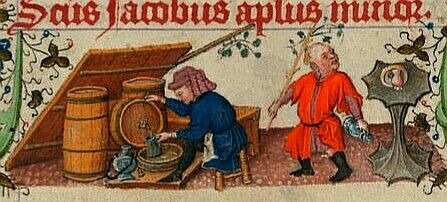
Humans have been drinking beer for almost 7,000 years, and the original brewers were women. From the Vikings to the Egyptians, women brewed beer both for religious ceremonies and to make a practical, calorie-rich beverage for the home.
In fact, the nun Hildegard von Bingen, who lived in modern-day Germany, famously wrote about hops in the 12th century and added the ingredient to her beer recipe.
From the Stone Age to the 1700s, ale – and, later, beer – was a household staple for most families in England and other parts of Europe. The drink was an inexpensive way to consume and preserve grains. For the working class, beer provided an important source of nutrients, full of carbohydrates and proteins. Because the beverage was such a common part of the average person’s diet, fermenting was, for many women, one of their normal household tasks.
Some enterprising women took this household skill to the marketplace and began selling beer. Widows or unmarried women used their fermentation prowess to earn some extra money, while married women partnered with their husbands to run their beer business.
So if you traveled back in time to the Middle Ages or the Renaissance and went to a market in England, you’d probably see an oddly familiar sight: women wearing tall, pointy hats. In many instances, they’d be standing in front of big cauldrons.
But these women were no witches; they were brewers.
They wore the tall, pointy hats so that their customers could see them in the crowded marketplace. They transported their brew in cauldrons. And those who sold their beer out of stores had cats not as demon familiars, but to keep mice away from the grain. Some argue that iconography we associate with witches, from the pointy hat to the cauldron, originated from women working as master brewers.
Just as women were establishing their foothold in the beer markets of England, Ireland and the rest of Europe, the Reformation began. The fundamentalist religious movement, which originated in the early 16th century, preached stricter gender norms and condemned witchcraft.
Male brewers saw an opportunity. To reduce their competition in the beer trade, these men accused female brewers of being witches and using their cauldrons to brew up magic potions instead of booze.
Unfortunately, the rumors took hold.
Over time, it became more dangerous for women to practice brewing and sell beer because they could be misidentified as witches. At the time, being accused of witchcraft wasn’t just a social faux pas; it could result in prosecution or a death sentence. Women accused of witchcraft were often ostracized in their communities, imprisoned or even killed.
Some men didn’t really believe that the women brewers were witches. However, many did believe that women shouldn’t be spending their time making beer. The process took time and dedication: hours to prepare the ale, sweep the floors clean and lift heavy bundles of rye and grain. If women couldn’t brew ale, they would have significantly more time at home to raise their children. In the 1500s some towns, such as Chester, England, actually made it illegal for most women to sell beer, worried that young alewives would grow up into old spinsters.
With those stricter gender norms, came the confiscation of convents, and women who were previously physicians, musicians, poets, brewers, etc., were told that they MUST be wives and mothers exclusively, but that’s a post for another time.
So, we have it established then, that before the commercialization of mass produced beer via mechanization and the assembly line models of production, women were kicked out of the beer business in some places. Don’t get me wrong on the big breweries: they are marvels of innovation. I live less than ten miles from one of the world’s largest and it is something to behold, but beer began as small batches as part of a woman’s work in the home.
From what some of us saw, that was the point of the Miller Lite ad. It gives a history lesson told by real women as many of us really look. Unlike with the Bud Light debacle, there were no trannies involved, nor were there scantily clad models. In fact, the scantily clad models – eye candy for men – were really rather denigrated by the real women. Most of us don’t look like that and would never entertain wearing a bikini.
Why these sorts of ads are coming out now might well be explained by a response to the ad itself:
That being the case, of all of the “go woke” campaigns started of late, this one may be the least objectionable. At least there are no actual trannies, and someone finally objected to women in bikinis or scantily clad in advertising and atmospheres targeted at men.
I’m no feminist, but that has been a pet peeve for a long time.
What was striking about today’s experience with this ad and the reaction to it was just how much vitriol there was. It was like so many conservatives were on a hair trigger with the trans stuff being in our faces for over a month. People are seeing “woke” everywhere, even when, for once with these social credit scores, the truth is being told. Men from all corners of the internet claim the target market was insulted. How?
And what exactly is woke about telling history, and explaining how compost – even if profanity was used unnecessarily to describe it – helps to produce the grains needed to brew the product?
Is there a real problem with women being entrepreneurs in the microbrew business?
Before just condemning the whole micro-episode in the woke agenda implosion, those are questions worth asking.
P.S. St. Hildegard von Bingen mentioned in the Smithsonian article is worth a look for those interested in the history of the Middle Ages. She was a VERY accomplished woman.