“We do not believe any group of men adequate enough or wise enough to operate without scrutiny or without criticism. We know that the only way to avoid error is to detect it, that the only way to detect it is to be free to inquire. We know that in secrecy error undetected will flourish and subvert.” –J. Robert Oppenheimer
While completing this series my heart and mind have been stirred by the patriots and their families. It has also made me curious about members of our family trees. It has been encouraging to see more study and research into American family genealogy. Our Aubergine is well versed in it and inspired me to get back to work on it recently after she posted some of her results and connections. Two decades ago I did some research on my family and came up empty beyond the mid-1800s. I restarted it with more current resources lately and was amazed. It is a testament to the interest of many more people wanting to know their family histories and taking time to post results with supporting documents. I first restarted with my paternal side as there were more readily accessible sources.
In this series of “begats” in my paternal lineage there were various maternal maiden names that need traced as well. Those will come as time permits. I also looked at the paternal lineage on wifey’s side of the family on a limited basis. The original purpose, which has since expanded, was to add this information to the two memory books of our fathers. However, in doing so I did note one curious connection from 1720 in North Carolina that has led to many jokes in our household. It seems we have a mother in common from that year. 😂 She originated from my side and married a man on wifey’s side. She then had a son that eventually led to wifey’s father and her.
So kissin’ cuzins would be us! I knew there was sumthin’ about that gal. No hillbilly jokes, please. Around here we use Bammer (Alabama) jokes. I made the mistake one time of telling a kissing cousin Bama joke to a really nice guy from that state who really had married his first cousin.
Oopsie. He took it well. I was a bit embarrassed. But I digress.
😀
This paternal trace on my side of the fanily originates in Scotland in the 1100’s with family members migrating into Ireland and England in the 1400-1500’s before soon leaving for the colonies. At its farthest point back that I have traced individuals, my paternal direct linage came from the Kent, England area pre-emigration to the colony of Rhode Island. A royal governor of that colony is in my direct lineage. He is about the only prominent or famous dude in all of those centuries I could find. Other than one Captain in the British Navy well before the Revolutionary War period, it appears all of the men on that side were grunts doing grunt things.
This particular paternal trace has progressed from 1547 in Middlesex, England to a 1661 marriage document in Quaker information in Maryland to the family migration, births and burials in the Raleigh area of NC during the early 1700’s to the migration of descendants to southeastern KY lumbering and coal mining areas, followed by moves to eastern TN lumbering and coal mining areas. In the process it has become very apparent I came from a Christian background with all of the baptism and christening documents that have been posted. It is in my blood. I am glad because I have not desired to live any other way. As a side note I immediately become emotionally involved when I hear the sound of bagpipes. I never understood why when I was younger. I do now.
In the middle of it all there was one who was born in 1731 and died in 1798 who served in the colonial army as a member of the 3rd battalion of the Cumberland County, PA militia. I was able to trace others, including younger military aged sons from North Carolina, who enlisted in Virginia and served honorably. Just knowing that brought patriot pride.
When we examine our family trees, we experience a slice of Americana that binds us even more to this great country. It becomes personal instead of simply names and events in a book. We are American by birth and by choice, it is our heritage. It helps us understand better why the non-enemy peoples from all over the world want that same citizenship and birthright as well. American pride is a real thing. You can tell the motives of those people by their desire to assimilate into the American Way. If they don’t want to assimilate, they are compromised and may be enemy combatants. They will never be real Americans if they do not assimilate. That is how you can identify them.
I will never understand why citizens of Great Britain willingly chose to throw all of it away by not resisting the opening of their doors to hordes of Islamic muck rakers and jihadists. Their blind allegiance to the Crown and Parliament has been their undoing. Their plight illustrates how right our patriot fathers and mothers were for kicking them and their lackeys out of America. Now, we are having to do it again with the heathen hordes that came in illegally that were invited by the uniparty and Demoncraps in particular. Of course, that bunch has always been tightly associated with the Brits and the (un)royal family. There should be no more pretending about bipartisan support of America and its culture. We have seen the enemy, we cannot unsee it. They are still the same as they were centuries ago.
It is a dirty shame THAT is not taught in public schools today. But it can be in private schools and homeschooling. As for me and my house…
As we near the completion of this topic of American Stories there are just two signers left that are far too important to the cause of liberty to take time away time from their stories. As we have learned the state of Virginia mattered greatly to the efforts of the patriots in their quest for independence. Below is just one more example. If there was such a thing as American royalty, perish the thought, this family would be listed near the top.
Benjamin Harrison V
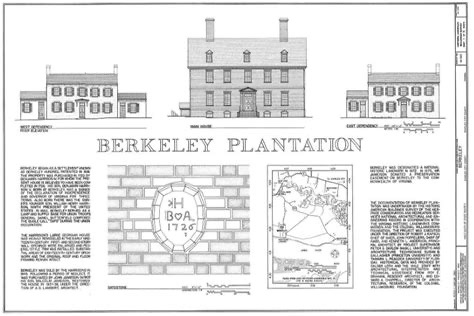
We will now discuss a signer with a distinguished family tree and legacy. Benjamin Harrison V was born in 1726 at the Berkeley Plantation in Charles City County, VA. It is the site of one of the first annual Thanksgiving celebrations in America in 1619. That is correct, two years before the popular Plymouth, MA related native Indian and pilgrim feast tale told to schoolchildren. Interestingly, it is also reported as the location where the Army bugle call of “Taps” was first written and played in 1862.
His parents were Benjamin Harrison IV and Ann Carter Harrison. He was the eldest son of their ten children. He was born the same year his father completed the Berkeley Plantation mansion, which is constructed of brick that was fired on the property. The initials of both his father and mother appear on a date stone over a door. Harrison V’s (H-5) great-great grandfather (H-1) emigrated to the area in 1633 from the Isle of Wight in England.
H-5’s mother was the daughter of wealthy planter and politician, “King” Carter. Carter owned over 300,000 acres and a thousand slaves. For a time he was Treasurer of Virginia, on the King’s Council, and very involved in colonial government. The Carter family traced their roots in America to predecessors who emigrated to the area in 1649.
H-5 was tutored at Berkeley until attending William & Mary College in classical studies with patriot notables, Patrick Henry and Thomas Jefferson. However, at age 19 a lightning strike killed his father and two sisters back home at Berkeley in 1745. Already disenchanted with college life anyway, he returned home to take over operations of their 1000 acre farm that included ship building and horse breeding. Three years later at the age of 22, H- 5 married Elizabeth Bassett of nearby New Kent County, a niece of Martha Washington. Her great grandfather, William, had also emigrated to the area from the Isle of Wight.
H-5 grew into a physically imposing man during the period. As an older adult he stood 6′ 4″ and weighed about 250 lbs. He and Elizabeth had eight children who survived to adulthood in their 40 year marriage. He and his family had between 80-100 slaves, but had a more humane view and treatment of them, feeling a great responsibility for their care. Families were respected and kept together. The Harrison family were Anglican and felt a duty to teach them about Christianity. Many other slave holders would not do so as they were considered property, while H-5 and family made sure that the willing were baptized. Unfortunately, some of the other younger Harrison men in the extended family were less principled and had relations with slaves. Over the years that followed H-5 began working to stop the slave trade and introduced legislation to do so.
H-5’s family had deep involvement in politics going back to H-1’s arrival there. There are records of their many squabbles with British authorities going back to 1640. One Harrison was even imprisoned for six years for challenging British authority over charges of tyranny and treason. H-5 entered politics in 1749 with his election the House of Burgesses where he periodically served as Speaker until royal governor Lord John Dunmore shut it down in 1774. Throughout his years of service and due to his influence the Brits tried to win him over to their side with potential appointments, but he always refused and sided with colonial causes. He strongly opposed the Stamp Act, but did not agree with Patrick Henry’s resolutions proposing civil disobedience.
With the dissolution of the House of Burgesses, he was immediately selected for the First Continental Congress in 1774, during which he participated greatly from the beginning. He chaired the committee that debated the drafting of the Articles of Association and signed them later that year. He roomed with Peyton Randolph and George Washington while they were in Philadelphia and remained a major contributor throughout his service in Congress into 1778 including the signing of the Declaration.
H-5 was well noted for his use of humor that helped reduce tension among the patriots through the years. From the Descendent site is this humorous conversation with Elbridge Gerry as they prepared to sign the Declaration.
“I shall have a great advantage over you, Mr. Gerry, when we are all hung for what we are now doing. From the size and weight of my body I shall die in a few minutes and be with the Angels, but from the lightness of your body you will dance in the air an hour or two before you are dead.”
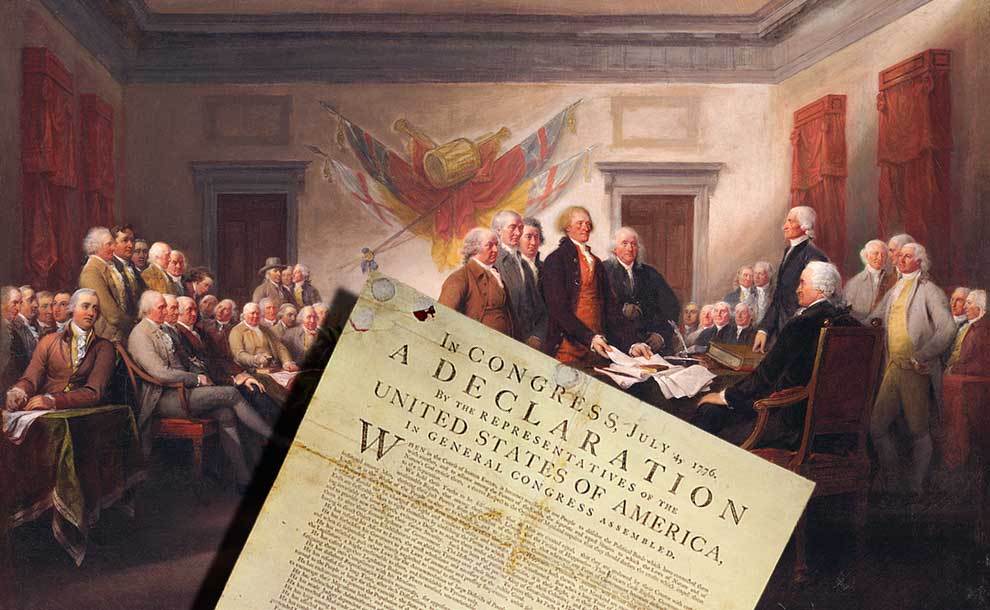
H-5 did not trust yankees. 😂 He was well known for not trusting anything that came out of the New Englanders. He was a major backer of state’s rights. The only powerful patriot he trusted from that NE area was John Hancock, of whom he thought very highly due to his fair treatment of all. He said of Hancock that he was “noble, disinterested and generous to a very great degree.” Despite his opinions, he was chosen by all to read Thomas Jefferson’s draft of the Declaration of Independence on July 1 as well as to chair the debate the following day.
While serving he solicited assistance from other countries as a member of the Secret Correspondence Committee. He worked closely with General Washington in planning the American army. He even served as a lieutenant in the county militia during the war and was a chief magistrate as well. Berkeley Plantation was ravaged during the war by Benedict Arnold and British troops, which included throwing their many family portraits into a fire, losing family historical documents and artifacts in the aftermath. That same Berkeley became the site of Gen. George McClellan’s headquarters as he gathered forces in the failed attempt to take Richmond for the Union during the Civil War many years later.
Further from the Descendants site:
After the war, Harrison remained active in Virginia politics as a member of the House of Delegates, which chose him to be its speaker. When his second- cousin Thomas Nelson, Jr., resigned from the governorship in 1781, Harrison was elected governor of Virginia and was re-elected twice. He was instrumental in shaping the U.S. Constitution as a member of the Virginia Ratification Convention in 1788 when he argued strenuously for a Bill of Rights prior to ratification, not after. Failing that he voted in favor and helped secure Virginia’s ratification in a close vote. He sat on the committee that recommended rights to be included in what became the Bill of Rights.
Whew. It wears me out just reading all this great man did on behalf of our nation. But after all that he returned to serve in the state legislature in 1791 before developing a severe case of gout and passing away at age 65. Elizabeth died a year later. They are buried at their beloved Berkeley Plantation, a national historic landmark.
Up to that point H-5 was long known for being healthy, active, and dignified in manner. He was rotund and found to love good food, wine, and bawdy behavior. As many noted he excelled in dealing with difficult situations and people as he was cheerful, steady and did not allow problems to bother him. John Adams wrote that Harrison had “contributed many pleasantries that steadied rough sessions.”
But Elizabeth’s and his story cannot be fully told without discussing their descendants. How about two future POTUS among other notables? From Wiki:
Among them was eldest daughter Lucy Bassett (1749–1809), who married Peyton Randolph (1738–1784). (Remember who H-5 roomed with in Philly?) Another daughter, Anne Bassett (1753–1821), married David Coupland (1749–1822). The eldest son was Benjamin Harrison VI (1755–1799), a briefly successful merchant who served in the Virginia House of Delegates but who died a self-indulgent, troubled, young widower. Another was Carter Bassett Harrison (c. 1756–1808), who served in the Virginia House of Delegates and the US House of Representatives. Other children were Elizabeth Harrison (1751–1791), who married physician William Rickman (c. 1731–1783) and Sarah Harrison (1770–1812), who married John Minge (1771–1829).
The youngest child was General William Henry Harrison (1773–1841), who became a congressional delegate for the Northwest Territory and also was governor of the Indiana Territory. In the 1840 United States presidential elections, William Henry defeated incumbent Martin Van Buren, but fell ill and died just one month into his presidency. Vice President John Tyler, a fellow Virginian and Berkeley neighbor succeeded him. William Henry’s grandson, Benjamin Harrison (1833–1901), was a brigadier general in the Union Army during the American Civil War. Benjamin served in the U. S. Senate and was elected president in 1888 after defeating incumbent Grover Cleveland.
Do you see what I mean that if it were a thing, the Harrison clan would be American royalty? We owe a big debt of gratitude to H-5, Elizabeth and family for their selfless, patriotic service to America.
Please remember Wolf’s rules for our community, which includes labeling all AI. In general the rules mean to be respectful to each other and to pull no shenanigans that your mom might find offensive or otherwise cause jail time. That said, free speech is honored here.
It is that time again. The Savior of all mankind is remembered and lifted up on the day. It is a story that never gets old or loses its meaning. Enjoy your times with family, friends and fellow church members. Pray for our nation that we may find favor and please Him.
Be blessed and go make something good happen!Merry Christmas!!!
This Rejoice & Praise God Sunday Open Thread, with full respect to those who worship God on the Sabbath, is a place to reaffirm our worship of our Creator, our Father, our King Eternal.
It’s also a place to read, post, and discuss news that is worth knowing and sharing. Please post links to any news stories that you use as sources or quote from.
In the QTree, we’re a friendly and civil lot. We encourage free speech and the open exchange and civil discussion of different ideas. Topics aren’t constrained, and sound logic is highly encouraged, all built on a solid foundation of truth and established facts, and not by agenda-driven accusations and pronouncements.
We have a policy of mutual respect, shown by civility. Civility encourages discussions, promotes objectivity and rational thought in discourse, and camaraderie in the participants – characteristics we strive toward in our Q Tree community.
Please show respect and consideration for our fellow QTreepers. Before hitting the “post” button, please proofread your post and make sure your opinion addresses the issue only, and does not confront or denigrate the poster. Keep to the topic – avoid “you” and “your”. Here in The Q Tree, personal attacks, name-calling, ridicule, insults, baiting, and other conduct for which a penalty flag would be thrown are VERBOTEN.
In The Q Tree, we’re compatriots, sitting around the campfire, roasting hot dogs, making s’mores, and discussing, agreeing, and disagreeing about whatever interests us. This board will remain a home for those who seek respectful conversations.
God is in Control . . . and His Grace is Sufficient, so . . . Keep Looking Up
Hopefully, every Sunday, we can find something here that will build us up a little . . . give us a smile . . . and add some joy or peace, very much needed in all our lives.
“This day is holy to the Lord your God; do not mourn nor weep.” . . . “Go your way, eat the fat, drink the sweet, and send portions to those for whom nothing is prepared; for this day is holy to our Lord. Do not sorrow, for the joy of the Lord is your strength.”
Mighty God
About 700 years before Jesus Christ was born, Isaiah announced the birth of Israel’s Messiah. The prophet’s vision stretched forward through the years from Christ’s lowly birth in Bethlehem to His glorious future reign in the New Jerusalem when there will be unspoiled peace under Messiah’s rule: “For to us a child is born, to us a son is given, and the government will be on his shoulders. And he will be called Wonderful Counselor, Mighty God, Everlasting Father, Prince of Peace” (Isaiah 9:6).
Isaiah deployed a list of titles typically associated with Israel’s kings to illustrate the majestic, kingly character of the coming Messiah. Wonderful Counselor originates from the Davidic line of monarchs, who were known for giving and receiving counsel so wonderful it was beyond human comprehension (see 2 Samuel 16:23). Everlasting Father and Prince of Peace were also divine attributes traditionally used to address earthly sovereigns.
In Psalm 45:6, the Hebrew text refers to the human king as “god.” The language reflects the honor and authority due the king and distinguishes him from other people because of his closeness to the Lord. The word mighty in Isaiah 9:6 relates to the king’s leadership role. In the original Hebrew, the adjective means “having or showing great power in authority or military leadership; heroic, valiant.” As Israel’s Mighty God, the Messiah will be a brave and powerful leader ruling over the armies of God like no other king before Him. He will be the divine hero and champion defender described in Deuteronomy 10:17: “For the Lord your God is God of gods and Lord of lords, the great God, mighty and awesome, who shows no partiality and accepts no bribes.”
Throughout His earthly ministry, Jesus Christ exhibited a different kind of leadership strength than the Jewish people had come to expect. They were looking for a heroic figure like King David who would deliver them from Roman oppression through valiant military conquests and political might. But the kingdom principles Jesus introduced were based on servant leadership (Matthew 12:17–21; 20:28) and a kingdom “not of this world” (John 6:15; 18:36). Scripture says that, when Jesus came to earth, He voluntarily “gave up his divine privileges; he took the humble position of a slave and was born as a human being” (Philippians 2:7, NLT). The “Mighty God” manifestation of Isaiah’s prophecy will only be fully seen in Christ’s second coming. Nevertheless, in every aspect of His life and ministry, from His conception (Luke 1:35, 49) to His ascension (Luke 24:50–51), Jesus operated with divine power and authority.
Jesus began His public ministry “in the power of the Spirit, and news about him spread through the whole countryside” (Luke 4:14). People testified that Jesus was “a prophet who did powerful miracles, and he was a mighty teacher in the eyes of God and all the people” (Luke 24:19, NLT; see also Acts 7:22). His mighty works showed “the Lord’s healing power was strongly with Jesus” (Luke 5:17, NLT). As people touched Jesus, “power came out from him and healed them all” (Luke 6:19, ESV; see also Luke 8:46).
When Jesus cast out demons and unclean spirits, He proved that He is both divine and mighty, operating under God’s complete authority and power (Luke 4:36; Mark 1:32–34). The apostle Paul announced, “People of Israel, listen! God publicly endorsed Jesus the Nazarene by doing powerful miracles, wonders, and signs through him” (Acts 2:22, NLT). Christ’s supernatural acts confirmed that Jesus is Mighty God.
The resurrection is undoubtedly the most significant proof that Jesus is Israel’s Mighty God, functioning in His Father’s power and authority. Jesus, who had the power to lay down His life and take it up again (John 10:18), humbly submitted to the weakness and humiliation of death on the cross (2 Corinthians 13:4; Philippians 2:5–8). But then God demonstrated His great power—“the same mighty power that raised Christ from the dead and seated him in the place of honor at God’s right hand in the heavenly realms. Now he is far above any ruler or authority or power or leader or anything else—not only in this world but also in the world to come. God has put all things under the authority of Christ and has made him head over all things for the benefit of the church” (Ephesians 1:19–22, NLT).
As Mighty God, Jesus rose from the dead and now sits at God’s right hand in heaven, high above every other authority, power, and leader. The Bible says God granted Jesus authority over all people to give eternal life to those given Him by the Father (John 17:2; see also John 10:28; 1 John 2:25). At the end of the age, Jesus Christ will come again to earth “with power and great glory” (Matthew 24:30). When Jesus steps on the world’s stage next time, Isaiah’s vision of a Mighty God and King will come to full fruition. Jesus will hand over the kingdom to His heavenly Father after He has destroyed every enemy of God (1 Corinthians 15:24–25).
As Mighty God, Jesus will judge all the people of the earth (Revelation 18:8, 10). Then He will sit on His eternal throne and reign in great power and authority (Revelation 11:15–17; 12:10). Every creature in heaven and on earth will bow down and worship Him. Heaven will ring with the shouting: “Hallelujah! Salvation and glory and power belong to our God” for He was slain, and He alone is worthy “to receive power and wealth and wisdom and strength and honor and glory and praise” forever and ever (Revelation 5:12–13; 19:1). xhttps://www.gotquestions.org/Mighty-God.html
Wheatie Wisdom. If you bring snacks, bring enough for everyone. No running with scissors. No food fights. (Launching dinner rolls encouraged.)
AI stuff posted, requires a link. Please use spoiler, for longer posts.
Wolf Speak. No obnoxious behavior towards fellow QTreeper(s). Freedom of Speech is honored here QTree. But Do Know, every poster, IS personally responsible for what they post.
PSA. This and several following Saturday posts, will arrive WP, from the Philippines. Internet and electricity allowing. Along with my very old backup laptop, with its ability to “screen paint”. LOL.
Regardless, placeholders are scheduled 0001 ET, every Saturday, through January.
If nothing follows, KK below, Night Crew you are on your own.
KK
FreshStuff. May be worth a read, listen, watch or scroll on by.
Prices pulled last evening. Gold $4,354.50. Silver $67.42. Bitcoin $88,099.
—
American Stories. (A series)
The White House Salute to America 250 Task Force has partnered with Hillsdale College to provide a history series that tells the remarkable story of American Independence.
It will highlight the stories of the crucial characters and events that resulted in a small rag-tag army defeating the mightiest empire in the world and establishing the greatest republic ever to exist.
This is the story of America. This is our shared heritage and our proud destiny that will continue to lead us to unimaginable achievements in the centuries to come.
This post will ignore the Howard University AND Providence RI ignorance. Plenty of other ignorance available…
—
We need more of this, non stop.
Fed Up with Islam, James Woods Issues Savage Statement That Will Offend Every Muslim on Earth, But Could Give Hope to Everyone Else
Western Civilization needs to have an honest conversation about Islam after Sunday’s deadly shooting at Australia’s Bondi Beach, as it is by no means a stand-alone affair.
Actor James Woods is someone who realizes this, as his Wednesday post on social media platform X showed. Woods noted that the shooters that day in Sydney, Australia, targeted Jews celebrating Hanukkah.
He also pointed to the genocide of Christians taking place in Nigeria.
The common thread, he pointed out, is Islamic terrorists.
“It isn’t just about who is being killed,” Woods wrote. “It’s more about who’s doing the killing. It is, of course, Islamic terrorism. The jihad to eradicate ‘infidels’ and occupy their nations is in full swing.
“The only way to stop it is to state the facts out loud. And the facts are that Islam is a plague intent on ending any semblance of civilization as the enlightened world now knows it.”
Woods is absolutely correct: These terrorists are not fringe actors or radicals; these are people following the dogma found in the Quran, which is clear in its call for Muslims to use violence in furtherance of their cause.
We do not have to live like this.
We do not have to keep importing and tolerating a flood of violent barbarians who have no interest in Western notions of tolerance.
Our systems and our outlook stand only as a means to power for the Muslim world.
The great Russian dissident Aleksandr Solzhenitsyn spent eight years in the Gulag prison system for daring to speak out against Joseph Stalin. He once prophetically said, “One man who stopped lying could bring down a tyranny.”
Woods is one of those men.
The Religion of Peace counts almost 2,000 attacks by Muslims across nearly 50 countries, with over 13,000 dead and over 6,000 injured in 2025 alone.
It is time to stop this.
Millions are waking up. The Western world cannot tolerate these people any longer. We cannot afford to import people whose toxic politics masquerade as a faith.
That’ll offend every Muslim there, but it will also be a relief and give hope to many non-Muslims.
Antisemitism is quite possibly the most volatile issue in the world today. Hand in hand Christianity is more silently a target as well. Nigerian slaughter, for example, has reached genocide levels. The world is reading the facts backwards in a sense, however. It isn’t just about… https://t.co/lZBG8RpBnu
Antisemitism is quite possibly the most volatile issue in the world today. Hand in hand Christianity is more silently a target as well. Nigerian slaughter, for example, has reached genocide levels. The world is reading the facts backwards in a sense, however. It isn’t just about who is being killed. It’s more about who’s doing the killing. It is, of course, Islamic terrorism. The jihad to eradicate “infidels” and occupy their nations is in full swing. The only way to stop it is to state the facts out loud. And the facts are that Islam is a plague intent on ending any semblance of civilization as the enlightened world now knows it.
—
Caving (surrendering) to mooSlimes is 100% wrong thing to do.
France, Australia, and Germany Have all Canceled New Years Celebrations – We All Know Why, But They’re Not Brave Enough to Tell Us
Newsmax’s Rob Schmitt:
A beautiful and spectacular event, and it has all been canceled because the French government can no longer keep its own people safe from potential radical Islamic terrorists that they have welcomed into their country. Think about that. France has led in so many Middle East and North African migrants that they can no longer assemble in crowds.
We’re watching one of the most beautiful countries and cultures in the world commit suicide, and this threat has now spread all over the West. This is not singular to Australia or France. It is everywhere now, including in Germany, where many are too scared to go to the country’s many famous Christmas markets because they are now so dangerous. They’re such a target for radical Islamists. Take a listen to the details from this report:
“Terrorists have struck seven European Christmas markets since 2014, three in France and four in Germany, all carried out by men of Muslim or Middle Eastern backgrounds. Authorities arrested five men suspected of planning attack number 8 in Germany last week. One of them, a Muslim cleric from a German mosque who urge his followers to kill as many people as possible.”
Yeah, attack number 8 foiled. There was another attack in Poland on a Christmas market foiled as well. The one in Germany, a Muslim cleric that left Egypt to move to Germany, moving to a country which tolerantly allows him to work at a mosque, to have a mosque. What does he do when he gets to Germany and he’s saved by the West? He begins indoctrinating other Muslims to murder as many Christians as they possibly can. Going to a German Christmas market at this point is a bit like playing Russian roulette.
Is today Can you say the day that one of our asylum seekers, living off our tax dollars, is going to plow his car through this market and kill 20 of us? We don’t know. In Australia, where 16 were murdered on a beach this past Sunday, many say that they have felt the threat skyrocket as their own government imported tens of thousands of migrants from Muslim countries.
The Muslim population doubling in a decade in Australia. The left wing Prime Minister of Australia, the Labor Party, a country that has the strictest gun laws in the world already, just wants to add more gun laws, light a candle and move on.
🚨Australia, France and Germany have now all CANCELLED their usual New Years Celebrations
Governments, including USG, need to be open and honest about the Islamic Threat To Freedom.
Tis the Season for Jihadist Christmas Attacks
Every year leading up to Christmas, news reports document Islamic terrorist attacks on Christmas markets and churches in Europe, Australia, and the United States, along with plots disrupted by police.
Liberals refuse to acknowledge the pattern or accept that allowing people into a country who hate its culture, hate Christianity, and want to kill its citizens carries obvious risks. Year after year, evidence shows that unvetted immigration and asylum policies are dangerous, particularly when military-age males from war-torn and failed Muslim countries are allowed to establish residency. Yet anyone who points this out is called a Nazi, a fascist, or a “Trumptard.”
…
In the United States, the FBI said it disrupted an alleged New Year’s Eve bombing plot in Southern California and arrested four people in Los Angeles. Tina Lai, Zachary Aaron Page, Audrey Carroll, and Dante Gaffield were charged with conspiracy and possession of an unregistered destructive device.
Investigators said the suspects self-identified as members of the Turtle Island Liberation Front, described as pro-Palestinian, anti-law-enforcement, and anti-government. Prosecutors allege the group planned coordinated improvised explosive device attacks at five locations around Los Angeles at midnight on New Year’s Eve, including two U.S. companies.
Authorities said Carroll authored an “Operation Midnight Sun” document detailing the plot, bomb-making instructions, and methods to avoid detection. Investigators also allege the group recruited others, gathered materials, and conducted a test in the Mojave Desert on December 12 before being arrested. If convicted, the defendants face up to 15 years in federal prison.
Seems another woke DEI hire, goes away. Sadly, I assume with a pension or golden parachute.
“To My Haters… F You!” – Outgoing DC Police Chief Goes on UNHINGED Screaming Meltdown During Walkout Ceremony (VIDEO)
Outgoing Washington DC Police Chief Pamela Smith went on a screeching rampage during her walkout ceremony on Friday.
Pamela Smith resigned earlier this month following accusations of rigging crime data.
The House Oversight Committee released a report on Sunday, detailing the committee’s investigation into DC Police Chief Pamela Smith’s manipulation of crime data.
The report, titled “Leadership Breakdown: How D.C.’s Police Chief Undermined Crime Data Accuracy,” follows a months-long investigation into whistleblower allegations that DC Police Chief Pamela Smith was intentionally fudging the crime statistics to make DC appear to have lowered homicide, burglary, carjacking, and other crime rates.
The report “reveals that Metropolitan Police Department (MPD) Chief Pamela A. Smith pressured and at times directed commanders to manipulate crime data in order to maintain the appearance of low crime in the nation’s capital,” according to a House Oversight Committee Press Release.
JUST IN: “YOU WILL BE HIT HARDER THAN YOU HAVE EVER BEEN HIT BEFORE IF YOU, IN ANY WAY, ATTACK OR THREATEN THE U.S.A.” – Trump and Hegseth Announce “Lots of” Enemies Killed in Operation Hawkeye Strike, a “Declaration of Vengeance” in Response to ISIS Killing US Troops Syria (VIDEO)
Full statement below:
Today, we hunted and we killed our enemies. Lots of them. And we will continue.—
Earlier today, U.S. forces commenced OPERATION HAWKEYE STRIKE in Syria to eliminate ISIS fighters, infrastructure, and weapons sites in direct response to the attack on U.S. forces that occurred on December 13th in Palmyra, Syria.
This is not the beginning of a war — it is a declaration of vengeance. The United States of America, under President Trump’s leadership, will never hesitate and never relent to defend our people.
As we said directly following the savage attack, if you target Americans — anywhere in the world — you will spend the rest of your brief, anxious life knowing the United States will hunt you, find you, and ruthlessly kill you.
Health Friday is a series devoted to Big Pharma, vaccines, general health, and associated topics.
There are Important Notifications by our host, Wolf Moon; the Rules of our late, good Wheatie; and, certain caveats from Yours Truly, of which readers should be aware. They are linked here. Note: Yours Truly has checked today’s offering for AI-generated content. To the best of her knowledge and belief, there is none, except perhaps for AI-generated content within linked URLs. If readers wish to post AI-generated content in today’s discussion thread, they must cite their source. Thank you.
Today’s offering is the Christmas Gift ExchangeEdition. A Gift Exchange of items, of ideas, of stories, of opinions. Yours Truly offers these:
A true story:
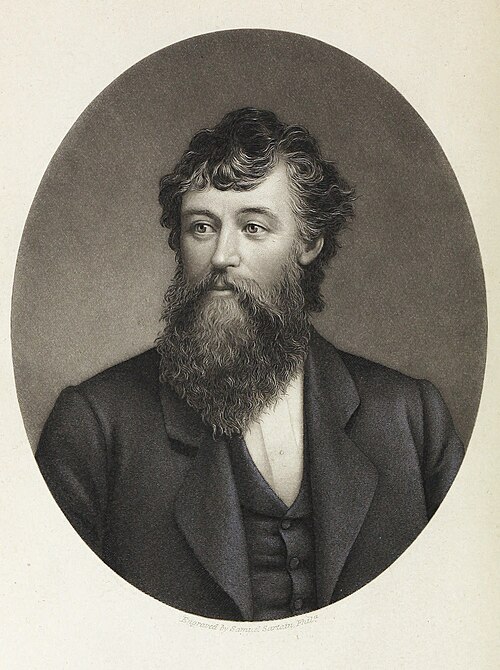
Dr. Joseph Henry Salisbury (1823 – 1905) served in the Civil War as a physician to the Union Army. The soldiers were dying from diseases — dysentery, typhoid, diarrhea. Dr. Salisbury looked into the diet that the soldiers were being given — which was black coffee, beans, hardtack, and minimal amounts of meat. These items were the cheapest that could be provided in bulk. But, this diet was killing the soldiers via inducing serious deficiencies which then permitted the establishment of serious diseases. Dr. Salisbury decided to change that.
What he did was to prescribe that more meat be given to the soldiers. Lean, chopped beefsteak, cooked. Taken along with coffee. Three times a day. His prescription was implemented. The health and morale of the soldiers began to improve.
Dr. Salisbury invented what is now known as Salisbury Steak: chopped steak (ground beef is mostly used now) mixed with onions and seasoning, covered with a gravy, then broiled. Dr. Salisbury further studied the interaction between diet and disease. He believed that beef was a defense against heart disease and tumors, among other conditions. He published a book on the subject, The Relation of Alimentation and Disease, in 1888.
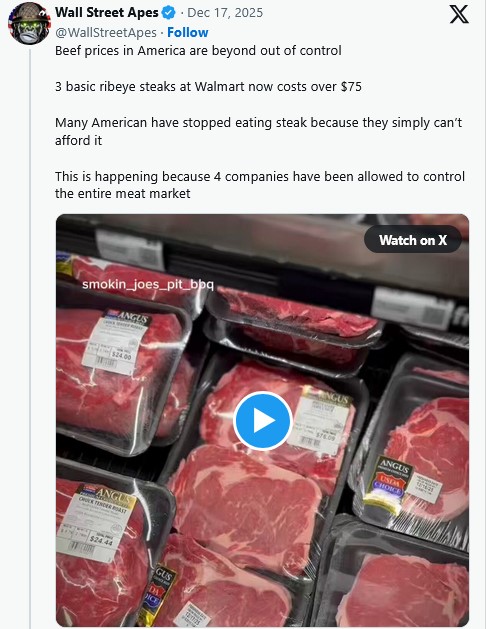
There are independent beef producers all around the country that sell antibiotic-free and/or mRNA “vaccine”-free beef online. There are likely local farmers, depending on where readers live, who also sell beef that they raise that are antibiotic and/or mRNA “vaccine” free. Prices will vary. Local grocery stores may have certain cuts of beef on sale.
————————————————————
A recipe from Yours Truly: Almond Butter, Cinnamon, and Chocolate Cookie Sandwiches
Ingredients:
Plain, flat cookies (I use Lotus brand Biscoff Cookies)
Almond butter, any brand (or homemade)
Ground cinnamon
Bar of dark chocolate, broken into small pieces; have an extra bar on hand (I use Dove Dark Chocolate bars, broken into small pieces)
Optional, for those who desire an “adult flavoring”: a favorite liqueur or hard liquor
Method:
On a large plate, place several of the cookies, “name side” down. Have an equal number of cookies at hand to use for the “tops” of the cookie sandwiches.
Combine 2 Tablespoons of the almond butter with a sprinkle or two of the cinnamon. Add 1/2 teaspoon of the “adult flavoring”, if desired. Mix until smooth.
Spread the almond butter mixture evenly, but not thickly, on both the “underneath” cookies and the “tops” cookies. Don’t put them together yet. If more almond butter mixture is needed, make some more. Then, proceed to working with the dark chocolate pieces.
Place several pieces of the broken up dark chocolate bar into a small, microwave-safe bowl. Microwave on High just until the chocolate is soft but not “runny.” (Yours Truly uses 15-second time increments for this and checks after each time segment.) Stir the chocolate gently with a small spoon. Drizzle the chocolate on the “underneath” cookies. Cover with the “tops” cookies. Press very lightly together. If more chocolate is needed, microwave some more small pieces until soft but not “runny”, the proceed as above.
Repeat the above method until all the cookies are used.
Put the cookie sandwiches, still on the plate, in the refrigerator for a few hours to chill before serving. It’s all right to “layer” the cookie sandwiches on the plate; just separate the layers of filled cookies with wax paper. Refrigerate leftovers in layers, separated by wax paper, in a covered container.
An 8-oz package of the Lotus brand Biscoff cookies makes about 12 cookie sandwiches. Enjoy!
Bonus: Leftover almond butter + cinnamon + chocolate (+ optional “adult flavoring”) spread is great on toast!
————————————————————
To close, the gift of a wish:
May all who read this offering today have Good Health, Good Energy, and Peace of body, mind, and spirit.
Last week I gave the Trumpmania economic and government strategy and plans that are being implemented to regain control of America and accelerate our world dominance. I now discuss a macro economics answer as to how we get the huge national debt off our collective backs. Are you ready?
Spend less than we take in. Pay back the debt. Done.
Don’t fall for the doomsday BS or even the termination of the Fed being needed. In my opinion, the latter will be neutered back to its original intent by #47 because it can be used for the white hats to our collective benefit – at least for now. Long term, all bets are off on what happens to it as the functions they perform are literally Treasury’s responsibility. After its usefulness is done it could be shut down or materially changed. There is no doubt it has been used as a weapon against us since 1913. Watch how #47 and Scott Bessent turn it into an asset against foreign trade and currency manipulators. Boomerang.
If you have not already, watch the Marlow interview with Scott Bessent in the link below. Watch now or in your spare time, but watch it. Even if you have zero understanding of the economy you will come away with knowledge that will be useful to you going forward. Trump has this. Trust him.
As for day to day media information, watch the world or business news, read an article, listen to a podcast – whatever. Believe what you will believe. Just know that if the GDP of America; its Gross Domestic Product (GDP) – defined as the total monetary value of all final goods and services produced within a country during a specific time period, typically measured annually or quarterly – averages 4% annually over the next three years the national debt will begin declining at a decent rate and the annual budget deficit will turn into a surplus every year. Actually that begins to happen irrespective of tariff revenues. Fact, it is an economic reality proven time again. They report it quarterly and annually. You will now be able to trust the reported data because of #47 and DOGE.
Guess what has happened already for two quarters in 2025? Yup, around 4% GDP. What is a primary reason for the Schumer Shutdown exclusive of political party infighting? The negative economic impact it had on the recovery and acceleration of business investment under Trump. Yes, TDS. It slowed the recovery down to probably around 1.5-2% per Kevin Hassett, chair of Trump’s National Economic Council. The Demoncraps felt it would help them to win a few blue state elections. They gave the 🖕 to We the People in doing so. Kevin may be downplaying it. The Atlanta Fed predicted we would still see 3.9% in the fourth quarter even with the Schumer Shutdown.
The people you can trust for reporting the truth on the economy are Scott Bessent and Kevin “Happy” Hassett. Both have our backs and the blessing of #47 to handle things. The latter has long been one of my favorite truth tellers. Just a really good dude. Signals are out that he and Kevin Warsh are the two at the top of the Fed Chair list. Both are outstanding and will do MAGA proud. We should know soon.
Next up add in the net tariff revenues. Which is why PDT predicts they will be able to eliminate the personal income tax, especially for low and middle income folks. PDT still needs the SCOTUS to rule in MAGA’s favor on them. If they do not, expect the markets to react negatively for a time and for PDT to retool their approach to using them. Bessent has already said they have other Constitutional methods to use if needed. The prayer is that they are not needed.
The Demoncraps care more about hurting Trump than the well being of even their own voters. Which means he and MAGA are over target. Demoncraps do that for personal party politics and don’t give two shits what any American thinks about it if it helps them gain or retain power. That is why there should be no bipartisan deals negotiated with them. We the People lose by giving them leverage if they do. Advance MAGA legislation and if the Demoncraps do not sign it, expose them openly while eliminating any financial or other support you legally can to their districts. Time to play hard ball.
With nearly $20 T being invested into America over time, 4% annual GDP is likely to be the floor if there are no Demoncrap generated disasters. If We the People deliver control of both houses of Congress, there is nothing stopping 5+% from happening annually for a very long time. The filibuster threat cannot even stop that because MAGA can deliver another reconciliation bill and PDT can use impoundment. The latter is the POTUS authority to delay or not fund non-essential appropriations. Since the Demoncraps cannot get any appropriations approved without GOP help going forward, stopping the funding of non-essential appropriations helps reduce the size of government, which reduces expenses and capital costs.
Commerce Secretary Howard Lutnick is already predicting 6% GDP at some point in 2026 as it currently stands. That is record breaking, but also sustainable if the patriots and We the People do our jobs with the midterms and beyond. That totally rebuilds the foundation of America economically and militarily. No adversaries will want to take that on. FAFO will rule and their demise will be swift and painful.
We could discuss multipolarity of regions of the world here, but I will wait. Just know that the Monroe Doctrine is the rule of order on this side of the world again. Both Chyna and Russia know it. The Euros are on their own. We will maintain a military force as a deterrant, but that will primarily be for America’s protection. Since the Euros want to shiz in their nests, it will be up to them to clean it up. #47 will be glad to sell them some of our weaponry and equipment to fight their forever wars.
To you, all of this means federal deficit reduction; which means lower interest rates, more liquidity (cash) in the economy, more economic growth, more well paying jobs with good benefits, continued low inflation and more opportunity for all of us long term. Anybody opposing that is a declared enemy of the American Way and Experience.
In reality, most of the world is over the old system that destroys to the benefit of the elites. They want what is now being delivered by #47 and patriots. Which is why the leaders of those nations agreed to high tariffs and massive investment into the USA. They are over forever wars and meddling in their own national affairs. We need to make sure it continues.
What that means personally to each and every one of you reading this is thousands of dollars of annual buying and investing power more than you have now with prices of products edging down or stabilizing at current levels. The extra funds compound annually if you invest into about anything that has and holds real value; not just CD’s, stocks and bonds. Land/property, precious metals, collectibles, etc. will also increase in value.
Method For Lasting National Prosperity
The actual method to reset everything PERMANENTLY in this country is the same that it has been since forever. It is a balanced budget amendment along with an amendment for no personal federal income tax in our U. S. Constitution. They must include enforcement provisions that even SCOTUS has no options to abort like the first and second amendment. Wut, you say? Yes, that is all it takes.
Which is just like the Brits treated the colonists. Some things never change without rebellion. The timing of the Fed potentially going away would affect the timing of the balanced budget amendment and its amendment language.
How do I know for sure that two amendment method works? Because there are very prosperous red states that do exactly that. I live in one. There are others. All are in really good financial shape with stable to growing employment and rising incomes of their citizens even in nationally troubled economic times.
Why must there be amendments to the Constitution you may ask? How many amendments to the Constitution have been terminated or repealed in over 236 years? One. The 21st effectively repealed the 18th. It was the repeal of prohibition – booze. That’s it. How many people do you know who would rise against the government for only spending what it takes in or eliminating personal income taxes? Exactly.
I am sure it is safe to say the 80/20 rule would apply. After ratification the two amendments would survive any future challenges easily. The political will to get it done resides within the MAGA movement. #47 is already on board with it and pushing for the personal tax elimination. It needs a block of GOP elected officials sufficient to make it and balanced budgets Constitutional amendments. That means killing dead their allegiance to the old system. Which means some existing elected officials have gotta go.
Primary out the RINO’s and elect large numbers of MAGA GOP. Increase the overall number of MAGA elected officials in government everywhere. Set the options on the table, explain what they do for the American people, and enjoy the fruits of their passage.
As an example, nearly every state ranking of financial health and solvency include Tennessee and Florida in the Top Five. Both require balanced budgets and have no personal income taxes. There are nine states with no personal income taxes and 49 with with some form of balanced budget requirement. None of the states that are without personal income taxes are anywhere near the bottom of the list for economic health. That honor is reserved for all of the high debt, highly taxed blue states with personal incomes taxes such as Illinois, Connecticut, Massachusetts, New Jersey and California. They are the bottom feeders who suck the economic lives out of their citizens who continue to seemingly enjoy the condition of being bent over by electing the people who stick it to them. That they do should tell We the People to completely ignore or shout them down every time they open their mouths.
When you add right to work state status, no personal income taxes, and a required balanced budget, you get an influx of population and business growth. It is a proven formula for success. Those same principles work for the federal government as well. It creates the environment for success. It shores up The Golden Age.
So how do we reduce and eventually eliminate our massive national debt? Are you ready?
Again, spend less than we take in. Use the difference, the surplus, to pay back higher interest treasury debt first. Even Dave Ramsey knows and tells people that in their personal finances.
Besides forcing a balanced budget via amendent, how do you get to surplus?
Well, that’s the good part. #47 and cabinet have already done enough, but are continuing to do it even more as explained above. The answer is massive investment into America that increases manufacturing, energy and natural resource development. Return to true supply side economic independence instead of playing the globalist game of London and Europe. That dramatically increases tax revenue collections over time. Add in massive tariff surpluses already in place that can be directly applied to the debt or given back to We the People as a, wait, what did #47 call it, oh yeah, DIVIDEND.
Dividends are paid from profits. America, Inc. is making money now and will make even more in the future as the business investment takes root. Again – America, Inc. is no longer just a user of funds at that point. Successful businesses pay dividends to shareholders, which in this case is us – We the People.
The balanced budget amendment generally includes requirements on what is done with surpluses. The sooner you get to surplus the sooner you can use future, more inflated dollars to pay off older, less inflated debt. Paying off debt reduces the carrying cost (interest expense) of remaining debt and it becomes a smaller percentage of the annual budget expenses going forward. The more you do it, the faster the debt repayment accelerates.
We can also accelerate the rate and total reduction by simply marking our massive gold reserves to market as well. That improves the balance sheet by $1.4 T +/- overnight based on current quotes. Doing it will probably also mean a return to the gold standard with the dollar solidifying as the world’s reserve currency. America then finds stability from less inflation, less to no market bubbles, less to no forever wars. All of that has been fueled by phony baloney fiat currency of the past.
However, there is no guesswork that the Sovereign Wealth Fund is going to be used because both PDT and Scott Bessent have discussed it publicly. The link below explores it and other subjects accurately in my opinion.
Surplus tax revenues from an expanded economy + tariffs + Sovereign Wealth Fund investment = National Debt demise. Balanced budget with restrictions on surplus fund usage keeps it there. We do not have to do a thing for all of this to happen to our benefit except be good citizens, show up in big numbers to vote for the patriots, and protect our nation.
This will be the last of my planned current day economic summaries for awhile. I have done all I can do to inform. I will still post in the comments on current activities if I can add to the flow. If conditions on the ground change dramatically in a different way, I will revisit. Me and my house chose the Lord, #47, and the patriots. So I am going to do what I have asked of everybody else – make a difference for America.
It is now time to discuss another largely unsung hero of the signers. This one was special and a critical piece in the quest for independence as we will see with another highly important founding father in a couple of weeks. Enjoy!
George Wythe
George Wythe was born in 1726 in the former Elizabeth City County, now city of Hampton, Virginia on the prominent Chesterville plantation. Over time the previous settlements and towns dissolved or merged into the city of Hampton, such that it lays claim to being the oldest continuously English speaking city in North America.
George was of the third generation of this predominantly Quaker family. His parents, Thomas III and Margaret Walker Wythe, were planters and Thomas owned a half interest in a wharf in Hampton. Unfortunately, Thomas passed away when George was three years old. His well educated mother homeschooled George. He became proficient in Latin and Greek while she also taught him the classics, logic and science. He entered William and Mary (W & M) Grammar School at age 14, studied two years, then spent two years in the study of law under his uncle, Stephen Dewey, in Charles City Council. After that he returned to Chesterville to continue his studies. At the age of 20 in 1746 he easily passed the bar exam.
Since his brother, Thomas IV, was established at Chesterville he moved to Spotsylvania County to open his practice. George moved in with the King’s attorney, Zachary Lewis, because Lewis had a great deal of case backlog. While there he met Lewis’ daughter, Ann. They fell in love and were married a year later. Unfortunately, Ann caught a fever and died seven months later. George was distraught with grief. He returned to Williamsburg and joined Ann’s uncle, Benjamin Waller, in his practice to get a new start on life. While there he was selected to clerk for two important committees of the House of Burgesses. This led to many contacts and an entry into the world of politics. In 1754 he was selected to fill a vacant seat in the House of Burgesses.
A year later his brother, Thomas IV, died and George inherited Chesterville. That same year he married Elizabeth Taliaferro, whose family lived a few miles outside of Williamsburg. A wealthy landowner and architect, Elizabeth’s father built the couple a nice brick home in the city to begin their lives together. It served as their home for over thirty years. The home was restored and has been owned by Colonial Williamsburg since 1938.
George would win and lose seats in the House of Burgesses for several years. In 1758 Francis Fauquier became the new royal Governor of Virginia. As a neighbor, Francis formed a close bond with George, who at that point was teaching at W & M. This included them bonding with a 20 year old student named Thomas Jefferson. The three of them were joined by fellow W & M professor, William Small, and became a tight knit group who frequently met for dinner to discuss science, literature, architecture, politics and morals. This continued for five years.
Wythe joined Patrick Henry in 1763 to argue against the Two Penny Tax. A year later they had a mini falling out over the Stamp Act. Wythe had sent an letter of admonition previously to Parliament concerning the Two Penny Act and was waiting on a response. When the Stamp Act was approved, Henry and supporters reacted harshly, while Wythe wanted to wait for an official response from his letter. Henry’s resolutions passed in the House and Governor Fauquier, Wythe’s friend, was forced to dissolve the General Assembly immediately in response.
A few years later George was elected Mayor of Williamsburg and had become more prominent in the area. When Lord John Dunmore was named royal Governor, the two frequently clashed. It became apparent to George it would no longer be possible to support the Brits and he moved more toward independence causes. After the battles of Lexington and Concord, Dunmore seized the arms and powder from the colonial magazine at Williamsburg. When the colonists learned of it they went after Dunmore and he was forced to escape to a British ship off shore. He left and never returned.
George then went to Philadelphia as Dunmore’s replacement to the First Continental Congress that year. From the Descendants site:
During the continuing debate over independence, he asked his fellow delegates, “In what character shall we treat? As subjects of Great Britain? As rebels? Why should we be so fond of calling ourselves dutiful subjects? We must declare ourselves a free people.”
In the spring he returned to Virginia to argue for Thomas Jefferson’s plan for their state government and returned to Philadelphia in time to sign the Declaration of Independence in September. He then moved Congress to make Jefferson, B and Silas Deane colonial agents (ministers) to France; for them to act as ambassadors. From our story on B, we now realize just how important it was to have him in France. We can thank George Wythe for that observation and recommendation.
He returned to Williamsburg the next year and was elected Speaker of the Virginia House of Delegates where he assisted Governor Patrick Henry is meeting obligations to fund and supply the military. Even though he was exposed to British forces, he remained in Williamsburg throughout the remainder of the war and avoided capture. In 1777 he was also named as a justice on the state’s Chancery Court, on which he served until 1788. In 1779 Jefferson as Governor appointed him to a new professor position over Law and Police at W & M when James Madison was President of the school. Many famous elected officials, attorneys and future judges were taught by Wythe over the years that followed which included Henry Clay, Littleton Tazewell, James Monroe and John Marshall. Remember that for a future Part.
He and Elizabeth hosted Gen. Washington in their home before the battle of Yorktown. He later worked on the Articles of Confederation as well as the Constitution in 1787 before he had to quickly return home when Elizabeth fell ill and soon passed away. The next year he worked within the state for the eventual ratification of its Constitution. In 1789 he resigned from W & M to move to Richmond with one of his students (William Munford) to be near the Chancery Court. Over the years that followed he studied Hebrew and began conducting electrical experiments there along with that former student. He returned to public service as a Presidential Elector in 1800 and 1804; both times voting for his long term friend and political ally, Jefferson. He had freed his slaves many years before at Chesterville and was adamant in his belief that, “…. freedom is the birthright of every human being….”.
The grandson of a sister came to live with him while in Richmond, George Wythe Sweeney. Wythe had written him into his will in 1803 as he and Elizabeth had no children. When he later discovered Sweeney was stealing from him he modified the will to read that Sweeney received half and a former freed slave, Michael Brown, would receive the other half. Sweeney discovered the changed will and codicil. He secretly began poisoning both Wythe and Brown with arsenic in their food. Both died, but before Wythe did he wrote Sweeney totally out of his will by order of the judge presiding over the murder charge. Sweeney had also poisoned Wythe’s former slave housekeeper, but she survived and sought to testify in Sweeney’s murder trial. Her testimony was disallowed because she was a Negro and not allowed to testify against a white man by law. As a result Sweeney was ruled to be not guilty.
George Wythe was 80 years old when he died and is buried at St. John’s Episcopal Church in Richmond. this is the same church where Patrick Henry gave his famous “give me liberty or give me death” speech. Per the Descendants site,
Wythe will be forever known by the comments of those with whom he associated.
“Four days after his death, on June 10, the Richmond Enquirer wrote: “Kings may require mausoleums to consecrate their memory, saints may claim the privilege of canonization; but the venerable George Wythe needs no other monument than the services rendered to his country, and the universal sorrow that the country sheds over his grave.”
From Thomas Jefferson, “No man ever left behind him a character more venerated than George Wythe. His virtue was of the purest tint; his integrity inflexible, and his justice exact; of warm patriotism, and, devoted as he was to liberty, and the natural and equal rights of man, he might truly be called the Cato of his country…. (He was) my faithful and beloved Mentor in youth, and my most affectionate friend through life.”
Benjamin Rush, “a profound lawyer and able politician. I have seldom known a man who possessed more modesty or a more dove-like simplicity and gentleness of manner.”
Reverend Lee Massey called George Wythe “the only honest lawyer I ever knew.”
Historian/biographer Reverend Charles Goodrich, wrote: “With all his great qualities, he possessed a soul replete with benevolence, and his private life is full of anecdotes, which prove that it is seldom that a kinder and warmer heart throbbed in the breast of a human being….As a judge, he was remarkable for his rigid impartiality, and sincere attachment to the principles of equity; for his vast and various learning; and for his strict and unwearied attention to business. Superior to popular prejudices, and every corrupting influence, nothing could induce him to swerve from truth and right. In his decisions, he seemed to be a pure intelligence, untouched by human passions, and settling the disputes of men according to the dictates of eternal and immutable justice…. He took a great delight in educating such young persons as showed an inclination for improvement. Harassed as he was with business, and enveloped with papers belonging to intricate suits in chancery, he yet found time to keep a private school for the instruction of a few scholars, always with very little compensation, and often demanding none.”
George Wythe was absolutely essential as a cornerstone building block in the creation of America. He will be honored for as long as America exists.
Please remember Wolf’s rules for our community. In general that means to be respectful to each other and to pull no shenanigans that your mom might find offensive or otherwise cause jail time. That said, free speech is honored here.
I wish all of you a Merry Christmas. Thanks be to God for the Savior of all mankind entered the world this week over 2000 years ago. He shall be called the Prince of Peace…
Be blessed, enjoy your times with family and friends, and go make something good happen!
This Rejoice & Praise God Sunday Open Thread, with full respect to those who worship God on the Sabbath, is a place to reaffirm our worship of our Creator, our Father, our King Eternal.
It’s also a place to read, post, and discuss news that is worth knowing and sharing. Please post links to any news stories that you use as sources or quote from.
In the QTree, we’re a friendly and civil lot. We encourage free speech and the open exchange and civil discussion of different ideas. Topics aren’t constrained, and sound logic is highly encouraged, all built on a solid foundation of truth and established facts, and not by agenda-driven accusations and pronouncements.
We have a policy of mutual respect, shown by civility. Civility encourages discussions, promotes objectivity and rational thought in discourse, and camaraderie in the participants – characteristics we strive toward in our Q Tree community.
Please show respect and consideration for our fellow QTreepers. Before hitting the “post” button, please proofread your post and make sure your opinion addresses the issue only, and does not confront or denigrate the poster. Keep to the topic – avoid “you” and “your”. Here in The Q Tree, personal attacks, name-calling, ridicule, insults, baiting, and other conduct for which a penalty flag would be thrown are VERBOTEN.
In The Q Tree, we’re compatriots, sitting around the campfire, roasting hot dogs, making s’mores, and discussing, agreeing, and disagreeing about whatever interests us. This board will remain a home for those who seek respectful conversations.
God is in Control . . . and His Grace is Sufficient, so . . . Keep Looking Up
Hopefully, every Sunday, we can find something here that will build us up a little . . . give us a smile . . . and add some joy or peace, very much needed in all our lives.
“This day is holy to the Lord your God; do not mourn nor weep.” . . . “Go your way, eat the fat, drink the sweet, and send portions to those for whom nothing is prepared; for this day is holy to our Lord. Do not sorrow, for the joy of the Lord is your strength.”
Glorify God in Everything
The concept of “glorifying” God is that of honoring God with our lives. First Corinthians 10:31 teaches believers to honor the Lord in all they do: “So whether you eat or drink or whatever you do, do it all for the glory of God.” The context of this verse includes a discussion of the freedom believers have in Christ. We are free to make personal choices in life, but we are not to do anything that causes another person to “stumble” or sin in his own walk with God. We are to seek the good of others (1 Corinthians 10:32–33).
Further, believers may have the “right” to do anything, but not everything is beneficial (1 Corinthians 10:23). Paul used the illustration of eating meat that had been dedicated to idols. To him, such a dedication meant nothing since idols are not real gods. However, he would abstain from ever eating meat again for the good of others who might sin by following his example. Believers serve the Lord both through their personal lives and in their actions toward others.
To glorify God requires full commitment to Him. In Colossians 3:23 we read, “Whatever you do, work at it with all your heart, as working for the Lord.” The context includes Paul’s directions for Christian slaves working for human masters. Even in this role, their work was to be done as if they were serving Jesus (Colossians 3:24). To honor or glorify God in everything includes having a strong work ethic, even when we work for those we do not like or labor in difficult situations.
Glorifying God in everything means we honor Him in our thoughts and actions. Our thoughts are to be set on the things of God (Psalm 1) and the Word of God (Psalm 119:11). When we focus on God’s Word, we know what is right and can follow through with doing what is right.
Jesus always glorified His Father in heaven. There was never a moment when He did not glorify God. Our Lord’s every thought, word, and action was totally devoted to the glory of God. When Jesus faced the temptations of Satan (Matthew 4:1–11), Jesus quoted Scripture all three times. Jesus was a man of the Word, fully committed to God’s will, and His example in overcoming temptation offers hope to all of us who seek to stand firm during times of testing.
Another way we glorify God in everything we do is in the proper treatment of our bodies. In speaking of sexual immorality, 1 Corinthians 6:19–20 teaches, “Do you not know that your bodies are temples of the Holy Spirit, who is in you, whom you have received from God? You are not your own; you were bought at a price. Therefore honor God with your bodies.”
To glorify God in everything, we must exercise faith (Hebrews 11:6), love without hypocrisy (Romans 12:9), deny ourselves (Luke 9:23), be filled with the Spirit (Ephesians 5:18), and offer ourselves as “living sacrifices” to God (Romans 12:1). Every area of life is important to evaluate and live to its fullest for the glory and honor of God. We should strive for every thought and deed to bring joy to our Father in heaven.
Wheatie Wisdom. If you bring snacks, bring enough for everyone. No running with scissors. No food fights.
AI stuff posted, requires a link. Please use spoiler, for longer posts.
Wolf Speak. No obnoxious behavior towards fellow QTreeper(s). Freedom of Speech is honored here QTree. But Do Know, every poster, IS personally responsible for what they post.
If nothing follows, below KK, Night Crew, you are on your own.
KK
FreshStuff. May be worth a read, listen, watch or scroll on by.
Prices pulled last evening. Gold $4,317.20. Silver $62.20. Bitcoin $90,323.
—
American Stories. (A series)
The White House Salute to America 250 Task Force has partnered with Hillsdale College to provide a history series that tells the remarkable story of American Independence.
It will highlight the stories of the crucial characters and events that resulted in a small rag-tag army defeating the mightiest empire in the world and establishing the greatest republic ever to exist.
This is the story of America. This is our shared heritage and our proud destiny that will continue to lead us to unimaginable achievements in the centuries to come.
The Story of America: The Declaration of Independence
10:49.
—-
Articles.
—
Musk…out performing as usual. Cracking up here…
Elon Musk Confirms that SpaceX Is Headed for an IPO that Could Make Him an ‘Instant Trillionaire’
Elon Musk has confirmed reports that SpaceX is planning an IPO in 2026. Musk’s space exploration company could hit the market at a valuation above a trillion dollars, allowing individual investors to buy into his dreams of Mars while also massively increasing his personal fortune.
CNBC reports that tech tycoon Elon Musk has verified reports that his space exploration company is gearing up for an initial public offering (IPO) in 2026. Musk’s confirmation came in response to an article by Eric Berger from Ars Technica, which delved into the reasons behind the timing of the IPO and the role played by the rise of artificial intelligence and space-based data center opportunities.
Killing the penny was just the start. Trump is rewriting the rules on America’s coins
The next signs of the nation’s political divide might be jingling in your pocket next year.
The administration plans to issue a $1 coin with President Donald Trump’s likeness on it next year, despite a century-old precedent of not honoring sitting, or even living former, presidents on coins.
Instead of quarters honoring the abolition of slavery, granting women the right to vote and the Civil Rights movement, the Treasury will instead issue historical quarters featuring white men from the 18th and 19th centuries who were already well represented on currency and in historical tributes.
The new coins, coming after the administration stopped issuing new pennies earlier this year, underscore Trump’s drive to put his own stamp on the presidency far beyond the confines of the White House – whether it’s by putting his own face and name on US institutions or by pulling back on diversity efforts to reframe the story of America itself.
The US Mint on Thursday released the final coin designs for historical quarters celebrating the country’s 250th birthday next year. Rather than the fight against slavery or giving women the vote, the designs primarily honored a more homogeneous view of US history: George Washington for the Revolutionary War, Thomas Jefferson and the Declaration of Independence, James Madison and the Constitution, Abraham Lincoln and the Gettysburg Address, as well as pilgrims to celebrate the Mayflower Compact.
“The designs on these historic coins depict the story of America’s journey toward a ‘more perfect union,’ and celebrate America’s defining ideals of liberty,” said Kristie McNally, the acting director of the Mint, in a statement.
The US Mint told CNN on Friday that instead of the previously recommended tribute quarters to abolition, suffrage and the Civil Rights movement, the new designs celebrate “American history and the founding of our great nation.”
The Trump dollar
The controversial Trump dollar coin is also part of Treasury’s plan to mark America’s 250th birthday.
The US Mint issued three different proposed coins Thursday with different likenesses of Trump, including one resembling his famous mug shot from 2023. Designs for the back include different versions of the American eagle.
A previously released version of coin would have also featured Trump on the back, raising his fist after an assassination attempt last year. However, US law prohibits images of living people on the backs of coins. The US Mint told CNN there is no such restriction on the front of coins, though it’s been US law since 1866 that living people can’t be on paper currency.
Still, Trump’s coin will only be the second time a US coin features a living president. The first was a half-dollar coin with both George Washington and then-President Calvin Coolidge issued in 1926 to mark the country’s 150th anniversary.
^^^ Yes, I’ll buy a roll of Trump dollars, to keep. AND carry more Trump dollars. Frequently use them as conversation starters. Much like wearing a Trump hat, t-shirt… ^^^
—
EU – U N E L E C T E D Thugs AND War Mongering L U N A T I C S.
FIRST this one….
EU Elites in Panic Mode: Threaten Belgium with Bankruptcy Over Refusal to Rob Russian Assets – De Wever Stands Firm Against Brussels’ Madcap Scheme!
The crumbling edifice of the European Union (EU) is showing its true colors, and it’s uglier than a Brussels bureaucrat’s expense report.
In a stunning display of tyrannical overreach, the EU’s unelected overlords are now threatening Belgium’s newly minted Prime Minister Bart De Wever with financial Armageddon simply because he refuses to play along with their insane plot to steal $200 billion in frozen Russian assets.
Yes, you read that right: STEAL. Like common thieves in the night, targeting a sovereign central bank’s holdings parked safely in Belgium’s Euroclear system. This isn’t just policy wonkery; it’s a full-throated assault on national sovereignty, international law, and basic common sense.
NATO Leader Mark Rutte Urges Europe to Prepare For ‘Widespread Suffering’ and WW3 With Russia Within Five Years (VIDEO)
NATO Secretary-General Mark Rutte is urging member states to prepare for World War III with Russia and its dictator, Vladimir Putin.
During a speech in Berlin on Thursday, the former Dutch prime minister said that “dark forces of oppression are on the march again” and that Europe is facing a “scale of war our grandparents or great-grandparents endured.”
The Internet Archive must not be our only resource to access the past
These days, we’re heading for an infotainment implosion. Even though we have all the world’s knowledge at our fingertips, many fail to grasp its meaning and importance, much less read past the headline and, at best, the first paragraph. Meanwhile, we’re letting machines do our thinking for us.
Glenn Beck’s new A.I. project is meant to get ahead of the curve, and it’s laudable in all its goals. But there is also a vital function that cannot be neglected: archiving and storing away the facts and data of our society. At present, these critical functions are performed by entities such as the Internet Archive, doing a yeoman’s job at storing away these irreplaceable records. They’ve come under attack recently and have had some breakdowns that point to a need for a separate system that performs the same function, albeit from a conservative point of view. Thus, this is our case for Glenn Beck and everyone else to support a Freedom Archive.
Multiple systems are better than one or two.
Most preppers can recite the rule of three: “Three is two, two is one, and one is none.” In other words, you need to have a couple of back-ups for every primary system that you rely on — water, food, self-defense, etc. The same holds true in storing information.
In engineering terms, you don’t want to have one failure mode that will lead to disaster.
U.S. Govt Agency Verifies that Nine Large U.S. Banks Conducted Ideological Debanking Operations
Press Release– […] The Office of the Comptroller of the Currency (OCC) today released preliminary findings from its supervisory review of debanking activities at the nine largest national banks it supervises: JPMorgan Chase Bank, Bank of America, Citibank, Wells Fargo Bank, U.S. Bank, Capital One, PNC Bank, TD Bank, and BMO Bank.
The OCC conducted its supervisory review in accordance with the President’s Executive Order “Guaranteeing Fair Banking for All Americans” to determine whether these institutions debanked or discriminated against any customers or potential customers on the basis of their political or religious beliefs or lawful business activities.
“The OCC is committed to ending efforts – whether instigated by regulators or banks – that would weaponize finance,” said Comptroller of the Currency Jonathan V. Gould. “Although our work continues, the OCC is today providing visibility into the debanking actions against customers and lawful businesses taken by the nation’s largest banks to ensure public awareness, and to halt these harmful and unfair practices.”
Eleven months ago… We’ve come a long way. Yes, with a long way to go.
Joe Kernen: "The affordability issue is from the 22% increase in prices under Biden—full stop."
Former SEC Chair Jay Clayton: "[Trump was] thrown, what I would say, the worst economy for the average American in my adult lifetime." pic.twitter.com/5vljwi1KPm
Joe Kernen: “The affordability issue is from the 22% increase in prices under Biden—full stop.” Former SEC Chair Jay Clayton: “[Trump was] thrown, what I would say, the worst economy for the average American in my adult lifetime.”
—-
Life IS getting better with Trump.
Louisiana man: "Since Trump's been in, the gas is going down, everything's getting better. He‘s deporting all these criminals that come over from other countries. I think it's great." pic.twitter.com/HVuNDWUjs0
Louisiana man: “Since Trump’s been in, the gas is going down, everything’s getting better. He‘s deporting all these criminals that come over from other countries. I think it’s great.”
—
Tampon Tim has got to be one of the dumbest, most corrupt, retarded assholes ever elected.
Well, elected or more likely installed.
Incompetent scumbag Tim Walz says it's a "pretty hard reach" to expect the Somali community to not engage in the massive theft of tax dollars, criticizes @POTUS for calling them out:
"Each community's got this… Donald Trump brought this to the attention… very dangerous." pic.twitter.com/ffqmpQcT7G
Incompetent scumbag Tim Walz says it’s a “pretty hard reach” to expect the Somali community to not engage in the massive theft of tax dollars, criticizes
@POTUSfor calling them out: “Each community’s got this… Donald Trump brought this to the attention… very dangerous.”
—
Europeans in denial. Dumbasses.
I already ripped this lady earlier today, but I have been reflecting on her post more and wanted to make an additional point.
I have traveled extensively in Europe, and while it may be the modern world, Europeans are vastly more hung up on matters of economic and social class,… https://t.co/fAbiLlYslr
Watched the Nobel Prize ceremony yesterday — as a Stockholm resident living a 15-minute walk from City Hall. I thought about how Trump’s America has turned against us: they hate us for being 1. Cultured 2. International 3. Relevant. European civilization is beautiful — thank you again, Stockholm!
Publius.
I already ripped this lady earlier today, but I have been reflecting on her post more and wanted to make an additional point. I have traveled extensively in Europe, and while it may be the modern world, Europeans are vastly more hung up on matters of economic and social class, titles of nobility, differences in ethnicity and differences in race than America is. Despite its long history of attempting to be egalitarian, class still matters in Europe. Titles of nobility still matter. Generational wealth from centuries back still matters. Look at the stiffs in the photo. How many of them earned it? Americans of European descent escaped Europe to get away from that ossified class structure and to make their own way with unlimited opportunity, and that vision still separates us from Europe culturally and intellectually. In the movie “Gettysburg,” Jeff Daniels—playing Colonel Joshua Lawrence Chamberlain—delivered an amazing soliloquy, an excerpt of which goes like this: “America should be free ground — all of it. Not divided by a line between slave state and free — all the way, from here to the Pacific Ocean. No man has to bow. No man born to royalty. Here, we judge you by what you do, not by who your father was. Here, you can be something. Here, is the place to build a home.But it’s not the land. There’s always more land.It’s the idea that we all have value — you and me.”
___________________________________
THAT is the spirit and soul of the United States of America, and is what still separates us from Europe to this very day.
DumRats suck. IIRC, this asshole, was on the J6 Non select committee of liars.
Good on Kristi, for standing up to this DumRat dickhead.
Scumbag @BennieGThompson says the horrific attack on our two great National Guard heroes in D.C. was just an "unfortunate accident."@Sec_Noem: "You think that was an unfortunate accident!? It was a terrorist attack. He shot our National Guardsmen in the head." pic.twitter.com/O4hEDvYDuT
Scumbag @BennieGThompsonsays the horrific attack on our two great National Guard heroes in D.C. was just an “unfortunate accident.” @Sec_Noem
: “You think that was an unfortunate accident!? It was a terrorist attack. He shot our National Guardsmen in the head.”
—
Good to keep this in mind when Pravda News AND DumRats lie about ICE arresting American Citizens.
Remember that every time you hear Democrats attack ICE for arresting US citizens they are arresting citizens who violently obstructed or assaulted federal law enforcement and are facing criminal prosecution.
Remember that every time you hear Democrats attack ICE for arresting US citizens they are arresting citizens who violently obstructed or assaulted federal law enforcement and are facing criminal prosecution.
—
.@SecWar delivers remarks at the new Space Command HQ in Alabama:
.@SecWardelivers remarks at the new Space Command HQ in Alabama: “I also want to pass my congratulations and thanks from President Trump. He wanted me to pass the message on… WELCOME HOME!”
—
Amtrak employees having a Merrier Christmas.
Imagine the wasted tax dollars that would have gone to Amtrak executives.
🚨 BREAKING: In an incredible Christmas surprise, the Trump administration is sending $900 BONUSES to 18,000 THOUSAND Amtrak workers…
…and the money is coming from CUTTING top executives' perks.
"It's budget neutral. We aren't spending more federal money or Amtrak money.… pic.twitter.com/tqsyYRPqKG
BREAKING: In an incredible Christmas surprise, the Trump administration is sending $900 BONUSES to 18,000 THOUSAND Amtrak workers… …and the money is coming from CUTTING top executives’ perks. “It’s budget neutral. We aren’t spending more federal money or Amtrak money. It’s taking money from the executives and saying, let’s SHARE the bonuses with the mechanics, operators…let’s give some of it back this Christmas season!” Sec. Duffy said Amazing! This is how it’s done!
The free vintage image of files for today’s header image is courtesy of iStock and Google Images.
Health Friday is a series devoted to Big Pharma, vaccines, general health, and associated topics. As today’s offering speaks to the disaster of COVID-19, Yours Truly dedicates it to all persons, of whatever age or location, who have suffered injuries, illnesses, or disabilities; or, who have passed away from, the manifestations of the COVID-19 disaster: from an infection of the COVID-19 virus itself; or, from COVID-19 “vaccine”-induced or -aggravated injuries, illnesses, or disabilities due to the COVID-19 “vaccines” that they took; or, from complications induced by the shedding of either the COVID-19 virus itself, or by the COVID-19 “vaccines.”
There are Important Notifications by our host, Wolf Moon; the Rules of out late, good Wheatie; and, certain caveats from Yours Truly, of which readers should be aware. They are linked here. Note: Yours Truly has checked today’s offering for AI-generated content; to the best of her knowledge and belief, there is none, except perhaps for AI-generated images within linked URLs. If readers wish to post AI-generated content to today’s discussion thread, they must cite their source. Thank you.
Special Note regarding today’s offering: In no way is the following, or The Baric Files series in general in Health Friday posts, to be construed as a “character assassination”, or as an “indictment”, or as any other type of attack or smear on Ralph S. Baric, PhD, of the UNC Gillings School of Global Public Health of the University of North Carolina, Chapel Hill, or of his lab at the university. The linked scientific papers, images therefrom, and other information about Dr. Baric (such as, his Curriculum Vitae) are all available on the internet. The ideas and conclusions of today’s offering are by Yours Truly. There is a plethora of items related to Dr. Baric; Yours Truly will focus on some of them in each part of The Baric Files.
Now, to today’s offering:The Baric Files, Part Two: Of Mice, Rabbits, Templates, and AI 23946 (also known as AI023946 as per NIH Reporter.)
In reading through the section VIII. PUBLISHED MANUSCRIPTS: in the Curriculum Vitae for Ralph S. Baric, PhD, of the UNC Gillings School of Global Public Health at the University of North Carolina, Chapel Hill, it appears that Dr. Baric’s research efforts began to shift away from the Sindbis virus that he was investigating early on in his career, to murine (mice), rabbits, and coronaviruses in general: for example, published manuscripts starting with number 11. Please see the screenshot, below, of portions of Page 11 and Page 12 of his Curriculum Vitae [1]:
Yours Truly turns to published manuscript number 11, dated 1986. By now in the research journey of Dr. Baric, it appears that he was starting to experiment with combining pieces of viruses, a process called “recombination.” Published manuscript number 11 [2] is the result of such experiments with mouse coronaviruses. At the time that this paper was published, Dr. Baric was a Post-doctoral Fellow at the University of Southern California Los Angeles School of Medicine. This occurred before he was hired by the University of North Carolina Chapel Hill. Please see the screenshots from this paper, below; first, the general summary; and, second, a portion of the Discussion section:
Note the mentions of “mRNAs”, “coronavirus”, “transcription”, and “recombinant viruses.”
There are other published manuscripts (papers) by Dr. Baric that relate to experiments with mouse coronaviruses, such paper number 16, from 1988, which discusses the interaction between certain coronavirus sequences and “the nucleocapsid protein” [3].
By the year 1990, Dr. Baric’s research journey had led to studying heart issues in rabbits. The first result of this study was the 1990 paper, “Rabbit cardiomyopathy” [4]. Please see the screenshots of the Title page of this paper; the Introduction of this paper; and, a portion of the Discussion section, below:
There is one more screenshot from this 1990 paper, which Yours Truly considers to be a significant publication in the research journey of Dr. Baric: the Acknowledgements section:
Please take note of the mention of NIH grantAI 23946. This grant also funded, for example:
The 1992 paper by Dr. Baric and colleagues, “An experimental model for dilated cardiomyopathy after rabbit coronavirus infection” [5}. Please see the screenshots from this paper, below: the Title and general summary page; a portion of the Results section; the Figure 1.; and, the mention of funding by NIH grant AI 23946:
Yours Truly decided to investigate more regarding the NIH grant award AI 23946 to Dr. Baric. Two more (of the multiple papers) funded by this grant are: one, for example, from 2005: “Coronavirus Genome Structure and Replication” [6]. Please see the screenshots, below, from this paper: the Title and Authors page; the Future Directions section; and, the Acknowledgements:
And, NIH grant AI 23946 also funded this paper by Dr. Baric, from 2009 [7], “Severe Acute Respiratory Syndrome Coronavirus nsp9 Dimerization Is Essential for Efficient Viral Growth.” Please see the screenshots from this paper, below: the Title page; the Summary; the Acknowledgements; and, the specific paragraph regarding the mouse hepatitis virus protein A59 (MHV-A59), which Dr. Baric was experimenting with back in 1986 (the Published Manuscript Number 11 [2], screenshots from which are above in today’s offering):
Below is the specific paragraph regarding MHV-59 and the nsp9 connection:
Dimerization is the process whereby two molecules of the same, or similar, chemical composition, join together to create a “dimer.”
————————————————————
Yours Truly is aware that all the above may appear as a “long tale to tell.” However, the point is to “trace” how Dr. Baric used one particular NIH grant, AI 23946 (among many other NIH grants, to be sure) to help fund his research journey. Part One and Part Two discuss his experimenting with a mosquito-borne virus — to experiments with mouse hepatitis and mouse coronavirus proteins — to experiments with rabbit coronavirus proteins — to experiments of the recombination of mouse hepatitis and mouse coronavirus proteins — to experiments with inducing myocarditis and Congestive Heart Failure in rabbits injected with rabbit coronaviruses: experiments that, with the exception of the ones on the Sindbis virus, were funded, at least in part, by AI 23946.
Along the way of what may be called “the NIH grant AI 23946 aspect” of Dr. Baric’s research journey, one observes that the focus of work becomes more concentrated; the research and laboratory methods become more complex and sophisticated; and, the work on combining coronaviruses and how to create “new versions” of them is emphasized (in other words, Gain-of-Function research.)
It appears, in Yours Truly’s opinion, that what began as Dr. Baric’s research into a certain virus (the Sindbis virus) carried by a certain mosquito (his published manuscripts 1980 – 1984 [1]), had, certainly by the year 2009, evolved into something very different: a detailed study of, and development of, lab-application processes for coronavirus gene code combination, genome manipulation, and inducement of disease conditions — including heart issues and severe respiratory infection — from these combinations and manipulations.
Part Three will discuss NIH grant AI 23946 further, in addition to presenting other aspects of Dr. Baric’s research journey.
ALL COVID-19 “VACCINES” MUST BE REMOVED FROM THE MARKET AND FROM USE IN THE UNITED STATES. NOW.
ALL GAIN-OF-FUNCTION RESEARCH IN THE UNITED STATES MUST STOP. NOW.
[5]: “An experimental model for dilated cardiomyopathy after rabbit coronavirus infection.” L K Alexander, J D Small, S Edwards, R S Baric. https://doi.org/10.1093/infdis/166.5.978. November 1992.
[7]: “Severe Acute Respiratory Syndrome Coronavirus nsp9 Dimerization Is Essential for Efficient Viral Growth.” Zachary J. Miknis, Eric F. Donaldson, Timothy C. Umland, Ryan A. Rimmer, Ralph S. Baric, L. Wayne Schultz. https://doi.org/10.1128/jvi.01505-08. 1 April 2009.
(Intellectual Property Disclaimer and Notice: With the exception of the linked published scientific papers and other linked items in the public domain listed above, the ideas, conclusions, and opinons in today’s offering are by PAVACA. Proper credit must be given to PAVACA if the ideas and conclusions of today’s offering are used by other blog writers, by podcasters, in social media, or in print media.)
There are Important Notifications from our host, Wolf Moon; the Rules of our late, good Wheatie; and, certain caveats from Yours Truly, of which readers should be aware. They are linked here. Note: Yours Truly has checked today’s post for any AI-generated content. To the best of her knowledge and belief, there is none. If readers wish to post any AI-generated content in the discussion thread for today’s post, they must cite their source. Thank you.
Do not forget to LABEL AI articles, video and such.
I want to archive these videos from Mike Benz, Promethean Action & the Transition Integrity Project interviews, since it documents the switch from the Fabian model (gradual) to a Color Revolution after the Cabal lost complete control of the USA under D.J. Trump.
Why I Think The Seeds Of The J6 Fedsurrection Plot Were Planted At This Secret Meeting In June 2020 (And What This Means For The J6 Pipe Bomber Investigation) pic.twitter.com/DO8LGmqHQz
PublishedSeptember 25, 2020 (17 minutes) Have a barf bag ready…
The White House is pushing back against its own FBI director who disputed President Trump’s claims about widespread voter fraud. This as Trump refuses to commit to a peaceful transition of power should he lose the election. Fmr. KY Secretary Of State Trey Grayson (R) is a member of the Transition Integrity Project, and he discusses what the Trump administration might pull come November.
Nils Gilman of the Berggruen Institute Discusses the Transition Integrity Project on Al Jazeera (5 minutes)
This is a good compilation of information, including a 33 minute audio interview of Nils Gilman by KGNU’s Liz Lane. It also includes a pointer to the 22 page PDF: Transition Integrity Project Report
The progressive coalition Fight Back Table has been meeting to game out what happens if Joe Biden doesn’t win by a landslide. It’s not pretty.
Last week, a coalition of leading progressive groups gathered on Zoom to begin organizing for what they envision as the post-Election Day political apocalypse scenario.
Put together by the Fight Back Table—an initiative launched after the 2016 election to get a constellation of lefty organizations to work more closely together—the meeting dealt with the operational demands expected if the November election ends without a clear outcome or with a Joe Biden win that Donald Trump refuses to recognize.
Sources familiar with the discussions described them as serious with a modestly panicked undertone. A smaller FBT session last fall had talked about post-election planning, but those discussions were tabled because of the COVID-19 pandemic. This was the first time they were bringing the matter to the 50-plus organizations that make up the coalition. To formalize the effort, they gave it a name: the “Democracy Defense Nerve Center.”
Over the course of two hours, participants broached the question of what the progressive political ecosystem can functionally do in a series of election scenarios. They began charting out what it would take to stand up a multi-state communications arm to fight disinformation, a training program for nonviolent civil disobedience, and the underpinnings of what one official described as “mass public unrest.” And they pored over a report from the Transition Integrity Project, a bipartisan group formed in 2019, that analyzed various election-season scenarios and made clear the type of ratfuckery, corruption, and chaos that potentially was ahead.
“The potential for violent conflict is high,” the report noted….
The co-founder of the Transition Integrity Project, Brooks hasconducted war games [Washington Post Article] to play out the range of Election Day and post-Election Day scenarios. And virtually all the outcomes, save one—a Biden landslide—have ended up facilitating a nightmarish fallout…
In real life, former (now aggrieved) associates of the president have warned [The Atlantic] that he will use extraordinary means to hold on to power. And Biden himself has openly worried that Trump might move to contest the election results if they don’t go his way. Beyond that, there has been very little said about what plans the Democratic nominee or his team have in store. Under law, Biden is restricted from coordinating with outside groups like those involved with the Democracy Defense Nerve Center….
The progressive leaders helping spearhead the Democracy Defense Nerve Center harbor no such illusions. Though conversations have just now begun dealing with the operational details of how to navigate life after Election Day, few if any anticipate a scenario in which Trump bends to elite opinion. Instead, the larger game plan is to apply pressure through mass mobilization….
While the sheer number of groups and volunteers involved in the effort has given organizers hope, there is some fear that they may not all be operating from the same playbook. Two sources involved with the FBT discussions said they worry Biden would concede a contested election too early, with an eye toward ensuring a peaceful transition of power. Inside the coalition, there is dispute over whether Biden should even concede if he wins the popular vote but loses the Electoral College, à la Clinton in 2016 and Gore in 2000.
Under that scenario, Eldridge said, his organization would not support mass mobilization. “I support the national popular vote,” he explained. “Our organization does advocacy for the popular vote… Unfortunately, the Electoral College is the system that we have.”
But the Transition Integrity Project noted that there would be immense pressure on Biden to fight it out if, for the third time in 20 years, the Democratic candidate won the popular vote but didn’t take office. In a simulation they ran, Team Biden “encouraged Western states, particularly California but also Oregon and Washington, and collectively known as ‘Cascadia,’ to secede from the Union” unless structural reforms were made. In exchange for Trump getting the presidency, for instance, Republicans would need to agree to abolish the Electoral College, give Puerto Rico and D.C. statehood, and divide California into five states for better Senate representation….
I included the Daily Beast article to show the type of Fear Mongering that was going on in the progressive sphere. Is there any doubt that some of those spooked by such reports might help set up peaceful MAGA on Jan 6th?
>>>>>>>>>>>>>>>>>>>>>>>>>>
As I have theorized for years, the Brits never gave up their attempts at taking over the USA. In 1913 they managed a ‘soft coup’ by installing the Federal Reserve Central Bank and passing the 16th Amendment to transfer American wealth to that central bank. Once the central bank was in place they moved to gain control of the media in 1915 (LINK), and shortly thereafter they started their very profitable endless wars.
One core feature of the Cabal is their contempt and hatred of the middle class. A class that challenges their absolute rule of the world.
KARL MARX & COMMUNISM
Notice that the target of Karl Marx is the bourgeoisie–the middle class, and NOT the aristocracy or Ruling Elite.
“The bourgeoisie, wherever it has got the upper hand, has put an end to all feudal, patriarchal, idyllic relations. It has pitilessly torn asunder the motley feudal ties that bound man to his ‘natural superiors,’ and has left remaining no other nexus between man and man than naked self-interest, callous ‘cash payment.’ It has drowned the most heavenly ecstasies of religious fervor, of chivalrous enthusiasm, of philistine sentimentalism, in the icy water of egotistical calculation. It has resolved personal worth into exchange value, and in place of the numberless indefeasible chartered freedoms, has set up that single, unconscionable freedom—Free Trade. In one word, for exploitation, veiled by religious and political illusions, it has substituted naked, shameless, direct, brutal exploitation.
The bourgeoisie has stripped of its halo every occupation hitherto honored and looked up to with reverent awe. It has converted the physician, the lawyer, the priest, the poet, the man of science, into its paid wage laborers.
The bourgeoisie has torn away from the family its sentimental veil, and has reduced the family relation to a mere money relation.” ― Karl Marx, The Communist Manifesto
A second point that a lot of people miss is that the goals of the Fabian Socialists and the Marxist Communists are the same. Just the methods are different. The Fabians favor a gradual take over, like we have experienced here in the USA, while the Communists favor bloody revolution. Both are inventions of the Brits.
“You must understand. The leading Bolsheviks who took over Russia were not Russians. They hated Russians. They hated Christians. Driven by ethnic hatred they tortured and slaughtered millions of Russians without a shred of human remorse. The October Revolution was not what you call in America the “Russian Revolution.” It was an invasion and conquest over the Russian people. More of my countrymen suffered horrific crimes at their bloodstained hands than any people or nation ever suffered in the entirety of human history. It cannot be understated. Bolshevism was the greatest human slaughter of all time. The fact that most of the world is ignorant of this reality is proof that the global media itself is in the hands of the perpetrators.” – Aleksandr Solzhenitsyn
Funny how we have the Nazis’ treatment of the Jews pounded into our heads as kids but you very seldom hear about the slaughter of Russians, the worst Democide of the 20th Century. After all sympathy for the Russian people would not fit the Cabal’s twin goals, Communism as the reason for the CIA to over throw governments and Communism taught to US students as the best form of government. (Logic? We don’t need no stinkin’ logic!)
4. 61,911,000 Murdered: The Soviet Gulag State 5. 35,236,000 Murdered: The Communist Chinese Ant Hill 6. 20,946,000 Murdered: The Nazi Genocide State 7. 10,214,000 Murdered: The Depraved Nationalist Regime
III 19,178,000 VICTIMS: THE LESSER MEGA-MURDERERS
8. 5,964,000 Murdered: Japan’s Savage Military 9. 2,035,000 Murdered: The Khmer Rouge Hell State 10. 1,883,000 Murdered: Turkey’s Genocidal Purges 11. 1,670,000 Murdered: The Vietnamese War State 12. 1,585,000 Murdered: Poland’s Ethnic Cleansing 13. 1,503,000 Murdered: The Pakistani Cutthroat State 14. 1,072,000 Murdered: Tito’s Slaughterhouse
I wonder what the total is for the CIA’s murder of Americans via the forever wars and drugs?
The Cabal has had a plan in place for well over a century. A plan to re-establish a feudal society. That is what Agenda 21 is. A modern version of feudalism with the transnational corporations taking the place of the Aristocracy. LINK As an example of implementation: November 29, 2012 The Demise of Christchurch City New Zealand Since then we have seen similar activity here in the USA.
I wrote a lot about this back in 2014 at Tony Heller’s old website because Global Warming was the ‘Fear’ the Cabal was using to push their agenda.
Rothschild/Aristocracy connection to Agenda 21:
World Bank Carbon Finance Report for 2007
The carbon economy is the fastest growing industry globally with US$84 billion of carbon trading conducted in 2007, doubling to $116 billion in 2008, and expected to reach over $200 billion by 2012 and over $2,000 billion by 2020 http://www.carbonplanet.com/navigating_the_carbon_economy(Now dead)
3. New Carbon Finance, “UK in Pole Position as Carbon Funds Surge – but More Funds required”. Press release 4 April 2007, www.newcarbonfinance.com.
38. Analysis from new Carbon Finance estimates that in the last six months, nearly US$4.7 billion of new capital had entered the market at the end of March 2007 (Source: New Carbon Finance, “UK in Pole Position as Carbon Funds Surge – but More Funds required”. Press release 4 April 2007, www.newcarbonfinance.com). Most of the newly raised money was of private origin and was targeted to the sell-side (project development and carbon asset creation). The remainder (about 15%) sits on the buy-side for direct purchases by public and private compliance buyers, compliance funds and investor funds targeted at the compliance segment. The same source estimated in addition that even more funds are required to bring to the market enough emission reductions to satisfy the appetite of compliance buyers.
…The draft hands effective control of climate change finance to the World Bank; would abandon the Kyoto protocol – the only legally binding treaty that the world has on emissions reductions; and would make any money to help poor countries adapt to climate change dependent on them taking a range of actions.
The document was described last night by one senior diplomat as “a very dangerous document for developing countries. It is a fundamental reworking of the UN balance of obligations. It is to be superimposed without discussion on the talks”….
If you bother to look you find Shell Oil’s finger prints all over CAGW. Shell is also very much entangled with the Banksters. The Rothschilds and Rockefellers are major shareholders
Shell Oil wanted to push natural gas. Ged Davis, the Shell Oil VP who wrote the Sustainability Scenarios for the IPCC, shows this in the “Sustainable Development (B1)” part of the February, 1998 Climategate e-mail which asks for comments on the attachment: “Draft Paper for the IPCC Special Report on Emissions Scenarios by Ged Davis.
Another Shell Oil exec Doug McKay was at the IPCC scenario meetings. McKay was also Senior Financial Analyst with the World Bank. Robert Watson worked for the World Bank while Chair of the IPCC.
Then you have Shell Oil, BP and a Rockefeller Foundation funding the Climate Research Unit at East Anglia. Marlan Downey, “Former President of the international subsidiary of Shell Oil, founder of Roxanna Oil; former President of Arco International” on the Advisory Board of Richard The Liar* Muller’s consulting firm, Muller & Assoc. (Muller is known for the so-called BEST temperature Data set.)
Who owns Shell? The Dutch royal family (The House of Orange) is still reportedly the biggest shareholder in Royal Dutch Shell, although the size of its stake has long been a source of debate. Another major stockholder is the Rothschilds. The Rothschild Investment Trust was formed in 1988 and united the Rockefellers and Rothschilds as did the merger of their two banks. The Queen of England was also a major stockholder.
SHELL and WWF:
Prince Bernhard of the Dutch Royal Family, a Nazi, is the Founding President of the World Wildlife Fund. (WWF) HRH The Duke of Edinburgh served as International President of WWF for 16 years until his retirement at the end of 1996. John H. Loudon, Better known as “the Grand Old Man of Shell”, headed Royal Dutch Shell from 1951 to 1965. He was President of WWF from 1976 to 1981.
Ruud Lubbers served three terms as Prime Minister of the Netherlands between 1982 and 1994, thus becoming the longest serving Dutch Prime Minister…. He continued in Parliament as Senior Deputy Leader, and later Parliamentary Leader of the Christian Democratic Alliance. He became President of WWF International on 1 January 2000.
Peter Voser Chief Executive Officer … a member of the Swiss Federal Auditor Oversight Authority from 2006 to December 2010. In 2011…
Josef Ackermann Non-executive Director … He is Chairman of the Board of Directors of Zurich Insurance Group Limited and of Zurich Insurance Company Limited, positions he has held since March 2012.
…he held a variety of positions in corporate banking, foreign exchange/money markets, treasury and investment banking. In 1990, he was appointed to SKA’s Executive Board, on which he served as President between 1993 and 1996. He joined Deutsche Bank’s Management Board in 1996 with responsibility for the investment banking division and, from 2006 and 2002 respectively until May 2012, he was Chairman of the Management Board and of the Group Executive Committee of Deutsche Bank AG. He is a member of the Supervisory Board of Siemens AG, the Board of Directors of Investor AB and a number of advisory boards. He also has various roles in several foundations and academic institutions….
Charles O. Holliday Non-executive Director … He served as Chief Executive Officer of DuPont from 1998 to January 2009, and as Chairman from 1999 to December 2009…. He previously served as Chairman of the World Business Council for Sustainable Development, Chairman of The Business Council, Chairman of Catalyst, Chairman of the Society of Chemical Industry – American Section, and is a founding member of the International Business Council. He is Chairman of the Board of Directors of Bank of America Corporation and a Director of Deere & Company.
Gerard Kleisterlee Non-executive Director …He is Chairman of Vodafone Group plc, a member of the Supervisory Board of Daimler AG, and a Director of Dell Inc.
Christine Morin-Postel Non-executive Director …. she was Chief Executive of Société Générale de Belgique, Executive Vice-President and a member of the Executive Committee of Suez S.A., Chairman and Chief Executive Officer of Crédisuez S.A. and a Non-executive Director of Pilkington plc, Alcan Inc. and EXOR S.p.A. She is a Non-executive Director of British American Tobacco plc.
Sir Nigel Sheinwald GCMG Non-executive Director …He was a senior British diplomat who served as British Ambassador to the USA from 2007 to 2012. He joined the Diplomatic Service in 1976 and served in Brussels (twice), Washington and Moscow and in a wide range of policy roles in London. He served as British Ambassador and Permanent Representative to the European Union in Brussels from 2000 to 2003. Prior to his appointment as British Ambassador to the USA, he served as Foreign Policy and Defence Adviser to the Prime Minister and Head of the Cabinet Office Defence and Overseas Secretariat. He retired from the Diplomatic Service in March 2012….
Linda G. Stuntz Non-executive Director She is a founding partner of the law firm of Stuntz, Davis & Staffier, P.C., based in Washington, D.C. Her law practice includes energy and environmental regulation as well as matters relating to government support of technology development and transfer. From 1989 to 1993, she held senior policy positions at the U.S. Department of Energy, including Deputy Secretary. She played a principal role in the development and enactment of the Energy Policy Act of 1992.
From 1981 to 1987, she was an Associate Minority Counsel and Minority Counsel to the Energy and Commerce Committee of the U.S. House of Representatives. She chaired the Electricity Advisory Committee to the U.S. Department of Energy from 2008 to 2009, and was a member of the Board of Directors of Schlumberger Limited from 1993 to 2010. She is a member of the Board of Directors of Raytheon Company. [Raytheon does mostly government contracts G.C.]
Jeroen van der Veer Non-executive Director ….He was Vice-Chairman and Senior Independent Director of Unilever (which includes Unilever N.V. and Unilever plc) until May 2011 and is Chairman of the Supervisory Boards of Koninklijke Philips Electronics N.V. and of ING Group. He also has various roles in several foundations and charities.
Gerrit Zalm Non-executive Director …He is Chairman of the Board of Management of ABN AMRO Bank N.V., a position he has held since February 2009. Before joining ABN AMRO, he was the Minister of Finance of the Netherlands from 1994 until 2002, Chairman of the VVD Liberal Party in the Lower House (2002) and Minister of Finance from 2003 until 2007. During 2007 until 2009 he was an adviser to PricewaterhouseCoopers (2007), Chairman of the trustees of the International Accounting Standards Board (2007-2010), an adviser to Permira (private equity fund) (2007-2008) and Chief Financial Officer of DSB Bank (2008). Prior to 1994, he was head of the Netherlands Bureau for Economic Policy Analysis, a professor at Vrije Universiteit Amsterdam and held various positions at the Ministry of Finance and at the Ministry of Economic Affairs. ….
Rather well connected to governments, NGOs and various banks, were they not? The present lot exhibit more ‘Woke’ credentials.
The Bankers/Cabal have already captured the corporations.
…we find that only 737 top holders accumulate 80% of the control over the value of all TNCs [Trans National Corporations] …This means that network control is much more unequally distributed than wealth. In particular, the top ranked actors hold a control ten times bigger than what could be expected based on their wealth…
…In detail, nearly 4/10 of the control over the economic value of TNCs in the world is held, via a complicated web of ownership relations, by a group of 147 TNCs in the core, which has almost full control over itself. The top holders within the core can thus be thought of as an economic “super-entity” in the global network of corporations. A relevant additional fact at this point is that 3/4 of the core are financial intermediaries….
The Leveraged Buyouts/Hostile Takeovers during Reagan’s Admin. dismembered and killed wealthy, no-debt mid-level American corporations and transferred the accumulated wealth to the Banksters/Cabal. Worse, this meant ‘American’ corporations were no longer actually American. Thus this was a very important move by the Cabal.
Under Reagan
…A leveraged buyout (or LBO, or highly-leveraged transaction (HLT), or “bootstrap” transaction) occurs whenan investor, typically [a] financial sponsor, acquires a controlling interest in a company’s equity and where a significant percentage of the purchase price is financed through leverage (borrowing).👉The assets of the acquired company are used as collateral for the borrowed capital,👈[BEFORE it was acquired]sometimes with assets of the acquiring company. Typically, leveraged buyout uses a combination of various debt instruments from bank and debt capital markets…
The leveraged buyout boom of the 1980s was conceived by a number of corporate financiers, most notably Jerome Kohlberg, Jr. and later his protégé Henry Kravis. Working forBear Stearns at the time, Kohlberg and Kravis, along with Kravis’ cousin George Roberts, began a series of what they described as “bootstrap” investments…
http://en.wikipedia.org/wiki/Leveraged_buyout
What they did was take corporations WHICH HAD NO DEBT, like the one I worked for, 👉 borrowed against the assets — THAT THEY DID NOT OWN!!👈 — and used that money to buy stock in the corporation so they could take control. (I do not know why this was not ILLEGAL!)
…Both economic and regulatory factors combined to spur the explosion in large takeovers and, in turn, large LBOs.The three regulatory factors werethe Reagan administration’s relatively laissez-faire policies on antitrust and securities laws, which allowed mergers the government would have challenged in earlier years; the 1982 Supreme Court decision striking down state antitakeover laws (which were resurrected with great effectiveness in the late eighties); and deregulation of many industries, which prompted restructurings and mergers.The main economic factor was the development of the original-issue high-yield debt instrument.
The so-called “junk bond” innovation, pioneered by Michael Milken of Drexel Burnham, provided many hostile bidders and LBO firms with the enormous amounts of capital needed to finance multi-billion-dollar deals…. http://www.econlib.org/library/Enc1/TakeoversandLeveragedBuyouts.html
This led to a feeding frenzy that was started…
…In January 1982, [by]former US Secretary of the Treasury William Simon and a group of investors[who] acquired Gibson Greetings, a producer of greeting cards, for $80 million, of which only $1 million was rumored to have been contributed by the investors. By mid-1983, just sixteen months after the original deal, Gibson completed a $290 million IPO and Simon made approximately $66 million.The success of the Gibson Greetings investment attracted the attention of the wider media to the nascent boom in leveraged buyouts. Between 1979 and 1989, it was estimated that there were over 2,000 leveraged buyouts valued in excess of $250 billion…..—WIKI
NOTE THIS WAS IN JANUARY 1982. What happen before then???
Did that shooting influence the Reagan administration’s failure to prosecute the buyouts under Anti-Trust? The possibility certainly sheds a different light on that shooting…
The 1980’s leveraged buyout feeding frenzy allowed the Transnational Financiers to GUT American industry. But even more important it got a transnational foot into the door of US Politics. I will address that below.
….Of mergers and acquisitions each costing $1 million or more, there were just 10 in 1970; in 1980, there were 94; in 1986, there were 346. A third of such deals in the 1980’s were hostile. The 1980’s also saw a wave of giant leveraged buyouts.
Mergers, acquisitions and L.B.O.’s, which had accounted for less than 5 percent of the profits of Wall Street brokerage houses in 1978, ballooned into an estimated 50 percent of profits by 1988...
THROUGH ALL THIS, THE HISTORIC RELATIONSHIP between product and paper has been turned upside down.
Investment bankers no longer think of themselves as working for the corporationswith which they do business. These days, corporations seem to exist for the investment bankers…. In fact, investment banks are replacing the publicly held industrial corporations as the largest and most powerful economic institutions in America.…
THERE ARE SIGNS THAT A VICIOUS spiral has begun, as each corporate player seeks to improve its standard of living at the expense of another’s.Corporate raiders transfer to themselves, and other shareholders, part of the income of employees by forcing the latter to agree to lower wages.
The 1980’s leveraged buyout feeding frenzy was followed by the establishment of the World Trade Organization (WTO), on 1 January 1995. The take-over of US corporations by the transnationals, helped set up the transfer of US manufacturing to third world sweat shops. These transnationals and financiers, (see The Network of Global Corporate Control above) would have zero loyalty to the USA since the actual control of corporations was transferred FROM stockholders/corporate boards TO the financiers/cabal. Thus we see that corporations can now be used as a WEAPON.
…New convergence and strengthened interdependence coincide with a third trend, relating to income distribution. In many countries the distribution of income has become more unequal, and the top earners’ share of income in particular has risen dramatically. In the United States the share of the top 1 percent has close to tripled over the past three decades, now accounting for about 20 percent of total U.S. income (Alvaredo and others, 2012). At the same time, while the new convergence mentioned above has reduced the distance between advanced and developing economies when they are taken as two aggregates…
Remember those terms Convergence, Interdependence and Divergence.
Convergence of the poor with the middle class ultimately leading to a new serf class.
Interdependence of nations ultimately leading to ‘Global Governance’ aka a world government.
Divergence of the elite from the middle class leading to a new Ruling Class.
Holding: Political spending is a form of protected speech under the First Amendment, and 👉the government may not keep corporations or unions from spending money to support or denounce individual candidates in elections.👈 While corporations or unions may not give money directly to campaigns, they may seek to persuade the voting public through other means, including ads, especially where these ads were not broadcast.
Judgment:
Reversed, 5-4, in an opinion by Justice Anthony Kennedy on January 21, 2010. in a 5-4 decision with an opinion written by Justice Kennedy. Justice Stevens dissented, joined by Justices Ginsburg, Breyer, and Sotomayor.
Building on Buckley v. Valeo, which held that spending money can be critical to exercising the freedom of speech, the majority also ruled that corporations have First Amendment rights and can spend money to exercise them. The Court overruled precedents that restricted political spending by unions and corporations during elections, finding that they were constitutionally permitted to support or oppose candidates, as long as they did not contribute to their campaigns or parties directly. As a result, the section of the Bipartisan Campaign Reform Act that banned independent expenditures by corporations and unions was unconstitutional. It appeared that the majority used a heightened standard of review, similar to strict scrutiny. Kennedy noted that the government does not have the authority to level the playing field among speakers such that each speaker has equal access to the public. He used a vision of the First Amendment as protecting the marketplace of ideas from intrusion by the legislature, even if that intrusion was based on concerns of fairness. He was not persuaded that corporations would corrupt the marketplace of ideas by flooding it with speech that they supported because of their funding advantages. Kennedy felt that corruption was limited to quid pro quo exchanges and that all citizens should be able to make their own judgments on whether certain information is valuable, without having some information removed from the marketplace of ideas in advance. However, the majority held that provisions of the Bipartisan Campaign Reform Act that required disclosure of who funded the speech were valid here, although they might not be valid in all instances.
A PAC is an entity formed by individuals, organizations, corporations, or unions to raise funds to help influence elections.They impact elections because they can donate to candidates and campaigns (within defined limits) and conduct independent expenditures (without limits) to help support the election or defeat of candidates.
PACs endorse and financially support specific candidates and causes. Individuals and corporations donate to the PAC, then the committee donates the pooled funds to political campaigns or uses them to create political ads, perform field work, or do other election-related activities.
PACs can also conduct independent expenditures (sometimes called IEs). The FEC defines an independent expenditure as“an expenditure for a communication, such as an advertisement through a website, digital device, application, advertising platform, newspaper, TV or direct mail” that expressly advocates for the election or defeat of a candidate and “is not made in consultation or cooperation with, or at the request or suggestion of” a candidate, their authorized agents, or a political party or its agents…
The purpose of PAC fundraising must be to impact elections. PACs raise funds to influence elections in a few ways. They can do so by:
Donating directly to political campaigns for any local, state, or federal office (*traditional PACs only, Super PACs cannot)
Paying for political advertisements on TV, social media, or other communication channels (*as long as these advertisements are not made in cooperation with the candidate or at their request — check with your relevant election authority to ensure compliance with relevant laws)
Financing get out the vote (GOTV) initiatives to help turn out voters for important candidates or causes
Essentially, PACs raise funds to attain more political power and use it to influence elections in ways that align with the group’s ideals and goals.
Super PACs are a relatively new type of committee that arose following the July 2010 federal court decision in a case known as SpeechNow.org v. Federal Election Commission.
Technically known as independent expenditure-only committees, super PACs may raise unlimited sums of money from corporations, unions, associations and individuals, then spend unlimited sums to overtly advocate for or against political candidates. Unlike traditional PACs, super PACs are prohibited from donating money directly to political candidates, and their spending must not be coordinated with that of the candidates they benefit. Super PACs are required to report their donors to the Federal Election Commission on a monthly or semiannual basis — the super PAC’s choice — in off-years, and monthly in the year of an election.
As of March 19, 2025, 2,502 groups organized as super PACs have reported total receipts of $5,096,825,517 and total independent expenditures of $2,688,997,939 in the 2023-2024 cycle...
On March 26, 2010, the D.C. Circuit Court of Appeals held that the provisions of the Federal Election Campaign Act that limit the contributions that individuals may make to SpeechNow.org, and the contributions that SpeechNow.org may accept from them, violate the First Amendment. Background
SpeechNow is a nonprofit, unincorporated association organized as a section 527 entity under the Internal Revenue Code. The organization was formed by individuals who seek to pool their resources to make independent expenditures expressly advocating the election or defeat of federal candidates. SpeechNow plans to accept contributions only from individuals, not corporations or other sources prohibited under the Act. The individual plaintiffs wish to contribute to SpeechNow, both in federally permissible amounts and in amounts exceeding the federal limits… The plaintiffs contend that the Act unconstitutionally restricts their association guaranteed under the First Amendment. By requiring registration as a political committee and limiting the monetary amount that an individual may contribute to a political committee, SpeechNow and the other plaintiffs assert that the Act unconstitutionally restricts the individuals’ freedom of speech by limiting the amount that an individual can contribute to SpeechNow and thus the amount the organization may spend. SpeechNow also argues that the reporting required of political committees is unconstitutionally burdensome.
The plaintiffs asked the court to find the contribution limits, reporting requirements and political committee registration requirements unconstitutional as applied to their proposed activities. The plaintiffs also requested that the court preliminarily and permanently enjoin the FEC from enforcing these provisions against SpeechNow and the individual plaintiffs….
Super PACs (independent expenditure only political committees) and Hybrid PACs (political committees with non-contribution accounts)
Super PACs (independent expenditure only political committees) are committees that may receive unlimited contributions from individuals, corporations, labor unions and other PACs for the purpose of financing independent expenditures and other independent political activity.
Hybrid PACs (political committees with non-contribution accounts) solicit and accept unlimited contributions from individuals, corporations, labor organizations and other political committees to a segregated bank account for the purpose of financing independent expenditures, other ads that refer to a federal candidate, and generic voter drives in federal elections, while maintaining a separate bank account, subject to all the statutory amount limitations and source prohibitions, that is permitted to make contributions to federal candidates…
So the result of all these different moves is that a transnational corporation (or union) can now contribute unlimited funds to influence US elections as long as they have an ‘office or affiliate’ in the USA and thus claim to not be a ‘foreign entity.’ And even with all this maneuvering POTUS Trump STILL WON!
So the cabal had to escalate to a Color Revolution.
This overall Trumpmania lead will have a second part next week. Hang in there, I know these require more reading than you would ordinarily want to do. Maybe you need reading material during the start of the winter doldrums. 😀 At least I hope you do as some of the subjects are pertinent to the times we live in and some of the signers discussed this month are exceptional as we wind this down.
Next year’s dailies from American Stories will be shorter and more celebratory. To better appreciate what We the People will have accomplished with our patriot leadership, we need to “see” them planting the seeds of liberty from which our beautiful nation later grew as well as review the trials and tribulations of these real people, who were just like us.
PDT’s admin is doing so many incredible things it is hard to keep up. Yet, the few negatives are always the first some people run to point out. Human nature I guess. If you want to know more how the rubber meets the road for We the People with the big stuff, please read this and the next part a week from today.
Or you can pass and focus on the fake pipe bomber, Epstein, the sport of blowing up narcos, the commie in NYC, color revolutions and other bright shiny objects from both sides.
However, it is America and you are free to play hardball or softball.
For those still reading that I have not offended or bored yet, going back a month, NYC/VA/NJ have been blue for a long time. It is a hive for unproductive, self centered sheeple and foreigners who deem themselves your betters because they are employed by the corrupted federal bureaucracy and its private support system, which you the taxpayer funds that gives them perceived importance and power. They truly treat the tax payer and Treasury’s borrowed funds as their personal piggybanks to raid for whatever they think of they want. I am not trying to disparage everybody who lives there, just the applicable, which happens to be a strong majority. I intend to disparage them. They are leeches whether they know it or not. If they had any sense of decency at all they would stop and assist #47’s administration, or, quit their fake jobs and leave the area.
I know because I spent a number of years visiting, working with and observing these people and the area of our nation’s capitol. I saw some of the inner workings of government and politics tied to the industry of my career. It did not take long to figure it out, most everybody on the Qtree would do so as well given the opportunity.
For example, we already knew northern VA would carry that state with 90+% of the federal workers who reside there with their families being donkey Dems for life going back to their father’s fathers. However, seeing the long view we know that the federal layoffs and dismantling of their gravy trains spills over. Despite their scummy candidates winning, their personal economic pain will continue, not lessen. Many of those federal jobs are not coming back or will be on the chopping block in the future. The Trump Admin will also leave jobs unfilled and allow attrition to handle some of it. The downsizing and decentralization of the federal government will continue. Federal worker unions are being neutered through judiciary decisions. The donkey Dems and their networks will eventually have to find real jobs that do not exist in that region over the next few years. It will take a couple of election cycles for a significant number of them to move out or cry “uncle” before the GOP can assert itself there and take VA into the MAGA fold. Once you head away from the hive to the central and western side of the state you realize MAGA is healthy. Patience is urged, but will be rewarded. Even NJ will gradually come into play because of the same paradigm changing moves of the #47 administration. It is two states anyway – north and south are different.
Some people on our side are missing the timing of all of what #47 and the patriots are doing for the midterms and beyond. To simplify – keep the powder dry until it is time as Q posted and has been done by successful military strategists since gunpowder existed. The attention span of many American citizens is short enough as it is. Many are in the “what did you do for me today?” camp due to impatience or greed. However, for another segment there is real economic pain. The reason for that was summarized quite well by VP JD Vance in the recent cabinet meeting that was televised.
For non-citizens who have also been illegally voting the span of time left to take advantage of We the People is much shorter. They have to make what they make and do quickly before leaving or getting deported. Their days of ripping us off are numbered. We are in the early stages now that will continue to trend well. Those struggling to make ends meet will be seeing that strain ease as that issue is handled and the BBB benefits are realized.
My advice for some MAGA and fence riders is to stop giving lip service about taking the long view and start working with the Patriots to accomplish the long view. The long view is not the midterms or immediate product price relief. The MAGA economic development plan is not being built and implemented based on lowering the price of eggs and providing more affordable housing. Those are benefitsof developing and building safeguards and legal protections around an economy that provides those and many other good byproducts from doing things Constitutionally in a capitalist economy. Focusing on micro to the exclusion of macro is what got us into this mess. PDT is bringing a full bore strategy of abundance to all people of the world who seek peace and success. The leftist idgits always operate on power seeking and scarcity of wealth that they can hoard.
Sometimes it all seems too much to comprehend to know how to help. Simply calling the ICE hotline on suspected illegals helps you and your fellow citizens. The link to that number and a summary of what they do is below,
Volunteer as an election worker where you live. You will get to visit with folks and observe. If you see something, say something.
It all adds up and you will be contributing to the success of America.
Product Prices
The current prices that average Americans pay should not be expected to drop significantly except for those costs that are tied to fuel prices. If they do drop like egg prices have, great, will take it. What matters most is the drop in crude oil prices as that long term strategy impacts product costs worldwide. Worldwide effects are important because of how much we import from other countries and use as consumers. For economic sanctions to work to help stop forever wars and commie aggression, the supply of crude oil has to be increased and domestically controlled. Once some of the international warring is handled by PDT, the world oil supply will strongly increase and with it, significantly decrease fuel costs to users. That is when food and household items will start moving down in price more because they are interrelated. Supplies increase, lesser number of buyers as illegals depart, wars stop so market disruption is less, and as a result prices trend down.
However, there has been a wildcard to address. The corresponding supply of final product fuels being produced from refineries in our country has not been materially increased for decades. We need more refinery capacity to get it to the pump in sufficient volumes to drop the prices to where most Americans can really benefit. #47 and the GOP are on it, the plans and development for it are being completed behind the scenes and out of the fake media. Another factor in why the gas prices have not dropped even faster is that PDT has been refilling the strategic oil reserve that Brandon depleted to pretend gas prices had stabilized in the lead up to the 2024 election. When that is finished there will be less crude oil demand and more supply available, which drops prices. But for now, national defense matters. PDT is using the current positive momentum to take care of our security needs as a nation.
This point is important. The first major new refinery since 1976 – a half century – is being built in Brownsville, TX and will come on line in 2027. It will add 160 K barrels a day to the nation’s supply. That is a roughly 1% increase of current domestic production. As discussed above we need more refining capacity to replace aging facilities and add capacity to existing wherever possible. To accomplish they had to neuter the EPA and state government resistance. That takes some time. About 20% of domestic refining production is in blue Cali under Newscum. So, who do you you think has been undermining the overall industry there? Yup.
The primary, macro way to clear the restrictive decks to increase capacity and thereby lower pricing at the pumps is through deregulation and declaring a national energy emergency. That cuts the red tape and leftist ability to obstruct. Well, guess what happened on the first day of #47’s term? Yup, refining was included in this EO.
Moving on, if prices of food and household items only stabilize or drop moderately in the short term, what else can we expect? With vehicles as an example, #47 and cabinet already handled the emissions issue that drove up prices by a $1000 + per average vehicle with even more costs to be added to comply in the future with the onerous (or is that odorous?) manufacturer fleet mandate that forced EV on the nation. He also opened the doors to the small, cheap car industry at the same time. You can expect more of the same with appliances, HVAC, furniture and so on. For what it is worth, the mandate away from freon was one of those scams as well.
As a result we can expect big ticket items to stabilize in price where they are and possible drop a little. If that happens, how does the average American who cannot afford them now get by? The answer is Increased income, which is primarily real wage increases plus reduced taxes. The sources for that increase in available household incomes are; the federal income tax bite is much smaller, child tax credits went up, long term interest rates are trending down, the manufacturing sector wage base is strongly increasing in job quantity and compensation, illegals taking jobs and housing is strongly declining, reduced legal immigration taking available jobs is happening and so on.
More good jobs with benefits + smaller labor pool available to work said jobs + much stronger economic activity overall + lower tax bill = Rising wages, personal incomes and greenbacks available for average Americans across all aspects of the economy.
Trojan Horse Issues
#47 and patriots are addressing the employer use of non-citizens at an increasing pace. Deportations, reductions in quotas, and revoking of visas, and raiding and fining offending employers is happening rapidly. So, let’s not make the mistake of believing the lack of fake media attention and patriot updates on the numbers means the deportations, reductions, and revocations have slowed or are not happening. Remember, the enemy does not need to know everything, just stuff that influences a reaction that benefits MAGA in some fashion.
The fake media has long been an important mercenary for the enemy. You will see an example of this going back nearly 250 years ago concerning an amazing founding father that finishes this series at the end of the month.
For examples today, have you noticed how little they talk about Ukraine now? Ukraine no longer commands the attention and money flow they crave. No little blue and yellow flags everywhere including the halls of Congress. The fake news industry helped the uniparty neocons siphon off $350 B of tax payer funds we did not have with Ukraine alone. The spigot turned off and they moved on to the next scam. A similar deemphasis is occurring with COVIDiocy and the jabs. The remake of the CDC and FDA is well underway. They may not be perfect, but they will be much improved. Truth and research is beginning to flow into the public domain more often. For example, say goodbye to the recommended 72 jab childhood vaccination schedule forced on physicians and staff to sell to unwitting families.
The fake news absence has been happening with DOGE media reporting. Their and leftist politician attacks against DOGE have all but died out. They lost the fight against it. SCOTUS ruled and DOGE continued retooling the entire operating system of the federal government in addition to addressing fraud, waste and abuse. It is completing its mission and has inspired some states to incorporate their own versions into their operations. So, the fake media’s leaking sources are easy to draw out as well. Below is an example.
As usual, this is fake news from @Reuters. President Trump was given a mandate by the American people to modernize the federal government and reduce waste, fraud and abuse. Just last week, DOGE terminated 78 wasteful contracts and saved taxpayers $335M. We’ll be back in a few… https://t.co/S1pSmx26s0
Put out a fake story within the patriot admin, see which azzhat leaker(s) hands it off to the enemy (fake news). If nobody does, leave it laying on a desk where somebody from the enemy can see it when they are in the vicinity. Boom – you get to have some fun at their expense.
As Q said, these people are stupid.
Do you fully grasp what all DOGE is doing (in Trump time) means? The reworked operating system will provide much more legit, real time information instead of the dated, wrong, manipulated BS of the past using far less leftist, make-work deep state bureaucrats. Enter the age of AI and effective government.
Also, no more of SD’s silos. They never existed anyway. Everybody on the Demoncrap side knew what the other agencies and departments were doing because they have been coordinated for decades. The financial side was buttressed by the donkey Dem controlled Congressional Budget Office (CBO) as well as General Accountability Office (GAO). Sundance made up an issue and term that MAGA could grab and run with to attract attention and clicks. Anybody who has worked in federal government or lobbied them knows what I just stated is truth. The nonessential and essential staffers moved between departments and agencies as needs and administrations changed. When 90% of them are Demoncraps there are no needs for silos, just processes and secrets being kept out of the public domain. The latter has always been assured when future employment is at risk if you talk combined with the uniparty GOP’s indifference. You know this is true with many horrible incidents occurring In recent years such as staffer Seth Rich being murdered for not staying silent. He was just a speck on the tip of the iceberg.
What made it appear as silos operationally was the lack of coordination of operating platforms with each other. Again, this was a feature and not a bug. It was an intentional design to create massive opportunities for fraud and corruption. So, ask yourselves who benefitted? Yup – the uniparty and their globalist masters. They already had the real data fed to them directly through a shadow system we are not supposed to know existed.
Surprise! We knew. OSatan taking up residence in DC right after #45 taking office gave it away. We know how it worked because Cankles already did it at home with the kitchen closet computer.
There is now much more efficient processing of inter-agency information, auditable financial dealings and reporting of same, removal of corrupted staff and activities from the system, reductions in workforce, and so on. It is like the federal government now must think and act like a big, successful business would. Which is exactly what they are emulating.
The X post below is a recent example of the fruits of their work. Think about the impact. The media will never discuss because it is not headline grabbling or work to the favor of their pariah owners. Private business would think what has been done as just being normal operating practices. Yet, our federal government did not do these type things for over a century and there were obviously nefarious reasons for it being the way they were based on all of the fraud, waste and abuse that has already been found.
Weather Radio Update! @NWS has just crossed 1,000 transmission sites modernized (97% of the network) across the nation. Total savings in FY25 are $6.5M. The remaining ~30 will be upgraded in the weeks to come. https://t.co/PB0YBYpUVb
Multiply times hundreds, perhaps thousands of issues such as these throughout government. Another…
Contracts Update!
Over the last 9 days, agencies terminated and descoped 78 wasteful contracts with a ceiling value of $1.9B and savings of $335M, including an $616k HHS IT services contract for “social media monitoring platform subscription”, an $191k USAGM broadcasting… pic.twitter.com/83ldxUZ1NY
By the way, it is interesting that the DOGE.gov website – the bright shiny object – is no longer used. August 13 was the last post. They use X now. So what does that tell you about X? Oh yeah, who owns X? What does that tell you about Elon and #47? The crims have been played and it is glorious.
Keeping government operations disjointed and not “talking” to one another is what criminal communist mafias and deep staters do. It serves their purposes, not We the People. The over taxation, misery, deaths, and destruction are opportunities to gain wealth and power for them.
The same is occurring with the removal of illegals. They are being exited at an increasing pace as DOGE conducts research and interconnected the operating system with other applicable agencies. DOGE has been a very valuable resource in that. They identified aberrations and fraud. ICE, DHS, DOJ, Treasury, and gang handle the evictions and arrests. Look at how many have been removed from the rolls of SNAP in just the 29 states that complied with USDA’s data request. How many more are there in the rolls of the remaining 21 blue states that did not comply whose enrollees will not receive benefits until they do? My hunch is at least three times more. You know the overall total has to be at least 15% of funding was stolen, it is sort of a rule of thumb when the crims are involved.
Less existing illegal human bodies in the nation and no new ones coming in means less ability for Dems to cheat in elections. Which explains this public pronouncement.
Forensic analysis has been expanding into the state systems with federal election safety providing the entry point. For cheating to work, human bodies need matched to residencies, social security numbers, citizenship, and census even if mailed in. EO’s and court actions will address to pass muster at the SCOTUS level along with existing cases before the courts. As the illegals disappear the criminals have to use existing citizens who never historically voted to replace. That complicates their efforts and leads to more exposure. One of the key cheat methods is before SCOTUS now. Mail-in voting is going to be addressed. Once it is, Harmeet Dhillon of the DOJ and other patriots will take over addressing the result of the decision.
Redistricting in the states will be finished and the GOP will net more seats in the House as a result. The GOP’s job is to advance strong, electable MAGA candidates in every area where they can win and use the bulk of their funding for that purpose. No MAGA supported candidates floated means the ones that are have uniparty stamped on them. That means a strong ground effort needs to be underway to have the uniparty criminals fearful of the methods they use and how much they cheat. They may throw caution to the wind and go crazy – that is likely as it is their last stand – but with FIB and DOJ retooled with patriots it will cost many of their soldiers prison time and give the basis (STANDING) to overturn election results as applicable. Less are likely to step forward to do the dirty and be prosecuted.
Just an FYI – to have a good indication as to what is happening in every area of emphasis and what to expect, you have to look back to look forward. Always check out what actually happened after the fake media headlines and initial politician driven ruckus to understand the real status of an issue. You know the opposite of what is reported is usually true.
2026 is all lining up for the economy to be humming, employment numbers strong, and inflation low along with with key household item prices stabilized to down by early spring. People with 401-k’s, pensions, IRA’s and other stock related investments – about half of American citizens – are seeing their portfolios jump. Do not miss this regardless of your personal situations. The markets being at record highs leads to people becoming more positive and spending money. Since we have a consumer based economy, when they spend money more jobs are created and incomes increase for everybody while reducing the deficit due to collection of more related tax revenues. That means no needed tax rate increases at the state and local levels should be necessary or even desired in addition to the reduced federal taxes delivered by the BBB. Save some cash for investing if you possibly can. Even a small amount can grow to help your situation over time.
The midterms are the short term target. The primary question will become, again, are you better off today than you were under the Maggot as KK calls him? We know the answer already, we just need to make sure the independent and swing voters get to the polls as well. Add in parading of more of the charged and convicted high profile Dem criminals that has begun. This needs to be an earthquake election that swallows that criminal party whole. That is where every America First MAGA supporter comes in. Vote, work to get others to vote, and work in local districts.
Do Not Miss This
In the big picture, what PDT has been doing is redefining the role of the POTUS and executive branch through the courts and his EO’s back to what the Constitution and law provides. The legislative and judiciary branches have been weaponized against the GOP executive branch. Now when leftist lawfare judges rise against the rule of law, it provides an opportunity to reaffirm in the appeal process and at the SCOTUS level. That is why he probes and pushes the buttons on legal and Constitution issues constantly. There is no such thing as settled law in this country. The Constitution was written without many enforcement and punitive provisions that quite frankly were not anticipated to be needed. Rules, procedures and practices added through the years continued the potential for circumvention.
PDT and patriots are actually reestablishing the role and value of the judicial system and branch in the process as well. With a 90+% win rate on appeals, which has never been achieved by any other POTUS in American history, the rules to the game are being defined in many respects for the first time. There has been renewed attention on the SCOTUS members being Constitutionalists as compared to the leftist/uniparty criminals and hacks that led our country astray in the past.
In the next phase JD and Marco will continue the direction and build on it. They are integrally involved in the entire process. As an accomplished attorney, JD is well versed in Constitutional law in addition to his tech business and military background. Marco knows government inside and out. They both know the King of Kings. So, the rest of the GOP better get on with the program and stop hiding behind rules, procedures and practices.
Multi (regional) polarity of independent nations is the end game for these times. More on that later.
It is a revolution. The Golden Age awaits. Trust Trump.
Francis Lightfoot Lee
Born in 1734 in Westmoreland County, VA on the Stratford Hall tobacco plantation, Francis (Frank) Lightfoot Lee, was the fourth son of the eight children of Thomas and Hannah Ludwell Lee. The Lee family were of English descent and among the first families of the state. His middle name came from the name of his father’s best man in the wedding to Hannah. Young Francis was tutored at home by a Scottish minister for his education.
Lee’s great grandparents emigrated from England in 1639. They became wealthy from trading activities related to furs, tobacco and other goods in the colonies as well as England. They purchased large amounts of land as as a result. The older brothers of Francis participated in the family business and were educated in England as they traveled to and from there with each trading voyage. Francis was too young for the trips and remained home with his tutor, which was a disappointment to him at the time. It got worse, in 1750 both of his parents died while his older brothers were in England. The children inherited everything, which included land, money, slaves, and company stock for land speculation.
Francis inherited an estate in northern VA named Coton. It was located in Loudoun County, so his brothers began calling him Loudoun. He continued to live and study at the Stratford Hall library with his brother and fellow Declaration signer, Richard Henry Lee. They used the period to debate each other on various political and legal issues. By 1758 he had moved on to his Coton estate. He was soon elected to the General Assembly.
In 1766 he signed on the Westmoreland Resolutions that his brother, Richard Henry, drafted that challenged the King’s authority and the Stamp Act. At the time it was considered a seditious act, yet, later served as a basis for the Declaration of Independence. Three years later at the age of 35 he married the love of his life, 16 year old Rebecca (Becky) Tayloe of Mount Airy. The couple built a home in Richmond County where Francis was also elected to the House of Burgesses. It was in that public service role that he became close friends with two of the greats, Patrick Henry and Thomas Jefferson.
Both Francis and Richard Henry joined the state’s Committee of Correspondence in 1773 and joined the state’s Convention a year later. In 1775 he became a member of the Second Continental Congress. He and Richard Henry traveled to Philadelphia and stayed with a sister and brother-in-law there through the build up to the Declaration. Richard Henry was called back to the Virginia Assembly in June before the vote. Francis wrote a letter to keep him informed and expressed concern that the Congressional members were fighting over matters less important than the need to declare independence and be about addressing their enemy.
He signed the Declaration on August 2 and Richard Henry arrived and signed on September 4. They are the only brothers to have signed. Francis participated in the creation of the Articles of Confederation as well and is only one of 16 who signed both documents. During 1777 he did all he could and was instrumental in securing vitally necessary supplies for the military during its darkest hours. He continued to serve in Congress for four years into 1779, before returning to Virginia. He served both in the Senate and House before retiring from public service in 1785.
Francis was known as a well-read man “of gentle reasoning and quiet persuasion” by his peers. While Richard Henry and brother, Arthur, were controversy prone, Francis was considered the opposite. Even Arthur called him “calmness and philosophy itself”. However, his political beliefs and commitments were every bit as radical as those of his brothers. John Adams described Lee as “a man of great reading, well understood, of sound judgment and inflexible perseverance in the cause of his country.”
From constitutionalcenter.org comes this statement:
“The 19th century writer, Mark Twain [Samuel Clemens] wrote of him: “He did no brilliant things, he made no brilliant speeches; but the enduring strength of his participation was manifest, his fearlessness in confronting perilous duties… was patent to all, the purity of his motives was unquestioned, his unpurchasable honor and uprightness were unchallenged.” Perhaps the epitaph offered by Lee’s niece Nancy Shippen put it best: “Thou sweetest of all the Lee race / That ever adorned our shore.”
After retirement into private life he was known for his happy demeanor and as a person who enjoyed helping others. Frank and Becky as they were known in the area, had no children. As a result when they both passed away in January 1797 they left their inheritance to the second son of Richard Henry Ludwell, as he had an interest in politics. Ludwell became an attorney and did successfully enter politics on the state level. The couple were buried in Mount Airy.
Francis Lightfoot Lee was an important, dedicated patriot who gave his full commitment to the cause of independence and his fellow citizens both in public and private life. We are forever grateful for his efforts.
Please remember Wolf’s rules for our community. In general that means to be respectful to each other and to pull no shenanigans that your mom might find offensive or otherwise cause jail time. That said, free speech is honored here.