Our mission, as God-fearing and God-loving patriots, is to defend this Constitutional Republic and to increase its greatness, in all good things and ways, by using our voices in free but courteous speech, by discussing the happenings of the world and coming to a profound understanding of those things, and by sharing and promulgating these Truths on both this platform and others.
Wheatie Wisdom. If you bring snacks, bring enough for everyone. No running with scissors. No food fights. AI stuff posted, requires a link. Please use spoiler, for longer posts. Wolf Speak. No obnoxious behavior towards fellow QTreeper(s). Freedom of Speech is honored here QTree. But Do Know, every poster, IS personally responsible for what they post.
NEW Intellectual Froglegs’ Unofficial MAGA 2026 Election Guide
—
🚨 NOW: There are "ADVANCED" Iranian plots to assassinate American officials overseas, according to a memo to Sec. MARCO RRUBIO from DNI Jay Clayton — Axios
PRAY FOR ALL OF THEM 🙏🏻
Clayton says Iran has "substantially increased" its targeting of U.S. officials
NOW: There are “ADVANCED” Iranian plots to assassinate American officials overseas, according to a memo to Sec. MARCO RRUBIO from DNI Jay Clayton — Axios
PRAY FOR ALL OF THEM
Clayton says Iran has “substantially increased” its targeting of U.S. officials
The State Department is already pulling nonessential staff out of Saudi Arabia, the UAE, Qatar, Jordan and Lebanon
President Trump’s warning today: “We may do another little Operation Epic Fury” unless Iran caves
The regime is plotting to m*rder Americans, STILL…
Tehran should be VERY careful!
Just remember that 47 is in office through Jan. 2029. The midterms have NO BEARING on that. He can unleash, whenever.
BREAKING: FLORIDA REPUBLICANS DID IT AGAIN — they just led today’s early voting by R+12.7 POINTS with over 108,000 THOUSAND REPs casting a ballot Today:
Republican: 46.2% (+12.7)
Democrat: 33.5% With mail, Dems’ statewide lead is merely 8K ballots! WIPE IT OUT TOMORROW. More red counties will be opening
GOP netted almost +30K ballots on Democrats today alone. Some how, some way, GOP is still holding its own in the mail, which is R+0.1 from 2024 and 2022 while we catch up in-person Keep voting!
—
🚨 LET'S GO! In an election integrity LEGAL WIN, Lansing, Michigan just caved and BACKED DOWN on their attempts to stack its poll workers against Republicans and in favor of Democrats
This is the state where Mike Rogers needs to crush Abdul! 🔥
LET’S GO! In an election integrity LEGAL WIN, Lansing, Michigan just caved and BACKED DOWN on their attempts to stack its poll workers against Republicans and in favor of Democrats This is the state where Mike Rogers needs to crush Abdul!
Keep suing, they are trying to cheat EVERYWHERE. In the primary, Lansing used 140 Democrat poll workers and just 71 Republicans, nearly 2 to 1, even though Michigan law requires the parties to be as close to even as possible Now the city has to call and train EVERY GOP nominee and put at least one Republican inspector at every precinct and counting board Why do they not want Republicans looking at the polls?!
—
🚨 IT'S OFFICIAL: The Trump DOJ could go to the US SUPREME COURT after appealing to the 9th Circuit to sequester *20,000* California likely-noncitizen ballots
ELECTION INTEGRITY, at ALL costs 🇺🇸
"If they had such conclusive evidence we were wrong, they'd probably put it online!… pic.twitter.com/Etltn95gHf
IT’S OFFICIAL: The Trump DOJ could go to the US SUPREME COURT after appealing to the 9th Circuit to sequester *20,000* California likely-noncitizen ballots ELECTION INTEGRITY, at ALL costs
“If they had such conclusive evidence we were wrong, they’d probably put it online! All they can say is we disagree about some names? Tell us! They think we’re right and they’re trying to RUN OUT THE CLOCK and we won’t let that happen.” LA County is as corrupt as it gets. These traitors are literally trying to count THOUSANDS of noncitizen votes to cancel out Americans California spent months fighting DOJ to keep its voter rolls hidden. Now that the feds found possible problems, the state’s answer is basically “trust me bro” DO NOT COUNT THOSE BALLOTS. We might need SCOTUS!
—
🚨 JUST IN: The Trump administration is offering El Salvador FULL SUPPORT as right-wing President Nayib Bukele surges special forces into Haiti to rescue four of his soldiers taken by gangs
BUKELE is a great ally to the US, so we are returning the favor! 🇺🇸🇸🇻
JUST IN: The Trump administration is offering El Salvador FULL SUPPORT as right-wing President Nayib Bukele surges special forces into Haiti to rescue four of his soldiers taken by gangs BUKELE is a great ally to the US, so we are returning the favor!
Gangs ambushed the four Salvadoran aviation technicians on Sunday According to Ambassador Mike Waltz, they hit the armored vehicle with hundreds of rounds and explosives, but officials believe all four SURVIVED. Bukele has now sent around 200 special operations troops, and he had a message for the gangs: “We’ve already finished off the gangs in El Salvador, and we can finish off yours too.”
🚨 UPDATE: Kaylub Giamanco, the dad who killed the Bend, Oregon school shooter, gives credit to the unarmed TEACHER who fought the gunman with her BARE HANDS 👏🏻
"I want to recognize HER. SHE gave me the opportunity to make my shot without losing my life…That's a real TRUE…
UPDATE: Kaylub Giamanco, the dad who killed the Bend, Oregon school shooter, gives credit to the unarmed TEACHER who fought the gunman with her BARE HANDS
“I want to recognize HER. SHE gave me the opportunity to make my shot without losing my life…That’s a real TRUE hero, to not have a weapon and to put yourself in between your babies and a firearm.”
This man is pure selfless. Give him a medal of freedom!
Police say she threw her PHONE at the 16-year-old gunman, then tackled him and fought for the gun. That gave Giamanco the shot he needed
When the gunman went for his weapon again, Giamanco fired two more times “to make sure that he couldn’t move”
He saved countless lives, and he’s still apologizing: “I want to apologize for not saving their babies.”
Man, this guy is a hero with a heart of gold.
—
🚨 HUGE: Former Clarence Thomas clerk John Yoo reveals Ilhan "Omar" Nur Said Elmi must be EJECTED FROM CONGRESS as soon as it's proven she's operating as a citizen under false information
"This is NOT a laughing matter, no matter how much the Congresswoman is GIGGLING on TV."… pic.twitter.com/pbVUh7nKl0
HUGE: Former Clarence Thomas clerk John Yoo reveals Ilhan “Omar” Nur Said Elmi must be EJECTED FROM CONGRESS as soon as it’s proven she’s operating as a citizen under false information
“This is NOT a laughing matter, no matter how much the Congresswoman is GIGGLING on TV.”
“The minute that it’s discovered that she either filed false naturalization papers or was part of conspiracy to do so, she’s not a citizen and she has to be ejected from Congress immediately, and she really was never legitimately elected to Congress for the last few years.”
The Constitution requires House members to have been citizens for at least seven years. If her citizenship was obtained by fraud, she never met that requirement!
A DOJ filing already referred to her as “Ilhan Nur Said Elmi.” When she was asked whether she’s related to Elmi, her answer was “not to my knowledge,” but the evidence is AGAINST HER
IT’S HAPPENING.
Time for Speaker Johnson to take the steps to disqualify her on the name ALONE
—
🚨 JUST IN: SecWar Hegseth announces the Pentagon designated CCP-linked Confucius Institutes as NATIONAL SECURITY THREATS and has now officially WIPED OUT 80 disguised Chinese propaganda cells hiding inside 30 American universities
JUST IN: SecWar Hegseth announces the Pentagon designated CCP-linked Confucius Institutes as NATIONAL SECURITY THREATS and has now officially WIPED OUT 80 disguised Chinese propaganda cells hiding inside 30 American universities BIG WIN!
“These Chinese government-backed propaganda cultural programs had infiltrated our nation’s universities in almost every state… they came back disguised in new forms, just like DEI does.” “80 new propaganda cells across 30 universities had popped up using different names and different charters, but with the same mission: to steal intellectual property and to infiltrate the minds of American students.” Now the War Department has labeled them a national security threat and dismantled every one in the last two months. “No more, and never again.” BOOM.
—
🚨 BREAKING — IT’S HAPPENING: Secretary of State Marco Rubio just publicly called on Cubans to work with the CIA to BRING DOWN the communist regime
THE REGIME IS SWEATING NOW…🔥
"To those who seek to create positive change in Cuba – now is the time… seize this opportunity to… pic.twitter.com/8HY883jcZr
BREAKING — IT’S HAPPENING: Secretary of State Marco Rubio just publicly called on Cubans to work with the CIA to BRING DOWN the communist regime THE REGIME IS SWEATING NOW…
“To those who seek to create positive change in Cuba – now is the time… seize this opportunity to create the change you desire through a discrete partnership with the CIA.” This comes after Trump confirmed on stage Cuba night be next and Marco would have a role!
For more than 65 years, the Castro regime has delivered nothing but poverty, blackouts and repression, while the ruling commies live in LUXURY A sitting Secretary of State openly inviting a regime’s own people to team up with the CIA is almost unheard of. IT IS TIME
—
Grateful our ancestors broke the British chains, again, and again…
Thankfully, Trump is finishing off the Brits, Canucks…Along with NATO. Ideally UN.
Wheatie Wisdom. If you bring snacks, bring enough for everyone. No running with scissors. No food fights. AI stuff posted, requires a link. Please use spoiler, for longer posts. Wolf Speak. No obnoxious behavior towards fellow QTreeper(s). Freedom of Speech is honored here QTree. But Do Know, every poster, IS personally responsible for what they post.
Prices pulled last evening. Gold $4,181.90 Silver $57.74 Bitcoin $81,545
Seems like such an obvious solution.
Elon blasted out the obvious…
Until we muster up honest conservative majority, we’ll…
Stuff…
Ideally, below article(s) and such of interest, that caught my eye.
Idle chatter. Slow Guy on the road through 3 November. Early enough to vote!
—
Worthy retread. Posted last Saturday. Great Tulsi speech. If ya missed, truly worth your time. Otherwise, scroll on below.
Tulsi…
Shreds flock cameras and the like.
Calls out islami ideology IS an IMMINENT threat to America.
34:09
—
Laughing here…
Buc-ee’s returns to Simply Saturday.
Buc-ee’s is a fascinating company.
12:06
—
Chiefio delivers…
But first. What the hell is Polymath Truth?
Brave.
The polymath truth is the concept that genius and exceptional achievement are not innate traits reserved for a select few, but are instead driven by intense curiosity and the ability to connect disparate ideas. Rather than being defined by deep expertise in a single narrow field, a polymath is characterized by their refusal to silo knowledge, allowing them to recognize patterns across boundaries and synthesize insights from multiple domains.
Key aspects of this perspective include:
Curiosity over Credentialism: True polymathy is about what you chase and how you see connections, rather than simply accumulating facts or awards.
Pattern Recognition: The core superpower of a polymath is seeing how different fields echo each other, modeling systems, and translating complexity into clarity.
Creative Synthesis: Polymaths create by letting inputs from diverse areas collide, resulting in novel solutions and insights that specialists might miss.
Action-Oriented: It is not just about knowing many things, but about applying that broad knowledge to solve specific problems and generate innovation.
Globalism requires a “shared vision” or a kind of Group-Think. Polymaths do not.
I don’t find this presenter particularly compelling (she plays with her hair a lot, and hesitates at the limits of her training), but does cite published literature on the topic and seems to have understanding of it). Her basic exposition is that Polymaths (people with skill and understanding in multiple domains of knowledge) are resistant to Group-Think while many (most?) others are not.
I think I have seen that in real life (rather too often…)
It also explains some of my social interactions as I am a polymath, don’t do group-think, and have often got “the hairy eyeball” from a group of agreed people when I point to something that shows them wrong. (Covid, The Jab, Global “Warming” and a long list at work over the decades). What I see as “Keeping a Tidy Mind” where new assertions must integrate with the proven body of knowledge spanning multiple domains – such as Geologic History which “Global Warming” ignores… they see as an attack on The Consensus.
8:51
Where this leads me to ponder
There are a few ponderings that come from this.
1) To what extent is Globalism a case of Group-Think?
2) Have the sociopaths at the very top learned to harness Group-Think to promote Globalism?
3) Is that why the “Leaders In Charge” seem more like the “Idiots In Charge” since they were selected by the sociopaths for their submission to the Group-Think Narrative being pushed from the top? (Think Klaus Schwab to the WEF hoard of followers / “leaders” to be…)
4) Is this why so many of the Best & Brightest who call out Bull Shit in The Narrative get attacked and smeared by said apparatus? The Sociopaths at the top pushing to “name & shame” (or Dox & Destroy…) them via using their “Idiots in Charge” (and their “useful idiot follower hoards – Antiffa, BLM, etc.) for the attacks. Those in a Group-Think Consensus Group absolutely hate anyone in the out-group showing they are wrong. They can’t accept being shown stupidly wrong.
5) Is this also why the push for Boss Babes? Women are MUCH more interested in “consensus” and “agreement”, so would naturally push for expulsion of the Polymaths and adoption of the Group-Think Narrative. Plus, a Female Sociopath is far more sinister (vicious?) in their attacks and quite indirect in their revenge. So put Ursala at the top as the sociopath manipulator, then Kaja Kallas falls in line easily without thinking.
I asked Brave Browser “Women leaders of the EU” and the A.I. answered:
Four women currently hold the five most powerful positions in the European Union, leading a significant shift toward gender parity in the bloc’s top institutions.
The current female leaders are:
Ursula von der Leyen: President of the European Commission (since 2019, re-elected 2024).
Roberta Metsola: President of the European Parliament (second term secured in 2024).
Christine Lagarde: President of the European Central Bank (since 2019).
Kaja Kallas: High Representative for Foreign Affairs and Security Policy (appointed 2024, succeeding Josep Borrell).
The only male in this top tier is Antonio Costa, the President of the European Council. Von der Leyen has been named the world’s most powerful woman by Forbes four consecutive years (2022–2025) and has actively pushed for gender parity in her Commission team, appointing women to six of the eight top vice-presidency roles in her second term.
I note in passing that “gender parity” in Ursela’s POV means ONE man in five top rolls and TWO men out of 8 at the next tier. So 5:1 and 3:1 women over men. Yeah, that’s “parity” all right… /snark;
Is the whole “meritocracy bad” and DIE Diversity Inclusion Equity based on race and gender due to this? The desire to put more “Group-Think” prone folks in authority and exclude the Polymath who disrupts the Group-Think and derails the Narrative Railroad?
I find it an interesting frame for looking at these questions, even if I can’t provide any definitive answers.
BUT it does seem to fit all the known facts. And, putting on my Sociopath Emulator Hat: it sure looks to me like, were I a socipath at the top, I’d NOT want a widely knowledgeable polymath who would fight me on The Narrative (of deception?) I was pushing, and I would want a lot of emos under me who would just follow my lead and conform to group pressure…
What is an emo person like? An emo person tends to be quiet, introspective or shy, and can be creative. They spend time alone or with people who share their interests listening to music or making emo-influenced art. They have deep emotions but aren’t always only angry or sad.
One also wonders if the Gay Guy stereotype comes into play here too. More emotional, less likely to be a polymath. More into music, art, clothes and other “girly stuff”… just a speculation / question. It would be amusing to look into group-think vs polymath tendency by social group with gender & “orientation” as markers.
In Conclusion
So there you have it. Insight of the day, but consisting more of questions than answers.
But it sure points toward more conformance to “all the known facts” than “doesn’t fit”…
Wheatie Wisdom. If you bring snacks, bring enough for everyone. No running with scissors. No food fights. AI stuff posted, requires a link. Please use spoiler, for longer posts. Wolf Speak. No obnoxious behavior towards fellow QTreeper(s). Freedom of Speech is honored here QTree. But Do Know, every poster, IS personally responsible for what they post.
Two Stories here, both Medical. In 2028 LED Bulbs get worse, & we might fix Huntington’s & Prion Diseases
I’ll start with the not so good so we can end on a good note.
LED Bulbs to get worse for health in 2028
Current pending regulations will make LED Bulbs even more narrow spectrum (and in a very bad way), so even the better color spectrum bulbs with both aesthetic and health benefits will be banned in the USA.
This will not bother me much, since I have a lifetime supply of IC and CFL bulbs; but I might stock up on a few of the better LEDs and encourage LED using friends to do so.
14:12
For those who have not got an inventory of Incandescent bulbs: You can make work-arounds.
There are Y adapters to turn one socket into 2, then put 40 W “appliance bulbs” in it for an 80 W IC lamp. I also bought some adapters with 3 to 1 sockets and then 3 x 25 W bulbs gives you a 75 W, while 3 x 40 gives 120 W of light.
I also have 2 “three way” floor lamps and, for now, you can still find IC 3 way bulbs ( I bought a bunch of 50 / 100 / 150 from Amazon recently). Then, running it on the low setting, when that burns out, you still have a bulb of the higher wattage that works in a regular socket (since the power comes from the center pin for that filament). I use the 50W as “all day long” ambient light in my office and about once a year get a bulb with only the high power 100W setting left, and move it to the Den Lamp on a dimmer. Run at about 90% of power, they last for several years.
Finally, “Rough Service” bulbs are not “general service” so you can still get “rough service” IC bulibs. I also have some 200 W “High Power” bulbs, that, turn on a dimmer will last nearly forever (though with low efficiency, but with LOTS of healthful IR light 😉
So with some work it is still possible to bypass the lousy LED light.
France Imported the 3rd World, now it burns. UK is importing it too, so far just rot
I do not know who “at the top” made the decision to import a load of leftists, Muslims, and the 3rd World and thought that would be a good thing for Democratic Christian Republics in modernity; but they were wrong. Very very wrong.
So now a bunch of “students” by the thousands in France are burning down their schools with the excuse that they are not good enough… though how a pile of ashes will provide a better education is unclear… The UK continues to force invading “migrants” onto an existing population that is already struggling. I doubt anyone at the decision making point in this migrant invasion has actually read the Koran or knows what it says is mandatory (hint: it is NOT what a Muslim will tell you thanks to Taqiyya – the Koranic permission to lie to the Infidel about Islam until you have converted them and their country (which is also commanded)).
There are fundamental incompatibilities between Islam and Christianity (including that the Koran says to try to convert Christians and only kill them after you give it a good attempt and they won’t pay you a special tax to stay alive… Then there’s the “kill the Jews where you find them” which sure sounds like a “hate crime” to me… and the stoning of anyone gay unless you can toss them off a high building… and more. And yes, I have read the Koran and it does say it is OK to enslave the infidel).
So John Cleese (Monty Python / Faulty Towers comedian) pointed out some of these inherent incompatibilities and the result is that the police (the Thought Police department of the Government Security apparatus) has put this 86 year old man on a potential terrorist list of some kind for speaking a truth that made someone (muslim) uncomfortable. Britain is toast. Cold and soggy toast at that.
Oddly, Better Bachelor who usually covers the Feminist Gender War On Men, has the news about it:
33:40
Here’s the link to the same story on Rumble for when YouTube takes down the original to comply with some European dictate or other:
IMHO, this will continue getting worse until one of two things happen:
1) Most likely is the collapse of European Christian Democratic Republics as Europe becomes Yet Another Islamic Mess like the rest of the Muslim World.
2) Least Likely is that the Native Europeans do what they did in the 1200-1500 A.D. era and once again drive out the invading ideology.
BOTH of them will involve a LOT of death and bloodshed. At present, with demographic collapse among the existing populations of Europe (largely due to the feminist ideology of “career no kids” and blame men), in another generation there will be a majority Muslims in Europe and they will just vote in an Islamic State. Then it will be “conversion by the sword” for any minority population of Europeans. That’s what the Koran mandates.
What would it take for a revival of a Christian Europe? Good luck with that… I don’t know what it would take, and I don’t see anyone making it happen. I do see a LOT of “import fighting age 3rd world Muslim Men”, and the fantasy that this is somehow going to end well.
Islam is NOT just some kind of “Christianity Lite”, and do not buy the lie that it is. Read your history. Read the Koran. THINK for yourself. Speak truth to power (and everyone else too…)
Me? Happily retired and NOT going to ever visit Europe again. Not the UK. Not the EU. Not Switzerland or the Nordic countries. Maybe Latin America selectively… Oh, and I will continue to advocate for stopping the flood of invaders to the USA and removal of the ones already here. It would be nice to save Canada from the European Disease, but as long as Carney and his ilk are in charge, closing the northern border is probably the best we can do. Might be nice to connect Alaska with the lower 48 via the Western Provinces becoming States (should they wish it), but not interested in Ontario / Toronto / Montreal…
I also hope that Australia can reverse some of their Cranial Rectal Inversion… but not seen any evidence there either.
IF anyone has sussed out the origin point for the idiocy of our Idiots In Charge in the West, I’d love to know about it. Is it all just the WEF? Or is something behind those curtains too? Cultural Marxism and Islam seem like strange bedfellows, and why Feminist Women are all for it is a mystery too (as being put in a tent without education and part of a harem seems counter to their POV)… I have trouble believing that our “Leaders” are really so stupid as to think they can benefit from the Chaos that they are causing. They ought to look at the results of prior French Revolutions and the resulting French Haircuts… So it all remains a mystery to me. But a cure can start without knowing where the root cause is located… for now.
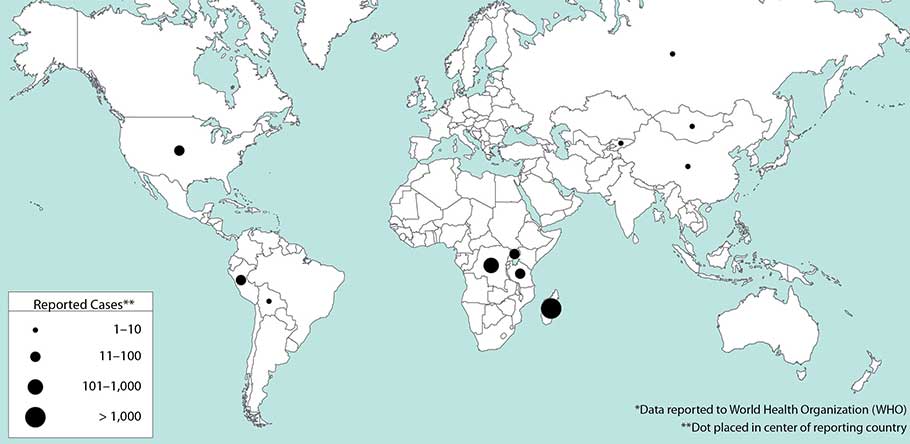
There’s a lot of Russian Lab Plague Panic! stories going on.
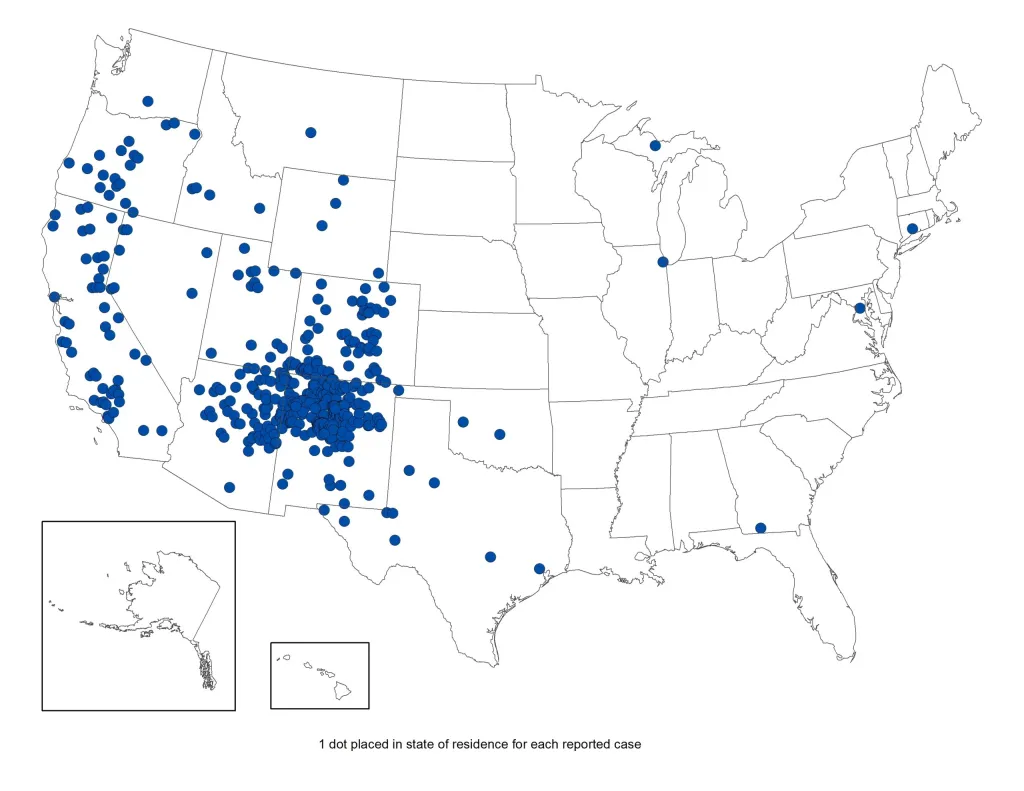
Why do I not care? Because I lived 60+ years with Plague in California.
I asked Brave A.I. for a summary of “Plague endemic in California” and it said:
Showing results for California, US
Plague is endemic in many parts of California, specifically in rural and undeveloped foothill and mountainous areas, as well as some coastal regions. The disease is naturally present in wild rodent populations, primarily ground squirrels, chipmunks, and woodrats, which serve as the main reservoir for the Yersinia pestis bacteria.
The South Lake Tahoe area in El Dorado County is a known hotspot, having recorded a human case in 2025 and evidence of plague in rodents since 2021. Other high-risk areas include the Angeles National Forest and San Gabriel Mountains in Los Angeles County, as well as higher elevations in Tulare County. Plague is not found in the Central Valley or the southeastern desert regions, and human cases in urban areas have not been reported in nearly 100 years.
Transmission to humans typically occurs through the bite of infected fleas from wild rodents or by handling infected animals. Pet cats are particularly susceptible and can carry infected fleas into homes or transmit the disease via respiratory secretions if they contract pneumonic plague. The average number of human cases in the United States is about seven per year, with most occurring in western states, and these cases are effectively treated with antibiotics if diagnosed early.
A small group used A.I. to write an open source clone of Photoshop in Rust in a few weeks. The whole thing.
Software companies just took a major hit to their business model. Even if nobody makes an A.I. Windows Clone, or Micro$oft manages to sue folks to prevent it: Any group could now make a ‘work alike” that was better than their crap, and a LOT more efficient, that required minimal changes to work flow and user skills, and make it free or minimally priced.
Going to Programming Classes and “learning to code” is no longer a viable career path. Learning to prompt an A.I. is.
Expect a flood of cheap software that works FINE from places like India, China, and frankly, just about anywhere. Were I, say, the Chief Tech Officer of the Government of Some 3rd World Country: I’d NOT be cutting a check for ANY Western Software. I’d either use the existing Open Source stuff, OR if some particular need existed and no open source product existed – I’d tell my computer department staff to whip up a clone using A.I. tools.
IMHO, there will be a huge reduction in valuations of Software Companies… the survivors will make it on “consultants” and “maintenance” fees. Not a software license fee.
10:40
Time to change from “learn to code” to “learn to prompt A.I.”
It looks (from what they said) like even the Q.A. & Validation was done with A.I. assist.
Wheatie Wisdom. If you bring snacks, bring enough for everyone. No running with scissors. No food fights. AI stuff posted, requires a link. Please use spoiler, for longer posts. Wolf Speak. No obnoxious behavior towards fellow QTreeper(s). Freedom of Speech is honored here QTree. But Do Know, every poster, IS personally responsible for what they post.
Prices pulled last evening. Gold $4,156.60 Silver $61.14 Bitcoin $84,600
Seems like such an obvious solution.
Elon blasted out the obvious…
Until we elect a conservative majority, we’ll…
Stuff…
OK so I was bouncing around YT and saw below video. Being a geezer, thought, what the hell…
Not in the market for a new vehicle until, I hope 2028.
15:13
—
Then I wondered, would geezer car insurance rates go down. So I asked Grok.
Yea, grok would have no conflict of interest here.
Grok
71yo driver. No accidents OR moving violations since 1975. Texarkana, TX. Typical insurance rates for a Tesla Y FSD?
Typical full-coverage rates for a Tesla Model Y in Texarkana, TX, for a 71-year-old with an exceptionally clean record (no accidents or moving violations since 1975) are roughly $180–$320 per month ($2,200–$3,800 per year), depending on exact coverage, deductibles, mileage, credit, and insurer. Liability-only is substantially lower. These are estimates based on 2025–2026 published averages and comparisons; actual quotes vary and require personalized shopping.
Key Benchmarks
Texas Model Y averages (full coverage, typical middle-aged clean-record driver, 100/300/100 limits + $500 deductibles): Around $4,169 per year / ~$347 per month. Liability-only (higher limits) averages closer to $1,495 per year. insurance.com
National Model Y full-coverage averages: Often $3,000–$4,600 per year (~$250–$380/month) for similar profiles, with some sources lower for safer/older drivers. insurance.com
Age effects: Rates for seniors in Texas rise modestly after ~65–70. A typical 70-year-old pays about 8% more than a 65-year-old for full coverage on an average vehicle (e.g., statewide senior full-coverage averages near $2,800–$3,000/year). Tesla premiums run higher due to vehicle value, battery/repair costs, and parts. Clean multi-decade records and mature-driver discounts help offset this. carinsurance.com
Texarkana specifically: Lower than major Texas metros (DFW/Houston averages for Model Y clean-record full coverage often $220–$400/month). Overall city auto averages for full coverage are frequently in the $170–$180/month range for typical cars—noticeably below the Texas statewide average—due to lower urban density/claim frequency. insurify.com
Tesla Insurance Advantage (Available in Texas)Tesla Insurance prices primarily on the vehicle’s Safety Score (and mileage/garaging) rather than age or credit score, which can benefit a very safe senior driver. It also offers an FSD (Supervised) usage benefit/discount in Texas (up to ~10% on eligible coverages for ≥50% of miles with FSD engaged; higher usage can produce larger effective savings in examples).
Example order-page estimates (Austin-area Model Y context, not Texarkana-specific): ~$205/month without heavy FSD use vs. ~$148/month with high FSD usage. Real rates depend on your Safety Score, ZIP, and coverage. High scores can produce competitive or lower-than-traditional rates.
Factors That Help or Hurt Your Rate
Helpful: 50+ years clean record, potential low annual mileage, mature/defensive driving course (common 5–10% discount for 55+ in Texas), multi-policy bundling, higher deductibles, Tesla’s advanced safety features, and strong Safety Score/FSD usage with Tesla Insurance.
Higher cost drivers: Newer/higher-trim Model Y, low deductibles, high mileage, urban ZIP nuances, or comprehensive coverage in hail-prone areas.
Company variation is large: In Texas Model Y data, full-coverage quotes have ranged widely (e.g., State Farm or Incline often lower; others substantially higher). USAA can be competitive if eligible. insurance.com
Practical AdviceShop quotes from Tesla Insurance, State Farm, GEICO, Progressive, Nationwide, local/independent agents, and others (or comparison sites). Provide your exact ZIP, model year/trim, desired limits/deductibles, annual mileage, and any other vehicles/homeowners policy. Complete a Texas-approved mature driver course if you haven’t recently. Rates are not guaranteed and change with market conditions, claims experience, and underwriting.These figures assume standard full coverage on a typical recent Model Y; liability-only or higher/lower limits will differ materially. Get multiple personalized quotes for the most accurate picture.
Me. Interesting it appears some insurance company rates go down with increased FSD engaged. Minor plug for Tesla insurance. 🙂
Maintenance appears to be minimal, as compared to ICE.
EVs still have a ways to go.
Are EV fires still an issue OR was that mainly non-Tesla EV fires for the most part. Based on Grok search, does not appear to be a significant issue. I spose, keep the Tesla out of water and hope it doesn’t catch on fire for any reason.
Cold weather issues. Charge time. Charge limits. Increase charge drain. Long distance travel on holidays likely long wait times to charge EVs.
Then I looked at Tesla weight Vs my Ram and Grand Cherokee L. Ram 25% heavier. Grand Cherokee L about the same. So much for the EVs are too heavy hype.
Tire prices comparable to what I buy these days. Maintenance appears to be much less than ICE.
Charging station availability on demand, likely my biggest concern. 2028 charging station availability may not be an issue.
So much for the Tesla rabbit hole deep dive of sorts.
—
This looks interesting.
Elon Musk Makes A Move On The Banks
When Elon Musk took over Twitter, fired four out of five employees, and rebranded it X (just because he thought it sounded cool), the talking heads predicted doom for the company. The opposite happened. It is now one of the most popular sources of news in the world, and a major delivery system for what social media is supposed to be.
He always had more in mind. He explained at the outset that he wanted to turn X into the “everything app.” I winced when I heard those words. As someone who worked in web development for years, I learned to regard every promise of a “one-stop shop” to be foolish. It never happens. Best to pick one thing you do well and stick with it.
To my own amazement, X is indeed taking steps toward being the Everything App. Not yet, of course, but the advent of his X Money platform is major and serious. It is being rolled out gradually to premium members. Under the new content-creators payout program, people are paid within the app and invited to use the service for transferring money.
Described thusly, it would seem to be another version of Zelle or Venmo and therefore not that much to notice, much less celebrate. But when you look at the details of what X Money is doing, another reality emerges. It would appear that this app is making a move on the banks themselves.
The evidence is on the app now. It offers a way to link your paycheck to X Money to enjoy a quicker payout than if your paycheck flows to your bank account. Speed is one thing, and a good thing, but why else would you do this?
The key comes in the details which have not been advertised (Musk doesn’t like old-style marketing). These are not regular dormant cash accounts like you get in a regular checking account. They pay a return. Not just any return. The return is higher than you would otherwise get in a normal money market.
For now the Annual Percent Yield (APY) is an eye-popping 6 percent as an initial customer-acquisition rate.
Not only that, the X Money card that comes digitally with the service (and physically on the ask) offers fully 3 percent cash back.
A high rate plus instant peer-to-peer transmission, a metal Visa card with 3 percent cash back, and early direct deposit is meant to pull balances and daily activity onto the platform.
What you notice from these terms is that this goes way beyond a mere money-transmission service. What’s being provided here, with quick and easy signups, is a highly lucrative vehicle for serious investment. Put your cash in and have it earn 6 percent. That beats inflation. With 3 percent cash back, you are way ahead of the game. That is reason enough to switch.
As a user I immediately found myself in a bind. Initially I thought I would enjoy spending my X Money on groceries and movie tickets or something along those lines. But with this level of earning power, I will lose money if I do that. I would be forgoing the return from the money held. Better to use the cash in my bank or my credit card that also pays 3 percent cash back.
The calculation here favors keeping the money in X Money, not spending it. Indeed, the calculator favors moving cash from banks into X Money and earning the return. To be sure, that 6 percent could change in a year or two or three. It would be up to how the app is managed.
Meanwhile, do you understand what this means? It means an actual reward for … saving money! Imagine that. Cash that earns a return on an app that allows peer-to-peer transfer at zero cost. This is disruptive innovation of the sort we’ve come to expect from this man and his companies.
Elon has designated the X Money app for now to be a loss leader in direct revenue but a huge investment in becoming what he likely thinks it can be in the long run: an actual option to the banks.
There might even be more afoot here. The banking rails themselves are provided by Cross River Bank. Founded in 2008, the bank carved out a special niche in working with new digital companies that focus on in-app service provision and edgier products like cryptocurrency. It is FDIC-insured but eschews traditional banking in favor of innovation. Even with its smaller capitalization, it is an ideal partner for a disruptive technology like X Money.
Recall too that Elon Musk was one of the founders of PayPal. It was started with a high hope of developing a new form of money transmission and even a new form of money. It eventually found itself regulated out of that vision to become what it is today, which is a highly valued means of payment for the digital age.
X Money seems to learn from mistakes made in those days to build out fully banking services from the very foundation. With the inclusion of crypto as part of the banking rails, we can easily imagine a future in which X Money integrates with a service like Coinbase to move money from dollars to crypto and back again.
One thing that is notable to me is the effortlessness of the signups and verifications. The developers have learned that customers recoil at too many screens, too much language, too many aggressive demands for passwords and accounts. They are using the latest technology to make signups and management extremely easy and clean.
That said, X Money does of course comply with all the arduous federal regulations concerning Know Your Customer laws and tax-reporting requirements. This is by no means an app that places a premium on your privacy. Even to make it work requires government IDs and 3D facial scans from our phone. I despise all of that while also understanding that this is the price any financial entrepreneur pays to make anything innovative these days. X Money is compliant across the board, which, from my point of view, is unavoidably regrettable.
It’s entirely possible that Elon has a big vision for this platform that he has not yet shared. Indeed, I’m struck by how much of the system that he has built so far has not been advertised at all. It’s extremely interesting how the rollout is going. The app presents direct information to the customer screen by screen, the pitch, the conditions, the advantages. Normal advertising speaks to the masses; Elon’s way is to speak to the individual user. It’s very different.
We can imagine two polar opposite futures with this new service.
Optimistically, it becomes the innovator of a new form of money and monetary services that eventually replaces paper money and even the dollar.
Remember that the app is global. What if the assets of X and other companies emerge as the asset baking of a new form of currency?
Pessimistically, X Money becomes just another new layer of the emergent financial control grid that spies on us and even worse: the integration of money and social media reminds one of China’s Social Credit System. This future sometimes feels baked into the technologies we use and the deep relationship of tech companies and the government.
Which will it be? We do not know. But from what I can see, there is a strong rationale for expecting this platform to be a major player and going concern in the future world of money and finance.
Wheatie Wisdom. If you bring snacks, bring enough for everyone. No running with scissors. No food fights. AI stuff posted, requires a link. Please use spoiler, for longer posts. Wolf Speak. No obnoxious behavior towards fellow QTreeper(s). Freedom of Speech is honored here QTree. But Do Know, every poster, IS personally responsible for what they post.
Prices pulled last evening. Gold $4,306.10 Silver $65.07 Bitcoin $84,079
Seems like such an obvious solution.
Elon echoes the obvious…
Until we have a conservative majority, we’ll…
Stuff…
This Saturday, skipping:
Hyperventilating over AI SI. WTF RFK Jr has not banned Covid Jabs, mRNA… IRGC shenanigans in Strait of Hormuz or Houthi’s… Lunatic wymyn murdering their youngsters. Lying dog breath R-Cons, Dumocrats… Canuckistan imploding.
Placing all of that stuff on ignore for a short while.
Or one can quickly scroll on by, rejoin the lunacy sooner.
This Saturday relax a bit. The lunacy can wait AND will be there when you tune into it.
May I suggest. Feet up. Sit back. grab a coffee, tea…enjoy a sampling of You Tube videos. Slow Guy found these interesting. Hope someone here enjoys one or more. videos.
First up.
Serious AH-HA moment for Slow Guy.
Have watched this happened hundreds. Perhaps a thousand times. The sequence always seemed to happen. Never knew WHY. Quite obvious WHY, now that it is splained.
Further explains WHY extra engines are placed in longer trains…Everything is choreographed. Assumed the latter. just not the WHY.
14:03
—
Speaking of Ah Ha moment. No, make that…
Elon’s incredible insight into What If We… Could We… Why Not… We Will Do It…
Tesla. Odd name for a car. Slow Guy always figured.
Nikola Tesla. Statue of Nikola Tesla in NY State park at Niagara Falls. Another odd moment for me.
IF Tonawanda was here, he’d school me for above line about Nikola Tesla, Niagara Falls…
What the hell does Elon naming a car Tesla, have in common with Nikola Tesla?
Was naming Tesla homage to the brilliance of Nikola Tesla?
Or a glimpse into Elon’s vision for future EV motors?
AND logic MeThinks.
—
Have seen a video or two of a windowless airplane.
This video splains the why. Arriving in 2027?
8:14
—
Boeing, for all of its screw ups with 737Max, DEI bullshit, Boeing is in fact delivering incredible vision, innovation…
Head on challenge to AirBus 380, 350…
Seamlessly incorpotated into existing airport operations around the Globe. (Unlike 380)
Efficiency in air travel, aircraft production including major components, training pilots, comfort of passengers AND crew…
Future 777 variants are incredible.
Also arriving 2027.
30:53
—
Tesla Muscle Car?
7:25
—
Returning to boilerplate, Simply Saturday.
Grateful our ancestors broke the British chains, again, and again…
Thankfully, Trump is finishing off the Brits, Canucks…Along with NATO. Ideally UN.
Wheatie Wisdom. If you bring snacks, bring enough for everyone. No running with scissors. No food fights. AI stuff posted, requires a link. Please use spoiler, for longer posts. Wolf Speak. No obnoxious behavior towards fellow QTreeper(s). Freedom of Speech is honored here QTree. But Do Know, every poster, IS personally responsible for what they post.
Data Centers/Artificial Intelligence. YOU ARE HERE
—
Data Centers. Gotta Have Them, MeThinks.
Locals Were There First. Assimilate with locals for the Win-Win. Cost AND availability of water AND power should NOT increase over whatever locals currently pay.
Ideally locals utility cost will be reduced. Modern technology ought to be able to deliver lower costs. Data centers are already going to improve local utility infrastructure.
Win-Win for everyone.
WAIT A Second.STOP The presses!
Below article addresses none of the concerns mentioned above. Though, those concerns Must AND I believe will be addressed to fairly meet local concerns, needs.
Energy reality forces tech to ditch climate virtue-signaling
If we want the data centers to run, we have to ditch the global warming propaganda.
In Pecos County, Texas, crews are clearing scrubland for a power plant that will burn natural gas and answer to no one but Amazon. With 35 turbines and a generating capacity of more than 7 gigawatts, the plant will be able to produce more electricity than the Grand Coulee Dam. A state permit allows the facility to emit 33 million tons of greenhouse gases a year, roughly double what comes from an Alabama coal-fired generator that has topped America’s emissions tables for years.
Now recall who founded the company building the gas behemoth. That would be Amazon’s Jeff Bezos, who just 5 years ago told delegates at a U.N. climate summit that a rocket ride had shown him a planet that was finite and fragile, prompting a pledge of $2 billion to “restore” nature. The applause was warm. The carbon-intensive private jet that carried Bezos to the Scotland meeting was noted by critics and forgotten by everyone else.
Now his company is financing what may become the largest point source of carbon dioxide in the United States, whose contribution to the greening of ecosystems should be welcome.
You are watching a conversion, and it deserves your attention because of what forced it.
The template, not the exception
Enverus Intelligence Research projects that user-owned turbines will account for about 40 percent of new data center capacity through 2030. Microsoft has signed a 20-year deal for power from a Chevron gas plant in neighboring Reeves County. Interconnection subscriptions are full, transformers are back-ordered, and the only metric that matters is the time it takes to get a power plant in operation.
In 2021, Facebook’s parent company Meta declared climate change one of the most pressing challenges facing the world and positioned itself among the largest corporate buyers of clean electricity. Then came its Hyperion data center in Louisiana. Regulators approved three combined-cycle gas plants for it in August 2025. In March 2026, Meta tripled the order, funding seven more and making the totals 10 gas plants and nearly $11 billion of investment. Meta will underwrite 15 years of revenue, while the turbines will run for 30 — a mismatch that has a dissenting member of the Public Service Commission warning that households may inherit the balance.
Elon Musk built an empire on the premise that combustion belongs to the past. In 2024, he said that a carbon tax was the only action needed to solve climate change. More recently, addressing G20 ministers, he warned of a significant power shortfall next year and defended data center construction against negative public sentiment. Meta’s Mark Zuckerberg, in the same meeting, asked governments for more electricians and more electricity. Neither man requested more wind and solar installations.
Energy physics forces a hard reset
Big Tech’s turn toward dedicated gas power does not settle the climate debate, but it exposes the distance between a political narrative and a power grid capable of supporting industries. When servers must run, physics gets a vote.
For example, at the start of 2026, every grid-scale battery in the United States combined could meet national demand for only 15 minutes. Modeling the PJM regional power system through 2045, Jonathan Lesser and Mitchell Rolling found that a grid of wind, solar, and batteries would need 10 times the generating capacity of gas and nuclear power. It would also cost about seven times as much and cover a land area larger than the PJM service area, which comprises most of the Mid-Atlantic and parts of the Midwest.
Yet despite these facts, pseudo-scientists, grifters, and demagogues lectured for 20 years that coal is immoral, natural gas is a bridge to nowhere, and so-called green technologies are the planet’s salvation. Banks denied financing for hydrocarbon projects in developing countries where surgeons operate under lights powered by unreliable generators and where hundreds of millions cook with sooty wood and dung.
The lesson is the same for data centers and households: Prosperity requires electricity that is available when needed. Dependable systems of conventional energy sources will continue to power the tech revolution and human progress for decades.
Wheatie Wisdom. If you bring snacks, bring enough for everyone. No running with scissors. No food fights. AI stuff posted, requires a link. Please use spoiler, for longer posts. Wolf Speak. No obnoxious behavior towards fellow QTreeper(s). Freedom of Speech is honored here QTree. But Do Know, every poster, IS personally responsible for what they post.
Prices pulled last evening. Gold $4,397.64 Silver $65.24 Bitcoin $79,607
Seems like such an obvious solution. We need a Conservative majority.
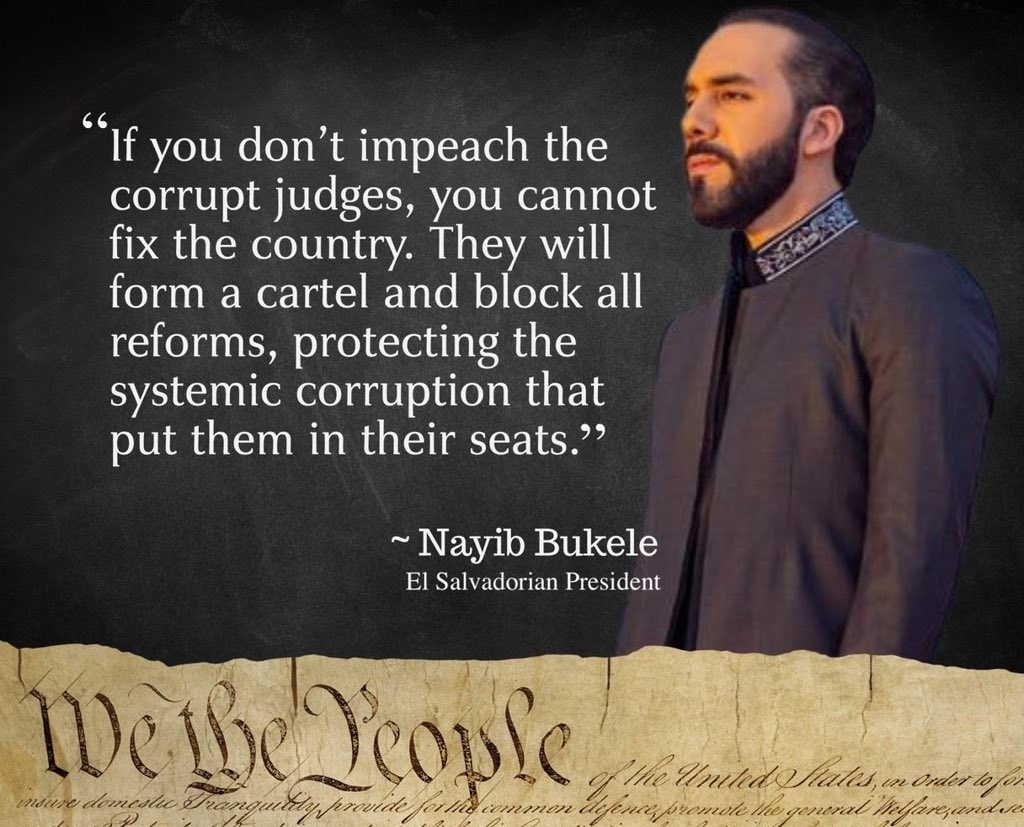
Elon also called to impeach activist judges.
Until we muster up honest conservative majority, we’ll…
Stuff…
Dumocrat Michigan…
Man Justifiably Kills Shooter In Self-Defense, Still Gets Punished By Blue State Anyway
By Harold Hutchison
A 19-year-old man who protected others by killing a gunman received two years of probation from a Michigan judge who accused him of using “poor judgment.
“He didn’t plan on using it that day. He thought he kept it for protection,” Long’s attorney told the court. “He didn’t instigate the fight. He didn’t start the fight, and he did pull it out for protection of others.”
“I know there was a gun fight at the Fairlane mall, and the lawyers have agreed, according to this court’s evaluation, that you were acting in self-defense or the defense of others, so that’s a valid legal defense,” the judge said to Long. “Why did you walk into the mall with a gun in the first place?”
Michigan is a “shall-issue” state that requires a Concealed Pistol License (CPL) to carry a concealed handgun for any applicant over the age of 21 who meets certain criteria, according to the NRA’s summary of the state’s gun laws. The laws distinguish between concealed and open carry, treat pistols in vehicles as concealed, and impose specific duties and location restrictions on CPL holders.
Due to his age, Long was placed under the provisions of the Holmes Youthful Trainee Act, a 2021 law that will allow him to expunge his criminal record if he successfully completes probation.
If ya missed or chose to not listen to RFK Jr speech at the recent R-Con mid term convention in Dallas, ya missed an excellent take down of everything Dumocrat.
100% worth the listen. Watch or play in background to RFK Jrs excellent messaging.
>>> Video for speech at the link. Full transcript within the article. <<<
Robert Kennedy, Jr. Delivers ABSOLUTELY HISTORIC Speech at RNC Midterm Convention in Crushing Blow to Democrat Anti-Americanism (VIDEO).
Robert Kennedy Jr., the outstanding US Health and Human Services Secretary, delivered an absolutely historic speech at the RNC Midterm Convention in Dallas, Texas on Thursday night.
Kennedy spoke about his long history in the Democrat Party, a once great party that represented the working man and woman and stood for individual rights and Freedom of Speech. Kennedy tells the sad story of how almost every police officer and fireman belonged to the Democrat Party and how they protected women and the downtrodden.
RFK Jr. described a party that is an absolute shell of its former self. He tells how the former president had his social media taken down for conflicting with the lies they were telling the American people during the COVID epidemic.
Robert also spoke about Democrats’ support of Israel and the party’s clarity on the radical Islamic threat. That is long gone.
And, then Robert Kennedy, Jr. delivered the most powerful and moving history of his relationship with President Donald Trump.
He ended with, “And I am so grateful to God for giving our country a leader like this.”
This was truly a historic speech. We hope you take the time to listen to this piece of history.
Here is the transcript:
Robert Kennedy Jr.: I’m 72 years old. And for 70 years of my life, I would have bet any amount of money that I would not be addressing a Republican convention.
Let me tell you something.
The irony of my presence here is inescapable. I attended my first Democratic convention in 1960 when I was 6 years old, and I attended most of the conventions, the Democratic conventions after that, and I spoke as a keynote speaker in many of them. I grew up in a Democratic Party of Franklin Roosevelt, of my Uncle John Kennedy, of my father, Robert Kennedy. And ours was a party— Ours was a party of strong principles, of clear policies, and an inspiring idealistic vision for America. My uncle ran on a platform of tax cuts, strong defense, and fighting communism. Does that sound familiar?
The Democrats of that era stood with labor and working people and the American middle class. Nearly every cop and firefighter was a Democrat. Our party was a champion of the Bill of Rights and particularly for unbridled free speech. It was wary of centralized government power and corporate privilege and secret intelligence agencies. My uncle and father understood the connection between free markets and functional democracy. They stood firmly against crony capitalism on the right and socialism on the left. They were all for competition, for meritocracy, and for excellence, which they thought should be a universal aspiration for Americans.
My father and uncles had served in World War II, and they understood the difference between forever wars that they opposed and wars to protect our national security, which they believed we should never hesitate to defend.
My family played critical roles in building NIH and CDC into centers of gold standard science that transformed America into this relentless dynamo. of international research. They promoted physical fitness, and they protected women’s sports. My Uncle Ted Kennedy wrote Title IX, which— because he wanted to make sure that women, real women, were able— were able to have a safe and guaranteed spot in college sports. And they stood with Israel as the bulwark of democracy. And as a beacon for press and religious freedoms, a haven for oppression— from oppression to gays and women and ethnic and religious minorities. amidst a regional sea of intolerance, of misogyny, of child marriage, of human slavery, and of ethnic and religious genocide. They saw Israel as America’s most critical frontline ally in fighting the toxic ideology of Islamism.
That’s right.
Which by its own accounts is waging an existential war against our country and against Western liberal democracies. It’s an ideology that has subjugated and impoverished and tyrannized and tortured the people of Palestine and the people of Iran, and they openly promise to do the same to us. Democrats opposed government coercion, defended individual rights, believed that government should give Americans information, good information, and then let them— trust them to make up their own minds. Democrats and labor leaders fought fiercely in my generation to stop illegal immigration at the border.
During COVID I watched the Democratic Party turn against every one of its essential values, its principles, and all of the policies that define my party. Democrats turned away from gold standard research and blindly defended industry-sponsored, agenda-driven science written by corrupt and captive regulatory agencies.
And the Democrats, which were once the champions of the American Constitution, systematically obliterated the Bill of Rights. And particularly beginning with the First Amendment, under the guise of combating misinformation, Democrats censored hundreds of scientists, and physicians who questioned the government’s dubious COVID pronouncements and orthodoxies. 37 years— 37 hours after President Biden took the oath of office, he ordered Facebook and Instagram to remove my accounts in order to prevent public debate.
Crowd: Boo!
RFK Jr.: I’m not complaining about what happened to me, but it was a bad thing for our country. Democrats obliterated the first— the second leg of the First Amendment, the right to the guaranteed right of assembly, by social distancing regulations that were completely unscience-based. Democrats violated the third leg of the First Amendment, the freedom to worship. They closed every church in our country for a year. Who could imagine that would have ever happened? And they kept open the liquor stores and the big box stores as essential businesses. Democrats torpedoed the 7th Amendment right to jury trial by giving liability shields to the giant pharmaceutical companies. No matter how negligent they were, no matter how reckless, no matter how toxic the ingredients, no matter how grievous your injury, You could not sue them. Democrats violated the 5th Amendment by shutting down 3 million businesses with no due process and no just compensation. Democrats shut down the 4th Amendment, protection from unlawful searches and seizures, by forcing Americans to disclose their medical information before they could exercise their constitutional rights. In a single year, my party obliterated 250 years of constitutional guarantees. The only Bill of Rights that they left unscathed was the Second Amendment, and probably only because there is a Second Amendment.
Crowd: Booo!
RFK Jr.:
And then the party of my body, my choice forced citizens to wear masks and to submit to invasive and intrusive medical interventions against their own wills. The party of MeToo— remember that we were all supposed to listen to women and to believe women— they cruelly silenced the voices of tens of thousands of mothers who believed that their children had suffered vaccine injuries. The Democrats declared war on women’s sports, effectively destroying Title IX.
Democrats condemned meritocracy openly and celebrated mediocrity. The Democratic Party became the party of elites, labeling working Americans as deplorables. Democrats cultivated deep ties with Big Pharma, Big Tech, Big Ag, Big Food, Big Insurance, and the mainstream media. They embraced policies that divided Americans along racial lines. They abolished my uncle’s physical fitness test because they said that competition was bad for children.
Crowd: Boo!
RFK Jr.:
The Democrats abandoned all of these values and all of their traditional values, offering Americans only one policy, the one policy that they stood for, the unbridled, sociopathic, and blind hatred of a single man, Donald J. Trump. And they were so confident that Trump hatred alone was sufficient to win elections that they abandoned accountability and made our government a predatory organism of monumental incompetence and corruption.
The Democrats dismantled the public— public integrity safeguards and opened the floodgates to thieves and fraudsters who fleeced the American medical regulatory agencies for $100 billion annually during every year of the Biden administration. They somehow— they somehow lost 360,000 children, and they turned our federal government into the biggest child trafficking operation in world history.
Crowd: Booo!
RFK Jr.: The Democratic Party, in short, lost its way. I mourn the fact that neither my father nor my uncle would recognize the Democratic Party of today. It struck me this was no longer about left and right. It was about sane and insane. It was about common sense and communism. In April 2023, I ran for president hoping to summon my party back to its bedrock values. But the Democratic Party had lost faith in American voters and utterly ironically lost faith in American democracy. They were convinced that they would lose the ballot box. They couldn’t win. And so they unveiled a lawfare strategy to prevent an election from occurring. They sued every candidate who dared to run against Joe Biden. and then attempted to remove us all from the ballot. A lot of you think that the lawfare was just against Donald Trump. It was mainly against him, but they sued Dean Phillips. They sued Marianne Williamson. They sued Cornel West. They sued Donald Trump 50 times in 38 states to remove him from the ballot.
And they sued me in 12 states to remove me from ballots where I had legally qualified. And then— this is almost comical— after I endorsed President Trump and I tried to remove myself from the ballot so that he could have my votes, they sued me to keep me on the ballot. I’m not joking. Oh, here was the Democratic Party that in my youth, the biggest issue that we had that my father and my uncle fought for was voting rights, and particularly in the southern states, to guarantee that every American had a right to cast a ballot. And here’s that same party 60 years later using all of its ingenuity and all of its power to make sure that Americans could not vote for the candidates that they wanted to vote for. They excluded me from the debates. They canceled the primaries. The Democratic Party changed the rules to make sure I could not win, and neither could the other people who were running as Democrats, no matter how many votes we got. And for the first time in history, they canceled their own convention. No voter ever cast a primary ballot for Kamala Harris. No elected delegate was ever consulted.
A party of no kings simply anointed a queen.
Handpicked by secretive party elites who nobody even knows who they were. They’re just faceless guys with lanyards who were calling all the shots from the upper decks of that convention center, and they— nobody can see their face any more than you can see the face of the people up there. But that’s who was making the decision. And then they canceled the convention and they held a coronation. The day that President Trump was shot in Butler, Pennsylvania, within 3 hours of his shooting, he called me and asked me for a meeting. And during the series of talks that followed, I realized that everything that I had heard about President Trump and everything I believed about him from the mainstream media was a lie. Everything. I discovered, I discovered a self-effacing man of superior intelligence, of empathy and compassion, with an encyclopedic grasp of the issues and within, in molecular detail, and most of all, a near reckless courage to challenge vested interests and official orthodoxies. I found a man who cared deeply about transparency in government, who believed in protecting free speech more than anything, and the entire United States Constitution. We talked about lowering drug prices, supporting farmers and ranchers, standing up for working Americans, restoring law and order, and protecting public safety and security and national safety as well.
We talked about ending official corporate influence, unraveling the corporate capture of our regulatory agencies, and restoring gold standard science and public trust. We, we talked about ending fraud, waste, and abuse. And most importantly to me, We talked about ending the chronic disease epidemic and restoring the health of our children. President Trump told me that he wanted safe food available to all Americans. He wanted to end chronic disease. He wanted to restore our kids’ health. He found it unacceptable that this country pays 2 to 3 times what every developing nation in the world pays, and yet we have the sickest children in the history of the world. We have the highest chronic disease burden ever recorded. These conversations changed the course of my campaign and my life. I realized that many of the foundational values of the Democratic Party had found a new home, and it was called the Republican Party.
Crowd: USA! USA! USA! Bobby! Bobby! Bobby! Bobby!
RFK Jr.: Now, out of a sense of fairness, after my conversation with President Trump, I tried to have the same conversation with Kamala Harris. You think she would agree to meet with me? Did she even pick up the telephone?
Later that day, on stage at the Turning Point rally in Arizona, I met President Trump, and that moment would never have happened without my friend Charlie Kirk. Charlie played a critical and indispensable role at bringing me and President Trump together. In fact, it was something that he was trying to do for almost a year, the last year of my campaign. And today, on the first anniversary of his assassination, I can’t stand here without thinking about him. Charlie believed that people from all different political traditions could find common ground in their love of country. That we were— we, in this age of algorithms driving us all apart and creating this terrible, destructive polarization, the only way that we were going to rescue our country is if we started talking to each other and having congenial conversations. And he helped build the bridge that President Trump and I walked across that day. And I like to believe that Charlie is looking down on all of us now. And, and seeing the seeds that he planted.
That afternoon, President Trump and I stood together in front of thousands of Americans.
We shook hands and we made a promise to the American people. Together, we promised to make America healthy again.
Some of my— some of my Democratic friends told me that I was a fool for trusting President Trump. And so I want to make the record clear right now. President Trump has kept every single promise that he made to me, without exception.
And we have kept our promise to the American people.
Today, 2 years into this administration, Americans are eating more real food. Real food sales were up 8% in 2025.
Americans are eating less processed food. Since President Trump took office, obesity is down by 7% after 40 years of increasing.
And this is best of all— preliminary data that I received 2 days ago. from CDC indicates that we have now reversed a 30-year decline in longevity.
President Trump has ended 9 wars.
He’s restored competency to our government. He’s restored public faith. He’s restored America’s leadership across the globe.
And I am so grateful to God for giving our country a leader like this.
And I’m grateful to President Trump for including me in his administration and giving me a place.
In this extraordinary revolution that is happening in our country, where we’re going to restore American democracy and restore the America that my uncle and father believed in, the exemplary nation respected and emulated across the globe. We are making America healthy again. It’s up to you now. We need to elect a Republican Congress to keep this momentum going. Let’s go out and do that. God bless you.
Wheatie Wisdom. If you bring snacks, bring enough for everyone. No running with scissors. No food fights. AI stuff posted, requires a link. Please use spoiler, for longer posts. Wolf Speak. No obnoxious behavior towards fellow QTreeper(s). Freedom of Speech is honored here QTree. But Do Know, every poster, IS personally responsible for what they post.
Continuing the awakening, reawakening, everything Covid, Covidiot Jab, mRNA…
Early last evening, PAVACA posted this, worthy read…
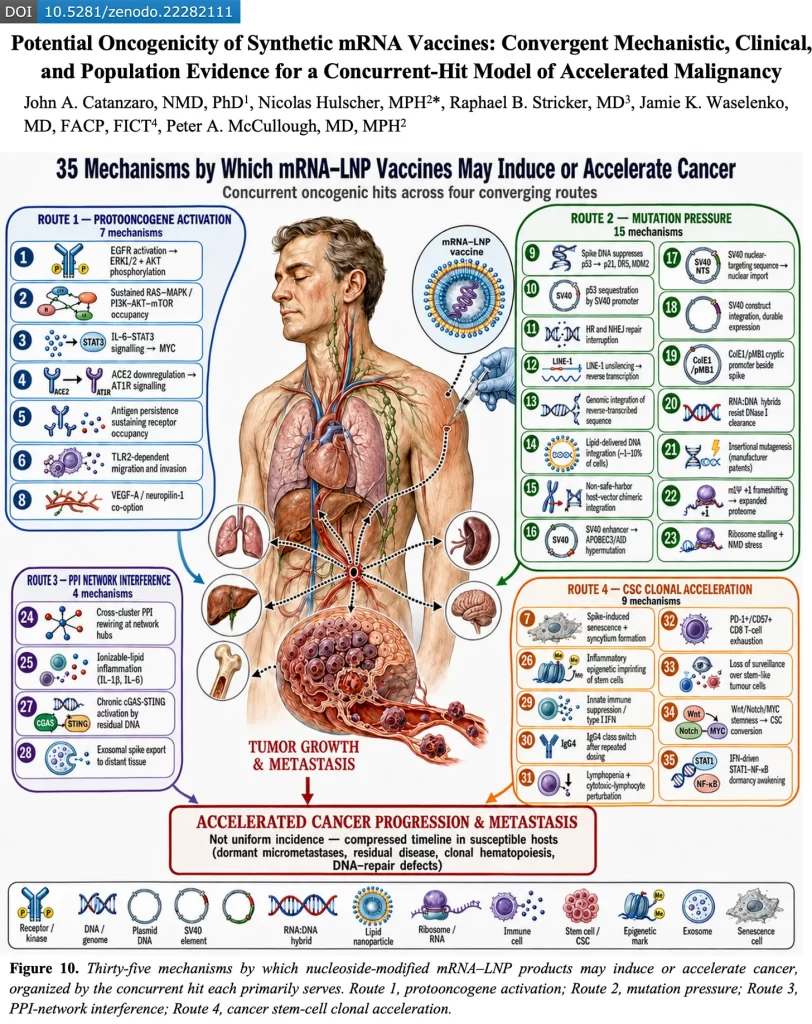
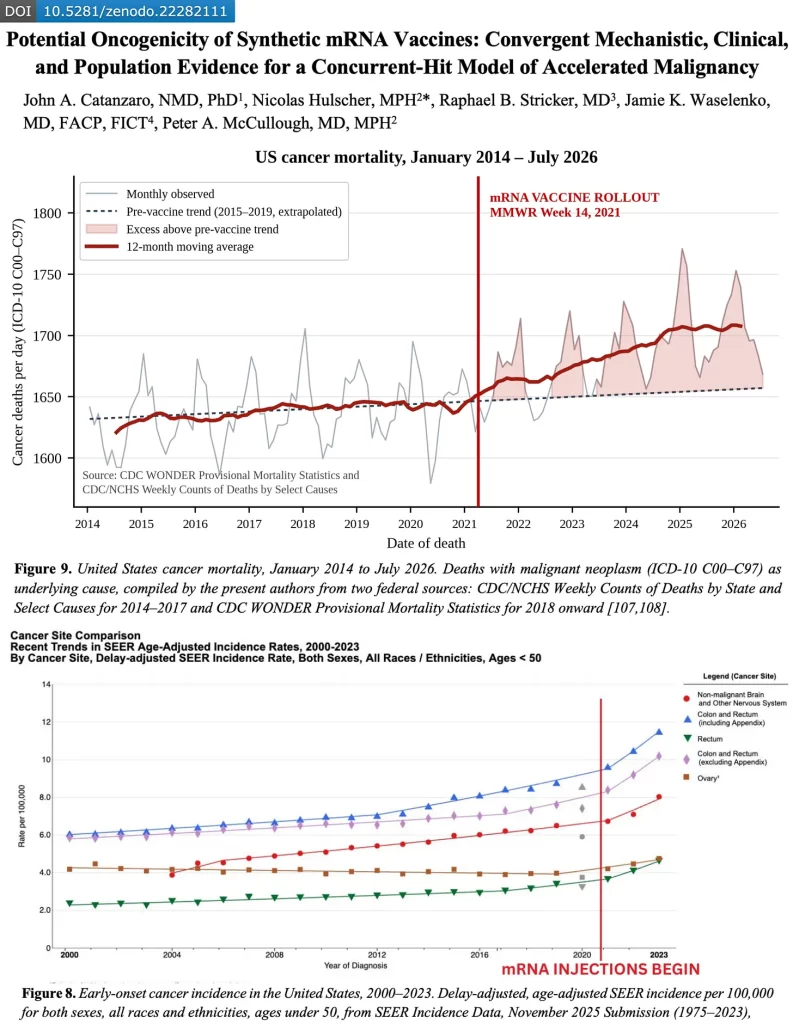
BREAKING: STUDY FINDS mRNA “VACCINES” COULD INDUCE OR ACCELERATE CANCER VIA 35 DISTINCT MECHANISMS
The most comprehensive analysis to date examining the link between mRNA “vaccines” and cancer identifies convergent mechanistic, clinical, and population-level evidence of turbo cancer.
Cancer is rising at an increasingly alarming pace. Early-onset malignancies are climbing in younger adults, aggressive cancers are appearing in patients with little warning, and U.S. cancer mortality has departed sharply from its pre-pandemic trajectory. Against this backdrop, one of the most important questions in medicine is whether the unprecedented mass deployment of nucleoside-modified mRNA technology could be contributing to cancer initiation, reactivation, or accelerated progression.
In the most comprehensive analysis to date examining the link between mRNA “vaccines” and cancer, we brought together mechanistic biology, published clinical cases, large population cohorts, U.S. cancer-incidence data, and national mortality records to evaluate whether these gene products could induce, accelerate, or unmask malignancy.
The findings converge on the same alarming picture: TURBO CANCER IS REAL.
And the implications extend far beyond COVID-19 vaccination, because the same underlying mRNA technology is now being pushed directly into cancer treatment.
Below is a concise breakdown of what we found:
MECHANISTIC EVIDENCE
We identified 35 distinct cancer-promoting mechanisms converging through 4 major routes: (1) protooncogene activation, (2) mutation pressure, (3) protein–protein interaction network interference, and (4) cancer stem-cell clonal acceleration.
Key mechanisms include EGFR/RAS/MAPK and STAT3–MYC activation, p53/BRCA suppression, impaired DNA repair, residual plasmid DNA and SV40 regulatory elements, LINE-1 reverse transcription, m1Ψ-associated frameshifting, chronic LNP inflammation, immune suppression, and cancer stem-cell expansion—pathways capable of promoting genomic instability, uncontrolled growth, immune escape, dormancy reactivation, and metastatic outgrowth. The full inventory of cancer-promoting mechanisms can be found in Table 4 of our study.
Our central concurrent-hit model proposes that these processes do not necessarily operate independently or sequentially. Multiple cancer-promoting hits overlap in the same susceptible host, compressing the time required for dormant, indolent, or microscopic disease to become clinically aggressive.
CLINICAL EVIDENCE
The published clinical literature includes 333 documented turbo cancer cases across 27 countries, involving lymphomas, leukemia, melanoma, breast cancer, lung cancer, glioblastoma and other glial tumors, sarcomas, and pancreatic cancer. The vast majority of these cases occurred following COVID-19 vaccination, with a minority following SARS-CoV-2 infection.
Approximately 86% of the post-vaccination cases occurred after nucleoside-modified mRNA products—about 56% after Pfizer-BioNTech, 25% after Moderna, and another 5% after exposure to both mRNA products across different doses.
Across these cases, recurring patterns include rapid cancer progression, short-latency recurrence, reactivation of previously controlled disease, and tumors involving the injection site or nearby draining lymph nodes.
Lymphoid malignancies represent the largest category in the published case literature, while glioblastoma and pancreatic adenocarcinoma were among the cancers most consistently associated with reports of unusually rapid progression.
POPULATION EVIDENCE
The population-level evidence reinforces these clinical and mechanistic signals.
OUR CDC WONDER ANALYSIS: At least 119,130 EXCESS U.S. CANCER DEATHS, rising to approximately 153,000–197,000 after accounting for mortality displacement.
INDEPENDENT CDC WONDER ANALYSIS: 154,330 excess U.S. cancer deaths, closely matching the lower end of our corrected range.
UNITED STATES (SEER): Early-onset cancer incidence surged 6.4% in just 2 years, from 2021–2023, alongside sharp increases in brain and nervous-system tumors (+19.5%), colorectal cancer (+19.4%), small-intestine cancer (+15.5%), ovarian cancer (+12.8%), stomach cancer (+7.3%), and female breast cancer (+3.6%).
SOUTH KOREA: A nationwide cohort of 8.4 million people found vaccinated individuals had an increased 1-year cancer risk across 6 cancer types: thyroid, gastric, colorectal, lung, breast, and prostate cancer.
ITALY: Vaccinated residents had a 23% higher risk of cancer hospitalization, with an adjusted hazard ratio of 1.23 compared with unvaccinated residents.
These findings come from entirely different data streams and study designs, yet they repeatedly point toward the same concern: accelerated cancer emergence and progression following the era of widespread mRNA exposure.
mRNA ONCOLOGY DANGER
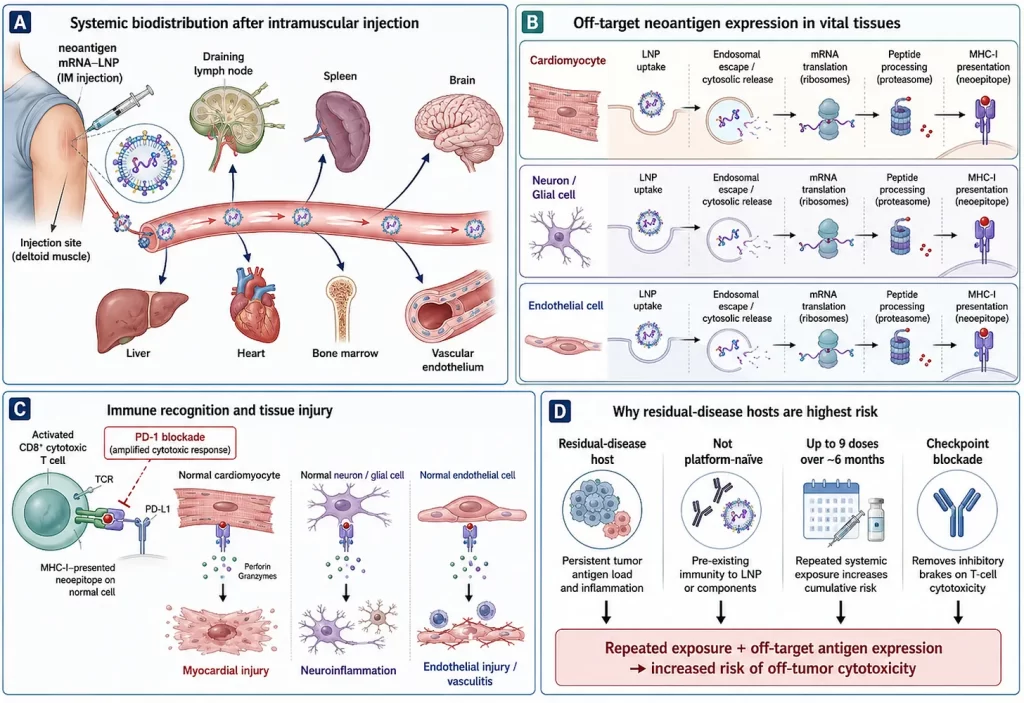
The very mRNA platform now linked in our paper to 35 oncogenic mechanisms is being repurposed to treat cancer itself.
Modern individualized mRNA cancer products encode patient-specific mutated tumor proteins and package them into RNA delivery systems designed to generate a strong immune response against those targets.
But the fundamental safety problem remains: where does that encoded antigen actually get expressed?
The platform can distribute systemically, causing vulnerable tissues including the heart and brain to express tumor-derived antigens—raising the risk of off-target immune attack, cardiac injury, and neurological damage.
Even more concerning, the LNP delivery vehicle itself promoted metastatic outgrowth in mice even without mRNA cargo, suggesting that some oncologic liabilities reside in the platform itself—not only the encoded antigen.
And now the first randomized test of individualized mRNA as monotherapy in residual cancer has FAILED. The Phase 2 BioNTech BNT122-01 trial enrolled 327 patients with molecularly confirmed residual colorectal cancer, crossed its futility boundary, and was terminated due to a mortality imbalance.
This matters enormously because these therapies are being moved into precisely the patients most vulnerable to accelerated disease: people already subjected to multiple mRNA boosters with residual cancer and genomic instability.
OUR CALL
On the combined weight of the mechanistic, clinical, and population evidence, we call for IMMEDIATE MARKET WITHDRAWAL of nucleoside-modified mRNA-LNP products from broad preventive use and a halt to their expansion into adjuvant and neoadjuvant cancer treatment.
35 mechanisms. Hundreds of documented turbo cancer cases across 27 countries. Up to ~197,000 excess U.S. cancer deaths by our analysis. A failed randomized mRNA cancer trial. And the same technology is now being pushed deeper into oncology.
Wheatie Wisdom. If you bring snacks, bring enough for everyone. No running with scissors. No food fights. AI stuff posted, requires a link. Please use spoiler, for longer posts. Wolf Speak. No obnoxious behavior towards fellow QTreeper(s). Freedom of Speech is honored here QTree. But Do Know, every poster, IS personally responsible for what they post.
A Feud between Micro$oft & A Security Guy going hot…
This is a fun one…
Has everything from corporate intrigue to morality play, big corp crushing small guys who keep fighting, and just to round it out, a zero day exploit that looks a lot like a “backdoor” (or could just be stupid programmer games).
I’d worry if I ran anything Microsoft, but I don’t, so I don’t 😉
Yes, it is a couple of months old, but I don’t usually follow M.S. stuff closely. The White hat “Nightmare Eclipse” is having a bit of a feud with M.S. over their ‘bug bounty’ program. Having not been paid for turning in some serious exploits, Nightmare Eclipse then started dropping “zero day” exploits on public servers. M.S. responded by getting them banned from Git Hub and Git Lab (so a bit of “whack a mole” going on). That won’t end well as the more they push the disclosure toward dark web / mesh network tech, the more exploits will be zero-day for the Black Hat community and hidden from the White Hats & the company.
Yes, a ZERO DAY exploit is bad. Yes having it quarantined with the company until a fix is published is better. BUT when the company goes all Pissy Dissy at the folks notifying them, the company can expect lack of cooperation in return. Companies can play nice or have Dark Web Exploits floating around for weeks or months before they find out. M.S. is not known for playing nice, IMHO.
FWIW: I survived all sorts of zero day exploits for years (decades…) via other site sanitation measures. Just because a given computer has an exploit doesn’t mean you can’t protect it. Isolation of critical systems from communications networks (i.e. not everything needs to be on the internet all the time…), very tight isolating firewalls, network architecture that prevents some kinds of access, access control facilities and more. They all work.
For example: I have a lot of data on disk. It is absolutely safe from attack from the internet. Why? Because the disk is not plugged into a computer, it is locked in a drawer. Also, the computer is left turned off and without power 99%+ of the time (that computer is only used when I want to access those disks) and, unless I’m actively downloading data from the internet, it doesn’t need an internet connection. I can download things (on a different system / uSD chip) that that gets moved to the archival system, maintaining isolation.
Bit of a PITA for things like system updates and adding data? Yeah, but a lot less trouble than getting shut down or data corrupted / stolen. Also note that I have copies of my various computer builds in the archive. IF one of my systems got corrupted or “locked” for ransom: I just remove the media with the locked OS on it, flash a new one from the saved image using my offline system builder system, and I’m back in business. All the important offline data is still secure and the online system recovered. Maximum loss is whatever I’ve done very recently, not backed up, and usually that’s easily recreated or just not important to me.
So yes, were I running a live on-line corporate center, some of those zero day exploits would matter to me a lot more (they did back when was doing that for a living). BUT, I find it a lot easier to have a dedicated system for personal web / on-line stuff that is semi-disposable, AND separate systems used only for things like financials, archives, and building systems. Compromising an exposed system doesn’t compromise anything important. With a separate computer costing in the $100 range, and uSD cards for an isolated system down around $10, running multiple computer images is very cheap and easy. Add that the Raspberry Pi 4 & 5 are enough for common web browsing stuff, and the barriers to entry for isolating “random browsing” from “important stuff” drops to the cost of a fancy coffee or at most a tank of gasoline.
Yes, that also involves avoiding the Microsoft Tax on the systems (one licence each) via Linux, but I’m fine with that 😉
So, here’s the Soap Opera Story, along with the tech of the exploit(s) involved:
Yes, this “exploit” requires access to the hardware. That’s one of the first big barriers to protect yourself. Keep your hardware / systems away from physical access by randoms. The laptop I use “on the road” at public WiFi has NOTHING on it of importance. No financials. No email archive. At most, a couple of days of “on the road” email reading records (email left on the server when on the road). Isolating use cases, it’s a good thing.
Also note that at about 11 minutes, there’s a ‘letter’ from Nightmare Eclipse stating that M.S. patched a vulnerability under active exploit without telling anyone (a bad behaviour). Once you push the patch, you notify everyone so they can assure they patch it AND find out if they were hacked.
For this particular bug, I don’t see it as a major risk for most users / use cases. For secure sites depending on disk encryption? Yeah, it would be an issue. OTOH, as someone who has needed to use “exploits” to recover other folks systems sometimes: To me it looks more like a way to recover an encrypted disk when the employee left the company or the PIN was lost… not all “security bypasses” are bad all the time…
Why? Because the path forward now sucks. Management at Canonical has made a series of “corporate friendly user hostile” decisions. SNAP is obligatory, which also means loss of control of YOUR code as it self updates “packages”. The inherent code bloat has pushed memory demand to levels higher than Microsoft Windows(!). Wayland is now obligatory so kiss off any old Xorg applications or recovery methods. Want to remove SNAP? Then you also lose sound as computer sound now depends on it. Kernel stable? Maybe, maybe not, as the Long Term Support version release may happen before kernel stability date. Then there is Uutils, the Rusty re-write of well tested well proven Gnu Coreutils pretty much guaranteed to induce bugs, script failures, downtime and commands that do not act as they did before.
I also have several very old PC boxes that I like to keep in service. Keeps e-waste down and old hardware useful. Canonical is abandoning old hardware, so abandoning me.
The “good news” is that the only system I’ve regularly used with Ubuntu was an Asus Laptop that came with it pre-installed. After some effort, I’ve reached the point where I can manage EUFI well enough to swap the OS on it – just as the keyboard and power connection have started being flaky… so I bought a new Think Penguin laptop with Devuan pre-installed. My only other Ubuntu systems tend to be alternative uSD cards for various Single Board Computers since many vendors supported Ubuntu first or only. Odroid, for example, liked to support it. For them, I’ve generally gotten a Devuan or Armbian alternative running as the main OS. I’ll now be “not bothering” to use the alternative Ubuntu, and actively replacing it.
Some of the boards (Odroid N2) were purchased with a pre-installed Ubuntu on an emmc chip. I’ll be putting the main OS on that chip instead… Devuan where possible, Void sometimes,others as interesting. Slackware runs on some of them too.
Canonical has embraced “The Microsoft Way” and abandoned The Unix Way, so I’m abandoning them. Here’s a nice 17 minute summary of why Ubuntu 26.04 LTS sucks:
A Minor Rant about Huge Corporations trying to “enclose the commons”
Over the last couple of decades, a growing trend in Linux has been Big Corporate “Support” in the form of Money, Programmers on Staff, and Membership In Governance Boards.
This has been very helpful in that resources have been provided to what had been a “Potluck Programming by The Little Guys” process without much funding or resources at all. This has been bad to the extent that the Big Corporate Players gain power over the direction of Linux, and then use it to capture it, and remove the very freedom that created it in the first place.
Microsoft has long had a known strategy of “Embrace and extend” (to capture and kill…). So they would “embrace” a proposed Standard, but then extend it in proprietary ways that were not compatible. Due to their size, they could do this with impunity, but it also prevented Other People and Other Companies from running on their “stuff” and ‘encouraging’ you to Buy Micro$oft products…
RedHat rose to dominate a lot of the Userland Codebase, so what RedHat did got propagated out to many (most?) other distributions. SystemD is a good example. Now owned by IBM (since 2019). Note that IBM has a long history of attempted monopoly practices in various markets. (Disclosure: At one time I worked for Amdahl Corp. who made “IBM compatible” mainframe computers, so saw this up close.) IBM does not care, at all, about Open Source or keeping free software free. ANY “new and improved” way of doing things from RedHat / IBM is something I will suspect of being directed at capturing control of the commons.
Canonical (Ubuntu) is also a large corporation and mostly cares about making an OS Release that works well and is easy for them to maintain. Your control and your choices and machine efficiency not so much. So they embrace SNAPS despite resources that uses and despite putting the package run (and updates to it) beyond your control. (SNAPS are automatically updated when Canonical feels like it, on your machine, for example.) Canonical is also making somewhat incompatible changes to their version of Linux, pushing you into being tied to their way of doing things – like forcing the use of the Rust based uutils instead of the GNU CoreUtils.
Mozilla (the FireFox browser) is pushing their creation of the Rust computer language. Supposedly for the “memory safety”, but that is only one type of bug and is NOT concerned with memory footprint or efficiency on small machines (like the Single Board Computers -SBCs- I like). After the re-write in Rust, FireFox tended to keep hold of more memory when a lot of tabs were kept open. I like to keep a lot of tabs open, even if inactive. This eventually had me move from FireFox to Brave (that seems to understand a page cached to disk doesn’t need to stay in memory). Do I really want ever more chunks of my Rusty-Linux system to demand memory residency?
Somewhere in my Bone Yard is an old Hitachi Laptop from about 1988? that has 8 MB of memory. Yes MEGAbytes. It has a RedHat Linux on it (from that era, not updated). I “inherited it” for free when it could no longer run Windows (so I don’t really know how old it is…). I turned it into a firewall / router for my office when I was the Build Master & IT Guy for a small software company of about 50 people. All MY traffic went through it to the corporate network. (Why? Because the Systems Admin AND a guy in charge of defending the sanctity of a build chain MUST protect against all kinds of things, even folks inside the company). The point?
Re-purposing old small memory & CPU equipment is of no interest to Major Corporations (selling new equipment is), but it IS in the interest of small corporations, independent developers, students, anyone who is poor and living in the 3rd World, and folks interested in reducing the tonnage of resources hitting landfills as eWaste.
A large part of the Linux World population has goals and values that do not align with those of the Major Corporations. Major Corporations want to control the commons and exploit it for their profit and gain. Not necessarily a bad thing (I’m all for profit in corporations, as long as it is not evil in execution). The problem comes with the “Enclosure of the commons”. A problem defined since before Medieval times. When there was a “commons” where everyone could chop wood or hunt food, then The King (or other local Lord) would claim it was for his private use alone. Under his rules. Kind of like saying: You Must use SystemD, Gnome & Wayland…
Also note, that the Rusting of various packages often comes with a licence change from GPL (GNU Public Licence that is “copyleft” and requires changes be published) to MIT (“permissive” that lets you keep changes a hidden secret). The point of a copyleft license is to prevent “Embrace and extend” as a way to “enclose the commons”. The move away from GPL to MIT helps big corporations, but endangers the Open Source Community and encourages making Variations Of Linux that are NOT compatible with others, that are proprietary and tied to one vendor.
I choose to stay in the GPL License world. Not as energetic about it as Richard Stallman, I’ll accept proprietary driver code for some odd peripheral, but aware of the risks of Corporate Capture, Enclosure of The Commons, and Proprietary incompatibility risks “going forward”. So I will run Wayland sometimes, but encourage Xlibre. I’d try to avoid SystemD, and I’ll not use Gnome at all. Ubuntu is on my “walk away and avoid” list due to their changes over the last few years, and Void is coming on board.
Embrace those Linux distributions who recognize these Corporate Capture Risks. Stay free.
May be wise to share with siblings, children, grands, friends…
An Inconvenient Study
MarieUrsula dropped off a link for one of the best documentaries I’ve seen in years – and IMO you would do well to watch this, too.
Her comment:
MarieUrsula (@guest_1644157) Online
August 25, 2026 00:55
#1644157
Found on my trapline a few hours ago, on a related subject:
“Here’s a story about vaccines with danger, deception, and intrigue, like a thriller. It’s an important piece of the vaccine puzzle. Produced by Del Bigtree, it’s essential for anyone still considering the validity of vaccines.” c. 1 hour 22 minutes.
This movie explains a whole bunch of things – even more than they intended to explain. The logic is beautiful. Del Bigtree is a truly excellent journalist. He understands exactly how to make things make sense with zero ambiguity.
This movie explains…..
numerous problems with vaccines
a critical study which went unpublished because it gave the wrong finding, but had a “plausible” exit for the author and institution
why RFKJ wants to do placebo studies
how the vaxxbots skate out of placebo studies on bogus ethics grounds
Wheatie Wisdom. If you bring snacks, bring enough for everyone. No running with scissors. No food fights. AI stuff posted, requires a link. Please use spoiler, for longer posts. Wolf Speak. No obnoxious behavior towards fellow QTreeper(s). Freedom of Speech is honored here QTree. But Do Know, every poster, IS personally responsible for what they post.
Lawrence Reed’s new book, “Born of Ideas: How Principles, Faith, and Courage Forged America,” is out September 1, and every American thinker will appreciate it.
At a time when universities are shuttering their presses, Grove City College has launched Faith & Freedom Press through publisher Whitaker House. Their inaugural book, “Born of Ideas,” written by distinguished author, academic and historian Lawrence W. Reed, frames how our nation’s founding was “born of ideas” through the lens of faith, personal responsibility and divine purpose.
Rather than reiterating the more conventional Revolutionary yarns, Reed commences his dissertation not in 1776 but with the Mayflower Compact in 1620. Reed is a learned student of the genre and devotes nearly a quarter of his tome explaining why the Mayflower Compact is not merely a political agreement but was rooted in the Pilgrims’ religious conviction that they were acting under God’s providence.
Reed, the author of more than a dozen books that blend liberty, economic history and political philosophy, underscores how America emerged first not from battlefields or politics, but from covenantalism that shaped much of freedom’s prevailing rise.
Divine Providence is a partner to the covenant. It is with the whole of the people not just between leaders covering the whole of life and the consent of the governed mentioned in the Declaration of Independence. Historically, it dates back to the book of Exodus that many scholars argue influenced the development of self-government and the later American doctrine of the consent of the governed.
Reed acknowledges America’s founding was first “a revolution of ideas” while still emphasizing the extraordinary nature of the American Revolution. As he writes in the Introduction, “Ours was first a revolution of ideas that produced a revolution in governance accomplished by heroes and ordinary Americans.”
The brevity of the 32 chapters does not diminish its clarity. Rather, it sharpens Reed’s argument and keeps the narrative moving into a fast read of 143 pages that can be accomplished in one sitting that delivers a fresh look at what makes the American experiment exceptional.
It is this mosaic approach that is the book’s defining strength. The chapters are historical vignettes that are crisp, thematic and tightly focused that absorb the founding era and its moral, philosophical and economic foundations. These engaging essays Reed says, “tells a particular story about a key figure or an aspect of the Revolution.”
Reed introduces readers to both the known and unsung heroes whose convictions shaped a nation. Samuel Adams, Patrick Henry and Thomas Paine appear, but Reed also devotes space to lesser-known contributors: Pelatiah Webster, “America’s First Economist”; Mercy Otis Warren, “The Conscience of a Great Cause” and Joseph Warren the fallen hero of Bunker Hill that made the American experience unique and yet remain essential today.
Whether discussing paper money, Native American alliances, Lafayette’s contributions, or the Roman influence on American republicanism, Reed returns repeatedly to the same core ideas: liberty, moral courage, personal responsibility and the belief that ideas, not accidents, forged the nation.
One of Trump’s biggest campaign promises was that he would close our borders to illegal immigration and remove those illegal aliens already here. He has indeed almost completely closed America’s southern border, but the Democrats then managed to turn deportation into a cause célèbre that seemed to derail that effort. It didn’t occur to them that Trump would find another way to accomplish the goal, or that Democrat politicians in blue states would help him.
Early this year, the headwinds seemed to be blowing in the Democrats’ direction. When Rebecca Good was killed while aiming a car at an ICE agent and a (legally) armed Alex Pretti was killed while violently resisting ICE agents, they seemed like the perfect poster children for the Democrats’ anti-ICE and anti-deportation push. Democrats thought it helped that there were other incidents in which illegal aliens confronting ICE also managed to get killed.
But somehow, despite the Democrat base’s hysteria, the American public didn’t rally to the cause. Those illegal immigrants who were killed turned out to have been engaged in violent actions against ICE agents or had heinous personal records. There were no George Floyd-style marches and riots. Without COVID lockdowns to make people desperate for any reason to get out of the house, and with most Americans happy to see the last of violent illegal aliens in their communities, this was not going to be a winning cause.
Trump then wisely removed the grandstanding Kristi Noem as Secretary of Homeland Security, replacing her with the ostensibly low-key but incredibly effective Tom Homan. With that, the air really went out of the Democrat anti-ICE balloon.
Sure, the Democrats are still agitating over ICE. It’s their cause, and the Democratic Socialists’ cause. Indeed, the DNC, reflecting the DSA’s power within the party, just approved competing resolutions about ICE. One demands that ICE reform, while the other wants to abolish it entirely.
However, while Democrats at the national level are fighting over the finer details of leaving tens of millions of illegal aliens in America, Benny Johnson reports that ICE is going about its work with Homan-esque low-key efficiency:
Something big is about to happen with deportations in America. You should be ready for this…
I just spoke with a senior DHS official. They shared deportation numbers with me that frankly stunned me.
+69,000 illegals are in DHS jails waiting to be deported at this moment.
And you haven’t heard a blip about it in the corporate press. Why? My DHS source says “stealth tactics.”
“We’re everywhere in every major city. We tell no one. Plain clothes. Beat up old cars. Quick work. Tactical strikes. No one sees anything. No drama. No tears. No media circus. You’re just going back home where you belong.”
And here’s where it gets insane…
DHS tells me blue states are quietly and very secretly working with the Trump administration to assist in the mass deportation of criminals. The criminal alien issue has become so “politically toxic” and “costly” that Democrat Governors have given the green light to Sheriffs and Police Chiefs in major blue cities to drop their illegals off with undercover ICE for removal.
It’s happening. You just don’t see it.
We can track if these numbers hold, but as for now this is a historic white pill and exactly what MAGA voted for.
This is great news. We are a country of people whose forebears immigrated here legally and promised when they arrived never to become a charge on the American people (a promise my hard-working parents kept).
It is absolutely unsustainable for a nation to be flooded with people whose first act is to violate the law, who immediately suck on the government teat (whether federal, state, or local), who are often criminally inclined, and who do not share our values and cannot or will not assimilate. If you want to see how that story ends, just look at Europe and the UK, which may be majority Muslim in the next 10 or 15 years.
There’s one more thing I like about the tweet, and that’s the bit about the blue state politicians assisting ICE. They’re cowards for refusing to do this openly, and they’re hypocrites for aiding deportations but not speaking out against their party’s stance on illegal aliens in America. And of course, we know that, once the illegal aliens are gone, leading to an inevitable decrease in crime rates and a drop in housing costs, they’ll claim that it was their leftist policies that made the difference.
For that reason, I sincerely hope that, once ICE drains a blue city or state of its illegal aliens, Tom Homan turns around and thanks those Democrat politicians for all their help with getting the job done.
As I wrote at the time, Pres. Trump made a good deal in June, got the oil flowing, and left the Iranians with no leverage and few benefits. So the IRGC reneged on it in a few weeks and started shooting.
Now we learn the U.S. Navy has set up a stealth convoy system for Hormuz that is taking 9-15 million barrels a day out of the Gulf, according to Energy Sec. Chris Wright. When you combine that with the 7-8 million barrels from the Hormuz bypass pipes, we are getting back to the pre-war normal of 20 million barrels from the Gulf.
Wright was bitterly mocked by the MSM when he announced this last week, but further mainstream reporting is now conceding this is basically true. While all the national and international media obsessed about the hopeless position the United States had reached, the stalemate was carefully being reversed.
It seems our military specifically targeted Iran’s anti-ship capacity, including coastal radars and look-out boats, over the last two months. It is very much harder to hit fast-moving tankers with a missile than a fixed land target. Especially if it is being protected by Navy jammers and interceptors.
The ball is in the Iranian court. We can now move a lot of oil without them being able to do much about it. Complicating things further, while the IRGC is firmly in control of the country, apparently each commander has near autonomy for his own forces. That leaves decision-making slow, and the guys in charge of the dwindling missile forces may not be in agreement with Tehran on what to do next.
While they figure it out, we might see a big drop in oil prices. This may lead to a situation like 1988, when the Iranians threw in the towel after President Reagan destroyed their navy and ended Iran’s first attempt to block the Gulf.
On the other hand, if the IRGC wants to keep playing a losing hand, they can strike the oil fields and desalination plants of their neighbors and try to take everyone down with them.
So far, they talk like that, but I wonder if that is more for show. All-out war would, in the end, leave Pres.. Trump and the Arab states no choice but some kind of Allied ground invasion to end the regime; much like Pres. Trump did in 2017 with ISIS in Iraq and Syria. I suspect the Iranian regime knows whose side most ordinary Iranians will be on if it comes to that.
New tire regulations will add hundreds of dollars to tire costs and drive 70 percent of tire manufacturers out of the market.
So what happens under solid blue rule when the budget gets blown out, the taxes hit the limit, the billionaires flee, and the government appetite for spending just gets bigger?
In California, they start to eye the things that make California California: Cars, freedom, houses, prosperity. It’s not just necessity, of course. They also long to make it Not California.
We’re seeing these kinds of new developments, and none of them are good.
Sacramento just dropped another regulatory bomb on everyday Californians.
The California Energy Commission unanimously approved the nation’s first replacement tire efficiency standards on Monday, setting strict limits on rolling resistance for tires sold in the state. Phase 1 kicks in for tires manufactured starting in 2029. The tougher Phase 2 hits in 2033.
Tire industry representatives say the 2033 standards would eliminate roughly 70% of the replacement tires currently on the market from being sold in California. Goodyear and America’s Tire have warned that applying the Phase 2 limits to today’s inventory would knock out the majority of available options.
The rules require lower rolling resistance (less energy lost as heat when the tire rolls) and a minimum wet-grip standard so replacement tires match the efficiency of the ones that come on new cars. Specialty tires – deep-tread off-road, certain winter/all-weather, competition, and some others – get carve-outs.
The Energy Commission insists the changes will save drivers nearly $1 billion a year in fuel and electricity costs statewide and cut 2 million metric tons of CO2 annually. It pegs the extra cost to consumers at just $1.50 per tire in Phase 1 and $6.50 in Phase 2, with fuel savings quickly offsetting that.
State officials claim it will add just $6.50 to the cost of a tire, a veritable nothingburger, not explaining why they needed to use an obscure 2003 law to justify it, or why they need to do it in phases. After all, why not do it all at once and reap the tax benefits if it’s just the little piddly thing they claim it is? We all know this story.
Here’s the lie sheet from the California Energy Commission, no guaranteed refunds offered when the opposite of what they promise actually happens, and it will. Many have noted that tire manufacturers are not at all onboard with this bad idea, and the supposed support from the big ones is the equivalent of CostCo getting its shops open during the lockdowns while everyone else had theirs closed, they stand to benefit from all the small fry shutting down. Meanwhile, if you like to stick your head into a live volcano, read the comments section:
Let’s set the record straight on California’s tire efficiency standard.
This very odd bird who is now regulating what tires you can get in CA just gave away the whole scam. She cites high gas prices to justify it: "If we can bring down those costs even a little bit, why wouldn't we do it?" Of course, no mention of reducing CA's self-imposed gas taxes… pic.twitter.com/Ua3NZiOwfK
⛽️ DO NOT FORGET! This is the SAME @GavinNewsom Energy Commission that has a WRITTEN plan to TAKE OVER REFINERIES: make it impossible to operate refineries in California, then have state purchase & run refineries, controlling the supply and cost of gasoline. In plain English👇… https://t.co/l3odJcfkfnpic.twitter.com/VKk0YcoJF3
— Houman David Hemmati, MD, PhD (@houmanhemmati) August 18, 2026
California just mandated what tires you're allowed to buy. Their own numbers say it costs you more. Analysts say up to $365 a set.
Gas tax. Registration. Paid parking at Balboa. Now tires.
They're not banning your car. They're pricing you out of it. One fee at a time. pic.twitter.com/hMmm07URZN