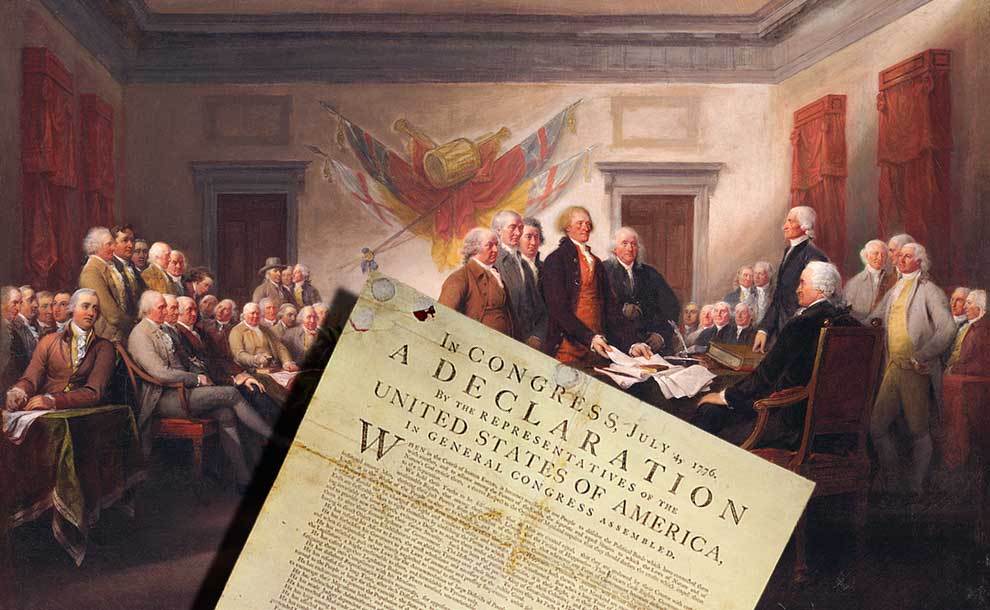
American Stories: When in the Course of human events – Part 10

As I have been researching and writing these stories I have been deeply moved by how each patriot started as well as how they finished their respective journeys in life. I am of the philosophical camp that it is not how you start, it is how you finish. However, the exercise of researching and writing these stories has led me to remember the primary message of the following song. I guess we are never too old to be reminded of a valuable lesson.

Y’all probably did not know that this old gray hair has enjoyed some of TobyMac’s works through the years, especially when he was in DC Talk. I have never been a fan of secular rap or hip hop, but music dominated, poetic rap of Toby and a few other Christian artists is a different story. I also especially enjoy the works of (David) Crowder with the earthy raw emotion in his words, observations and musical style. I am big fanboy of him, however, I enjoy many styles and genres of music. This song may or may not be familiar to you, so I am happy to provide this official lyrics version.

As we have dug into the lives of these incredible patriots I have been struck by the intention and commitment to doing what they individually believed was right for all colonists no matter the cost. This also was expressed in the behavior and support of their wives and families. They were globally focused on the greater good and not just on themselves and their families. Some seemed to throw all caution to the wind and attack the prospect of independence and freedom from the chains of oppression. Others sought compromise and accommodation until they were boxed into corners and forced to choose. All seemed to relish the opportunity to give their input and insights while serving in the governance of assemblies and congresses. They sensed they were playing a part in something much bigger than themselves and spoke of it in their letters and journals. When it became obvious to most that it was time to change history; all of the signers found consensus and were ready to accept whatever fate awaited them. They walked to the table to sign with solemn minds and hearts.

Fellow Christian – don’t you just love it when the Lord implements His plans and you get to play a part in it? This American Experiment was more than just a bunch of pizzed off rebel colonists. Something that grand developed from people who were of a similar ancestral lineage with linked family bonds who were placed under the thumbs of the leaders of the world’s great superpower of the day. Where have you seen that before, Christian? Oh yeah, in stories of struggle throughout the Holy Word. Fast forward to the past decade here in America. Can you see and feel the parallels, interconnections, etc. with history in America today?

The song speaks to that dash between birth and death that we see on many tombstones. You will read of the personal history, the dash, on one such tombstone below concerning a Declaration signer. It leads us to see that the time we spend in the dash is about the choices we make. It addresses how we spend that time has eternal consequences. We should choose wisely what we do and not waste it. Our time may not be one of a bitter war or strife, but it will always be a time of reaching the lost and hurting. Many God fearing men and women in these stories went about doing just that even when some had much safer options. We are the beneficiaries of their choices. They modeled what we know from John 15:13, which says, “Greater love has no one than this: to lay down one’s life for one’s friends.” (NKJV)

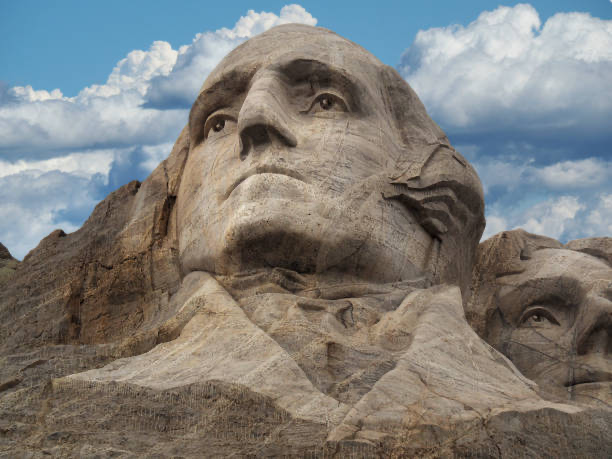
I am eternally grateful for what those great founding fathers and their families did with their dashes. I have peace in doing these stories because I now see how the details of history relate to what God planned for America. To think that approximately 250 years later we are in the same camp as the Sons of Liberty and working out our freedom and liberty as AMERICA FIRST MAGA movement patriots is humbling as well as inspiring. Thanks to our collective commitment and response, our George Washington is in the White House saving and helping America prosper along with his patriot Vice President, who is performing the modern role of John Adams. While Thomas Jefferson, Benjamin Franklin and others were building the rep and security of America in other lands, so is our equivalent Secretary of State and various cabinet members. The revolutionary warfighters stayed on the alert and protected the homeland against all enemies foreign and domestic, just as ours today under the leadership of a man who has been there and done that with honor and distinction on the battlefields as well as with a man who has defended our borders from illegals invading for decades.

We may even have advantages the patriots did not have with a hugely wealthy and successful man in a Darth cap with incredible vision, talent and intelligence who can slice through those who create their own fiefdoms within our central government. This man can deliver a modern, fiscally responsible operational system of government unlike any other on the planet that by its presence will prevent much of the corruption and fraud that we have endured for so long. He is doing what always must be done to starve the evil doers – follow the money and cut off the flow.

We also have men and women with steely resolves leading the work to root out those alien criminals and terrorists who would take us down that were invited in by past incompetent and even demonic administrations to infiltrate our ranks. This restoration that will lead to The Golden Age for America is being accomplished with perhaps the greatest cabinet and patriots backing any POTUS in history since the Declaration was signed. All desire to be a part of something bigger than themselves and we can all feel the success that awaits. They are ready and willing to protect and provide for America with the personal time they have left within their dashes, so that we can make the most of the time left within ours and all future Americans. They have been chosen for this great moment in history.

It is now time to discuss a couple more great founding fathers who accomplished much during their dashes.

George Walton

This signer was supposedly born in 1741 in Prince Edward County, VA, although it is not known with certainty and guesses range from 1740 – 1750. George Waltons education was informal and for the most part he taught himself. Both parents died when he was young, so he was adopted by an uncle who did not believe in schooling. As a result he apprenticed as a carpenter under that uncle. In 1769 after realizing he had an interest and the intelligence to do so, he moved to Savannah, GA to study law. He was later admitted to the bar in 1774. It is in this independence infused area that he joined the patriot movement. He spent many years in the state in its development as well as in a political feud with the infamous Button Gwinnett that we previously discussed.

In the lead up to the Revolutionary War he was elected Secretary of the state’s Provincial Congress and President of the Council of Safety. He became a delegate in the second Continental Congress that led to him being a Declaration signer. Somehow in the period he found time to marry Dorothy Camber and they had two sons together.

After the Declaration signing he entered into the Revolutionary War as Colonel of the First Regiment Militia in the state. He was hit in the leg by a musket ball, thrown from his horse and taken prisoner in the Battle of Savannah while serving under Gen. Robert Howe. Unlike some of his fellow colonist prisoners throughout the war, he was allowed to heal before being sent to Sunbury Prison. He was later released in 1779 in a prisoner exchange.

As a political ally and friend of Lachlan McIntosh he was involved in controversy his entire political career. He was even censured by the state legislature in 1783 for his role in the famous duel that resulted in Gwinnett ‘s death, but never formally charged. By this point he was considered to be one of the most competent and successful lawyers in the state. He was used to negotiate a treaty with the Cherokees in TN as well. He was requested to assist at the U. S. Constitutional Convention with its preparation, but declined due to all he was doing for the state.

None of the previous conflicts with Gwinnett prevented him from being named as the Chief Justice for the state that same year. He served in that role until 1789 while becoming a Presidential elector. He was also the acting Governor of the state in 1789 – 1790. He served as Superior Court Judge starting in 1789, which continued until 1798. In 1795 he served as a U. S. Senator on an interim basis.

He retired to the Augusta area and passed away in 1804. Though he owned a plantation, he had no slaves. This was possibly due to his upbringing as well as his understanding that all people were created equal. He was an abolitionist in a period and region where it would least be expected. Only one son survived from the marriage to Dorothy; George, Jr. He became the first Secretary of the Territory of Florida as well as the acting Governor. He was of great comfort to his father during his later years. Dorothy lived in Pensacola after her husband’s death and she passed away in 1832. Walton County, GA is named after him.

From an Augusta Press article of 10/14/21 by Scott Hudson:

In the center of Greene Street and across from the Municipal Building in Downtown Augusta sits an obelisk known as the Signer’s Monument. Underneath it lies the graves of Lyman Hall and George Walton, two of the three signers of the Declaration of Independence from Georgia.

Less than a mile away from the Signer’s Monument is Meadow Gardens, Walton’s home. The modest home is located near the corner of Walton Way and 13th Street. It has been preserved and holds weekday tours.

George Walton lived through very difficult, humble beginnings. He was self taught and driven to both learn and do his best for his country. He was a doer, not a public speaker known for his inspiring quotes. He gave his entire life to the independence movement as well as on the battlefield. After that he threw himself into public service and the law. As a result Georgia and America benefitted greatly. We have much to appreciate about this great American patriot.

John Witherspoon

With the previous discussion in Part 9 about Stockton and son in law, Rush, meeting with John Witherspoon in Scotland pre war, it is probably time to review him as a Declaration signer. John Witherspoon was born in 1722 or 1723 in Gifford, Scotland. His parents were James Witherspoon and Anna Walker. His mother taught him in the early years and he was able to read by age 4. She used the Bible and later in his youth he was able to recite the New Testament. His father was a minister of Yester Parish and very involved in the General Assembly. His mother came from a long line of ministers as well. The couple had six children.

John was so advanced in his education and in the understanding of English, Latin, Greek, French, the classics and mathematics that he was sent to the University of Edinburgh at age 13. By age 16 he had a Masters of Arts with a thesis in Latin. By age 20 he received a Doctor in Theology and was licensed to preach. At age 22 he received his first parish. Three years later he married Elizabeth Montgomery. They had nine children with five surviving that traveled with them later to the colonies.

When Dr. Samuel Finley died as President of the College of New Jersey, Witherspoon was solicited for the role by Stockton and Rush among others as mentioned previously. He had been requested to do so years before and declined. This time he was persuaded and they left for Philadelphia in 1768. He was successful almost immediately. He grew endowments, improved the curriculum, and helped bring peace within the Presbyterian Church. By 1770 the students began advocating for independence and Witherspoon agreed, including stating this belief in a commencement address. He was soon chosen to represent the county in the Provincial Assembly and went on to be chosen as a delegate to the Continental Congress.

When others in the period waffled on independence by suggesting the time was not ripe to do so, he replied to one such complainer, “Not ripe sir, we are not only ripe for the measure but in danger of rotting for the want of it”. Not long after the Declaration signing and the war increasing, the college was taken by the British. They proceeded to occupy the campus, burn down the library, and destroy his documents and personal writings. The next year he lost one son in the Battle of Germantown.

He stayed with the Continental Congress until 1782. He helped reorganize the Board of Treasury along with performing other duties that utilized his expertise. Prior to that in early 1778 he had begun the difficult rebuild of the college and was able to restart classes later in that year. As the war ended Witherspoon became more active than ever. He was in the voting delegation that approved the Constitution for NJ. He was a key contributor to the newly organized, independent Presbyterian Church in America. His contributions as a pastor, educator and patriot brought great recognition to Princeton.

In 1789, his wife passed away. A month later he turned his attention to involvement in the NJ Assembly. He soon had responsibilities that included prisoner treatment, pensions of invalids, public debts, promotion of religion and morality, divorce, paper money, vital statistics and promotion of manufacturing. The seemingly odd thing was he kept two slaves, although as he aged he turned his attention toward abolition and the systematic acclimation of slaves into society as free men. It seems that a number of his descendants were involved in Confederate causes in the years that followed. Witherspoon believe as Charles Carroll did, that the nation was heading toward abolition anyway. He preferred the slave be assisted into freedom and the world that laid ahead rather than cutting them loose to make a go without preparation and acceptance by society.

Apparently, Witherspoon was not done with living at this point, so at age 68 he married 24 year old Ann Marshall Dill. The couple had two children, one of whom died a week or so after birth. It was not long before he lost his eyesight and passed away in 1794.

He left us with many memorable quotes, a handful of which are below:

It is only the fear of God, can deliver us from the fear of man.

Never rise to speak till you have something to say; and when you have said it, cease.

Those who wish well to the State ought to choose places of trust men of inward principle, justified by exemplary conversation.

The people in general ought to have regard to the moral character of those whom they invest with moral authority either in the legislative, executive, or judicial branches.

Never read a book through merely because you have begun it.

Wisdom. Words for all of us to take to heart just like they were in that day. The following is inscribed on his tombstone in Princeton Cemetery, a description of his dash.

Beneath this marble lie interred
the mortal remains of
JOHN WITHERSPOON, D.D. LL.D.
a venerable and beloved President of the College of
New-Jersey.
He was born in the parish of Yester, in Scotland,
on the 5th of February, 1722, O. S.
And was liberally educated in the University of Edinburgh;
invested with holy orders in the year 1743,
he faithfully performed the duties of
his pastoral charge,
during five and twenty years,
first at Beith, and then at Paisley.
Elected president of Nassau Hall,
he assumed the duties of that office on the 13th of August, 1768,
with the elevated expectations of the public.
Excelling in every mental gift,
he was a man of pre-eminent piety and virtue
and deeply versed in the various branches
of literature and the liberal arts.
A grave and solemn preacher,
his sermons abounded in the most excellent doctrines and precepts,
and in lucid expositions of the Holy Scriptures.
Affable, pleasant, and courteous in familiar conversation,
he was eminently distinguished
in concerns and deliberations of the church,
and endowed with the greatest prudence
in the management and instruction of youth.
He exalted
the reputation of the college amongst foreigners,
and greatly promoted the advancement
of its literary character and taste.
He was, for a long time, conspicuous
Among the most brilliant luminaries of learning and of the Church.
At length,
universally venerated, beloved, and lamented,
he departed this life on the fifteenth of November, 1794
aged 73 years.

John Witherspoon made his mark on America that will long be remembered especially as a patriot and leader of what became Princeton University. He laid a foundational building block for education and faith that has stood the test of time. He was a great American patriot.

Conclusion

I will stop here with this part. The lessons learned appear profound. We find the dash on every tombstone represents the results of the breath God gives all of us. We find that with the Declaration of Independence signers that they gave all for freedom and liberty. None were perfect men, they all had feet of clay just like all of us today. Yet, they allowed themselves to be used by the Lord to achieve what we now experience despite all of the hardship and strife.

With Walton and Witherspoon we see two very different men and a study of contrasts. One was raised in hardship, not even permitted to experience the love and care of parents for a time due to life and death getting in the way. He was self taught by his own curiosity and intelligence to achieve. He had the internal fortitude to take on the challenges of his life and overcome while finding meaning for his existence.

The other was raised in plenty and of good repute. He experienced the benefits of societal standing and parental love and care. He learned the value of his Christian upbringing and threw himself into learning all he could as quickly as he could with the religious and educational opportunities that were made available. He achieved at an incredible pace and was placed in positions of trust in his native Scotland as well as later in America.

When it came time to walk to the table to sign, they both did in solemn agreement and despite their very different journeys. They both did so knowing it could result in their deaths and harm to their families and communities. How is it that an orphaned southern colonist boy who grew up hard in GA and a Scottish born boy brought into a world of privilege who immigrated to America to restore a college in New Jersey, could equally share legacies as great American patriots? That is our shared American legacy. Both were needed, both answered the call, and both were honored to serve all of the citizens and as a result, all of us.

The hand of God was on display then and is now. We need to hear him and respond. As Isaiah said in Isaiah 6:8, “Then I heard the voice of the Lord, saying, “Whom shall I send, and who will go for Us?” Then I said, “Here am I. Send me!” (NASB)
Dear KMAG: 20250310 Trump Won Three Times ❀ Open Topic


Joe Biden never won. This is our Real President – 45, 46, 47.

AND our beautiful REALFLOTUS.


This Stormwatch Monday Open Thread remains open – VERY OPEN – a place for everybody to post whatever they feel they would like to tell the White Hats, and the rest of the MAGA/KAG/KMAG world (with KMAG being a bit of both).

And yes, it’s Monday…again.

But we WILL get through it!

We will always remember Wheatie,

Pray for Trump,

Yet have fun,

and HOLD ON when things get crazy!


We will follow the RULES of civility that Wheatie left for us:

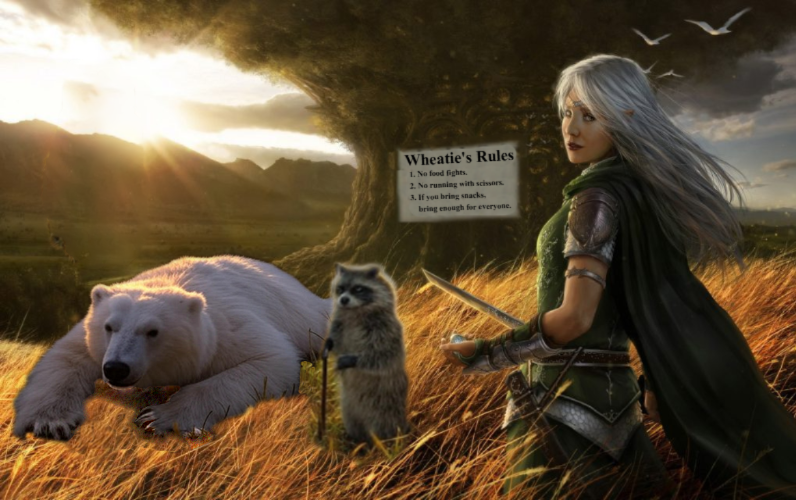
Wheatie’s Rules:

  1. No food fights.
  2. No running with scissors.
  3. If you bring snacks, bring enough for everyone.

And while we engage in vigorous free speech, we will remember Wheatie’s advice on civility, non-violence, and site unity:

“We’re on the same side here so let’s not engage in friendly fire.”

“Let’s not give the odious Internet Censors a reason to shut down this precious haven that Wolf has created for us.”

If this site gets shut down, please remember various ways to get back in touch with the rest of the gang:

Our beloved country is under Occupation by hostile forces.

Daily outrage and epic phuckery abound.

We can give in to despair…or we can be defiant and fight back in any way that we can.

Joe Biden didn’t win.

And we will keep saying Joe Biden didn’t win until we get His Fraudulency out of our White House.


Wolfie’s Wheatie’s Word of the Week:

wallflower

noun, adjective

  • a color which is yellowish red
  • an attribute of being colored yellowish red
  • a light purple color marketed by Sherwin-Williams
  • a genus of flowering plants, Erysimum, in the family Brassicaceae (mustards)
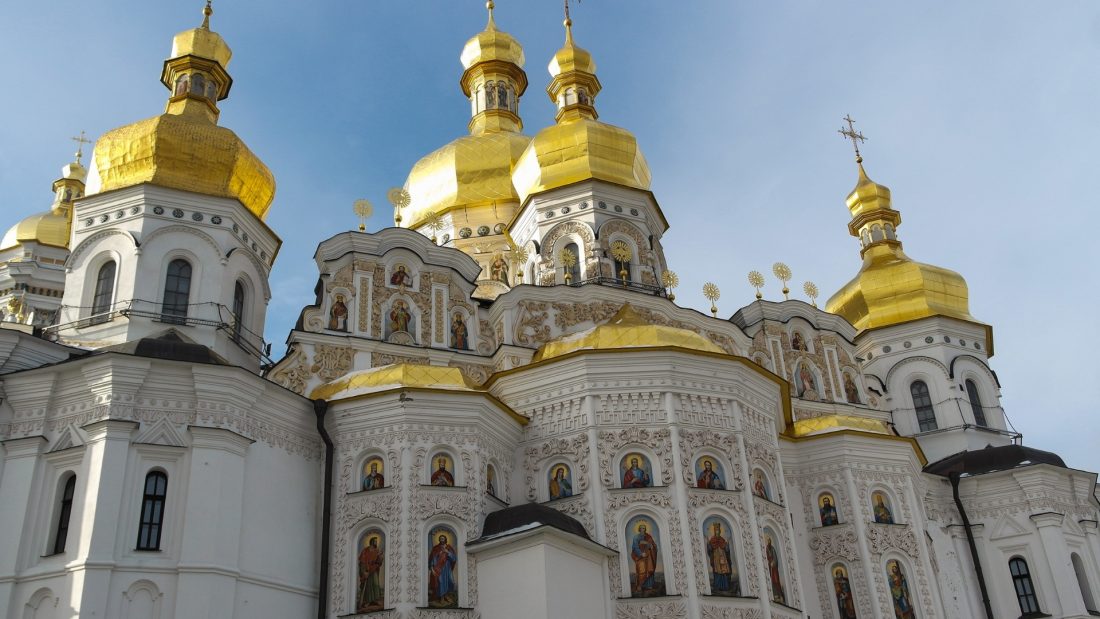
  • a shy, unassuming person

Used in a sentence

Whether wallflower is yellow-to-red or purple seems to depend upon the circumstances.

Shown in a picture

Shown in a different picture

But wait! Some wallflowers show the other wallflower!


MUSIC!

Wallflowers. Just can’t get away from them!

But wait! There’s moar!


THE STUFF

So what do you think about going to Mars? I can tell you, the crowd at Trump’s inauguration was incredibly enthusiastic. I was cheering BIG TIME. But let’s look at it more critically – both sides of the question. We’ve learned from Trump – always cover the downside. Listen to the critics, and think about what they say.

Still enthusiastic about Mars? I am! Ask me why!

Just sayin’!

And remember…….

Until victory, have faith!

And trust the big plan, too!

And as always….

ENJOY THE SHOW

W


American Stories: When in the Course of human events – Part 9

Since I brought up the subject of Shays’ Rebellion in Part 8, we might as well dig into the subject briefly. Most of us were never educated in school about the truth that not all of our citizens got along after defeating the British. Everything did not just become hunky dory within our nation’s boundaries. At times, the independent and contrary nature of some could not be appeased or led into compromise easily. Shays’ Rebellion is one of those situations that was brought on by real injustice. It dealt with the unequal and unfair administration of the law within the citizenry. The law and economic system themselves were still in development. As a result ethical issues that had gone unresolved caused great tension. It was clear that there was still a lot of pent up anger and bitterness that carried over from British oppression due to the presence of the loyalists still living and controlling governments and businesses within the borders. It led to violence and angry confrontations at times.

In other words, people being people.

Shays’ Rebellion

Rather than repeat the words of others, I have provided two good links. I urge you to read them and the third link further down in the body.

https://www.battlefields.org/learn/articles/shays-rebellion

https://www.thoughtco.com/shays-rebellion-causes-effects-4158282

As things generally work, we can now go back and see that without the rebellion, there may never have been the compromise and reconciliation that followed. Lessons learned in central national governance and the states paying back accrued war debts led to the termination of the Articles of Confederation instead of amending same within the same Convention that later produced the U. S. Constitution.

Whether this last point was a wise path to follow or not from my viewpoint will be addressed in a future part. But as a spoiler, quickly throwing the baby out with the bathwater may not have been the best of ideas. However, the Federalists were hellbent on getting it done the way it eventually did.

Many American citizens, primarily farmers, lost their property and assets unfairly in deference to those who had the upper hand – the merchants, bankers and wealthy who had the support of government leaders and many politicians. The truth is that few states had the capacity to pay wages that were past due to members of the Continental military during the war. The new federal government did not have the coin either. Yes, it is factually correct to state that the new federal and state governments of that day welched on their legal responsibilities to pay war participants what they were due. In Massachusetts (Taxachusetts) this led to many losing their farms and assets to debtors who were supported by the government and judiciary. To get a feel for how the fighters were to be compensated read the summary link below.

https://www.battlefields.org/learn/articles/soldier-pay-american-revolution

Note that Washington and Morris paid a lot of the wages during the war out of their own wealth at one critical point. Many of the wealthy founding fathers did likewise.

The situation in Massachusetts was the stuff that the Crown and Parliament would do that the same people in authority on the winning side of the war and this rebellion had fought against. That is the ugly truth that is glossed over frequently by historians and certainly our federal government in its records and archives.

It sucked big time.

Walk in the shoes of the common man for a time. You are a simple farmer in that patriot inspired era and region. You risk your life, family, property, community – everything – to a belief that the colonies should seek independence from their oppressors who taxed everything that moved and treated colonists as their lessers. You endure great hardship, lose friends and family, and have your home destroyed by the vengeful Brits. Adding to the misery you never receive the full wages the state and your colonial government promise to pay for your voluntary service to your country; while newer recruits later in the war receive a larger bounty than you did to sign up.

But you let it all go because you now live in a free country that is not taxed to death. You really have no way to take on the authorities to receive your back pay anyway.

You soon learn that you have been put on the clock to pay merchant debts as well as accrued colony/state taxes from the past war debts are still due. While working hard in your return to private life and trying to make a living on your farm, the politicians are busy passing laws to tax you at high rates to pay back state war related debts as well as other commercial debts to the wealthy merchants. This eventually causes the loss of your property because you have no funds to pay as well as dealing with the ensuing family hardships. Adding more injury to the insult, not only do you lose your farm to foreclosure, but you are sent to a filthy, dungeon like debtors prison for failure to pay.

You might become more than a little angry over it all as we would. Pizzed may be a better word.

The war debts and bills the merchants and governments owed to others were real. But so was the back pay that was owed to the military members who actually fought the war and enabled those merchants to stay alive and in business. Pensions for widows and disabled veterans were given by the new government and it was the right thing to do. Not paying all the other men who actually fought the war what they were due was a huge violation of trust.

You become aware that the state government had the ability all along to forge a compromise to provide relief to you and the people as well as assist the merchants by amending the terms of the debt repayment. All they had to do was print more money, pay you the wages from the war and reduce the onerous taxes. This would have temporarily increased inflation as we know, which the merchants fought against – caring only for themselves and not for the people that saved their bacon. I guess the mafia types the government borrowed the war expenditures from did not agree to this compromise. They created a situation that allowed the wealthy predators to bottom feed on the foreclosed properties of their lessers. Their former British oppressors would be proud (and were) of their exploits since many were Brit loyalists, still owing their allegiance to the Crown that had been defeated.

We would understand it this way today: Who needs a destructive wildfire when you can just use excessive war debt and taxes to accomplish the same evil results? It is a parallel path with what Clinton/Soetoro/Biden had America following before MAGA and America First saved the day. Create a debt quagmire through war and other means that cannot be repaid that causes misery and huge wealth transfers to the already wealthy and dictators. A tale as old as world history.

Never forget that truth, fellow patriots.

Back to the story. In response to the highly volatile conditions and unrest the state government did nothing of substance to assist and permitted the destruction of their own citizens and former war fighters. They revealed who they were. Most Democrats of today would be very proud of them.

However, back in those days it led to Shays’ Rebellion and other conflicts in the new nation. In these days it led to J6 and November 5, 2024. If there is anything we have learned as America First MAGA movement participants it is that things are not as they have been represented by those with nefarious agendas.

As we learn from the linked and other accounts, the vast majority of rebel participants received amnesty or were pardoned to restore order. Which was an obvious acknowledgement by those in authority that the participants had valid reasons to do what they did. The Governor (Bowdoin) and Lt. Governor (Lincoln) who failed the people were tossed out of office. The new legislature cut the taxes and placed a moratorium on debts. This led to better economic conditions and lessening of unrest.

Knowing this, does it help explain why the vote was so close to approve the Constitution after the Massachusetts Compromise was reached?

What should have happened immediately after the war ended, finally happened after the common man rose up once again against their new oppressors. Those actions brought an end to this unfortunate chapter in American history.

However, lemons were turned into lemonade when Shays’ Rebellion and other significant rebellious events happened throughout the former colonies who had become states. People with various interests and beliefs realized they needed to reunite together to help the young republic succeed. Resolving the conflicts and seeing the need to create more unity led to this revered leader coming out of retirement as the new U. S. Constitution was enacted.

Our thanks go to Daniel Shays and others who fought for what was right and good for the common man just as our appreciation does for the America First MAGA patriots of today. Time to discuss more signers.

Richard Stockton

This son of Quaker and wealthy landowner, John Stockton, was born in 1730 in the Princeton, NJ area. Richard Stockton attended Samuel Finley’s Nottingham Academy and went on to graduate from the College of New Jersey (now Princeton U) at the age of 18. He began the study of law under noted attorney, David Ogden, and was admitted to the bar in 1754. He was highly respected in the profession. He married his wife, Annis Boudinot, a noted poet and the sister of Elias Boudinot, a well known statesman of the colony. They had six children together. One of his daughters, Julia, later married Declaration signer Benjamin Rush. Through the years, Stockton became a close friend of George Washington. He was physically tall, considered handsome and very well spoken within society. When touring England, Scotland and Ireland in 1766, he was invited to attend events with the King and Queen, who were impressed with his high character and abilities.

He toured Scotland and was invited to visit with the noblemen and society. During those times he and his future son-in-law Rush, who was a medical student in Scotland at the time, met with Rev. John Witherspoon to try to convince him to become the President of the College of New Jersey, a position he had previously declined. He subsequently agreed and came to the colonies to lead the school. Ten years later, Witherspoon stood with Stockton and Rush as they all signed the Declaration of Independence.

Back in the colonies Stockton had little interest in politics and government for many years.  Per Wiki he once wrote, “The public is generally unthankful, and I never will become a Servant of it, till I am convinced that by neglecting my own affairs I am doing more acceptable Service to God and Man.”

In 1768 he was appointed to the royal executive council of New Jersey and later to the Supreme Court. As the independence movement continued to gain momentum, in 1774 he drafted a plan for self rule of the colonies while still owing allegiance to the Crown. It was rejected and Stockton faced a choice he had to make. He chose the colonies and independence. He was deeply moved by the arguments of John Adams when it came time to approve the document and sign it. Rather than holding offices offered to him back in NJ, he chose to remain active and a member of Congress. He was sent along with fellow signer, George Clymer, to inspect the northern Continental Army for its needs. They reported back to John Hancock of the dire need for nearly everything. He went on to actively solicit basic clothing and shoes that were severely needed for the warfighters, some of whom were barelegged and barefoot.

He learned of the British invasion of NJ and quickly went home to move his family about thirty miles away. However, he was still captured and treated horribly. He stayed locked in leg irons without sufficient clothing and food in the dreaded New York City’s Provost Prison where 12,000 men died as well as on nearby prison ships. After George Washington became aware, he protested his treatment to British Gen. Howe. Stockton was given a parole as long as he did not participate in the war and was released. He was too sick to participate anyway. He was severely malnourished and near death from which he never fully recovered. When he arrived back at his home, he found it had been plundered and nearly destroyed by Gen. Cornwallis and his men who had stayed in the home during the war. He survived only through the personal assistance of family and friends. Over time he became strong enough to return to work some in his law practice and taught a couple of students. However, he died in 1781 before being able to experience the end of the war and our nation’s independence. Even his death was excruciatingly painful as he had developed a lip cancer that grew into his throat before he passed.

Stockton’s wife, Annis, continued in correspondence for the rest of her life with their friend, George Washington, including writing a poem about Cornwallis’ surrender to Washington. An excerpt of Washington’s letter of appreciation stated, “…This address, from a person of your refined taste and elegance of expression, affords a pleasure beyond my powers of utterance, and I have only to lament that the hero of your pastoral is not more deserving of your pen; but the circumstance shall be placed among the happiest events of my life. I have the honor to be, madam you’re most obedient and respectful servant, G. Washington.” 

The respect for the greatness and commitment of Richard Stockton was exhibited by a statue of him being placed in Statuary Hall in the Capitol Building in Washington, DC. He was one of only six signers so honored. His home of Morven became the New Jersey Governor’s Mansion from 1954-1981. His eldest son went on to become a NJ senator and four generations of Stockton’s served in Congress.

Again, a man of wealth and high position in society who could have avoided the personal destruction that he lived through by simply staying uninvolved, gave his all for America and freedom for all of his countrymen and all of us who have followed. He deserved far better than he received. He was the definition of an American Patriot.

James Smith

James Smith was born in Dublin, Ireland in 1719. He and his Presbyterian faith based family immigrated from there when he was ten years old and lived in the Cheshire County, PA. His father became a successful farmer. He was informally educated by local clergy, then educated more at Philadelphia Academy (Penn), and later apprenticed in law under his brother, George. He was admitted to the PA bar at the age of 26. He moved with his brother to the more frontier area of Cumberland County and spent his time surveying. After about five years he moved back to the more populated city of York to practice law full time.

At the age of 41 he married Eleanor Armor and they had five children. With his surveying experience, he was highly recognized in the area for his work with property transfers in his law practice. He invested into a local iron foundry that failed and cost him greatly financially.

As the independence movement expanded, Smith became an advocate. He attended the 1774 provincial assembly and offered a paper on the considerations of the relationship between the Colonies and Great Britain. He recommended boycotting British goods, which he believed would force British merchants to pressure their government to reduce taxes and oppression in the colonies. Later that year he organized a local militia and was chosen its Captain. With the British continuing their oppressive activities, the unit quickly grew to battalion size. The men wanted him to be the Commander, but he declined due to his age (55), preferring a younger man take the role. Even so, most accounts had him serving in action during the war.

He was elected as a delegate to the state convention in 1775 and said the following, “…if the British administration should determine by force to effect a submission to the late arbitrary acts of the British parliament, in such a situation, we hold it our indispensable duty to resist such force, and at every hazard to defend the rights and liberties of America.”

Bold. Very bold.

Smith was considered to have similar beliefs concerning independence as both Adams, Sherman, both Morris, Rush, Floyd, Lee and Patrick Henry. After agreeing to the Declaration’s contents and signing, he returned to York with a copy to read to citizens in the town square. He continued to serve in the Congress and state until 1778. He was elected Brigadier General of the state militia in 1781 and resumed his law practice as the war ended. He worked in the practice until retiring at age 81. He passed away in 1806 at the age of 86. His wife passed away in 1818.

James Smith was another in a long list of devoted American patriot Declaration signers that gave his full commitment, voice and actions to the cause of liberty and freedom.

Thomas Nelson, Jr.

Born in Yorktown, VA in 1738, Thomas Nelson, Jr. was born into Virginia aristocracy and privately educated in England. He graduated from Christ’s College at Cambridge. His parents were William Nelson, a former governor of the state and Elizabeth Carter Burwell, daughter of former acting governor of the state, Robert “King” Carter and the widow of Nathaniel Burwell. He was the grandson of Thomas “Scotch Tom” Nelson who immigrated from England and became a successful businessman and politician.

He returned from England and assisted his father in operating their plantations, which utilized slave labor. He married Lucy Grymes Burwell and helped manage the estates left to her sons with the death of her first husband.

It was soon after his return that he was elected as a representative to the House of Burgesses in 1761 at age 23. He served 6 terms, learning the political ropes. As the state moved more toward independence he was elected to a number of their state conventions preceding the war. He played a role in the development of the state’s Constitution as well as serving in the Continental Congress and signing the Declaration of Independence. He was later forced to take time away to recover from an illness in 1778-1779, only to be elected to return there and in state roles in the years that followed. He was one of the thirteen committee members who drafted the Articles of Confederation. He was known to spend large sums of money as well as make loans for the military to have sufficient ammunition and supplies. He gave so much he had very little when he passed away a decade later.

Nelson was a brigadier general of the lower VA militia and later followed Thomas Jefferson as governor of the state. He was in action in the final siege ofYorktown led by General Washington and his troops in combination with General Lafayette and the French army combatants. It is in this battle that Nelson’s legend was solidified.

Neither the American or French army would fire upon Nelson’s home, the Nelson House, where General Cornwallis had his headquarters. This angered Nelson. He publicly offered five guineas (each had a quarter ounce of gold) to the first war fighter to fire a cannon and hit his home. That was enough to get it done. The NPS has placed two cannonballs in the walls where the home was hit. I assume Nelson paid as he stated he would.

That story is all sorts of patriot awesome! He was a real American badazz!

Unfortunately, in 1781 Nelson’s health took a negative turn that forced him to resign as Governor and was succeeded by fellow signer Benjamin Harrison. His health continued to deteriorate over the next four years. He never recovered from the effects of being in the field and fighting the war. He passed away at age 50 in 1789. Nelson County in VA and in KY were named in his honor. His wife, Lucy, passed away at age 87 in 1830. The couple had eleven children together in addition to the son from Lucy’s first marriage.

Thomas Nelson, Jr. died too soon to receive the full benefits of his work in helping to deliver America its independence. However, he will never be forgotten for his leadership and commitment as a great American patriot.

Conclusion

This has been a story of three extraordinary Declaration signers with three very different experiences and conclusions to their lives. They did it for God, country and family. That was the reward. Their wealth and standing in society were cast aside.

Yet, for every Declaration signer there were thousands of common citizens doing their parts against all odds as well. You will not find their busts, statutes, paintings or honors in places of prominence in American institutions and museums. They just did what they needed to do and returned to their lives and families as unsung American patriot heroes.

There is also the truth that not everything went well or fairly for the participants and early citizens of America.

As they say, freedom isn’t free. However, it is well worth the cost to pursue.

Dear KMAG: 20250303 Trump Won Three Times ❀ Open Topic


Joe Biden never won. This is our Real President – 45, 46, 47.

AND our beautiful REALFLOTUS.


This Stormwatch Monday Open Thread remains open – VERY OPEN – a place for everybody to post whatever they feel they would like to tell the White Hats, and the rest of the MAGA/KAG/KMAG world (with KMAG being a bit of both).

And yes, it’s Monday…again.

But we WILL get through it!

We will always remember Wheatie,

Pray for Trump,

Yet have fun,

and HOLD ON when things get crazy!


We will follow the RULES of civility that Wheatie left for us:

Wheatie’s Rules:

  1. No food fights.
  2. No running with scissors.
  3. If you bring snacks, bring enough for everyone.

And while we engage in vigorous free speech, we will remember Wheatie’s advice on civility, non-violence, and site unity:

“We’re on the same side here so let’s not engage in friendly fire.”

“Let’s not give the odious Internet Censors a reason to shut down this precious haven that Wolf has created for us.”

If this site gets shut down, please remember various ways to get back in touch with the rest of the gang:

Our beloved country is under Occupation by hostile forces.

Daily outrage and epic phuckery abound.

We can give in to despair…or we can be defiant and fight back in any way that we can.

Joe Biden didn’t win.

And we will keep saying Joe Biden didn’t win until we get His Fraudulency out of our White House.


Wolfie’s Wheatie’s Word of the Week:

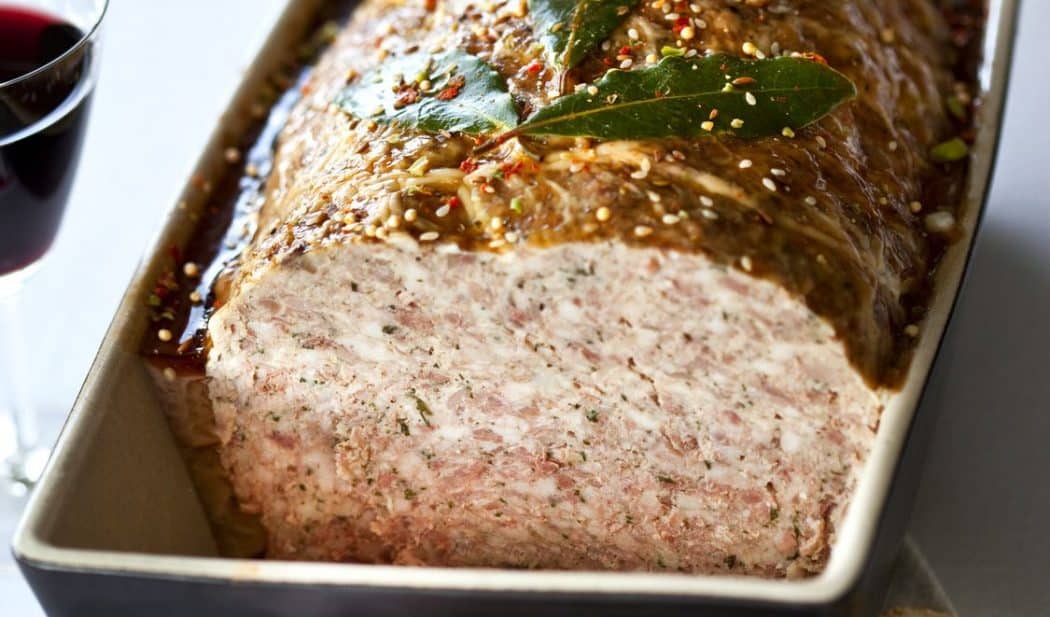
terrine

noun

  • earthenware jar or dish
  • a covered clay pot or mold
  • a traditional French dish
  • a loaf of forcemeat or aspic cooked in a terrine
  • a loaf-shaped, layered, savory dish of meat or fish and sometimes vegetables, cooked in a water bath and served cold

Used in a sentence

She cooked the terrine in an actual French terrine, this time, instead of the Pyrex dish she had always used before.

Shown in a picture

Described in a recipe

Shown in a video


MUSIC!

OK, this is interesting – a mixture of Jefferson Airplane, epic music, and Matrix visuals.

Which led me to another…..

Which led me back to the original. Which seems very strange now.


THE STUFF

Why is AI being used to create fake stories about Elon Musk?

I find this sort of fake story to be much more annoying that AI country music.

OK – let’s wash that away with some reality – the study of “perfect” numbers! (I may have played this topic before, but whatever – let’s play it again!)

Six is a pretty cool number – but 28? And 496? And (2^82,589,933 – 1)?

Just sayin’!

And remember…….

Until victory, have faith!

And trust the big plan, too!

And as always….

ENJOY THE SHOW

W


American Stories: When in the Course of human events – Part 8

Stories about the signing of the Declaration of Independence and the Revolutionary War period would not be complete without a discussion about one of greatest speeches ever made in a public setting by an American colonist. Yet, it was made by a leader who refused to sign the Declaration as he was fearful that signing it or the Constitution would lead to a central government that overrode the rights of the states.

His fears were eventually realized.

Give Me Liberty, or Give Me Death!

Patrick Henry will be forever known as a major influencer and leader for independence. He was born in 1736 and raised in Hanover County, VA. His father was a farmer who was college educated in Scotland. Patrick was educated primarily by his father at home. He tried and failed to be a store keeper and a planter. He finally found employment as a tavern keeper for his father-in-law and began to study law. He progressed to being able to open his own law practice in 1760.

His first major legal case was called Parson’s Cause in 1763. It became a major issue that helped fuel the patriot cause. We might consider it trivial today, but back then it was a big deal. The ministers of the Church of England in VA were paid their annual salaries with tobacco. There had been a drought in the 1750’s that had reduced the crop yields and caused a shortage that drove up prices. So the VA legislature passed a bill that set the salary at two pennies per pound of tobacco rather than at the drought affected current price of six pennies per pound. The clergy appealed to King George III who overturned the law and encouraged the clergy to sue for damages.

Patrick Henry was a somewhat unknown attorney representing Virginia. He delivered a passionate speech and answer to the King’s actions claiming Crown overreach. He left little doubt about his and the state’s position with, “that a King by annulling or disallowing acts of so salutary a nature, from being Father of his people degenerated into a Tyrant, and forfeits all rights to his subjects’ obedience.”

It was clear at this point that Patrick Henry had found his voice and his calling as a patriot. His contemporaries said he spoke with the authority of the Great Awakening pastors from previous decades.

When the Stamp Act was passed on to the colonies that forced them to pay a tax on every piece of paper they used, the colonists reacted bitterly. Henry led the VA legislature into a series of “resolves” that rejected taxation without representation. This led to one of the most famous speeches in American history in March 1775 at St. John’s Church in Richmond in the Second Virginia Convention. The Virginia House was undecided on whether to organize for military action against the encroaching British army. Henry argued in favor of mobilizing for war.

Henry rarely, if ever, utilized notes for his speeches. His first biographer, William Wirt, worked from oral histories to reconstruct a text of Henry’s most memorable and perhaps most influential speech. Below is a link to Wirt’s work and the speech.

https://www.historicstjohnschurch.org/the-speech/

Consider some of the excerpts from the speech below;

“They tell us, sir, that we are weak; unable to cope with so formidable an adversary. But when shall we be stronger? Will it be the next week, or the next year? Will it be when we are totally disarmed, and when a British guard shall be stationed in every house?

“Shall we gather strength by irresolution and inaction? Shall we acquire the means of effectual resistance, by lying supinely on our backs, and hugging the delusive phantom of hope, until our enemies shall have bound us hand and foot?

“Sir, we are not weak if we make a proper use of those means which the God of nature hath placed in our power. Three millions of people, armed in the holy cause of liberty, and in such a country as that which we possess, are invincible by any force which our enemy can send against us.

“Besides, sir, we shall not fight our battles alone. There is a just God who presides over the destinies of nations; and who will raise up friends to fight our battles for us. The battle, sir, is not to the strong alone; it is to the vigilant, the active, the brave.

“It is in vain, sir, to extenuate the matter. Gentlemen may cry, Peace, Peace but there is no peace. The war is actually begun! The next gale that sweeps from the north will bring to our ears the clash of resounding arms!

“Our brethren are already in the field! Why stand we here idle? What is it that gentlemen wish? What would they have? Is life so dear, or peace so sweet, as to be purchased at the price of chains and slavery? Forbid it, Almighty God! I know not what course others may take; but as for me, give me liberty or give me death!”

Score one for truth, again. The liars and deceivers would have Americans today to believe there was no love of the Christian God or of country, that the founders were deists and atheists. They would have you believe our founders and their fellow citizens were the real oppressors, just looking out for their own gain. Your only valid response as a patriot to these lies and attacks are to confront and conquer with truth and facts like those provided here.

Henry was a follower of Christ and a man of faith. A variety of sources confirm the following incidents from his life.

He once said to a neighbor:

“This book [the Bible] is worth all the books that ever were printed, and it has been my misfortune that I never found time to read it with the proper attention and feeling till lately. I trust in the mercy of heaven that it is not too late.”

In a letter to his daughter dated August 20, 1796, he wrote:

“Amongst other strange things said of me, I hear it is said by the deists that I am one of their number; and indeed, that some good people think I am no Christian. This thought gives me much more pain than the appellation of Tory; because I think religion of infinitely higher importance than politics; and I find much cause to reproach myself that I have lived so long, and have given no decided and public proofs of my being a Christian. But, indeed, my dear child, this is a character which I prize far above all this world has, or can boast.”

On his deathbed, Patrick Henry was reported to have said:

“Doctor, I wish you to observe how real and beneficial the religion of Christ is to a man about to die…. I am … much consoled by reflecting that the religion of Christ has, from its first appearance in the world, been attacked in vain by all the wits, philosophers, and wise ones, aided by every power of man, and its triumphs have been complete.”

On November 20, 1798, in his Last Will and Testament, Patrick Henry wrote:

“This is all the inheritance I give to my dear family. The religion of Christ will give them one which will make them rich indeed.”

He died from stomach cancer at the age of 63.

We should always remember that our founders were men who believed that liberty was a precious right that flowed from God. In Patrick Henry’s life God was preeminent, personal and the provider of salvation through His Son, Jesus Christ.

Time to discuss more signers.

Stephen Hopkins

Born in the Providence, RI area in 1707, Hopkins was from a wealthy, prestigious Quaker family. His great grandfather was among the first settlers in the Providence area and his grandfather was an influential politician in the state. His parents were William and Ruth Hopkins with his mother having descended from the famous Whipple family.

He was educated at home into the sciences, mathematics, and literature. He became a surveyor and astronomer. He married Sarah Scott in 1726 and the couple had seven children together, five of whom survived to adulthood. She passed away at age 46 in 1753. He became a justice of the peace at 23 years old and not long after, a justice in the Court of Common Pleas. He was also part owner of a local iron foundry as well as a successful merchant. He was named to the state Supreme Court in 1747 and was Chief Justice for a handful of years before being elected Governor in 1755. He served in that role for 9 of the next 15 years.

He and fellow Declaration signer Samuel Ward were at political odds with one another for years in Rhode Island. Ward was a backer of hard currency while Hopkins supported paper. Hopkins became a major leader of the independence movement in the state when his pamphlet The Rights of Colonies Examined was published and distributed. It addressed taxation and Parliament actions. A link to this is below.

To summarize the essence of its content in one sentence from this publication, Hopkins said, “Liberty is the greatest blessing that men enjoy, and slavery the heaviest curse that human nature is capable of;”. Historian Thomas Bicknell called it “the most remarkable document that was issued during the period preceding the War of the Revolution.” It established Hopkins as one of the leaders of public opinion throughout the colonies.

He and his political adversary, Samuel Ward, were selected to represent RI at the Continental Congress. At age 68 he was the oldest there. Only he and Benjamin Franklin had attended the Albany Congress twenty years before. When it came time to sign the Declaration, he had to hold his right writing hand steady with his left hand as he suffered from palsy. He stated, “My hand trembles, but my heart does not.”

John Adams had this to say about Hopkins,

Governor Hopkins of Rhode Island, above seventy Years of Age kept us all alive. Upon Business his Experience and judgment were very Useful. But when the Business of the Evening was over, he kept Us in Conversation till Eleven and sometimes twelve O Clock. His Custom was to drink nothing all day nor till Eight O Clock, in the Evening, and then his Beveredge was Jamaica Spirit and Water. It gave him Wit, Humour, Anecdotes, Science and Learning. He had read Greek, Roman and British History: and was familiar with English Poetry particularly Pope, Tompson and Milton. And the flow of his Soul made all his reading our own, and seemed to bring to recollection in all of Us all We had ever read. I could neither eat nor drink in those days. The other Gentlemen were very temperate. Hopkins never drank to excess, but all he drank was immediately not only converted into Wit, Sense, Knowledge and good humour, but inspired Us all with similar qualities.

His knowledge and experience in shipping made him invaluable to the naval committee during the war. He was instrumental in drafting naval legislation including rules and regulations for the Continental Navy. His younger brother, Esek, became the commander in chief of the first continental naval squadron in the Revolutionary War. Unfortunately, things did not go well for him in the role due to a series of missteps and misperceptions about his leadership that led to polarization within the Congress and military over his leadership. Despite having the support of John Adams he was forced to resign in January 1778. John Paul Jones who reported to him assumed the role. However, Jones continued to successfully utilize a defensive method Esek Hopkins had used against the overwhelming force of the British Navy.

Poor health led Stephen Hopkins to resign from the Continental Congress later in 1776 to return home where he continued to serve in the state legislature until retiring in 1779. During the years that followed he released a few slaves and provided for others to the point of listing in his will. In some cases he felt it unwise to fully release as he determined they were ill prepared for what would be entailed in doing so.

He passed away at age 78 in 1785. Prior to his death he had helped establish the predecessor school to Brown University having served as the school’s first chancellor from 1764 until the year of his death. He survived his second wife, Anne Smith Hopkins, who had passed away in 1782.

As is the case with many of the Declaration signers, I have only briefly touched on the accomplishments, involvements and personal interconnections of this great Patriot. We all owe him a debt of gratitude even today. The following is inscribed on the west side of the memorial at his burial site,

“Sacred to the memory of the illustrious Stephen Hopkins, of revolutionary fame, attested by his signature to the Declaration of our National Independence, Great in Council from sagacity of mind; Magnanimous in sentiment, firm in purpose, and good, as great, from benevolence of heart; He stood in the front rank of statesmen and patriots. Self-educated, yet among the most learned of men; His vast treasury of useful knowledge, his great retentive and reflective powers, combined with his social nature, made him the most interesting of companions in private life.”

Button Gwinnett

We go from a polished and dignified uniter with great knowledge and wisdom to a man who was a lightning rod for controversy. Button Gwinnett was born in Down Hatherley, England in the 1732-35 range. He was the third of seven children of the Welsh minister, Rev. Samuel Gwinnett and wife, Anne. He was raised and educated there, being baptized at St. Catherine’s Church. He later married Ann Bourne in 1757, the daughter of a greengrocer (seller of vegetables and fruits), an occupation he had apprenticed in previously. They had three daughters together before deciding to leave for America in 1762. They arrived in Newfoundland and soon chose to go to Jamaica. He was not successful as a merchant there so they left for Savannah, GA where he also failed. So he purchased St. Catherine’s Island and a large group of slaves on credit to try to be a planter, an occupation he never really succeeded at as well. However, the associations led him into local politics and the Provincial Assembly.

It was not until 1775 that he became active in the independence movement in the area. St. John’s Parish where his plantation was located threatened to secede from the colony as they valued independence from the Crown versus so many other loyalists in the state. His political rival in the Assembly was Lachlan McIntosh and his biggest supporter was future Declaration signer Lyman Hall. Gwinnett was later appointed to be a delegate to the Continental Congress and subsequently voted to adopt the Declaration of Independence and signed it. He became a candidate to become a brigadier general to lead the First Regiment of the Continental Army, but lost out to his rival Lachlan McIntosh. The decision left him bitter and angry.

He return to the GA Assembly and helped write the state’s Constitution. He soon became Speaker of the Assembly. This led to further tensions between McIntosh as he sought to undermine his rival. When Gwinnett succeeded in having the Assembly approve a measure to attack the British in eastern FL to protect the state’s southern border, it all came to a head. From georgiaencyclopedia.org;

Disappointed in his military ambitions, Gwinnett continued to lead the opposition to the Christ Church Parish coalition, and when his followers gained control of Georgia’s Provincial Congress, they succeeded in electing him Speaker. He played a key role in the passage of the Constitution of 1777 and began to purge the military of officers whom he and his followers deemed less than zealous in their enthusiasm for the Whig cause. This brought him into conflict with Lachlan McIntosh. After the death of Georgia’s president and commander-in-chief, Archibald Bulloch, in February 1777, the Council of Safety appointed Gwinnett to succeed him.

Gwinnett proposed a military foray into British East Florida, a defensive measure that he argued would secure Georgia’s southern border. McIntosh and his brother George (who had opposed Gwinnett’s election as president and subsequently had been arrested for treason) condemned the scheme as politically motivated. The expedition failed, and though he was not elected governor when the new legislature met in the spring of 1777, Gwinnett was exonerated of any misconduct in carrying out the campaign.

McIntosh was furious. He publicly denounced Gwinnett in the harshest terms, and Gwinnett challenged him to a duel. Though each man shot the other, only Gwinnett’s wound proved fatal. He died on May 19, 1777, and was buried in Savannah’s Colonial Park Cemetery, though the exact location of his grave is unknown. Gwinnett County was named for him when it was established in 1818.

Gwinnett left behind a wife and several young children with his death. Gwinnett’s long held hatred of a fellow patriot had led his demise. McIntosh recovered from his wounds from the duel and went on to serve with distinction under George Washington including leading units at Valley Forge. He was later captured in the British siege of Charleston and was a prisoner for two years before an exchange one year before the end of the war. He returned home to his destroyed plantation and lived in relative poverty the rest of his life although he remained active in the affairs of the state until his death in 1806.

Still yet, we remember Gwinnett as a charismatic leader of the Independence movement and his place in history as a backer and signer of our Declaration of Independence. It is notable that both Gwinnett and McIntosh have counties named after them and their families within the state of GA.

Robert Treat Paine

Robert Treat Paine was born in 1731 in Boston, MA. His father was a minister, Rev. Thomas Paine in the Congregational church in Weymouth and mother, Eunice Treat Paine, was daughter of Rev. Samuel Treat. Both fathers of the couple were educated at Harvard College. Robert was the fourth of five children and expected by the family to also become a minister. Both families had storied histories going back to England. In 1730 Robert’s father left full time ministry to also become a merchant. He was educated at Boston Latin School and went on to graduate from Harvard College at the age of 18. For a couple of years he taught school before going to law school in 1755. He briefly served as a chaplain during the French and Indian War.

After completing law school he eventually opened a practice in Taunton, MA in 1761. He went on to be chosen as a delegate to the provincial convention in Boston 1767. He and Samuel Quincy, who was the MA Solicitor General prosecuted the British soldiers involved in the Boston Massacre. John Adams represented the soldiers and was credited with winning the overall cases in their favor. Up to this point Paine believed that the colonists and the British could work out their differences and compromise on the contentious issues. These events removed that consideration from his mind and he became a sold out patriot seeking independence.

Paine was a devout Christian and Congregationalist, although he later followed his church, First Church in Boston, into Unitarianism when they changed. He married Sally Cobb in 1770 and they had eight children together, a number of which went on to graduate from Harvard College.

Paine served two years in the MA General Court, two years in the Provincial Congress and from 1774-76 in the Continental Congress representing the state. He signed the final appeal to the King in the Olive Branch Petition in 1775. He then framed the rules of debate and helped secure gunpowder the following year after signing the Declaration. Leading up to the signing, he was noted for his objections during debates and proceedings. Per revolutionary-war.net, fellow delegate Benjamin Rush called him “The Objection Maker” in reference to his objections to the proposals of others; “He seldom proposed anything, but opposed nearly every measure that was proposed by other people…”

Sounds like he could be a pain in the azz to me. 😂

After the signing and follow up work in the Congress he returned to MA and served in the state legislature before becoming its Attorney General after helping draft the state’s Constitution. At one point he prosecuted participants for treason in Shay’s Rebellion. This subject will be briefly discussed in a future part.

Paine finished his career as a justice on the state’s Supreme Court, serving 14 years. He passed away in 1814 with his wife passing away two years later. We are thankful for the contributions of this devoted Patriot who contributed greatly to the law and fabric of America.

Conclusion

A uniter, a divider and an objector walk into a bar…

And so it was within the congressional hall with three of the signers of the Declaration of Independence. Three very different men with the common purpose of giving freedom and liberty to all Americans.

DEAR MAGA: Open Thread 20250225 ❀ Tuesday Placeholder ❀ Get Smart – Buy a Globe!

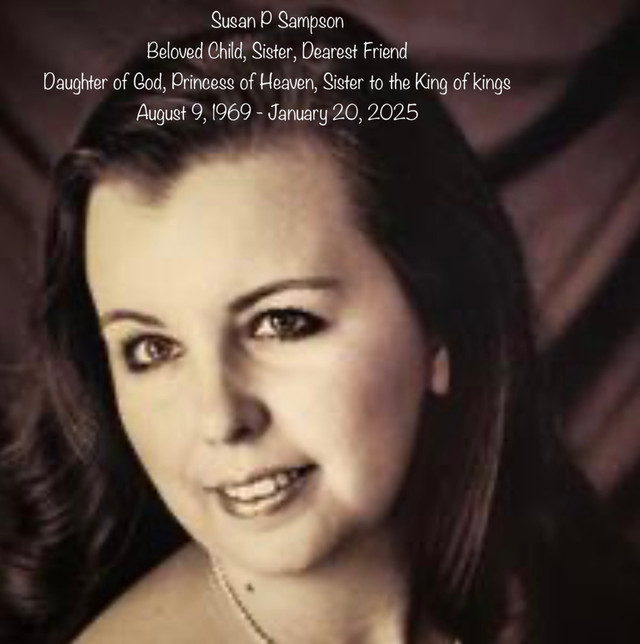
We continue to mourn the untimely passing of our beloved compatriot DePat, known in real life as Susie Sampson, and also as author Patricia Holden.

Until we have a dedicated author for the Tuesday daily open thread, I will be posting “placeholders” like this one, which may or may not be spiced up with additional content.

Gudthots will take DePat’s old Thursday daily open thread.

Please notify me in advance if you would like to post anything in lieu of the Tuesday placeholder. We welcome all content – the topic doesn’t matter.

W


Get Smart – Buy a Globe!

When I was trying to get somebody to take DePat’s Tuesday open thread – meaning THIS thread – and there were no takers, I toyed with the idea of turning this open into a kind of comedy hour. The satire would be brutal – brutal enough that somebody would quickly decide to shut me up by volunteering to take the open. OR SO I HOPED!

I was going to call myself Flat Earth Wolf, and I planned to ferociously but facetiously advocate everything that most people here disagreed with, if not depise. Flat earth, no virus, deep state Trump, woke right – the worse, the better!

Yeah, at first it sounded kinda fun, but then I realized that it would just drive people away. And even I wouldn’t enjoy it.

SIGH.

Eventually, I just decided to use this open to post my own honest opinions about things. The beauty of that is, if somebody disagrees with me, they only have to volunteer to take the open to shut me up – but I don’t have to be funny or interesting, which is work.

I can just spout off and state my piece – and that is exactly what I’m going to do!

Now, as you have seen, I’ve spent a lot of time being “fair” to flat earth, by making sure people who want to post any side of any debate can do so here – and that is still happening. Most of the time, I’m encouraging people to post views that may oppose not only my own views, but everybody else’s, too.

But it’s time to be more….. how shall I say….. “complete” about things.

I try to be “nice” about a lot of “science” that “has issues”. I just try to smile and not pull out any deadly weapons of argumentation.

No serrated blades. No 100-round clips. No razor-studded baseball bats. Maybe a hanky. Yes. A perfumed hanky. Cough. Cough. Pardon me!

WELL – NOT TODAY, AND NOT RIGHT HERE, AND NOT RIGHT NOW.

¿Comprende?

Pardon me for just one moment. I’m gonna be tougher about science. Because we have to be tough. We are up against a very organized force.


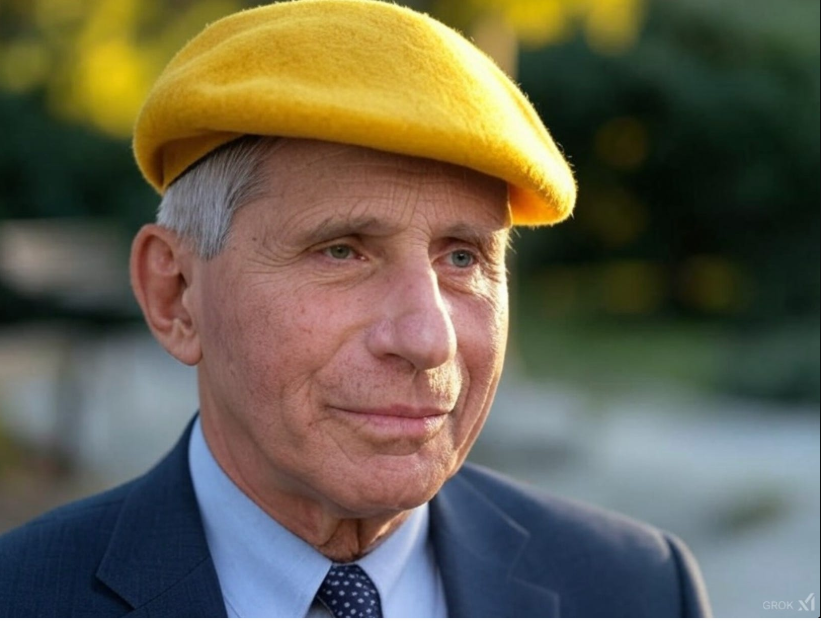
The Yellow Berets, also known as Public Health Service trainees, were a group of physicians who participated in the National Institutes of Health (NIH) Associate Training Program during the Vietnam War era. They were often derogatorily referred to as “Yellow Berets” by supporters of the war who viewed them as avoiding military service.

LINK: https://www.malone.news/p/deconstructing-nih-cdc-and-fda-culture


We are up against some really bad people, who are fully prepared to tell any lie for their purposes. So this opposing army – OUR army – can’t tolerate weak, wrong, and misled science in the forward combat positions. SURE – if you want to work on the base back in safe territory, you can believe all the bad and broken science you want. But if you want to get out in front, you have to subject your own biases to the relentless sharpening forces of TRUTH – and in particular EVIDENCE.

Some things are very certain out in the front lines. One of them is that this planet is a sphere, roughly.

NOW – like most other professional scientists, I haz science skilz in a lot of different areas, because most true scientists are like that. We don’t turn off the science when we walk out of school or job – and our opinions can be particularly relevant in looking at other people’s “expert” stuff, and asking terrible, sharp, venomous questions that the “experts” in those areas are hiding from, or pretending don’t exist.

Much “organization” in current, problematic, sick, “mainstream” science is done to insulate compromised insiders from pesky intelligent outsiders.

Decorum, you know. That’s it. Decorum.

Well, too bad.

BUT we have to hold ourselves to the same revolutionary standards.

Yadig? Of course! What’s good for vaccines, is good for “no virus”, “flat earth”, and many other things.

Globe Earth Wolf has a recommendation that will ultimately test your faith in God, by beating on it. He’s gonna BEAT your armor until it is HARDER, and the first beat-down is that you need to buy an actual globe and STUDY IT.

They’re CHEAP AS DIRT. Most are made in CHYYYNA. But you still have to buy one. I don’t care where it’s made. BUY A GLOBE. And if you already have one, pull it out of the closet, attic or basement.

Buy one at a garage sale, if you have to.

I recommend buying a globe that is at least 12 inches in diameter, and is mounted so that the tilt of Earth’s axis relative to the sun is clearly demonstrable.

Blue oceans which are highly differentiated in color from the land masses are very helpful. Political boundaries are somewhat immaterial, although they do help you LOCATE things more quickly and precisely, and if they are current, the globe can be used to increase your current geopolitical understanding. On the other hand, a vintage globe can be useful for more historical understanding. In either case, I recommend blue oceans, because some vintage globes hide this physically useful truth, by making everything somewhat off-white, sepia and tan, simply to look good on furniture, as opposed to BEATING ON YOUR BRAIN, which is my purpose.

What I am doing is actually a stupid trick from science – a silly secret among the “top men”. And top women, but let’s not get TOO bogged down in DEI.

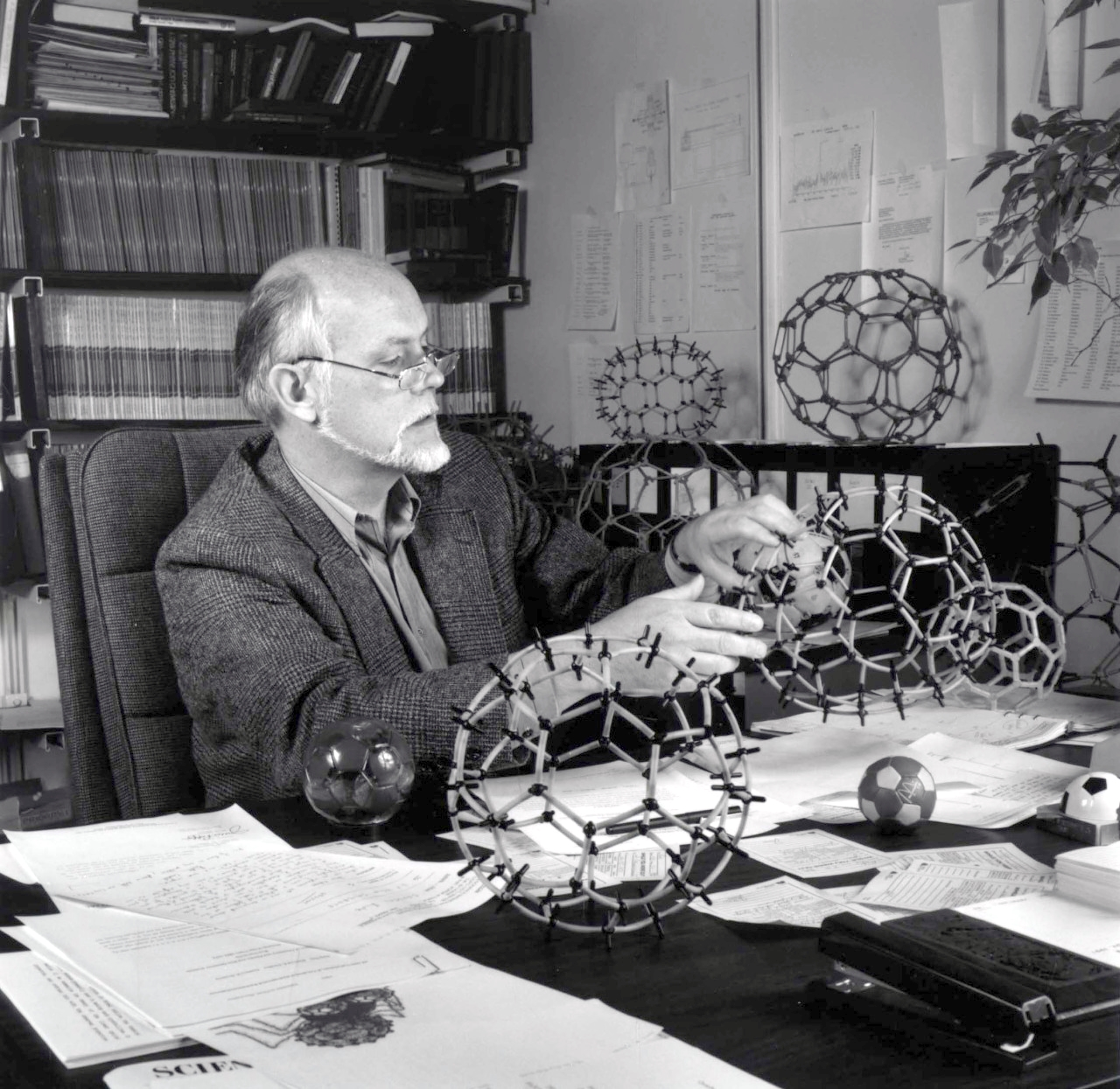
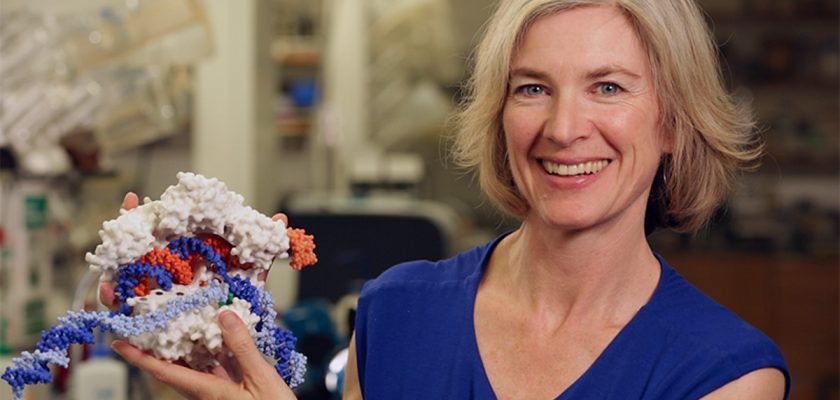
You see, MODELS – simple physical models – are behind so much of the best science and so many of the best scientists. I have watched this throughout my entire life, and it’s hilarious. Good models are what won Watson and Crick the Nobel Dynamite & Bankster Prize for DNA, and Doudna and Charpentier the same for CRISPR-Cas9. Good models are how all the best work on C60/Buckyballs/Fullerenes was done.

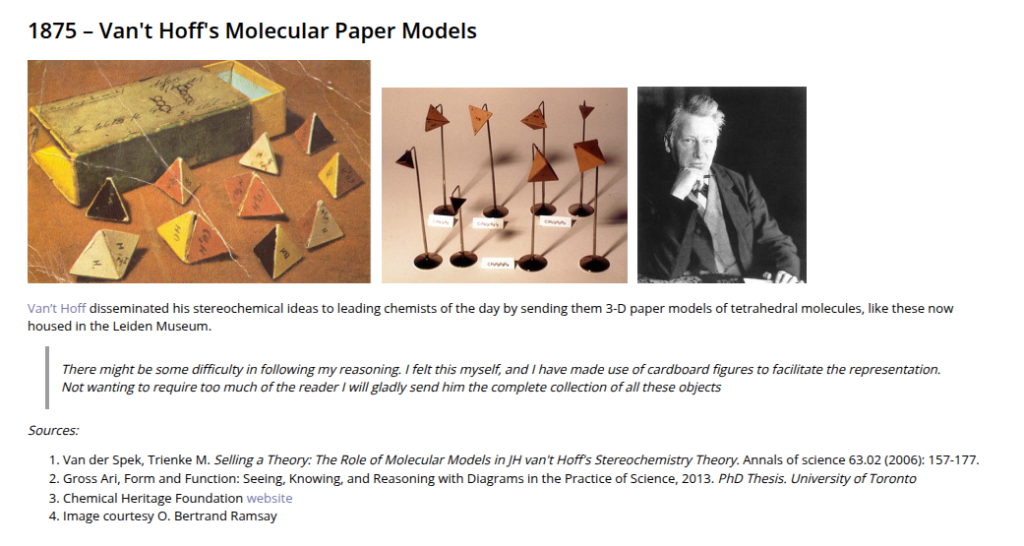
Good models are how stereochemistry was explained in the late 19th century. Good models are – over and over – how organic chemistry and then biochemistry were worked out in the 19th and 20th centuries.

When I went to school with a bunch of scary smart people, I quickly realized that I could use my cheap plastic molecular model set, which I was ironically forced to buy, but wisely chose to actually use, to find all sorts of science which had apparently evaded older students and even our professors for years. Simple, stupid, cheap, plastic and aluminum, “straws and jacks” (not even balls and sticks) was all it took to figure out realities that would ALWAYS show up in chemical behavior, spectroscopy, and quantum mechanical calculations.

I would SHOW PEOPLE this stuff with models – and you could always tell the winners from the losers by how fast they would start using their own “required but never used” model set to figure things out – by how carefully (or stupidly and carelessly) they would cut their little bonds – by how carefully or carelessly they would grab the right “jack” to get the right angles at the atoms – by how strongly they would reason past the limitations of the cheap models – and by how quickly they would spend some of their hard-earned but very limited cash to buy a SECOND or THIRD model set, to make even bigger and better models possible.

I am doing the exact same thing here, to make you smarter – to make YOU a winner.

Because we can’t have too much winning if you aren’t on the same page as Trump, as well as the historical patriots who really did walk this SPHERICAL planet and built this great civilization – and GOD – who made this WORKING BALL on which WORKING LIFE not only EXISTS but THRIVES and then hopefully carries on His PRO-LIFE MISSION of creating and persisting a life-filled and God-loving universe, which is something GOD WANTS BECAUSE IT’S GOOD.

Just my opinion?

Yeah. But still – buy a globe. You will learn so much from it.

I recommend keeping your globe in some place you visit regularly. I stand in front of my globe generally 2-4 times a day, and I probably toy with it at least daily. When we’re having science discussions here, especially after one of Steve’s science posts, I may spend a half hour with that globe.

What am I looking at?

I am looking at seasons. I’m looking at angles of the sun. I’m looking at hours of daylight, twilight, and darkness. But that’s just the beginning.

Most importantly, I’m looking at thousands of tiny details and saying “OH, THAT MAKES SENSE”. Airplane flights. Jet lag. Shipping routes. Planetary distances. Phone conversations. Satellites. “4 AM”. Russia, CHYYYNA, Japan. Burma Shave. TAIWAN. Why Hawaii has always been filled with trouble and bullshit. Look at your globe and every little thing starts to make sense.

This is very critical. When you have a real, true, winning solution in science, like a spherical planet, it just makes all the little stuff WORK. All the thousands of minor details WORK for any scientist who looks at the model, and kicks the tires. This is why Newton is not “replaced” by Einstein – he’s just being helped out around the edges where things get weird.

The problem with “Flat Earth” (and other things I’ll talk about later) is that one big mistake made from an emotionally attractive bias to the past tries (and fails) to upset all the little yet critical stuff other people are doing or have done – meaning millions of honest, good-faith observations. THEN, the same people who break all the little yet critical stuff for everybody else, when confronted, just throw back some non-working, “causes even more trouble”, evasion of an answer, and pretend that they answered the problem, when they didn’t. And that is exactly why nobody takes them seriously, and most people ignore them.

In science, you have to make something that lets OTHER PEOPLE explain or predict stuff on their own, successfully, nearly every time, to actually have a product that sells AND GETS RE-SOLD. Newton did that. Chemistry did that. Electromagnetism did that. Relativity did that. Quantum mechanics did that. Particle physics did that.

When you look at the globe, try to predict how long automobile trips and plane flights take. Look at where islands are. Look at where history happened. Look at where mankind started, wandered, and settled. Look at climate. Look at weather. Look at temperatures. Look at where those temperatures are on the globe.

Right there, the semi-frozen pizza stumbles hard, but the globe, with two poles on one axis, just works like crazy. Everything is nicely – no – perfectly explained – and it’s explained all together at the same time, by a very simple model.

Your actual globe will make you a solid and strong glober. And scientist. And lover of truth.

And then you will become even stronger, because – believe it or not – you will become stronger in FAITH. You will start to see how God makes stuff WORK – and I mean REALLY WORK – simply, powerfully, independently – and that pattern is something you can predict will show up again, and again, and again.

God makes stuff that WORKS. And KEEPS WORKING.

But I’m getting ahead of things.

So buy that globe, or get the old one out, and let’s talk about it. Make that globe WORK for you. Let it help you see the TRUTH.

And as it brings you closer to TRUTH, it will bring you closer to GOD.

W

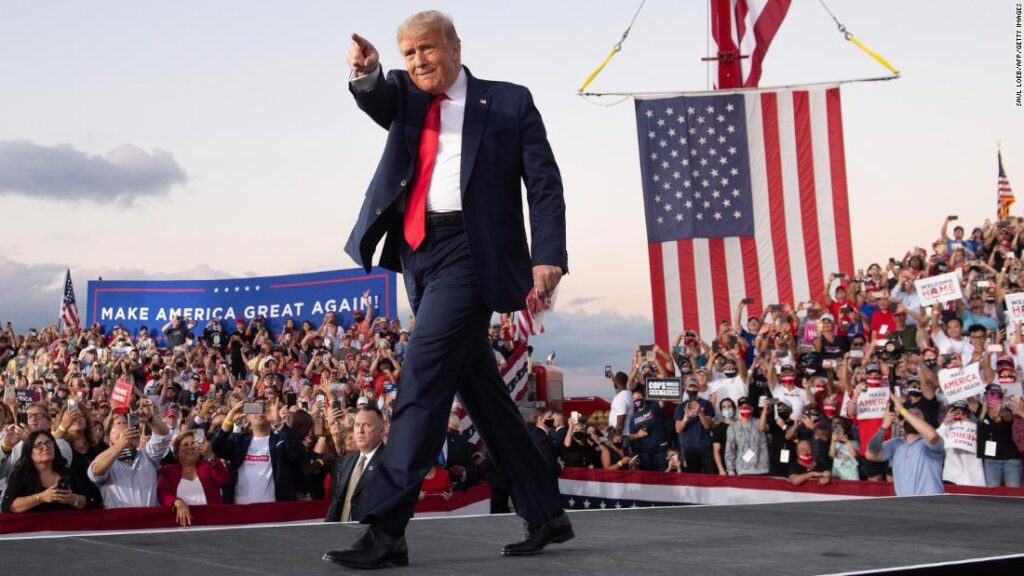
“Is there anything as great as a Trump rally?”

TOPSHOT – US President Donald Trump holds a Make America Great Again rally as he campaigns at Orlando Sanford International Airport in Sanford, Florida, October 12, 2020. (Photo by SAUL LOEB / AFP) (Photo by SAUL LOEB/AFP via Getty Images)

Dear KMAG: 20250224 Trump Won Three Times ❀ Open Topic


Joe Biden never won. This is our Real President – 45, 46, 47.

AND our beautiful REALFLOTUS.


This Stormwatch Monday Open Thread remains open – VERY OPEN – a place for everybody to post whatever they feel they would like to tell the White Hats, and the rest of the MAGA/KAG/KMAG world (with KMAG being a bit of both).

And yes, it’s Monday…again.

But we WILL get through it!

We will always remember Wheatie,

Pray for Trump,

Yet have fun,

and HOLD ON when things get crazy!


We will follow the RULES of civility that Wheatie left for us:

Wheatie’s Rules:

  1. No food fights.
  2. No running with scissors.
  3. If you bring snacks, bring enough for everyone.

And while we engage in vigorous free speech, we will remember Wheatie’s advice on civility, non-violence, and site unity:

“We’re on the same side here so let’s not engage in friendly fire.”

“Let’s not give the odious Internet Censors a reason to shut down this precious haven that Wolf has created for us.”

If this site gets shut down, please remember various ways to get back in touch with the rest of the gang:

Our beloved country is under Occupation by hostile forces.

Daily outrage and epic phuckery abound.

We can give in to despair…or we can be defiant and fight back in any way that we can.

Joe Biden didn’t win.

And we will keep saying Joe Biden didn’t win until we get His Fraudulency out of our White House.


Wolfie’s Wheatie’s Word of the Week:

yoni

noun

  • symbol representing female genitals
  • a stylized representation of a vulva worshiped as a symbol of a goddess, in particular the Hindu goddess Shakti.
  • the symbol under which Shakti, or the personification of the female power in nature, is worshiped
  • The female sexual organs, or a symbol of them, especially as an object of veneration within certain types of Hinduism, Buddhism, and other cultures
  • concept applicable to female vaginal treatments, exercises, massages, and other focuses

As I have said, I don’t back down on ANY word that comes next in my list of “needful words” that don’t get enough usage. HOWEVER…..

Used in a sentence

I’m not going to show all the things I’ve read regarding yoni. I encourage interested readers to explore on their own. And as for pictures…..

Used in a picture

No. Just no. And the good pictures include symbolic representation of the male counterpart, too. Yikes. Interesting, but…..


MUSIC!

LOL! OK – I am simply not going to promote “yoni” music – this is classified as “women’s health” in my world, and even the less “anatomically technical” music videos are likely to be a bit too pagan and new-age for this site.

On the other hand, being only a bit new-age and globalist (“world music”), Greek instrumental and electronic artist Yanni is somebody my father enjoyed during his sunset years, and Yanni’s music brings back good memories of my mother and father enjoying their retirement, so here you go. Twenty of Yanni’s greatest hits.

https://youtu.be/MKaDLtMkn5I

THE STUFF

Flying insects the size of a hawk or an eagle?

OK – this video is actually some interesting science wrapped in click-bait advertising and bad AI narration. The critters aren’t all THAT bad – although they seem pretty nasty by today’s standards.

Bottom line – kinda happy all these bugs got smaller.

Just sayin’!

And remember…….

Until victory, have faith!

And trust the big plan, too!

And as always….

ENJOY THE SHOW

W


PS – Hint about Tuesday’s post – it’s spherical!

Ukraine: Another Playground for Evil

This new post is being created for us to collect newer Ukraine history, background, details on the actors on the stage, corruption, shadow government evil-doings, and so on. There are older, related posts on this site by Daughn, here, and here, and a detailed timeline here.

But for today’s focus, let’s start with this interview of an American lawyer who is deeply involved in working to right the wrongs being done to the good Christians of the region.

Bob Amsterdam lays it all out with both compassion and unusual clarity from his viewpoint. NB: he is a liberal and seems to be conflating “right wing” and Nazism. Wolf would likely want to call them Jazis. Amsterdam would probably have no idea what that could mean.

The effort to right the wrongs is documented at this site: Save the UOC. It certainly seems worthy of our attention and our prayers.

May God show kindness and mercy to His people struggling under the oppression that is today’s corrupt government of the Ukraine.

Dear KMAG: 20250217 Trump Won Three Times ❀ Open Topic


Joe Biden never won. This is our Real President – 45, 46, 47.

AND our beautiful REALFLOTUS.


This Stormwatch Monday Open Thread remains open – VERY OPEN – a place for everybody to post whatever they feel they would like to tell the White Hats, and the rest of the MAGA/KAG/KMAG world (with KMAG being a bit of both).

And yes, it’s Monday…again.

But we WILL get through it!

We will always remember Wheatie,

Pray for Trump,

Yet have fun,

and HOLD ON when things get crazy!


We will follow the RULES of civility that Wheatie left for us:

Wheatie’s Rules:

  1. No food fights.
  2. No running with scissors.
  3. If you bring snacks, bring enough for everyone.

And while we engage in vigorous free speech, we will remember Wheatie’s advice on civility, non-violence, and site unity:

“We’re on the same side here so let’s not engage in friendly fire.”

“Let’s not give the odious Internet Censors a reason to shut down this precious haven that Wolf has created for us.”

If this site gets shut down, please remember various ways to get back in touch with the rest of the gang:

Our beloved country is under Occupation by hostile forces.

Daily outrage and epic phuckery abound.

We can give in to despair…or we can be defiant and fight back in any way that we can.

Joe Biden didn’t win.

And we will keep saying Joe Biden didn’t win until we get His Fraudulency out of our White House.


Wolfie’s Wheatie’s Word of the Week:

voile

noun

  • a soft, fine, sheer fabric
  • a light, plain-weave, sheer fabric of cotton, rayon, silk, or wool used especially for making dresses and curtains
  • a light, translucent cotton fabric used for making curtains and dresses
  • a light, semitransparent fabric

Used in a sentence

Like many lightweight fabrics, voile cloth is ideal for spring and summer outfits.

More about voile

The term comes from the French word meaning ‘veil’. When made of 100% cotton or cotton and linen blended together, it allows the air to pass through, providing comfort even on the most scorching day. Due to its fine texture, voile fabric can also be used to line garments.

What are the key features of high quality voile?

  • Plain, tight weave
  • Silky soft finish
  • Light drape
  • No stretch
  • Slightly transparent (lining is optional)
  • Crisp and sometimes wiry
  • Stiff but flexible

Voile fabric is versatile, which means it is great both for apparel and home décor. You’ll often find voile in craft projects such as pillowcases, cushions, doilies, doll’s dresses and more. This gauzy material is also one of the favourites when it comes to creating lightweight curtains. It filters the sunlight and floods any room with natural light.

Shown in a picture

Discussed in a video


MUSIC!

A search on “voile” brought back “Voilà” – so enjoy this song, even though you likely have seen this performance before.


THE STUFF

Dating methods.

The basics. Including limitations.

No, we’re not talking about Brylcream and hot cars – chocolates and roses – BMOC / “wingman” – websites, matchmakers, singles groups – or any of the other methods of “dating success”! Although YES, those do work!

These work, too!

Just sayin’!

And yet remember…….

Until victory, have faith!

And trust the big plan, too!

And as always….

ENJOY THE SHOW

W


American Stories: When in the Course of human events – Part 7

Wait a minute. I just remembered that I told readers that Benjamin Rush was a hero for helping Federalist John Adams and Anti-Federalist Thomas Jefferson to reconcile. That must mean those two strong willed, highly intelligent American patriots had a falling out? I thought they were great friends? What gives?

Continental Congress

The two first met at the Continental Congress and began working together in the Committee of Five that wrote the Declaration of Independence. There was a strong mutual respect as each saw the strengths of the other. The tall, handsome, wordsmith Jefferson and the short, more portly, born leader, extroverted Adams hit it off. Per worldhistoryedu.com,

Adams admired Jefferson’s eloquence and writing skills, and Jefferson respected Adams’s fierce advocacy and leadership. Their collaboration during the drafting of the Declaration of Independence in 1776 marked a high point in their relationship. Adams even suggested Jefferson for the task of writing the Declaration because of his “masterly pen.” This period of cooperation laid the foundation for their future interactions, though the seeds of their eventual rivalry were already present in their differing temperaments and political philosophies.

Per historyhit.com,

When Jefferson’s wife, Martha, died in 1782, Jefferson became a frequent guest at the home of John and Abigail Adams. Abigail said of Jefferson that he was “the only person with whom my companion could associate with perfect freedom and reserve”.

During the war both were sent as diplomats to Europe. For a time Adams worked with Benjamin Franklin in France, but they grew to despise each other. Franklin had decades of experience and a polished ease in social situations that fit in well in Europe while Adams was brash and direct. They separated and Adams was sent to Holland. Meanwhile, Jefferson served as Governor of VA and was nearly captured at his home in Monticello. Over time and as the war ended, Adams resumed the lead role in negotiating the Treaty of Paris.

The tensions between the two began well after the war was won and the Treaty of Paris signed. After signing Adams headed to London and Jefferson was dispatched to Paris to begin efforts to restore normalized relations for the new nation. From the time they had first met through their years in Europe, they exchanged many of the 380 letters accorded them in their lifetimes. It was what happened when they returned to America with the finalizing of the Constitution that caused the rift.

Both had very different views over the primary role of a federal government. As noted previously, Adams was a Federalist who strongly believed in a dominant centralized government and was very suspicious of the French Revolution. He was a student of classical world history and saw how great nations fell when they lost order and experienced chaos. He feared the people having too much freedom from democracy. He was also more oriented to populated urban areas.

On the other hand Jefferson was Anti-Federalist who believed in decentralization of government, who saw no reason to abandon relations with the French. He preferred an agrarian based nation and was all in on democracy for all. He believed in the basic goodness and wisdom of the common man from his experiences within the Enlightenment period. A link to an explanation of that is below.

https://www.history.com/topics/european-history/enlightenment

As both Adams and Jefferson dug in deeper in their beliefs and actions, their letter writing to each other slowed dramatically. With the POTUS election of 1788 each battled for the role of VP under President George Washington. Adams was the victor. At that point the publicly drawn battle lines between the two became more pronounced. The respect and friendship they once shared soured.

Adams and Jefferson ran against each other for POTUS in 1796 after Washington’s retirement. Once again Adams was the narrow victor. However, the rules provided for Jefferson to be the VP.

Awkward! 😆

Undeterred with the loss, Jefferson and his Democratic Republican party supporters stayed on the offensive and used the passage of the Alien and Sedition Acts of 1798 by the Federalists as proof of how removed Adams and his party had become from the will of the people. SOUND FAMILIAR?

So what were the Acts all about that caused the ruckus?

https://www.archives.gov/milestone-documents/alien-and-sedition-acts

At this point, please do not make the mistake of drawing a parallel of the Federalists kicking out the aliens as the same as what is happening today. The aliens of yesteryear were not here to overturn the government and were in fact here legally. They were invited here to become citizens in a young country bursting with opportunities that was expanding westward in need of workers and settlers. This is why the period of residency before becoming a citizen was only 5 years. The fearful reaction of the Federalists to this population growth in other regions of the country drove the passage of the Acts that increased the residency requirement to 14 years among other onerous, controlling provisions. They knew the newer citizens would not be interested in more control from a central government and would be attracted to the Democratic Republicans’ promise of liberty and a decentralized government. It was an attempt to keep the status quo and the Federalists in power. SOUND FAMILIAR?

Today’s Uniparty throws in millions of illegal ballots in key races and areas. It is a current version of the Federalist operatives who gamed the system to stay in power. Different method, same result. The parallel you can draw effectively is that the will of the people won out in 1800 just as it did on November 5, 2024. Thomas Jefferson won the POTUS role in 1800 and Adams was defeated. It was called The Revolution of 1800 as it was a dogfight between the two camps. Personal attacks and partisanship ruled the campaigns. It got ugly. At one point James Madison joined forces with Jefferson to promote states rights.

The election actually ended in a tie between Jefferson and Aaron Burr. It was finally determined in the House of Representatives for Jefferson. The oppressive Acts subsequently expired or were repealed. With the loss Adams retreated from government and politics. He returned to his farm in Quincy, MA and largely withdrew from public life.

Jefferson went on to served two terms successfully. Both Adams and Jefferson had very little contact with each other and held resentments. In 1812, the friend of both, Declaration signer Benjamin Rush, took the big step to restore their relationship. He had been saddened by their lack of communications as well as the effects it had on the nation as a whole. After conversations with both over the years he took it upon himself to approach Adams about the prospects of reconciling with Jefferson. Adams agreed and sent a short cordial letter to Jefferson. That was all it took for the two to resume their friendship. Over the next 14 years they wrote each other often, discussing a wide variety of subjects that included politics, philosophy and personal matters.

Their words revealed a deep mutual respect and a shared sense of history and their involvement in it. They discussed their disagreements and were even humorous about their past behavior. They bridged their divide and reconciled as people. It was a very meaningful event for America that these two patriot giants could settle their differences and remain bonded in friendship and love of country. Again, it may have been the most important act Benjamin Rush took out of an incredible number of important acts he undertook in his storied life.

How appropriate that both Adams and Jefferson died on the same day; July 4 ,1826 – Independence Day. The last words of Adams were, “Thomas Jefferson still survives.” He was mistaken: Jefferson had died five hours earlier at Monticello at the age of 83.

Shivers.

Let’s move on to more signers.

John Hart

I am going to go with 1713 as John Hart’s birth year primarily because it is the year Congress officially recognized, although other sources state 1711 and other years. In reality they do not know with certainty. What they do know is that his father was Captain Edward Hart and that John was born in Stonington, CT. His father was in the local militia that was active in the French and Indian War as well as being a farmer, public assessor and justice of the peace. The family relocated to New Jersey early in his life and he was baptized in a local meeting house that is now a Presbyterian Church, although it appears his family had some association with Baptists as John deeded some land to them to build a church on in 1747.

John married Deborah Scudder in 1741. They went on to have 13 children together. He held a county position beginning in 1750 and by 1761 was elected to the NJ Colonial Assembly where he served for ten years. His primary occupation was a farmer and earned the name “Honest John Hart” from within the state. As a patriot he was appointed the state’s Committee of Safety as well as the Committee of Correspondence. As the First Continental Congress was formed he was chosen as one of the representatives of the state. That led to him being one of the first sent to the Second and as a result an approver and signer of the Declaration of Independence.

As the war came to New Jersey, The British sought him out as a signer as well as Speaker of the Assembly in NJ. As this was happening his wife lay dying in their home. He refused to leave until she breathed her last, then departed for the nearby Sourland Mountains he had hunted for many years even though he was well into his sixties by that time. He remained for a year until the threat of the British had passed there before returning home and finding that they had severely damaged his property. In the summer of 1778 he offered his farm along with other local farm owners to become the staging and planning area for General Washington’s 12,000 man army. He and Washington dined together while camped there. However, before the year was out he experienced life threatening kidney stone attacks that left him in great pain until his death six months later in 1779.

Honest John Hart literally gave all of himself and his possessions for the cause of liberty without regard to its cost. He was a great America Patriot.

Thomas Heyward, Jr.

Born St. Luke’s Parish, SC in 1746, Thomas Heyward. Jr., was from a wealthy plantation owning family that were known for growing tidal rice. His father was Col. Daniel Heyward. He was educated at home in classical studies and Latin, while later being trained in law locally and in England. While in England he observed that the Brits there viewed the colonists as their lessers, which angered him. He continued to travel Europe and saw that the lives of luxury around him stood in contrast to the simple lives of the farmers he liked at home. It made a distinct impression on him.

When he returned in 1772 he soon married Elizabeth Matthews, daughter of Col. John and Sarah Matthews. The couple had six children together although she passed away in childbirth in 1782. Only one survived to adulthood.

When the Stamp Act was passed Heyward was its most vocal critic. He began to rise in patriot circles, much to his loyalist father’s dismay. At one time the Heyward family were the largest slaveholders in America, so his beliefs about independence ran contrary to long held family interests. In 1775 he was elected to the General Assembly and subsequently to represent the state in the First Continental Congress. His father warned him of the consequences, but was unable to dissuade him. However, prior to his father’s death in 1777, the two reconciled.

He became a Declaration signer as well as later, a signer of the Articles of Confederation. In 1778 he returned home to take over operations of the family plantation after his father’s death the previous year. He assumed control of a small artillery militia and was wounded in battle, from which he recovered. He was subsequently captured in the Battle of Charleston and sent to St. Augustine with other officers. He was later sent to Philadelphia in a prisoner exchange near the end of the war and was nearly killed when he fell over board of the prison ship. After the exchange, it was not long until his wife died during childbirth. He had lost his wife, his plantation had been destroyed, his slaves ad other possessions taken away, and yet, he continued to serve as a judge and in the affairs of his state including the writing of the state Constitution until his retirement in 1798. His personal life recovered with his second marriage to Elizabeth Thomas, daughter of Col. Thomas and Mary Elliot Savage of Charleston. They had three children together. Heyward passed away in 1809 having fulfilled his life’s mission of serving his country as a great American Patriot.

Lessons From The Life Of Thomas Heyward

Picture yourself as a young man born into southern plantation society and wealth, whose family is aligned with the Crown. Life has been plentiful. Your family is highly respected in the community and state. Slaves work the fields and serve throughout the mansion and grounds. You have been afforded an elite classical education at home that has led to an apprenticeship and training into the law. Your parents see your abilities and send you to England to complete your education and training in law. You spend the next five years traveling Europe and then realize as you set sail for home that you do not care for those people or the lives they represent.

This leads to getting sideways with your father as you have determined that liberty is the only path for the colonies. You go your own way, though fortunately reconciling with him before he passes. Over the ensuing years you give your all for the cause that includes your freedom as a prisoner of war and nearly your life on multiple occasions. You go from being shot to being imprisoned to nearly drowning from going overboard on the voyage that was to take you to freedom. Then you lose your wife in the childbirth of one of your six children, only one of whom survived. All of this only to return home after the war to find your family’s plantation in ruins and all of the slaves gone, most of whom having been sent to Jamaica.

Instead of throwing your hands up in surrender, you rebuild your life. You become a judge and continue to be active in state affairs. You marry again and have children. And the one constant through it all remains your commitment to the service of your country and your memories of having signed the greatest document in American history.

Thomas Heyward was a man of qualities and flaws like all of us. However, his life illustrates his commitment to our nation no matter the cost. It is a strong lesson for all who would be patriots.

Conclusion

I only have time for two signers this week. I have finally recovered from Flu A and much work remains on the project for the kids’ house. I will likely skip a week before restarting the series as I want the content to continue to reflect our nation’s return to its patriot roots with the Golden Age upon us.

I am in awe over what PDT, JD, Elon, cabinet members and supporters are delivering. It is literally a long held dream come true for this old head and heart. I wanted it so badly for the children and grandchildren, so they could carry the day and fight well into the future. Our America First MAGA leaders get it. They have the spirit and the will of our 1776 Sons of Liberty coursing through their veins. I am so proud to be an American again.

May God continue to bless our united efforts to restore and lift up the republic for His glory and the good of His people.