Our mission, as God-fearing and God-loving patriots, is to defend this Constitutional Republic and to increase its greatness, in all good things and ways, by using our voices in free but courteous speech, by discussing the happenings of the world and coming to a profound understanding of those things, and by sharing and promulgating these Truths on both this platform and others.
There are Important Notifications from our host, Wolf Moon; the Rules of our late, good Wheatie; and, certain caveats from Yours Truly, of which readers should be aware. They are linked here. Note: Yours Truly has checked today’s post for any AI-generated content. To the best of her knowledge and belief, there is none. If readers wish to post any AI-generated content in the discussion thread for today’s post, they must cite their source. Thank you.
Do not forget to LABEL AI articles video and such.
This is a compilation of the research I have done for Hubby. His legs are getting weaker and weaker and he now has trouble getting out of a chair or walking without a cane.
Since I switched to Firefox I have been inundated with ads. One is by a Dr Gundry who sells high priced supplements. One is Muscle Defense from ApexLabs. I am not interested in the supplement but he did have interesting information.
It seems as we get older, our bodies no longer use proteins to make muscle. Or at least not as easily. So here is what I have found.
First Question: Is there actually the problem Gundry stated?
Anabolic resistance is defined by a blunted stimulation of muscle protein synthesis rates (MPS) to common anabolic stimuli in skeletal muscle tissue such as dietary protein and exercise. Generally, MPS is the target of most exercise and feeding interventions as muscle protein breakdown rates seem to be less responsive to these stimuli. Ultimately, the blunted responsiveness of MPS to dietary protein and exercise underpins the loss of the amount and quality of skeletal muscle mass leading to decrements in physical performance in these populations. The increase of both habitual physical activity (including structured exercise that targets general fitness characteristics) and protein dense food ingestion are frontline strategies utilized to support muscle mass, performance, and health. In this paper, we discuss anabolic resistance as a common denominator underpinning muscle mass loss with aging, obesity, and other disease states. Namely, we discuss the fact that anabolic resistance exists as a dimmer switch, capable of varying from higher to lower levels of resistance, to the main anabolic stimuli of feeding and exercise depending on the population. Moreover, we review the evidence on whether increased physical activity and targeted exercise can be leveraged to restore the sensitivity of skeletal muscle tissue to dietary amino acids regardless of the population.
Declines in skeletal muscle mass and strength are major contributors to increased mortality, morbidity and reduced quality of life in older people. Recommended Dietary Allowances/Intakes have failed to adequately consider the protein requirements of the elderly with respect to function. The aim of this paper was to review definitions of optimal protein status and the evidence base for optimal dietary protein. Current recommended protein intakes for older people do not account for the compensatory loss of muscle mass that occurs on lower protein intakes. Older people have lower rates of protein synthesis and whole-body proteolysis in response to an anabolic stimulus (food or resistance exercise). Recommendations for the level of adequate dietary intake of protein for older people should be informed by evidence derived from functional outcomes. Randomized controlled trials report a clear benefit of increased dietary protein on lean mass gain and leg strength, particularly when combined with resistance exercise. There is good consistent evidence (level III-2 to IV) that consumption of 1.0 to 1.3 g/kg/day dietary protein combined with twice-weekly progressive resistance exercise reduces age-related muscle mass loss. Older people appear to require 1.0 to 1.3 g/kg/day dietary protein to optimize physical function, particularly whilst undertaking resistance exercise recommendations.
New evidence shows that older adults need more dietary protein than do younger adults to support good health, promote recovery from illness, and maintain functionality. Older people need to make up for age-related changes in protein metabolism, such as high splanchnic extraction and declining anabolic responses to ingested protein. They also need more protein to offset inflammatory and catabolic conditions associated with chronic and acute diseases that occur commonly with aging. With the goal of developing updated, evidence-based recommendations for optimal protein intake by older people, the European Union Geriatric Medicine Society (EUGMS), in cooperation with other scientific organizations, appointed an international study group to review dietary protein needs with aging (PROT-AGE Study Group). To help older people (>65 years) maintain and regain lean body mass and function, the PROT-AGE study group recommends average daily intake at least in the range of 1.0 to 1.2 g protein per kilogram of body weight per day. Both endurance- and resistance-type exercises are recommended at individualized levels that are safe and tolerated, and higher protein intake (ie, ≥1.2 g/kg body weight/d) is advised for those who are exercising and otherwise active. Most older adults who have acute or chronic diseases need even more dietary protein (ie, 1.2–1.5 g/kg body weight/d). Older people with severe kidney disease (ie, estimated GFR <30 mL/min/1.73m2), but who are not on dialysis, are an exception to this rule; these individuals may need to limit protein intake. Protein quality, timing of ingestion, and intake of other nutritional supplements may be relevant, but evidence is not yet sufficient to support specific recommendations. Older people are vulnerable to losses in physical function capacity, and such losses predict loss of independence, falls, and even mortality. Thus, future studies aimed at pinpointing optimal protein intake in specific populations of older people need to include measures of physical function.
So yes there is evidence of the problem.
Gundry said he found the KEY protein that ‘unlocks’ the repair and rebuild signal. An amino acid named leucine. Well he is sort of correct but there is a lot more to it. I found an excellent paper and have provided excerpts at the end of this article. It is a very long paper. Before I found that paper I found other information of interest.
Before I go any further into Amino acids and muscle building, I want to point out something that I think the researchers are missing. A Qtreeper handed this information to us.
Subtle distortions frequently occur in science, creating a false conception of reality that conveniently allows a profitable industry to exist. For example, stomach acid is largely viewed as unnecessary and thus frequently possible to justify eliminating with acid suppressing medications. In reality, it has numerous vital functions:
Protein Digestion: Amino acids, the building blocks of the body, are obtained from protein. Without sufficient acid, proteins can’t be properly digested, leading to significant nutritional deficiencies, impaired energy levels, mood or cognitive function, and food sensitivities from undigested foreign proteins entering the bloodstream…
Since GERD [Gastroesophageal reflux disease] is so common, that suggests there is also a widespread deficiency in stomach (hydrochloric) acid. Presently, I believe a few factors are responsible:
Aging: Stomach acid production decreases with age, particularly after 60. This decline is linked to various health issues, making amino acid and B-12 supplementation crucial for older adults. The increasing prevalence of GERD with age suggests that doctors often misattribute symptoms to excess acid rather than considering a deficiency…
If the proteins are not being digested, then the amino acids will not be available for muscle building.
Leucine is one of the three branched-chain amino acids (BCAAs) essential for muscle protein synthesis. Unlike other amino acids, the body cannot produce leucine, so getting it from your diet is vital. Understanding the leucine content in foods can help you make informed dietary choices to support your fitness and health objectives.
With less than this, the protein you eat is used only to maintain your vital organs, which are a higher priority than your muscles. Whileleucine is required to activate muscle protein synthesis, you need all the essential amino acids to build and repair your body, so it’s not as simple as supplementing with leucine.
….In order to get the most from your time in the weights room, you might want to start thinking about adding more Branched-chain Amino Acids (BCAAs) and Leucine to your diet. But what are they? What will they do for you? Do you even need them? Here’s everything you need to know…
Nine of these are essential for humans to consume in our diets as they can’t be created from other amino acids, and these are known as Essential Amino Acids (EAAs). Three of these are categorised as Branched-chain Amino Acids – so-called because of their structure – and these are leucine, isoleucine and valine.
…Our bodies need 20 amino acids overall to develop and function, but the nine essential amino acids we get from our food are histidine, isoleucine, leucine, lysine, methionine, phenylalanine, threonine, tryptophan, and valine. Foods that contain adequate levels of these amino acids and can be easily digested and absorbed are considered “complete proteins.” They typically come from animal sources, so you can get a good dose of them from a juicy steak or pan-seared salmon…
Many plant proteins are considered incomplete, with a handful of exceptions such as tofu and edamame…
Leucine, isoleucine, and valine are the three branched-chain amino acids, and they’re your best friends when trying to build muscle.
Leucine is the most powerful amino acid for muscle growth because it’s thought to stimulate the actual muscle protein synthesis process, but isoleucine and valine also play important supporting roles along the way…
1. Leucine
Leucine acts as a sort of “green light” to muscle growth. It triggers muscle protein synthesis “by signaling to pathways that other amino acids are available to start the muscle repair process post-exercise,” explains Samuel, adding that you need at least 2–3 grams of leucine to stimulate the process.
Research also illustrates leucine’s role in promoting muscle growth and metabolic health. A small 2020 studypublished in the journal Nutrients, for example,found that leucine helped moderately reduce muscle damage in young men after a short bout of resistance exercise. This amino acid also helps heal wounds and balance blood sugar levels, according to the Cleveland Clinic.
2. Isoleucine
Isoleucine also contributes to muscle protein synthesis, playing a vital but not quite as influential role as leucine. It appears to increase muscle mass by promoting myogenesis, the process by which we actually form muscle tissue, according to a 2021 study in mice published in Food & Function.
BCAAs, especially isoleucine, also help increase the uptake of glucose into cells, according to Samuel. Because glucose is your body’s main fuel source, isoleucine may indirectly help boost your energy(although more research is needed). And the more energy you have, the harder you can hit your muscle-building workouts.
3. Valine
Valine acts as a complement to the other two BCAAs: It’s used to make glucose in the body and helps improve muscle protein synthesis when paired with leucine and adequate levels of other amino acids, Samuel says.
Plus, a 2023 study published in Bioscience, Biotechnology, & Biochemistry indicates that valine improves mitochondrial function, aka the body’s ability to generate energy from the food we eat…
“Originally it was thought that all three BCAAs play a direct role in muscle building,” says Paul Falcone, principal scientist at BODi. “But research indicates that much of the effect of branched-chain amino acids is really driven by leucine.”
That’s because leucine is key in the process of muscle protein synthesis, which enables muscle hypertrophy(growth).
Leucine has the ability to directly signal mTOR, one of the major nutrient sensor molecules and master regulators in the body that’s known for anabolic (growth) signaling. This helps make muscles absorb protein, which is key for their preservation and growth.
In this way, leucine is both a building block at a construction site and the contractor directing the process, Falcone says. Because it plays this dual role, it’s the most important amino acid for muscle building.
According to the USDA FoodData Central, some of the foods that contain the most leucine per serving include:
Chicken
Beef
Pork
Tuna
Milk
Cheese
“The amount of leucine that you have in protein is important,” Falcone says. “But leucine is not going to be effective on its own. It’s effective in the right amount, as a part of an essential amino acid blend or protein supplement. The leucine content of your protein is a major driver of its effect on muscle building.”
According to a 2017 position stand by the International Society of Sports Nutrition, your protein supplement should contain 700 to 3,000 mg of leucine per serving, in addition to a balanced array of essential amino acids.
Most research supports that between 20-40mg/kg body weight per day is adequate for supporting ideal levels of leucine in the body. One study showed that the timing of leucine supplementation did not make a difference (unlike BCAAs, which are recommended before or during a workout).2,4 Keeping a consistent intake of leucine is key, especially for the effects it can have for preventing muscle breakdown on rest days.
Recommended Daily Amounts of Essential Amino Acids
Amino Acid
Recommended Daily Allowance
Histidine
14 milligrams
Isoleucine
19 milligrams
Leucine
42 milligrams
Lysine
38 milligrams
Methionine
19 milligrams
Phenylalanine
33 milligrams
Threonine
20 milligrams
Tryptophan
5 milligrams
Valine
24 milligrams
There are many dietary sources for leucine and other BCAAs. Consider these healthy sources of amino acids:
Salmon
Get your amino acids from salmon, and you’ll also get omega-3 fatty acids. There are some health concerns about farmed salmon. Choose wild-caught or limit your servings per month.
These nutritional superstars contain 7 grams of protein and 6 grams of fiber in just half a cup, and they are high in iron, too. Enjoy them as hummus or add them to soups, stews, curries, and salads.
Even the American Heart Association says that an egg a day is okay. You’ll get 6 grams of protein in one egg.
Soybeans
This versatile legume is available in a variety of forms, including tofu, tempeh, edamame, and roasted soybeans. Today, texturized soy protein is readily available in supermarkets. It can substitute meat in many dishes.
Declines in skeletal muscle mass and strength are major contributors to increased mortality, morbidity and reduced quality of life in older people. Recommended Dietary Allowances/Intakes have failed to adequately consider the protein requirements of the elderly with respect to function. The aim of this paper was to review definitions of optimal protein status and the evidence base for optimal dietary protein. Current recommended protein intakes for older people do not account for the compensatory loss of muscle mass that occurs on lower protein intakes. Older people have lower rates of protein synthesis and whole-body proteolysis in response to an anabolic stimulus (food or resistance exercise). Recommendations for the level of adequate dietary intake of protein for older people should be informed by evidence derived from functional outcomes. Randomized controlled trials report a clear benefit of increased dietary protein on lean mass gain and leg strength, particularly when combined with resistance exercise. There is good consistent evidence (level III-2 to IV) that consumption of 1.0 to 1.3 g/kg/day dietary protein combined with twice-weekly progressive resistance exercise reduces age-related muscle mass loss. Older people appear to require 1.0 to 1.3 g/kg/day dietary protein to optimize physical function, particularly whilst undertaking resistance exercise recommendations.
And finally the LONG paper I mentioned at the beginning.
The term “sarcopenia” (from the Greek words “sarx”, i.e., flesh, and “penia”, i.e., loss) was first proposed by Rosenberg in 1989 to describe the age-related loss of muscle mass [1]. Later, this term referred to the decrease in muscle mass and/or strength with ageing.
Abstract
The development of sarcopenia in the elderly is associated with many potential factors and/or processes that impair the renovation and maintenance of skeletal muscle mass and strength as ageing progresses. Among them, a defect by skeletal muscle to respond to anabolic stimuli is to be considered. Common anabolic stimuli/signals in skeletal muscle are hormones (insulin, growth hormones, IGF-1, androgens, and β-agonists such epinephrine), substrates (amino acids such as protein precursors on top, but also glucose and fat, as source of energy), metabolites (such as β-agonists and HMB), various biochemical/intracellular mediators), physical exercise, neurogenic and immune-modulating factors, etc. Each of them may exhibit a reduced effect upon skeletal muscle in ageing. In this article, we overview the role of anabolic signals on muscle metabolism, as well as currently available evidence of resistance, at the skeletal muscle level, to anabolic factors, from both in vitro and in vivo studies. Some indications on how to augment the effects of anabolic signals on skeletal muscle are provided.
….
2.1. The Molecular Mechanisms behind Muscles Growth in Young Subjects: Exercise, Nutrients, and Hormones
Muscle growth, or muscle hypertrophy, is a complex process regulated by several molecular pathways. The primary pathways that promote muscle growth in response to exercise, nutrients, and growth signals include the IGF-1/PI3K (phosphoinositide 3-kinase)/Akt/mTOR pathway and hormones like testosterone and GH (Figure 1).
The IGF-1/PI3K/Akt/mTOR pathway is a vital signaling cascade in muscle growth that involves various interconnected mechanisms. Its activation increases protein synthesis, reduces protein degradation, and improves cell growth. The molecular mechanisms and interactions within this pathway are still being studied in human muscle physiology. When activated, mTOR promotes muscle hypertrophy by stimulating protein synthesis and cell growth [13]. The mTOR kinase is the main regulator of muscle protein synthesis and responds to the availability of nutrients, particularly amino acids and growth factors. Indeed, resistance exercise and nutrient intake, especially leucine-rich amino acids, activate the mTOR pathway essential for exercise-induced muscle protein synthesis and are, thus, necessary for increasing muscle protein synthesis following resistance exercise in young men…
The timing of exercise and protein intake also affect Akt activation and subsequent muscle protein synthesis. While exercise alone did not increase Akt and mTOR phosphorylation, protein ingestion afterward did so in a dose-dependent manner. As a matter of fact, Akt activation is a complex process influenced by exercise, nutrition, and specific amino acids, and further research is being conducted to fully understand its role in muscle growth and adaptation [18].
The upstream controller in this axis is the insulin-like growth factor-1 (IGF-1), which is crucial in promoting growth and anabolic processes in skeletal muscles [13]. IGF-1 is a key growth factor that regulates both anabolic and catabolic pathways in skeletal muscle…
Testosterone is one of the most potent naturally secreted androgenic-anabolic hormones, and its biological effects include promoting muscle growth. In muscle, testosterone stimulates protein synthesis (anabolic effect) and inhibits protein degradation (anti-catabolic effect) [25,26,27,28,29]. Testosterone plays a crucial role in muscle growth in response to exercise and nutrition. Various studies have shed light on this topic. Vingren et al. (2010) explored the physiological aspects of testosterone in resistance exercise and training, highlighting its upstream regulatory elements [28]. They found that testosterone enhances muscle protein synthesis, stimulates satellite cell activation and proliferation, and modulates anabolic signaling pathways such as mTOR and IGF-1. These findings suggest that testosterone plays a key role in mediating the anabolic response to resistance exercise…
2.2.1. Effects of Proteins and Amino Acids
…Leucine is particularly important as a key metabolic regulator of MPS through its activation of the mTOR pathway, and it acutely enhances skeletal MPS both in vitro [45,47,48,49,50] (also above) and in vivo [51]. In addition to the protein or the amino acids, other variables or factors, such as the coexistence of exercise, the pattern and/or the timing of nutrient administration, the age of subjects, the presence of comorbidities, etc., are important. Most reports have investigated the combined effect of protein and exercise…
Leucine, isoleucine, and valine, i.e., the branched-chain amino acids (BCAA), account for about one-third of all amino acid residues in muscle protein, and have been extensively studied regarding their direct regulatory role (due to leucine) on protein synthesis (see also above). Nevertheless, the demonstration of a clear-cut effect of BCAA alone, on skeletal muscle hypertrophy (i.e., a long-term effect) in humans is not sound. In a meta-analysis, leucine supplementation was reported to increase the muscle protein fractional synthesis rate, however, without changing either body lean mass or leg lean mass [61]. The effect of another amino acid, glutamine (non-essential), on skeletal muscle in humans, is yet uncertain and/or unwarranted…
The structure/form of nutrient intake (free AA vs. intact protein) with respect to the timing of administration (either before, or 1 to 3 h after, exercise) on the stimulation of skeletal muscle protein accretion is relevant too. While net amino acid uptake by skeletal muscle (measured by means of femoral arteriovenous sampling) was greater when free essential amino acids plus carbohydrates were ingested before, rather than after, resistance exercise [84], the ingestion of intact whey protein was similar irrespective of the administration time [85].
2.2.3. Effect of Other Substrates
Protein synthesis is an energy-requiring process [86]; therefore, energy-providing substrates such as glucose and fat may affect protein turnover too. The activities of the cellular pathways controlling protein turnover are bio-energetically expensive and therefore depend on intracellular energy availability (i.e., macronutrient intake) [87].
Glucose
Glucose increased muscle protein synthesis in vitro [88]. Testing glucose-induced or derived substrates separately, tissue ATP decreased during incubation with lactate, and lactate + pyruvate supported protein synthesis better than pyruvate or glucose. The data on the effects in humans of either glucose or fat on protein metabolism, specifically on skeletal muscle, are scarce, complex, and not univocal [42]. Enteral glucose administration did not affect either duodenal mucosal protein FSR or the activities of mucosal proteases [89]. An oral glucose load, and the simultaneous glucose-induced stimulation of insulin secretion, did not alter the rate of whole-body protein synthesis or breakdown [90]. Similarly, glucose ingestion added to a protein dose that maximally stimulated MPS, despite greater insulin increments, did not show either additive or synergistic effects on either the stimulation of MPS or the inhibition of muscle protein breakdown [91]. The co-ingestion of carbohydrates with protein did not further augment the post-exercise stimulation of muscle protein synthesis…
Lipids and Ketones
The effects of either lipid or ketone infusion/administration in humans are complex. Lipid infusion in humans did not affect proteolysis [96]. In contrast, medium-chain fatty acid infusion apparently increased leucine oxidation and, therefore, net protein catabolism [97]. Thus, the effects on whole-body protein degradation may depend on the fatty acid length [98]. The increase in FFA decreased basal muscle protein synthesis, but not the anabolic effect of leucine [99]. When associated with dietary protein ingestion, neither acute nor short-term dietary fat overload impaired skeletal MPS in overweight/obese men in the post-prandial phase, thus excluding a role by dietary accumulation of intramuscular lipids on the anabolic response to meal ingestion [100]. The infusion of 3OHButyrate decreased both whole body and forearm protein turnover (measured by phenylalanine/tyrosine tracers), as well as phenylalanine catabolism, in post-absorptive conditions, whereas it did not modify the insulin-induced effects following an euglycemic clamp [96]. In another study, 3OHButyrate infusion did not change whole-body leucine turnover, decreased leucine oxidation, and increased the non-oxidative portion of leucine disposal, while muscle PS increased, demonstrating an anabolic effect of 3OHButyrate at this level [101].
[There is a whole lot more info. And then they get into us old folks. — GC]
3.2. Anabolic Resistance in Ageing: Human Studies
Elderly subjects exhibit many abnormalities in protein metabolism in respect to younger subjects, here concisely summarized:
An increased splanchnic “trapping” of the ingested substrates, henceforth reducing amino acid delivery to peripheral tissues, such as skeletal muscle.Google AI — Aging and Clinical States: In older adults or those with certain metabolic conditions, splanchnic uptake can become hyperactive (a process called splanchnic sequestration). This means too many amino acids get trapped in the gut/liver, leaving less available for the muscles. This contributes to age-related muscle loss (sarcopenia)
A decreased amino acid utilization by muscle, and/or the requirement for a greater AA load/delivery to stimulate appropriately PS in muscle, compatible with an anabolic-resistant state. In other words, the skeletal muscle in ageing might be less sensitive to lower (normal) levels of amino acids than that in young adults, and may thus require more protein to acutely stimulate muscle protein synthesis above rest, to achieve the required accretion of muscle proteins.
A decrease in energy production otherwise required to sustain the energy-expensive PS.
Altered protein digestion.
A decrease in transluminal AA transport.
An intestinal microbiota different from that of younger people.
Any of the above-listed potential factors could explain why elderly people would require, and/or are recommended to assume, at least ≈ 50% more protein than either young or mature subjects [66]. In the following sections, we report the literature data on protein turnover in ageing, both in basal and “post-absorptive” conditions, and following nutrition, exercise, and response to hormones.
…
However, at variance with these earlier reports, more recent studies consistently failed to confirm the earlier findings of decreased basal muscle protein synthesis in elderly subjects, showing little or no differences between young and old adults…
It should, however, be recognized that basal muscle protein turnover could particularly be altered in frail, elderly subjects, being potentially associated also with a chronic, subtle, systemic inflammatory state and/or other co-morbidities [198,199]. Indeed, inflammatory mediators, such as cytokines, particularly TNFα, may impair skeletal muscle protein FSR, by interfering with the phosphorylation of the mammalian target of the rapamycin (mTOR) pathway [150], critically involved in the regulation of mRNA translation, muscle protein synthesis, and growth [200]. Therefore, it is currently accepted that basal skeletal muscle protein turnover is near-normal in healthy elderly subjects. In contrast, a different, complex picture can emerge when studying the response in ageing of skeletal muscle protein turnover to anabolic stimuli, such as substrates (i.e., mixed meals, protein, amino acid mixtures, other metabolites), exercise, anabolic hormones, or their combinations.
Elderly subjects exhibit some peculiarities in the handling of oral feeding. Using the essential amino acid leucine as a tracer, a greater first-pass splanchnic uptake of ingested amino acid(s) was reported in the elderly rather than in young people, suggesting that a lower proportion of ingested amino acid reached the peripheral circulation [195]. Such a greater splanchnic extraction could limit the amino-acid-mediated stimulation of muscle protein synthesis in peripheral tissues such as skeletal muscle. Consequently, sustaining splanchnic vs. muscle protein synthesis could indicate a “metabolic priority” during recovery from metabolic stress in healthy elderly persons. Such a mechanism might become more relevant in older individuals suffering from chronic diseases and/or subjected to poly-medications [201]. However, in contrast with the above report, it was also reported that oral amino acids stimulated muscle protein anabolism in the elderly, despite the higher first-pass splanchnic extraction [202].
A protein pulse rather than a spread (or continued) oral feeding stimulated the best protein accretion in the elderly [203]…
Generally speaking, dietary protein supplementation can augment the gains in skeletal muscle mass and strength mediated by resistance exercise… Verdijk et al. compared the increment(s) in skeletal muscle mass and strength following 3 months of resistance exercise training, with or without protein ingestion, either prior to or immediately after each exercise session in elderly males who habitually consumed about 1.0 g protein/kg per day [210]. They concluded that timed protein supplementation prior to and after each exercise bout did not further increase skeletal muscle hypertrophy…
No impairment of muscle protein synthesis to protein intake was detected in elderly subjects after ingestion of large amounts of carbohydrates and proteins [211], or of either moderate (≈115 g) [212] or large (≈300 g) amounts of beef [213]. By comparing sarcopenic (≈80 y) and healthy (≈70 y) older men, the ingestion of ≈20 g of a leucine-enriched whey protein load, increased muscle protein synthesis rates to the same extent in both groups [214].
In older adults, following the ingestion of mixed meals containing combinations of animal (beef) and vegetal proteins, the whole-body anabolic response linearly increased with increasing protein intake, primarily due to the suppression of protein breakdown. Notably, muscle protein synthesis (i.e., one factor contributing to the net protein accretion, or balance, together with the suppression of protein degradation) was further stimulated by a protein dose (70 g) above that previously considered as “optimal” in the elderly (≈35 g/kg BW) [215], yet attaining the same maximal response as that of young subjects. However, at the 40 g dose, the stimulation of muscle protein synthesis in the elderly was lower than that observed in the young volunteers, therefore compatible with anabolic resistance in the former group at a “lower” (i.e., 40 g) mixed protein dose (see also below). The above-reported protein dose(s) stimulating MPS in older subjects were, however, greater than the 20 g high-quality, whey protein dose that produced the maximal effect on MPS in young people, either exercising or not [72]. The muscle protein synthetic response to the combined ingestion of protein and carbohydrate (i.e., an additional energy source) was not impaired in healthy older men [216]. Similarly, the co-ingestion of carbohydrates with protein and free leucine stimulated muscle protein synthesis to the same extent in young and elderly lean men [217]…
A ten-day administration of a supplement containing fast-digestive proteins (soluble milk proteins compared to casein alone) could overcome muscle anabolic resistance in the elderly [205]. Furthermore, oral EAA ingestion exhibited a retarded albeit still sustained response of MPS in the elderly as compared to young subjects [58].
In older men, skeletal muscle was also less responsive to the anabolic effects of leucine in the postprandial phase than in the young controls [219]. Also, a higher proportion of leucine within an essential amino acid mixture was required for the optimal stimulation of muscle protein synthesis in the elderly, rather than in young subjects…
3.2.6. Deleterious Effects of Bed Rest in the Elderly
A condition opposite to exercise is bed rest, an undesired situation very common in hospitalized older subjects, as well as in those old persons in whom, for a variety of factors, physical activity is restrained and/or abolished, either voluntarily or not [156,225,226,227]. In older adults, bed rest significantly restrained the EAA-induced increase in MPS, through a reduction in mTORC1 signaling and amino acid transport [228]. EAA supplementation above RDA may help to preserve muscle function in the elderly during inactivity
3.2.7. Effect of the Inflammatory State
Acute and chronic inflammation retain undesired effects on skeletal muscle mass and protein metabolism. Thus, age-associated inflammation (either subtle or overt) may negatively affect the anabolic sensitivity of skeletal muscle in the elderly. Toth et al. reported a strong relationship exists between MPS and circulating concentrations of several markers of immune activation [199]. At the mechanistic level, cytokines, in particularly, TNF-α, may impair MPS by blunting the phosphorylation of proteins in the mammalian target of the rapamycin (mTOR) intracellular signaling pathway…
3.3.1. The Effect of Complex Nutritional Supplements
Although natural foods rich in high-quality protein (dairy products, meat, and egg) can adequately stimulate protein anabolism as efficiently as that of protein-rich supplements and/or of specifically designed amino acid mixtures, the advantage of using specific nutritional supplements remains questionable…
3.3.2. Specific Effects of Leucine Addition
The addition of leucine to other nutritional products may be a valid supplement to be used in the elderly, although with somehow limited effects [240]. Older subjects consuming a leucine supplement showed a greater increase in MPS rates from baseline than the controls, but not in lean body mass or muscle function [61]. In a recent study in older men (74 y), co-ingestion of 2.5 g leucine with 20 g casein resulted in a 22% higher muscle protein synthetic rate compared with ingestion of casein alone [241].
The leucine effect seems to be dose-dependent. Leucine added as a supplement (3–5 g) to either whey protein or EAA solutions in either younger or older men, showed comparable increments in skeletal muscle myofibrillar protein synthesis (MyoPS), at variance with no sustained stimulation observed in control subjects receiving only 1.8 g leucine [242,243]. However, the leucine effect in skeletal muscle of aged people might be impaired, as mTORC1 activation is defective, and sensitivity and responsiveness of muscle protein synthesis to amino acids decreased [50]. Conversely, the basal activation of mTOR seems to be higher. A combined effect of age-related impairment of muscle signaling and insufficient availability/delivery of nutrients and growth factors to the muscle might contribute to sarcopenia. Thus, whether ageing per se affects mTORC1 signaling is yet uncertain, because of the common association between poor protein assumption, reduced/absent physical activity, and concurrent diseases. In studies in which habitual protein intake exceeded 1.0–1.1 g/kg/day, and included a moderate/high proportion of dairy protein, prolonged leucine supplementation (2.5 g daily for six months) did not increase muscle mass or strength in healthy type 2 diabetic older adult
3.3.3. Exercise Strategies
The primary target(s) of sarcopenia prevention/amelioration is the reduction in the risk of falls and fractures and the maintenance of independence in everyday tasks. The interventions applied to attain these targets look very similar to those aimed at the amelioration of general health status with ageing, such as improvements in muscle mass and strength, bone density, cardiovascular fitness, maximal oxygen consumption, endurance, and energy metabolism, in addition to the reduction in insulin resistance and the associated risk of diabetes mellitus, coronary heart disease, hypertension, and obesity [245]. In other words, the benefits of regular exercise translate into an improvement in the quality of life of elderly populations. Practicing regular exercise is a prerequisite to attain and maintain these benefits over time. In order to attain these key objectives, much attention has to be devoted to the implementation of specific exercise programs, aiming at increasing the awareness of their safety, required constancy, and compliance.
Following regular training, older subjects can increase muscle strength as much as that of younger control subjects, even by threefold, over a few months. This result is initially accomplished by neural adaptation(s) and greater muscle fiber recruitment, while more prolonged resistance training leads to an increase in muscle mass/size too, (partially) restoring the loss of the cross-sectional area of type II muscle fibers occurring with ageing [246]. Resistance training contributes to improvement in the functional capacity of the levels of physical activity and allows participation in daily living activities to be maintained, thus being motivationally efficient too. Specific protocols for the implementation of exercise to combat sarcopenia in ageing, in the old [247], as well as the oldest-old (80–85 y) [248] and the physically frail [249], have been proposed.
Both resistance/strength/weight exercise and endurance/aerobic training of skeletal muscles may be useful in the prevention and treatment of sarcopenia. Strenght training can positively affect the neuromuscular system, and increase hormone concentrations and the MPS rate [250]; however, from a recent meta-analysis, the benefit of combining dietary supplements and exercise is not so straightforward among different populations [251].
Exercise training has been consistently shown to be highly effective in slowing down and possibly preventing the insurgence of sarcopenia in older people, counteracting the loss of muscle mass, and strength, and an increase in intramuscular fat infiltrations. While stressing the importance of a personalized approach, general physical activity guidelines suggest that a combination of aerobic exercise, progressive resistance training, and balance training might be the ideal intervention for a sarcopenic population. Of note in a mixed training involving aerobic, strength, and balance exercises was effective in improving or preserving motoneuronal health and neuromuscular junction (NMJ) stability, together with muscle mass, strength, and functionality in an old, sarcopenic population [252]. These sarcopenic subjects were trained three times per week for 2 years with a mix of aerobic, strength, and balance exercises matched with nutritional advice [252]. The same group of researchers followed older dancers for 6 months, reporting a major stability in neuromuscular junctions and a superior functional performance despite no differences in muscle size…
New exercise technologies, and supplementation by antioxidants, vitamin D, eicosapentaenoic acid, or ursolic acid, as well as activation of peroxisome proliferator-activated receptor γ coactivator-1α (PGC-1α), may be considered too…
A number of reports have also investigated the optimal daily distribution of food protein, as well as the timing of the administration with respect to exercise performance (see also above).
In regard to food protein distribution over the three main daily meals, it was reported that non-frail elderly subjects consume dietary proteins more evenly than pre-frail and frail subjects, thus suggesting that the daily protein load should be consumed as ≈30 g protein (in a representative 75 kg subject) at each of the three daily mealtimes [264]. Conversely, in a subsequent randomized-controlled trial, the pattern of meal-protein intake (i.e., even vs. not even) over the day did not affect lean body mass, muscle strength, or other functional outcomes, as well as whole-body protein kinetics and MPS over 8 weeks in older adults [265].
With respect to the timing of food protein food administration with exercise (i.e., before, at the beginning, i.e., at t = 0′, or after exercise performance), in the only published study in the elderly, the early intake of a protein supplement immediately before (at t = 0′) each bout of resistance-type exercise in a 12-week intervention study in the elderly sustained skeletal muscle hypertrophy, as opposed to having no effect with the supplement intake taken 2 h after exercise [266]. Notably, protein ingestion in the evening/night before sleep increased Muscle Protein Synthesis throughout the night in healthy older men [267].
A list and the quantities of common foods providing ≈ 30 g of protein are reported in Table 4. (data compiled from ref. [268]) The quantities of animal foods are lower than those of vegetal foods (except for soybeans and quinoa), because of their balanced content of essential amino acids. The reported quantities are only indicative, because most of these foods have not been specifically tested in controlled studies of stimulation of skeletal MPS with exercise in the elderly.
Coconut oil is a medium-chain fatty acid and is suggested as brain energy for the elderly. Does Coconut oil interfere with muscle building?
Lipids and Ketones
The effects of either lipid or ketone infusion/administration in humans are complex. Lipid infusion in humans did not affect proteolysis [96]. In contrast, medium-chain fatty acid infusion apparently increased leucine oxidation and, therefore, net protein catabolism [97]. Thus, the effects on whole-body protein degradation may depend on the fatty acid length [98]. The increase in FFA decreased basal muscle protein synthesis, but not the anabolic effect of leucine [99]. When associated with dietary protein ingestion, neither acute nor short-term dietary fat overload impaired skeletal MPS in overweight/obese men in the post-prandial phase, thus excluding a role by dietary accumulation of intramuscular lipids on the anabolic response to meal ingestion [100]. The infusion of 3OHButyrate decreased both whole body and forearm protein turnover (measured by phenylalanine/tyrosine tracers), as well as phenylalanine catabolism, in post-absorptive conditions, whereas it did not modify the insulin-induced effects following an euglycemic clamp [96]. In another study, 3OHButyrate infusion did not change whole-body leucine turnover, decreased leucine oxidation, and increased the non-oxidative portion of leucine disposal, while muscle PS increased, demonstrating an anabolic effect of 3OHButyrate at this level [101].
Just as a short comment, all this infusion stuff sounds like injecting it.
The only section that talks about ingestion is:
“When associated with dietary protein ingestion, neither acute nor short-term dietary fat overload impaired skeletal MPSmuscle protein synthesis in overweight/obese men in the post-prandialafter eating phase, thus excluding a role by dietary accumulation of intramuscular lipids on the anabolic response to meal ingestion.”
I should point out that the process of digestion tends to rip incoming food slurry into useful components. Lipids are typically stored or burned for metabolism as the amino acids that build proteins that build muscle are routed elsewhere.
Results showed that the percent of protein, fats, ash of quail eggs was higher than that of chicken egg. There was no significant difference at P<0.05 between cholesterol content of quail and chicken eggs which was 12.26 and 12.48 mg/g, respectively. Quail eggs scored higher contents in Fe, Cu, Mg and P, while chicken eggs were higher in Ca, Zn, Na and K. The predominant fatty acids in quail and chicken eggs were oleic, palmitic and linoleic acid which were 42.54 and 40.65, 27.53 and 26.96; 16.61 and 16.33%, respectively.
The essential amino acid leucine was recorded the highest level in quail eggs (8.95 g / 100 g protein), while lysine amino acid was the highest in chicken eggs (7.47 g / 100 g protein). Tryptophan was the first limiting amino acid in all investigated samples. The results revealed that the protein efficiency ratio (PER) for both quail and chicken eggs was 3.29 and 3.21, respectively. Therefore, the biological value of the quail egg protein was higher than that of the chicken egg protein. So, the current study confirmed the vital and economic importance of quail eggs, and suggested that it is necessary to more studies to identify the health impact of quail eggs consumption.
The thing about oatmeal is that it works if you work like a peasant. If you’re not going to go plow a field later, it’s good to stick to proteins and fats (e.g. eggs and bacon/ham). Cooking eggs in butter is nice because it’s tasty and browns nice. If you’re doing pseudo-Asian dishes like a stir-fry, coconut oil is good. If you’re doing pseudo-Mediterranean dishes, olive oil is good.
Try looking at it as setting the mood for the dish. If you’re looking for garlic/ginger/citrus/spice frying, use a coconut base. If you’re looking for herbal garlic frying base, use olive oil. If you’re doing a light saute, use a butter base.
Instapundit swears by this guy who advocates weight training. This is also emphasized in your post’s article as “resistance exercise” as opposed to “endurance exercise”.
In line with today’s thread – IQ Bars. Plant based. Good protein, very low sugar (use stevia and sometimes unsweetened chocolate bits), great Keto with good fiber. They have coconut oil and lions mane among other good stuff, Wifey and I both eat as snacks or small meal substitutes. Highly recommend.
DROOOoooool.
I really wish I could still eat bacon. …A couple sunny side up eggs fried in bacon fat with the hot fat spooned over the top to just cook the white but not the yolk…. I really miss that breakfast!
Glad to see this daily, Gail. Dr. Guidry is on to some things I believe are really important. I took his gut health test and found some personal issues and mistakes I made that he confirmed. I made the changes and voilà, everything got better.
I support everything I read above with the note that some of the food representations need to be tied to personal gut health needs as we are all different. Guidry says there are three main gut types. So once you know yours, and you can even tell by observing your personal reactions to consuming the foods he shows, you can adjust your intake.
My gut says to cut back on the lectins, when the traditional food pyramid and health “professionals” say to hit them hard. I love multigrain breads and cereals as an example and all of the professionals push for more fiber intake. If I want to stay constipated and straining in the bathroom, sure, keep doing that. That causes a whole different set of health issues.
Post exam, the doc who did my colonoscopy said I needed to eat more fiber to scrap the walls of the intestines. I had one small, benign polyp. Then I was to flush the fiber by drinking more water and fluids. I was already drinking over 100 ounces of water daily. So I did that for years and was miserable, even when focusing on eating more vegetable fiber. I gained weight. Turns out I was sabotaging my own health. It created holes and pockets in my intestinal lining, which led to all sorts of gas, bloating, constipation, infection, etc. It could have created diverticulitis.
It also turns out the heavy fiber/fluids consumption works well for about a third of the guts. So I cannot condemn it, just cannot do it myself. I had to cut way back on tomatoes and related products due to the lectin that is heavy in the multigrains. That was hard, the bread change back to white and sourdough has been easy. When I began making the changes there was much relief, the bloating and constipation went away. The excess pounds began falling off. Which is why Keto has worked so well for me.
I have a follow on wifey and my experiences on next Tuesday’s Daily. It has been an eye opening journey.
In my own experience, brown rice is one f the most damaging foods for one’s intestines, having been on a macrobiotic diet. There is a reason for white rice,
We used to throw uncooked rice at weddings. Then, we were told birds would eat it, it would expand like it was cooked and kill the birds. Hmmm… give cooked rice to the birds?
I want my friend to take that gut type quiz. The doctors have given up on her.
My guess is LOW acid (they have her on acid reducers) perhaps pancreatitis, although the test come back ‘normal’ now, and SIBO (standing for small intestinal bacterial overgrowth)
Forty-eight children, aged 2-5 years, presenting with watery diarrhoea of less than 48 h duration at home prior to hospitalization, were admitted into a randomized controlled clinical trial, 24 children being treated during the first 24 h of admission with oral rehydration solution (ORS) alone and 24 children being given ‘ORS plus boiled-rice feeding’. The latter group received boiled-rice to supply at least 55 kcal/kg/d (about 150 g boiled-rice per feed, given four times daily). Vibrio cholerae were isolated by stool culture on admission from all children. No antibiotics were given. Clinical characteristics of children in the two treatment groups were comparable. Among children given ‘ORS plus boiled rice’, there was a significant increase in volume of diarrhoea stools (P less than 0.05), duration of diarrhoea in hospital (P less than 0.01), and more frequent diarrhoea motions (not significant statistically). However, the children fed boiled rice absorbed and retained 176 ml more fluid, and had gain in body weight comparable to that observed in children who were not fed during the first 24 h of hospitalization.
A lectin, also known as the “antinutrient” is a type of protein that binds to certain carbohydrates. Just about every organism in the world, from plants to animals to microbes, contains lectins.
There are many types of lectins, and some are completely safe, while others may pose health risks. The difference depends on the amount of lectins present and what type of carbohydrates bind to them.
Not every lectin is dangerous in the same way. In fact, many types of lectins pass through your digestive system unchanged. And, while the lectins found in plants are considered edible and are usually harmless, they can sometimes still affect your health.
Further, while lectins aren’t affected by digestive enzymes, they are easily broken down by heat. Boiling sources of lectins for just five to 10 minutes appears to reduce lectins’ abilities to bind entirely.
Why You Should Avoid Lectins
Lectins are sometimes dangerous because of how they bind to carbohydrates like sugar. You should avoid certain types of lectins due to a risk of:
Malnutrition
Certain types of lectins can prevent your body from absorbing other substances that have nutritional value.
Poisoning
Some sources of lectins are considered seriously poisonous. Castor beans, for example, contain a potent lectin poison called ricin.
Certain types of lectin may bind with the walls of your digestive system which can lead to serious problems. Eating one particular lectin, phytohemagglutinin, can lead to severe abdominal pain, vomiting, and diarrhea.
Potential Risk of Auto-immune Response
Some proponents of lectin-free diets claim that lectins can cause symptoms of auto-immune disorders. However, studies are still being done to confirm or deny this idea….
…
These six foods are some of the worst sources of lectins in the American diet when consumed raw.
1. Raw Kidney Beans
Red kidney beans are a great source of plant-based protein and they are a low-glycemic-index food. However, it’s critical that you boil them thoroughly before you eat them. Eating raw or undercooked kidney beans exposes you to an incredibly high level of phytohemagglutinin. Cooking beans thoroughly reduces the activity of this lectin to undetectable levels.
[ALL beans should be cooked thoroughly. AVOID slow cookers on low heat. They may not be hot enough to destroy the lectins. – GC]
2. Peanuts
Peanuts are another form of legume, and like kidney beans, they contain lectins. Peanut lectins can be detected in the blood after eating peanuts in large amounts…
3. Whole Grains
Raw wheat and other whole grains are high in lectins. Raw wheat germ, which is often sold as a source of fiber, can contain as much as 300 mcg of wheat lectins per gram. If you’re trying to avoid lectins, do not eat raw whole grains.
4. Raw Soybeans
Soybeans are another legume that’s full of lectins. However, unlike some other legumes, soybeans are often eaten toasted or roasted. This type of dry heat does not appear to be as effective at breaking down lectins as boiling.
5. Raw Potatoes
Potatoes are part of the nightshade family and contain high levels of lectins. Raw potatoes, in particular the skin, appear to contain potentially harmful lectins that may affect your health.
Tomatoes and Eggplant are also part of the nightshade family. Dr Gundry suggests avoiding them. I hope that through cooking (Sauteed eggplant and tomato sauce) destroys the lectins)
…boiling kidney beans for one hour reduces the lectin content by over 99%…
uncooked legumes and whole grains are the most concentrated sources of lectins. Much of the research on lectins is focused on these foods.
Lectins are also found in the nightshade family of vegetables in lesser amounts.
Here are the foods that contain the most lectins:
Beans, including red kidney beans, pinto beans, black beans, chickpeas, and white beans.
Lentils, including brown lentils, green lentils, and red lentils.
Soybeans.
Peas.
Whole grains, including wheat, barley, quinoa, and rice.
Nightshade vegetables, like potatoes, bell peppers, and tomatoes.
Though most of the high-lectin foods must be cooked before eating (which destroys the lectins), several vegetables, like bell peppers and tomatoes, can be eaten raw.
The amount of lectins found in these foods is significantly lower than in raw legumes, and the type of lectins are considered to be non-toxic.
If you experience gastrointestinal symptoms when you eat high-lectin foods, talk to your doctor for an evaluation.
It’s important to rule out any underlying digestive conditions before eliminating any foods.
I notice he started rapidly going down hill when he stopped eating eggs and beef. Steaks & roasts were just too much to chew and he no longer bothered boiling eggs for an egg salad breakfast.
Now it is a meat loaf in the Frig at all times and other high protein meals like Eggplant Moussaka (Ground meat, onion and chickpeas layered with eggplant like a lasagna) Heavy on the meat, stir fry, lasagna, salmon or tuna salad.
You might consider getting a food slicer, like the kind that delis use to slice meats for sandwiches. If you own your own, you can just take a regular roast (so it isn’t “cured” meat full of nitrates and salt) and thin-slice it so it won’t be chewy.
cthulhu (@guest_1623018)
Online
June 24, 2026 00:18
#1623018
I am also running Firefox — but, by contrast, I see no ads.
Right, but if there is no requirement of any kind, anywhere, to carry — no licenses, no issues with interstate carry, no training, just anyone can go to a gun store and buy a gun and carry — if it is that easy, then expect a whole lot of unstable people with zero emotional control to be carrying.
Like all the Africans who like to stage knock down, drag out brawls at Waffle House, and Home Depot, and gas stations, and, well, just about anywhere, going by all the videos.
Certainly, but it’s not currently an ‘in’ thing for every human in the country to be carrying.
If that does become the ‘in’ thing, there will suddenly be a significant increase in the proportion and number of people carrying, who have no training to pair up with their longstanding skill of no emotional self-control.
However, major cities in states without “preemption” laws—such as New York City, Chicago, Washington D.C., and Los Angeles—function as de facto gun-free zones …
-Weekend gun violence in Chicago leaves 22 shot, 1 fatally- Another weekend of gun violence in Chicago left one man dead and at least 21 others wounded…
I’m just sayin’, I see a LOT of videos of Shaniqua and Dalwiquia and Varniqua going full-on big time wrestling at Waffle House, big girls in skin tight pink spandex pants and half t-shirts, going at it like a scene from an Apocalypse movie.
But they’re essentially harmless, besides throwing chairs and anything else that’s not bolted down.
But if they all start carrying gats, the Waffle House is gonna get spicy 🤣
Yes, but we have whole generations of people, mostly Africans, who don’t know the word ‘polite’, they have been raised to look for any conceivable reason to be ‘offended’ so they can emotionally (and physically) explode on someone.
Now add guns to the mix, and season to taste 😂
For anyone who thinks all the other changes / revelations require going ‘slowly’ so the public can ‘wake up’ and not be too ‘distressed’, expecting emotionally ungovernable Africans to go from 100mph to zero in a suddenly 100% armed society is going to be hilarious to watch.
If “stand your ground” is nationally legal, and incidents are addressed by a conservative law enforcement body, there will be a whole lot of dead “criminally insane” leftists.
Crews are now installing FENCING around the Lincoln Memorial reflecting pool as rabid leftists REFUSE to stop tampering with it
These people need LENGTHY prison sentences.
The fencing will stay up until repairs to their vandalism are complete.
And then what? Leftists will not stop without extreme penalties. Maybe an electric fence like those used for livestock ⚡️, but any kind of fence will mar the view.
Hippos can run up to 30 mph in short bursts. Despite their bulky size and short legs, they are remarkably fast and can comfortably maintain a sprinting or trotting speed of about 19 to 20 mph on land.To put that into perspective, the fastest human on record, Usain Bolt, only reached a peak speed of about 23.4 mph. GOOGLE AI
I have given some thought, since it became a ‘thing’, to appropriate punishment to adults who vandalize or destroy a national monument or landmark. I have not yet formulated what to do with minor children (under age 15). I believe these sentences will fall under a new category of law termed, crimes against the nation. I do not believe such vandalism to be worthy of a capital offense verdict, so this is my recommendation.
Upon conviction, if a citizen, offender will be stripped of citizenship.
Offender will serve a sentence of not less than 10 years in prison without parole.
Sentence must be served outside the continental United States.
Offender may not be pardoned or have sentence shortened by any other legal method.
Offender, upon completion of sentence, will be barred from ever entering US territory for the remainder of the offender’s life.
If offender is or becomes a business owner, offender may not do business with any American business entity.
If offender is not a citizen, steps 2-6 apply with the exception that sentence must be served outside US territory.
I do not regard persons who do such things as worthy to live among Americans, and therefore, not subject to merciful consideration.
I like all of the consequences above . I wish they would be used.
These people aren’t going to stop no matter what.
Because they aren’t going to quit, cameras at every conceivable angle could film them destroying it. The public should be able to watch it free..the reflecting pool cam..
After time passes with the destruction a mess and everyone can see who’s doing it maybe some harsh penalties will be adopted .
Right now it’s almost still under the Orange-man-bad playbook. Not enough of the public cares
The actions of minors are the responsibility of the parents (majors).
Whatever their children do, the parents are on the hook.
I like the severity of consequences for those who mar, deface, or damage ANY national monument or landmark, as you put it.
Once people emerge from the debilitating propaganda that America is “bad,” and learn the truth, the motivation to destroy America will disappear.
We’ve been under attack by lies – lies that the Mockingbird media have successfully convinced FAR too many of the younger generations to believe their agenda of hating America.
Russian troops advancing in Ukraine discovering "USAID" signs on buildings as they go.
The full scale of the US states involvement in the illegal coup, and subsequent instalation of an illegal, radical Government in Ukraine, may never be revealed. pic.twitter.com/2VLzs51KQO
Russian troops advancing in Ukraine discovering “USAID” signs on buildings as they go.
The full scale of the US states involvement in the illegal coup, and subsequent instalation of an illegal, radical Government in Ukraine, may never be revealed.
======================
August, 2021. Mayorkas goes to the Southern border and announces a bunch of USAID funded programs to improve the lives of the people in Guatemala, Honduras, and El Salvador.
We later found out that USAID funds were being used by NGOs to bring people to the border so they could… pic.twitter.com/NQ06gqoOpc
August, 2021. Mayorkas goes to the Southern border and announces a bunch of USAID funded programs to improve the lives of the people in Guatemala, Honduras, and El Salvador.
We later found out that USAID funds were being used by NGOs to bring people to the border so they could enter our country illegally.
All on the American taxpayer’s dime.
======================
The money being sent from USAID wasn’t for humanitarian efforts. USAID money was being LAUNDERED TO GEORGE SOROS to pay for protests
Mike Benz exposes USAID has been sending money to George Soros NGOs, he then uses that money to FUND AND TRAIN PROTESTERS
The money being sent from USAID wasn’t for humanitarian efforts. USAID money was being LAUNDERED TO GEORGE SOROS to pay for protests
Mike Benz exposes USAID has been sending money to George Soros NGOs, he then uses that money to FUND AND TRAIN PROTESTERS
USAID paying for street protest handbooks to be printed
“USAID gave $5 million to Open Society Foundation — USAID is actually funding George Soros and Soros is passing those funds to the people on the ground.”
“USAID paid to have Saul Alinsky Street protest handbooks printed.”
“The local politicians, the local judges, the local prosecutors, the local anti-corruption NGOs, the local media outlets, the local trade labor, labor groups and unions.”
This is 100% true and it’s publicly available information
In 2001, the Soros foundations network was listed USAID among its “donor partners” alongside other government aid agencies. There have been many documented collaborations
We funded these protests handbooks
USAID provided 5+ million noted in the Government Accountability Office reports for projects involving OSF-linked groups. These trained hundreds of young Macedonians in activism
THERE IT IS 🚨 USAID wasn’t saving millions of lives, it was a giant money laundering operation. Marco Rubio exposes:
– Only 12 cents of every dollar spent from USAID went to recipients, the other 88 cents went to NGOs who pocketed the money – Even with the reforms we put in… pic.twitter.com/KGHOeFEQ2P
USAID wasn’t saving millions of lives, it was a giant money laundering operation. Marco Rubio exposes:
– Only 12 cents of every dollar spent from USAID went to recipients, the other 88 cents went to NGOs who pocketed the money
– Even with the reforms we put in place and what we’re suggesting in changes to our foreign aid, we still will provide more foreign aid, more humanitarian support than the next 10 countries combined
– China doesn’t do humanitarian aid. China does predatory lending, they provide debt traps
– China has no zero record of doing humanitarian aid in the world
– The US State Department was captured, “The State Department had to change. It was no longer at the center of American foreign policy. It had often been replaced by the National Security Council or some other agency of government when in fact, we have these highly talented people — that were being edged out.”
I did the math on this and USAID gave about $280 billion over the last 10 years
That means
– $33.6 billion might have been spent on actual recipients
– $246 billion was laundered to NGOs
For reference it would only take about $40-$80 billion per year to end world hunger
They laundered more money then it would take to end world hunger for years
What I hated, was the money was never used to better the life of the people. A system was KNOWN since the 1970s but people were never trained! I read about this decades ago. So did E.M.
A story about reversing desertification, description of a legume tree that helps, and of an Agronomy System that can change poor rural lives.
Back in the ’70s or so I saw an article. I’ve forgotten where and I’ve forgotten “about whom”. (Frankly, I don’t think I ever caught the name. It was an Indian (as in India) name, and they tend to ‘runtogetherforme’ into some long hypnotic rampathrathimatripiaticrythm kind of thing that just doesn’t “click”, nor “stick” for me.) I think the article might have been in Mother Earth News, or perhaps something more technical. Again, “Title” is not one of the things I used to notice.
The basic thrust of the article was about a place in India where there was a lot of “Desertification” happening. They had photographs of a Dr. Rmamumblemumblemumble who had ‘fixed it’. What “stuck in my brain” were the method, and a strong visual of the location. They had “before” and “after” pictures of the same location with The Good Doctor seated in the same place. Just “night and day”.
🚨 Just announced: The United States Mint will produce 250,000 Semiquincentennial 2026 Declaration of Independence Quarters featuring a special “July 4” privy mark in celebration of America’s 250th anniversary. 🇺🇸
The United States Mint (Mint) will produce 250,000 Semiquincentennial 2026 Declaration of Independence Quarters featuring a special “July 4th” privy mark in celebration of America’s 250th anniversary. Bearing no mint mark, these unique quarters will be placed randomly into circulation, offering Americans a once-in-a-lifetime opportunity to discover a piece of history in everyday transactions.
“This is more than a coin; it’s a defining moment in our nation’s story,” said Mint Director Paul Hollis. “We hope Americans enjoy the search for these iconic quarters as they’re meant to be shared, saved, and remembered as part of this historic anniversary.”
Randomly mixed in with other 2026 Declaration of Independence Quarters, these 250,000 special “July 4” quarters will be made available to banks and financial institutions nationwide in time for the Fourth of July. Customers can learn more about all the Semiquincentennial coins and medals by visiting the Mint’s website.
People will have to pay with cash instead of credit cards in order to find these, unless they can just be obtained at a bank.
“Bearing no mint mark, these unique quarters will be placed randomly into circulation, offering Americans a once-in-a-lifetime opportunity to discover a piece of history in everyday transactions.”
“Randomly mixed in with other 2026 Declaration of Independence Quarters, these 250,000 special “July 4” quarters will be made available to banks and financial institutions nationwide in time for the Fourth of July.”
______________
Available on eBay the same afternoon for just $499.99 each.
Banks/ financial institutions will funnel this limited to themselves, select customers and friends.
Average American will never see these coins unless they pay premium bucks the US Mint.
Tens of millions of each, if not a couple hundred million of each and flooded into circulation.
—
Additionally. IF the Trump $250 bill is ever printed and released, it needs to be available to ALL Americans.
cthulhu (@guest_1623041)
Online
June 24, 2026 01:36
#1623041
Note to Gail —
So, I’ve been doing Urgent care visits for a leg ulcer. They did a culture and found it was Staph aureas. Acting innocent, I commented that I had boils and carbuncles as a child and found that Icthammol knocked ’em down pretty fast. They said, “never heard of it — do what you want.”
So tomorrow morning I will have completed 24 hours with icthammol.
And I was wrong — I had been looking at a board and they said it was discontinued, but it’s still available on Amazon.
What it’s like — it looks, feels, and smells like it was freshly harvested from the La Brea Tar Pits. It stains things it touches. It’s often referred to as “horse liniment”, because it’s commonly used in horse care.
What it does — it’s a “drawing salve” because it induces your body to shed bad stuff into it (and thus “draws” the bad stuff out of your body). I started having frequent staph infections after I crashed my knee into a lawn sprinkler in 5th grade. The drill was to apply hot wet compresses to bring it to a head, after which it might be lanced and de-gorped.
One year, I had a stubborn one and my dad took me to Kaiser, where the luck of the draw gave me an old army (or maybe cavalry) doc. He said that you have to ask the pharmacist to get it from behind the counter, but there was no prescription required. We got it, slathered the stuff on, covered it with bandages, and in just about a day it was already draining. It was well-nigh miraculous and didn’t need all the scalding compresses or lancing…..and it drained thoroughly.
Mind you, I did have a brown spot where it had been that lasted for over a decade….
…One tanker has been provisionally booked to ship crude from the Persian Gulf to India at a rate that’s nine times the benchmark for the route, shipbrokers told Bloomberg on Wednesday.
South Korea’s Sinokor shipping group, which before the war went on a buying and chartering spree to control about 120 very large crude carriers (VLCCs), will provide one of these supertankers for the shipment of a cargo of up to 2 million barrels from the Persian Gulf to India. The rate at which the tanker has been provisionally booked is 897% of the MEG-India benchmark route, or nine times higher than the normal freight cost, shipbrokers told Bloomberg.
Tanker rates have surged since last week as the industry is preparing for a return of supply from the Middle East.
According to Reuters, the cost of hiring a tanker in the Gulf has nearly doubled in just a week, jumping from around $106,000 per day to more than $190,000 per day. For some VLCCs hauling cargoes through the Strait of Hormuz, daily earnings have surged to nearly $470,000—a level that would have seemed absurd before the war began…
The current price of Brent crude oil today is $73.72 per barrel. Live charts, historical data, futures contracts, and breaking news on Brent prices can be found below…
What are Oil Futures?
Oil futures are financial contracts that allow participants to buy or sell a specific quantity of oil at a predetermined price on a future date. These contracts serve as an agreement between the buyer and the seller to facilitate the delivery of oil or the cash settlement of the contract at the expiration date.
Oil futures are traded on commodities exchanges, such as the New York Mercantile Exchange (NYMEX) and the Intercontinental Exchange (ICE). These exchanges provide a platform for participants to buy or sell oil futures contracts.
Donald J. Trump
@realDonaldTrump
So, I have Iran on the “ropes,” ready to go down for the fall, willing to give us practically anything, and for the first time in decades, respecting the hell out of the United States and its President, ME, and the U.S. Senate decides to have a poorly timed and meaningless War Powers Act Vote, telling the Number One Sponser of Terror in the World that the United States doesn’t like what I am doing to them, and I must stop, and by so doing has provided aid and comfort the Enemy. Four Republican Losers voted with the Dumocrats, and Iran asked my people, “what does that all mean?” These Senators have just made my job more difficult, but I will get it done, one way or the other, because I always get it done! President DJT
6/23/26, 10:39 PM https://truthsocial.com/@realDonaldTrump/posts/116802765132974094
over at Marica’s, I read that she is having hip replacement surgery on Monday, so if you could offer up a prayer and keep her in your thoughts, that would be appreciated.
My family got almost all of the Time-Life books when I was a kid — both the Nature series and the Science series. They were published in the 1960s.
In the “The Human Body” book, hip and knee replacements were portrayed as science-fiction, something that we’d all see in the near future (perhaps along with moon labs).
Since then, I’ve come to know many people who have had successful hip and knee replacements, and they have become common and reliable.
Marica can look forward to a procedure with reasonable risk and predictable outcome. They will have her walking out of the hospital in shockingly little time, though she will have to follow-through with her physical therapy.
Prayers are due that no harm unexpectedly strikes her, and she follows the path to healing……and that the Great Physician sustain her throughout her PT.
and PAVACA wisely advised her to make sure she presents them with a written and signed letter stating she does not want to receive any vaccinations while there.
my MIL had one and had to have a metal rod inserted somehow into the hip/thigh area that required her to carry a card for going thru metal detectors when she traveled, which she loved to do.
Both hip and knee replacement look really ugly…..but they’re only done when the natural joint is shot — and it is simply amazing how much instant improvement there is, and how fast people are released to go home.
I’m doing okay. thanks for asking.
as soon as we learned of hospice involvement, I made my peace with it and focused not on the end, but on making the remaining time meaningful for her. letting her know every day that I loved her.
You’re a great person and a wonderful daughter to have been able to live that sentiment .
Know that if you have days that aren’t okay we’re here for you. 💑
The second thing was that all the extra time I needed to write on Substack required me to use each available window I had for writing. This frequently meant that I needed to use awful ergonomics while writing, which I fully admit I actively discourage my patients from doing. Prior to this, I had experimented with a variety of typing positions and concluded the best options were either:…
[LISTS OPTIONS]
…As I’ve gotten to know some of the other individuals who write prolifically on this platform (which requires frequently utilizing their laptop in poor ergonomic situations), I’ve discovered they also developed many of the same musculoskeletal issues I identified. For example, quite a few of them moved along this progression which causes a lot of problems as it progresses if not addressed.
Hubby is beyond the 3rd on the right since he worked in a cubical writing his entire career. He can no longer lift his head into a normal position.
I think one of the most important proteins, one that can be raised in your backyard, isn’t touted enough. That would be eggs.
Eggs are just about the easiest protein to absorb in the body, contain leucine (eat a three-egg omelet), and have all kinds of other amino acids. If you have chickens, you control what they eat.
The government that wants to kill us disses eggs. “One a day” is fine. Good grief.
Agreed. I always thought that was BULL SCHIFF! When I worked I ate so many eggs that I could fry bacon, do 2 sunny side up eggs, shower, blow dry my hair and get dressed in a 1/2 hour. (Gas stoves are the greatest)
Obviously I was multi-tasking. Get in my way and you got run over! 😂
Backyard poultry will always be a thing. People here let their chickens roam loose in the yard, even in town. Preventing a person from having a couple of chickens in a fenced backyard would be very difficult and costly.
Roosters in town are almost always illegal. It’s rude. They crow at all hours. And you don’t need a rooster for eggs. I don’t want fertilized eggs anyway.
Daughter and SonIL have a neighbor in the subdivision behind theirs on a lot that adjoins that has a chicken coop. Heard the rooster crowing when we were working on his deck last month. I mentioned it and asked if the noise bothered them. He said, “No, that’s the sound of freedom.” 🇺🇸
h/t Filly
Tucker is not the only one who is done supporting the Republican Party.
There is A LOT of us that are absolutely fed up and will not support a party that betrays its voters and country.
That does not mean we are turning into Democrats either.
But we are DONE with the America…
— Marjorie Taylor Greene https://s0.wp.com/wp-content/mu-plugins/wpcom-smileys/twemoji/2/svg/1f1fa-1f1f8.svg (@mtgreenee) June 22, 2026
Good Lord, does this woman even think that she can run for President in 2028?
Let alone with Tucker Carlson in the VP slot?
What does she think she can do — create a “new Republican Party” somehow?
Which will crash and burn — kicking the door open for the DemCommunists to take BOTH the House and the Senate, AND the White House in 2028?
“…kicking the door open for the DemCommunists to take BOTH the House and the Senate, AND the White House in 2028?”
THAT is the actual plan. If the DemonRat can not win but it is close, run a LIBERTARIAN in order to split the ReBoob vote. I have seen that time and time again.
I was thinking Tucker as Prez and her as VP actually. Tucker has been testing the waters lately with statements about wanting to make waves or challenge or influence 2028.
…It also cements the role of New York’s mayor as a formidable kingmaker for the left, and that of the Democratic Socialists of America – which backed both Mamdani and Avila Chevalier – as a surging force in US elections. All three congressional candidates backed by the mayor (in what some observers had viewed as a gamble) won seats on Tuesday, as did nine out of 10 of DSA’s candidates….
Avila Chevalier, the daughter of working-class Dominican immigrants, grew up “pretty poor”, as she put it, in Florida before moving to New York to attend Columbia University, where she was active organizing to end sexual violence on campus and in support of Palestine and Black students. She was recruited to run for Congress by Justice Democrats, the same political group that backed Alexandria Ocasio-Cortez in her own historic upset of an establishment Democrat a decade ago. Avila Chevalier has been described by some as “like AOC, but to the left”.
“We are very lucky to have a principled leader and someone who understands who it means to be a leader carrying for their whole constituency,” wrote Ilhan Omar, the Minnesota representative and another history-making progressive, in a post following Avila Chevalier’s win. “Congratulations sis and welcome to Congress!..
Today’s Housing News Conference and Signing is hereby cancelled until such time as we pass the desperately needed SAVE AMERICA ACT, which I consider to be a National Emergency. Thank you for your attention to this matter! President DJT https://truthsocial.com/@realDonaldTrump/116805545512296111
..”She’s working very hard on trying to keep the election safe. And she’s done a very good job,” Trump said.
“And they, as you know, they got into the votes, you got a signed judge’s order in Georgia,” the president added. “And you’re going to see some interesting things happening. They’ve been trying to get there for a long time.”
The Wall Street Journal has reported that according to White House officials, Gabbard has been probing the 2020 White House contest results for months…
Times of peace and happiness. (1-8) An interval of trouble, yet comfort and blessings in the end. (9-20)1-8 Christ our righteous King, and his true disciples, are evidently here intended. The consolations and graces of his Spirit are as rivers of water in this dry land; and as the overhanging rock affords refreshing shade and shelter to the weary traveller in the desert, so his power, truth, and love, yield the believer the only real protection and refreshment in the weary land through which he journeys to heaven. Christ bore the storm himself, to keep it off from us. To him let the trembling sinner flee for refuge; for he alone can protect and refresh us in every trial. See what pains sinners take in sin; they labour at it, their hearts are intent upon it, and with art they work iniquity; but this is our comfort, that they can do no more mischief than God permits. Let us seek to have our hearts more freed from selfishness. The liberal soul devises liberal things concerning God, and desires that He will grant wisdom and prudence, the comforts of his presence, the influence of his Spirit, and in due time the enjoyment of his glory.
9-20 When there was so much provocation given to the holy God, bad times might be expected. Alas! how many careless ones there are, who support self-indulgence by shameful niggardliness! We deserve to be deprived of the supports of life, when we make them the food of lusts. Let such tremble and be troubled. Blessed times shall be brought in by the pouring out of the Spirit from on high; then, and not till then, there will be good times. The present state of the Jews shall continue until a more abundant pouring out of the Spirit from on high. Peace and quietness shall be found in the way and work of righteousness. True satisfaction is to be had only in true religion. And real holiness is real happiness now, and shall be perfect happiness, that is, perfect holiness for ever. The good seed of the word shall be sown in all places, and be watered by Divine grace; and laborious, patient labourers shall be sent forth into God’s husbandry.
Commentary by Matthew Henry, 1710. _________________________________________ Why God’s Clockwork is Always Perfect
___________________________________________
Thank You, Jesus, for blessings received and prayers answered !!!
WE ARE FIGHTING A SPIRITUAL WAR OF GOOD VERSUS EVIL
PRAYING ON THE ARMOR OF GOD
Father God, I now follow your command to put on the full armor of God, because my battle is not against flesh and blood but against rulers, authorities, the powers of this dark world and against spiritual forces of evil in the unseen world.
I first pray on the Belt of Truth that it may be buckled around my waist, may I be centered and encircled by your truth dear Lord. Hem me inside all that is true and right, and may I be protected and held up by the truth of your living word, in my Lord Jesus name.
I pray on the Breastplate of righteousness, please protect my vital organs and my inner man, cover my integrity, my spirit, and my soul. Guard my heart for it is the wellspring of life, please strengthen and guard the most vulnerable places in my life with that which is right, good, and noble that I might not receive a fatal blow from the enemy, in my Lord Jesus name.
I pray on the Gospel Shoes of Peace. I choose to stand in the shoes of your good news, and on the firm foundation of my Lord and Savior Jesus Christ, the solid eternal rock. All other ground is sinking sand, I pray that I will not slip or fall, but that my feet would be firmly fitted on your lordship, my Lord Jesus. I choose to stand on you, so that the peace of God, which transcends all understanding will guard my heart and mind in Christ Jesus, the eternal Rock of Ages. I receive your holy peace now my Lord, from the sole of my feet to the crown of my head, in my Lord Jesus name.
I pray the Shield of Faith into my hand now. As I take up the shield of faith, I ask that you might extinguish every dart and arrow that is launched from the enemy to take me down spiritually, physically, mentally, emotionally, and every attempt of the enemy to destroy my joy. I ask that my faith in you would make it flame out. Extinguish every flaming arrow that would come against me, my life, my family, my home, or my ministry. May my faith always be out in front of me like a shield. Give me the courage to “faith my fears” by choosing to walk by faith and not by sight, in my Lord Jesus name.
I pray on the Helmet of Salvation, that you might protect my mind from the thoughts that can lead me astray. I choose to take every thought captive, and arrest all intentioned ideas and motives that would harm others, or distract me from your holy will for me. I submit every captured thought to the Lordship of my Lord Jesus Christ, and ask that you would imprison those thoughts that are not of you my Lord. Transform my mind and renew my thinking that I may think God thoughts, and have a sober mind that is focused on your glory. Please protect me from being double minded that I may allow my mind, I reject to live an earthly life, because I choose to live a holy one, governed by you My Lord Jesus, the prince of peace, please have my mind to be saturated with the holy mind of Christ, in my Lord Jesus name.
Finally, I take up the Sword of the Spirit which is the holy word of God, I pray this powerful offensive weapon into my hand, and ask that your holy word would be fitting for every encounter I face. As the enemy gets close to me, please give me the insight, wisdom, and skill to wield the word of God to drive away the enemy, in my Lord Jesus name.
May the enemy and his team flee from me, upon hearing the word of God spoken by the power and direction of the Holy Spirit. Give me the sword of the spirit to cut through the wiles of the devil, so that I may discern the schemes of the enemy when he is near.
With all kinds of prayers, supplication, and intercession I pray to you my Lord God as the one who fights my battles. Now that I’m in your holy powerful armor, I walk away covered and ready to face my day as you go before me, and please protect me in the midst of the spiritual warfare in this unseen world, in my Lord Jesus name.
Thank you my Lord, for the spiritual weapons of armor and prayer that you have given me. It is written no weapon formed against me shall prosper, and you will refute every tongue that accuses me.
Thank you Father God, my Lord Jesus and the Holy Spirit, that I am more than a conqueror in my Lord Jesus. I pray all of this in the mighty name of my Lord God and Savior Jesus Christ, Amen.
St. Michael the Archangel, defend us in battle, be our protection against the wickedness and snares of the devil. May God rebuke him we humbly pray; and do thou, O Prince of the Heavenly host, by the power of God, cast into hell Satan and all the evil spirits who prowl about the world seeking the ruin of souls. Amen.
When searching for simple serenity The falsehood mask obscures verity No way to determine or to perceive The secret agenda there to deceive
What clues are provided for clarity When relevance becomes a rarity Has something been lost that cannot be found Does the back and forth go round and around
We can’t move on when we do not let go Of memories past tugging to and fro We cannot go back to where we began We must decide to move forward again
There is a direct path and place to be That God has decided for you and me To serve Him in this world until such time We have completed our duty divine
It might not be what we wanted to do Or probably something we even knew Our lives are not written for us to view To modify beforehand in the queue
What does it take to keep on going How can we stop this to and froing It takes faith in what can never be seen To quit returning to where we have been
God wants us to prosper and live our lives Free and happy and no longer take dives Into a world of pestilence and pain With no hope of happiness ever again
Good morning, C&C, it’s Wednesday! This morning’s lead stories all offered different takes on yesterday’s across-the-board socialist victories in New York City. It is now open civil war inside the Democrat tent; the lions are loose, the clowns are rioting, and the tamer is off on a bender. We have dots to connect and layers of narrative lasagna to peel away.
…For most blue-base voters, both sides are imperfect. They dislike corporate donors and oligarchs, but they also worry that open socialists and communists are unelectable or too extreme on crime/Israel/culture. Being pushed to pick a side heightens their cognitive dissonance instead of relieving it. That’s the migraine….
One of the main differences between Conservatives and the left, is the left has been coddled all their life. That means they will make no decision AND NOT VOTE in order to relieve their mental pain. Of course that means we need HONEST elections.
The Zohrantifada has conquered NYC. Islamists and socialists are allies in the woke jihad. DSA has taken over the Democrat party. Anti-semitism, mass migration, and asset seizures are its main platforms. The only way to save America and the west is mass denaturalizations and deportations.
I would go further and say removal of US Citizenship in certain cases even if your parents were citizens.
I saw the entire 4-part series of Yuri Bezmenov (in the ’70s) on YouTube, and he was somewhat up in years at the time.
No way he’s still around – and I remember that a few adherents (at least one) took up his mantle, faithfully, for future reference.
The message is the same, so, for (almost) all intents and purposes, it’s on the money.
I liked the original Yuri – he made a ton of sense, in re the purposeful demoralization of a generation and a half, yet I think he was a bit pessimistic, having his roots in Russia / Soviet Union.
The ideas are the same, though, whether from he or from those who carry his torch of truth.
When I viewed it, it was like a red-pill, even though he may have had ulterior motives, whether the truths he spake were somewhat less than the full truth.
Still, his warnings were quite accurate, though not perfect.
I also saw the series in re (Katherine?) Griggs, in re psyops from her husband (existentialist in the worst way, yesterday’s don’t matter, evil incarnate (IMO).
Anthony Constantino, the CEO of Sticker Mule, won his primary race on Tuesday against the Republican Party-endorsed candidate, Assemblymember Robert Smullen.
With 94% of the vote counted, Constantino took a commanding 59% to 40% victory. He did it the hard way: self-funding his campaign with reportedly $10 million of his own cash, going toe-to-toe against the full weight of the NYGOP, county chairs, and outside money funneled in to prop up Smullen.
Constantino posted a massive, $150,000 ‘Vote for Trump’ sign on top of his property, and the tallest building in Amsterdam.
He has been a fearless champion of President Trump while building Sticker Mule into a major American employer with over 1,200 workers. He even guest-posted on these pages about Trump’s historic 2024 landslide.
When Elise Stefanik prepared to vacate the seat to serve as President Trump’s U.N. Ambassador, New York RINOs and party insiders tried to sideline Constantino and install their own establishment favorite. They failed spectacularly…
Constantino will now face Democrat Blake Gendebien in November in a solidly Republican district that has been in GOP hands for over a decade.
This primary win locks in a strong MAGA candidate to keep the seat red and help President Trump deliver on border security, manufacturing revival, and draining the swamp in Washington.
On Tuesday, Gaetz announced his appointment to the Triumph Gulf Coast Board of Directors, the powerful body tasked with disbursing massive settlement funds from the 2010 Deepwater Horizon oil spill to help devastated Northwest Florida communities recover…
Triumph Gulf Coast is the nonprofit corporation created to manage and distribute Florida’s share of the enormous economic damages settlement paid by BP after the catastrophic 2010 oil spill that wrecked the Gulf Coast economy, destroying jobs in fishing, tourism, and small business across eight Panhandle counties.
The board oversees roughly 75% of the state’s recovery funds, totaling around $1.5 billion, directing grants for infrastructure, job training, education, and economic development projects that actually help the residents still feeling the effects of that disaster.
Gaetz father, former State Senator Don Gaetz, previously chaired the same board. And during his own service in the Florida House, Matt Gaetz backed the legislation that established Triumph Gulf Coast in the first place.
It would not surprise me if he doesn’t serve the complete four-year term and if this turns out to be a stepping stone to something else. If that happens, I don’t consider it to be a negative circumstance.
Never forget the people who attempted to guilt the unvaccinated.
They should all be in prison.
“If you’re not vaccinated, you are the problem.” Chuck Todd: “The only people dying are the unvaccinated.” 😡💉
They tried to shame us into getting something that could adversely affect the rest of our lives, and something that could even end our lives. They spoke with no authority or basis for their statements. The hubris is off the charts. The consequences for those who heeded them have been devastating.
We can not sue Big Pharma but I think we can sue them for giving medical advice when NOT doctors. Advise that caused DEATH or adverse reactions in our loved ones.
I wish they could be sued. Their excuse would probably be that they were following some “expert’s” advice. I can’t remember exactly who said what, and when; i.e., did Fauci say that the unvaxxed were the problem? Did the 3-letter medical agencies? If so, then those people need to be sued as well as prosecuted for giving faulty advice that had nothing to back it up.
This post is mostly a compilation of rough initial comments shared elsewhere, a practice I’ve been resorting to of late, partly because it’s just not worth putting much into elaborate analyses that will be overtaken by events inside of 48 hours.
Kevin Warsh Just Killed the Rule That Made Americans Suffer
“Susan Kokinda argues that new Federal Reserve Chairman Kevin Warsh’s inaugural press conference signaled a break with the Phillips Curve “cruel choice” doctrine, insisting strong growth, low prices, and high employment are compatible through productivity-led expansion.
She highlights Warsh’s rejection of forward guidance and his call for markets to focus on incoming data from the real economy rather than Fed “prophecy.”
Kokinda connects this shift to Trump Administration efforts to “outflank the money masters” by expanding directed credit through institutions like the Export-Import Bank, the Development Finance Corporation, and others to finance reindustrialization, machine tools, and advanced manufacturing.
She concludes that the deeper driver of non-inflationary growth is human creativity — scientific discovery and innovation — framed as the American System’s alternative to the British Liberal financial model.”
.
.
00:00 The Midweek Update – Kevin Warsh Just Killed the Rule That Made Americans Suffer – June 24, 2026 01:36 The Old System Was a Choke Chain 05:30 Building the Engine for Reindustrialization 09:14 What a Difference a Brain Makes
Van Jones reacts to NY primary: “The roof is collapsing on the Democratic party establishment tonight.”
He thinks socialism is taking over the Dem Party. Some commenters say it’s not as bad as that in other parts of the country, but NY leads the way for Dems in some respects.
It seems the OG Dems don’t have any momentum and now with media being cheerleaders for socialism/communism the forward D party movement is going to the dark(er) side. Interesting to note lots of islamic names popping up across the country in elections.
SD: “It did not happen last night folks. It took them another 15 years after they installed Obama to become the legitimate heirs to the political party formerly known as Democrats. An instructor demonstrates how to break free of plastic hand restraints at the Occupy Wall Street occupation of Zuccotti Park, Sunday, Oct. 9, 2011 in New York. (AP Photo/Henny Ray Abrams)
The progressive movement is now branded as “Democrat Socialists of America” (DSA), but those who have followed the arc of this group well understand every single member within DSA is from the Occupy Wall Street / Anarchy movement that preceded it.
Fingers are being pointed toward New York as the epicenter of the new Democrat Party Headquarters of DSA, which is a fitting location of focus given the OWS origin.
The front line of the DSA movement consists of 18 to 30-year-olds, mostly white, urban, upper-middle-income activists, carrying Macbooks with anarchist stickers and physical attire resembling a blend of hipster ‘grunge’ and skateboard beanie resistance. They don’t shower much and love to talk about AOC and Bernie on Social Media.
Don’t belittle them, they are authentic. They don’t misunderstand things; they bought into the nonsense and genuinely believe the popular narrative sold to them since High School that capitalism is horrible and Communism or Socialism is the preferred system of government.
.
Individually, not one of them would shed a tear if their collective comrades broke into their parent’s houses tomorrow and murdered the elders. When joined in group assemblies, their emotions are controlled by the sensibility of the group. This is the Mao generation, repeating and rhyming.
IDEOLOGY: Capitalism is bad. Law enforcement are pigs. Policy should support emotions. The collective should rule every decision.
Democrat socialists believe all dissent must be squashed unless they actually lose a popular election – then, the system is oppressing them. Speech that argues against their belief system is ‘violence’. However, violence that supports their belief system is ‘speech’.
Democrat Socialists of America are factually Occupy Wall Street activists. The traditional mechanisms of self-controlling morality do not apply to this group of generational ideologues. The haves -vs- have nots is their religion. They never cede power and elections do not remove them. Go look at history, the only thing that has ever stopped Socialism is physical violence.
You may have read the stories of multi-billionaires building bunkers. The predictable DSA is why.
People who say, “violence is not the answer” are pretending they don’t know history.”
POLITICO – […] Fresh off sweeping victories across New York City that showcased the growing power of the anti-establishment progressive left inside the Democratic Party, Democratic Socialists of America leaders, eager to capitalize on their momentum, are already plotting their next act: making sure one of their own is on the presidential primary debate stage, whether the party wants them or not.
“What DSA represents is a real contrast to Democrats who have run the last couple of elections on fear,” DSA national co-chair Megan Romer said. “You can’t run on that. You have to offer an alternative. And it’s really important that we be involved in that conversation in 2028. It’s important that we have somebody saying sensible things.”
Their search process is already underway. This summer, DSA is dispatching surveys to all 250 of its chapters, asking members to weigh who they want to back and why, and return their findings to national leadership by Sept. 15, details the group first shared with POLITICO. DSA expects to receive a stack of 20-page to 40-page dossiers from chapters coast to coast weighing in on who should carry the democratic socialist banner into 2028.
The organization plans to hold national discussions, including with leaders like New York Mayor Zohran Mamdani and Sen. Bernie Sanders (I-Vt.), who is 84 and not expected to run in 2028, with a formal vote expected at the group’s 2027 convention next year — though leaders say they could move faster if the primary timeline demands it.
“We’re going to be talking about millions of hours knocking doors for 2028 — so when we decide to really run somebody, people have to feel like they had a say,” Romer said.
Mamdani-backed candidates swept three closely watched New York congressional primaries Tuesday, with Claire Valdez, Brad Lander and Darializa Avila Chevalier all defeating more establishment-aligned rivals — including two incumbents. It was a major show of force for Mamdani’s political operation, and fresh evidence of the left’s growing muscle heading into 2028. “They ask, ‘Who do you want to run in 2028?’ Then they ask, ‘When does the race for 2028 begin?’ It starts now. It starts on Tuesday,” Mamdani said at a Brooklyn rally last week.
The elephant in the room for the group, of course, is Rep. Alexandria Ocasio-Cortez. (read more)
“An instructor demonstrates how to break free of plastic hand restraints at the Occupy Wall Street occupation of Zuccotti Park, Sunday, Oct. 9, 2011 in New York.”
_____________
Where is Kash Patel?
That ‘instructor’ is clearly not one of the unwashed. Look how he is dressed, compared to everyone else. His clothes are clean. Like he’s wearing a costume, not his usual attire.
Look at his face, he’s clean shaven with short hair. He’s a professional of some kind, late 40s or early 50s.
Maybe he’s working on it. Maybe he’s a little busy with cases similar to this one ⬇️. He just got the first criminal convictions for Antifa as a terrorist organization.
“Do you think you know everything they are doing?”
______________
No, I certainly don’t.
But I have a sense of the scale of the problem, and real life experience in watching giant government agencies in action, and when taking those two things into consideration, and adding the remaining amount of time DJT has in office, there are some holes in the math.
From OT, check the interview with Stephen Miller, the young d-Rats have gone full communist.
I predict there will be a lot of blood, and most of it theirs. It’s all so unnecessary, but nobody in a position of power or authority seems to want to do anything to stop it.
I know DJT has a plan, lots of ‘stuff’ going on ‘behind the scenes’, so I guess we’re just waiting.
Haven’t seen Hannity in a long time, he’s starting to look like Pritzker.
.
SD: “Dan Goldman was the lead staffer and primary Democrat legal counsel who conducted the Trump impeachment inquiry and testified before the House joint committee on impeachment. {Reminder} Goldman was the Lawfare operative who worked with Barry Berke, Norm Eisen and Mary McCord. He later ran for congress from New York.
Last night Dan Goldman lost his primary reelection bid, and Sean Hannity was incensed about the insulting loss for Goldman. WATCH:
.
It seems like an odd person to be sympathetic toward. Odd, until you realize the main concern for Sean Hannity was not the ideology or damage from Goldman, but rather something else entirely. Hannity is more concerned about his religion.
I’m not sure who still watches Sean Hannity on the television.
Does anyone have any idea how Sean Hannity is still on air?
… recently, viewers have noticed that Sean is not looking like himself – and have taken to social media to investigate what has happened to their favorite TV journalist’s face, with many asking if he underwent plastic surgery…
“Linda, don’t I sound better today? Aren’t you excited to hear my voice back?” Sean asked his co-host Lynda McLaughlin, who promptly responded, “I am, and I think America is excited that you’re not dying of a stroke.”
Clearly, she was alluding to the tweets about his appearance.
Sean went on to explain that he went to see a doctor and he was diagnosed with a bad sinus infection, which led to laryngitis.
“I didn’t want to take this crappy medicine called prednisone, so he just said ride it out…,” he added. So, there you have it.
But the swelling looks like he did take the prednisone. Maybe he ended up doing so after all.
You should not use cortisone if you are allergic to it, or if you have a fungal infection anywhere in your body.
👉Steroids can weaken your immune system, making it easier for you to get an infection or worsening an infection you already have. Tell your doctor about any illness or infection you had within the past several weeks, especially:
I’ve heard of its being prescribed for sinus and other infections. I’m not sure, but I think it might be a last resort when antibiotics are not doing the job.
I’m currently on a mission from God helping my attorney friend stand against the lawfare being waged upon her. The enemy is so evil but she and I are taking the legal fight to areas where no one has gone before.
IMO those who think logically will know 100%. I know. It’s Sean. I can’t believe some people jump to conclusions that someone might have been replaced every time they perceive the slightest difference in their appearance.
But we don’t have to know with 100% surety – just enough to make a conclusion that the odds are MASSIVELY in our favor.
The odds regarding what?
Mathematical truth. Pascal’s Wager. Logic.
??? There is no logic in thinking that every time someone’s appearance changes a little, they might have been replaced.
We are in superlative times, and we’ll win.
I don’t know what is meant by “superlative times.”
Is it Sean – really him?
Of course it’s Sean. He looks the same, even with some facial swelling, which happens to people at times. He sounds the same. He thinks the same way. His speech patterns are the same. It’s not possible to mimic someone to that extent among viewers who know what he is really like. There is not one instance of its having ever happened, because it’s impossible.
What is the reason for thinking things like that?
How about clear communication?
If you think Sean was replaced, I would appreciate if you would just say so, like this: “I think there’s a good possibility that that isn’t the real Sean Hannity and that it is a body double” (or whatever you think might have happened). Then you could explain how you think such a thing would be possible.
Instead, IMO, it looks as if you don’t state it directly because dwelling in the world of reality and concreteness negates the theory. So the theory gets stated in vague, wishy-washy terms, because—again, IMO—that’s how the thinking is.
For me to enter into that world of illogical, unreal thought would be damaging in the extreme, and I shun it and will continue to speak against it. IMO it is not healthy for you, either.
• Goldman was kicked out of a NY coffee shop because of his support for Israel.
• He lost to a socialist candidate fully supported by Mamdani.
Hannity: “It appears that a pretty scary transformation is now fully underway in the Democratic Party, especially in a blue state like New York.”
Hannity’s point was how far left the Dems are moving. He wasn’t supporting Goldman; he just appeared to be drawing a comparison between a Dem who supports Israel vs. a full commie. (And I know the issues surrounding Israel. Many Dems use Israel as a litmus test without seeing the bigger picture. Many Repubs do as well, on the opposite end of the spectrum.)
I don’t think it’s accurate to say, “Hannity was incensed about the insulting loss for Goldman.” He didn’t seem incensed at all. He was merely reporting on the direction Dems are heading. Hannity probably thinks it’s better to have a Dem in Congress who supports Israel vs. a Mamdami-backed socialist/communist. Hard choice, but I would probably agree.
Hannity probably thinks it’s better to have a Dem in Congress who supports Israel vs. a Mamdami-backed socialist/communist.
I think it’s more that Hannity finds it concerning that so many New Yorkers would vote for a socialist/communist against an incumbent who has a record of going against Trump in the past—which is supposedly what they want. The people appear to be using support for Israel as a criterion, or else they are going full commie. I think the concern is about the latter. The same concern is reflected in a lot of commentary that I’m seeing in various places.
It really is a strange dichotomy.
It often feels to me that they (whomever they are) has managed to create an ultimate us vs them. Their supporters will rally for anything as long as it’s against anything patriots want..even if in the long run it’s counterproductive for them.
Sean Hannity Aghast and Saddened When Lead Counsel of Trump Impeachment Loses Primary
That is one of the silliest and most misleading headlines that I’ve ever seen from someone supposedly on the Right. There is nothing in the video clip showing Hannity to be aghast or sad. Hannity’s remarks had nothing to do with the “lead counsel of the Trump impeachment.” As I pointed out in other comments, it’s clear what Hannity meant if you listen to what he said.
This kind of thing is why I have zero respect for SD’s opinions. He chose the lowest common denominator here, and it’s one that isn’t even truthful. Absolutely despicable.
Hannity is not everyone’s cup of tea. He is not on the same level of sophistication as many in the conservative movement. But he is at least a conservative pundit who has an audience. He has not gone the way of Tucker, Megyn, Candace, etc. There is no reason to ascribe emotions and motives to him that he did not manifest in that video. We don’t need to be fighting our own, even if we don’t agree with them on everything, by manufacturing false reports.
I was banned before Q, over my comments that Milo Yiannopoulos was not helping our cause with his comments about pederasty. And I’ve stayed away, gladly.
It’s interesting how the wagons circled around someone supposedly on our side in Milo’s case, but not in Hannity’s case. Apparently, criticizing Hannity serves some purpose.
SD: “Even as House Speaker Mike Johnson and House Republican leadership assembled for a news conference touting the recently passed Housing bill, President Trump cancelled the signing ceremony.
.
President Trump appears very serious about facing down both the Senate and the House on their intransigence to pass the Save America Act to secure national elections. President Trump is now on a direct collision course with Senate Majority Leader John Thune.
Trump was scheduled to sign the 21st Century ROAD to Housing bill on Wednesday afternoon, which passed both chambers with wide bipartisan support. (Politico)
This is the second legislative priority being blocked by President Trump due to Legislative friction. The FISA (702) reauthorization in the Senate is also stalled as Senator’s demand Trump withdraw Acting DNI Bill Pulte.”
Trump is now setting up so the data centers and manufactures will be able to produce their own electric, plus trump is now expanding the grid to make cheaper electricity. Oil prices are dropping and Trump wants to know why the Oil companies aren’t dropping prices like they raise prices. Bessent says the US economy is heading away from all other countries.The D’s have gone full communist. This will make it easy for people to see who they truly are, just like when Biden opened the border. Sometimes you need to show the people. Trump is making tactical moves to make sure the [DS] cannot push against the constitution and the rights of the people. This is part of the plan to stop the [DS] in the future. Soon it will all start to come together and people will see what he has done to protect future generations.
Lord of Peace, as evening falls, I seek the calmness only You can provide. Quell the storms of my mind and replace anxiety with Your peace. As the world quiets down, let my heart do the same. May Your presence envelop me so that I may know tranquility tonight and always. Amen.
Serenity at Day’s End
Heavenly Father, with the closing of this day, I ask for serenity. As the night sky displays its vast beauty, let my soul mirror its peacefulness. Help me to let go of the worries of the day and trust in Your loving care. May Your peace reign in my heart and home tonight. Amen.
Prayer for Restful Stillness
Dear God, in the stillness of this evening, I come to You seeking rest for my soul. Help me to lay down the burdens I’ve carried today and find comfort in Your arms. Grant me peace that passes understanding and a rest that restores my spirit. May my sleep be undisturbed and my dreams be sweet. Amen.
Nighttime Whisper for Peace
Creator of All, as I listen to the night’s gentle whisper, I ask for peace to settle over me. Let Your tranquility wash away the noise of the day. In this quiet hour, I lean on Your promise of peace, a heavenly balm to my weary soul. Keep me in perfect peace as I keep my mind stayed on You. Amen.
Prayer for Gentle Rest
Omnipotent and Gentle Lord, at the end of this day, I seek the gentle rest that You so lovingly provide. May my mind be at ease, my body relax, and my spirit find harmony. Help me to release every concern into Your capable hands and sleep in the assurance of Your protection and peace. Amen.
Trump's Postmaster General Just Made a MASSIVE Announcement Ahead of the Midterms To Prevent Democrat Voter Fraud…
The U.S. Postal Service WILL NOT Deliver Mail-In Ballots to states who refuse to comply with Trump’s Executive Order requiring them to provide lists of voters to… pic.twitter.com/ChiYhDKLjO
Trump’s Postmaster General Just Made a MASSIVE Announcement Ahead of the Midterms To Prevent Democrat Voter Fraud…
The U.S. Postal Service WILL NOT Deliver Mail-In Ballots to states who refuse to comply with Trump’s Executive Order requiring them to provide lists of voters to ensure they are U.S. citizens.
We’ve had enough with mass mail-in ballots coming in at 3am in Democrat cities after election day.
Maybe somebody’s reading at the Q Tree. I’ve stated multiple times that the Post Office (federal) should just be disallowed from handling ballots, period.
If a state wants absentee ballots of any kind, they should have to pay FedEx a fortune to send them. And then the federal government should declare any vote handled by an outside third party (non-governmental), null and void. Chain of custody, and all that.
Can we please just finally go to war with these cheating people?
It’s certainly not the end of America, but it could easily be the end of New York.
From SD’s article posted earlier:
………………………
“Democrat socialists believe all dissent must be squashed unless they actually lose a popular election – then, the system is oppressing them. Speech that argues against their belief system is ‘violence’. However, violence that supports their belief system is ‘speech’.
Democrat Socialists of America are factually Occupy Wall Street activists. The traditional mechanisms of self-controlling morality do not apply to this group of generational ideologues. The haves -vs- have nots is their religion. They never cede power and elections do not remove them.
Go look at history, the only thing that has ever stopped Socialism is physical violence.”
……………………….
Ted Lewd is a dumbass. He probably spent hours laughing to himself thinking that peddling this lie would be funny. Sadly for Ted, there’s no special new drug to cure being a bitch. https://t.co/gcBuYvTVZz
Now that we know the political significance of my $8.75 coral maternity dress from Old Navy, can’t wait to hear what the New York Times has to say about my elastic-waistband pants and compression socks! In the meantime, enjoy my pregnancy fashion (or lack thereof) and a good…
Now that we know the political significance of my $8.75 coral maternity dress from Old Navy, can’t wait to hear what the New York Times has to say about my elastic-waistband pants and compression socks! In the meantime, enjoy my pregnancy fashion (or lack thereof) and a good story with your kids on Storytime with the Second Lady.
Bankrupt and wont pay out the lawsuits theyre prob going to lose. Camp Mystic files for bankruptcy almost a year after dozens died in devastating Texas floods
A Chapter 11 filing listed Camp Mystic’s assets as between $1 million and $10 million and its debts in excess of $10 million, the New York Times reported. The camp has been beset with wrongful-death lawsuits by the families of those killed.
State investigators found in their first official report from the tragedy earlier this month that the all-girls camp was woefully unprepared for the flood, and failed to put sufficient emergency plans in place.
The camp had planned to reopen this year for its 100th anniversary, and said 800 girls had signed up to attend starting in the spring – but it abandoned the plan in April after Texas health investigators found the camp had failed to comply with a slate of newly enacted health and safety regulations.
🚨 JUST NOW: FBI Director Kash Patel's partner Alexis Wilkins performs the NATIONAL ANTHEM at the kickoff of the Great American State Fair, ahead of President Trump's attendance
JUST NOW: FBI Director Kash Patel’s partner Alexis Wilkins performs the NATIONAL ANTHEM at the kickoff of the Great American State Fair, ahead of President Trump’s attendance
"President Trump single-handedly stopped Iran from getting a nuclear weapon," says @StephenM.
"As a result of these negotiations, the United States is closer than ever before to inking an agreement that is going to finally create the roadmap for peace, security, and prosperity… pic.twitter.com/Vcpcvditmi
— Rapid Response 47 (@RapidResponse47) June 24, 2026
“President Trump single-handedly stopped Iran from getting a nuclear weapon,” says @StephenM.
“As a result of these negotiations, the United States is closer than ever before to inking an agreement that is going to finally create the roadmap for peace, security, and prosperity in the Middle East.”
If you want to know why the socialists are winning NY it’s because NY is already a failed socialist welfare state. 42% of NYC residents are on Medicaid. 1 out of 5 are on food stamps, 1/3 live in rent stabilized apartments, 1 out of 20 living in public housing, 1 out of 4 work for either the government or a government funded non-profit. NYC has a government budget larger than Florida. NYS has a budget larger than Texas & Florida combined. The City has fallen. The lunatics are in charge. The only question is when do they run out of other people’s money. https://x.com/EndWokeness/st/EndWokeness/status/2069595867875512760
Then laws to prevent anyone from blue states who has ties to any of them from moving to or taking up residence in your state.
This is easily containable, and it can kill itself off, by making them live in the disaster they created, and not allowing them to contaminate the rest of the country with their disease.
But most people are soft, and they won’t do anything to stop it, until the Republic itself is in danger of falling.
We know that, we just went through it in 2020 thru 2024.
And here we are, in control of the WH, the Senate and the House, and dicking around like always.
Request for someone who’s on X (I’m not) to find and post.
Today, DataRepublican posted, “German Bundestag appropriates EUR 70M/year to Rosa Luxemborg Stiftung in Berlin. Their own annual report: ‘This includes financing its foreign offices.’ Cumulative revenue of the New York office: $19.1 million over 13 years.”
DataRepublican explains the connection between Democratic Socialists of America ~ based in Germany! ~ and its funding by the German government, itself.
🚨🧵 MAJOR BREAKING: German government has been grooming DSA leaders for over a decade, and nobody noticed? 🇩🇪
Last night, Darializa Avila Chevalier — endorsed by NYC-DSA (Democratic Socialists of America) — beat a five-term incumbent to win New York's 13th congressional… pic.twitter.com/UtXDQRSDJf
— DataRepublican (small r) (@DataRepublican) June 24, 2026
🚨 NOW — SEC. SEAN DUFFY: "Give a big round of applause for our military band and singers, WAY better than those libtards that canceled on us. SO much better. President Trump will make you famous!" 🔥 pic.twitter.com/FkseqRX3NH
NOW — SEC. SEAN DUFFY: “Give a big round of applause for our military band and singers, WAY better than those libtards that canceled on us. SO much better. President Trump will make you famous!”
It just totally reveals her as a human. Saving money on a dress she’ll probably never wear again, just like any other penny-pinching pregnant mother. Good for her.
Don’t know if it has already been posted… for families with young kids
Calling all readers: My Summer Reading Challenge is back! Visit https://t.co/KqGhZTJjUu TODAY to download your reading log and get started. Your next summer adventure is just one page away! pic.twitter.com/isrw3QZ9FS
U.S. airstrike last week in Syria killed a top ISIS leader, U.S. Central Command (CENTCOM) announced on Wednesday.
A post on X noted that CENTCOM “forces conducted an airstrike in northwest Syria, June 19, that resulted in the death of a senior ISIS leader.”
“The precision strike killed Ali Husayn al-‘Ulaywi and is part of ongoing U.S. efforts to disrupt and eliminate terrorists seeking to attack Americans abroad or the U.S. homeland. CENTCOM forces continue to work alongside regional partners,” the post noted.
🚨 JUST NOW: President Trump says he will NOT agree to a "compromise" version of the SAVE America Act
Stand your ground, 47!
"Look at what's going on in Los Angeles and California . The vote STILL hasn't been counted! What's it, 2 weeks now?! It still hasn't been counted!"… pic.twitter.com/jz96ArWiiV
Wow Gail, that’s some detailed work. I’m sorry your hubby is having challenges in this arena. I recall before getting Dad out of the hospital one of the workers there pulled me aside & said the quickest way to get him home was to get him up & walking. Hope your Hubby will be feeling better & improving at a pace both of you can manage. Blessings!

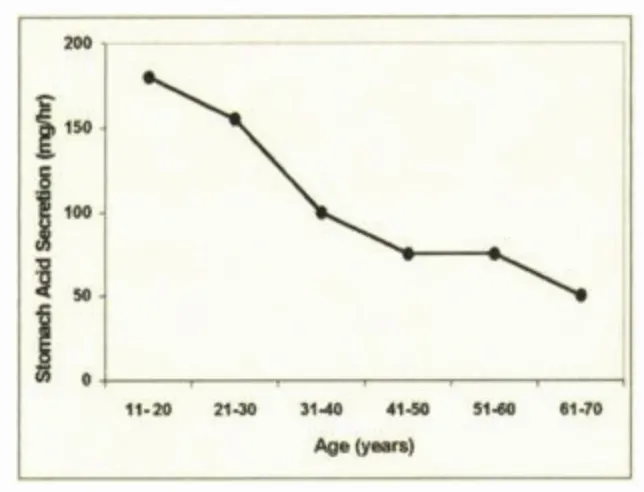


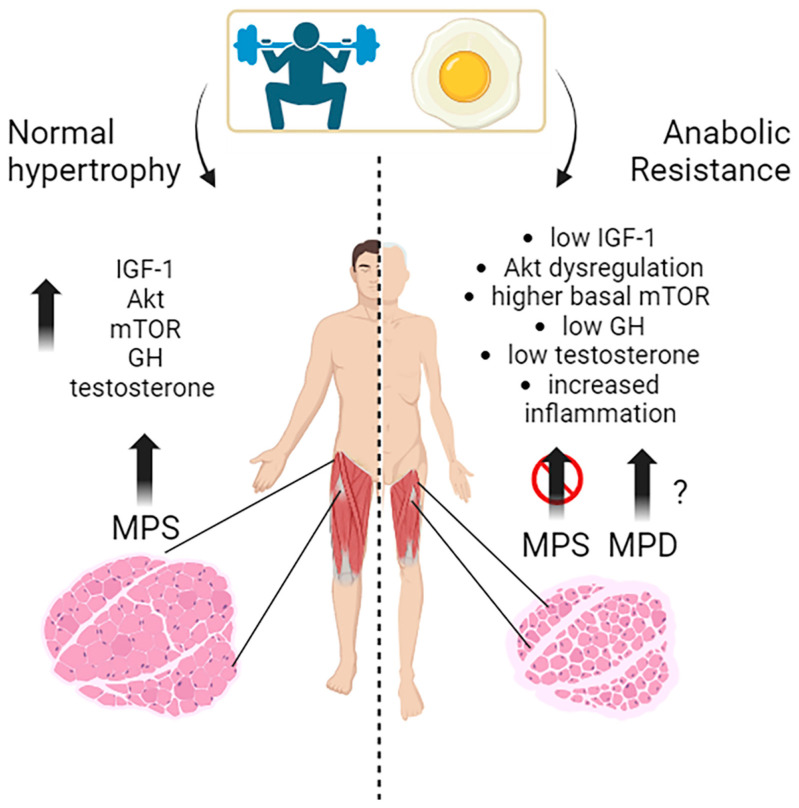


































Wolfie, can you put this in plain English?
Coconut oil is a medium-chain fatty acid and is suggested as brain energy for the elderly. Does Coconut oil interfere with muscle building?
Lipids and Ketones
Just as a short comment, all this infusion stuff sounds like injecting it.
The only section that talks about ingestion is:
“When associated with dietary protein ingestion, neither acute nor short-term dietary fat overload impaired skeletal
MPSmuscle protein synthesis in overweight/obese men in thepost-prandialafter eating phase, thus excluding a role by dietary accumulation of intramuscular lipids on the anabolic response to meal ingestion.”I should point out that the process of digestion tends to rip incoming food slurry into useful components. Lipids are typically stored or burned for metabolism as the amino acids that build proteins that build muscle are routed elsewhere.
Thanks Coothie
I am switching Hubby from oatmeal to an omelet and a piece of toast. His daily coconut oil is getting hidden in that meal.
FWIW, my neighbor is donating quail eggs as well as chicken eggs. So the omelet is made with 2 chicken & 3 quail eggs.
A_Comparative_Study_on_Nutritional_Value_of_Quail_and_Chicken_Eggs
The thing about oatmeal is that it works if you work like a peasant. If you’re not going to go plow a field later, it’s good to stick to proteins and fats (e.g. eggs and bacon/ham). Cooking eggs in butter is nice because it’s tasty and browns nice. If you’re doing pseudo-Asian dishes like a stir-fry, coconut oil is good. If you’re doing pseudo-Mediterranean dishes, olive oil is good.
I am just trying to get the coconut oil down his gullet. Although I do use olive oil too for some cooking.
Try looking at it as setting the mood for the dish. If you’re looking for garlic/ginger/citrus/spice frying, use a coconut base. If you’re looking for herbal garlic frying base, use olive oil. If you’re doing a light saute, use a butter base.
What I am doing is looking to keep Hubby out of a wheel chair.
Instapundit swears by this guy who advocates weight training. This is also emphasized in your post’s article as “resistance exercise” as opposed to “endurance exercise”.
I think it’s
https://en.wikipedia.org/wiki/Mark_Rippetoe
I also highly recommend both resistance and endurance.
I think a lot of the distinction comes from a focus on “aerobic” in the 1980’s.
Turns out, resistance and endurance are not the same, and aerobics are not a substitute for weight training.
In line with today’s thread – IQ Bars. Plant based. Good protein, very low sugar (use stevia and sometimes unsweetened chocolate bits), great Keto with good fiber. They have coconut oil and lions mane among other good stuff, Wifey and I both eat as snacks or small meal substitutes. Highly recommend.
Thanks! Sounds interesting. Will look for them!
Are you using the paste version? Lou-Ann is the cheapest I’ve found. Is he objecting to it? I cannot see why other than it has zero taste.
Make half-n-half. Half salted butter and half coconut oil. The result will have the butter flavor.
I add butter to mask the slight taste.
If you’re using eastern spices, they’ll overwhelm the taste by themselves.
He is not much for spices. I use Chinese five spice and soy sauce for him on stir fry. I go for a spicier sauce.
I only buy unsalted butter, because it’s easy enough to add salt and salt is cheaper per pound.
Where is there a price difference? I’ve never seen any.
I think you’re being sarcastic.
There typically isn’t any price difference in the butter….but there is a difference between the salt and the butter.
If you can get 1kg of 100% butter for $10, 100g of salt for $0.05, or 1kg of 99% salted butter for $10, which is the better deal?
Sorry but I don’t think there’s enough at stake to be worth the effort. BTW, you’re donating the value of your labor.
AHHHhhh but you can use either iodized salt or Himalayan pink salt. Both of which are better for you.
(I use potassium chloride)
I only buy unsalted butter because I can not have sodium.
I cook my eggs in bacon fat. I still keep a container of leftover bacon fat on my stove, just like my grandma did.
DROOOoooool.
I really wish I could still eat bacon. …A couple sunny side up eggs fried in bacon fat with the hot fat spooned over the top to just cook the white but not the yolk…. I really miss that breakfast!
Now I eat omelets if I eat breakfast.
Glad to see this daily, Gail. Dr. Guidry is on to some things I believe are really important. I took his gut health test and found some personal issues and mistakes I made that he confirmed. I made the changes and voilà, everything got better.
I support everything I read above with the note that some of the food representations need to be tied to personal gut health needs as we are all different. Guidry says there are three main gut types. So once you know yours, and you can even tell by observing your personal reactions to consuming the foods he shows, you can adjust your intake.
My gut says to cut back on the lectins, when the traditional food pyramid and health “professionals” say to hit them hard. I love multigrain breads and cereals as an example and all of the professionals push for more fiber intake. If I want to stay constipated and straining in the bathroom, sure, keep doing that. That causes a whole different set of health issues.
Post exam, the doc who did my colonoscopy said I needed to eat more fiber to scrap the walls of the intestines. I had one small, benign polyp. Then I was to flush the fiber by drinking more water and fluids. I was already drinking over 100 ounces of water daily. So I did that for years and was miserable, even when focusing on eating more vegetable fiber. I gained weight. Turns out I was sabotaging my own health. It created holes and pockets in my intestinal lining, which led to all sorts of gas, bloating, constipation, infection, etc. It could have created diverticulitis.
It also turns out the heavy fiber/fluids consumption works well for about a third of the guts. So I cannot condemn it, just cannot do it myself. I had to cut way back on tomatoes and related products due to the lectin that is heavy in the multigrains. That was hard, the bread change back to white and sourdough has been easy. When I began making the changes there was much relief, the bloating and constipation went away. The excess pounds began falling off. Which is why Keto has worked so well for me.
I have a follow on wifey and my experiences on next Tuesday’s Daily. It has been an eye opening journey.
All government nutritional recommendations are politicized garbage. The food pyramid is toxic and has caused an explosion of diabetes and obesity.
AMEN!!!
I have been ignoring it since I was a teen.
In my own experience, brown rice is one f the most damaging foods for one’s intestines, having been on a macrobiotic diet. There is a reason for white rice,
I prefer white rice as I said above. For me wheat is very much a No No. Eat it at night and I will have acid reflux.
ThanQ. I had no idea.
Now what do I do with all the brown rice in my back room? 🤔
Feed it to the goats?
Put it in the bird feeder?
We used to throw uncooked rice at weddings. Then, we were told birds would eat it, it would expand like it was cooked and kill the birds. Hmmm… give cooked rice to the birds?
I want my friend to take that gut type quiz. The doctors have given up on her.
My guess is LOW acid (they have her on acid reducers) perhaps pancreatitis, although the test come back ‘normal’ now, and SIBO (standing for small intestinal bacterial overgrowth)
I am not real fond of brown rice, I prefer Basmati rice cooled 24 hours to produce resistant starch. I have low blood sugar. Sugar will, within an hour, put me to sleep due to the drop in blood sugar caused by too much insulin. Cooled and reheated rice produces no such problem.
Effect of cooling of cooked white rice on resistant starch content and glycemic response
…
Effect of variety and cooking method on resistant starch content of white rice and subsequent postprandial glucose response and appetite in humans
At one point I saw a paper talking about rice water. You boil rice in a lot of water until you have a liquid, then cool. Rice will literally grab the bacteria and move it out of your system.
The paper of course has since been memory holed…
Hee, Hee, Hee
YANDEX had it as the FIRST offering. TAKE THAT GOOGLE!
Effect of boiled-rice feeding in childhood cholera on clinical outcome
Similar articles
>>>>>>>>>>>>>>>>>>
I mention this about rice because bad gut bacteria causes all sorts of problems!
Worst Foods High in Lectins — WebMd
[ALL beans should be cooked thoroughly. AVOID slow cookers on low heat. They may not be hot enough to destroy the lectins. – GC]
Tomatoes and Eggplant are also part of the nightshade family. Dr Gundry suggests avoiding them. I hope that through cooking (Sauteed eggplant and tomato sauce) destroys the lectins)
Lectin-Free Diet: What It Is, Possible Benefits, Food Choices, & More
See my comment somewhere here about eggs. Great idea!
I notice he started rapidly going down hill when he stopped eating eggs and beef. Steaks & roasts were just too much to chew and he no longer bothered boiling eggs for an egg salad breakfast.
Now it is a meat loaf in the Frig at all times and other high protein meals like Eggplant Moussaka (Ground meat, onion and chickpeas layered with eggplant like a lasagna) Heavy on the meat, stir fry, lasagna, salmon or tuna salad.
I have to reorder the lions mane mushroom and I want to try Turkey tail mushroom too.
You might consider getting a food slicer, like the kind that delis use to slice meats for sandwiches. If you own your own, you can just take a regular roast (so it isn’t “cured” meat full of nitrates and salt) and thin-slice it so it won’t be chewy.
I am also running Firefox — but, by contrast, I see no ads.
The ad-blocker I am using is Ad-block plus.
same here.
I have to get Hubby to install that.
And be sure to set Firefox on Hi security. I also use Ghostbusters as an as block. Never get ANY ads!
Thanks for the info and health advice, Gail!
Your Welcome. I figure we could all use the info. so why not share?
Someone in the goon squad should be holding a “Tolerance” sign! 😁
This one:

It needs bullet holes. For authenticity. 😉
 …
… 
And some blood stains! 👍😂
Excellent explanation!
I’m okay with whatever happens to Khanna and people like him. If I’m on the jury, he deserved it.
Great explanation and needs circulated far and wide.
You’re going to have to confront the national mental health problem that has consumed the Left.
Otherwise you’re just arming the criminally insane.
Scott, they do not give a Schiff about state or federal laws. Only the law abiding have their guns removed.
Right, but if there is no requirement of any kind, anywhere, to carry — no licenses, no issues with interstate carry, no training, just anyone can go to a gun store and buy a gun and carry — if it is that easy, then expect a whole lot of unstable people with zero emotional control to be carrying.
Like all the Africans who like to stage knock down, drag out brawls at Waffle House, and Home Depot, and gas stations, and, well, just about anywhere, going by all the videos.
They can get the guns on the streets.
Certainly, but it’s not currently an ‘in’ thing for every human in the country to be carrying.
If that does become the ‘in’ thing, there will suddenly be a significant increase in the proportion and number of people carrying, who have no training to pair up with their longstanding skill of no emotional self-control.
Given the murder rate in ‘GUN FREE’ Chicago, I think they already have those guns
Gun Laws in Illinois
What Cities Are Gun Free Zones? Guide to Local Carry Laws
CHICAGO IS BIGGER THAN THIS’: A deadly weekend
I’m just sayin’, I see a LOT of videos of Shaniqua and Dalwiquia and Varniqua going full-on big time wrestling at Waffle House, big girls in skin tight pink spandex pants and half t-shirts, going at it like a scene from an Apocalypse movie.
But they’re essentially harmless, besides throwing chairs and anything else that’s not bolted down.
But if they all start carrying gats, the Waffle House is gonna get spicy 🤣
AND if there is Stand Your Ground law to go with it, then we eliminate the problem permanently.
Yes, but we have whole generations of people, mostly Africans, who don’t know the word ‘polite’, they have been raised to look for any conceivable reason to be ‘offended’ so they can emotionally (and physically) explode on someone.
Now add guns to the mix, and season to taste 😂
For anyone who thinks all the other changes / revelations require going ‘slowly’ so the public can ‘wake up’ and not be too ‘distressed’, expecting emotionally ungovernable Africans to go from 100mph to zero in a suddenly 100% armed society is going to be hilarious to watch.
From a good long distance! 🤣
You have more kindness in your heart than I do.
If “stand your ground” is nationally legal, and incidents are addressed by a conservative law enforcement body, there will be a whole lot of dead “criminally insane” leftists.
Just saying.





And then what? Leftists will not stop without extreme penalties. Maybe an electric fence like those used for livestock ⚡️, but any kind of fence will mar the view.
Maybe they could electrify the pool….
Lots of electric eels in the pool?
Piranha will work, also.
Maybe both.
Fun fact — each year in Africa, hippos kill more people than crocodiles, lions, buffalo, elephants, leopards, or rhinos —
I yield to your superior absurdity power.




Important note – hippos can run. Very fast.
But they can’t climb trees.
Don’t let them win by making you change. Make a humiliation game out of it, and give snipers some practice time using tranquilizer darts.
Have snipers in Ghillie suits strategically located all around the area.
Whenever some lunatic Leftist makes his move on the reflecting pool, drop him (or her) with a tranquilizer dart.
Then use Sharpie markers to draw all over their faces, like we used to do in college to friends who passed out.
Then make Instagrams and Tik-Toks of the perps being dragged away, still unconscious, while the whole world laughs at them 😂
There are many lawyers who would cheer as long as nobody could see them.
Why don’t they want anybody watching?
Because some slimeball might report them to the state bar for conduct that casts the profession in a bad light. Yes, they can yank bar cards for that.
“Yes, they can yank bar cards for that.”
_____________
No more drinking is probably a good thing!
I believe they are fencing it in order to repair it. I don’t think it’s permanent.
everywhere I’ve seen says temporary fencing
Yes, that’s what it says. I’m just saying, what’s to stop vandalism after the repairs are done?
EXACTLY!
National Guard with live bullets?
National Guard and camera surveillance I would imagine.
“I’m just saying, what’s to stop vandalism after the repairs are done?”
_____________
Bullets!
LOTS of bullets 😁
I have given some thought, since it became a ‘thing’, to appropriate punishment to adults who vandalize or destroy a national monument or landmark. I have not yet formulated what to do with minor children (under age 15). I believe these sentences will fall under a new category of law termed, crimes against the nation. I do not believe such vandalism to be worthy of a capital offense verdict, so this is my recommendation.
I do not regard persons who do such things as worthy to live among Americans, and therefore, not subject to merciful consideration.
I like it. You hate the USA? Then get the F..K OUT!
I like all of the consequences above . I wish they would be used.
These people aren’t going to stop no matter what.
Because they aren’t going to quit, cameras at every conceivable angle could film them destroying it. The public should be able to watch it free..the reflecting pool cam..
After time passes with the destruction a mess and everyone can see who’s doing it maybe some harsh penalties will be adopted .
Right now it’s almost still under the Orange-man-bad playbook. Not enough of the public cares
The actions of minors are the responsibility of the parents (majors).
Whatever their children do, the parents are on the hook.
I like the severity of consequences for those who mar, deface, or damage ANY national monument or landmark, as you put it.
Once people emerge from the debilitating propaganda that America is “bad,” and learn the truth, the motivation to destroy America will disappear.
We’ve been under attack by lies – lies that the Mockingbird media have successfully convinced FAR too many of the younger generations to believe their agenda of hating America.
Truth will win over all.
(Takes time, though!)
What’s the point of having districts if every Federal judge can issue worldwide proclamations?
I like your thinking!
What’s the point of having Johnny Thune as senate leader if he only sabotages the POTUS and leader of the GOP?
USAID
======================
======================
What I hated, was the money was never used to better the life of the people. A system was KNOWN since the 1970s but people were never trained! I read about this decades ago. So did E.M.
Leucaena leucocephala collection of linksPosted on 12 March 2013 by E.M.Smith
I don’t know how old this clip is since Pres. Trump is not running for president anymore, but this woman thinks for herself.
There’s an awful lot of woman to love. 😂
Wife or sparring partner?
You owe me a keyboard!
OFF topic.
IIRC, you inquired if Emerald Star was still on QTree.
I incorrectly replied yes, now posting as ES.
Thank you Kalb – I purposely changed my nom-de-plume to get vindicated, without controversy (Daughn), that I am MALE.
I’m “Sir ES,” and I thank you for your attention to this matter!
Thanks again.
Cheers!
YW.
Cheers back at ya…
United States Mint:
From the link (emphasis mine):
People will have to pay with cash instead of credit cards in order to find these, unless they can just be obtained at a bank.
Should be a million with the mark.
Should be minted for a whole year, at least. It’s expensive to create all the tooling for a new coin.
They’re creating artificial scarcity for no good reason, which means the people who really want one will have to pay flipper prices to get it.
250,000 for a reason 🇺🇸
Not a good reason. IMO.
Those with connections (banks / financial institutions) win. 
Commoners, not so much. 

“Bearing no mint mark, these unique quarters will be placed randomly into circulation, offering Americans a once-in-a-lifetime opportunity to discover a piece of history in everyday transactions.”
“Randomly mixed in with other 2026 Declaration of Independence Quarters, these 250,000 special “July 4” quarters will be made available to banks and financial institutions nationwide in time for the Fourth of July.”
______________
Available on eBay the same afternoon for just $499.99 each.
This administration is fun.
Yes, it is!
“It’s called ‘trolling’ – we do a little trolling.”
Smears work both ways, and the libs are far less resistant to the technique.
Wanna know why lefties can’t meme? It’s because THEY ARE THE MEME!
LOL!
Nonsense. Bullshit.Banks/ financial institutions will funnel this limited to themselves, select customers and friends.
Average American will never see these coins unless they pay premium bucks the US Mint.
Tens of millions of each, if not a couple hundred million of each and flooded into circulation.
—
Additionally. IF the Trump $250 bill is ever printed and released, it needs to be available to ALL Americans.
Note to Gail —
So, I’ve been doing Urgent care visits for a leg ulcer. They did a culture and found it was Staph aureas. Acting innocent, I commented that I had boils and carbuncles as a child and found that Icthammol knocked ’em down pretty fast. They said, “never heard of it — do what you want.”
So tomorrow morning I will have completed 24 hours with icthammol.
Did you know they no longer sell human icthammol?
They no longer sell original Coca-Cola any longer, either.
One gets you better and the other makes you appreciate yourself better.
OMGosh!!!!! I’m really getting OLD!
Note to everyone else (I assume Gail knows) —
https://en.wikipedia.org/wiki/Ammonium_bituminosulfonate
And I was wrong — I had been looking at a board and they said it was discontinued, but it’s still available on Amazon.
What it’s like — it looks, feels, and smells like it was freshly harvested from the La Brea Tar Pits. It stains things it touches. It’s often referred to as “horse liniment”, because it’s commonly used in horse care.
What it does — it’s a “drawing salve” because it induces your body to shed bad stuff into it (and thus “draws” the bad stuff out of your body). I started having frequent staph infections after I crashed my knee into a lawn sprinkler in 5th grade. The drill was to apply hot wet compresses to bring it to a head, after which it might be lanced and de-gorped.
One year, I had a stubborn one and my dad took me to Kaiser, where the luck of the draw gave me an old army (or maybe cavalry) doc. He said that you have to ask the pharmacist to get it from behind the counter, but there was no prescription required. We got it, slathered the stuff on, covered it with bandages, and in just about a day it was already draining. It was well-nigh miraculous and didn’t need all the scalding compresses or lancing…..and it drained thoroughly.
Mind you, I did have a brown spot where it had been that lasted for over a decade….
“Mind you, I did have a brown spot where it had been that lasted for over a decade….”
____________
Probably don’t want to use it on your face, then 😁
If you used it on your palm, you might get flashbacks to Treasure Island….
Or Thunder Island… 😂
Depends on the layout of the face. It might improve the look.

Yes the stuff is great.
Icth is no longer sold for human? I have a big jar of it for use on my animals. It is great for drawing out infections.
Amazon has it!
Be careful and be Safe.
Amelia isn’t satisfied…..(lyrics warning) —
Oh, and this is AI (and says so in the title).
Appreciate the post Gail. Food is Medicine.
AMEN.
Terror Attack in Canada Just Got So Much Worse! Female Cop Humiliated As Manifesto Targets Revealed
“This is insane ”
.
Benny is channeling Scott. 😂
……….
Pornhub is run by an Israeli Jew who studied to be a Rabbi? WTF??
“Benny is channeling Scott. 😂”
____________
Hopefully it’s a trend 😁
Snicker..
😁
OUCH!! 
Thought so.
Pocket extra profits, stick it to citizens, make Trump look bad — yeah, there’s a little bit….a smidgeon….of temptation there…..
And Scott Bessent and Todd Blanche are licking their chops.
🙂
Ewww the visual. 🤣
Nothing to look into.
Listen to Eric Bolling on Warroom – he lays it out very well. If there’s gouging going on it’s at the oil trading desks of the commodities exchanges.
Crude Oil Prices Today | OilPrice.com
The gouging is all over:
VLCC Earnings Near $470,000 a Day as Hormuz Hopes Drive Tanker Frenzy
Brent Crude Oil Futures Contracts
In other words they are a betting casino.
Probably accurate. The PDT post applies the right pressure to the entire process.
PDT has We the People in mind with everything he does.
Oil production and distribution has been gaming the system for a very long time. The small retailers as well as end customers get hurt in the process.
Troublemaker10
June 24, 2026 1:52 am
Donald J. Trump
@realDonaldTrump
So, I have Iran on the “ropes,” ready to go down for the fall, willing to give us practically anything, and for the first time in decades, respecting the hell out of the United States and its President, ME, and the U.S. Senate decides to have a poorly timed and meaningless War Powers Act Vote, telling the Number One Sponser of Terror in the World that the United States doesn’t like what I am doing to them, and I must stop, and by so doing has provided aid and comfort the Enemy. Four Republican Losers voted with the Dumocrats, and Iran asked my people, “what does that all mean?” These Senators have just made my job more difficult, but I will get it done, one way or the other, because I always get it done! President DJT
6/23/26, 10:39 PM
https://truthsocial.com/@realDonaldTrump/posts/116802765132974094
Which was their intent since they play for the black hats.
The American people need to wake up and understand how they have been played for fools and suckers for over a century.
I heard Alligator Alcatraz is closing…but don’t worry…they’re just relocating for now.

over at Marica’s, I read that she is having hip replacement surgery on Monday, so if you could offer up a prayer and keep her in your thoughts, that would be appreciated.
My family got almost all of the Time-Life books when I was a kid — both the Nature series and the Science series. They were published in the 1960s.
In the “The Human Body” book, hip and knee replacements were portrayed as science-fiction, something that we’d all see in the near future (perhaps along with moon labs).
Since then, I’ve come to know many people who have had successful hip and knee replacements, and they have become common and reliable.
Marica can look forward to a procedure with reasonable risk and predictable outcome. They will have her walking out of the hospital in shockingly little time, though she will have to follow-through with her physical therapy.
Prayers are due that no harm unexpectedly strikes her, and she follows the path to healing……and that the Great Physician sustain her throughout her PT.
and PAVACA wisely advised her to make sure she presents them with a written and signed letter stating she does not want to receive any vaccinations while there.
Side effect of the PT – weight loss [if needed].
I know of someone receiving an ankle replacement next month.
Who knew…
I had a video [on my crashed harddrive] of that surgery.
I can safely say that if that vid ever went viral, nobody would approve having that surgery done on him/her. Yes it’s that brutal.

my MIL had one and had to have a metal rod inserted somehow into the hip/thigh area that required her to carry a card for going thru metal detectors when she traveled, which she loved to do.
Both hip and knee replacement look really ugly…..but they’re only done when the natural joint is shot — and it is simply amazing how much instant improvement there is, and how fast people are released to go home.
How are you doing, Pat?
I’m doing okay. thanks for asking.
as soon as we learned of hospice involvement, I made my peace with it and focused not on the end, but on making the remaining time meaningful for her. letting her know every day that I loved her.
May those actions and your memories comfort you always. 🙏
thank you.
You’re a great person and a wonderful daughter to have been able to live that sentiment .
Know that if you have days that aren’t okay we’re here for you. 💑
thank you…that’s very sweet and kind of you!
Thanks, Gail!!! Does eating essential amino groups while reading increase muscle mass? Hope Hubby recovers his muscles and balance!!!
Does eating essential amino groups while reading increase muscle mass?
😂 NO!
That is Hubby’s problem.
FROM: The Forgotten History of Carpal Tunnel Syndrome
Hubby is beyond the 3rd on the right since he worked in a cubical writing his entire career. He can no longer lift his head into a normal position.
I think one of the most important proteins, one that can be raised in your backyard, isn’t touted enough. That would be eggs.
Eggs are just about the easiest protein to absorb in the body, contain leucine (eat a three-egg omelet), and have all kinds of other amino acids. If you have chickens, you control what they eat.
The government that wants to kill us disses eggs. “One a day” is fine. Good grief.
There’s a reason this is a thing:
Agreed. I always thought that was BULL SCHIFF! When I worked I ate so many eggs that I could fry bacon, do 2 sunny side up eggs, shower, blow dry my hair and get dressed in a 1/2 hour. (Gas stoves are the greatest)
Obviously I was multi-tasking. Get in my way and you got run over! 😂
Thank you.
Eggs are a wonderful food.
Superfood that they tried to murder through the cholesterol scam.
Which is why Maggot wanted to kill off the national chicken stock with the fake bird flu virus scam.
It’s also protein they can’t control.
Backyard poultry will always be a thing. People here let their chickens roam loose in the yard, even in town. Preventing a person from having a couple of chickens in a fenced backyard would be very difficult and costly.
Last town we lived in tried. Roosters were illegal.
Roosters in town are almost always illegal. It’s rude. They crow at all hours. And you don’t need a rooster for eggs. I don’t want fertilized eggs anyway.
Great point! 👍
👍
Daughter and SonIL have a neighbor in the subdivision behind theirs on a lot that adjoins that has a chicken coop. Heard the rooster crowing when we were working on his deck last month. I mentioned it and asked if the noise bothered them. He said, “No, that’s the sound of freedom.” 🇺🇸
So proud of him.
That’s a good one!
i smell running mates…
h/t Filly
Tucker is not the only one who is done supporting the Republican Party.
There is A LOT of us that are absolutely fed up and will not support a party that betrays its voters and country.
That does not mean we are turning into Democrats either.
But we are DONE with the America…
— Marjorie Taylor Greene https://s0.wp.com/wp-content/mu-plugins/wpcom-smileys/twemoji/2/svg/1f1fa-1f1f8.svg (@mtgreenee) June 22, 2026
Have we met? You are vaguely familiar, but it’s not a good familiar.
How about you just … get off my lawn!
 that’s telling her!
Good Lord, does this woman even think that she can run for President in 2028?
Let alone with Tucker Carlson in the VP slot?
What does she think she can do — create a “new Republican Party” somehow?
Which will crash and burn — kicking the door open for the DemCommunists to take BOTH the House and the Senate, AND the White House in 2028?
“…kicking the door open for the DemCommunists to take BOTH the House and the Senate, AND the White House in 2028?”
THAT is the actual plan. If the DemonRat can not win but it is close, run a LIBERTARIAN in order to split the ReBoob vote. I have seen that time and time again.
I was thinking Tucker as Prez and her as VP actually. Tucker has been testing the waters lately with statements about wanting to make waves or challenge or influence 2028.
It’ll be such a wonderful pairing of running-away mates!
Let the tragi-comedy begin!
Posers…
Darializa Avila Chevalier: pro-Palestinian doctoral student steps into politics with ‘faith in the future’ — The Guardian UK
FOR FAMILY, FRIENDS, AND ALL IN NEED OF PRAYER
PRAISE AND WORSHIP
SAFE AND STILL | Deep Soaking Worship Piano & Comforting Words with Nature Scenes
_____________________________________
WeThePeople2016
June 24, 2026 10:27 am
Today’s Housing News Conference and Signing is hereby cancelled until such time as we pass the desperately needed SAVE AMERICA ACT, which I consider to be a National Emergency. Thank you for your attention to this matter! President DJT
https://truthsocial.com/@realDonaldTrump/116805545512296111
Love it! This puts the national spotlight on the traitors in the Senate.
and perhaps he is laying the foundation for “declaring” a national emergency in regards to the midterms…?
Hope so!
me too…
Step 1. Alert the normies that HE considers it a National Emergency. check
Step 2. ….
Step 2. Gabbard testimony on Puerto Rico voting machines raises questions about role of Venezuela conspiracy theory
and
Trump confirms what Tulsi Gabbard was doing at Georgia election center
And then there is Maduro…
EACH DAY WE TAKE UP THE OFFENSIVE WEAPON OF THE WORD OF GOD – THE SWORD OF THE SPIRIT – ONE VERSE OPENS THE DOOR TO THE CONTEXT OF THE CHAPTER MESSAGE
Verse of the Day for Wednesday, June 24, 2026
✟
“And a man shall be as an hiding place from the wind, and a covert from the tempest; as rivers of water in a dry place, as the shadow of a great rock in a weary land.”
Isaiah 32:2 (KJV)
COMMENTARY FOR ISAIAH 32
Times of peace and happiness. (1-8) An interval of trouble, yet comfort and blessings in the end. (9-20)1-8 Christ our righteous King, and his true disciples, are evidently here intended. The consolations and graces of his Spirit are as rivers of water in this dry land; and as the overhanging rock affords refreshing shade and shelter to the weary traveller in the desert, so his power, truth, and love, yield the believer the only real protection and refreshment in the weary land through which he journeys to heaven. Christ bore the storm himself, to keep it off from us. To him let the trembling sinner flee for refuge; for he alone can protect and refresh us in every trial. See what pains sinners take in sin; they labour at it, their hearts are intent upon it, and with art they work iniquity; but this is our comfort, that they can do no more mischief than God permits. Let us seek to have our hearts more freed from selfishness. The liberal soul devises liberal things concerning God, and desires that He will grant wisdom and prudence, the comforts of his presence, the influence of his Spirit, and in due time the enjoyment of his glory.
9-20 When there was so much provocation given to the holy God, bad times might be expected. Alas! how many careless ones there are, who support self-indulgence by shameful niggardliness! We deserve to be deprived of the supports of life, when we make them the food of lusts. Let such tremble and be troubled. Blessed times shall be brought in by the pouring out of the Spirit from on high; then, and not till then, there will be good times. The present state of the Jews shall continue until a more abundant pouring out of the Spirit from on high. Peace and quietness shall be found in the way and work of righteousness. True satisfaction is to be had only in true religion. And real holiness is real happiness now, and shall be perfect happiness, that is, perfect holiness for ever. The good seed of the word shall be sown in all places, and be watered by Divine grace; and laborious, patient labourers shall be sent forth into God’s husbandry.
Commentary by Matthew Henry, 1710.
_________________________________________
Why God’s Clockwork is Always Perfect
___________________________________________
Thank You, Jesus, for blessings received and prayers answered !!!
WE ARE FIGHTING A SPIRITUAL WAR OF GOOD VERSUS EVIL
PRAYING ON THE ARMOR OF GOD
Father God, I now follow your command to put on the full armor of God, because my battle is not against flesh and blood but against rulers, authorities, the powers of this dark world and against spiritual forces of evil in the unseen world.
I first pray on the Belt of Truth that it may be buckled around my waist, may I be centered and encircled by your truth dear Lord. Hem me inside all that is true and right, and may I be protected and held up by the truth of your living word, in my Lord Jesus name.
I pray on the Breastplate of righteousness, please protect my vital organs and my inner man, cover my integrity, my spirit, and my soul. Guard my heart for it is the wellspring of life, please strengthen and guard the most vulnerable places in my life with that which is right, good, and noble that I might not receive a fatal blow from the enemy, in my Lord Jesus name.
I pray on the Gospel Shoes of Peace. I choose to stand in the shoes of your good news, and on the firm foundation of my Lord and Savior Jesus Christ, the solid eternal rock. All other ground is sinking sand, I pray that I will not slip or fall, but that my feet would be firmly fitted on your lordship, my Lord Jesus. I choose to stand on you, so that the peace of God, which transcends all understanding will guard my heart and mind in Christ Jesus, the eternal Rock of Ages. I receive your holy peace now my Lord, from the sole of my feet to the crown of my head, in my Lord Jesus name.
I pray the Shield of Faith into my hand now. As I take up the shield of faith, I ask that you might extinguish every dart and arrow that is launched from the enemy to take me down spiritually, physically, mentally, emotionally, and every attempt of the enemy to destroy my joy. I ask that my faith in you would make it flame out. Extinguish every flaming arrow that would come against me, my life, my family, my home, or my ministry. May my faith always be out in front of me like a shield. Give me the courage to “faith my fears” by choosing to walk by faith and not by sight, in my Lord Jesus name.
I pray on the Helmet of Salvation, that you might protect my mind from the thoughts that can lead me astray. I choose to take every thought captive, and arrest all intentioned ideas and motives that would harm others, or distract me from your holy will for me. I submit every captured thought to the Lordship of my Lord Jesus Christ, and ask that you would imprison those thoughts that are not of you my Lord. Transform my mind and renew my thinking that I may think God thoughts, and have a sober mind that is focused on your glory. Please protect me from being double minded that I may allow my mind, I reject to live an earthly life, because I choose to live a holy one, governed by you My Lord Jesus, the prince of peace, please have my mind to be saturated with the holy mind of Christ, in my Lord Jesus name.
Finally, I take up the Sword of the Spirit which is the holy word of God, I pray this powerful offensive weapon into my hand, and ask that your holy word would be fitting for every encounter I face. As the enemy gets close to me, please give me the insight, wisdom, and skill to wield the word of God to drive away the enemy, in my Lord Jesus name.
May the enemy and his team flee from me, upon hearing the word of God spoken by the power and direction of the Holy Spirit. Give me the sword of the spirit to cut through the wiles of the devil, so that I may discern the schemes of the enemy when he is near.
With all kinds of prayers, supplication, and intercession I pray to you my Lord God as the one who fights my battles. Now that I’m in your holy powerful armor, I walk away covered and ready to face my day as you go before me, and please protect me in the midst of the spiritual warfare in this unseen world, in my Lord Jesus name.
Thank you my Lord, for the spiritual weapons of armor and prayer that you have given me. It is written no weapon formed against me shall prosper, and you will refute every tongue that accuses me.
Thank you Father God, my Lord Jesus and the Holy Spirit, that I am more than a conqueror in my Lord Jesus. I pray all of this in the mighty name of my Lord God and Savior Jesus Christ, Amen.
PLEASE PRAY FOR ABUSED, MISSING, AND TRAFFICKED CHILDREN
BE MY VOICE





CHILD NOT CHOICE
JESUS LOVES THE LITTLE CHILDREN
St. Michael the Archangel, defend us in battle, be our protection against the wickedness and snares of the devil. May God rebuke him we humbly pray; and do thou, O Prince of the Heavenly host, by the power of God, cast into hell Satan and all the evil spirits who prowl about the world seeking the ruin of souls.
Amen.
PLEASE PRAY FOR ONE ANOTHER
MAPA = MAKE AMERICA PRAY AGAIN
SIMPLE SERENITY
When searching for simple serenity
The falsehood mask obscures verity
No way to determine or to perceive
The secret agenda there to deceive
What clues are provided for clarity
When relevance becomes a rarity
Has something been lost that cannot be found
Does the back and forth go round and around
We can’t move on when we do not let go
Of memories past tugging to and fro
We cannot go back to where we began
We must decide to move forward again
There is a direct path and place to be
That God has decided for you and me
To serve Him in this world until such time
We have completed our duty divine
It might not be what we wanted to do
Or probably something we even knew
Our lives are not written for us to view
To modify beforehand in the queue
What does it take to keep on going
How can we stop this to and froing
It takes faith in what can never be seen
To quit returning to where we have been
God wants us to prosper and live our lives
Free and happy and no longer take dives
Into a world of pestilence and pain
With no hope of happiness ever again
D01: 08/14/2023
Psalm 91. The most powerful prayer from the Bible. God’s protection, healing
#psalm91 #psalms #prayer
Pray Everyday
https://rumble.com/v57jz8d-psalm-91.the-most-powerful-prayer-from-the-bible.-gods-protection-healing-p.html
Sleep Well with Psalms. Psalm 91, Psalm 121, Psalm 3, Psalm 4, Psalm 139.
#faith #god #psalms
prayeveryday777
https://rumble.com/v57jvfg-sleep-well-with-psalms.-psalm-91-psalm-121-psalm-3-psalm-4-psalm-139.faith-.html
______________________________
HAVE A VERY BLESSED DAY !!! ❤️❤️❤️
https://www.coffeeandcovid.com/p/clowns-and-civil-wars-wednesday-may
Good morning, C&C, it’s Wednesday! This morning’s lead stories all offered different takes on yesterday’s across-the-board socialist victories in New York City. It is now open civil war inside the Democrat tent; the lions are loose, the clowns are rioting, and the tamer is off on a bender. We have dots to connect and layers of narrative lasagna to peel away.
From Jeff:
One of the main differences between Conservatives and the left, is the left has been coddled all their life. That means they will make no decision AND NOT VOTE in order to relieve their mental pain. Of course that means we need HONEST elections.
Yuri Bezmenov agrees with us here:
I would go further and say removal of US Citizenship in certain cases even if your parents were citizens.
I saw the entire 4-part series of Yuri Bezmenov (in the ’70s) on YouTube, and he was somewhat up in years at the time.
No way he’s still around – and I remember that a few adherents (at least one) took up his mantle, faithfully, for future reference.
The message is the same, so, for (almost) all intents and purposes, it’s on the money.
I liked the original Yuri – he made a ton of sense, in re the purposeful demoralization of a generation and a half, yet I think he was a bit pessimistic, having his roots in Russia / Soviet Union.
The ideas are the same, though, whether from he or from those who carry his torch of truth.
No way he’s still around…
Earlier at his substack the person tells you he is not the actual Yuri. However now it is behind a paywall.
Yes, thank you, the original Yuri is no more.
His pontifications, however, remain.
When I viewed it, it was like a red-pill, even though he may have had ulterior motives, whether the truths he spake were somewhat less than the full truth.
Still, his warnings were quite accurate, though not perfect.
I also saw the series in re (Katherine?) Griggs, in re psyops from her husband (existentialist in the worst way, yesterday’s don’t matter, evil incarnate (IMO).
Gutsy Trump-Endorsed CEO of Sticker Mule Anthony Constantino Wins New York 21 District Primary to Replace Elise Stefanik
Matt Gaetz Appointed to Florida’s Triumph Gulf Coast Board of Directors: “I am Returning to Public Service!”
It would not surprise me if he doesn’t serve the complete four-year term and if this turns out to be a stepping stone to something else. If that happens, I don’t consider it to be a negative circumstance.
A reminder…
“If you’re not vaccinated, you are the problem.” Chuck Todd: “The only people dying are the unvaccinated.” 😡💉
They tried to shame us into getting something that could adversely affect the rest of our lives, and something that could even end our lives. They spoke with no authority or basis for their statements. The hubris is off the charts. The consequences for those who heeded them have been devastating.
We can not sue Big Pharma but I think we can sue them for giving medical advice when NOT doctors. Advise that caused DEATH or adverse reactions in our loved ones.
I wish they could be sued. Their excuse would probably be that they were following some “expert’s” advice. I can’t remember exactly who said what, and when; i.e., did Fauci say that the unvaxxed were the problem? Did the 3-letter medical agencies? If so, then those people need to be sued as well as prosecuted for giving faulty advice that had nothing to back it up.
I disagree – they can, and will, be sued via MASSIVE class action lawsuits – despite their weak protections.
Knowingly fostering genocide, lying about their rigged poisons, killed MILLIONS of people, and hiding their doctored ‘studies.’
I’ve read from the anons that Barry effectively changed the Nuremberg protocol during his term(s).
So much FRAUD! IMO, ***nothing*** will stop their liability. It’s coming…

Still today, the Anons regularly post the meme of six of the WORST promulgators of anti-vax consequences for “saving” our species.
Schwarzenegger: “F*ck your freedom!”
Howard Stern: the unvaxxed are dangerous to all (heavily paraphrased).
Gene Simmons: (same message).
Their ‘hubris’ wasn’t genuine – it was that the consequences for these troglodytes and their families / circles were as evil as can be.
Saving their skins, over saving our Republic.
“They thought we (the general public) would follow the stars!” said Q.
Big mistake, though too many fell for it.
Well, the “general public” did follow the stars. About 85% of Americans got at least one shot.
We are rara avis.
https://theoptimisticconservative.wordpress.com/2026/06/22/interesting-times-we-got-us-an-mou/#more-10932
This post is mostly a compilation of rough initial comments shared elsewhere, a practice I’ve been resorting to of late, partly because it’s just not worth putting much into elaborate analyses that will be overtaken by events inside of 48 hours.
Kevin Warsh Just Killed the Rule That Made Americans Suffer
“Susan Kokinda argues that new Federal Reserve Chairman Kevin Warsh’s inaugural press conference signaled a break with the Phillips Curve “cruel choice” doctrine, insisting strong growth, low prices, and high employment are compatible through productivity-led expansion.
She highlights Warsh’s rejection of forward guidance and his call for markets to focus on incoming data from the real economy rather than Fed “prophecy.”
Kokinda connects this shift to Trump Administration efforts to “outflank the money masters” by expanding directed credit through institutions like the Export-Import Bank, the Development Finance Corporation, and others to finance reindustrialization, machine tools, and advanced manufacturing.
She concludes that the deeper driver of non-inflationary growth is human creativity — scientific discovery and innovation — framed as the American System’s alternative to the British Liberal financial model.”
.
.
00:00 The Midweek Update – Kevin Warsh Just Killed the Rule That Made Americans Suffer – June 24, 2026
01:36 The Old System Was a Choke Chain
05:30 Building the Engine for Reindustrialization
09:14 What a Difference a Brain Makes
Is that Thune walking behind him with a smirk on his face?
Yep, that’s John Thune.
Doing the Mike Pence / “Et tu, Brutus?” thing.
Bingo …
Hanging basket planters make great homes:
#2
#3
#4
#5
At your home? Those are precious pics.
He thinks socialism is taking over the Dem Party. Some commenters say it’s not as bad as that in other parts of the country, but NY leads the way for Dems in some respects.
“He thinks socialism is taking over the Dem Party.”
_____________
He’s playing nice. Communism has taken over the d-Rat party.
Past tense.
👍
I think he doesn’t want to admit it yet.
It seems the OG Dems don’t have any momentum and now with media being cheerleaders for socialism/communism the forward D party movement is going to the dark(er) side. Interesting to note lots of islamic names popping up across the country in elections.
Indian names too.
From OT:
‘Occupy Wall Street’ Now Officially Controls the Democrat Party
June 24, 2026
SD: “It did not happen last night folks. It took them another 15 years after they installed Obama to become the legitimate heirs to the political party formerly known as Democrats.

An instructor demonstrates how to break free of plastic hand restraints at the Occupy Wall Street occupation of Zuccotti Park, Sunday, Oct. 9, 2011 in New York. (AP Photo/Henny Ray Abrams)
The progressive movement is now branded as “Democrat Socialists of America” (DSA), but those who have followed the arc of this group well understand every single member within DSA is from the Occupy Wall Street / Anarchy movement that preceded it.
Fingers are being pointed toward New York as the epicenter of the new Democrat Party Headquarters of DSA, which is a fitting location of focus given the OWS origin.
The front line of the DSA movement consists of 18 to 30-year-olds, mostly white, urban, upper-middle-income activists, carrying Macbooks with anarchist stickers and physical attire resembling a blend of hipster ‘grunge’ and skateboard beanie resistance. They don’t shower much and love to talk about AOC and Bernie on Social Media.
Don’t belittle them, they are authentic. They don’t misunderstand things; they bought into the nonsense and genuinely believe the popular narrative sold to them since High School that capitalism is horrible and Communism or Socialism is the preferred system of government.
.
Individually, not one of them would shed a tear if their collective comrades broke into their parent’s houses tomorrow and murdered the elders. When joined in group assemblies, their emotions are controlled by the sensibility of the group. This is the Mao generation, repeating and rhyming.
IDEOLOGY: Capitalism is bad. Law enforcement are pigs. Policy should support emotions. The collective should rule every decision.
Democrat socialists believe all dissent must be squashed unless they actually lose a popular election – then, the system is oppressing them. Speech that argues against their belief system is ‘violence’. However, violence that supports their belief system is ‘speech’.
Democrat Socialists of America are factually Occupy Wall Street activists. The traditional mechanisms of self-controlling morality do not apply to this group of generational ideologues. The haves -vs- have nots is their religion. They never cede power and elections do not remove them. Go look at history, the only thing that has ever stopped Socialism is physical violence.
You may have read the stories of multi-billionaires building bunkers. The predictable DSA is why.
People who say, “violence is not the answer” are pretending they don’t know history.”
POLITICO – […] Fresh off sweeping victories across New York City that showcased the growing power of the anti-establishment progressive left inside the Democratic Party, Democratic Socialists of America leaders, eager to capitalize on their momentum, are already plotting their next act: making sure one of their own is on the presidential primary debate stage, whether the party wants them or not.
“What DSA represents is a real contrast to Democrats who have run the last couple of elections on fear,” DSA national co-chair Megan Romer said. “You can’t run on that. You have to offer an alternative. And it’s really important that we be involved in that conversation in 2028. It’s important that we have somebody saying sensible things.”
Their search process is already underway. This summer, DSA is dispatching surveys to all 250 of its chapters, asking members to weigh who they want to back and why, and return their findings to national leadership by Sept. 15, details the group first shared with POLITICO. DSA expects to receive a stack of 20-page to 40-page dossiers from chapters coast to coast weighing in on who should carry the democratic socialist banner into 2028.
The organization plans to hold national discussions, including with leaders like New York Mayor Zohran Mamdani and Sen. Bernie Sanders (I-Vt.), who is 84 and not expected to run in 2028, with a formal vote expected at the group’s 2027 convention next year — though leaders say they could move faster if the primary timeline demands it.
“We’re going to be talking about millions of hours knocking doors for 2028 — so when we decide to really run somebody, people have to feel like they had a say,” Romer said.
Mamdani-backed candidates swept three closely watched New York congressional primaries Tuesday, with Claire Valdez, Brad Lander and Darializa Avila Chevalier all defeating more establishment-aligned rivals — including two incumbents. It was a major show of force for Mamdani’s political operation, and fresh evidence of the left’s growing muscle heading into 2028. “They ask, ‘Who do you want to run in 2028?’ Then they ask, ‘When does the race for 2028 begin?’ It starts now. It starts on Tuesday,” Mamdani said at a Brooklyn rally last week.
The elephant in the room for the group, of course, is Rep. Alexandria Ocasio-Cortez. (read more)
“An instructor demonstrates how to break free of plastic hand restraints at the Occupy Wall Street occupation of Zuccotti Park, Sunday, Oct. 9, 2011 in New York.”
_____________
Where is Kash Patel?
That ‘instructor’ is clearly not one of the unwashed. Look how he is dressed, compared to everyone else. His clothes are clean. Like he’s wearing a costume, not his usual attire.
Look at his face, he’s clean shaven with short hair. He’s a professional of some kind, late 40s or early 50s.
My guess is government, past or present.
CIA? MI6?
Maybe he’s working on it. Maybe he’s a little busy with cases similar to this one ⬇️. He just got the first criminal convictions for Antifa as a terrorist organization.
Antifa Terrorists Sentenced to 50 to 100 Years in Prison for Attack on Texas ICE Detention Center
That’s great, but it’s like pointing out we arrested and convicted (8 out of 10) people, when who even knows how many millions are right behind them.
There appears to be no sense of urgency or scale.
Did you know they were working on those Antifa cases, and the timeline of them? Do you think you know everything they are doing? 🤔😅😎
They know more, having traced all their comms.
The resultant graphic spans the entirety of their operation.
“We have it all.”. Q
Yes, DJT has been saying “We have it all” for years now.
But ‘having it all’ and actually arresting and convicting them all is a physical process that requires a significant amount of time.
And time will be just two years remaining, as of the midterms.
Trump is in office for two and a half more years. If we got ten Antifas in prison per week, we might be getting somewhere.
Every arrest is a win. But there are a LOT of these people out there who have broken the law.
“Do you think you know everything they are doing?”
______________
No, I certainly don’t.
But I have a sense of the scale of the problem, and real life experience in watching giant government agencies in action, and when taking those two things into consideration, and adding the remaining amount of time DJT has in office, there are some holes in the math.
6.24.26: Where WE GO ONE, WE go QUANTUM, Indictments, IRAN, OIL, USAID, TESLA, PRAY!
And We Know
https://rumble.com/v7brety-6.24.26-where-we-go-one-we-go-quantum-indictments-iran-oil-usaid-tesla-pray.html
From OT, check the interview with Stephen Miller, the young d-Rats have gone full communist.
I predict there will be a lot of blood, and most of it theirs. It’s all so unnecessary, but nobody in a position of power or authority seems to want to do anything to stop it.
I know DJT has a plan, lots of ‘stuff’ going on ‘behind the scenes’, so I guess we’re just waiting.
Haven’t seen Hannity in a long time, he’s starting to look like Pritzker.
.
Sean Hannity Aghast and Saddened When Lead Counsel of Trump Impeachment Loses Primary
June 24, 2026
SD: “Dan Goldman was the lead staffer and primary Democrat legal counsel who conducted the Trump impeachment inquiry and testified before the House joint committee on impeachment. {Reminder} Goldman was the Lawfare operative who worked with Barry Berke, Norm Eisen and Mary McCord. He later ran for congress from New York.
Last night Dan Goldman lost his primary reelection bid, and Sean Hannity was incensed about the insulting loss for Goldman. WATCH:
.
It seems like an odd person to be sympathetic toward. Odd, until you realize the main concern for Sean Hannity was not the ideology or damage from Goldman, but rather something else entirely. Hannity is more concerned about his religion.
I’m not sure who still watches Sean Hannity on the television.
Does anyone have any idea how Sean Hannity is still on air?
Regarding Hannity’s appearance:
https://www.distractify.com/p/what-happened-to-sean-hannitys-face
But the swelling looks like he did take the prednisone. Maybe he ended up doing so after all.
prednisone, a cortisone for a sinus INFECTION???
https://www.drugs.com/mtm/cortisone.html
I’ve heard of its being prescribed for sinus and other infections. I’m not sure, but I think it might be a last resort when antibiotics are not doing the job.
J A B effects.
T.H.I.S.
Prednisone is NOT crappy medicine. I’m using it daily.
https://en.wikipedia.org/wiki/Prednisone
It can be hard on the liver. Which isn’t a huge concern for me since I’m already dying from emphysema.
I’m not happy about that last sentence. 🙁🙏 for you, every day.
ThanQ. I’ve lived a reasonably good life.
I’m currently on a mission from God helping my attorney friend stand against the lawfare being waged upon her. The enemy is so evil but she and I are taking the legal fight to areas where no one has gone before.
We’re making a record. History being created.
Excellent! You make important contributions here as well.
“Sean is not looking like himself.”
But he has to be – right?
We will never know 100% sure.
But we don’t have to know with 100% surety – just enough to make a conclusion that the odds are MASSIVELY in our favor.
Mathematical truth. Pascal’s Wager. Logic.
We are in superlative times, and we’ll win.
Is it Sean – really him?
IMO those who think logically will know 100%. I know. It’s Sean. I can’t believe some people jump to conclusions that someone might have been replaced every time they perceive the slightest difference in their appearance.
The odds regarding what?
??? There is no logic in thinking that every time someone’s appearance changes a little, they might have been replaced.
I don’t know what is meant by “superlative times.”
Of course it’s Sean. He looks the same, even with some facial swelling, which happens to people at times. He sounds the same. He thinks the same way. His speech patterns are the same. It’s not possible to mimic someone to that extent among viewers who know what he is really like. There is not one instance of its having ever happened, because it’s impossible.
What is the reason for thinking things like that?
How about clear communication?
If you think Sean was replaced, I would appreciate if you would just say so, like this: “I think there’s a good possibility that that isn’t the real Sean Hannity and that it is a body double” (or whatever you think might have happened). Then you could explain how you think such a thing would be possible.
Instead, IMO, it looks as if you don’t state it directly because dwelling in the world of reality and concreteness negates the theory. So the theory gets stated in vague, wishy-washy terms, because—again, IMO—that’s how the thinking is.
For me to enter into that world of illogical, unreal thought would be damaging in the extreme, and I shun it and will continue to speak against it. IMO it is not healthy for you, either.
Hannity pointed out:
• Goldman was kicked out of a NY coffee shop because of his support for Israel.
• He lost to a socialist candidate fully supported by Mamdani.
Hannity: “It appears that a pretty scary transformation is now fully underway in the Democratic Party, especially in a blue state like New York.”
Hannity’s point was how far left the Dems are moving. He wasn’t supporting Goldman; he just appeared to be drawing a comparison between a Dem who supports Israel vs. a full commie. (And I know the issues surrounding Israel. Many Dems use Israel as a litmus test without seeing the bigger picture. Many Repubs do as well, on the opposite end of the spectrum.)
I don’t think it’s accurate to say, “Hannity was incensed about the insulting loss for Goldman.” He didn’t seem incensed at all. He was merely reporting on the direction Dems are heading. Hannity probably thinks it’s better to have a Dem in Congress who supports Israel vs. a Mamdami-backed socialist/communist. Hard choice, but I would probably agree.
Regarding this:
I think it’s more that Hannity finds it concerning that so many New Yorkers would vote for a socialist/communist against an incumbent who has a record of going against Trump in the past—which is supposedly what they want. The people appear to be using support for Israel as a criterion, or else they are going full commie. I think the concern is about the latter. The same concern is reflected in a lot of commentary that I’m seeing in various places.
“The people appear to be using support for Israel as a criterion, or else they are going full commie. I think the concern is about the latter.”
_____________
For reasons that have never made sense to me, Jewish people in America, or at least in NY, seem to have largely supported d-Rats for generations.
Now the Left wants to annihilate Jews and ‘free Palestine’, even though real Palestinians would kill most LGBTQLMNOP Leftist Americans.
And nobody intervenes to stop any of the madness, it’s like a game of chicken, so it just keeps growing and growing.
It really is a strange dichotomy.
It often feels to me that they (whomever they are) has managed to create an ultimate us vs them. Their supporters will rally for anything as long as it’s against anything patriots want..even if in the long run it’s counterproductive for them.
It’s like Mad Max Beyond Thunderdome:
“Two
menideologies enter onemanideology leaves. ”One would think the dems would have appreciated the imagery of a MMA cage match on the White House lawn.
They were so busy hating on Trump that they couldn’t think about anything else, or any possible deeper meaning.
That is one of the silliest and most misleading headlines that I’ve ever seen from someone supposedly on the Right. There is nothing in the video clip showing Hannity to be aghast or sad. Hannity’s remarks had nothing to do with the “lead counsel of the Trump impeachment.” As I pointed out in other comments, it’s clear what Hannity meant if you listen to what he said.
This kind of thing is why I have zero respect for SD’s opinions. He chose the lowest common denominator here, and it’s one that isn’t even truthful. Absolutely despicable.
Hannity is not everyone’s cup of tea. He is not on the same level of sophistication as many in the conservative movement. But he is at least a conservative pundit who has an audience. He has not gone the way of Tucker, Megyn, Candace, etc. There is no reason to ascribe emotions and motives to him that he did not manifest in that video. We don’t need to be fighting our own, even if we don’t agree with them on everything, by manufacturing false reports.
Well, he did ban us off his tree over Q.
Saved us from having to fight a revolution. 😎
I was banned before Q, over my comments that Milo Yiannopoulos was not helping our cause with his comments about pederasty. And I’ve stayed away, gladly.
It’s interesting how the wagons circled around someone supposedly on our side in Milo’s case, but not in Hannity’s case. Apparently, criticizing Hannity serves some purpose.
If you did not see or read Hannity’s interview of Kash, it is a bit of an eye opener. It is very nicely conducted with out the interruptions.
See: KMAG DAILY THREAD 20260520 Kash Patel & the FBI
From OT:
President Trump Cancels Bill Signing Event Due to Republican Intransigence on Save America Act
June 24, 2026
SD: “Even as House Speaker Mike Johnson and House Republican leadership assembled for a news conference touting the recently passed Housing bill, President Trump cancelled the signing ceremony.
.
[SOURCE]
.
President Trump appears very serious about facing down both the Senate and the House on their intransigence to pass the Save America Act to secure national elections. President Trump is now on a direct collision course with Senate Majority Leader John Thune.
Trump was scheduled to sign the 21st Century ROAD to Housing bill on Wednesday afternoon, which passed both chambers with wide bipartisan support. (Politico)
This is the second legislative priority being blocked by President Trump due to Legislative friction. The FISA (702) reauthorization in the Senate is also stalled as Senator’s demand Trump withdraw Acting DNI Bill Pulte.”
Good. Nothing passes until SAVE America Act is passed.
100%
D’s Go Full Communists, Trump Is Making Tactical Moves, Do You See The Plan? Soon – Ep. 3934
June 24, 2026 x22report
https://x22report.com/ds-go-full-communists-trump-is-making-tactical-moves-do-you-see-the-plan-soon-ep-3934/
Trump is now setting up so the data centers and manufactures will be able to produce their own electric, plus trump is now expanding the grid to make cheaper electricity. Oil prices are dropping and Trump wants to know why the Oil companies aren’t dropping prices like they raise prices. Bessent says the US economy is heading away from all other countries.The D’s have gone full communist. This will make it easy for people to see who they truly are, just like when Biden opened the border. Sometimes you need to show the people. Trump is making tactical moves to make sure the [DS] cannot push against the constitution and the rights of the people. This is part of the plan to stop the [DS] in the future. Soon it will all start to come together and people will see what he has done to protect future generations.
Ep 3934a – Bessent Confirms, The US Economy Is Moving Away From The Rest Of The World
https://x22report.com/aiovg_videos/ep-3934a-bessent-confirms-the-us-economy-is-moving-away-from-the-rest-of-the-world/
Ep 3934b – D’s Go Full Communists, Trump Is Making Tactical Moves, Do You See The Plan? Soon
https://x22report.com/aiovg_videos/ep-3934b-ds-go-full-communists-trump-is-making-tactical-moves-do-you-see-the-plan-soon/
😂
.
Peace and Tranquility Prayers
Prayer for a Calm Heart
Lord of Peace, as evening falls, I seek the calmness only You can provide. Quell the storms of my mind and replace anxiety with Your peace. As the world quiets down, let my heart do the same. May Your presence envelop me so that I may know tranquility tonight and always. Amen.
Serenity at Day’s End
Heavenly Father, with the closing of this day, I ask for serenity. As the night sky displays its vast beauty, let my soul mirror its peacefulness. Help me to let go of the worries of the day and trust in Your loving care. May Your peace reign in my heart and home tonight. Amen.
Prayer for Restful Stillness
Dear God, in the stillness of this evening, I come to You seeking rest for my soul. Help me to lay down the burdens I’ve carried today and find comfort in Your arms. Grant me peace that passes understanding and a rest that restores my spirit. May my sleep be undisturbed and my dreams be sweet. Amen.
Nighttime Whisper for Peace
Creator of All, as I listen to the night’s gentle whisper, I ask for peace to settle over me. Let Your tranquility wash away the noise of the day. In this quiet hour, I lean on Your promise of peace, a heavenly balm to my weary soul. Keep me in perfect peace as I keep my mind stayed on You. Amen.
Prayer for Gentle Rest
Omnipotent and Gentle Lord, at the end of this day, I seek the gentle rest that You so lovingly provide. May my mind be at ease, my body relax, and my spirit find harmony. Help me to release every concern into Your capable hands and sleep in the assurance of Your protection and peace. Amen.
Trump’s Postmaster General Just Made a MASSIVE Announcement Ahead of the Midterms To Prevent Democrat Voter Fraud…
The U.S. Postal Service WILL NOT Deliver Mail-In Ballots to states who refuse to comply with Trump’s Executive Order requiring them to provide lists of voters to ensure they are U.S. citizens.
We’ve had enough with mass mail-in ballots coming in at 3am in Democrat cities after election day.
It’s time to secure our elections.
Maybe somebody’s reading at the Q Tree. I’ve stated multiple times that the Post Office (federal) should just be disallowed from handling ballots, period.
If a state wants absentee ballots of any kind, they should have to pay FedEx a fortune to send them. And then the federal government should declare any vote handled by an outside third party (non-governmental), null and void. Chain of custody, and all that.
Can we please just finally go to war with these cheating people?
“END OF AMERICA”… Mamdani’s Communists SWEEP ALL NYC ELECTIONS
It’s certainly not the end of America, but it could easily be the end of New York.
From SD’s article posted earlier:
………………………
“Democrat socialists believe all dissent must be squashed unless they actually lose a popular election – then, the system is oppressing them. Speech that argues against their belief system is ‘violence’. However, violence that supports their belief system is ‘speech’.
Democrat Socialists of America are factually Occupy Wall Street activists. The traditional mechanisms of self-controlling morality do not apply to this group of generational ideologues. The haves -vs- have nots is their religion. They never cede power and elections do not remove them.
Go look at history, the only thing that has ever stopped Socialism is physical violence.”
……………………….
Treasure the Second Amendment.
Ted Lewd is a dumbass. He probably spent hours laughing to himself thinking that peddling this lie would be funny. Sadly for Ted, there’s no special new drug to cure being a bitch.
https://x.com/cspan/status/2/cspan/status/2069807379382677553
Now that we know the political significance of my $8.75 coral maternity dress from Old Navy, can’t wait to hear what the New York Times has to say about my elastic-waistband pants and compression socks! In the meantime, enjoy my pregnancy fashion (or lack thereof) and a good story with your kids on Storytime with the Second Lady.
15 Plumbing Secrets That Will Save You Thousands
Bankrupt and wont pay out the lawsuits theyre prob going to lose.
Camp Mystic files for bankruptcy almost a year after dozens died in devastating Texas floods
The Texas Christian summer camp where 28 people, including 25 young girls, died in catastrophic flash flooding last July has declared bankruptcy — amid mounting debts over $10 million.
A Chapter 11 filing listed Camp Mystic’s assets as between $1 million and $10 million and its debts in excess of $10 million, the New York Times reported. The camp has been beset with wrongful-death lawsuits by the families of those killed.
State investigators found in their first official report from the tragedy earlier this month that the all-girls camp was woefully unprepared for the flood, and failed to put sufficient emergency plans in place.
The camp had planned to reopen this year for its 100th anniversary, and said 800 girls had signed up to attend starting in the spring – but it abandoned the plan in April after Texas health investigators found the camp had failed to comply with a slate of newly enacted health and safety regulations.
https://nypost.com/2026/06/24/us-news/camp-mystic-files-for-bankruptcy-almost-a-year-after-dozens-died-in-devastating-texas-floods/
What about the Chemtrails company?
Idk, was there a company involved in some way?
Trump Just Pulled The Greatest Power Move In History To Shut Down Voter Fraud | Libs Freak Out
Beautifully sung.
Kash hit a Grand Slam with this gal.
JUST NOW: FBI Director Kash Patel’s partner Alexis Wilkins performs the NATIONAL ANTHEM at the kickoff of the Great American State Fair, ahead of President Trump’s attendance
“President Trump single-handedly stopped Iran from getting a nuclear weapon,” says @StephenM.
“As a result of these negotiations, the United States is closer than ever before to inking an agreement that is going to finally create the roadmap for peace, security, and prosperity in the Middle East.”
islamis ARE the cancer- the problem. WTFU France.
Kill them all.
The government won’t do anything about it.
Death penalty, right there on the street.
It is the only answer.
It has always been the only answer.
Then kill the government who did this to their own people.
Swinging Mussolini time.
You can’t play a game where another tribe hides behind “some us are good!” while a significant percentage of others go around murdering you.
There is no way to tell which are the ‘good’ and which are the murderers, and you can’t live like that.
It doesn’t matter if the scum-sucking evil political-class created the situation, what matters is ending it, and everyone who created it.
The only answer there has ever been, in the entire history of humanity, is SEPARATION.
BORDERS.
BOUNDARIES.
Different tribes do not mix, and they never have over any length of time, not without violence.
Prove me wrong.
Well said. 100% truth
I have heard this in varied forms and sadly throughout history ancient to now its true.
It’s NOT just NYC embracing commie at the ballot box.
If you want to know why the socialists are winning NY it’s because NY is already a failed socialist welfare state. 42% of NYC residents are on Medicaid. 1 out of 5 are on food stamps, 1/3 live in rent stabilized apartments, 1 out of 20 living in public housing, 1 out of 4 work for either the government or a government funded non-profit. NYC has a government budget larger than Florida. NYS has a budget larger than Texas & Florida combined. The City has fallen. The lunatics are in charge. The only question is when do they run out of other people’s money.
https://x.com/EndWokeness/st/EndWokeness/status/2069595867875512760
Time to outlaw communism, socialism, islam.
Then laws to prevent anyone from blue states who has ties to any of them from moving to or taking up residence in your state.
This is easily containable, and it can kill itself off, by making them live in the disaster they created, and not allowing them to contaminate the rest of the country with their disease.
But most people are soft, and they won’t do anything to stop it, until the Republic itself is in danger of falling.
We know that, we just went through it in 2020 thru 2024.
And here we are, in control of the WH, the Senate and the House, and dicking around like always.
Request for someone who’s on X (I’m not) to find and post.
Today, DataRepublican posted, “German Bundestag appropriates EUR 70M/year to Rosa Luxemborg Stiftung in Berlin. Their own annual report: ‘This includes financing its foreign offices.’ Cumulative revenue of the New York office: $19.1 million over 13 years.”
DataRepublican explains the connection between Democratic Socialists of America ~ based in Germany! ~ and its funding by the German government, itself.
With friends like these . . . .
This?
Yes, thanks! That looks like the beginning of today’s DR thread. She asked us to be patient as she pulls together the whole thread.
Soon, libtard heads sploding over this…
NOW — SEC. SEAN DUFFY: “Give a big round of applause for our military band and singers, WAY better than those libtards that canceled on us. SO much better. President Trump will make you famous!”
He said “libtards”…🤭

Thought is funny AND most welcome.
I love Usha Vance!
The great things in this article:
1) She bought a maternity dress from Old Navy
2) She only paid $8.75 for it
3) She used a promo code to get the price down!
Fantastic.
https://redstate.com/terichristoph/2026/06/24/usha-vance-pushed-back-on-nyt-n2203694
Usha absolutely owned them, as in driving an 18-wheeler through their vapid rhetoric, leaving nothing in its wake. Brava!
It just totally reveals her as a human. Saving money on a dress she’ll probably never wear again, just like any other penny-pinching pregnant mother. Good for her.
Don’t know if it has already been posted… for families with young kids
Turn Any Fan Into an Air Conditioner with 2 Ice Bottles ($0 DIY AC)
US forces kill senior ISIS leader in Syria: CENTCOM
Wow Gail, that’s some detailed work. I’m sorry your hubby is having challenges in this arena. I recall before getting Dad out of the hospital one of the workers there pulled me aside & said the quickest way to get him home was to get him up & walking. Hope your Hubby will be feeling better & improving at a pace both of you can manage. Blessings!