This DePat Tuesday Open Thread honors the author of the original Tuesday open thread on this site, namely the late Susie Sampson, a.k.a. Deplorable Patriot, among her other handles, pen names, etc.
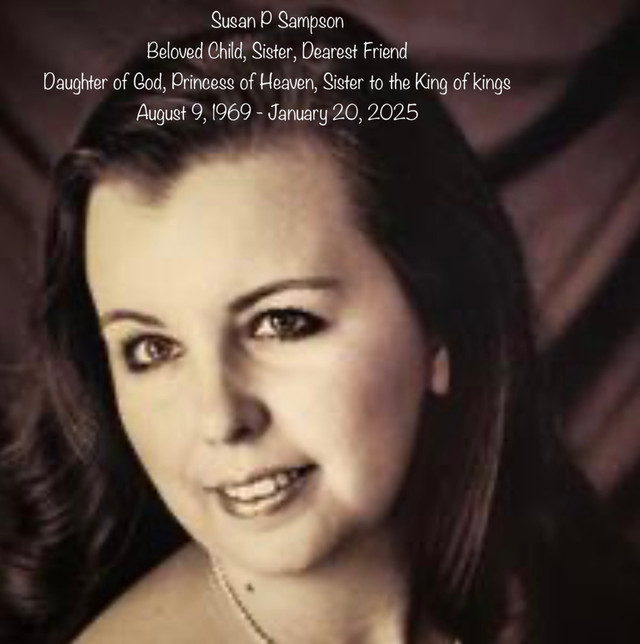
For more on the untimely passing of Dear DePat, please see these three posts.
At one time, DePat handled FOUR daily open threads here, in addition to taking care of her relatives, choir duties, and numerous other responsibilities. She was a powerhouse – a dynamo – a true force of nature.
DePat’s faith in Trump, Q, “The Plan”, the White Hats, and “the anons” in general, was legendary. Although I didn’t always agree with her quick acceptance of some sketchier evidence and fringier theories, I will gladly admit to “coming around” to numerous so-called “conspiracy theories” which she championed first. I was always careful to give her credit for being right, too, when I had been wrong.
It is impossible to overstate how much DePat did for not only this site, but for her country. I urge all to say a quick prayer of thanks, whenever you think of her, for the privilege of knowing, in life or after death, such an exemplary human being, and lover of God.
And thank you, Susie, for the firm foundation which you left us, when you were called to your true home!


Must Women Keep Silent In Church?
It’s too bad that Deplorable Patriot, who was most definitely NOT silent in church, is not around to help us answer this question.
Let’s start with Aubergine’s original frustration and question.
LINK: https://www.theqtree.com/2026/08/30/dear-maga-20260830-open-topic/#comment-1645918

Aubergine(@aubergine)
Offline
Wolf
I am struggling with something.
I have been reading the Bible aloud and recording it for a Christmas gift to my family. Reading out loud is different somehow. My pastor says if you want to hear God, read the Bible aloud. I think he’s right.
I have been reading 1 Corinthians, and I was struck by something. I have said for a while now that if I read something in the Bible outside of the Four Gospels that seems contradictory to what Jesus Himself did or said, I go with Jesus.
Many people will say nothing in the rest of the New Testament contradicts Jesus, but I don’t think that’s true. When Paul says that women should “keep silent” in the churches, that seems to me to contradict the fact that Jesus empowered a woman as his first evangelist when he revealed Himself to the Samaritan woman at the well.
So I’m reading out loud, and it hit me hard that in 1 Corinthians, there are several instances where Paul states (paraphrasing) this is from me not God. Well, then, what am I to make of that?
I know the Bible says “all Scripture” is useful for teaching. That appears in 2 Timothy 3. But 2 Timothy was written around 64-67 A.D. The Four Gospels were written between 65-100 A.D. The “Scripture” 2 Timothy was referring to could not have included the Four Gospels, only the Old Testament, so Paul could only have been referring to that.
I am, as I said, struggling with this.
(/END Aubergine)
There was a response to this question by Scott, and I believe it is highly instructive to examine.

scott467(@scott467)
Online
Wolf
Reply to Aubergine
August 30, 2026 17:17
“Many people will say nothing in the rest of the New Testament contradicts Jesus, but I don’t think that’s true. ”
____________
The reason why people say this, or more broadly, the Bible (Old Testament and New) doesn’t contradict itself, is because all Scripture is given by inspiration of God, and God is perfect, and God knows the end from the beginning, and therefore God does not (cannot) contradict Himself.
So if we see something which on the surface appears to be a contradiction, we are misunderstanding something.
Last edited 1 day ago by scott467
I promised Aubergine that I would get back later with my response, and this post is that response.
In consulting my study Bible, it becomes clear to me that most of the explained responses to this question revolve around the idea that Paul is referring to what was regarded as acceptable practice in Corinthian churches at that time.
Specifically, the section in question is found in Chapter 14 of 1 Corinthians, and in the study Bible is entitled Orderly Worship. The question at hand is prophesying and speaking in tongues. Paul concludes the chapter with this summary (NIV translation).
Therefore, my brothers, be eager to prophesy, and do not forbid speaking in tongues. But everything should be done in a fitting and orderly way.
It is noted in the study Bible that “Paul does not altogether forbid women to speak in church (see 11:5). What he is forbidding is the disorderly speaking indicated in these verses.”
1 Corinthians 11:5 is a section entitled Propriety in Worship, and it deals primarily with men and women’s head-covering or lack thereof in church – specifically the Corinthian churches of that time. As he refers to women who are prophesying or praying, in that context, it is clear that women were indeed speaking in church.
Before going further, I think it is important to reflect on Scott’s answer above. In general, readings of the Bible should be not only self-consistent, but consistent with each other.
I would say, similar to what Scott says, that if you find sections of the Bible in contradiction, then misinterpretation of either the scripture itself or its context, is almost certain to be why.
This is not to say that Aubergine’s method of prioritizing Christ’s direct statements over Paul’s take on Christ, is somehow wrong or bad. Indeed, I have the same policy, and I find it extremely useful – but primarily as a way of locating any inconsistency or misinterpretation on my part. In my experience, what Christ says plainly, is where to begin the route to understanding.
So where does that leave us?
IMO it is a case of not just “apples and oranges”, but First Century apples and oranges.
What was acceptable for men and women in Christ’s public ministry in the Levant – and at different times and places within that ministry – is not the same as what was acceptable for Greek Christians in a house of worship. And – to add lemons and grapefruit to the mix – what is acceptable in different modern houses of worship is not the same as what was acceptable back then.
What IS the same in all these circumstances is the maintenance of Decency, Orderliness, and Propriety appropriate for the venue. IMO Paul is absolutely correct in that. “Good order” – however defined – is to be maintained. Paul is insisting that Corinthian churches not abandon their own standards – particularly at moments when some worshipers are overcome with the Holy Spirit. And that last part is key. He is writing to Corinthians about Corinthian churches, and he is talking about the speaking of tongues and its impact on church services. This was apparently a social problem.
Modern analogous standards in America would not distinguish between men and women, but would insist that worshipers not talk, text, or disturb others during services. Interruptions are only tolerable for emergencies, and even then, discretion may be in order. Worshipers experiencing the Holy Spirit (crying, joyous, speaking in tongues, etc.) are to be left alone or comforted as needed – NOT to be the cause of discussion, ridicule, rude comments, laughter, or other things normally intolerable in a church service (at least, outside of a very humorous and entertaining sermon give precisely with the expectation of eliciting laughter, spoken responses, and the like).
Looking at how modern churches in America vary greatly in their expectations with regard to the following, is instructive.
- children
- teens
- nursing moms
- the elderly
- the handicapped (including disruptive disorders)
- “expressive” worshipers
- concealed carriers / defenders / guards
- ushers
- demonstrators
- those experiencing the Holy Spirit
- visitors
- etc.
Now add the range of church policies on things like head coverings (required or forbidden), other clothing (required or forbidden), and behaviors (mostly forbidden, but some required). We are now in an age where Paul only visits us in writing, through letters to other churches from 2000 years ago! Imagine what he’d be writing now – and the kind of push-back he might get!
Then recognize that he got some push-back back then, too!
The bottom line – I’m not worried about apparent inconsistencies and contradictions in the Bible, because IMO when the Bible is considered fully within its own history and its work on humanity, it all makes sense, it’s not contradictory, and it retains it’s divine nature. It DOES lose simplicity by requiring understanding and context – and that’s OK with me, perhaps easier because I’m a bit of a theological liberal. By which I mean the following.
IMO, some parts of the Bible are more metaphorical than others, some parts are more historical than others, and some are more bookkeeping than others, but they are all united in purpose and on message about GOD. The books, chapters, and verses don’t all have to be the same. The humans that believe don’t all have to be the same. Some churches let the women speak, and even speak to the whole congregation – though always in good order. Some don’t. But we do all have to have Faith.
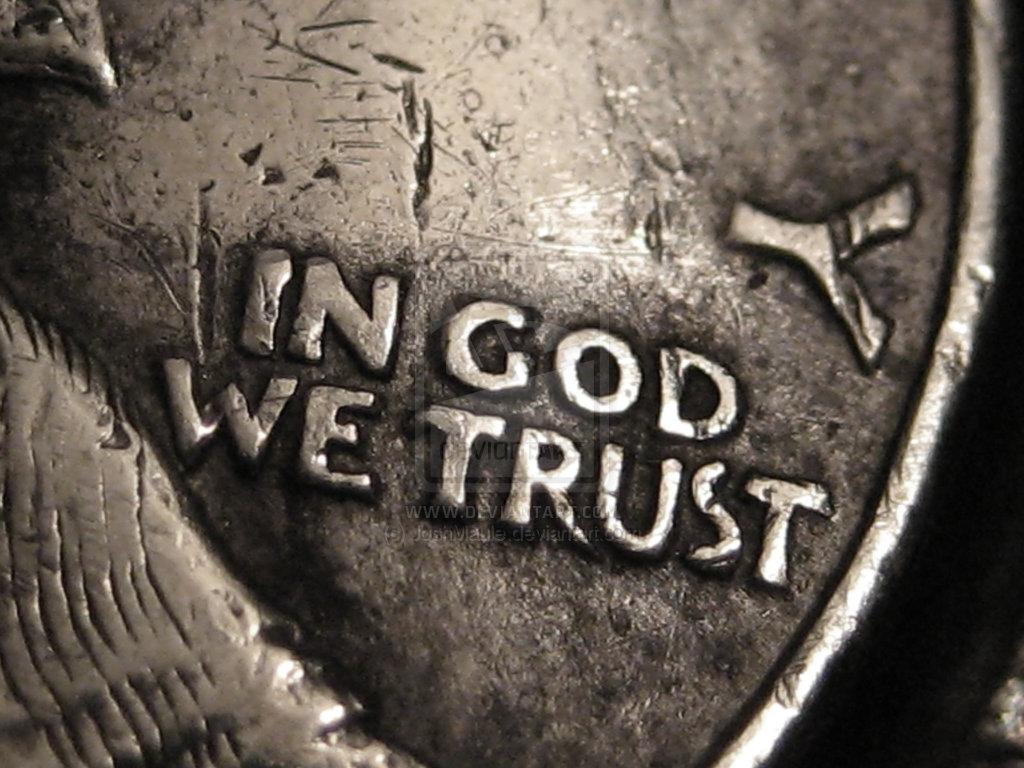
Good Faith is required to understand, and to believe in God. And Faith requires Trust. So let’s trust!
W

And remember…….
Until victory, have faith!

And trust the big plan, too!
And as always….

ENJOY THE SHOW

W