About Scranton:
History
Pre-industrial (1776–1845)
Present-day Scranton and its surrounding area had been long inhabited by the native Lenape tribe, from whose language “Lackawanna” (or lac-a-wa-na, meaning “stream that forks”) is derived. In 1778, Isaac Tripp, the area’s first known white settler, built his home here; it still stands in North Scranton, formerly a separate town known as Providence. More settlers from Connecticut came to the area in the late 18th and early 19th centuries after the American Revolutionary War, as their state claimed this area as part of their colonial charter.
They gradually established mills and other small businesses in a village that became known as Slocum Hollow. People in the village during this time carried the traits and accent of their New England settlers, which were somewhat different from most of Pennsylvania. Some area settlers from Connecticut participated in what was known as the Pennamite Wars, where settlers competed for control of the territory which had been included in royal colonial land grants to both states. (This claim between Connecticut and Pennsylvania was settled by negotiation with the federal government after independence.)
Though anthracite coal was being mined in Carbondale to the north and Wilkes-Barre to the south, the industries that precipitated the city’s early rapid growth were iron and steel. In the 1840s, brothers Selden T. and George W. Scranton, who had worked at Oxford Furnace in Oxford, New Jersey, founded what became Lackawanna Iron & Coal, later developing as the Lackawanna Steel Company. It initially started producing iron nails, but that venture failed due to low-quality iron. The Erie Railroad‘s construction in New York State was delayed by its having to acquire iron rails as imports from England. The Scrantons’ firm decided to switch its focus to producing T-rails for the Erie; the company soon became a major producer of rails for the rapidly expanding railroads.
In 1851, the Scrantons built the Lackawanna and Western Railroad (L&W) northward, with recent Irish immigrants supplying most of the labor, to meet the Erie Railroad in Great Bend, Pennsylvania. Thus they could transport manufactured rails from the Lackawanna Valley to New York and the Midwest. They also invested in coal mining operations in the city to fuel their steel operations, and to market it to businesses. In 1856, they expanded the railroad eastward as the Delaware, Lackawanna and Western Railroad (DL&W), in order to tap into the New York City metropolitan market. This railroad, with its hub in Scranton, was Scranton’s largest employer for almost one hundred years.
The Pennsylvania Coal Company built a gravity railroad in the 1850s through the city for the purpose of transporting coal. The gravity railroad was replaced by a steam railroad built in 1886 by the Erie and Wyoming Valley Railroad (later absorbed by the Erie Railroad). The Delaware and Hudson (D&H) Canal Company, which had its own gravity railroad from Carbondale to Honesdale, built a steam railroad that entered Scranton in 1863.
There’s a lot more on Wiki.
About Wilkes-Barre:
By the 18th century, the Wyoming Valley was inhabited by the Shawnee and Delaware Indian (Lenape) tribes. In 1753, the Susquehanna Company was founded in Connecticut for settling the Wyoming Valley (in modern-day Pennsylvania). Connecticut succeeded in purchasing the land from the Native Americans; however, Pennsylvania already claimed the very same territory through a purchase they made in 1736. In 1762, roughly two hundred Connecticut settlers (Yankees) established a settlement near Mill Creek. They planted wheat and constructed log cabins. The Yankees returned to New England for the winter.[6]
The Connecticut settlers returned in the spring of 1763 with their families and additional supplies. A party of Iroquois also visited the area with the dual purpose of turning the Delaware (Lenape) against the colonists and killing Teedyuscung, a local Delaware chief. On April 19, 1763, the residence of the chief, along with several others, was set ablaze. Chief Teedyuscung perished in the inferno. The Iroquois let the Delaware believe that this atrocity was committed by the settlers. As a result, the Delaware attacked the colonists on October 15, 1763. Thirty settlers were killed, and several others were taken prisoner. Those who managed to escape fled back to New England. The Delaware then burned what was left of the Yankee settlement.[6]
In 1769, the Yankees returned to the Wyoming Valley. Five townships were established by Connecticut. Each one was five square miles and divided amongst forty settlers. Wilkes-Barre Township was one of the original townships; it was named in honor of John Wilkes and Isaac Barré—two British members of Parliament who supported colonial America. Pennsylvanians (Pennamites) also arrived in the valley that same year.[6]
The Connecticut settlers established Fort Durkee, which was named in honor of their leader (Colonel Durkee). This was immediately followed by a series of skirmishes between the Pennsylvanians and Connecticut settlers. The land changed hands several times between the two groups. The Congress of the Confederation was asked to resolve the matter. With the Decree of Trenton, on December 30, 1782, the confederation government officially decided that the region belonged to Pennsylvania; the Wyoming Valley became part of Northumberland County.[6]
Pennsylvania ruled that the Connecticut settlers (Yankees) were not citizens of the Commonwealth. Therefore, they could not vote and were ordered to give up their property claims. In May 1784, armed men from Pennsylvania force-marched the Connecticut settlers away from the valley. By November, the Yankees returned with a greater force. They captured and destroyed Fort Dickinson in Wilkes-Barre. With that victory, a new state (which was separate from both Connecticut and Pennsylvania) was proposed. The new state was to be named Westmoreland. To ensure that they didn’t lose the land, the Commonwealth of Pennsylvania worked out a compromise with the Connecticut (Yankee) settlers. The Yankee settlers would become citizens of Pennsylvania and their property claims would be restored (prior to the Decree of Trenton). As part of the compromise, Pennsylvania would establish a new county in Northeastern Pennsylvania. The Yankees agreed to the terms.[6]
On September 25, 1786, the Pennsylvania General Assembly passed a resolution which created Luzerne County. It was formed from a section of Northumberland County and named after Chevalier de la Luzerne, a French soldier and diplomat during the 18th century. Wilkes-Barre became the seat of government for the new territory. This resolution ended the idea of creating a new state.[6][7][8]
In 1797, several decades after the community’s founding, Louis Philippe, later the King of France from 1830 to 1840, stayed in Wilkes-Barre while traveling to the French Asylum settlement.[9]
Wilkes-Barre’s population skyrocketed due to the discovery of anthracite coal in the 19th century. In 1808, Judge Jesse Fell of Wilkes-Barre discovered a solution to ignite anthracite with the usage of an iron grate; it allowed for the coal to light and burn easier. This invention increased the popularity of anthracite as a fuel source. This led to the expansion of the coal industry in Northeastern Pennsylvania; Wilkes-Barre was nicknamed “The Diamond City” due to its high productivity of mining coal. The growing demand for coal as a domestic heat source resulted in changes to patterns of immigration to Wilkes-Barre in the 19th century. The Pennsylvania guide, compiled by the Writers’ Program of the Works Progress Administration in 1940, noted that:[10]
Venue:
Mohegan Sun Arena at Casey Plaza
255 Highland Park Blvd.
Wilkes-Barre, PA 18702
Special Guest Speakers:
State Senator Doug Mastriano, Republican Nominee for Governor of Pennsylvania
Dr. Mehmet Oz, Republican Nominee for U.S. Senator for Pennsylvania
Mr. Jim Bognet, Republican Nominee for U.S. Representative for Pennsylvania’s 8th Congressional District
Timeline of Events:
8:00AM – Parking and Line Opens
2:00PM – Doors Open and Entertainment Begins
4:00PM – Special Guest Speakers Deliver Remarks
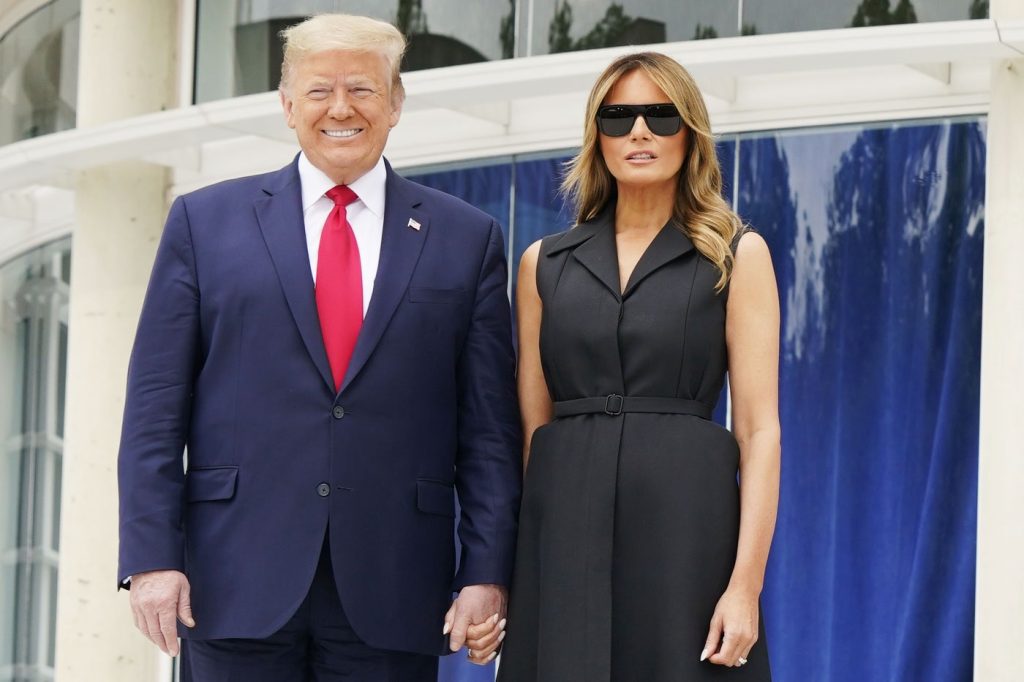
7:00PM – 45th President of the United States Donald J. Trump Delivers Remarks
About Save America
Over the past four years, President Donald Trump’s administration delivered for Americans of all backgrounds like never before. Save America is about building on those accomplishments, supporting the brave conservatives who will define the future of the America First Movement, the future of our party, and the future of our beloved country. Save America is also about ensuring that we always keep America First, in our foreign and domestic policy. We take pride in our country, we teach the truth about our history, we celebrate our rich heritage and national traditions, and of course, we respect our great American Flag.
- We are committed to defending innocent life and to upholding the Judeo-Christian values of our founding.
- We believe in the promise of the Declaration of Independence, that we are all made EQUAL by our Creator, and that must all be TREATED equal under the law.
- We know that our rights do not come from government, they come from God, and no earthly force can ever take those rights away. That includes the right to religious liberty and the right to Keep and Bear Arms.
- We believe in rebuilding our previously depleted military and ending the endless wars our failed politicians of the past got us into for decades.
- We embrace free thought, we welcome robust debate, and we are not afraid to stand up to the oppressive dictates of political correctness.
- We know that the rule of law is the ultimate safeguard of our freedoms, and we affirm that the Constitution means exactly what it says AS WRITTEN.
- We support fair trade, low taxes, and fewer job-killing regulations, and we know that America must always have the most powerful military on the face of the Earth.
- We believe in Law and Order, and we believe that the men and women of law enforcement are HEROES who deserve our absolute support.
- We believe in FREE SPEECH and Fair Elections. We must ensure fair, honest, transparent, and secure elections going forward – where every LEGAL VOTE counts.