This post won’t be on news of the day, but it will be on a political matter, one that perennially pops up.
Every once in a while it’s good to discuss/review some of the foundational issues; it keeps one politically “centered.”
It’s especially important to review/discuss the sorts of things that the Opposition wants to obfuscate or hijack. They do that to try to destroy the concept; it’s very hard to think clearly about something without the appropriate concepts in place, and they love to muddy thought processes, because clear thinking lets one see through their crap.
(Clear thinking is our ally, which is one reason I fight against muddy thinking by people on my side. It’s not the usual “we’re better than this” argument that needs to be ditched because we’re now at war, it’s the fact that we’re laying down our best weapon by engaging in the behavior that they do, and fighting on the turf they chose.)
So today, let’s pick up the question of what a “right” is. I’m going to be talking about the basic rights, not the procedural rights that come into play when someone sues you or the government prosecutes you. Those, of course largely depend on the procedure, whereas the basic rights, we tend to regard as absolutes, inherent in the human condition regardless of how our courts work.
We all know that the Left thinks there is a right to healthcare, a right to child care, a right to an education, and even a right to a basic living income. We disagree, of course. But why? It’s important to know why this is wrong.
The other day I saw a comment on the daily thread, and it implied, I believe, the <em>wrong answer</em>. I wrote a response to it, which apparently no one noticed. (No one “liked” it, and no one took me to task for it either, which means no one hated it. 😀 )
Here’s the original comment I responded to (at https://wqth.wordpress.com/2019/02/28/dear-maga-20190228-open-topic/comment-page-1/#comment-85981)
no, not inconvenient–it’s a RIGHT (according to Lizzy) to have government provide childcare–what could go wrong?
hmmm…which number is that in the Bill of Rights Liz?
(“Lizzy” is Elizabeth “Spreading Bull” Warren a/k/a Fauxcahontas.)
I find this line of thinking–that it’s not a right if it’s not listed in the Bill of Rights–very dangerous for two reasons.
1–What if the writers of the BOR didn’t think of everything? The list of rights could be overly narrowly construed because of that. For instance, if there’s a right to privacy (and I’ve seen good arguments both ways, but let’s assume for the sake of argument that there is), it’s not in the Bill of Rights, and someone could try to deny that it’s a right on that basis.
(Note: Someone might say it’s not a constitutional right, and they’d be correct. But then the question still remains: Does that “someone” believe it’s therefore not a right at all?)
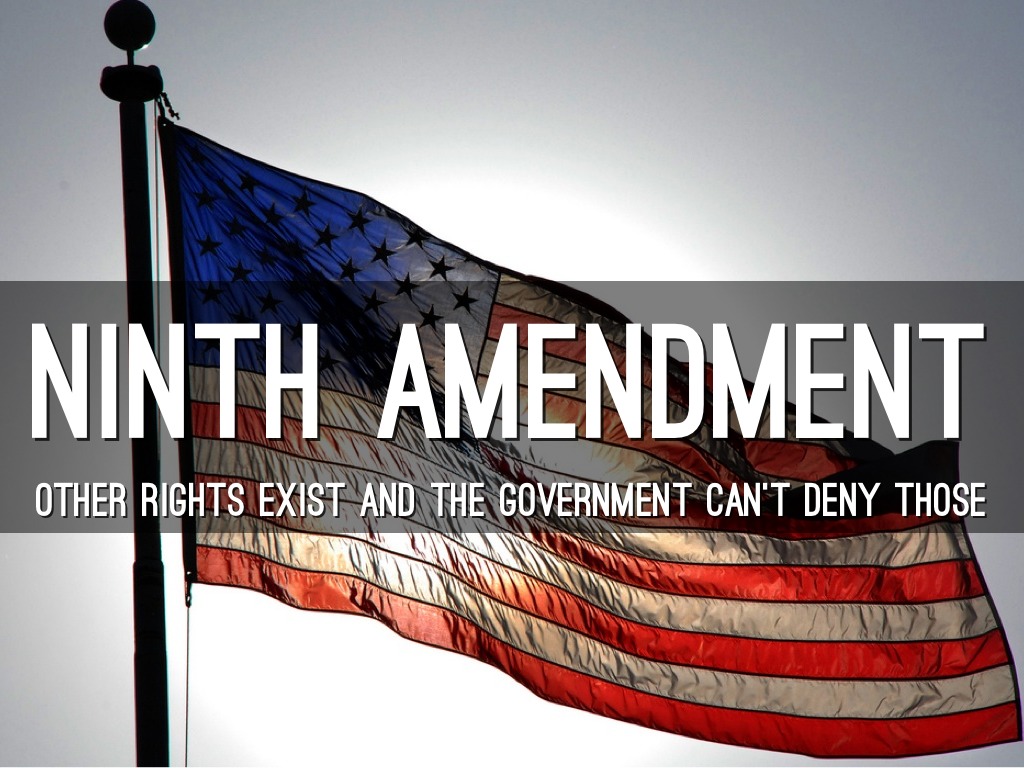
2–Ironically, the writers of the BOR did realize they hadn’t listed everything. So they wrote the Ninth Amendment. Here it is:
The enumeration in the Constitution of certain rights shall not be construed to deny or disparage others retained by the people.
In other words, the Bill of Rights itself explicitly states that something might be a right even though it doesn’t have a number in the Bill of Rights. So there you have it: It would be a mistake to assume that only rights specifically named in the Constitution are rights.
The Ninth Amendment was included in the Bill of Rights to counter an argument that many made against having a Bill of Rights: That listing some rights might be taken as an implication that the government could violate any rights it wanted as long as it didn’t violate those specific rights. Meaning it could run rampant everywhere else.
And you’ve got to admit, they did have a point–it does seem as if the government overreaches with impunity everywhere else; it’s certainly not actually limited to the powers expressly delegated to it in Article I, Section 8 or anywhere else in the Constitution. That’s largely because the SCOTUS generally hasn’t yanked back on the leash unless there was a BOR-listed-rights violation.
The Ninth was an attempt to address this argument, and it is a sleeping giant of constitutional law. If the SCOTUS ever decides to pay attention to it, well–it will be interesting to see what they come up with. One would hope they use it as a meat cleaver, getting rid of a lot of the crap the government does to us, putting it back inside the bounds of the expressly delegated powers.
But the Ninth has its hazards, too: it leaves the door open to inventing bogus rights, then claiming that there’s no argument against them, because of the 9th amendment. I’m sure everyone can think of a favorite example of a bogus right that could be brought in this way. This is very likely the sort of thing that was on the mind of the person who wrote the comment I quoted.
To sum up: It’s clear that the Founders recognized there were more rights than in the Bill of Rights, but since they didn’t specify them, the door is wide open to invent bogus rights. We shouldn’t rely on the BOR “list” to be complete, but we don’t want to let people tack things onto it willy-nilly, either.
How to resolve this?
This is why it’s very important to remain grounded on the true definition of what a “right” is. The Left would love people to lose track of it precisely so they can invent new pseudo-rights, and also to deny the ones that really exist.
But even if we come up with a good definition of a “right,” one that allows for freedom of conscience (speech, religion), freedom to have firearms, etc., but does NOT include “right to health care,” the Left has a counter-argument. To them “rights” are “social constructs,” arbitrary decisions by society which society can decide to countermand whenever it feels like. To the Left, there’s no objective definition of what a “right” is, because rights don’t really exist, so the concept can mean whatever you want it to mean.
So it’s important to be able to defend (even if only in your own mind) against this, to know that your definition of a “right” is objectively correct, not just some arbitrary preference on your part. If you buy into the social construct theory, then your only defense is to make sure they don’t have the power to make the decisions for the rest of us, because once they get that power then you have no choice but to agree that the list they come up with is the correct one, at least this decade.
I’m not going to go into justifying the definition this time around, mainly because I strongly suspect everyone here would disagree with my justification. I’m going to take the definition as a given. (Of course, there’s a potential problem here: because our justifications are different, our definitions might be subtly different too.)
So here it is, my favorite definition of a right.
A “right” is a moral principle defining and sanctioning a person’s freedom of action in a social context.
Let’s note a few key things.
A) It says a man. A right applies to an individual, not to any group.
B) It covers freedom of action. Let’s unpack this a bit more. A right concerns a potential action to be taken by an individual. What that means is, if someone has a right to take an action, they can take it, without compulsion or interference by others. The basis of this is that the basic right is to life, but one must take action to sustain their own life; thus the right to action is a derivative of the right to life.
But note, this is only a right to act on one’s own judgment; it does not impose any obligation on others to take positive action, it only requires them to not interfere.
This is why there is no “right to health care.” Because if there were, you’d have a right to force someone to act to provide you with that health care. Any proposed right that requires someone to take positive action on your behalf, or provide resources to you, cannot be a real right. If there were such a right, it would absolutely interfere with people’s real rights to enjoy the fruits of their own labor, it would turn everyone into a slave.
This is why the Left is not just trying to invent bogus rights, but trying to get rid of real ones as well–those real rights conflict with their bogus ones.
Even actual rights are not immune to attempts to contaminate them. To take an example that irritates me still, “Free Speech” is about being able to speak your mind, it is not about someone having to provide you with a microphone, or an internet site, or a printing press, or even a soapbox, to do so. “Freedom of Religion,” similarly; you can practice your religion; you cannot legitimately force me to pay it either lip service or monetary support.
Of course a right has limits beyond just “don’t force someone else to pay for it,” but those limits are usually pretty obvious, direct damage to others, interfering with their rights, and so on. Your right generally ends when you start violating the rights of others, or cause them physical harm, or intrude on their property. I can speak freely, but I cannot commit libel. I can bear arms, but I can’t go around shooting people or threatening to do so, even if, by my judgment, it might make sense to rob a bank to go buy a Mercedes.
So now you can use this definition as a litmus test for a right covered by the Ninth. Is hiking on my own property a right? It surely is; it’s an action I am undertaking, it’s not requiring anything out of anyone else (other than that they keep off my property and let me walk), and it doesn’t harm anyone else. It’s not specifically listed in the Bill of Rights, but it is a real right, and the Ninth Amendment legitimately covers it.
But if any Leftist schmuck tries to tell you health care is a right, you can call bullshit; and if he tries to slide it in under the Ninth Amendment, you can, for the same reason, call bullshit.