“We do not believe any group of men adequate enough or wise enough to operate without scrutiny or without criticism. We know that the only way to avoid error is to detect it, that the only way to detect it is to be free to inquire. We know that in secrecy error undetected will flourish and subvert.” –J. Robert Oppenheimer
This Sanctuary Sunday Open Thread, with full respect to those who worship God on the Sabbath, is a place to reaffirm our worship of our Creator, our Father, our King Eternal.
It’s also a place to read, post and discuss news that is worth knowing and sharing. Please post links to any news stories that you use as sources or quote from.
In the QTree, we’re a friendly and civil lot. We encourage free speech and the open exchange and civil discussion of different ideas. Topics aren’t constrained, and sound logic is highly encouraged, all built on a solid foundation of truth and established facts.
We have a policy of mutual respect, shown by civility. Civility encourages discussions, promotes objectivity and rational thought in discourse, and camaraderie in the participants – characteristics we strive toward in our Q Tree community.
Please show respect and consideration for our fellow QTreepers. Before hitting the “post” button, please proofread your post and make sure you’re addressing the issue only, and not trying to confront the poster. Keep to the topic – avoid “you” and “your”. Here in The Q Tree, personal attacks, name calling, ridicule, insults, baiting and other conduct for which a penalty flag would be thrown are VERBOTEN.
In The Q Tree, we’re compatriots, sitting around the campfire, roasting hot dogs, making s’mores, and discussing, agreeing, and disagreeing about whatever interests us. This board will remain a home for those who seek respectful conversations.
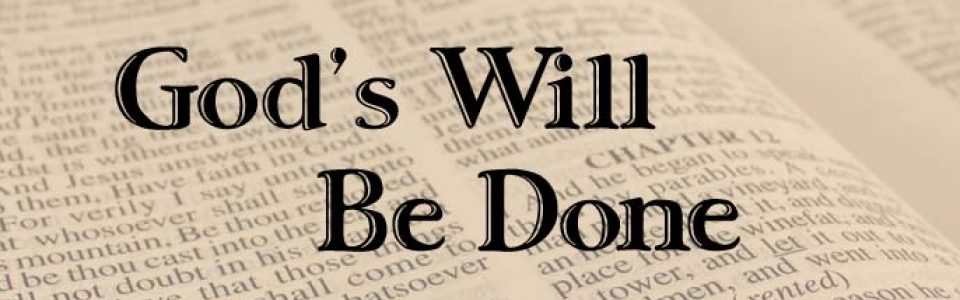
Last Sunday, a post included an image and some verse. The verse mentioned “Paid in full” and “remembered”, a phrase and a word that generated the idea for this Sunday’s daily thread. So, thanks to that poster for the idea. I made a new image from what was posted:
Of the last sayings of Christ on the cross, none is more important or more poignant than, “It is finished.” Found only in the Gospel of John, the Greek word translated “it is finished” is tetelestai, an accounting term that means “paid in full.” When Jesus uttered those words, He was declaring the debt owed to His Father was wiped away completely and forever. Not that Jesus wiped away any debt that He owed to the Father; rather, Jesus eliminated the debt owed by mankind—the debt of sin.
Just prior to His arrest by the Romans, Jesus prayed His last public prayer, asking the Father to glorify Him, just as Jesus had glorified the Father on earth, having “finished the work you have given me to do” (John 17:4). The work Jesus was sent to do was to “seek and save that which is lost” (Luke 19:10), to provide atonement for the sins of all who would ever believe in Him (Romans 3:23-25), and to reconcile sinful men to a holy God.
“All this is from God, who reconciled us to himself through Christ and gave us the ministry of reconciliation: that God was reconciling the world to himself in Christ, not counting men’s sins against them. And he has committed to us the message of reconciliation” (2 Corinthians 5:18-19). None other but God in the flesh could accomplish such a task.
Also completed was the fulfillment of all Old Testament prophecies, symbols, and foreshadowings of the coming Messiah. From Genesis to Malachi, there are over 300 specific prophecies detailing the coming of the Anointed One, all fulfilled by Jesus. From the “seed” who would crush the serpent’s head (Genesis 3:15), to the Suffering Servant of Isaiah 53, to the prediction of the “messenger” of the Lord (John the Baptist) who would “prepare the way” for the Messiah, all prophecies of Jesus’ life, ministry, and death were fulfilled and finished at the cross.
Although the redemption of mankind is the most important finished task, many other things were finished at the cross. The sufferings Jesus endured while on the earth, and especially in His last hours, were at last over. God’s will for Jesus was accomplished in His perfect obedience to the Father (John 5:30; 6:38). Most importantly, the power of sin and Satan was finished. No longer would mankind have to suffer the “flaming arrows of the evil one” (Ephesians 6:16).
By raising the “shield of faith” in the One who completed the work of redemption and salvation, we can, by faith, live as new creations in Christ. Jesus’ finished work on the cross was the beginning of new life for all who were once “dead in trespasses and sins” but who are now made “alive with Christ” (Ephesians 2:1, 5).
On this day and every day –
God is in Control . . . and His Grace is Sufficient, so . . . Keep Looking Up
Hopefully, every Sunday, we can find something here that will build us up a little . . . give us a smile . . . and add some joy or peace, very much needed in all our lives.
“This day is holy to the Lord your God; do not mourn nor weep.” . . . “Go your way, eat the fat, drink the sweet, and send portions to those for whom nothing is prepared; for this day is holy to our Lord. Do not sorrow, for the joy of the Lord is your strength.”
Over the past four years, President Donald Trump’s administration delivered for Americans of all backgrounds like never before. Save America is about building on those accomplishments, supporting the brave conservatives who will define the future of the America First Movement, the future of our party, and the future of our beloved country. Save America is also about ensuring that we always keep America First, in our foreign and domestic policy. We take pride in our country, we teach the truth about our history, we celebrate our rich heritage and national traditions, and of course, we respect our great American Flag.
We are committed to defending innocent life and to upholding the Judeo-Christian values of our founding.
We believe in the promise of the Declaration of Independence, that we are all made EQUAL by our Creator, and that must all be TREATED equal under the law.
We know that our rights do not come from government, they come from God, and no earthly force can ever take those rights away. That includes the right to religious liberty and the right to Keep and Bear Arms.
We believe in rebuilding our previously depleted military and ending the endless wars our failed politicians of the past got us into for decades.
We embrace free thought, we welcome robust debate, and we are not afraid to stand up to the oppressive dictates of political correctness.
We know that the rule of law is the ultimate safeguard of our freedoms, and we affirm that the Constitution means exactly what it says AS WRITTEN.
We support fair trade, low taxes, and fewer job-killing regulations, and we know that America must always have the most powerful military on the face of the Earth.
We believe in Law and Order, and we believe that the men and women of law enforcement are HEROES who deserve our absolute support.
We believe in FREE SPEECH and Fair Elections. We must ensure fair, honest, transparent, and secure elections going forward – where every LEGAL VOTE counts.
The Hohokam people occupied the Phoenix area for 2,000 years.[19][20] They created roughly 135 miles (217 kilometers) of irrigation canals, making the desert land arable, and paths of these canals were used for the Arizona Canal, Central Arizona Project Canal, and the Hayden-Rhodes Aqueduct. They also carried out extensive trade with the nearby Ancient Puebloans, Mogollon, and Sinagua, as well as with the more distant Mesoamerican civilizations.[21] It is believed periods of drought and severe floods between 1300 and 1450 led to the Hohokam civilization’s abandonment of the area.[22]
After the departure of the Hohokam, groups of Akimel O’odham (commonly known as Pima), Tohono O’odham, and Maricopa tribes began to use the area, as well as segments of the Yavapai and Apache.[23] The O’odham were offshoots of the Sobaipuri tribe, who in turn were thought to be the descendants of the Hohokam.[24][25][26]
The Akimel O’odham were the major group in the area. They lived in small villages with well-defined irrigation systems that spread over the Gila River Valley, from Florence in the east to the Estrellas in the west. Their crops included corn, beans, and squash for food as well as cotton and tobacco. They banded with the Maricopa for protection against incursions by the Yuma and Apache tribes.[27] The Maricopa are part of the larger Yuma people; however, they migrated east from the lower Colorado and Gila Rivers in the early 1800s, when they began to be enemies with other Yuma tribes, settling among the existing communities of the Akimel O’odham.[28][29][23]
The Tohono O’odham also lived in the region, but largely to the south and all the way to the Mexican border.[30] The O’odham lived in small settlements as seasonal farmers who took advantage of the rains, rather than the large-scale irrigation of the Akimel. They grew crops such as sweet corn, tapery beans, squash, lentils, sugar cane, and melons, as well as taking advantage of native plants such as saguaro fruits, cholla buds, mesquite tree beans, and mesquite candy (sap from the mesquite tree). They also hunted local game such as deer, rabbit, and javelina for meat.[31][32]
The Mexican–American War ended in 1848, Mexico ceded its northern zone to the United States, and the region’s residents became U.S. citizens. The Phoenix area became part of the New Mexico Territory.[33] In 1863, the mining town of Wickenburg was the first to be established in Maricopa County, to the northwest of Phoenix. Maricopa County had not been incorporated; the land was within Yavapai County, which included the major town of Prescott to the north of Wickenburg.
The Army created Fort McDowell on the Verde River in 1865 to forestall Indian uprisings.[34] The fort established a camp on the south side of the Salt River by 1866, which was the first settlement in the valley after the decline of the Hohokam. Other nearby settlements later merged to become the city of Tempe.[35
Additional links for coverage will be added as they come available if YouTube doesn’t take them down as a precaution against the truth getting out.
Another week, another deluge of BS from the White House and from the Controlled Opposition.
The Audit continues.
The collapse of the Covidschina continues.
No doubt much will be said about those today. (And I have missed a lot this past week.)
To my mind the audits are the last hope for a within-the-system fix to what happened last November. “Within the system” meaning the audits find fraud, the various states decertify the results, and some dang judge rules that Biden must step down and Trump must be installed.
That last step is crucial. The way our system works, “fraud” isn’t a fact until some “competent authority” (i.e., meaning “one that has jurisdiction,” not “one that won’t end up with an ice cream cone on its forehead”) rules it is so. That must happen before the system will accept that the election is vitiated by fraud. No finding of fraud means, as far as they are concerned no fraud, no fraud means nothing vitiated. We sit and fume, because the system has failed.
I’ll leave it to you to decide how likely you think it is that a judge will rule against the Left given the riots that would likely endanger his/her family.
As for the military stepping forward and doing the job instead? Well, that’s technically “outside of the system” and besides…this military, that’s being made woke as we speak?
And as for the “this is just a movie” scenarios that posit that Trump is actually in charge…well, I was talking to a friend the other night and I said to him, “You know there are people who think this whole thing is fake and Trump is really in charge, can come back at any time, he’s just waiting for people to realize how bad the other side is?”
He didn’t believe me.
I told him to google “This is just a movie” and within seconds he came back to me with “I’ll be damned.” He was incredulous that anyone could actually believe such a thing.
I’m no longer incredulous, because I spend time here. (And I am no longer incredulous that some people think that failing to believe it is the same as giving up all hope.)
This is not to say that I believe Biden is actually in charge. I don’t. He is indeed a figurehead, not for Trump, but for the Deep State.
What do we do in the likely event that fraud is found, but no judge will find it to be “fact” as far as the Federal Government is concerned? I keep hoping someone will come up with a suggestion, and so far “general strike” (H/T Scott) is the only one I’ve seen.
Justice Must Be Done.
The prior election must be acknowledged as fraudulent, and steps must be taken to prosecute the fraudsters and restore integrity to the system. (This doesn’t necessarily include deposing Joe and Hoe and putting Trump where he belongs, but it would certainly be a lot easier to fix our broken electoral system with the right people in charge.)
Nothing else matters at this point. Talking about trying again in 2022 or 2024 is pointless otherwise. Which is not to say one must never talk about this, but rather that one must account for this in ones planning; if fixing the fraud in the system is not part of the plan, you have no plan.
This will necessarily be piecemeal, state by state, which is why I am encouraged by those states working to change their laws to alleviate the fraud both via computer and via bogus voters. If enough states do that we might end up with a working majority in Congress and that would be something Trump never really had.
Lawyer Appeasement Section
OK now for the fine print.
This is the WQTH Daily Thread. You know the drill. There’s no Poltical correctness, but civility is a requirement. There are Important Guidelines, here, with an addendum on 20191110.
We have a new board – called The U Tree – where people can take each other to the woodshed without fear of censorship or moderation.
And remember Wheatie’s Rules:
1. No food fights 2. No running with scissors. 3. If you bring snacks, bring enough for everyone. 4. Zeroth rule of gun safety: Don’t let the government get your guns. 5. Rule one of gun safety: The gun is always loaded. 5a. If you actually want the gun to be loaded, like because you’re checking out a bump in the night, then it’s empty. 6. Rule two of gun safety: Never point the gun at anything you’re not willing to destroy. 7. Rule three: Keep your finger off the trigger until ready to fire. 8. Rule the fourth: Be sure of your target and what is behind it.
Pretty steady! Yes, things are a bit down since this time last week, but things are pretty much bouncing around inside a trading range right now, yesterday happened to be down (but within the range) whereas last Friday was up (but within the range).
2500
This year is a BIG anniversary. Both in size and importance. It’s tough to pin down dates, more than “probably August and September” so I’ll talk about this before August.
This is the 2500th anniversary of the Battles of Thermopylae and Salamis, in 480 BC
One thing to get out of the way first. Someone is going to tell me that that anniversary was surely last year, after all wouldn’t 2500 years from any year ending in a zero, be a year ending in a zero?
Yes, provided you don’t cross the BC/AD divide.
480 years after 480 BC was not 0. It wasn’t even 0 BC. It was 1 AD. The year immediately after 1 BC was 1 AD, so 1 AD was 480 years after 480 BC, because 1 BC was 479 years after 480 BC. (This is because people back then thought in ordinals (1st, 2nd, 3rd) and didn’t, therefore have a concept of zero as being a number in its own right, rather than the lack of a number.)
And thus 2020 years after 1 AD, puts us right at now, 2021 AD.
Not that I’m counting, mind you.
Well, OK, this time I am counting. Because this counts.
A bit of background.
In 499 BC, the Persian empire extended from parts of present-day Afganistan, Turkmenistan, and Pakistan, through Iran (Persia), then on into Iraq, Syria, Jordan, and Lebanon, south through present-day Israel (the Persian Empire had allowed the Hebrews to return from captivity, but they were in charge nonetheless), down into Egypt, and across through Anatolia (the Asian part of Turkey); they had even gained a foothold in Europe, the region then called Thrace, but now the European part of Turkey, much of Bulgaria, and the north-easternmost part of mainland Greece.
The western coast of Anatolia/Turkey back then was largely Greek in culture, but those city-states, including ones like Ephesus (yes, that Ephesus that Paul both visited and wrote to a church in) and Miletus had been conquered by the Persian Empire. In 499 they staged a revolt, and Athens, plus a few other cities in what we now think of as Greece, helped them out. Athens even attacked the Persian satrapal capital city of Sardis and burned some temples.
The Persians were exactly as happy about that as you would be with a church being torched.
[Incidentally that area of present day Turkey, the Ionian coast, was still largely ethnic Greek until just after World War I. At that point any ethnic Greeks in Turkey, and any ethnic Turks in Greece, were forced to move out, in an instance of “ethnic cleansing.” So now Ephesus (“Efes” in Turkish) is quite thoroughly Turkish, though it wasn’t just barely a century ago.]
Once the revolt had been put down (by 493 BC), the Persians decided Athens had to be punished, and the entire region that is now “Greece” should be brought into the empire.
In 490 BC the Persians, under Darius the Great, attempted to invade Attica (the roughly triangular-shaped peninsula on which Athens sits; it was the territory that the city-state of Athens ruled at the time). Athens is near the west coast ofAttica, at the north side of the triangle. The invasion was at Marathon, on Attica’s east coast.
The invaders had about 25,000 infantry, 1000 cavalry, and many more men whose main role was to defend the ships that had brought the invasion force. Against them, Athens had 10,000 and one ally, Plataea, contributed another 1,000 men (these are modern estimates). The Persians also had 600 triremes (fast attack ships; I’ll have more to say about them later), which didn’t participate in the battle, which was fought on land.
The Athenians defeated the Persians, killing 4-5000 Persians and losing 192 Athenians and 11 Plataeans (according to Herodotus).
That is decidedly an ass-kicking!
The Athenians and Plataeans who were killed were buried on the battlefield in large mounds called tumuli, which are still there to this day–you can go visit them, if you can find your way past all the museums devoted to marathon running…which does have something to do with this but I don’t want to dive down that rabbit hole.
Tumulus of the Athenians at MarathonTumulus of the Plataeans at MarathonUnder the command of Miltiades (a modern statue, also at Marathon)
The battle of Marathon apparently happened on either August or September 12, 490 BC…but this is not what this article is about; it’s but a prelude, albeit a magnificent one.
After this failure Darius planned a bigger invasion, but died before it could come to fruition. It fell to his son Xerxes to finally bring the Greeks to heel.
[Xerxes, by the way, is our borrowing (and butchering) of a Greek butchering of the guy’s actual Persian name, which was Khshayarsha or Khashayarusha. In Greek it got spelled Ξέρξης, and at least our spelling is a reasonably accurate rendering of that. That first (and fourth) letter is pronounced in Greek as “ks” just like X usually is, but we got lazy centuries ago and just substituted a Z sound. I have heard at least one historian actually pronounce it like “ks.” Xerxes is likely he is the same person as King Ahasuerus in Esther.]
Legend (as repeated by Herodotus) has it that the Persian army numbered two or even three million men (!!); modern historians estimate anywhere from 70,000 to 300,000, that latter number still being humongous for that day.
Xerxes marched his men across the Dardanelles on a bridge specially made for the occasion (built over the hulls of ships), then across Thrace–which, again, was Persian territory. Paralleling them off shore was a naval force, modern estimates say anywhere between 400 and 1200 triremes.
Map of the situation in 480 (showing some of the battles that occurred that year).
That three prong “fork” at the very western edge of Persian territory was treacherous to sail around, particularly the easternmost “tine”, so Xerxes actually cut a canal through it.
After marching (and sailing) across Thrace, Macedonia, a vassal state of the Persian Empire (and the future home of someone named Alexander the Great), had to let them pass. Epirus and Thessaly were divided up among many Greek city states, and they remained neutral in this war. Finally the Persian army reached Thermopylae.
Thermopylae was a pass, but not a mountain pass like Coloradoans are used to, rather a pass between cliffs and the sea. The army had to march along the shoreline here. On one side were cliffs, on the other, the ocean. It was a tight squeeze, so the Greeks figured a small force should be able to hold the Persians back. Thermopylae is directly north of the letter C in PHOCIS in the map above.
In mid 480 BC, a Greek force of about 7,000 men marched to meet the Persians there. Meanwhile a naval force tried to block the Persians at the straits of Artemision (directly north of the word EUBOEA in the map above).
The ground force rather famously included 300 Spartans under King Leonidas
You know, these three hundred Spartans under this King Leonidas:
In late August or early September, the Persians arrived at the pass.
For seven days the 7,000 Greeks were able to hold off 150,000 Persians. Though to call them “Persians” obscures the fact that many, if not most, of them were supplied by places Persia had conquered.
After the second day, a Greek whose name is known to us today, but which I shall not repeat, told the Persians of a “back door” trail through the mountains and Leonidas, King of Sparta, serving as leader of the whole Greek force as well as the Spartans, realized he was going to be surrounded and annihilated. He dismissed almost the entire force, but the Spartans stayed behind–every single one volunteered to stay behind, saying in unison, “We have been ordered to defend the pass”–and the rest is history. Surrounded, they eventually succumbed.
Stranger, go tell the Spartans That we lie here True, even to the death To our Spartan way of life.
(From the epitaph that was placed there, the original is long gone, but was replaced in 1955.)
With the Spartans out of the way, the Persians marched on, and sacked, Athens.
The Athenians, of course, had fled–the fleet from Artemision, which had also lost its battle, had returned, and evacuated the Athenians to the nearby island of Salamis. (In the map below, the island of Salamis is the backward facing C; Athens is near the right hand side.)
The resistance on land had collapsed.
[No, it’s not “salamis” as in the food (saLAHmeez), it’s pronounced “SAL-a-miss” or “SAL-a-meese,” at least when English speakers butcher it.]
The Greek (mostly Athenian) navy, however, was still in the fight. It had taken a beating at Artemesion, but was still operational.
Now I must discuss the trireme.
Yes, the trireme seems laughably primitive to us today. But it was in fact a superbly engineered craft. It had exactly one purpose…to move as quickly as possible and strike and destroy an enemy ship with the ram in front, below the water line.
The picture above shows a modern replica of a trireme that was built during the last century according to the descriptions left to us by ancient sources. (Of course it has been photoshopped to look like an entire fleet, but it is an actual photograph, not a painting.) Engineers who have studied it cannot improve upon the old designs (given the technological constraints of the time, of course); the only exception was that the spacing between the rows of oarsmen was too close. But even here, another source was found which gives the spacing as being the actual optimum!
This replica, the Olympias, is now actually a commissioned ship of the modern Greek navy. They know and respect their history.
The ships were designed to be light, and were propelled by 170 oars, each powered by one man. Contrary to Ben Hur, these men were not slaves; they were free men fighting for their country. (And contra The Ten Commandments Israelite slaves did not build the pyramids, which were actually over 1000 years old at the time of Exodus. But no doubt the Egyptians gave them plenty of other things to do.)
Other ships, like merchant vessels, had hulls coated with lead to ward off water-borne ship worms that would bore into the wood and destroy the ships. This lead coating would have been dead weight on a trireme, so every night, the rowers would drag the ships onto the beach, to kill off any ship worms (they need water to live) and let the boat dry out. This had another benefit in that dry wood was lighter than waterlogged wood.
The Greek fleet consisted of ships from a number of city states, not just Athens, but they were under the command of an Athenian named Themistocles. He actually leaked misinformation to the Persians, letting them know about the route around the other side of Salamis and, yes, telling the Persians how to trap his force, but also causing them to divide their forces. So the Persians surrounded the Greek fleet, and waited for the Greeks to come to them. The Greeks did not. Instead, they pulled their ships up onto the shore, and got a good night’s sleep.
The Persian forces did not do this. Rather, their oarsmen stayed on the ships, and the ships stayed in the water, alert for any Greek attempt to escape.
Xerxes wanted a decisive battle. He had even set up a throne on the Attica mainland overlooking the strait to view it.
And the next day he got it.
As that day dawned, the Persian rowers had not had any sleep in 24 hours. Their triremes–essentially identical to the Greek ones–were waterlogged and heavy, and thus would be slower even if the oarsmen had been well rested. There were about 30 soldiers staged on the top of each one, making them top-heavy.
A rested, fit man can put out 1.2 horsepower for a brief period of time, or .1 horsepower continuously. But only one side was rested.
And that was the side that had one more thing going for it: They were motivated more too. Imagine an Egyptian, a Medean, or a Babylonian oarsman on one of those Persian ships. How much does he want to fight for that dang Persian “King of Kings”? Whereas the Greeks were fighting for their homes and freedom.
As it happened the Persian ships were too numerous. In the tight confines of the strait, they largely got in each other’s way. It was another ass-whupping, by the Greeks.
This happened right under the eyes of Xerxes himself. He was no help; some of his ships’ captains did stupid things trying to impress him.
This was in September of 480 BC, two months shy of 2500 years ago.
The Persian army now had no naval support and could go no further south. Sparta, among other city states, would not be sacked by the Persians.
Indeed Xerxes feared that the Greeks would attack the bridge across the Dardanelles, and took most of his army back with him, leaving his second in command, Mardonius in charge to finish the job the next year.
Instead, the next year saw the battle of Plataea on land–destroying what was left of the Persian army–and the nearly simultaneous naval battle of Mycale, where the remnants of the Persian fleet were destroyed.
Greece would continue to be a thorn in Persia’s side for over a century, until Phillip of Macedon conquered the entire region at the Battle of Chaeronea in 338 BC. His son, Alexander the Great would then go on to conquer Persia.
That Battle of Chaeronea marked the end of Greek independence, which would not be restored for over two thousand years.
OK, so returning to Thermopylae and Salamis: Why does this matter?
Look at that date: 480 BC.
This date was before the Athenian democracy. It was before the great tragedies and comedies. It was before the great philosophers Socrates, Plato, and Aristotle. And all that other stuff we associate with Western Civilization. The only Greek culture we can readily think of that comes from before that year is Homer’s Illiad and Odyssey. And if the Persians had won, none of that would have happened. And no one today would give a rat’s ass about Homer, either–if indeed, he wouldn’t have been long forgotten.
Don’t think that the Romans would have started Western Civilization even without Greek help. The Persians would no doubt have worked their way over to the Italian peninsula. Rome in the 400s and 300s had not really gotten started. Maybe they would have held Persia off. Maybe not. But unless they had a one-in-a-billion Alexander type too, they’d never have gotten the Eastern Mediterranean which was actually the more valuable part of their empire. (They had enough trouble fighting Parthia in the 200s AD even from a position of strength…and that was basically another, later Persian empire.)
And there would have been no Alexander the Great. Macedon was a vassal of Persia; it probably would have been entirely absorbed between 480 and the 330s BC, meaning no king for him to be the son of. And even if he had, what culture would he have spread throughout the ancient world?
Our entire Western heritage would not exist; it would have been derailed before it got started.
And it turned on the Battle of Salamis, 2500 years ago. Here’s to…
…years and counting, not that I’m counting, mind you, of Western Civilization thanks to his man and his fellow Greeks!
Obligatory PSAs and Reminders
China is Lower than Whale Shit
To conclude: My standard Public Service Announcement. We don’t want to forget this!!!
Remember Hong Kong!!!
If anyone ends up in the cell right next to him, tell him I said “hi.”
中国是个混蛋 !!! Zhōngguò shì gè hùndàn !!! China is asshoe !!!
China is in the White House
Since Wednesday, January 20 at Noon EST, the bought-and-paid for Joseph Biden has been in the White House. It’s as good as having China in the Oval Office.
Joe Biden is Asshoe
China is in the White House, because Joe Biden is in the White House, and Joe Biden is identically equal to China. China is Asshoe. Therefore, Joe Biden is Asshoe.
But of course the much more important thing to realize:
Joe Biden Didn’t Win
乔*拜登没赢 !!! Qiáo Bài dēng méi yíng !!! Joe Biden didn’t win !!!
“All power is originally vested in, and consequently derived from, the people.” James Madison
Welcome to Wolf’s Pub! It’s Friday and wouldn’t we love to put the communist revolution on ice? Ah, just as summer peaks, our special today is a lovely ice wine from the Finger Lakes region of upstate New York. In a moment, though. First, the Patriots speak. And how magnificently they speak!
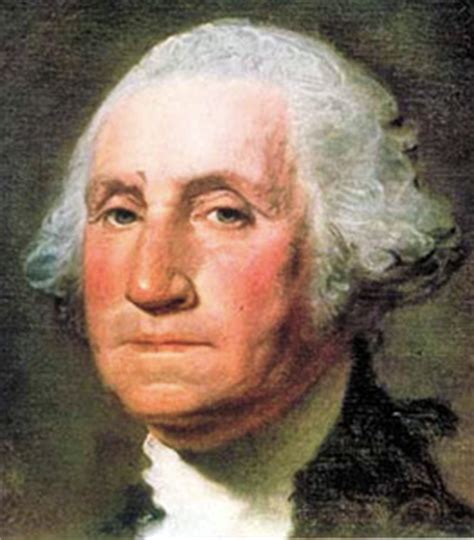
“The hour is fast approaching, on which the Honor and Success of this army, and the safety of our bleeding Country depend. Remember officer and Soldiers, that you are Freemen, fighting for the blessings of liberty—that slavery will be your portion, and that of your posterity, if you do not acquit yourselves like men.”
George Washington
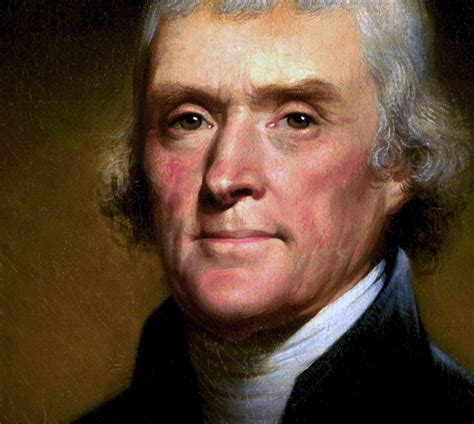
“The God who gave us life gave
us Liberty at the same time.”
Thomas Jefferson
Samuel Adams
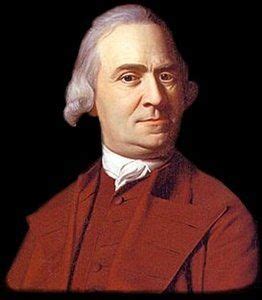
“The people alone have an incontestable, unalienable, and indefeasible right to institute government and to reform, alter, or totally change the same when their protection, safety, prosperity, and happiness require it.”
Samuel Adams
“The basis of our political systems is the right of the people to make and to alter their Constitutions of Government. But the Constitution which at any time exists, until changed by an explicit and authentic act of the whole People is sacredly obligatory upon all.”
George Washington
Thomas Jefferson
“Honor, justice, and humanity, forbid us tamely to surrender that freedom which we received from our gallant ancestors, and which our innocent posterity have a right to receive from us. We cannot endure the infamy and guilt of resigning succeeding generations to that wretchedness which inevitably awaits them if we basely entail hereditary bondage on them.”
Thomas Jefferson
“The ultimate authority…resides in the people alone…The advantage of being armed, which the Americans possess over the people of almost every other nation…forms a barrier against the enterprises of ambition.”
James Madison, Federalist 46
“[The Judicial Branch] may truly be said to have neither FORCE nor WILL, but merely judgment…Liberty can have nothing to fear from the judiciary alone, but would have everything to fear from its union with either of the other departments.”
Alexander Hamilton
“Each State, in ratifying the Constitution, is considered as a sovereign body, independent of all others, and only to be bound by its own voluntary act. In this relation, then, the new Constitution will, if established, be a FEDERAL, and not a NATIONAL constitution.”
James Madison, Federalist 39
“Tyranny is the exercise of some power over a man, which is not warranted by law, or necessary for the public safety. A people can never be deprived of their liberties, while they retain in their own hands, power sufficient to any other power in the state.”
Noah Webster
“The powers delegated by the proposed Constitution to the federal government are few and defined. Those which are to remain in the State governments are numerous and indefinite.”
James Madison, Federalist 45
“Laws are made for men of ordinary understanding and should, therefore, be construed by the ordinary rules of common sense. Their meaning is not to be sought for in metaphysical subtleties which may make anything mean everything or nothing at pleasure.”
Thomas Jefferson
OBAMA CARE
“Is the present state of the national republic enough? Is virtue the principle of our government? Is honor? Or is ambition and avarice, adulation, baseness, covetousness, the thirst for riches, indifference concerning the means of rising and enriching, the contempt of principle, the spirit of party and of faction the motive and principle that governs?”
John Adams
“It is natural to man to indulge in the illusions of hope. We are apt to shut our eyes against a painful truth—and listen to the song of that syren. …For my part, whatever anguish of spirit it might cost, I am willing to know the whole truth; to know the worst, and to provide for it.”
Patrick Henry
“We should never despair. Our situation before has been unpromising and has changed for the better, so I trust, it will again. If new difficulties arise, we must only put forth new exertions and proportion our efforts to the exigency of the times.”
George Washington
“It does not take a majority to prevail…but rather an irate, tireless minority, keen on setting brushfires of freedom in the minds of men.”
Samuel Adams
“I consider the foundation of the Constitution as laid on this ground that ‘all powers not delegated to the United States, by the Constitution, nor prohibited by it to the states, are reserved to the states or to the people.’ To take a single step beyond the boundaries thus specially drawn around the powers of Congress, is to take possession of a boundless field of power, not longer susceptible of any definition. …The states can best govern our home concerns and the general government our foreign ones. I wish, therefore, … never to see all offices transferred to Washington, where, further withdrawn from the eyes of the people, they may more secretly be bought and sold at market.”
Thomas Jefferson
“He that would make his own liberty secure, must guard even his enemy from oppression; for if he violates this duty, he establishes a precedent that will reach to himself.”
Thomas Paine
“We are in danger of being overwhelmed with irredeemable paper, mere paper, representing not gold nor silver; no sir, representing nothing but broken promises, bad faith, bankrupt corporations, cheated creditors and a ruined people. …Of all contrivances for cheating the laboring classes of mankind, none has been more effective than that which deludes them with paper money.”
Daniel Webster
“It is an object of vast magnitude that systems of education should be adopted and pursued which may not only diffuse a knowledge of the sciences but may implant in the minds of the American youth the principles of virtue and of liberty and inspire them with just and liberal ideas of government and with an inviolable attachment to their own country.”
Noah Webster
“Let each citizen remember at the moment he is offering his vote that he is not making a present or a compliment to please an individual – or at least that he ought not so to do; but that he is executing one of the most solemn trusts in human society for which he is accountable to God and his country.”
Samuel Adams
Maricopa County, AZ
“There is danger from all men. The only maxim of a free government ought to be to trust no man living with power to endanger the public liberty.”
John Adams
“In all criminal prosecutions, the accused shall enjoy the right to a speedy and public trial, by an impartial jury of the State and district wherein the crime shall have been committed, which district shall have been previously ascertained by law, and to be informed of the nature and cause of the accusation; to be confronted with the witnesses against him; to have compulsory process for obtaining witnesses in his favor, and to have the Assistance of Counsel for his defence.”
Amendment VI, the Bill of Rights
“Representative government and trial by jury are the heart and lungs of liberty. Without them, we have no other fortification against being ridden like horses, fleeced like sheep, worked like cattle, and fed and clothed like swine and hounds.”
“I agree with you that in politics the middle way is none at all.”
John Adams
Brad Raffensberger
“When once a man has cast a longing eye on offices, a rottenness begins in his conduct.”
Thomas Jefferson
“Citizens, by birth or choice, of a common country, that country has a right to concentrate your affections. The name of American, which belongs to you in your national capacity, must always exalt the just pride of patriotism more than any appellation derived from local discriminations.”
George Washington
“They accomplished a revolution which has no parallel in the annals of human society. They reared the fabrics of governments which have no model on the face of the globe. They formed the design of a great Confederacy, which it is incumbent on their successors to improve and perpetuate.”
James Madison
“A bill of rights is what the people are entitled to against every government on earth.”
Thomas Jefferson
Benjamin Franklin
“It is a common observation here that our cause is the cause of all mankind, and that we are fighting for their liberty in defending our own.”
Benjamin Franklin
“Contemplate the mangled bodies of your countrymen, and then say ‘what should be the reward of such sacrifices?’ …If ye love wealth better than Liberty, the tranquility of servitude than the animated contest of freedom, go from us in peace. We ask not your counsels or arms. Crouch down and lick the hands which feed you. May your chains sit lightly upon you, and may posterity forget that you were our countrymen!”
Samuel Adams
“The American war is over; but this far from being the case with the American revolution. On the contrary, nothing but the first act of the drama is closed. It remains yet to establish and perfect our new forms of government, and to prepare the principles, morals, and manners of our citizens for these forms of government after they are established and brought to perfection.”
Benjamin Rush
ICE WINE
Now to the beauty of winemaking, in particular ice wines. Ice wines are really and truly made from frozen grapes. To the purist that means grapes that were left on the vine until the cold weather arrives. Once temperatures reach into the negatives, the grapes are harvested and immediately pressed.
Being frozen, only the juice is reserved when pressed, and the water (ice) is taken out of the process. This allows for a very sweet wine that is usually used for dessert, or an aperitif, and sometimes as an ingredient in cocktails. Of course, ice wines are quite expensive and sold in 375 ml bottles.
Canada is a big producer of ice wines, but here’s a lovely version from the Finger Lakes. It’s from Wagner Vineyards. The bartenders are ready and as an added bonus, there is a lovely selection from Wegmans olive bar to go along.
Yes, watching the videos below made me really, really miss upstate New York. It’s such a special place, and there are so many wonderful people and places there. Sigh. Ok. Picking myself up.
Video on the ice wine process here:
And just for nice, here is a lovely video all about the Finger Lakes. The first 20 minutes tell a wonderful story of the Finger Lakes and how wineries came to be there. I had no idea that American winemakers almost killed the wine industry in Europe but ended up also saving it because of American grape rootstocks. Ya gotta listen in.
Also in the first 20 or so minutes is the wonderful story of Dr. Frank Konstantin, a Ukrainian immigrant who was able to prove to American winemakers that the best wine grapes could be grown in the cold weather of New York. Great story. And Dr. Konstantin was an American patriot. Enjoy his story!
HOUSE RULES
It’s the domestic communists who are undertaking a covert revolution of “fundamentally transforming” our beloved Republic, and that is putting us all in a bad mood. I like to keep that in mind. My nature is not to be a stinker. But my nature is to be a patriot. They aren’t going to make the name ‘patriot’ a dirty appellation. They aren’t going to define us.
However, we do want to stay civil and act kindly to one another. Wolf’s House Rules are here. In case you want to duke it out, the Utree is the place to go. Also, it’s a place to reconvene if needed.
STOP WITH THE FEAR STUFF!
“Fear not, for I am with thee: turn not aside, for I am thy God: I have strengthened thee, and have helped thee, and the right hand of my just one hath upheld thee.”
This Sanctuary Sunday Open Thread, with full respect to those who worship God on the Sabbath, is a place to reaffirm our worship of our Creator, our Father, our King Eternal.
It is also a place to read, post and discuss news that is worth knowing and sharing. Please post links to any news stories that you use as sources or quote from.
In the QTree, we’re a friendly and civil lot. We encourage free speech and the open exchange and civil discussion of different ideas. Topics aren’t constrained, and sound logic is highly encouraged, all built on a solid foundation of truth and established facts.
We have a policy of mutual respect, shown by civility. Civility encourages discussions, promotes objectivity and rational thought in discourse, and camaraderie in the participants – characteristics we strive toward in our Q Tree community.
Please show respect and consideration for our fellow QTreepers. Before hitting the “post” button, please proofread your post and make sure you’re addressing the issue only, and not trying to confront the poster. Keep to the topic – avoid “you” and “your”. Here in The Q Tree, personal attacks, name calling, ridicule, insults, baiting and other conduct for which a penalty flag would be thrown are VERBOTEN.
In The Q Tree, we’re compatriots, sitting around the campfire, roasting hot dogs, making s’mores, and discussing, agreeing, and disagreeing about whatever interests us. This board will remain a home for those who seek respectful conversations.
“Thy will be done” is one of the requests in the Lord’s Prayer. In part, Jesus taught His disciples to pray, “Our Father in heaven, hallowed be your name, your kingdom come, your will be done, on earth as it is in heaven” (Matthew 6:9–10). Jesus Himself pleaded for God’s will to be done in the Garden of Gethsemane.
Prior to His crucifixion, Jesus prayed, “My Father, if it is possible, may this cup be taken from me. Yet not as I will, but as you will” (Matthew 26:39). Jesus was committed to seeing God’s will accomplished, and the prayer “Thy will be done” was a theme of His life.
Most simply, to pray, “Thy will be done,” is to ask God to do what He desires. Of course, we’re praying to the God who said, “Let there be light,” and there was light (Genesis 1:3), so we know that
His sovereign decree will be accomplished, whether or not we pray for it.
But there is another aspect of God’s will, which we call His “revealed” will or “preceptive” will. This is God’s “will” that He has revealed to us but that He does not force upon us. For example, it is God’s will that we speak the truth in love (Ephesians 4:15) and that we not commit adultery (1 Corinthians 6:18) or get drunk (Ephesians 5:18). When we pray, “Thy will be done,” we are asking God to increase righteousness in the world, to bring more people to repentance, and to further the cause of the kingdom of His Son.
When we pray, “Thy will be done,” we acknowledge God’s right to rule. We do not pray, “My will be done”; we pray, “Thy will be done.” Asking that God’s will be done is a demonstration of our trust that He knows what is best. It is a statement of submission to God’s ways and His plans. We ask for our will to be conformed to His.
The Lord’s Prayer begins by acknowledging God as Father in heaven. Jesus then models petition, presenting three requests to the Father: 1) That God would cause His name to be hallowed; in other words, as Albert Mohler explains, “that God would act in such a way that he visibly demonstrates his holiness and his glory” (The Prayer That Turns the World Upside Down: The Lord’s Prayer as a Manifesto for Revolution, p. 61). 2) That God would bring His kingdom to earth; that is, that the preaching of the gospel would convert sinners into saints who walk in the power of the Holy Spirit and that God would rid the world of evil and create the new heavens and new earth where God will dwell with His people and there will be no more curse and no more death (see Revelation 21—22). 3) That God’s will would be done “on earth as it is in heaven” (Matthew 6:10). In heaven, the angels perform God’s desire completely, joyfully, and immediately—what a world this would be if humans acted like that!
As a point of clarification, “Thy will be done” is not an impassive prayer of resignation. Jesus’ prayer in Gethsemane was not passive or fatalistic in the least; He bared His heart before the Father and revealed His ultimate desire: for God’s will to be accomplished. Praying, “Thy will be done,” acknowledges that God has more knowledge than we do and that we trust His way is best. And it is a commitment to actively work to further the execution of God’s will.
Romans 12:1–2 says, “Therefore, I urge you, brothers and sisters, in view of God’s mercy, to offer your bodies as a living sacrifice, holy and pleasing to God—this is your true and proper worship. Do not conform to the pattern of this world, but be transformed by the renewing of your mind. Then you will be able to test and approve what God’s will is—his good, pleasing and perfect will.” Understanding who God is, we submit ourselves to Him and allow Him to transform us. The more we know God, the more readily our prayers will align with His will and we can truly pray, “Thy will be done.” We can approach God in confidence that “if we ask anything according to his will, he hears us” (1 John 5:14–15).
By faith, we know that praying, “Thy will be done,” is the best thing we can ask for.
“Now to him who is able to do immeasurably more than all we ask or imagine, according to his power that is at work within us, to him be glory in the church and in Christ Jesus throughout all generations, for ever and ever! Amen” (Ephesians 3:20–21).
On this day and every day –
God is in Control . . . and His Grace is Sufficient, so . . . Keep Looking Up
Hopefully, every Sunday, we can find something here that will build us up a little . . . give us a smile . . . and add some joy or peace, very much needed in all our lives.
“This day is holy to the Lord your God; do not mourn nor weep.” . . . “Go your way, eat the fat, drink the sweet, and send portions to those for whom nothing is prepared; for this day is holy to our Lord. Do not sorrow, for the joy of the Lord is your strength.”
Joe Biteme, properly styled His Fraudulency, continues to infest the White House, we haven’t heard much from the person who should have been declared the victor, and hopium is still being dispensed even as our military appears to have joined the political establishment in knuckling under to the fraud.
One can hope that all is not as it seems.
I’d love to feast on that crow.
Justice Must Be Done.
The prior election must be acknowledged as fraudulent, and steps must be taken to prosecute the fraudsters and restore integrity to the system.
Nothing else matters at this point. Talking about trying again in 2022 or 2024 is hopeless otherwise. Which is not to say one must never talk about this, but rather that one must account for this in ones planning; if fixing the fraud is not part of the plan, you have no plan.
Lawyer Appeasement Section
OK now for the fine print.
This is the WQTH Daily Thread. You know the drill. There’s no Poltical correctness, but civility is a requirement. There are Important Guidelines, here, with an addendum on 20191110.
We have a new board – called The U Tree – where people can take each other to the woodshed without fear of censorship or moderation.
And remember Wheatie’s Rules:
1. No food fights 2. No running with scissors. 3. If you bring snacks, bring enough for everyone. 4. Zeroth rule of gun safety: Don’t let the government get your guns. 5. Rule one of gun safety: The gun is always loaded. 5a. If you actually want the gun to be loaded, like because you’re checking out a bump in the night, then it’s empty. 6. Rule two of gun safety: Never point the gun at anything you’re not willing to destroy. 7. Rule three: Keep your finger off the trigger until ready to fire. 8. Rule the fourth: Be sure of your target and what is behind it.
Not much action this week, other than palladium taking a beating and rhodium staging a partial recovery.
(Update: Real gold can now be had for $125 over paper gold spot prices at places like Kitco. If you arent too fussy about branding you could get even lower (however, you’ll end up selling for less at the other end of the pipe).)
1905 – Quadruple BOOM!!! (Part XI of a Long Series)
Introduction
Let us start off by recapping our list of mysteries and conservation laws.
Conservation of mass
Conservation of momentum
Conservation of energy
Conservation of electric charge
Conservation of angular momentum
The following mysteries were unanswered at the end of 1894.
Why was the long axis of Mercury’s orbit precessing more than expected, by 43 arcseconds every century? Was it, indeed, a planet even closer to the sun? If so, it’d have been nice to actually see it.
Why was Michelson unable to measure any difference in speed of light despite the fact we, being on planet Earth that is orbiting the sun, had to be moving through the medium in which it propagates?
What makes the sun (and other stars) shine (beyond the obvious “they shine because they’re hot” answer). What keeps the sun hot, what energy is it harnessing?
How did the solar system form? Any answer to this must account for how the planets, only a tiny fraction of the mass of the solar system, ended up with the vast majority of the angular momentum in the system.
What is the electrical “fluid” that moves around when there is an electric current, and that somehow seems imbalanced when we perceive that an object has a charge? Were there both negative and positive fluids, or just one fluid that had a natural neutral level; below it was negative (deficit), above it was positive (excess)?
Why are there so many different kinds of atoms? How did electrical charges relate to chemistry? How is it that 94 thousand coulombs of charge are needed to bust apart certain molecules (though it often had to be delivered at different voltages depending on the molecule)?
Why were the atomic weights almost always a multiple of hydrogen’s? Why was it never quite a perfect multiple? Why was it sometimes nowhere near to being a multiple?
Why does the photoelectric effect work the way it does, where it depends on the frequency of the light hitting the object, not the intensity?
Why does black body radiation have a “hump” in its frequency graph?
I’ve crossed off #5 because J. J. Thomson’s discovery of the electron answered that question.
Because of Max Planck’s work, we had something that might answer #9, depending on how real energy “quanta” were. So I’ll leave that un-crossed-out for now.
And thanks to the discovery of radioactivity we had a hint of a sort of thing that might explain #3. But that’s a lot more tenuous than even Planck’s hypothesis.
With that reminder in place, 1905 saw the publication of four very important papers.
1 – Brownian Motion.
Brownian motion is the jiggling around of bacteria or specks of pollen when looking at them in a drop of water, under a microscope.
This paper used statistical mechanics to come up with a model for how often molecules of water might just happen to “kick” a small object suspended in the water. Statistical mechanics assumes that molecules in a fluid (gas or liquid) will have an average momentum with the particles distributed around that average. Max Planck (and many others) considered it a bit suspect, but today we know it to be the underpinning of thermodynamics. Planck, as we saw in Part X, had found that statistical mechanics could provide a model that would explain the blackbody curve (the Maxwell – Boltzmann distribution). By assuming that atoms could only emit energy in discrete packets, the amount of energy depending on the frequency, he was able to match the curve.
Anyhow, this paper showed that if water consisted of molecules, actual molecules, not just a convenient construct, and statistical mechanics were true, then Browning motion was explained. It had been one of those minor mysteries up until then (one which I didn’t even put in my list, but, let’s face it, I should have).
So now we have a paper showing that Brownian motion is actually hard evidence that atoms and molecules exist, rather than just being a convenient mental “crutch” to understand chemistry. And the position of statistical mechanics is much more solid.
So the last holdouts who didn’t believe atoms were real were finally convinced as this paper made the rounds.
BOOM!!!
2 – Photoelectric Effect
In Part 8, I described how Heinrich Hertz was able to produce, and prove the existence of radio waves. However, he had died in 1894 leaving a bit of a puzzle behind, the photoelectric effect (item 8 on our list of mysteries). Sparks would jump a gap more easily, if ultraviolet light were hitting the gap. Even dim ultraviolet light would have some effect. But lower frequency/longer wavelength light would do absolutely nothing no matter how bright it was.
What turning up the ultraviolet intensity did do, however was cause more electrons to jump the gap, resulting in a bigger spark.
So the frequency had to be high to enable the spark jumping in the first place; if enabled, the intensity was proportional to how big the spark was. If not enabled, no spark, no matter what.
Recall that with a wave, the energy in the wave is in the amplitude, in other words, the intensity of the wave, not its frequency. And Maxwell had pretty much demonstrated to everyone’s satisfaction that light is a wave. Newton had thought it was a particle but between Maxwell and certain earlier investigators who got light to diffract and generate interference patterns (and even measured the frequency of some forms of light), the particle hypothesis looked to be deader than Hitlary Klinton’s conscience.
But this paper begged to differ.
If light came in little pieces, and the energy in those pieces depended on the frequency, then the photoelectric effect made sense. If a piece…call it a photon…had a high enough energy, it could knock an electron loose and it could jump the gap in Hertz’s apparatus. If a photon didn’t have the energy necessary, it wouldn’t. And neither would any number of those low-energy photons, hitting different electrons in the metal.
But even one high energy photon would knock an electron loose; a bunch of them would knock many electrons loose.
So if light consisted of photons and if the energy of a photon depended on the frequency of the light, then the photoelectric effect could be explained.
But this bit about energy depending on frequency should sound familiar (unless you blew Part X off last week).
Yes, this paper invoked E = h ν. Energy depending on frequency, times that h constant.
And so Planck’s crazy idea that just happened to “fit” with black body radiation now also explained the photoelectric effect.
But even more: Planck had concluded that the quantum principle was a limitation on the atoms that emitted the black body radiation. This paper claimed it was a limitation on the light itself.
So now, we can cross off #9. And #8 as well, as a reward for our patience with #9.
But not in 1905. Most physicists rejected this paper at first, because it strongly implied that light was a particle, not a wave. James Clerk Maxwell had pulled together his four equations, after all, and other people before him had succeeded in measuring wavelengths of light. Something that makes no sense if light is particles, not even particles whose name begins with the 17th letter of the alphabet.
Hold on, though, before we go further. Is light a particle or a wave?
The best answer to that, after a lot of tussling in the early 20th century turned out to be: “Yes.” It’s not a wiseacre answer either, it turns out that light is either/or depending on the circumstance, or if you like our host’s formulation, “AND Logic” applies here.
The greatly oversimplified statement would be that light propagates as a wave, as Maxwell showed, but when it interacts with something (generally consuming the photon) it will behave like a particle, as this paper was the first to claim.
OK, that’s counter-intuitive, you say. Why yes, yes it is. It’s a particle sometimes and a wave other times and it will develop it’s sometimes got aspects of both. But physicists a hell of a light brighter than anyone reading these words (and I do read them myself, so I am not excluding myself from this comparison) have wrestled with this for over a century, and as near as they can tell, that’s Just. The. Way. It. Is.
They might pretend to understand it in a deep sense, but the more honest ones will tell you, no they don’t, in fact, they’ll even quote an old saw that if you think you understand it, that’s proof positive you don’t (this was from Richard Feynman). But physicists can describe the behavior to a T, with excruciating precision.
Incidentally, photons themselves have no mass, and no electric charge (even though they carry the electromagnetic force, they aren’t themselves affected by it). So they don’t interact with anything, until they hit something and are absorbed. And “interacting” with something includes being detected by it, like, say, being seen by your eyes. When your eye sees a photon, it’s now gone. Any photon you don’t see, because it misses your eye, is effectively invisible to you and you can’t know it’s there unless it hits something else and affects it in a way that you can see. There will be plenty of other particles that are similar. Many forms of radiation that go right through you, for instance, are harmless–it doesn’t interact with your body. It’s when you stop radiation with your body that you have a problem. (Note, however, that if a charged particle goes through your body, it can cause all kinds of havoc as it passes by, because it affects the molecules in your body, but in turn, you will deflect the particle slightly in the process.)
In 1921 this paper won its author the Nobel Prize. By then the arguments against it had largely been resolved.
BOOM !!!! (even if it was a delayed blast).
3 – The Electrodynamics of Moving Bodies
There was (and is) a conundrum in Maxwell’s equations. If you moved a coil of wire through a stationary magnetic field, a current is induced in the wire. The problem is, if you looked at it from the point of view of the wire, the effect is due to an electrical force. But from the point of view of the magnet, the effect is due to a magnetic force.
Which kind of force it was depended on who was moving and who was stationary.
However, we had known since Galileo that as long as you’re moving without changing speed, the laws of physics look the same whether you’re moving or not. He used the example of a ship moving smoothly through water. You can play dodgeball on that ship (including all that fun velocity, momentum, mass, and force) without having any way of knowing that it’s in motion. If people outside can see the game, they’ll note different velocities (because they will add the velocity of the ship to everything), but still see everything being consistent with Newton’s laws.
All of those things I dragged you through weeks ago work the same if they’re happening in a moving frame of reference…or not. This is now referred to as Galilean relativity: The laws of nature are the same in all inertial reference frames (i.e., ones not accelerating). He put this forward clear back in 1632.
So it shouldn’t matter whether you’re in the frame of reference of the loop of wire (and see the magnet as moving) or in the frame of reference of the magnet (and see the loop as moving).
Oddly enough, the fact that Michelson and Morley had been unable to tell any difference in the speed of light through a vacuum (mystery #2) no matter what direction they measured it in, turned out to be part of the solution for this.
This paper showed that if you posit Galilean relativity and that the speed of light in a vacuum is one of those things that’s always the same no matter what inertial frame you are in, then the conundrum found in Maxwell’s Equations is resolved.
The paper mentioned the Michelson-Morley experiments in passing; later on the author would not even remember he had done so. But their experiment strongly implied the second postulate (the invariance of the speed of light in a vacuum, in any inertial reference frame, even one that’s moving at near light speed as seen by us) is actually true. And indeed we have never, ever seen this fail.
I’ll explain later some of the ramifications of this. Get ready for a bit of a wild ride.
If you measure the speed of light in a vacuum, which is denoted by the symbol c, with perfect accuracy and precision (while riding your invisible pink unicorn, which came bundled with your perfectly accurate and precise lab equipment) you will get precisely 299,792,458 meters per second.
The invariance is so well accepted that now, the meter has been defined in terms of the speed of light. You’ll occasionally read some article claiming that the speed of light is changing. Although scientists are trained to never say never, they’re so confident that cdoes not change that they define their units by it–if they’re wrong about this it would wreak havoc.
I’ll have more to say about this presently, but first, a minor rant.
To the popular reader in America, the speed of light is often given as 186,000 miles per second. Of course, that’s an attempt to make it more relatable to us Yanks since it’s not in kilometers, but it’s still a fail.
We don’t think in miles per second. We think in miles per hour. (Unless, of course, we’re astrodynamics or rocketry geeks–but those folks have mostly gone metric, outside of some rocket production facilities.)
The speed of light is almost precisely one billion kilometers per hour, or 671 million miles per hour.
That’s not really relatable either, but at least when you read that you know just how unrelatable that is.
Most of us have never even traveled at the speed of sound (since the SST never really took hold). That’s 767 miles per hour at standard temperature and pressure (sea level or 29.92 inches of mercury at 20 C/68 F). Under those conditions, that’s Mach 1. Light moves at Mach 874,837.
It’s going to be a while before we get moving that fast.
The implications of this turn out to be staggering and mind-bending, and I’ve promised to try to walk you through them below.
But because of those implications, this is a BOOM!!! too. And we get to cross Mystery #2 off the list.
Now on to the fourth paper, in some ways the biggest BOOM of all.
4 – Does the Inertia of a Body Depend Upon Its Energy Content?
The third paper seemed to raise paradoxes, so the fourth paper took them on and came up with a surprising result, and I will try to explain that too, below. Here I’ll just state it.
An object, just sitting there, doing nothing, has energy. In fact, because it’s not moving and isn’t kinetic energy, it’s called rest energy.
How much energy? A LOT of energy. A one kilogram object, in fact, contains 89.875 quadrillion joules of energy. That will run a million 100 watt light bulbs for almost 28 1/2 years.
One very big implication of this was that mass and energy were equivalent, meaning that in some cases some mass could become energy.
But that violates the first and third conservation laws I listed up above.
Or rather, it combines them into a new law, the conservation of mass-energy. However, particle physicists just tend to think of matter as a form of energy by preference (it’s more convenient than thinking of energy as a form of matter) so they will still talk about conservation of energy, while never talking about conservation of mass (they see it change far too often…as you will eventually see).
Another consequence is that even a massless particle, like a photon, has momentum. If you recall, though, momentum requires both mass and speed. Well the photon has speed and energy. Energy is equivalent to mass, so it can have momentum. Which is why light sails work in space, albeit not very quickly; the sun’s light can push–ever so slightly–on the sail, which provides a tiny amount of thrust, without the need for rocket propellant. Because the thrust is so small, you have to already be in free fall for it to do any good, but there it is (oh, a super duper powerful laser might succeed in launching a payload, but we probably couldn’t power such a thing without blacking out the entire planet). But not having to put the mass of the propellant onto the space probe means we can launch a bigger actual probe, or launch it at higher speed, or some of each. And you get continuous thrust. It’s surprising how much a continuous small thrust can do over time. This is huge from a space exploration standpoint; if we can get into orbit we can potentially get places cheaply as long as we aren’t in an absolute tearing hurry.
BOOM!!!!
And I do mean “boom” here because that kind of energy can be explosive.
As the Japanese learned on two days in summer, 1945.
Muck with America, and you just might get a physics lesson a lot more painful than any of my posts.
(Talk about physics lessons–right after I wrote that sentence a bolt in my chair broke and I got a few more lessons in physics.
All in 1905
All four of these papers came out in 1905. Some had an immediate impact, others were disregarded, because they were too outlandish.
But today they are all landmark papers, and 1905 is considered one of the biggest years in the history of science, on a par with 1666 when Newton had the key insights that resulted in the theory of universal gravitation and the spectrum and calculus.
Who wrote these papers? I never mentioned their authors, did I.
WRONG. I never mentioned their author.
One man.
This man.
That is a photo from 1904. One year before what is now called the Annus Mirabilis. He was 26 when he wrote those papers.
And in case you still don’t recognize him, here he is in 1947.
Yes, this was Albert Einstein. And he wasn’t done yet!
Oh, and the formula that tells you how much energy there is in a mass (or vice versa)?
E = mc2
The units of E are joules, which are kg m2 / s2. Notice on the right there is mass (kg) and a speed, squared, which is to say m/s, squared. The units match.
The units always must match!
If Albert Einstein had, after all his algebra, come up with some formula where the units didn’t match, he’d have known to start over. Or in other words, this could not have happened (but it’s too funny to pass up).
And yes, c is the speed of light. The one kilogram mass thus has, or rather, is (1kg)(299,792,458 m/s)(299,792,458 m/s) = 89,875,517,873,681,764 joules.
And this is a gigantic hint, as to where the huge amounts of radiation in radioactivity might be coming from.
Roundup
Let’s recap/update those lists.
Conservation of mass
Conservation of momentum
Conservation of energy
Conservation of electric charge
Conservation of angular momentum
(ADD:) Conservation of mass-energy
The following mysteries were unanswered at the end of 1894.
Why was the long axis of Mercury’s orbit precessing more than expected, by 43 arcseconds every century? Was it, indeed, a planet even closer to the sun? If so, it’d have been nice to actually see it.
Why was Michelson unable to measure any difference in speed of light despite the fact we, being on planet Earth that is orbiting the sun, had to be moving through the medium in which it propagates?
What makes the sun (and other stars) shine (beyond the obvious “they shine because they’re hot” answer). What keeps the sun hot, what energy is it harnessing?
How did the solar system form? Any answer to this must account for how the planets, only a tiny fraction of the mass of the solar system, ended up with the vast majority of the angular momentum in the system.
What is the electrical “fluid” that moves around when there is an electric current, and that somehow seems imbalanced when we perceive that an object has a charge? Were there both negative and positive fluids, or just one fluid that had a natural neutral level; below it was negative (deficit), above it was positive (excess)?
Why are there so many different kinds of atoms? How did electrical charges relate to chemistry? How is it that 94 thousand coulombs of charge are needed to bust apart certain molecules (though it often had to be delivered at different voltages depending on the molecule)?
Why were the atomic weights almost always a multiple of hydrogen’s? Why was it never quite a perfect multiple? Why was it sometimes nowhere near to being a multiple?
Why does the photoelectric effect work the way it does, where it depends on the frequency of the light hitting the object, not the intensity?
Why does black body radiation have a “hump” in its frequency graph?
Almost all of those crossoffs are Einstein’s work.
Even better, two and a half of the rest of the items will get crossed off in the future, either by Einstein, or by people using what he did in 1905.
Boom!!! Boom!!! Boom!!! and KABOOM!!!!
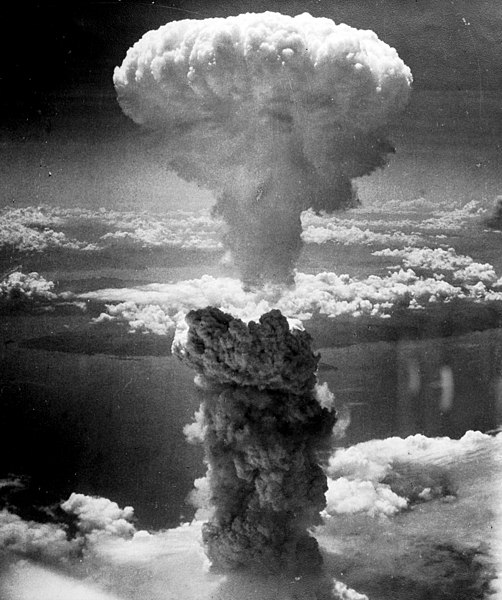
Physics Demo, Nagasaki, Japan, August 9, 1945
Special Relativity
The third and fourth of Einstein’s 1905 papers were on what we today call “Special Relativity” and some of its implications. It’s “special” relativity, because it applies only to inertial reference frames, a “General” theory of relativity would apply even to accelerating reference frames.
I’m going to be honest with you, this won’t be easy to explain, and it won’t be easy to understand, either. So let us gird our loins, and jump in.
The two postulates are 1) that the laws of physics are the same in any inertial reference frame, and 2) that the speed of light in a vacuum, c, is the same in any inertial reference frame.
The first was and is utterly uncontroversial. Galileo had used the example of a smoothly moving ship (as in sea vessel) to explain it clear back in 1632. (The only thing that had changed by 1905 was that people would used moving trains to visualize the principle. Gotta keep up with progress. Nowadays we use rocket ships or airplanes. But we’ll stick to vintage 1905 imagery for now.)
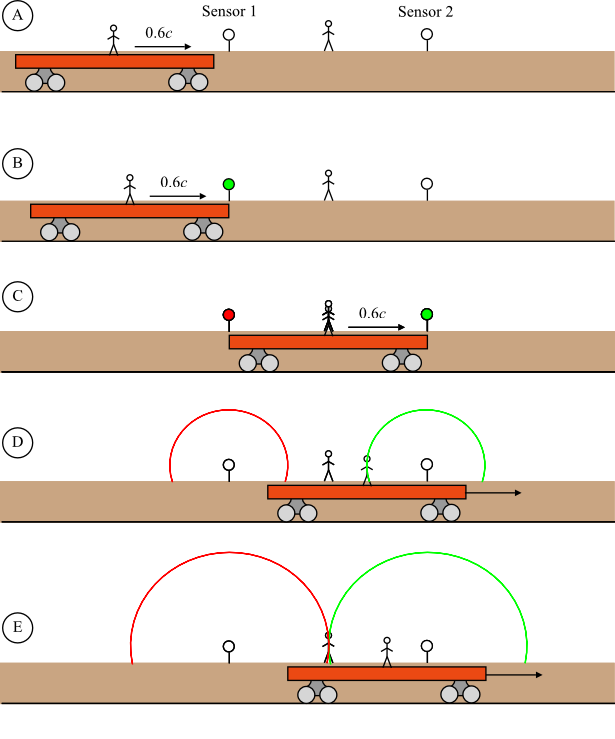
The second postulate doesn’t sound too crazy, either, right? If you’re standing on a train, moving at, say, 60 percent of the speed of light and aim a laser pointer directly ahead, and light it off, you expect it to look to you like it’s moving away at the speed of light. And the same if you fire it sideways, or backwards. Just as if you were firing a gun, or throwing a baseball. (Nor does it matter if you’re doing something distinctly less American.) You shouldn’t be able to tell the train is moving, or in which direction, just by the way the light, or bullet, or baseball (or, egad, soccer ball) behaves.
And likewise, if you’re instead standing on the railway station platform. Things should look the same there, too. You can’t tell which frame of reference is moving, because there is no “God’s Eye point of view” fixed, absolute reference frame. Any such frame can be treated as if it were fixed and the rest of the universe were moving.
Yes, that seems reasonable. But this will not: If you’re standing on the train and point the laser pointer straight ahead, and turn it on, not only will you measure its speed as c, but so will someone standing on the railroad platform!!! Now, you would expect the guy on the railroad platform to measure 0.6c + 1.0c = 1.6c for the speed of the light beam coming off the laser pointer, but he does not. He measures it as c. You cannot just add the velocities together, as you do for baseballs and bullets and trains. When I said “the speed of light in a vacuum, c, is the same in any inertial reference frame,” I meant it, thoroughly. It applies even to a beam of light starting in some other reference frame!
How can this be?
Velocity, remember, is distance over time. If the velocity stays the same no matter what, perhaps the time and distance don’t.
Time Dilation
Well, let’s think about this somewhat mathematically. Light travels a bit less than a foot in a billionth of a second (a nanosecond). So I’m going to actually define a new unit of length, a bit less than a foot, the distance light travels in a billionth of a second. I am going to call it a pod (from the Greek for “foot,” as in tripod and bipod, to say nothing of tetrapods (amphibians, reptiles, birds and mammals)). Expressed in pods, then, c is 1 pod per nanosecond ( 1 pod/ns ).
So returning to our 0.6c train, in the time it takes light to move ten pods’ distance (a hundred-millionth of a second), the train moves 6 pods’ distance.
Imagine the inside of the train car is 8 pods high, and call that distance L. Your friend is in the train, and he sets a laser pointer on the floor, pointing straight up. On the ceiling is a mirror, and the pointer also has a detector in it, waiting for the reflected beam. He sets the laser pointer to fire a very short burst instead of continuous beam.
He fires it off, the pulse goes straight up, bounces off the mirror, and comes straight back down. Total trip, 16 pods, total time 16 nanoseconds. Like in the picture below:
Figure 11-3 illustration of what the guy on the train sees. Round trip time is 2 x L / c, and L is 8 pods. C is 1 pod per nanosecond.
But what do you, standing on the railway platform, see?
You see the pulse of light traveling from the floor of the train, up at a slant to hit the mirror on the ceiling (because the train is moving, remember), then back down at the same slant to hit the detector.
Figure 11-4 – Someone standing on the railway platform sees the pulse of light leave the laser pointer when the train is at A, hit the mirror on the ceiling when the train’s ceiling is at is at B, then hit the detector when the train has gotten to C. The total distance traveled is 2D, D is the hypotenuse of a right triangle.
Rather than turn this into a story problem and ask you to figure out how long D and 1/2 v delta t prime is, I’ll give it to you. D is 10 pods long. The train moves 60 percent as fast, so going from A to B it moves 6 pods. The light beam travels a total of 20 pods (10 each way). So our lengths are 8, 6 and 10 pods (and our times are 8, 6 and 10 nanoseconds). This is consistent with Pythagoras:
c2 = a2 + b2 102 = 82 + 62
You measure the pulse’s speed as c, and measure the time it took to be 20 nanoseconds.
The same trip took 16 nanoseconds as far as the man on the train is concerned, and 20 nanoseconds as far as you are concerned.
This is not an illusion. If you could see a clock running on that train as it went past, it would show as running 20 percent slow. Time would actually be slower on the train, as seen from outside the train.
If this seems totally against your intuition–that time can literally crawl just because of how fast you’re moving, you’re not alone. You never see that in real life.
But in real life you don’t move close to light speed, either!
This is time dilation. It’s absolutely real, and has been confirmed again and again and again in experiments for the last 116 years.
And you thought time zones were bad.
Given something moving past at some speed, how much is the time dilation? Gee, I think it’s time for some algebra. I’m going to call the time running on the train tt, the time on the platform tp, and the speed of the train vp (v as seen from the platform. vt, the speed of the train seen from the train, is, of course, zero.) I’m doing this instead of what’s in the diagrams because I find it hard to keep track of what the tick mark means (and I think these diagrams are using it for the other side of things than my physics textbook did, to boot).
OK, so the time measured on the train is:
tt = 2L/c.
Pretty simple.
For you on the platform, you need 2D, and you can get there with a right triangle and Pythagoras, solving for D (which is ctp/2)
[ctp/2]2 = L2 + [tpvp/2]2
So let’s do some cleanup here. First multiply everything by 4, it will get the two-squareds out of the denominators.
[ctp]2 = 4L2 + [tpvp]2
Then divide by c2 and just write out all the squareds in full:
tp2 = 4L2/c2 + [tpvp/c]2 tp2 = 4L2/c2 + tp2vp2/c2
Now bring the tp2vp2/c2 on the right over to the left.
tp2 – tp2vp2/c2 = 4L2/c2
Factor out the tp2:
tp2[ 1 – vp2/c2] = 4L2/c2
Divide both sides by what’s in the square brackets.
tp2 = 4L2/c2 ( 1/[ 1 – vp2/c2] )
Now take the square root of both sides.
tp = 2L/c ( 1/sqrt[ 1 – vp2/c2] )
But, going way back, the guy on the train measured the total time as tt = 2L/c, so:
tp = tt ( 1/sqrt[ 1 – vp2/c2] )
That whole thing inside the parentheses shows up again and again, so it’s often written as gamma (γ).
tp = γtt
Let’s check this against our original specific example, of the train moving at 60 percent of c.
vp/c is 0.6. Square this, and get 0.36. Subtract from one, get 0.64. Take the square root, get 0.8. Divide that into one, get 1.25–that’s γ. And indeed the time on the platform, 20 ns, is 1.25 times the time measured on the train, 16 ns. Cool!
Let’s examine γ some more:
γ = 1/sqrt[ 1 – vp2/c2]
When v is very, very low, like, say walking speed which is about one billionth of c, then v/c is a small, small fraction, and if you square it, it gets even smaller, it’s now a quintillionth. Subtract from one, and you still get, basically, one, as close as you can measure it, just a bit under. Take the square root and you get even closer to 1, and when you divide that into one, you get a number just a teensy bit over one. So both times are so close to being the same, you can’t tell the difference. And this is what you see in everyday life.
Now set vp to 86.6 percent of the speed of light. Dividing by C of course you get .866; square it and you get .75, subtract from one and get .25, take the square root of that, get 1/2, divide into 1 to get 2. Two hours, two years, pass on the platform for every hour or year on the train.
Note that you have to get to over 86 percent of the speed of light just to make γ equal to 2. After that, though, it takes off. At 99 percent of light speed, γ is 7. At 99.9 percent of light speed, γ is 22.3. Which means the entire Barack Obola administration, which was about 22.3 years long [wasn’t it?], could have gone by in one year.
The number explodes the closer you get to light speed. When actually at light speed, the part inside the square root sign becomes zero, and you are dividing 1 by zero. Technically you’re not supposed to say “that’s infinity”, but that’s basically what it is.
γ is always one or more. Sometimes a lot more.
OK, if you’ve thought about this a bit, you’ve probably come up with an objection to this.
If I see the train traveling at 0.6c and its clocks are running slow, how about what the people on the train see when they look at the big clock on the station tower, as they move past it? From their point of view, the station is moving at 0.6c (albeit backwards); shouldn’t they see its clock run slow, too?
Yes, they do.
Doesn’t that seem contradictory, though? How can you have two clocks, and each one is slower than the other?
I don’t have a good intuitive explanation of this one, and the one I found on wikipedia is kind of weak, too (they drew an analogy to two people far apart both looking small to each other). The fancy explanation is, you can’t really get into a contradiction until you bring the two clocks close to each other, stationary with respect to each other, and check total elapsed time. But doing that means you have to decelerate one (or both) of the clocks, and once you’ve done that you’re not dealing with inertial rest frames any more. The frame that accelerated is now a different case from the one that didn’t, they’re not symmetric any more and one clock can indeed mark off less total time than the other without it being a contradiction.
I’m sure you’ve heard about the “twins paradox” too. One twin gets on a starship, takes a long journey at close to the speed of light, comes back, and he ends up being younger than the other twin, who stayed behind. The same objection seemingly applies. From the point of view of the traveling twin, the guy who stayed behind traveled away from him and came back, why isn’t he the younger one, or better yet, why are they not the same age at the end?
The reason why is because the traveling twin accelerated, decelerated at his destination, accelerated to come back, and decelerated to arrive back here on Earth. He was not in an inertial frame, but the stay-behind twin was.
That sounds pretty arbitrary and lazy, but the more detailed answer involves going back to our train and railway platform, and demonstrating that two events in two different locations that seem simultaneous to someone at the platform will not seem simultaneous to someone on the train…and vice versa. I’ll talk about that in a moment, but first there’s something else to get out of the way.
Length Contraction
Imagine a passenger on that train…the one moving at 0.6c. He’s going to a destination six trillion pods away. Light covers a billion pods a second, so light would cover this distance in six thousand seconds (less than two hours). The train, though is moving at .6c and conveniently will take exactly ten thousand seconds to make the trip. But the clock on the train is running slower, it’s running at 80 percent of the speed of the clock at the station. The people on the train will perceive that 8000 seconds have gone by when they reach their destination. But the train measures the rest of the world’s velocity as .6c backwards. Multiplying the time by the velocity, they will think the trip was only 4.8 trillion pods (4/5ths) as far.
This is length contraction.
This too is symmetrical. The people on the train see the world shortened in the direction of travel. But the people on the ground see the train shortened in the direction of travel, too. Remember, from the standpoint of the train, the clock on the platform is running slowly as the train goes by, so it must take less time for those people on the platform to see the train go by, than it would otherwise. So they see the train 20 percent shorter than it would be, were it standing right next to the platform at rest.
In fact if lt is the length of the train, as seen on the train, and lp is the length of the train as seen from the platform:
lp = lt/γ
This time you divide by gamma. And again, this effect is totally immeasurable and imperceptible at day-to-day speeds, but it’s as real as Joe’s pedophilia at close to light speed. Again, it has been measured, time and time again.
Simultaneity
Now it’s kind of hard to get a handle on “simultaneous.” How can you tell that two events happening fairly far away (but in different directions) are simultaneous? If there is a flash of light to the north, and another to the south, how can you decide they’re simultaneous, when you know it took some amount of time for the light from the two events to reach you?
Well, the simple case is if you’re halfway between the two events. The light from both should arrive at the same time if they’re simultaneous, because in both cases they had to travel the same distance. Similarly, if you know the distances to the events, you can simply correct for light speed delay even if they’re not equidistant from you, figure out when the events happened by subtracting the delay from when you saw it happen, and compare.
OK, let’s go back to the railway station.
You set up a pair of sensors. When the train reaches the sensor, it will flash green. When it passes the sensor (i.e., the sensor sees that there is no train right there any more) it will flash red.
Now you set the sensors as far apart as the length of the train, on the edge of the platform (after figuring in its contraction).
You stand precisely in between the sensors.
When the train reaches the first sensor, it flashes green. When it reaches the second sensor, that sensor flashes green, but the train is just finishing passing the first sensor, so it flashes red at the same time. You see the red flash and the green flash simultaneously, and you know you’re standing exactly midway between them, so you conclude that you got the two sensors at the right distance because the train started passing one at the same instant it finished passing the other.
Figure 11-5 A. Train approaches first sensor at .6 c. B. Train reaches the first sensor, it lights green C. Train now reaches the second sensor, which lights green, and is done passing the first sensor, which lights red. There is a clock at each sensor that reads midnight at this moment. D. The man on the train sees the green flash from sensor 2, but NOT the red flash from sensor 1 even though he was midway between them when they flashed. He also sees that the clock at sensor 2 shows it is midnight. E. The man on the platform sees both sensor flashes at the same time, and he says, ah, ha! I’m halfway in between them so I know they both fired simultaneously. They both show midnight. Meanwhile the man on the train still hasn’t seen sensor 1 flash. When he finally does, he’ll see it says midnight and he’ll conclude that sensor 2 (which from his point of view is chasing sensor 1) has a clock that is running fast compared to Sensor 1.
What about someone standing in the middle of the train? He is moving toward the second beacon as it flashes green, and away from the first beacon as it flashes red. He will therefore see the green flash before the red flash. At the time you see them both flash, he is already down the track, and therefore must have seen the green flash already! Since he knows he was midway between the beacons (from his viewpoint one was at the front of the train, the other at the back), and he knows the speed of light is a constant, he concludes that the two flashes were not simultaneous, the green flash from the front of the train came first.
This is actually consistent with the length contraction of the station that he sees. He sees that the sensors are too close together because of the length contraction, thus the front of the train reached the second sensor before the back of the train reached the (too close) first sensor. Thus the first sensor fires its red flash after the second sensor fires its green flash. And that is precisely what he saw happen.
If you are thinking that this is an artifact of the fact that the train is moving and the platform is stationary, think again. From the standpoint of the train, the train is stationary and the platform is moving. From the standpoint of a third party, they might both be moving while that third party is at rest.
None of these reference frames is any better or “truer” than the others. That’s what the Galilean equivalence means. You can’t even tell which one is moving by measuring how fast light moves in the stationary aether…as Michelson and Morley demonstrated (to their puzzlement at the time)…because there is no stationary aether.
Imagine that there is a clock right next to each sensor, and that the train passed them at midnight, precisely. The guy on the train will see the second clock the same time he sees the green flash, and it will say midnight. Later on he will see the red flash from the first sensor, and see that the clock there reads midnight. From his standpoint the clock that passed him first (going backwards) at sensor one, is lagging behind the clock that is “chasing” it (clock and sensor #2). And the formula for just how far off they are is:
t2 – t1 = Lv /c2
Here L is the length of the train, as seen on the train. In other words, the length of the train when you don’t see it as moving, because if you see it moving, its length will contract. The answer is how far the second (chasing) clock is ahead of the first (leading) clock in the train’s reference frame, when the two clocks are synchronized in their own (platform) reference frame.
If the train is 60 pods long, those two clocks will seem to be off by: 60 x 0.6pod/ns divided by 1 pod2/nsec2 = 36 nanoseconds, which given how fast things are moving and how short our time scale is, is very significant. The train requires 100 ns to move its length, and the apparent discrepancy in the clocks is over a third that much.
The Twins Paradox
Now we can go back to the “twins paradox.” Let’s say the ship is going to Sirius, which close to 8 light years away (we’ll ignore the difference for purposes of illustration). A light year is the distance light travels in a year, so light would take eight years to make the trip. From d = vt, we can write a light year as ct with t in years (1), and c in meters per year instead of per second. And let’s figure the ship is going to travel at .8c. The ship will therefore take ten years to get there, as seen from earth. It will then immediately turn around and come back at the same speed. Total time, as seen from earth, 20 years.
Billy is going on the expedition. Bob is staying home.
Bob analyzes the trip. He sees the ship traveling 8 light years at .8c and concludes the one way trip will take ten years. Two ways, 20 years.
Let’s look at Billy’s perspective. Calculating γ at 1 2/3s, he can divide by that (since he’s going to be the one on the train, by the math) and see that the distance to Sirius will contract by 40 percent (he will multiply it by .6). So once he’s on that ship, traveling at .8c, Sirius will be 8 x .6 = 4.8 light years, and traveling at .8c, it will take him six years, one way, 12 years round trip.
From Billy’s point of view, however, it’s Bob that’s doing the traveling, so he should be younger than Billy when they meet again. In fact, while Billy ages 6 years, Bob should be aging 6 x .6 = 3.6 years, or in total, Billy ages 12 years, Bob ages 7.2 years. Not 20! So Billy is scratching his head, wondering how that “twenty years” of aging that Bob will do, possibly can be.
It’s resolved this way. Imagine a clock on earth, and a clock at Sirius, that were synchronized with each other. A person midway between them, at rest with respect to both of them, sees them both reading four years ago (he is four light years from each clock, so their signals are delayed by four years when they reach him).
While Billy is traveling to Sirius, it’s going to look like two clocks moving past him at .8c, separated by 8 light years. It will look like the one at Sirius is chasing the one at earth. Go back to our formula:
t2 – t1 = Lv /c2
L is 8 light years, v is equal to 0.8 c, so the Sirius clock looks to Billy (after correcting for all light-speed delay) as if it were 6.4 years ahead of the clock on Earth. (You have to convert everything back to meters and seconds and use 299,792,458 meters/second for that to work out. I just did it, that’s the right answer.)
So Billy arrives at Sirius, and stops. He’s now in the frame of reference of the Sirius clock, which, remember, was, while he was moving, 6.4 years fast. The clock did not just run backwards, so it still reads what it read before. But that means the clock back on earth must have advanced 6.4 years while Billy was slowing down to a stop, because in this reference frame, the two clocks are synchronized. So Billy thought Bob had aged 3.6 years during the trip; now he has to add 6.4 years to that to get…10 years. So Bob ages ten years during half of the trip.
It might also help to have the two twins send each other messages once a year (as they perceive it). Each twin can then monitor the aging of the other by simply counting signals. They don’t even need to correct for light speed delay, because they will receive all of the signals sent by the time they are re-united at the end of the round trip; some will be later than others but all will get there before the end of the trip. As it turns out, when they are moving further apart, each will get a signal from the other once every three years. When they are heading towards each other, the signals arrive every four months (a third of a year).
Looking at it from Traveler Billy’s point of view, during the six years he spends traveling to Sirius, he gets two signals. When he turns around and heads back to earth, he starts getting three signals a year for six years, total eighteen, grand total 20. The last signal from Bob reaches Billy in earth orbit just as the journey ends. Bob aged twenty years.
From Stay at Home Bob’s point of view, while Billy is travelling out for ten years, he gets three signals, the last arriving at year nine. But then he continues to get signals after ten years, from Billy as he was traveling outwards, because the last signal was sent from Sirius, eight light years away, ten years after the trip started. So Bob gets six signals over the course of eighteen years. Then the signals from Bob as he’s coming back arrive, 3 per year, for two years, for a total of six more signals, including the last one from earth orbit that arrives just as Bob arrives. total, twelve signals; Bob aged 12 years.
There are aspects of this I could not cover, including the Doppler shift, which is how one gets the 3 per year, one every three year numbers I just used.
I also didn’t have time to explain how E = mc2 comes from all of this (Einstein’s fourth paper, the big kaboom!!! both literally and figuratively).
But I am running out of time and I have to produce the diagram for simultaneity still (no good one to be had online). But it’s now done and it’s 12:26. Just need to fix the precious metal prices!
Obligatory PSAs and Reminders
China is Lower than Whale Shit
Remember Hong Kong!!!
Whoever ends up in the cell next to his, tell him I said “Hi.”
中国是个混蛋 !!! Zhōngguò shì gè hùndàn !!! China is asshoe !!!
China is in the White House
Since Wednesday, January 20 at Noon EST, the bought-and-paid for His Fraudulency Joseph Biden has been in the White House. It’s as good as having China in the Oval Office.
Joe Biden is Asshoe
China is in the White House, because Joe Biden is in the White House, and Joe Biden is identically equal to China. China is Asshoe. Therefore, Joe Biden is Asshoe.
But of course the much more important thing to realize:
Joe Biden Didn’t Win
乔*拜登没赢 !!! Qiáo Bài dēng méi yíng !!! Joe Biden didn’t win !!!
It started with this Gospel passage proclaimed on the morning of June 27, the Thirteenth Sunday of Ordinary Time:
MARK 5:21-43
21And when Jesus had crossed again in the boat to the other side, a great crowd gathered about him; and he was beside the sea. 22Then came one of the rulers of the synagogue, Ja’irus by name; and seeing him, he fell at his feet, 23and besought him, saying, “My little daughter is at the point of death. Come and lay your hands on her, so that she may be made well, and live.” 24And he went with him. And a great crowd followed him and thronged about him. 25And there was a woman who had had a flow of blood for twelve years, 26and who had suffered much under many physicians, and had spent all that she had, and was no better but rather grew worse. 27She had heard the reports about Jesus, and came up behind him in the crowd and touched his garment. 28For she said, “If I touch even his garments, I shall be made well.” 29And immediately the hemorrhage ceased; and she felt in her body that she was healed of her disease. 30And Jesus, perceiving in himself that power had gone forth from him, immediately turned about in the crowd, and said, “Who touched my garments?” 31And his disciples said to him, “You see the crowd pressing around you, and yet you say, `Who touched me?'” 32And he looked around to see who had done it. 33But the woman, knowing what had been done to her, came in fear and trembling and fell down before him, and told him the whole truth. 34And he said to her, “Daughter, your faith has made you well; go in peace, and be healed of your disease.” 35While he was still speaking, there came from the ruler’s house some who said, “Your daughter is dead. Why trouble the Teacher any further?” 36But ignoring what they said, Jesus said to the ruler of the synagogue, “Do not fear, only believe.” 37And he allowed no one to follow him except Peter and James and John the brother of James. 38When they came to the house of the ruler of the synagogue, he saw a tumult, and people weeping and wailing loudly. 39And when he had entered, he said to them, “Why do you make a tumult and weep? The child is not dead but sleeping.” 40And they laughed at him. But he put them all outside, and took the child’s father and mother and those who were with him, and went in where the child was. 41Taking her by the hand he said to her, “Tal’itha cu’mi”; which means, “Little girl, I say to you, arise.” 42And immediately the girl got up and walked (she was twelve years of age), and they were immediately overcome with amazement. 43And he strictly charged them that no one should know this, and told them to give her something to eat.
In some Lectionaries, the bolded passage is optional to read, and just the account of Jarius’s daughter is the point of the day. One Mass I cantored that weekend, indeed the presider chose not to read that segment. Essentially, the woman with the issue of blood, a character in the Gospels who appears in all three of the Synoptic Gospels, which is unique in and of itself, her story was considered to be so important that she could essentially be canceled on a given week.
(Another priest I heard talk that weekend did read the passage, but was dismissive of the incident in the midst of a father’s pain in potentially losing a child. Seriously, a twelve year period is no joke. The anemia alone is debilitating.)
In both cases, the presiders – light in the loafers, if you will, although celibate, I am quite sure – mentioned that Bishop so and so – a name famous in Catholic circles, and also quite light in the loafers – said that such and such should be mentioned in the homily, and what it all meant. No mention of the woman, though.
Blah, blah, blah.
Now, this is not to dismiss Jarius and his daughter by any means, but the two stories being one in essence have the same resonance: faith, pure faith, that Jesus could work a miracle for them.
And the story of the woman who suffered at the hands of the system was either ignored or dismissed in favor of the man’s story where the crisis was not chronic, but immediate.
There was another incident that escapes my head, and then there was this:
https://youtu.be/Iz-ELg_RrFw
There are simply no words as to how insulting this is to women. Real women, especially those who would have loved to have been mothers, but it didn’t happen for whatever reason, not to mention mothers who lactated for years. Dude, you just don’t have the equipment. It ain’t happening.
And then some genius decided to make a pregnant man emoji.
Guys, that’s called a beer belly. Trust me. They run in part of my gene pool and are a precursor to diabetes among other ailments.
There’s a few constitutional amendments these women need to read. Black women have been able to vote for over a hundred years.
And in all of this, where are the feminists? Where are the self described defenders of women’s rights?
Oh, that’s right. They are hell bent on women killing their children if their conception isn’t prevented in the first place.
What is really sick about this is in looking back at the women’s rights movements, women today have no idea how good they’ve got it, and the right to vote is the least of the issues. The suffrage/suffragette push started, actually, as an outgrowth of something far larger.
In England, and her sphere of off-shoots (that includes the U.S.), after the Cromwell years, women had no rights, and in a way that was the message of Jane Austen’s body of work: to demonstrate how unfair the social standards and rules of heredity were, and how women were just treated as chattel. In Sense and Sensibility, the Dashwood women were thrown out of their home and forced to live by the charity of a relative. In Pride and Prejudice, the Bennett sisters were all tarnished by one sister running off with a man who seduced her at the age of fifteen. In Emma, her friend Harriet is the by-blow of God only knows who, and cannot aspire to a marriage of the caliber that Emma can. Life was not fair for women even among landed gentry, and their only hope to escape eventual poverty was marriage, and then the husband held all the cards, including her money – her dowry – which was a complete departure from the original purpose of a woman’s fortune which was supposed to be a safety net for her and any children she had. (See Mary Kate’s fortune in The Quiet Man for reference. In the west, a dowry was a pagan custom that survived in Christianity, so it couldn’t have been all bad.)
In researching the suffrage/suffragette movements, it seems it started in England with fathers wanting to be sure that their daughters’ money was not controlled completely by their husbands. (This is a BIG point made in the Romance sub-genre of Regency. Marriage settlements are always about how much a father provides to his daughter’s new husband.)
Yes, it was all about the money, and in the United States, it was somewhat about women being able to sign contracts, and having bank accounts without a husband. Widows were grandfathered in to an extent, but women owning property was not the norm. No, that was a man’s world. Women were to be the helpmates.
Forget the sexual aspect of it all and the voting rights. Women had nothing unless they were married or widowed.
At a political meeting in Manchester in 1905, Christabel Pankhurst and millworker, Annie Kenney, disrupted speeches by prominent Liberals Winston Churchill and Sir Edward Grey, asking where Churchill and Grey stood with regards to women’s political rights. At a time when political meetings were only attended by men and speakers were expected to be given the courtesy of expounding their views without interruption, the audience were outraged, and when the women unfurled a “Votes for Women” banner they were both arrested for a technical assault on a policeman. When Pankhurst and Kenney appeared in court they both refused to pay the fine imposed, preferring to go to prison in order to gain publicity for their cause.[25]
In July 1908 the WSPU hosted a large demonstration in Heaton Park, near Manchester with speakers on 13 separate platforms including Emmeline, Christabel and Adela Pankhurst. According to the Manchester Guardian:
Friends of the women suffrage movement are entitled to reckon the great demonstration at Heaton Park yesterday, arranged by the Women’s Social and Political Union, as somewhat of a triumph. With fine weather as an ally the women suffragists were able to bring together an immense body of people. These people were not all sympathisers with the object, and much service to the cause must have been rendered by merely collecting so many people and talking over the subject with them. The organisation, too, was creditable to the promoters…The police were few and inconspicuous. The speakers went by special [tram]car to the Bury Old Road entrance, and were escorted by a few police to several platforms. Here the escorts waited till the speaking was over, and then accompanied their respective charges back to the special car. There was little need, apparently, for the escort. Even the opponents of the suffrage claim who made themselves heard were perfectly friendly towards the speakers, and the only crowding about them as they left was that of curiosity on the part of those who wished to have a good look at the missioners in the cause.[26]
Stung by the stereotypical image of the strong minded woman in masculine clothes created by newspaper cartoonists, the suffragettes resolved to present a fashionable, feminine image when appearing in public. In 1908 the co-editor of the WSPU’s Votes for Women newspaper, Emmeline Pethick-Lawrence,[27] designed the suffragettes’ colour scheme of purple for loyalty and dignity, white for purity, and green for hope.[28] Fashionable London shops Selfridges and Liberty sold tricolour-striped ribbon for hats, rosettes, badges and belts, as well as coloured garments, underwear, handbags, shoes, slippers and toilet soap.[5] As membership of the WSPU grew it became fashionable for women to identify with the cause by wearing the colours, often discreetly in a small piece of jewellery or by carrying a heart-shaped vesta case[29][5] and in December 1908 the London jewellers, Mappin & Webb, issued a catalogue of suffragette jewellery in time for the Christmas season.[30]Sylvia Pankhurst said at the time: “Many suffragists spend more money on clothes than they can comfortably afford, rather than run the risk of being considered outré, and doing harm to the cause”.[5] In 1909 the WSPU presented specially commissioned pieces of jewellery to leading suffragettes, Emmeline Pankhurst and Louise Eates.[30]
The suffragettes also used other methods to publicise and raise money for the cause and from 1909, the “Pank-a-Squith” board game was sold by the WSPU. The name was derived from Pankhurst and the surname of Prime MinisterH. H. Asquith, who was largely hated by the movement. The board game was set out in a spiral, and players were required to lead their suffragette figure from their home to parliament, past the obstacles faced from Prime Minister H. H. Asquith and the Liberal government.[31] Also in 1909, suffragettes Daisy Solomon and Elspeth McClelland tried an innovative method of potentially obtaining a meeting with Asquith by sending themselves by Royal Mail courier post; however, Downing Street did not accept the parcel.[32]Emily Davison
1912 was a turning point for the suffragettes, as they turned to using more militant tactics and began a window-smashing campaign. Some members of the WSPU, including Emmeline Pethick-Lawrence and her husband Frederick, disagreed with this strategy but Christabel Pankhurst ignored their objections. In response to this, the Government ordered the arrest of the WSPU leaders and, although Christabel Pankhurst escaped to France, the Pethick-Lawrences were arrested, tried and sentenced to nine months’ imprisonment. On their release, the Pethick-Lawrences began to speak out publicly against the window-smashing campaign, arguing that it would lose support for the cause, and eventually they were expelled from the WSPU. Having lost control of Votes for Women the WSPU began to publish their own newspaper under the title The Suffragette.[33]
The campaign was then escalated, with the suffragettes chaining themselves to railings, setting fire to post box contents, smashing windows and eventually detonating bombs, as part of a wider bombing campaign.[34] Some radical techniques used by the suffragettes were learned from Russian exiles from tsarism who had escaped to England.[35] In 1914, at least seven churches were bombed or set on fire across the United Kingdom, including Westminster Abbey, where an explosion aimed at destroying the 700-year-old Coronation Chair, only caused minor damage.[36] Places that wealthy people, typically men, frequented were also burnt and destroyed whilst left unattended so that there was little risk to life, including cricket pavilions, horse-racing pavilions, churches, castles and the second homes of the wealthy. They also burnt the slogan “Votes for Women” into the grass of golf couses.[37] Pinfold Manor in Surrey, which was being built for the Chancellor of the Exchequer, David Lloyd George, was targeted with two bombs on 19 February 1913, only one of which exploded, causing significant damage; in her memoirs, Sylvia Pankhurst said that Emily Davison had carried out the attack.[37] There were 250 arson or destruction attacks in a six-month period in 1913 [37] and in April the newspapers reported “What might have been the most serious outrage yet perpetrated by the Suffragettes”:
Policemen discovered inside the railings of the Bank of England a bomb timed to explode at midnight. It contained 3oz of powerful explosive, some metal, and a number of hairpins – the last named constituent, no doubt to make known the source of the intended sensation. The bomb was similar to that used in the attempt to blow up Oxted Railway Station. It contained a watch with attachment for explosion, but was clumsily fitted. If it had exploded when the streets were crowded a number of people would probably have been injured.[38]
There are reports in the Parliamentary Papers which include lists of the ‘incendiary devices’, explosions, artwork destruction (including an axe attack upon a painting of The Duke of Wellington in the National Gallery), arson attacks, window-breaking, postbox burning and telegraph cable cutting, that took place during the most militant years, from 1910 to 1914.[39] Both suffragettes and police spoke of a “Reign of Terror”; newspaper headlines referred to “Suffragette Terrorism”.[40]
One suffragette, Emily Davison, died under the King‘s horse, Anmer, at The Derby on 4 June 1913. It is debated whether she was trying to pull down the horse, attach a suffragette scarf or banner to it, or commit suicide to become a martyr to the cause. However, recent analysis of the film of the event suggests that she was merely trying to attach a scarf to the horse, and the suicide theory seems unlikely as she was carrying a return train ticket from Epsom and had holiday plans with her sister in the near future.[41]
Sound familiar?
Things were never that violent in the United States, but still, eventually, the woman’s rights and suffrage movements were co-opted for something far more insidious: the breakdown of the family and traditional marriage forged through Christianity.
Now, men with psychiatric issues are trying to tell us biological women that, really, we’re all born eunuchs, and, well, we can pick and choose what we want to be later in life despite what set of chromosomes we are born with, and, oh, isn’t it wonderful that we guys are so in touch with our inner females that we are going to do your most important job on this planet for you? Guess what ladies! We’re going to birth and raise the next generation without ovaries and with borrowed eggs and wombs!
Sure.
Where are the feminists?
Where are the self described defenders of women?
Where are the loud mouthed squeaky wheels when we REALLY need them?
‘Cause this men pretending to be women is about the most egregious attack on women in the most natural sense since before even Jane Austen. It’s not rights which are under attack, but the entire idea of a unique sex.
And don’t you guys forget it.
Women and womanhood are under attack.
Where are our self-styled defenders?
‘Cause, you know, we girls raised to be ladies, mothers and the like are being pushed aside by the men who aren’t really sure that they are men and the ones who don’t quite appreciate the whole different sex thing.
Welcome back to Wolf’s Pub! It’s Friday and I hear a huge sucking sound. The sound of drainage. As if a huge pustule had popped in Arizona and the draining could be heard in all 50 states and D.C.
THE AUDITS ARE COMING!
Based on yesterday’s Arizona hearing, the Biden Regime cannot survive. Perkins Coie, LLP can’t help them. Their one hundred lawyers in Arizona weren’t able to stop anything from coming. Now, they’ve descended on Georgia. The embedded communists are being flushed out in our state and federal governments.
The FRAUD IS SO BIG IT CANNOT BE WIPED, HIDDEN, ERASED, or EXPLAINED AWAY.
It’s the UniParty and their bureaucrats we’re going to defeat. This is why we will see large numbers of ALL AMERICANS insisting on reforming our election system. Every state voter system will have to be reformed. That’s when the good times will roll again. Because patriots are a huge majority. We love our country, we love our Constitution, we love our fellow citizens.
The Arizona hearing brings to mind this:
“WE HAVE IT ALL.”
It’s clear why they are so bent on accusing Trump supporters of being insurrectionists:
CLASSIC PROJECTION
The rush to shut us up, shut us down, assassinate our national character, take away our rights, and force the Covid shot on us is clearly a reaction to the audits. The BIG STEAL is going to be exposed, and nothing can stop what is coming.
“Despite massive Voter Fraud and Irregularities during the 2020 Presidential Election Scam, that we are now seeing play out in very big and important States, I never threatened, or spoke about, to anyone, a coup of our Government. So ridiculous! Sorry to inform you, but an Election is my form of “coup,” and if I was going to do a coup, one of the last people I would want to do it with is General Mark Milley. He got his job only because the world’s most overrated general, James Mattis, could not stand him, had no respect for him, and would not recommend him. To me the fact that Mattis didn’t like him, just like Obama didn’t like him and actually fired Milley, was a good thing, not a bad thing. I often act counter to people’s advice who I don’t respect.
President Donald J. Trump
In any event, I lost respect for Milley when we walked together to St. John’s Church (which was still smoldering from a Radical Left fire set the day before), side by side, a walk that has now been proven to be totally appropriate—and the following day Milley choked like a dog in front of the Fake News when they told him they thought he should not have been walking with the President, which turned out to be incorrect. He apologized profusely, making it a big story, instead of saying I am proud to walk with and protect the President of the United States. Had he said that, it would have all been over, no big deal, but I saw at that moment he had no courage or skill, certainly not the type of person I would be talking “coup” with. I’m not into coups!
In fact, around the same time Milley, in a conversation, was an advocate of changing all of the names of our Military Forts and Bases. I realized then, also, he was a much different person than I had hoped. I said to him, “spend more time thinking about China and Russia, and less time on being politically correct.”
But never during my Administration did Milley display what he is showing now. He was not “woke.” Actually, I don’t believe he ever was, but the way I look at Milley, he’s just a better politician than a general, trying to curry favor with the Radical Left and the absolute crazy people espousing a philosophy which will destroy our Country!”
NATIONALISM IS BACK!
Nationalists in every country are rising up.
May God protect and guide the Cubans and the French and the Germans and the Brits, and the Polish and ALL who desire to preserve and protect their nation and its heritage.
Code Monkey Z kept close tabs on the Arizona hearing yesterday. Read his Telegram notes on it if you want the abbreviated version. He gets right to the heart of the matter.
Oh, there are so many people we need to keep an eye on. Just like they are keeping an eye on us, we need to keep tabs on those who seek to “fundamentally transform” America into a progessive/globalist/Marxist state.
Here’s one of the “planners.” Meet Joshua Geltzer, currently a special advisor to the Homeland Security advisor. Can you say unelected bureaucrat? He’s also the guy who is heading up the current strategy regarding domestic terrorism. I guess he’s the go-to guy for renaming Trump supporters as domestic terrorists. That is one big mistake. The elites and their minions thought that almost unlimited money, seats of power, evil associate nation-states and no qualms about breaking God’s law let alone the laws of men, would give them the victory.
Of course he’s got the pedigree for being your garden-variety progressive—all the right schools, positions and connections.
Here Geltzer questions, in a CNN opinion piece from 2019(!!), if President Trump will leave office peacefully:
HOLD THE LINE
Now, I could just keep on going with this stuff, but I think it’s important to think about what the “planners” (“enjoy” his Twitter Feed) have in store for us now.
What comes to mind is the door-knocking “ambassadors” with the death jab info and even the jabs. Vox Day makes a suggestion to film and publish names of the individuals who are doing the knocking:
“And since it would be very counterproductive for there to be a publicly accessible catalog of all the spies; we’ll be informed this hypothesis is correct if some sort of law or Facebook policy is quickly announced to ban posting the identities and images of the door-knockers.”
Vox Day
THEY INSIST, WE RESIST
Apparently, the door-knockers (poor tools most likely) are reportedly being prepped that they are not legally bound by NO TRESPASSING and NO SOLICITING signs. The Bidenazis are hoping we attack the door-knockers, I bet.
They failed with their trumped-up Fake Insurrection. It’s not flying. No matter how many times they tell the BIG LIE on Enemedia TV, they aren’t getting traction with the majority of Americans.
Now they are baiting us by coming to our castles. They seem desperate for more optics. But since so many Americans are cued in to the contrived communist crap with which both government and fascist-owned media conspire to manipulate and control us, they are not as successful as in the past.
Hold the line. Watch out for their traps. This one won’t be the last.
IN HONOR OF CUBAN PATRIOTS
Today’s drink special is the iconic Cuba Libre! May Cuba again win her freedom from tyranny.
According to lore, the Cuba Libre came to be around 1902, after Cuba gained its independence from Spain. An American soldier, a Cpt. Russell, asked for a rum with cola and lime. Coke had just become available in Cuba, so the timeline fits.
Incidentally, Coke south of the border is made with real sugar and not the yucky corn syrup that we get here in the States. The difference in taste is palpable. Try your local Mexican grocery store for some. However, the lime adds just the right tartness to offset the sweetness of the rum and Coke combo.
According to this video, the Cuba Libre was Teddy Roosevelt’s favorite drink:
This second video has a funny clip from the movie “Cocktail” with Tom Cruise. Then it gives an easy version and a more involved recipe for the Cuba Libre:
Let us raise our glasses “Por Cuba Libre!”
NITTY GRITTY HOUSE RULES
I’m pretty lazy when it comes to the rules of civility around here. We all know the drill, and I suspect that any newcomers would be happy to review the RULES HERE. Please do. Wolf keeps this place as safe as can be and we owe it to him to keep ourselves in line. Aubergine and These Truths excepted. 😊 Love you guys!
The Utree is for “slap fights” as Wheatie puts it. 😊 Also, if there’s problems here we can reconvene there.
This Sanctuary Sunday Open Thread, with full respect to those who worship God on the Sabbath, is a place to reaffirm our worship of our Creator, our Father, our King Eternal.
It is also a place to read, post and discuss news that is worth knowing and sharing. Please post links to any news stories that you use as sources or quote from.
In the QTree, we’re a friendly and civil lot. We encourage free speech and the open exchange and civil discussion of different ideas. Topics aren’t constrained, and sound logic is highly encouraged, all built on a solid foundation of truth and established facts.
We have a policy of mutual respect, shown by civility. Civility encourages discussions, promotes objectivity and rational thought in discourse, and camaraderie in the participants – characteristics we strive toward in our Q Tree community.
Please show respect and consideration for our fellow QTreepers. Before hitting the “post” button, please proofread your post and make sure you’re addressing the issue only, and not trying to confront the poster. Keep to the topic – avoid “you” and “your”. Here in The Q Tree, personal attacks, name calling, ridicule, insults, baiting and other conduct for which a penalty flag would be thrown are VERBOTEN.
In The Q Tree, we’re compatriots, sitting around the campfire, roasting hot dogs, making s’mores, and discussing, agreeing, and disagreeing about whatever interests us. This board will remain a home for those who seek respectful conversations.
The word glory as related to God in the Old Testament bears with it the idea of greatness of splendor. In the New Testament, the word translated “glory” means “dignity, honor, praise and worship.” Putting the two together, we find that glorifying God means to acknowledge His greatness and give Him honor by praising and worshiping Him, primarily because He, and He alone, deserves to be praised, honored and worshiped. God’s glory is the essence of His nature, and we give glory to Him by recognizing that essence.
A question that comes to mind is if God has all the glory, which He does, how then do we “give Him” glory? How can we give God something which is His in the first place? The key is found in 1 Chronicles 16:28-29, “Ascribe to the LORD, O families of nations, ascribe to the LORD glory and strength, ascribe to the LORD the glory due his name. Bring an offering and come before him; worship the LORD in the splendor of his holiness.”
In this verse, we see two actions on our part that make up the action of glorifying God. First, we “ascribe” or give glory to Him because it is His due. No one else deserves the praise and worship that we give to glorify Him. Isaiah 42:8 confirms this: “I am the LORD; that is my name! I will not give my glory to another or my praise to idols.” Second, we are to “bring an offering” to God as part of the worship that glorifies Him. What is the offering we bring to God to glorify Him?
The offering we bring to God as we come before Him involves agreement, obedience, submission, and praising His attributes and Himself. Glorifying God begins with agreeing with everything He says, especially about Himself. In Isaiah 42:5, God declares, “I am the Lord God. I created the heavens like an open tent above. I made the earth and everything that grows on it. I am the source of life for all who live on this earth, so listen to what I say.”
Because of who He is, holy and perfect and true, His proclamations and statutes are holy and perfect and true (Psalm 19:7), and we glorify Him by listening to and agreeing with them. God’s Word, the Bible, is His Word to us, all that we need for life in Him. Listening to and agreeing with Him, though, will not glorify Him unless we also submit to Him and obey the commands contained in His Word. “But from everlasting to everlasting the LORD’s love is with those who respect him, and his righteousness with their children’s children—with those who keep his covenant and remember to obey his precepts” (Psalm 103:17-18). Jesus reiterated the idea that glorifying and loving God are one and the same in John 14:15: “If you love me, you will obey what I command.”
We also glorify God by thinking over His attributes and His deeds. Stephen, in his final sermon before he was killed for his faith, retold the story of God’s dealings with Israel from the time Abraham left his country in obedience to God’s command, all the way to the coming of Christ, the “Righteous One,” whom Israel betrayed and murdered. The crowd who heard Stephen hated what he said, covering their ears and rushing at him to stone him. “But Stephen, full of the Holy Spirit, looked up to heaven and saw the glory of God, and Jesus standing at the right hand of God” (Acts 7:55).
When we tell of God’s work in our lives, how He saved us from sin, and the marvelous works He does in our hearts and minds every day, we glorify Him before others. Even though others don’t always want to hear our glorifying God, He is more than pleased by it. To glorify God is to praise His attributes—His holiness, faithfulness, mercy, grace, love, majesty, sovereignty, power, and omniscience, to name a few—going over them in our minds, and by living our lives with respect, honor and affection to God, and by abiding in Christ.
First Corinthians 10:31 teaches believers to honor the Lord in all they do: “So whether you eat or drink or whatever you do, do it all for the glory of God.” The context of this verse includes a discussion of the freedom believers have in Christ. We are free to make personal choices in life, but we are not to do anything that causes another person to “stumble” or sin in his own walk with God. We are to seek the good of others (1 Corinthians 10:32–33).
Further, believers may have the “right” to do anything, but not everything is beneficial (1 Corinthians 10:23). Paul used the illustration of eating meat that had been dedicated to idols. To him, such a dedication meant nothing since idols are not real gods. However, he would abstain from ever eating meat again for the good of others who might sin by following his example. Believers serve the Lord both through their personal lives and in their actions toward others.
To glorify God requires full commitment to Him. In Colossians 3:23 we read, “Whatever you do, work at it with all your heart, as working for the Lord.” The context includes Paul’s directions for Christian slaves working for human masters. Even in this role, their work was to be done as if they were serving Jesus (Colossians 3:24). To honor or glorify God in everything includes having a strong work ethic, even when we work for those we do not like or labor in difficult situations.
Glorifying God in everything means we honor Him in our thoughts and actions. Our thoughts are to be set on the things of God (Psalm 1) and the Word of God (Psalm 119:11). When we focus on God’s Word, we know what is right and can follow through with doing what is right.
Jesus always glorified His Father in heaven. There was never a moment when He did not glorify God. Our Lord’s every thought, word, and action was totally devoted to the glory of God. When Jesus faced the temptations of Satan (Matthew 4:1–11), Jesus quoted Scripture all three times. Jesus was a man of the Word, fully committed to God’s will, and His example in overcoming temptation offers hope to all of us who seek to stand firm during times of testing.
Another way we glorify God in everything we do is in the proper treatment of our bodies. In speaking of immorality, 1 Corinthians 6:19–20 teaches, “Do you not know that your bodies are temples of the Holy Spirit, who is in you, whom you have received from God? You are not your own; you were bought at a price. Therefore honor God with your bodies.”
To glorify God in everything, we must exercise faith (Hebrews 11:6), love without hypocrisy (Romans 12:9), deny ourselves (Luke 9:23), be filled with the Spirit (Ephesians 5:18), and offer ourselves as “living sacrifices” to God (Romans 12:1). Every area of life is important to evaluate and live to its fullest for the glory and honor of God. We should strive for every thought and deed to bring joy to our Father in heaven.
God doesn’t want our recognition of Him to be a part-time, hit-or-miss proposition. He wants us to be continually aware of who He is, what He has done, is doing and will do for us, and to know, trust in, think about and do the precepts that He has given us . . . precepts that He knows will make our lives better for ourselves.
On this day and every day –
God is in Control . . . and His Grace is Sufficient, so . . . Keep Looking Up
Hopefully, every Sunday, we can find something here that will build us up a little . . . give us a smile . . . and add some joy or peace, very much needed in all our lives.
“This day is holy to the Lord your God; do not mourn nor weep.” . . . “Go your way, eat the fat, drink the sweet, and send portions to those for whom nothing is prepared; for this day is holy to our Lord. Do not sorrow, for the joy of the Lord is your strength.”
Joe Biteme, properly styled His Fraudulency, continues to infest the White House, and hopium is still being dispensed even as our military appears to have joined the political establishment in knuckling under to the fraud.
All realistic hope lies in the audits, and perhaps the Lindell lawsuit (that will depend on how honestly the system responds to the suit).
One can hope that all is not as it seems.
I’d love to feast on that crow.
Physics?
It looks like the next couple of months aren’t going to be as busy I had thought so I can do some physics posts. See below.
Justice Must Be Done.
The prior election must be acknowledged as fraudulent, and steps must be taken to prosecute the fraudsters and restore integrity to the system.
Nothing else matters at this point. Talking about trying again in 2022 or 2024 is hopeless otherwise. Which is not to say one must never talk about this, but rather that one must account for this in ones planning; if fixing the fraud is not part of the plan, you have no plan.
Lawyer Appeasement Section
OK now for the fine print.
This is the WQTH Daily Thread. You know the drill. There’s no Poltical correctness, but civility is a requirement. There are Important Guidelines, here, with an addendum on 20191110.
We have a new board – called The U Tree – where people can take each other to the woodshed without fear of censorship or moderation.
And remember Wheatie’s Rules:
1. No food fights 2. No running with scissors. 3. If you bring snacks, bring enough for everyone. 4. Zeroth rule of gun safety: Don’t let the government get your guns. 5. Rule one of gun safety: The gun is always loaded. 5a. If you actually want the gun to be loaded, like because you’re checking out a bump in the night, then it’s empty. 6. Rule two of gun safety: Never point the gun at anything you’re not willing to destroy. 7. Rule three: Keep your finger off the trigger until ready to fire. 8. Rule the fourth: Be sure of your target and what is behind it.
UPDATE: Apparently paper prices are getting closer to reality. I was quoted $125 over spot for an American Gold Eagle (the modern day one ounce bullion piece).
Gold is slowly climbing again, Silver down a touch, Platinum and Palladium up a bit, Rhodium is down. In fact at the beginning of the day today it was at $17,500 but jumped a grand sometime before close.
Max Planck: Physics Starts Getting Weird
Introduction
This is going to start to tie together a few dangling threads out there, notably Hertz’s discovery of the photoelectric effect (how even dim, weak ultraviolet light would help the spark jump the gap but glaringly bright visible light would not), and the puzzle of why black body radiation had a “hump” in its frequency distribution (instead of just going to infinity with higher frequency/lower wavelength).
To recap, we knew of the existence of X rays, ultraviolet, infrared and radio, in addition to “ordinary” visible light.
Also, to avoid getting bogged down in Spockian numbers specified to nine decimal places, I’m going to round a lot of things off.
Max Planck
Planck was born in 1858 in Kiel, Holstein (now the German state of Schleswig-Holstein, it’s the area immediately adjacent to modern-day Denmark).
He was raised as a geek, and ended up teaching at the Humboldt University in Berlin. In 1894 he decided to take up the black body radiation problem. Why did it behave the way it did?
To recap, black body radiation is the glow given off by hot objects (in the idealized case that the hot object is perfectly black). As shown in the figure below, if you plot the wavelength of the light versus intensity you get a hump that’s steep on the high frequency side (left side of the diagram), and less steep on the low frequency side. The peak of the curve tends towards blue (leftward) the higher the temperature, and the height of the curve increases very rapidly as the temperature increases.
Figure 10-1 recap of black body radiation curves.
The best physicists could do as of 1894 (when Planck put his shoulder to the wheel) is design a theory (the Rayleigh-Jeans law) that predicted the distribution should look like the black line in the figure. It’s not a bad match at the low frequencies (longer wavelengths, at the far right) but is totally, ridiculously wrong at higher frequencies/lower wavelengths; the prediction was basically that the higher the frequency the more should be radiated at that frequency. Since you can’t get a sunburn (caused by ultraviolet) off of a wood fire–because the wood fire is not super hot and emits no UV–we know that’s not actually what’s going on here.
Figure 10-2 An approximate rendering of the color of glow of a black body, given its temperature (in kelvin). The sun comes in at about 5800 K, so it’s just a tiny bit off white. The only things you’re likely to have seen that are hot enough to appear to be glowing blue are many stars in the night sky and bolts of lightning. That being said, modern LED light bulbs are generally set to simulate some specific temperature, from “warm” tungsten filaments through sunlight, and cloudy days and shade can give a 7-9 thousand kelvin cast to things that your camera has to try to account for if you don’t, when taking pictures.
An alternate law, Wien’s Law, was proposed by Wilhelm Wien in 1896 (after Planck began his work). It worked well at high frequencies and was wrong at low frequencies. It was a much better fit, but not perfect; it was a bit too low. Alas this diagram is “backwards” (compared to 10-1) with high wavelengths on the left.
Figure 10-3 Wien’s Law.
Wien’s Law looks pretty close, but it’s not right-on, so there was still a problem here.
Max Planck’s goal was to solve the problem, to come up with a formula that gave results consistent with what was actually measured. And since the line that’s “true” in figure 10-3 is labeled “Planck” you can probably guess that he ultimately succeeded.
But not without some trials and tribulations. He tried to imagine the atoms in the glowing object as little oscillators, because that way he could apply entropy to an ideal oscillator. He came up with a proposed law (the Wien-Planck law) in 1899…that, alas, turned out not to match measurements either.
In October of the next year, 1900, he did succeed in writing a law that described experimental results well. This derivation avoided any sort of statistical mechanics, which Planck had an aversion to.
Statistical mechanics was a fairly new thing at the time, it studied large assemblies of microscopic units in a statistical manner; in fact modern thermodynamics relies heavily on it. But in 1900 it was still considered suspect by many, including Max Planck. It had philosophical and physical implications that were distasteful to many.
But Planck, having got a law that looked good on paper…couldn’t for the life of him explain why it worked–and without some explanation of that, it was interesting that his law could match what was seen, but not enlightening. Over the course of the next few months, he did finally, in desperation, decide to accept statistical mechanics as a tool, incorporating Boltzmann’s statistical interpretation of the second law of thermodynamics.
This is like a dedicated Marxist coming to the dawning realization that capitalism works and Marxism cannot. That is how desperate Planck was to try new things to figure this out. It was, as he said, “an act of despair … I was ready to sacrifice any of my previous convictions about physics.”
His derivation started with an assumption that seemed totally whacky, and had no obvious basis in reality, but it was: Energy could only be emitted in multiples of a certain base amount. That amount was:
E = h ν
(As a reminder ν is the lower case Greek letter “nu” and stands for the frequency of the light being emitted.)
This meant that there wasn’t just a minimum amount of energy, but that any amount of energy had to be an integer multiple of this amount. It’s sort of like money…you don’t see fractions of a cent. Any amount can be expressed as a whole number of cents, but never is there a fraction of a cent (not withstanding nominal US gasoline prices that end in 9/10 of a cent without fail).
This minimum amount was termed a “quanta.”
But note that it depends on the frequency. So at, say, 600 THz (yellow light) the minimum quanta would be one size, but at 300 THz (infrared), it would be half as much. It’s rather like exchanging your dollars for euros and now the minimum amount you can work with is the Euro cent rather than our cent.
The minimum “quanta” of energy not only depended on the frequency it would be radiated at, but also on this new number, h, which is a constant, now known as Planck’s constant, and it’s one of the most important numbers in physics:
h = 6.62607015×10⁻³⁴ J s
It’s going to turn up again, and again, and again from here on out.
The units are joule seconds, not joules per second (which is power measured in watts). When you multiply this by a frequency (which is cycles per second) the seconds cancel out and leave you with energy in joules.
In fact, it’s really joules per cycle or per hertz, i.e., one cycle of the wave of the light, but the cycle is expressed as one over seconds (1/s) so when you divide by that, you’re multiplying by seconds.
(As usual when a scientist brings a new constant into things, Planck didn’t actually know the value of h; he just realized that there had to be a value to this number. Today, of course, we know it precisely, because the latest iteration of the metric system actually defines a number of physical constants, including h, to have specific values, and the size of the units involved is set by that action. Thus we have the meter…which is defined to be the distance traveled by light (in a vacuum) in 1/299792458 of a second. Planck’s constant is set to the number above, and from that, we get a definition of the kilogram [because a joule second is a kg m2/s; we have a defined second and a defined meter, so that gives us a defined kilogram]. Before 2019, however, the kilogram was still defined as the mass of a certain metal cylinder kept in a vault in France…a definition which was starting to cause problems, because exact copies made decades ago were no longer the same mass, making one wonder if any of those cylinders was not changing.)
Even with typical visible light, yellow light in particular, having a frequency of about 600 THz, or 6×10¹⁴ Hz, you can see that doing the multiplication is going to leave you with a very small number, basically about 4×10-19 joules. Given that a joule is very roughly the energy it takes to lift an apple a meter, this is a very small amount of energy. And as mentioned, the size of the “quanta” depends on the frequency; twice the frequency, twice as much energy in a quanta.
He wasn’t the only one who was skeptical nor was he the most skeptical, Lorentz, Rayleigh and Jeans tried setting h to zero in their work, i.e., meaning that there was no minimum energy unit. That was too conservative even for Planck, who compared Jeans’s inflexibility to Hegel’s: “I am unable to understand Jeans’ stubbornness – he is an example of a theoretician as should never be existing, the same as Hegel was for philosophy. So much the worse for the facts if they don’t fit.”
But, at the time (1900) Planck did regard this as a mere formalism with no real basis in reality, much as there were, at that time, still holdouts in chemistry who thought atoms didn’t really exist, but were convenient conceptual tools. The quantum concept was convenient but didn’t represent something that really existed.
That’s what he thought at the time. Today, we look upon Planck’s use of this concept as the birth of quantum mechanics–which, if it were wrong, would mean that semiconductors don’t work and you are not reading this on a computer screen.
One last wrinkle here; as I mentioned, the constant is “per cycle” which is regarded as analogous to going all the way around a circle. That’s 2π radians. But many formulas (like for angular momentum and rotation rate, when expressed in terms of angles) operate in radians, so there’s a version of Planck’s constant that accounts for this and is expressed in a “per radian” sense instead of a “per cycle” sense. It’s written ħ (a crossed h, called “h bar” in speaking), and is h/2π. This symbol is seen, if anything, even more often than h in modern physics.
But anyway, back to 1900.
Planck was banging on the door to modern physics, unwilling as yet to open it.
Soon, very soon, others would kick the damn thing down.
Obligatory PSAs and Reminders
China is Lower than Whale Shit
Remember Hong Kong!!!
Whoever ends up in the cell next to his, tell him I said “Hi.”
中国是个混蛋 !!! Zhōngguò shì gè hùndàn !!! China is asshoe !!!
China is in the White House
Since Wednesday, January 20 at Noon EST, the bought-and-paid for His Fraudulency Joseph Biden has been in the White House. It’s as good as having China in the Oval Office.
Joe Biden is Asshoe
China is in the White House, because Joe Biden is in the White House, and Joe Biden is identically equal to China. China is Asshoe. Therefore, Joe Biden is Asshoe.
But of course the much more important thing to realize:
Joe Biden Didn’t Win
乔*拜登没赢 !!! Qiáo Bài dēng méi yíng !!! Joe Biden didn’t win !!!