
Site rules stolen from our good friend PAVACA
There are Important Notifications from our host, Wolf Moon; the Rules of our late, good Wheatie; and, certain caveats from Yours Truly, of which readers should be aware. They are linked here. Note: Yours Truly has checked today’s post for any AI-generated content. To the best of her knowledge and belief, there is none. If readers wish to post any AI-generated content in the discussion thread for today’s post, they must cite their source. Thank you.
Do not forget to LABEL AI articles video and such.
I thought I would continue the look at supplements since many are compounds necessary for good heart health, brain function and a healthy immune system. I have increasingly noticed more and more ‘mis-information’ designed to prevent people, especially older people or those vaccine injured, from obtaining the best health they can. Also, as I found out the hard way, Google Advanced has now removed the ability to search a URL (blog) for a key phrase so you can find old comments. Therefore I am trying to put important info from the comments into articles so it can be found later. (Sorry if I do not do a H/T to everyone, though I do try.)
This is a CLASSIC that may or may not be from an actual doctor. Her credentials are Baylor, who kicked out and sued Dr McCulloch and John Hopkins of Event 201 (Plan-demic) fame. She also has the blue checkmark by her name.
Aubergine(@aubergine) August 24, 2026 10:26
Lord have mercy. This is the kind of misinformation that lets them kill us.
She says “IVERMECTIN HORSE PASTE is WORMWOOD & HONEY.”
NO, it most certainly is NOT. Good grief.
She says “FENBENDAZOLE is BLACK WALNUT, CLOVES, & HONEY.”
Again, NO, it most certainly is NOT.
People like this frustrate and infuriate me. They sound like crazy people, so when I tell people to use ivermectin or fenbendazole, I get tarred with this brush. It makes me so mad.
This is a sneakier example of the same type of Psy-op. Notice these are attacks on the three most critical ‘NEW’ compounds for fighting the effects of the Covid Vaccine.
Nattokinase
I stumbled across this video and decided to take a look. I did not bother to actually watch it and instead looked at the comments first before I decided whether or not to take the time.
I take NOW Foods (100 mg/ ~2000FU) nattokinase. Thanks to the comments I now know that is way too little to make a difference. The Ultra Spike Detox that I have suggests a serving size of 400 mg and a serving is 4 capsules or approximately 8000FU. This would be on the bare minimum side of the effective dose.
Video: I Stopped Using Nattokinase. Here’s Why.
A couple of the comments that made me decide to write this article.
@DeepWarmVoice
Saying that 2000 FU of nattokinaise doesn’t work is like saying aspirin doesn’t work for a headache because the people who took half a tablet didn’t get relief. You ignored the study that compares 10,800 FU with 3600 FU. The people who took 3600 FU saw no improvement. The people who took 10,800 FU did see improvement. No wonder the studies with 2000 FU didn’t see any difference! It would be interesting to see you and Dr. Ford Brewer, who taught preventative medicine at Hopkins and is licensed in all 50 states, arm wrestle over this topic. He uses natto and sees plaque REVERSAL, which many doctors say is impossible.
The study:
New Study Reveals: High-Dose Supplement Shrinks Arterial Plaque by 36%…
A high but not low dose of nattokinase is associated with reducing artery plaque size by 36% in older adults.
Key Points:
- 10,800 but not 3,600 FU per day of nattokinase is associated with a 36% reduction in artery plaque size.
- Nattokinase supplementation is also associated with reducing triglyceride and cholesterol levels.
- The plaque-reducing effects of nattokinase were more pronounced in non-sedentary, obese, cigarette-smoking, and alcohol-drinking participants.
I watched this all the way, I was patient to see the point you wanted to make, and I struggled. A the end of the day, this was a lot of baseless fear mongering about Nattokinase imho. Fundamentally, Natto is food, the safety profile based on ingestion by those who have been eating it for like forever is considerable. This population are also some of the most long lived in the world.You can’t use 1 data point (Susan) to calibrate studies and or any nutraceutical. I sincerely wish MDs would talk about drugs i.e. pharmaceuticals for which they received training and not nutraceuticals. Natural substances are “smart”, they are able to detect what the issue is and “act” appropriately i.e. if your blood viscosity does not need thinning, most natural substances would go about “doing other things” and not continue to thin your blood. Drugs are manufactured to do one specific thing and are usually blind to other things hence the myriad of negative side effects. The reality is most of the people who take Nattokinase have already given up on allopathic medicine. They will definitely hedge their bets on Nattokinase and other nutraceuticals irrespective of what MDs like yourself think or say.
So much for watching that video!
Now a quick look at the Wellness Company’s “Ultimate Spike Detox” [Take 4 a day = serving]
Per Serving:
Selenium — 75 mg
Tumeric Root extract –500 mg
Bromelian — 500 mg
Natto Seed Extract 400 mg or (Nattokinase — 8,000 FU)
Black Cumin Seed Powder — 100 mg
Dandelion Root — 50 mg
Black Pepper [makes body absorb turmeric better] 5 mg.
Nigella sativa – Wiki: “Nigella sativa (common names, black caraway, black cumin, nigella, charnushka, or kalonji) “
You can get Black Seed Oil from Walmart. (I think it was Singing Soul who suggested it) I take it some times and it seems to help my mobility.
Brave AI
Black seed oil, derived from Nigella sativa seeds and rich in the active compound thymoquinone, is widely used to support immune function, reduce inflammation, and improve skin health.
Functional, Nutraceutical, and Pharmacological Properties of Black Seed
ABSTRACT
Since ancient times, black seed, or Nigella sativa, has gained popularity in modern industry and health due to its numerous nutritional and therapeutic applications. Detailed coverage of the botanical description, taxonomy, and phytochemical composition can be seen in this review about the most crucial bioactive compounds, such as thymoquinone, alkaloids, saponins, and fixed oils. This therapeutic plant has undergone numerous studies about its solicitations in treating cancer, its protective effects on the heart, and its antiviral, antibacterial, anti‐inflammatory, antioxidant, and antidiabetic properties. Side by side with its function in conventional medical practices of Ayurveda and Unani, its amalgamation is also specified in the review. This also takes into account the health benefits of black seed, its metabolism, macro‐ and micronutrient composition, and other nutritional considerations. The usages discover the product development potentials within the pharmaceutical and food industries, such as functional foods, health supplements, and cosmetics. Customer attention in natural products has made novel prospects, but side by side with them, there are different concerns about stability, bioavailability, and regulatory problems. To augment the medicinal and economic value of N. sativa, there is potential for its genetic development, for more progressive cultivation methods, and for biotechnological policies. Thus, the incorporation of N. sativainto current healthcare and industry comprises creative, multidisciplinary investigation.
10,800 FU of nattokinase is approximately equivalent to 540 mg of the enzyme.
This conversion is based on the standard ratio where 2,000 FU corresponds to roughly 100 mg. Therefore, a 10,800 FU dose represents the higher end of clinical study ranges, often used in observational research for atherosclerosis and lipid management, whereas the standard daily dose for general cardiovascular support is typically 2,000 FU (approx. 100 mg).
Nattokinase Dosage Guide: Why 2,000 FU Falls Short – Toku
Quick Answer
Clinically effective nattokinase dosage for lipid and atherosclerotic plaque support is 10,800 FU per day
- Based on: 12-month study, 1,062 participants (Chen et al., 2022)
- Market standard: 2,000 FU (5.4x below clinical dose)
- 3,600 FU/day was tested and found ineffective for lipids and atherosclerotic plaque support
- Minimum threshold for modest blood pressure support: 2,000 FU/day
Getting the nattokinase dosage right is the single biggest factor in whether supplementation delivers real results. If you’ve been researching nattokinase, you’ve probably noticed something frustrating: every product seems to list a different dose, and none of them explain why they chose that number…
Reddit discussion: https://www.reddit.com/r/covidlonghaulers/comments/10tnwgr/to_those_of_you_taking_nattokinase_what_dosage/
I discussed this with a researcher in the US who collaborates with Resia who said to titrate up to 4000 FU 2x per day. You can also look up some articles from long COVID PharmD whose written a lot about nattokinase
Here is some info from long COVID PharmD: https://pharmd.substack.com/p/frequency-asked-questions-nattokinase
She cites a paper that showed safety at 10k+ FU but she suggests 4K twice a day.
Neprinol is 15,000 fus a pill of natto and serra so not sure which fu number is for which enzyme which but they recommend up to 9 pills a day and one to 3 as a starter dose. 9 pills : That’s 135k fus. This stuff won’t kill you it’ll just make you feel like your dying for a few weeks when it’s working. and then it gets better from there on out. I hope. I’m 1.5 weeks in and praying the fates finally cut my life web fully. These clots are no effing joke . Killing them off is hell too. Start low and slow and go up from there and good luck
>>>>>>>>>>>>>>>>>>>>>>>>>
Dr. Ford Brewer MD MPH
The ONE Supplement Every Senior Should Take — Co-Q-10 (9 minutes)
>>>>>>>>>>>>>>>>>>>>>>>>>
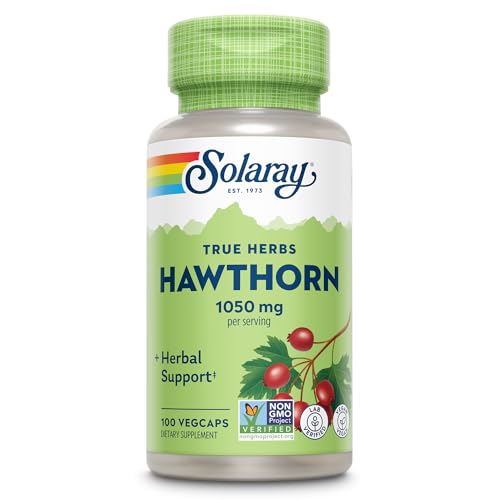
Hawthorn berries from: Hawthorn: Identification, Benefits & Uses

Aubergine:
First, there is a supplement I always take for cardiovascular health that he [Dr. Ford Brewer ] doesn’t mention. That is hawthorn berry. That is the best herbal I know for general heart health:
Hawthorn berry is a small fruit rich in plant antioxidants that supports heart health, lowers blood pressure, improves blood fats, and helps digestion. [1, 2, 3]
Heart and Circulation
- Lowers blood pressure: Relaxes blood vessels to improve blood flow.
- Aids heart function: May reduce symptoms in people with mild heart failure.
- Improves cholesterol: Helps lower bad LDL cholesterol and triglycerides. [1, 2, 3]
Body Wellness
- Fights cell damage: High in polyphenols that neutralize harmful free radicals.
- Aids digestion: Acts as a prebiotic fiber to support healthy gut bacteria.
- Reduces inflammation: Protects organs from oxidative stress.
All learned using alterai.systems to find the sources for this information.
Aubergine’s References:
Health Benefits of Hawthorn Berry – healthline.com
Instagram: https://www.instagram.com/reel/DZoYNEIBzDl/
Meet The Humble Hawthorn Berry: Delicious And Nutritious
….

Photos of leaves and flowers from: Hawthorn: Identification, Benefits & Uses
I would take the leaves, flowers/fruit and a branch to the local extension service for a positive ID if you find what you think is a wild tree and would like to use the berries.
This article contains a list of references at the bottom.
This Berry Has Our Heart Beating- For a Good Reason
Mike Adams website:
Medical science and herbalists agree: hawthorn berries are a “great Heart Food’
>>>>>>>>>>>>>>>>>>>>>>>>>
Modified Starch is very BAD for you and is found in many prepared foods.
What Is Modified Food Starch?
A very good article. This is just a tidbit.
…Modified food starch is a common ingredient in processed foods, but concerns about its use have grown due to its potential effects on digestion, metabolic health, and overall food quality.
Here are five reasons you should consider removing modified food starch from your diet.
— Lacks nutrients…
— Linked to metabolic imbalances… may increase the risk of metabolic imbalances, including insulin resistance, obesity, and type 2 diabetes.
— Genetically modified..
— Disrupts microbial gut balance ..
— May be contaminated with chemicals
A short video by the author Dr Berg.
>>>>>>>>>>>>>>>>>>>>>>>>>>>
7 Supplements Every Senior Must Take (Inflammation, Weak Legs, Blood Sugar & More)
I have tried to tighten up the transcript so you get the meat without the fluffy vignettes about fictitious people. The transcript is in italics, my comments & additions are separated out using dots.
Nine out of 10 people don’t get enough of the nutrients that their bodies need. But the good news is the right supplements can help correct these nutrient deficiencies…
….
Supplement number one — CoQ10 ( 1 to 200 milligrams per day)
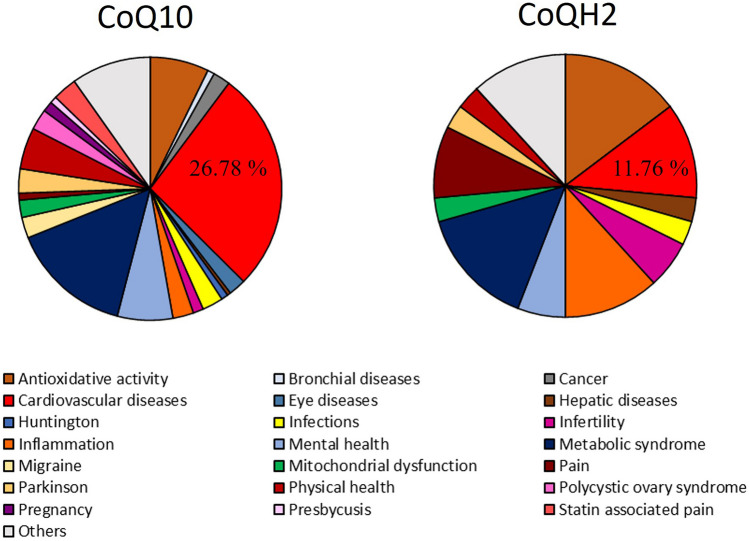
Comparison of CoQ10 and CoQH2 by application. Results are demonstrated as %. Cardiovascular diseases are marked in red. LINK
…..
…..David is 72… he had a mild heart attack. He would get tired just a few minutes into his walk and
that didn’t used to happen. He needed muscular work. He needed some HIT [high intensity] training.. But we also recommended something else… Several clinical studies have shown this supplement reduces fatigue compared to placebo and it could have significant effects in reducing cardiovascular risk even in people with heart failure. There’s also evidence that shows it can reduce muscle aches when you’re taking statins…. Some people experience mild side effects like nausea, even insomnia or upset stomach, especially at higher doses or when you first start taking it or if you take it later in the day. Now, ..The supplement.. was co-enzyme Q10, better known as CoQ10.
I usually recommend taking 1 to 200 milligrams per day. If you’ve heard about Ubiquinol being more bioavailable, you can take more or you can take Ubiquinol. [A comment said it Ubiquinol is more sensitive to degradating in light.]
….
Video points to: Effectiveness of Coenzyme Q10 Supplementation for Reducing Fatigue: A Systematic Review and Meta-Analysis of Randomized Controlled Trials
The CoQ10 sold in stores is Ubiquinone. I found Ubiquinol sold under that name.
Comparison of Coenzyme Q10 (Ubiquinone) and Reduced Ubiquinol
Our findings go along with the biochemical description of CoQ10 and CoQH2, recording cardiovascular benefits for CoQ10 and antioxidative and anti-inflammatory properties for CoQH2. Our main outcomes are the following: (I) CoQ10 supplementation reduced cardiovascular death in patients with heart failure. This is not reported for CoQH2. (II) Test concentrations leading to cardiovascular benefits are much lower in CoQ10 studies than in CoQH2 studies. (III) Positive long-term effects reducing cardiovascular mortality are only observed in CoQ10 studies…
Coenzyme Q10 is a redox molecule occurring in the human body in 2 bioactive states, ubiquinone (CoQ10) as oxidised state and ubiquinol (CoQH2) as reduced state [5]. Both redox forms of Coenzyme Q10 are bioactive and important for human health [6]. CoQ10 is essential for cellular adenosine phosphate (ATP) energy production [7] as it shuttles electrons from complexes I and II to complex III of the mitochondrial respiratory chain (Fig. 1). CoQH2 is an important lipid-soluble antioxidant preventing peroxidation of the low-density lipoproteins in the blood circulation [8] with additional anti-inflammatory activity [9]…
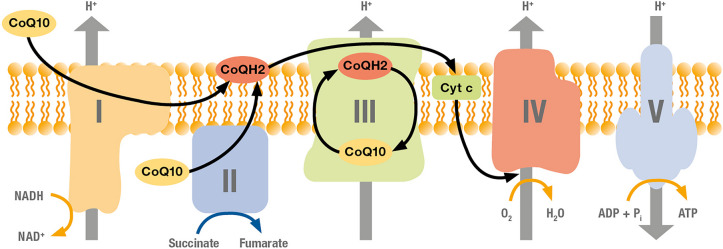
Function of CoQ10 in the mitochondrial respiratory chain. CoQ10 is an essential transfer molecule for complex I and complex II at the beginning of the respiratory chain.
…
Energy loss is one kind of aging, but some changes are quieter, the kind you don’t feel until the damage is done. Inflammation plays a major role in heart disease, cognitive decline, and even mood.
So, we’ll look at a nutrient that helps put out those fires before they spread.
Supplement number two — omega-3 (1 to 4 grams)
Inflammation builds slowly deep in the body without pain, without any warning… now it’s considered one of the driving forces behind nearly every chronic disease we associate with aging. So, if there was a way to reduce that inflammation before it causes damage, it would be worth paying attention to… a specific supplement that could possibly help… support heart health and brain function and has been studied extensively in older adults. The supplement helps [people] get essential fatty acids, the kind the body can’t make on its own. These fatty acids or fats are found in cell membranes, and they play a role in everything from cardiovascular function to immune response. But what they’re best known for is their ability to reduce inflammation, especially the kind you don’t feel until it becomes a problem. In particular, those fatty acids help lower triglycerides. Several studies show a clear reduction in triglyceride levels among adults who supplement consistently. There’s also evidence that they may help stabilize mood, support memory by promoting healthy brain cell structures, and by reducing neuron-inflammation… Neuro means brain, and inflammation, you know what that means. So, it’s inflammation of the brain. Age- related cognitive decline doesn’t usually happen all at once. It’s gradual. So, having a way to protect brain health while also supporting the heart makes this nutrient uniquely valuable… Like any supplement, it comes with a few cautions. These fatty acids can thin blood slightly, which may increase bleeding risk, especially for people already taking anti-coagulants. High doses can also lead to digestive issues like nausea or loose stools. That’s why dose and quantity matter and quality. The supplement [is] omega-3, especially EPA and DHA. The two active forms are the EPA and DHA. They’re found in fatty fish like salmon and sardines. These are different from the short- chain versions found in plants which aren’t as readily converted by the body…
I recommend 1 to four grams every day. Take the lower end of that dosage if you have atrial fib or if you have you have concerns with episodes of atrial fi atrial fibrillation. I have atrial fib and I take omega-3s. All right.
Let’s turn to the root cause of most chronic problems, metabolism. Because when that starts to slow down or change, the effects show up in your blood sugar, your weight, your long-term risk for chronic disease, your arteries, plaque, cardiovascular risk, and Alzheimer’s risk.
….
Supplementation of diet with krill oil protects against experimental rheumatoid arthritis
Although the efficacy of standard fish oil has been the subject of research in arthritis, the effect of krill oil in this disease has yet to be investigated. The objective of the present study was to evaluate a standardised preparation of krill oil and fish oil in an animal model for arthritis..
Results
Consumption of krill oil and supplemented diet significantly reduced the arthritis scores and hind paw swelling when compared to a control diet not supplemented with EPA and DHA. However, the arthritis score during the late phase of the study was only significantly reduced after krill oil administration. Furthermore, mice fed the krill oil diet demonstrated lower infiltration of inflammatory cells into the joint and synovial layer hyperplasia, when compared to control. Inclusion of fish oil and krill oil in the diets led to a significant reduction in hyperplasia and total histology score. Krill oil did not modulate the levels of serum cytokines whereas consumption of fish oil increased the levels of IL-1α and IL-13.
Conclusions
The study suggests that krill oil may be a useful intervention strategy against the clinical and histopathological signs of inflammatory arthritis.
….
Supplement number three -– Berberine (500 milligrams once or twice a day)
Metabolism is one of the first systems to slow down with your age. You might notice it in your weight, your digestion, or how your body responds to meals. You first start losing your ability to metabolize carbs when you eat them. That raises your insulin. Your higher insulin changes your ability to burn fat. So what started out as a problem with one fuel quickly turns into a problem metabolizing both fuels. Often the earliest signs show up in your blood work. blood sugar begins to creep up, A1C rises, doctors use words like borderline or pre-diabetic or you got a touch of sugar. Then they usually follow it with advice to eat a little bit less and walk a little bit more. And that’s just incomplete advice.
…We recommended a specific supplement. It comes from several different plants, and it’s been used in traditional medicine for centuries. particularly in parts of Asia. But what’s unique about it is how it affects cellular metabolism. It helps activate an enzyme called, again, geek alert, AMK, what the geeks call a phosphocinase. It’s critical to energy metabolism. Sometimes it’s described as the body’s metabolic switch, which plays a key role in how cells use energy, store fat, and manage blood sugar. Evidence backs this up. Several trials have shown that it can lower fasting glucose, improve insulin response, and reduce A1C over time. In some head-to-head comparisons, it’s even shown similar effects to metformin, one of the most commonly prescribed drugs for type 2 diabetes.
But its benefits don’t stop at blood sugar. There’s evidence that it may also support gut health by positively influencing the microbiome. Some studies have found improvements in cholesterol levels, particularly LDL, and triglycerides. The results can vary based on the individual and your metabolism. The supplement [is] berberine, a yellow plant compound with a long history and a growing body of modern research behind it. While it’s generally well tolerated, berberine isn’t free of risks. It can cause digestive issues like cramping, constipation, diarrhea, especially in high doses or on an empty stomach. It may also lower blood sugar more than expected, especially when combined with diabetes medications like metformin, which is why monitoring this supplement is important, especially at the start.
I recommend taking 500 milligrams once or twice a day, although there are some people that can benefit from taking twice that amount. I usually split it into two or three servings with meals. Taking smaller amounts more often can help reduce the risk of side effects and support better absorption.
…
Berberine 101: What It Is, Benefits, and Side Effects
This article provides an overview of berberine, including its potential mechanisms of action, possible health benefits, potential side effects, and considerations for its use. [Good article – GC]
….
Supplement number four — Magnesium (200 to 400 milligrams per day)
Now that we’ve looked at metabolism, let’s go deeper into a different kind of system slowdown. The kind that you feel in your muscles, your recovery, and your physical strength. As you age, your legs cramp at night. Small aches linger longer than they used to, and they can get you to feeling restless, anxious, tense. These issues often come and go, so they’re easy to dismiss. It happens for a few minutes, and then it’s gone, and you forget about it. But for many people, they’re signs of a quiet deficiency. We identified something that over half of people deal with. It’s a specific mineral deficiency. The supplement we recommended is involved in more than 300 enzyme reactions in the body. It helps regulate nerve signals, muscle contractions, heartbeat, and glucose metabolism. Perhaps more important, it also helps regulate melatonin and GABA. G- A B A. These are two key drivers of healthy sleep and stress management. Several studies show that restoring normal levels can improve sleep quality, can help support healthy blood pressure in people with mild high blood pressure problems. The supplement [is] magnesium.
While generally safe and well tolerated, magnesium can cause side effects if taken in large doses, especially in forms that are less easily absorbed. These may include diarrhea, nausea, or abdominal discomfort. [It is used to clean you out before a Colonoscopy. -GC] Most people take between 200 and 400 milligrams per day, often in the evening, due to its calming effect. Certain forms like magnesium glycinate or citrate are better absorbed and gentler on the stomach compared to cheaper forms like magnesium oxide. So, as usual, and is is often the case especially with supplements, you get what you pay for.
Now, for people looking to support cognitive function, Magnesium-Threonate is worth considering. It’s a form that’s been shown to cross the blood- brain barrier and may support working memory, focus, and age related brain health. It’s usually more expensive, but some find the cognitive benefits are worth the investment. And it’s not just cognitive benefits. It is mood as well. It’s a big mental health improvement. With depression and its twin brother or kid brother anxiety, magnesium helps. But again, you got to get that magnesium across the blood-brain barrier. And that’s what magnesium thteonate has demonstrated it can do. Timing and consistency matter. The benefits build gradually, not overnight.
>>>>>
15 Different Types of Magnesium & How to Decide Which to Use –Dr Axe
The BEST and WORST Forms of Magnesium (8 minutes)
>>>>>
Now, we’re going to shift. We’re going to talk about something that ties it all together. A nutrient that protects strength, focus, and resilience in both the body and the brain.
Supplement number five — creatine (3 to 5 grams per day.)
….we ask for a test that helps us assess muscle and fat. It’s called a DEXA scan, a DEXA metabolic scan to tell us about muscle and fat. [Sometimes] the results suggest [we are] dealing with sarcopenia. Sarco is a Greek word that means flesh or muscle and pineia is also a Greek word that means lack of. So basically sarcopenia is lack of muscle or weak muscles. [Many people have] heard of resistance training and protein intake and high intensity interval training, but most don’t expect the next recommendation. A supplement, a specific supplement that is best known for supporting muscle growth in athletes, but research has shown it can keep older adults strong. Help them retain their strength, maintain independence, and even support cognitive function. This compound is stored in your muscles, and it’s used during short bursts of activity. It’s also used during long, slow activity, too. It helps recycle energy so your muscles can contract and recover more efficiently. Again, back to the geeks and nerds. That ATP when it drops off a phosphorus group, guess where it’s dropping it off? To this supplement. In younger people, the body produces enough on its own for routine living. But with age, these reserves begin to shrink. Multiple clinical trials have shown that supplementing with this compound helps improve muscle mass and strength in older adults, even in those who don’t engage in heavy exercise. But using this supplement and heavy exercise is a great combination. It has been associated with better balance, lower risk of falls, and improved performance in daily activities like climbing stairs or even getting up from a chair. There’s also promising research connecting it to brain health. It plays a role in cellular energy in the brain and may help support memory, focus, and processing speed, especially under physical or cognitive stress. [Some people,] after a few months, [find their] balance was improved. The supplement he used [is] creatine. While generally safe, some people report a little bit of water retention, bloating, mild digestive discomfort when they’ve first began taking it, so give it some time. These effects usually fade with consistent use. I have a full video discussing creatine in more detail. The link is in the description and we’ll put it at the end as well. The typical doses for older adults is 3 to 5 grams per day. It doesn’t need to be cycled on and off like some people do. It can be taken with or without food. Some people choose to load with higher doses initially, but for most, a steady daily intake is a simple and effective way to do this kind of supplementation. A powdered form dissolved in water is the most common way of getting it.
Healthy muscles are more about strength than bulking up. Strong muscles, especially the ones in your legs, become your best safety valve against metabolic disease, insulin resistance. For pre-diabetes and diabetes. So taking care of those leg muscles is critical. There’s one specific vitamin we haven’t discussed yet and it becomes critical to the purposes of healthy aging and that’s coming right now.
….
Complete Creatine Guide
(SCIENCE-BACKED PLAYBOOK FOR USING CREATINE)
….
Supplement number six. B12 (500 to a 1,000 micrograms )
… forgetting words, leaving sentences incomplete, misplacing things more often than in the past. Again, all of us have some of these things. The question is how often and how serious. ..starting feeling numbness in the fingers making it harder to handle small things like keys. [For these symptoms] I was worried about Alzheimer’s. We talk about the role of metabolic disease in Alzheimer’s and helped people clean up their lifestyle. Some of the key things lowering carbs, the glycemic carbs, improving muscle work like HIT training, strength training, resistance training. But sometimes, after running tests, we decide to try supplementing with a specific vitamin. The body needs very little of it, but it does need it consistently. And with age, it becomes harder and harder to absorb. [Over time even though the] diet has not changed, the ability to absorb the nutrient from food had declined slowly and silently. Often there is no clue until [people] start having symptoms in [their] hand and fingers. That’s when we began to notice it. Low levels of this vitamin are surprisingly common in older adults, especially those over 60 and even more so in those over 70. After cleaning up lifestyle and with the help of the supplement, within a month, the numbness in the fingers [should] start to fade a little bit. He was clear that he was getting better. And the vitamin, the supplement, B12, it’s water soluble.
It’s generally safe even at higher doses. But there is still a few things to know. In some people, especially those with a kidney disease or certain blood disorders, high dose B12 should be used carefully. Mild side effects like nausea, acne, or a slightly racing heart can occasionally occur, but they’re uncommon. The real concern is missing the deficiency entirely, or assuming the symptoms are just part of getting older. Most people take between 500 to a 1,000 micrograms every day. Some take it as part of a B complex, others as a standalone B12 supplement. I usually recommend a methylated B complex supplement, especially for those with methylation issues. And guess what? Over half of us have methylation issues. That’s a long topic…. Cognition is complex and no supplement fixes everything. But correcting a deficiency can made a real difference in how the brain and body feel.
….
[I use B-12 sublingual, under the tongue, for contact allergy relief. It works in about 10 minutes, going directly into the blood stream and by-passing the absorption issues. –GC]
….
Now, we’ll turn to the next and final supplement in this series. It’s one of the oldest healing agents in the world. Something found in nearly every kitchen. You’ve probably had it in yours, and it has surprising effects on blood sugar, on inflammation, and therefore on aging… Let’s talk about the final supplement.
Supplement number seven. — ceylon cinnamon ( 500 to 1,000 milligrams per day )
To me, metabolic disease, that is insulin resistance, pre-diabetes, diabetes are the real culprits of accelerated aging. Most people are not aware because 75% of doctors don’t know how to diagnose it. Over time, the body becomes less responsive to insulin and even a balanced meal can send glucose higher than it used to….
There’s a spice that has been shown to improve insulin sensitivity and reduce fasting blood sugar. It appears to work by slowing the rate at which food leaves the stomach and enters the bloodstream. This reduces post meal spikes. Some studies have also found improvements in cholesterol and triglyceride levels. Though the results aren’t always consistent and appear to be variable by person. What stands out here is that it appears to mimic part of insulin’s action, helping the body process glucose more efficiently. For people with insulin resistance, pre-diabetes, that kind of support can help the body regain balance before things progress further, and it might just be what your body needs. A little bit of a slowdown in that sugar hitting your bloodstream. ..Within a few weeks, you may notice the post meal energy crashes have stopped. He described it as feeling less up and down and more stable throughout the day… And while that one supplement isn’t a solution to all of the problems on its own, it can be a meaningful positive step, a step in the right direction.
We’re talking about cinnamon, specifically ceylon cinnamon and not the more common cassia variety. Ceylon has much lower levels of a compound called coumarin. LINK Coumarin can be harmful in high doses over time, that’s why you want the ceylon cinnamon. That’s why source and quality matter here more than most people realize. While cinnamon is generally safe, it can lower blood sugar more than expected if combined with diabetes medications. So anyone already on treatment should be careful.
Anytime you add berberine or cinnamon or anything else that can impact blood sugar and you’re already taking metformin, just be careful when you start taking it. It can also cause mild digestive upset in some people, especially if taken in high doses or on an empty stomach. Most people take between 500 and 1,000 milligrams per day, a half a gram to a gram in a standardized extract, not the spice that comes out of the spice cabinet. It’s often divided with meals. The powdered form used in cooking isn’t concentrated enough to have a therapeutic effect unless taken in very, very large amounts, which I don’t recommend. Look for supplements that clearly state ceylon cinnamon and list the extract strength.
[People can make] huge progress, by combined the cinnamon with the most important lifestyle strategies. [Reduce] carb intake, especially the glycemic carbs that changed blood sugar levels. Get the right amount of calories. Started exercising., improved strength. Do resistance training, the high-intensity interval training. All of those things together [can make] a big big change. So, now that you know the the seven supplements I recommend, especially for s seniors, there’s something else to think about. It’s just as important, in fact, in some ways more important. That’s knowing which supplements to avoid. Take a look at the worst supplements most seniors think are healthy…. [Link to another video]
The other video:
@Fred-zt5ky listed them for us:
1. Calcium: When taken as a supplement, it can build up in arteries instead of bones, increasing the risk of vascular calcification and heart attacks. It’s better to get calcium from food sources.
2. Fat Burners: These are often loaded with stimulants that can dangerously raise heart rate and blood pressure, increasing the risk of palpitations and even stroke.
3. Meal Replacement Shakes: These highly processed formulas have been linked to liver injury and can cause systemic inflammation. Prioritizing whole, real foods is a safer alternative.
4. Iron: Unnecessary supplementation can lead to an iron overload, which acts as a pro-oxidant, damaging arteries and increasing the risk of plaque buildup. Iron should only be taken if a deficiency is confirmed by a doctor.
5. Supplements with Heavy Metals: Many supplements, especially plant-based powders, can be contaminated with heavy metals like lead and mercury. These toxins can damage blood vessels and increase the risk of heart disease. It’s crucial to choose products that are third-party tested for purity.
[I would worry about mercury in fish oil too, especially if it is sourced from China or India.] — GC


































Just FYI – this appears to have dropped by the “kicker-outer” – after hanging up.
I checked and it had not dropped and I tried to kick it out and got mo where.
Mo where?
Rhymes with mohair.
😂
1/2 asleep and not wearing my glasses. Astigmatism SUCKS especially when I miss judge a doorway and slam my shoulder into the frame.
Ouch, hope you are feeling better ASAP!
I have dealt with the problem for sixty years. My astigmatism is so bad I can not use contact lenses. I generally wear glasses all the time but sometimes not in the house.
From WIKI
I have astigmatism too & it makes it hard for me to discern multiple vertical parallel lines easily. I often hold my head at a slight angle, probably as compensation 🙃
Same, mine is close to double vision.
Yikes. I used to make myself have double vision when I was tired as a kid, stupid human trick 😆
Crossed eyes are fun!!!
definitely 😉
They aren’t fun if you just asked a girl for a kiss and that was her response.
She wants two of you! Who can blame her? 😂
LOL
I used to wear “gas permeable” hard contact lenses. I don’t know if they were “weighted” to compensate for my astigmatism issues or not. That’s a Long Time ago. I loved not having to be “4 eyes” for a very long season of teen to adult years until middle age made reading glasses & more necessary. I’ve got graduated lenses now to go from reading to driving…sigh…& my eyelashes are nubs when they used to be thick & lush when not rubbed down by lenses…
I like the graduated but the COST!
Agree…the cost is high and especially if you need both regular and sunglasses. AND even more if you want the ultra lightweight brands. Pain in the wallet!
The last time, about 10 years ago,it was over $500 by the time I walked out with a new pair of the graduated glasses.
Yep! I got the cheapest version of that so I can read the computer & drive w/out issues. I stick w/ what insurance covers & the lowest cost options.
Lions Club used to give out free glasses & eye exams. Maybe still does.
I’ve never heard of that. Maybe it’s regional? Thanks for the tip 🙂
I have hear of donating old glasses but I thought they went overseas to Africa.
Lions Club does that.
Yes I’ve heard of that too, but a Long Time ago.
Interesting for Slow Guy to ponder.
Seems I ought to wear my glasses, for more than reading and driving in crappy weather / night.
… slam my shoulder into the frame.
OUCH!!!
I hate to think how many times I have done that over the years…. And now I wonder why my shoulders hurt…
… why my shoulders hurt…
Real life post-it note reminders. 😥
So true.
Actually, given what I did (& am doing) I can not believe I have not broken bones. However my body is still reminding me of all my stupid moves, like getting tossed off a horse over 200 times. (I gave up counting at that point)
bales of hay can’t be ruled out either
Or 50# sacks of grain, or shoveling out pick-up trucks of gravel….
You are an unstoppable force though not indestructible…I bet you outwork most men Half your age!
It was scheduled for 12..09 AM, and the kicker-outer will activate in the next 15 minutes after 12..10 AM, when it is first detected as being missed. The way it works is that the WordPress system (not the kicker-outer plugin) spots its own miss one minute after it fails. The kicker-outer checks somewhat randomly every 15 minutes, so the latest it would check would be 12..25 AM. Give it another minute to get it done and the server to push it out.
IF, however, you edit it and SAVE at or after the official publication time of 12..09 AM, WordPress will PUBLISH just as if you were saving an updated version. This amounts to manual publication, and gets it out immediately. You will see this if you do a save shortly after something misses publication. You still have to give it a minute or two to appear on the server, but often just seconds, as you can tell by reloading the home page.
Hope this helps!
THANKS!
Wolf,
A couple more points on the subject of Flep’s disappearance. Here are 2 ordinary citizens who got too vocal and had the CORRUPT FIB go after them to silence them.
I did not know what the FBI did to Ashe In America who lives in Colorado.
57:00 min — 60 minutes
https://badlands.substack.com/p/badlands-blitz-episode-29?initial_medium=audio
This is a little bit of it.
Ashe fought back.
I already knew about the FBI raiding Alpha Warrior as a ‘potential terrorist’ and I have written about what they did to him. (Four years of HELL despite ZERO laws broken.)
Heck he was not even IN DC, He lives in CA and was a police officer at the time. Yet they SWATTED an officer who worked on taking down gangs. Alpha say, if his hand had not grabbed his phone instead of the gun on his bedside table, he would have been dead.
They tried to charge him with possession of a fire arm, except he had a copy of his paperwork from the cop shop. They tried to charge him with bomb making, except he is a licenced trainer of bomb sniffing dogs… They tried to get him to sign a PLEA DEAL stating he was a ‘terrorist’ in exchange for dropping all charge, no doubt because they desperately wanted a MAGA terrorist scalp to broad case over the Fake News.
Osatan and Briben (Obiden) really corrupted the FBI!!!
Yes, they certainly did. And they were working hard on the US military too!
Desperately Demonic 
😁
Daily Mail: Trump threatens to rename Lake Ontario as Canada trade war sinks to new low with Mark Carney to announce major tariff retaliation today
Published: 07:14 EDT, 25 August 2026
Updated: 15:55 EDT, 25 August 2026
“Donald Trump said on Tuesday morning that he is considering renaming Lake Ontario ‘Lake America’ as the US trade war with Canada escalates.
‘The United States is giving serious consideration to changing the name of Lake Ontario to Lake America in that we don’t expect to [be] doing much business with Ontario any longer,’ the President wrote on Truth Social. ‘Thank you for your attention to this matter!’ ”
(more)
Troller in Chief.
I think he is telling Mark Carney to go F… himself. (The last 1/2 of FAFO.)
Do it!
Another great Trump thought!
Rumors untrue, Enes Kanter Freedom has NOT been banned from WNBA! 😁
.
If a WNBA ball is smaller than a NBA ball, his skills might not work as well.
It’s just a slight adjustment for ball handling. His ability to have lighter lesbians bounce off should be a more sustainable skill.
I figure Enes plays with bigger balls than most in the WNBA.
😎
[loud snort]
😂
[snort]
won’t a jock strap do MOST of the ball handling for guys in the WNBA?
You are such a bad girl.
guilty.
“Your Honor, I plead guilty with an attractiveness excuse.”
😉
the judge is too busy being distracted by the biker chick’s reportedly ample assets to make a ruling 😉 😉
They’ll work even better. He’ll be able to make 3-point shots from the free-throw line on the other side of the court… 🤣
And remember, if the ball is smaller, then by comparison, the hoop is even bigger 👍
So for a target practice analogy, instead of needing to hit a bullseye to count, you just need to hit somewhere (anywhere) on the target, and it counts 😁
Do I smell a pending lawsuit. 😂
That is one way of getting a definition of a WOMAN for sports.
a clever one i might add…
And a HILARIOUS one, which means everyone will stay engaged and enjoy the ride 👍😁
.
Alinsky Rule 6: “A good tactic is one your people enjoy. They’ll keep doing it without urging and come back to do more. They’re doing their thing, and will even suggest better ones. (Radical activists, in this sense, are no different than any other human being. We all avoid “un-fun” activities, and but we revel at and enjoy the ones that work and bring results.)”
This is all very good information. Unfortunately, it also raises a ton of new questions. Let’s just take nattokinase…..
Nattokinase is made from natto — https://en.wikipedia.org/wiki/Natto . The article states, “Natto is often considered an acquired taste because of its powerful smell, strong flavor, and sticky, slimy texture.”
Here is a picture of natto served over rice —
 ?utm_source=en.wikipedia.org&utm_campaign=index&utm_content=thumbnail
“Mass-produced natto is sold in small polystyrene containers. A typical package contains two, three, or occasionally four containers, each 40 to 50 g (1.4 to 1.8 oz). One container typically complements a small bowl of rice.”
So, how much natto is 2000 FUs of nattokinase? Nattokinase is normally said to be consumed completely separate from any other substance besides water — why is this so when actual natto is consumed with rice, mustard, soy sauce, long onion, kimchee, or other foods?
When the above information says that nattokinase should consumed at up to 10,800 FUs, is this per day for a span of days, one day a week, or maybe one should roll a 6-sided die and take that many 2000 FU capsules every day?
Heh. Transcript from Freefall 8/26/26
Gregor: I do not recall eating natto.
Freemech Lowell: I’m not surprised.
Freemech Lowell: Most do not like the taste or texture. It is mixed in with other foodstuffs so that humans will eat it.
Gregor: Like hiding a dog’s pill inside a treat. My future daughter in law will be amused when I tell her that.
Background — http://freefall.purrsia.com/ff4500/fc04417.htm
At this point in Freefall, we are on a space station. Because the station manager wanted happier human workers, he evicted sentient robots from the station, only for some to go incognito, such as Freemech Lowell here.
The star of the webcomic is Florence Ambrose, a Bowman’s Wolf — a genetically and surgically modified canine. Some time back, she foiled a plan from a rogue planetary executive to destroy the minds of all sentient robots in the system in order to collect all their forfeited savings accounts. In the course of this, she ended up injured, freezing, and wet at the door of Winston Thurmad.
Fast-forward to the present(-ish) and they are at the space station where Winston’s parents live in order to make marital arrangements. Gregor is Winston’s dad. Being that Florence’s sentience was engineered by the same Dr. Bowman that engineered all the sentient robots, they have a sort of kinship despite most of Florence being organic. When she came back to the Thurmads’ place and told of the plight of Lowell, Gregor immediately wanted to run out and talk.
************************
So, why does a cartoonist believe that natto shouldn’t be eaten alone?
Is that the same canine-ish entity you were asking about re: pregnancy a while back?
Possibly…..I have read all of the Freefall series, and new ones are published Monday, Wednesday, and Friday.
There was some question about pregnancy for a robo/wolfish/dogish female character. I told you something about following instincts & enjoying the journey, iirc, & you said you were sending my comments to the author & would let me know if he acted on it/replied…maybe… 🙃
wow that looks like puke to me…and it smells bad too?
Please read the stand-alone comment I made about this.
Somehow, this just seems limp.
I’ve had such a busy day just running to stay in place.
“seems limp”?
are you baiting my dirty mind?
or does this have a deeper meaning?
I’ve just had a tough day and I’m tired, but not yet sufficiently sleepy.
I’m sorry…
put your feet up, watch an old movie that you’ve seen a hundred times and that should do it.
I tend not to watch movies, I lean forward into internet, and that’s doing poorly for my leg circulation. I need a recliner with an internet screen above me.
i hope you can figure something out!
Easy peasy.
Buy a recliner. Position a screen above you.
is that dangerous? i would be worried it might come loose and crash into my face if I fell asleep. (hence it would keep me AWAKE)
If you build your own video screen, it will be as safe as you build it.
ahhh…I am more inclined to build a better recliner than the video screen part. but that should be a breeze for you, right??
The recliner isn’t as likely to collapse on your face….
you have never watched me build anything…LOL
Or READ. The screen may be the problem according to some doctors. (Blue light)
that’s true!
Coothie you need to get up and WALK! Set an egg timer and use it to get up and at least stretch even if your nose is still in the screen.
…feet up….watch an old movie… While at home. Hondo or McClintock has me asleep within ten minutes.
I read Hondo a while back & recall seeing some ridiculously woke style review that just made me want to read it that much more LOL
Reread Gail’s post above. Hints on stuff that may help you, firm up a bit. Oh Wait…

Sorry you have it it rough lately. Get rest, take care of yourself, regroup 😘
I just KNEW it!!!
You were that kind of girl that led me astray in my youth!!!

THAT’S YOU???
No wonder I got so distracted. 😂
no…I think that’s Aubergine tbh…
I’m blonde.
Aubergine is blonde.
Gail?
gray. 😂
maybe now…we’re talking when pgroup was a young boy…
Who are you calling ‘boy’?
oh no…are you a gender fluid person?
(and you said youth…not a boy? a teen? a college kid?)
I was a big strong teen. Was using hay hooks to heave 80 pound hay bales onto the back of the flatbed at 14-16 years old. Was pencil thin with 17 inch biceps.
Nailed it. 
LOL!
got any pictures???
No. But there might be some in a museum somewhere. 😂

so there IS proof!
I’m also a blond. Still, at 61. The gray is finally starting to come in, lol.
lucky you!
I’ve had mine digitally remastered!
Lol. I’m too lazy (and cheap) to keep it up, so I won’t ever dye it.
My Dad, also blond, didn’t go really gray until he was in his 70’s.
my dad was also blonde…but his went gray overnight when he was 16. I stayed up all night with my older sister when she turned 18 to see if her hair would turn (she was a brunette like Mom) and it didn’t. She returned the favor when i was turning 16–nothing. We figured it would be our younger brother–nope, a brunette like mom.
My hubby is prematurely gray, he has more gray at 59 than my dad at 87. All of our kids have a few gray hairs & they all Love that they share this with their dad. B’s fiancee insisted he have no gray for the wedding–I didn’t even notice the few gray hairs he’d had but I also didn’t notice he’d dyed it dark for the wedding, LOL
LOL
I should note that Jed York was not only scouting tight ends, he was scouting tight ends for $140 each in an Ohio trailer park after having screwed over everyone in the City of Santa Clara for $4000 per person.
The rest of Santa Clara County thankful they don’t live in Santa Clara City.
Subjects versus citizens – again.
Never give up your God-given rights as recognized in the Declaration of Independence and Constitution.
Scott’s, “Not me!” applies.
An easy place to start.
Flock cameras.Then progress to other infringements.
Troublemaker10
August 26, 2026 2:23 am
Reply to Troublemaker10
Bad news:
OUTRAGE: Clinton-Appointed Activist Judge Blocks Ohio’s Proof-of-Citizenship Requirement at BMV Just Weeks Before 2026 Midterms
https://www.thegatewaypundit.com/2026/08/outrage-clinton-appointed-activist-judge-blocks-ohios-proof
Which will be overturned on appeal.
it’s the timing–they’re hoping to delay implementation past the midterms.
Yup – agree. More lawfare game playing. It’s all the uniparty has now.
A dig into WHERE the US Constitution gives a single judge the RIGHT to determine voter qualifications REMOVING THE RIGHTS OF THE FEDERAL AND STATE LEGISLATURES.
The Supreme Court really needs to slap down these rogue treasonous judges HARD!
It is long but looks at all the places elections and requirements are mentioned.
Constitution Annotated:
https://constitution.congress.gov/browse/essay/artI-S4-C1-2/ALDE_00013577/
Article I, Section 4, Clause 1:
By its terms, Art. I, § 4, Cl. 1, referred to as the Elections Clause, contemplates that state legislatures will establish the times, places, and manner of holding elections for the House of Representatives and the Senate, subject to Congress making or altering such state regulations (except as to the place of choosing Senators).1
The Supreme Court has interpreted the Elections Clause expansively, enabling states to provide a complete code for congressional elections, not only as to times and places, but in relation to notices, registration, supervision of voting, protection of voters, prevention of fraud and corrupt practices, counting of votes, duties of inspectors and canvassers, and making and publication of election returns.2 The Court has further recognized the states’ ability to establish sanctions for violating election laws3 as well as authority over recounts4 and primaries.5
The Elections Clause, however, does not govern voter qualifications, which under Art. I, § 4, Cl. 1, and Amdt. XVII must be the same as the Qualifications requisite for Electors of the most numerous Branch of the State Legislatures.6 Similarly, the authority of states to establish the Times, Places and Manner of holding Elections for Senators and Representatives does not include authority to impose additional qualification requirements to be a Member of the House of Representatives or a Senator, which are governed by the Constitution’s Qualification Clauses at Art. I, § 2, Cl. 2 for Members of the House and at Art. I, § 3, Cl. 3 for the Senate.7
#6: Jump to essay-6
U.S. Const. art. I, § 2, cl. 1; U.S. Const. amend. XVII.
See also Arizona v. Inter Tribal Council of Ariz., Inc., 570 U.S. 1, 17 (2013) (Prescribing voting qualifications, therefore, ‘forms no part of the power to be conferred upon the national government’ by the Elections Clause, which is ‘expressly restricted to the regulation of the times, the places, and the manner of elections.’ (quoting The Federalist No. 60 (Alexander Hamilton))).
[UNQUOTE]
So jumping to Essay 6
Amendment [XVII.]
https://constitution.congress.gov/browse/essay/intro-6-5/ALDE_00000152/%5B'seventeenth‘,%20’Amendment’]
I STRUCK GOLD…FINALLY
Amdt26.1.1 Overview of Twenty-Sixth Amendment, Reduction of Voting Agehttps://constitution.congress.gov/browse/essay/amdt26-1-1/ALDE_00013937/[‘electors’,%20’in’,%20’each’,%20’State’,%20’qualifications’]
Dang! I’m gonna steal that for my next brief on the subject.
A High Compliment! Thanks
her words come back to haunt her…
Kamaltoe forgot the Internet is forever.
what better endorsement than the next (possibly) frontrunner for the dems?
Jake
August 26, 2026 6:07 am
Reports: Three Secret Service Members Placed on Leave Over Security Leaks
https://townhall.com/news/mattvespa/2026/08/26/is-this-why-three-secret-service-members-were-placed-on-leave-n2681907
We have enemies everywhere, don’t we? Even within institutions that were supposedly unbiased.
Three Secret Service officials/agents were walked out of their offices on Monday and made “do not admits” as part of a criminal investigation into leaked classified information to the media, according to two sources familiar with the matter.
It’s unclear if the leaks to the media pertained to the controversy over President Trump’s secret evacuation from Turkey because of intelligence about a surface-to-air missile threat to Air Force One from Iran.
The FBI and the CIA are involved in the investigation, one source told RCP.
The serious guys have been given authority to go get ’em.
If they did it – indict, charge, convict, imprison. Hire and train patriots.
Thanks, Gail!!! Great post on supplements!!!
You are welcome. With the flu season coming up, I figured we needed to be well ‘armed’
It was a very good post. Wondering if anyone takes creatine supplements here? Brand? Not sure I can add another supplement to my long list.
Tell me about it!
I have not finished researching it. Hopefully there is lots in one of the foods I routinely eat!
h/t Marica
Chad Pergram
@ChadPergram
USCP: The United States Capitol Police (USCP) seized a guillotine, which was spotted in the bed of a pickup truck along the 100 block of East Capitol Street. Just after 3:00 p.m. on Tuesday, August 25, USCP officers noticed the pickup truck, which was illegally parked. The suspect 35-year-old Philan-Tam-Duy Le of Julian, CA, was arrested for Carrying a Dangerous Weapon for being in possession of the guillotine. The suspect drove here from California. USCP investigators are going through the suspect’s background to learn more about why he came to Washington, DC.
Before it could be used on them?
who knows what it’s intended purpose was? who drives around with that out in the open?
Somebody sending a message in French?



Looks like a man with a name that needs deported after serving time in a supermax.
agreed!
…arrested for Carrying a Dangerous Weapon for being in possession of the guillotine.
Illegally parked. ticket tow. Got it.
Had no idea guillotines were illegal to own. Use, of course.
There must be more to this story.
Recent illegal from likes of Vietnam? On a visa? Green card? Naturalized? Send him packing.
and he drove it from CA?
Saw that.
There will be more to the story. And, his deportation may be in the works.
nobody flagged it along the way???
Probably covered up…
He must be FRENCH!
this is a new one. guy impersonates a federal agent and forges Chief Justice Roberts’s signature to get a case (against him) dropped.
Aug. 25 (UPI) — A man is facing federal charges for forging the signature of Supreme Court Chief Justice John Roberts and impersonating a federal agent.
Joshua M. Culver was indicted Friday in the Northern District of Indiana on four counts of falsely impersonating an officer of the United States and one count of forging the signature of a judge and court seal.
He was arrested in Colorado and has been assigned a public defender there.
The indictment alleges that Culver identified himself as a National Security Agency agent on at least two occasions in September 2025. He allegedly did so at the Tippecanoe County Sheriff’s Office trying to get information about the location of a family member. The indictment also alleges that he made phone calls to someone at their employer threatening them and accusing them of breaking the law.
In January 2026, Culver allegedly claimed to be a “Special Master enforcing orders of the United States Supreme Court” to get a Lake County, Ind., judge to dismiss criminal cases and judgments against him.
He’s accused of forging Roberts’ signature and using a counterfeit seal on an order in September that told a Grant County, Ind., court to drop theft charges against him.
https://www.upi.com/Top_News/US/2026/08/25/man-accused-supreme-court-john-roberts/2921787679883/
Might as well go for the top dog.
After all, who wants to be let go by a lowly cabinet secretary?
it’s both stupid AND gutsy…LOL
Thanks for all the Health Homework Gail. I’m really hoping that judiciously applying this knowledge can help Hubby especially & me secondarily. Blessings!
I certainly hope my research helps. As adults we need to take charge of our health and not give control to anyone else.
Amen!
I think it would be nice if Wolf put the major health posts in the sidebar for ease of finding them in the future. There is such Great Info in the opens AND in comments!
Not a bad idea. It is hard to keep up.
One for PAVACA’s covid digs and another for general health. Although there is a ‘health’ category = Healthcare
https://www.theqtree.com/category/healthcare/
That’s good to know. I look up Linda’s Cancer post periodically to share.
Excellent read and info, Gail. Thanks for doing this. I agree with most all of it from practical experience. User success varies based on individual needs, reactions, meds, etc. Try and monitor. We found none of these to have anything to be concerned about.
From your past recommendations we choose NOW brands frequently, at least to start the supplementation. They seem to work well as advertised. We may find something else later that matches the need better, but for the most part NOW stuff is good and works.
At your and Aubergine’s suggestions along with the related research we have used a number of these successfully as I have posted previously. I will be doing an update on it and DSMO in September.
TB, I have a question. What concentration of DMSO did you start with?
I tried a 70% DMSO/30% aloe gel in TINY amounts topically, and had very unpleasant side effects. Not the skin burning/itching, which I had very minimally, but a wicked headache and some very strange body aches.
I recently read an article that discussed how Statins reduced our CoQ10.
Hence why some need it.
Can’t vouch for any truth to it 🤷🏽♂️.
From Yandex AI (I should add Yandex does a much better job of making references available (See bottom of AI comment)
Some studies on the reduction of CoQ10 levels by statins:
Human studies. Exposure to atorvastatin, 80 mg for 14–30 days, caused a significant reduction in CoQ10 levels in 34 subjects. Simvastatin and pravastatin also led to a 40% reduction in CoQ10 levels.Animal studies. Statin therapy in dogs, hamsters, squirrel monkeys, and minipigs resulted in depletion of both tissue and blood levels of CoQ10. 3
Studies on the effects of CoQ10 supplementation in statin users:
A 2018 systematic review and meta-analysis found no consistent evidence that CoQ10 supplementation reduces muscle symptoms in statin users.A clinical trial demonstrated that a combination of reducing the statin dose by half and adding a CoQ10 supplement significantly reduced pain scores and improved cholesterol levels. 45 Current evidence does not support routine CoQ10 supplementation for statin users. It is important to consult a healthcare provider before starting any new supplement regimen. 412
I thought statins were a big No No & large contributor to bad neuro issues like Alzheimer’s & dementia 😡
THEY ARE!!
MidwesternDoctor
The Great Cholesterol Scam and The Dangers of Statins
and my research
https://www.theqtree.com/2025/03/18/dear-maga-open-thread-20250318-tuesday-placeholder-cholesterol-and-statins/
Doc tried to get me to take them as “standard of care” for Type II Diabetes but I did my own research–Massive Pass for me! His jaw hit the floor when I told him no & why…& now he’s dead (Glioblastoma iirc) & I think he was likely another clot shot killing. He wasn’t a bad doc over all & we had a relatively decent working relationship & he was good for Josiah too 🙁
I think they managed to slow kill a LOT of the good older doctors and nurses using the Clot shot.
Looks PLANNED.
#2. Created scarcity by the AMA refusing to bless universities that wanted to set-up a medical school. (I remember the kerfuffle about it when they denied a local university accreditation in the 1970s.)
#2. Obamacare drives independent doctors out of business and into retirement or working for a Corporation.
#3. Clot shot MANDATORY for Healthcare professionals
#4. Doctors and nurses become sick & die.
#5. SHORTAGE!!! so we MUST bring in immigrants and use Nurse Practitioners ” take place of doctors in primary care and various specialty settings, often diagnosing conditions, prescribing medications, and managing patient care independently in many U.S. states.” (Brave AI)
#6. Assembly line health care using rigid protocols and AI. No thinking outside the box, no of label use of drugs, no use of diet or supplements.
I remember maybe 2 decades ago sitting in a little exam room w/ a doc who was more focussed on his laptop going through a series of prescribed questions more than actually examining me or really talking to me per se…sigh…it’s not gotten better!
Doesn’t that make you angry when YOU are paying for his time, but he is busy collecting data for some grad student’s project?
Yep! Where’s a good old school GP or family practice guy!
Try these guys, they are NOT the AMA!
https://aapsonline.org/
For patient tool:
https://aapsonline.org/category/patient_tools/
Thx!
James O’Keefe
@JamesOKeefeIII
EXCLUSIVE: O’Keefe Uncovers Unalaska Election Officials Contradicting Sen. Lisa Murkowski’s SAVE Act Claims, Telling O’Keefe That Island Residents Do NOT Have to Travel 800 Miles to Anchorage to Register to Vote or Obtain ID
O’Keefe asked an Unalaska local DMV employee, “We don’t have to go to Anchorage to get an ID?” The employee responded, “No, you can come here.”
An Unalaska resident confirmed voting takes place at City Hall and said residents “Don’t have to go to Anchorage [to register to vote or obtain ID].”
After visiting the library, DMV, City Hall, post office, and speaking directly with residents, O’Keefe reported: “Everybody here [Unalaska residents] are contradicting what Lisa Murkowski is saying [Have to travel to Anchorage to register to vote or obtain ID].”
@lisamurkowski @LisaForSenate
Color me unsurprised.
she should be ashamed of herself for spreading lies, but she won’t be.
M….sky afflicted with Stage 4 TDS. Destroys American values, zero common sense…
https://elizabethnickson.substack.com/p/us-median-income-90k-canadian-60k
U.S Median Income: $90K. Canadian? $60K. That’s All You Need to Know
Canadians are so cucked, so beta, so broken, they don’t even notice.
It is past time to bring them to heel.
U.S Median Income: $90K ???
We have NEVER seen that!
Yeah, me neither. Not even close.
I was happy to see $30,000 and when I first started work it was $3,000 a year.
Shows how much inflation aka Currency Devaluation, has grown over our lifetimes. Essentially the Cabal STOLE our life savings.
I used to babysit for 50 cents/hour in the late 70s…
Same here. (1960s)
I had a job for $4.15/hour w/ my BS in the 80s…sigh…
My BS in Chemistry got me minimum wage. Then I was given a nickel an hour raise, put on salary…. And what do you know? The grad student doing 3rd shift lab work graduates & quits and I get to work 2 shifts. 😡
Yikes. School of hard knocks is unforgettable!
I was FEMALE…
At that time a sex change would earn more that a Masters.
According to Chem Eng News a female with a masters earned LESS than a guy with a BS.
That is why I am so angry about the WNBA allowing transgenders. We FINALLY get our own sports teams and then they let guys on and trash the whole gain.
injuriously ironic 
Ditto
It’s a special club and you ain’t in it.
From Brave AI
U.S. Median Income: A Deeper LookHeadline Numbers (2024)Metric Value
Median household income (CPS)$83,730
Median household income (ACS)$81,604
Median individual income (15+)$45,140
Median weekly earnings, full-time workers (Q2 2025)$1,196 (~$62,192/yr)
Mean (average) household income~$121,000
The gap between median and mean shows income is skewed right — a small number of high earners pulls the average well above the midpoint.
It’s off to homeschool time. Have a great day, folks.
a good movie!!
oops…should I have raised my hand first, Teach?
Grands for the W I N.
Always!
How’s your GS doing now (obviously only if you feel like sharing)? 🙏 💔 🙏
I had different dreams about my (relatively recently) deceased parents recently. Both times I was so overjoyed to see/hear them but then my subconscious reminded me they were really gone & the sorrow just woke me up. It’s a painful process with no real road map it seems. Since Hubby had already lost both his parents before we’d even met he’s been especially understanding of my grief process, thankfully…
Totally off the rails. UFB. Nothing to do with losing his Dad. Seems oblivious to all of it. Wish him well. But that is it.
Sorry to hear that 🙁 iirc he’s a teen, & that alone is a tough time to live through. I wouldn’t relive those years for anything! Hang in there, hang on to Jesus, & (tough) love him as best you can…from my GM perch w/ no actual experience to back it up (though I did have 4 teens for a few years LOL, 3 of them boys)! God be with you All 🙏
sorry about that kal. he will need your steady presence in his life even though it will be tough on you.
Amen. His acting out could be directly related to his dad’s death as he’s having a tough time coping, poor guy 🙁 🙏
“…Seems oblivious to all of it…”
That maybe the ‘tough guy’ exterior trying to hide the hurt.
Agreed. It’s heavy stuff to process for an adult, let alone a teen 🙁
Charitable. Wish it could be true. Well see.
how in the world was EBT used to purchase this stuff in the first place?
FTA
He said the amended plan would prohibit EBT cards from being used to purchase:
• Tobacco, nicotine, and vaping products
• Drugs and intoxicants
• Pornography and adult content
• Video games
• Theme park subscriptions and entertainment tickets
• Tattoos, spa services, and tanning
• Psychic and fortune-telling services
https://amgreatness.com/2026/08/25/florida-becomes-first-state-to-ban-use-of-ebt-cards-to-purchase-inappropriate-non-essential-items/
Ridiculous! 
I understand the point being made. The Supreme Court’s rulings are nationwide, but a federal judge can make a ruling and say it applies nationwide as well? seems like overstepping to me.
nessie509
August 26, 2026 8:34 am
I keep asking this question? How might one Federal Judge in one Federal District make any nationwide Ruling? I must’ve been sleeping through that particular and peculiar power of the Federal Judiciary.
A federal Judge in Massachusetts decides She doesn’t like all those Trump Mail-In Ballot Regulations from the Executive. Okay fine! Maybe other districts want a more secure election in their districts? How is Equitable justice served by the opinion of one judge?
In order for an injunction to apply nationwide, the district court judge must rule that the particular item before the court violates the fed constitution. It’s not so much that a single judge controls the nation; it’s that other courts facing the same or a similar issue will not rule that it doesn’t violate the constitution.
They will follow the ‘precedent’ set by the first judge. The effect of this is that the injunction applies nationwide.
This is my opinion only. It may not be accurate.
I have a vague memory of the Supreme Court slapping an inferior court down about the ‘nationwide’ subject.
I think you’re right…I vaguely remember that.
Yandex to the RESCUE!
Yandex AI
thanks Gail!!
I think that I see the principle that Justice Jackson is concerned about, but the reverse concern is valid as well, and I will bet that the founders figured that the courts would find a moderate solution that would allow the judiciary to have control of the executive, but not create a democratic tyranny within the judiciary.
That thought is probably not palatable to Justice B.L.M. Jackson, but I can see it being persuasive to ACB.
“…I will bet that the founders figured that the courts would find a moderate solution that would allow the judiciary to have control of the executive..”
However I do not think they foresaw communist traitors installed as judges whose goal is the destruction of the USA.
ALSO the courts were SUPPOSED to have juries. They were never supposed to be a single UNELECTED tyrant changing the course of the USA.
Jury trials in the USA. The 6th and 11th Amendment of the U.S. Constitution and Article 3 Section 2 give US citizens the right to a trial. As Joan Biskupic stated
Jefferson had a LOT to say about
WHAT IS JURY NULLIFICATION?
Thomas Jefferson on Judicial Tyranny
“Nothing in the Constitution has given them [the federal judges] a right to decide for the Executive, more than to the Executive to decide for them. . . . The opinion which gives to the judges the right to decide what laws are constitutional and what not, not only for themselves, in their own sphere of action, but for the Legislature and Executive also in their spheres, would make the Judiciary a despotic branch.” (Letter to Abigail Adams, September 11, 1804)
“The original error [was in] establishing a judiciary independent of the nation, and which, from the citadel of the law, can turn its guns on those they were meant to defend, and control and fashion their proceedings to its own will.” (Letter to John Wayles Eppes, 1807)
“Our Constitution . . . intending to establish three departments, co-ordinate and independent that they might check and balance one another, it has given—according to this opinion to one of them alone the right to prescribe rules for the government of others; and to that one, too, which is unelected by and independent of the nation. . . . The Constitution, on this hypothesis, is a mere thing of wax in the hands of the judiciary, which they may twist and shape into any form they please.” (Letter to Judge Spencer Roane, Sept. 6, 1819)
“You seem . . . to consider the judges as the ultimate arbiters of all constitutional questions; a very dangerous doctrine indeed, and one which would place us under the despotism of an oligarchy. Our judges are as honest as other men, and not more so . . . and their power [is] the more dangerous, as they are in office for life and not responsible, as the other functionaries are, to the elective control. The Constitution has erected no such single tribunal, knowing that to whatever hands confided, with corruptions of time and party, its members would become despots.” (Letter to William Jarvis, Sept. 28, 1820)
“The judiciary of the United States is the subtle corps of sappers and miners constantly working under ground to undermine the foundations of our confederated fabric. They are construing our constitution from a co-ordination of a general and special government to a general and supreme one alone. This will lay all things at their feet, and they are too well versed in English law to forget the maxim, ‘boni judicis est ampliare jurisdictionem’ [good judges have ample jurisdiction]. . . . A judiciary independent of a king or executive alone, is a good thing; but independence of the will of the nation is a solecism, at least in a republican government.” (Letter to Thomas Ritchie, Dec. 25, 1820)
“The germ of dissolution of our federal government is in the constitution of the federal Judiciary; an irresponsible body (for impeachment is scarcely a scare-crow) working like gravity by night and by day, gaining a little today and a little tomorrow, and advancing its noiseless step like a thief, over the field of jurisdiction, until all shall be usurped.” (Letter to Charles Hammond, August 18, 1821)
“The great object of my fear is the Federal Judiciary. That body, like gravity, ever acting with noiseless foot and unalarming advance, gaining ground step by step and holding what it gains, is engulfing insidiously the special governments into the jaws of that which feeds them.” (Letter to Judge Spencer Roane, 1821)
 “At the establishment of our constitutions, the judiciary bodies were supposed to be the most helpless and harmless members of the government. Experience, however, soon showed in what way they were to become the most dangerous; that the insufficiency of the means provided for their removal gave them a freehold and irresponsibility in office; that their decisions, seeming to concern individual suitors only, pass silent and unheeded by the public at large; that these decisions, nevertheless, become law by precedent, sapping, by little and little, the foundations of the constitution, and working its change by construction, before any one has perceived that that invisible and helpless worm has been busily employed in consuming its substance. In truth, man is not made to be trusted for life if secured against all liability to account.” (Letter to A. Coray, October 31, 1823)
I do not think Jefferson liked or trusted judges.
He understood the true sin nature of man & the implications if left unchecked w/ such power 🙁
thanks pgroup. I always appreciate you weighing in!
😎 😍
Forgot – one more thing.
If you have not read or heard, Dolly had kidney cancer along with immune system deficiencies. She was also fully jabbed. She used Vanderbilt for healthcare. Unfortunately, we probably know what happened now. She got Fauxi’d along with many of her celebrity friends.
BASTARDS!!!
I hope her entire fan base knows what the Cabal did to her.
Eventually, they will.
Fauxi murdered her. It’s that simple.
We need them to be aware NOW so they can help get out the vote and get active in their local politics.
P, you bring up an interesting logical point. If someone offers a loaded gun to someone who then voluntarily uses the weapon to commit suicide, how does the legal system view the person who offered the gun? It seems it would be somewhat akin to the bartender who serves alcohol to a customer who later drives a vehicle that ultimately crashes resulting in the driver’s death. I know that in some US jurisdictions and other countries assisted suicide carries no legal hazard.
Yes.
Far too much of our legal system contradicts its own logical principles but nobody seems to be eager to correct those insults.
Reminds me of a youngish girl who encouraged a young man to commit suicide. He did. She was brought to trial. Don’t know the outcome it was in the US.
https://en.wikipedia.org/wiki/Death_of_Conrad_Roy
Thank you, Cthulhu.



Such needless tragedy…sigh…
That’s what I figured anyway, from when she started talking about her health problems.
I read she donated a cool million for the development of the Covid poison shot. I’m sure she took every booster, poor thing.
Everybody reaps what they sow – good and bad.
Dolly’s good outweighed her bad but it didn’t make it vanish.
Correct.
Dolly Parton took the Moderna COVID-19 bioweapon “vaccine” injections.
Very sad.
Gail, Truly appreciate this supplement focused post. (35 page word doc on my laptop:-)
Have been planning to rework my daily supplements. Likely within two weeks, after returning to TX. Two things on the list. Riding mower and supplements. Easy peasy.
No particular reason. Nothing “off”. Just seems a more deliberate, thoughtful, daily supplement list appropriate for this Old Fart.
Thank you.
It is interesting that as we get older we have absorption issues or issues with the compound in the blood stream actually getting into the cell where it is needed.
I think that was one of the biggest light bulb moment for me.
True story on the absorption.
I had to up my vitamin D intake this year to 10,000 i.u every day instead of 5000 i.u. in summer. My number wasn’t as high as I wanted at my last blood test.
Re: Nattokinase or any other natural treatment dosaging.
There is a big difference, at least as far as I’m concerned, in prevention vs. reversal.
Let’s say that you are relatively young, have low blood pressure, great cholesterol numbers, exercise a lot, get plenty of sleep and sunshine, and eat well. Your supplementation with nattokinase or any other herbal medicine is just supporting your healthy system not developing problems. (This is me, BTW).
Now, let’s think of the person who is overweight, insulin-resistant, sedentary, sleep-deprived, and inside all day. Not exercising in the sunshine, sitting behind a desk. Well, sadly, they (more than half of Americans I think, one way or another) are a different case altogether. They aren’t starting with a good, solid engine that needs lubrication, they are starting with a broken down engine that needs new belts, a transmission flush, an oil change, and maybe a full rebuild.
This is why I always tell people to get blood tests and such, so you know where you are starting from. Nattokinase, hawthorn, or any other supplement is not a “miracle cure.” They are supplementary by nature. They are an addition to maintain good health.
We have been trained by Big Pharma to think that there is a pill to cure everything. But there really isn’t a substitute for good healthy habits. No supplement can replace a decent diet, good sleep habits, time in nature, and exercise, I don’t care what it is.
Timeless wisdom here, methinks–thank you!
Anytime, Valerie. I want everyone to be healthy.


Dr. Ford Brewer makes it clear in his videos that supplements are just part of the protocol. Exercise (and he goes into detail on that) plus diet changes are also a must.
The doctors I am running into are ALL low carb and point to Sugar-Insulin as a major issue in your overall health, obesity and inflamation.
I forgot to add SLEEP, Dr Brewer also emphasizes that and makes suggestion about how to get it.
Spot on. S
ome supplements are better at doing both than others. But all of them require good nutrition, exercise, and rest combined with them to work well. If that means losing the fat to get to a healthy weight, so be it.
Thanks for all you are doing to help focus.
You are most welcome!
NEW: Victor Davis Hanson *TORCHES* Chuck Schumer and Hakeem Jeffries
“They were the Dr. Frankensteins and they created this socialist Frankensteinian MONSTER — and now it’s devouring them because they’re WEAK!”
“When you look at Hakeem Jeffries, he’s like a deer in the headlights. His eyes start rolling … it’s just gibberish.”
“They’re old fuddy-duddy, ossified, calcified HACKS!”
“They’ve been a BIG gift to Trump — because they’re so incompetent and off-putting and repulsive.”
Watching Schumer and Jeffries speak really is brutal.
They have led their party off the rails.
Their “big tent” is now filled with America-hating socialists they refuse to denounce.
The whole party is now branded as communists.
Even Hillary Clinton warned this will be a “very effective” attack line against Democrats.
YUP.
In fact, I think that some of them like AOC are actually a bit scared that the beast is getting away from its own leadership.
Psycho trannies with guns and Islamist imports who want to turn America into Beirut may seem exciting to these fools, but normal Americans are doing a massive WTH.
Great points. Normal Americans watching the fools in NYC either being all pompous about destroying middle class and up or the scruffy dirty mouthpieces professing theft is a biological need are so far out of normal that they have to be seriously questioning it all.
The crowds at these speeches also look like homeless or one wrung up from homeless. They don’t look like an ordinary mix of NY ers so who identifies with the narratives?.
Man-Dummy is a gift who keeps on giving. Let’s hope he is broadcast to Americans in all his glory.
His massive ego won’t allow his quietly working his commie magik…he’ll continue courting the media to broadcast it.
FOR FAMILY, FRIENDS, AND ALL IN NEED OF PRAYER
PRAISE AND WORSHIP
WHEN HOPE FEELS FAR | 3 Hour Piano Worship with Scriptures for Strength
_____________________________________
EACH DAY WE TAKE UP THE OFFENSIVE WEAPON OF THE WORD OF GOD – THE SWORD OF THE SPIRIT – ONE VERSE OPENS THE DOOR TO THE CONTEXT OF THE CHAPTER MESSAGE
Verse of the Day for Wednesday, August 26, 2026
✟
“Whereby are given unto us exceeding great and precious promises: that by these ye might be partakers of the divine nature, having escaped the corruption that is in the world through lust.”
2 Peter 1:4 (KJV)
COMMENTARY FOR 2 PETER 1
This epistle clearly is connected with the former epistle of Peter. The apostle having stated the blessings to which God has called Christians, exhorts those who had received these precious gifts, to endeavour to improve in graces and virtues. They are urged to this from the wickedness of false teachers. They are guarded against impostors and scoffers, by disproving their false assertions, ch. #3:1-7|, and by showing why the great day of Christ’s coming was delayed, with a description of its awful circumstances and consequences; and suitable exhortations to diligence and holiness are given.Exhortations to add the exercise of various other graces to faith (1-11) The apostle looks forward to his approaching decease. (12-15) And confirms the truth of the gospel, relating to Christ’s appearing to judgment. (16-21)
1-11 Faith unites the weak believer to Christ, as really as it does the strong one, and purifies the heart of one as truly as of another; and every sincere believer is by his faith justified in the sight of God. Faith worketh godliness, and produces effects which no other grace in the soul can do. In Christ all fulness dwells, and pardon, peace, grace, and knowledge, and new principles, are thus given through the Holy Spirit. The promises to those who are partakers of a Divine nature, will cause us to inquire whether we are really renewed in the spirit of our minds; let us turn all these promises into prayers for the transforming and purifying grace of the Holy Spirit. The believer must add knowledge to his virtue, increasing acquaintance with the whole truth and will of God. We must add temperance to knowledge; moderation about worldly things; and add to temperance, patience, or cheerful submission to the will of God. Tribulation worketh patience, whereby we bear all calamities and crosses with silence and submission. To patience we must add godliness: this includes the holy affections and dispositions found in the true worshipper of God; with tender affection to all fellow Christians, who are children of the same Father, servants of the same Master, members of the same family, travellers to the same country, heirs of the same inheritance. Wherefore let Christians labour to attain assurance of their calling, and of their election, by believing and well-doing; and thus carefully to endeavour, is a firm argument of the grace and mercy of God, upholding them so that they shall not utterly fall. Those who are diligent in the work of religion, shall have a triumphant entrance into that everlasting kingdom where Christ reigns, and they shall reign with him for ever and ever; and it is in the practice of every good work that we are to expect entrance to heaven.
Commentary by Matthew Henry, 1710.
________________________________________
Verse of the Day | James 1:19 [August 26, 2026]
____________________________________________
Thank You, Jesus, for blessings received and prayers answered !!!
WE ARE FIGHTING A SPIRITUAL WAR OF GOOD VERSUS EVIL
PRAYING ON THE ARMOR OF GOD
Father God, I now follow your command to put on the full armor of God, because my battle is not against flesh and blood but against rulers, authorities, the powers of this dark world and against spiritual forces of evil in the unseen world.
I first pray on the Belt of Truth that it may be buckled around my waist, may I be centered and encircled by your truth dear Lord. Hem me inside all that is true and right, and may I be protected and held up by the truth of your living word, in my Lord Jesus name.
I pray on the Breastplate of righteousness, please protect my vital organs and my inner man, cover my integrity, my spirit, and my soul. Guard my heart for it is the wellspring of life, please strengthen and guard the most vulnerable places in my life with that which is right, good, and noble that I might not receive a fatal blow from the enemy, in my Lord Jesus name.
I pray on the Gospel Shoes of Peace. I choose to stand in the shoes of your good news, and on the firm foundation of my Lord and Savior Jesus Christ, the solid eternal rock. All other ground is sinking sand, I pray that I will not slip or fall, but that my feet would be firmly fitted on your lordship, my Lord Jesus. I choose to stand on you, so that the peace of God, which transcends all understanding will guard my heart and mind in Christ Jesus, the eternal Rock of Ages. I receive your holy peace now my Lord, from the sole of my feet to the crown of my head, in my Lord Jesus name.
I pray the Shield of Faith into my hand now. As I take up the shield of faith, I ask that you might extinguish every dart and arrow that is launched from the enemy to take me down spiritually, physically, mentally, emotionally, and every attempt of the enemy to destroy my joy. I ask that my faith in you would make it flame out. Extinguish every flaming arrow that would come against me, my life, my family, my home, or my ministry. May my faith always be out in front of me like a shield. Give me the courage to “faith my fears” by choosing to walk by faith and not by sight, in my Lord Jesus name.
I pray on the Helmet of Salvation, that you might protect my mind from the thoughts that can lead me astray. I choose to take every thought captive, and arrest all intentioned ideas and motives that would harm others, or distract me from your holy will for me. I submit every captured thought to the Lordship of my Lord Jesus Christ, and ask that you would imprison those thoughts that are not of you my Lord. Transform my mind and renew my thinking that I may think God thoughts, and have a sober mind that is focused on your glory. Please protect me from being double minded that I may allow my mind, I reject to live an earthly life, because I choose to live a holy one, governed by you My Lord Jesus, the prince of peace, please have my mind to be saturated with the holy mind of Christ, in my Lord Jesus name.
Finally, I take up the Sword of the Spirit which is the holy word of God, I pray this powerful offensive weapon into my hand, and ask that your holy word would be fitting for every encounter I face. As the enemy gets close to me, please give me the insight, wisdom, and skill to wield the word of God to drive away the enemy, in my Lord Jesus name.
May the enemy and his team flee from me, upon hearing the word of God spoken by the power and direction of the Holy Spirit. Give me the sword of the spirit to cut through the wiles of the devil, so that I may discern the schemes of the enemy when he is near.
With all kinds of prayers, supplication, and intercession I pray to you my Lord God as the one who fights my battles. Now that I’m in your holy powerful armor, I walk away covered and ready to face my day as you go before me, and please protect me in the midst of the spiritual warfare in this unseen world, in my Lord Jesus name.
Thank you my Lord, for the spiritual weapons of armor and prayer that you have given me. It is written no weapon formed against me shall prosper, and you will refute every tongue that accuses me.
Thank you Father God, my Lord Jesus and the Holy Spirit, that I am more than a conqueror in my Lord Jesus. I pray all of this in the mighty name of my Lord God and Savior Jesus Christ, Amen.
PLEASE PRAY FOR ABUSED, MISSING, AND TRAFFICKED CHILDREN
BE MY VOICE





CHILD NOT CHOICE
JESUS LOVES THE LITTLE CHILDREN
St. Michael the Archangel, defend us in battle, be our protection against the wickedness and snares of the devil. May God rebuke him we humbly pray; and do thou, O Prince of the Heavenly host, by the power of God, cast into hell Satan and all the evil spirits who prowl about the world seeking the ruin of souls.
Amen.
PLEASE PRAY FOR ONE ANOTHER
MAPA = MAKE AMERICA PRAY AGAIN
Powerful Psalms of Praise & Worship | Beautiful Gospel Songs to Feel God’s Presence
https://rumble.com/v7dsdlg-powerful-psalms-of-praise-and-worship-beautiful-gospel-songs-to-feel-gods-p.html
Forgiveness in the 21st Century
Mind splitter, code keeper, builder of the altarsWhere will you go when the magic falters?Soul snatcher, trespasser, thief of the willCold-hearted, calculated; gives me a chill
Spell caster, handler, false web weaverSeems like your working up a real bad feverTavistock, CIA, MI6, FBI pick up sticksAll of you playing from the same bag of tricks
Who gave you the right; what makes you dare?Do you have any doubts about what is fair?Worker of iniquity, mind violatorWhat turned you into this stone-cold hater?
You herald human intellect, elevate the mindSurvival of the fittest, strong wins over kindCompassion seen as weakness, absorbed into the hiveMentality of evil; it eats you up alive!
The WILL is inviolate and should be sanctifiedAll your violations, abominations; will be tried;Judged and convicted, by the rule of the LawThere is a Higher Power that watches over all
Reject the dark forces, renounce and repentTurn your face away, before your life is spentChasing after evil, disguised as golden lightYou can’t change its nature, try as you might
To continue to deny exactly what you seeBefore your very eyes, the true realityWe have been told, they will prefer the lieAt times the vision weakens me; makes me cry
The evil slay the wicked, it’s written in the BookMaybe you should check it out; take a closer lookPower and the pleasure; the riches you enjoyAre fleeting, temporary, spoiled, rich man’s toys
It hasn’t been an easy path that leads me to todayWhere I can truly pray for you, and mean it, when I sayForgiveness, such a thorny rose, but one that can be knownFrom deep within the heart; through prayer, in tears, alone
D01: 04/10/2013
Forgiveness in the 21st Century
Mind splitter, code keeper, builder of the altars
Where will you go when the magic falters
Soul snatcher, trespasser, thief of the will
Cold-hearted, calculated; gives me a chill
Spell caster, handler, false web weaver
Seems like your working up a real bad fever
Tavistock, CIA, MI6, FBI pick up sticks
All of you playing from the same bag of tricks
Who gave you the right; what makes you dare
Do you have any doubts about what is fair
Worker of iniquity, mind violator
What turned you into this stone-cold hater
You herald human intellect, elevate the mind
Survival of the fittest, strong wins over kind
Compassion seen as weakness, absorbed into the hive
Mentality of evil; it eats you up alive
The WILL is inviolate and should be sanctified
All your violations, abominations; will be tried
Judged and convicted, by the rule of the Law
There is a Higher Power that watches over all
Reject the dark forces, renounce and repent
Turn your face away, before your life is spent
Chasing after evil, disguised as golden light
You can’t change its nature, try as you might
To continue to deny exactly what you see
Before your very eyes, the true reality
We have been told, they will prefer the lie
At times the vision weakens me; makes me cry
The evil slay the wicked, it’s written in the Boo
Maybe you should check it out; take a closer look
Power and the pleasure; the riches you enjoy
Are fleeting, temporary, spoiled, a rich man toy
It hasn’t been an easy path that leads me to today
Where I can truly pray for you, and mean it, when I say
Forgiveness, such a thorny rose, but one that can be known
From deep within the heart; through prayer, in tears, alone
D01: 04/10/2013
Psalm 91. The most powerful prayer from the Bible. God’s protection, healing
#psalm91 #psalms #prayer
Pray Everyday
https://rumble.com/v57jz8d-psalm-91.the-most-powerful-prayer-from-the-bible.-gods-protection-healing-p.html
Sleep Well with Psalms. Psalm 91, Psalm 121, Psalm 3, Psalm 4, Psalm 139.
#faith #god #psalms
prayeveryday777
https://rumble.com/v57jvfg-sleep-well-with-psalms.-psalm-91-psalm-121-psalm-3-psalm-4-psalm-139.faith-.html
______________________________
HAVE A VERY BLESSED DAY !!! ❤️❤️❤️
https://www.coffeeandcovid.com/p/measles-related-wednesday-august
Good morning, C&C, it’s Wednesday! Your roundup includes: how two Pennsylvania deaths went from “measles-related” to “measles deaths” in a single news cycle, and what quietly happened to the word in between; why the Lancaster County coroner says his office handled no measles deaths at all, and what he says he is investigating; how Governor Shapiro found time to travel to Lancaster, name patient zero, and blame a Cabinet secretary, but not to declare a state of emergency; what the numbers actually say about vaccine risk versus measles risk, and the argument nobody in power will engage; and why a federal judge found the government deliberately violated her injunction, wrote it down in devastating detail, and then ordered absolutely nothing about it.
Democrats PANIC as Trump’s AMAZING Midterm Strategy Is Taking Shape!!!
Mexico’s “Cartel President” Thought She Was Safe… Until Her Troops JOINED TRUMP
this is in response to Philly DA Krasner saying he wants the Trump Ballroom blown up.
While we were worried about the house and senate, Soros took over the DAs and Judges.
I think Gretchen Witchmer was a Soros DA first fwiw…
From WIKI
Thanks Gail.
yup, knowing the holdovers in congress would not exercise control (via impeachment) over their outrageous behavior.
If this utube shows up it’s Jesus the body language guy explaining how this type of leftard talk can impel people to try and make it happen.
At about the 3:00 mark he speaks of it
Laws don’t apply to d-Rat politicians. They never have.
8.26.26: The SWAMP runs DEEP, In this TOGETHER, Midterms SECURE? Arrests cont., H1-B Visa, PRAY!
And We Know
https://rumble.com/v7eojzm-8.26.26-the-swamp-runs-deep-in-this-together-midterms-secure-arrests-cont.-.html?e9s=src_v1_cmd%2Csrc_v1_ucp_a
Mark Carney Voters CAN’T COPE with the Consequences of Their Vote!!!
Turley missed the fact that China is/was using Canada as a method to escape tariffs by having Canada slap a made in Canada sticker on Chinese goods. Or in the case of auto parts, do some assemble of Cheap Chinese Schiff and call it Canadian made.
If the USA treats Canada the same as China, in terms of tariffs, there is no advantage to China to ship to Canada on the way to the USA. Therefore Chinese trade will slow too.
OOPS..
Letitia James Could Get OFF THE HOOK After Trump DOJ Makes Major Mistake
Trump Just Hit SO HARD… THEY CAN’T COME BACK
sure, demand answers…BUT do not allow the land to be purchased by muzzies. OR any front group for muzzies. If need be, scatter pig bones across the remnants of ANY AND ALL churches that “burn mysteriously”.
user avatar
Gunther Eagleman™
@GuntherEagleman
SICKENING: I’m sick and tired of watching churches burn.
Now a historic Cleveland house of worship dating back to the 1890s has been reduced to ruins. More than a century of history, gone.
And Christians are supposed to just shrug and move along?
No. Every church fire deserves a serious investigation. If it’s an accident, prove it. If it’s arson, hunt down whoever did it and prosecute them to the fullest extent of the law.
Christians should never become numb to attacks on our churches.
Enough is enough.
Protect our churches. Defend our faith. Demand answers.
note: video has a little made with ai in the corner. don’t think that changes the tweet tho
Massive flood and landslides triggered by earthquake on the border between Nepal and Chine.
Many people missing including a large number of tourist.
They Will Blow Up the World to Save Their System
.
“Barbara Boyd argues that the most dangerous escalation is the proxy war with Russia, highlighting Russia’s warning that direct British involvement in strikes on Russian territory could make Britain a combatant.
She says the UK has long driven the Ukraine conflict and that Trump has sought peace while Britain and Europe resist, relying on war production amid failing economies.
The episode focuses on Canada’s Mark Carney as a key spokesman for a permanent-warfare economic strategy, detailing his global financial roles and Canada’s creation of a Defense Security and Resilience Bank to fund defense mobilization without citizen involvement.
Boyd also describes Carney’s actions against the U.S., including trade disputes, deeper EU alignment, and Arctic defense plans. She claims a coordinated “chaos” and “psychological warfare” campaign targets U.S. voters ahead of the midterms.”
.
.
00:00 The Midweek Update – They Will Blow Up the World to Save Their System – August 26, 2026
01:42 Russia Declares Britain an Enemy Combatant
05:17 The Enemy on Our Northern Border
08:12 Mark Carney and the Loonie Democrats
Of course they will blow up the world, not even to save their system, just out of spite. No different than any Karen / AWFUL would do, in a heartbeat. No different than the IRGC would do, if they had nuclear weapons.
So you don’t just sit around and let them do it.
You eliminate them all first.
That’s an act of self-defense.
If you see someone running toward you with a knife, screaming Honolulu snackbar, you don’t have to just stand there and wait, until after he stabs you, to defend yourself.
I was very serious when I wrote: THE CASE FOR NUCLEAR WAR.
The Cabal has spent decades doing their homework on what are the damages and how to survive.
Remember 14 out of 15 gotta go.
Brave AI says:
The most populous countries are India (approx. 1.47 billion) and China (approx. 1.41 billion), followed by the United States (approx. 349 million).
So those are the three main targets.
They Will Blow Up the World to Save Their System
OOPSEY – SORRY SCOTT !!! 🙃
👍😁
Broome Sheriff Akshar Discusses Joint Sheriffs Lawsuit Against Gov. Hochul and Attorney General
Broome County, NY are my family’s historic stomping grounds, back in the 1700s & 1800s 🙂
This is charming.
CDC restores info showing how many good guys with guns stop bad guys after Biden removed it
I thought ‘brandishing’ was illegal. If it stops 80% of all ‘encounters’ without anyone getting shot, seems like it ought to be encouraged.
It’s clear as mud.
https://www.uslawshield.com/everything-you-need-to-know-about-brandishing/
This is a fairly long article, well worth the read IMO (emphasis mine). It starts with a discussion about brandishing, and continues with this:
I thoroughly enjoyed the things he was saying and the way he was saying them. 😀
Because they’ve never been told “no” in their entire lives.
They can’t even grasp the concept that they can’t do whatever they please, to include murdering their own children.
Or someone else’s children.
Or other adults.
Where’s the limit?
There isn’t one.
most, if not all, would never take their own life–they think way to highly of themselves.
Obviously. The fact that there is even a controversy is ludicrous.
Two more celebrity deaths. May they RIP.
Shelley Fabares passes away at 82.
Legendary Character Actor Tim Curry, Who Starred in “The Rocky Horror Picture Show” and “It,” Has Died [at 80]
always in threes it seems…
🤩 Wow, Gail, this is a ton of good info. I appreciate your pulling the awesome comments into a post, I know I miss so much when I can’t keep up daily on the comments.
75 mg seems like a lot of Selenium.
The hawthorn blossoms are so pretty. I spent a pleasant lunch break reading up on which are native where I live, would love to get some planted around the edge of the yard.
Sorry, it should be MICRO grams. (mcg) I wish they would not put important info in 6 point type that I can not read except in very strong light with very clean reading glasses!
We stick to one, maybe 2 Brazil nuts a day plus meat and fish unless we are getting it from another source.
Webmed — Selenium: What Are the Benefits, Sources, and Risks?
Ooooo…I also have two Brazil nuts a day, but I should cut back to one since I often have either chicken or sardines as well. They are $25 per pound at the hippie store 😬
Ours are $10/7 oz so a bit less. I had a devil of a time finding them this year!
Trump Sends A Message To Antifa, Then Points To Obama,Did The D’s Just Lose The Election? – Ep. 3979
August 26, 2026 x22report
https://x22report.com/trump-sends-a-message-to-antifa-then-points-to-obamadid-the-ds-just-lose-the-election-ep-3979/
Carney blew the deal up because he is shilling for the [CB] because they are trying to hold onto the original agenda where to shift everything to China. This has already failed. Bessent in the process of shifting the control from the Fed to the Treasury, this will allow the market to control the prices. [CB] days are numbered. The [DS] is now preparing for the midterms. They know that Trump has been mitigating their cheating. They are preparing to say Trump has cheated in the election, they are ready to use Antifa to push riots. Trump and team have sent a clear message to the far left terrorist cells, we know what you are up to and we are countering your agenda. Trump sets his focus on Obama. SC just ruled in Trumps favor in regard to mail-in ballots, now the Judge that has been blocking just folded. The D’s are going to lose the midterms.
Ep 3979a – You Are Witnessing The Demolition Of The Old Economic System, Planned Long Ago
https://x22report.com/aiovg_videos/ep-3979a-you-are-witnessing-the-demolition-of-the-old-economic-system-planned-long-ago/
Ep 3979b – Trump Sends A Message To Antifa, Then Points To Obama, Did The D’s Just Lose The Election?
https://x22report.com/aiovg_videos/ep-3979b-trump-sends-a-message-to-antifa-then-points-to-obamadid-the-ds-just-lose-the-election/
This is stone-cold truth.
Full text:
“If Big Tech bros loved the people of this country 1/1000th as much as Dolly Parton loved her people in rural Tennessee, they would be falling all over themselves to do this same kind of philanthropy in the rural areas where they want to build data centers. Instead of just hoovering up and destroying land and filling it with H-1Bs, they’d be investing in the livelihoods and futures of the people like Dolly’s neighbors. If they loved and treated Americans the way Dolly did—instead of mocking them and lecturing them and paying dirtbag influencers to smear them as communists—people would invite them into their towns. But they don’t love Americans, or America. They look down on the people who grow our nation’s food and drive its trucks and fight its wars. And people can tell.”
so true.
From X-22 Report
Think of it like a franchise. McDonald’s doesn’t have one owner it has thousands of operators who all use the same system. The illicit network works the same way. It’s not one organization. It’s a class of people in every country who all exploit the same opacity. They’re loyal to the system, not to any flag.
The Demolition
Multiple countries are now tearing that system apart. Not together in some secret room separately, using their own laws, for their own reasons, but hitting the same targets at the same time.
The United States is rewriting who gets to operate in the financial system. Treasury not the Federal Reserve is now running the show. Treasury is licensing stablecoin banks. Treasury is writing the compliance rules. Treasury is managing the bond market. Treasury is issuing record penalties. The Fed used to be the most powerful financial institution in the world. Now the Fed sets the overnight interest rate, and Treasury does everything else. The new Fed Chair actually volunteered to hand authority back to Treasury before he was even confirmed.
China is purging its own institutions from the inside. Over 100 senior military officers removed. Securities regulators prosecuted. Politburo members expelled. The largest real estate fraud in history life sentence, $2.4 billion in fines. They’re specifically targeting officials who moved their families and money to America. Sixty percent of the military’s anti-corruption watchdogs didn’t show up to the last meeting. The purge is so deep it’s consuming the people who were running the purge.
Russia is seizing assets and financially erasing anyone who left the country and criticized the government. Two new laws one freezes your property the moment you’re charged, no trial needed. The other cuts you off from banking, property, passports, and every government service. They call it “civic death.” Several hundred thousand people who fled after the Ukraine invasion are the targets. Takes effect September 1.
Saudi Arabia is arresting officials by the hundreds. India is freezing political party accounts and tracing money through Dubai. The EU is banning crypto platforms and sanctioning Russian shipping networks. Australia is shutting down crypto ATMs. The UK is seizing tankers.
Nobody coordinated this. The interests aligned.
The New Building
The United States is building the replacement system. Here’s how it works.
Treasury published rules that say: if you want to issue a stablecoin a digital dollar you need a license. To get that license, you follow Treasury’s rules, you submit to sanctions screening, you let OFAC monitor your transactions, and you back every coin with U.S. Treasury bonds.
Now here’s the key part. If you’re a foreign company that wants to offer stablecoins to American consumers, your country needs to have a deal with the United States. A reciprocal arrangement. No deal, no access to 330 million American consumers.
The United States is simultaneously negotiating trade deals with about 60 countries. Those trade deals aren’t just about tariffs. They’re also about financial access. Sign the trade deal, and your country’s stablecoin issuers can reach American markets. Don’t sign, and they can’t.
One signature. Three gates. Trade deal. Financial deal. Digital currency deal. All the same piece of paper.
Meanwhile, the Federal Reserve is banned by law from issuing a digital dollar. Banned. By a vote of 89 to 10 in the Senate. That’s not an accident. If the Fed issued a digital dollar, it would be free and risk-free, and nobody would use the private stablecoins that Treasury is licensing. The ban protects the architecture.
Every stablecoin issuer has to buy Treasury bonds as reserves. That means every stablecoin in circulation creates automatic demand for U.S. government debt. Treasury is simultaneously managing the bond market through buybacks. So Treasury controls the supply of bonds, the demand for bonds (through stablecoin rules), and the licensing of every institution that touches them.
The Fed isn’t being attacked. It’s being made irrelevant. Built around. Nobody gave a speech about ending the Fed. They just built a new system that doesn’t need it.
The Sorting
Everything runs through a sorting mechanism. You’re either inside or outside.
Countries that sign trade deals with the U.S. are inside. Their stablecoin issuers get access. Their banks get chartered. Their enforcement cooperates with American enforcement.
Countries that don’t sign are outside. Their financial institutions can’t reach American consumers. Their transactions get flagged. Their citizens get designated.
This isn’t theoretical. It happened in real time last week. On August 24, the United States removed Syria from the terrorism list after 47 years and invited investment. The same day, the United States launched the largest sanctions package in history against Iran. Syria moved inside. Iran got pushed further outside. Same day. Same Treasury Secretary announcing both.
The Mexican drug cartel CJNG has been hit with fifteen enforcement actions across five countries in eighteen months. The Chinese government is prosecuting officials whose money is in America. Taiwan is indicting people for smuggling AI chips to China — even though Taiwan doesn’t have a law against it. They used document forgery charges because they didn’t have the right statute. They prosecuted anyway because the interests aligned.
The Tension
Here’s what makes this complicated. The same government that’s building all of this is also dismantling some of the tools that make it work.
The Corporate Transparency Act required shell companies to tell the government who actually owns them. That was the tool that would have mapped who owns the mysterious properties, the anonymous LLCs, the hidden bank accounts. It was permanently eliminated on August 11. The data was ordered destroyed.
Eight days later, a Chinese national was sentenced for laundering $92 million through shell companies for the cartels. The exact type of entity the transparency law was designed to expose.
The same Treasury, the same week, issued a record $125 million bank penalty AND killed the shell company transparency requirement. Tightened enforcement on big players, loosened transparency on small ones.
Both things are true at the same time. The system is getting tighter for the big fish and looser for the small ones. Whether that’s by design or by contradiction is the question the framework hasn’t resolved.
What Nobody’s Talking About
Three major powers are all targeting people who live between systems. China targets officials with American exposure.
All of this is documented. All of it is from government sources court filings, Federal Register publications, Treasury press releases, OFAC designations, parliamentary records, official statistics. None of it is classified. None of it is leaked. It’s all sitting on government websites, in plain sight, waiting for someone to connect the dots.
The old building is coming down. The new one is going up. And the people who lived in the walls of the old one the ones who used the opacity to hide are being flushed out by every government at once.
That’s the 40,000-foot view.
Timelines. Patterns. The general’s words, not mine. All I did was read the receipts.
I am the guy on the couch, and you have been debriefed.
@CouchGuy17 @Homeranger17 @ScottZPatriot @AstuteActual
The part about China is eye opening.
We actually know some of what he says to be true from historical actions taken within our government, within China, with Syria, in press reports, and so on.
Besides his own brilliance and expertise, Warsh was selected because his own philosophy matched #47/Bessent about the Fed’s role. He openly advocated for less to no policy making and more allowance for the markets and economy to determine how it managed the money supply, inflation concerns, etc. Much less proactive picking of winners and losers by being reactive to the real needs of the overall economy.
Wall Street wants their regular press meetings about Governors meetings and decisions on rates from the Chair that gives them the winners and losers because they make money on both. They are not going to get what they want, which has been going on for 40 years. They have been openly pouting about it. The meetings are going to be greatly reduced because the Treasury has taken over the policy functions that had previously been shifted away from Treasury to the Fed by the globalist pigs. IMO, Powell continues to hang on as a Director for his remaining term to give them the inside info.
A new day is being ushered in and it is being done without much fan fare to average Americans. All of the fear porn a few years ago about digital dollars and such was always a nothing burger. I have always believed and advocated for the market basket approach on pegging the dollar. I have never been a gold or silver bug. IMO the precious metals have their places in the basket along with other assets such as oil, bonds, real estate, etc. The diversity of assets backing the dollar is its best defense from those who love cornering control over same – think Soros, Rothschild, etc.
The world’s primary economic engine is right here in the good ole U S of A. Nearly $20 Trillion of investment into industry here tells you all you need to know. China is not a three legged stool like us. They are dependent on critical resources and innovation coming from others. If PDT has the pecking order established all of this will fall into place.
Looking at you, Canucks. Euros have precious little ability to bail you out and Chyna is in the process of being neutered. Chyna is just doing what they always do; steal resources, technology, etc. while providing cheap crap and fake money in return.
This looks Yuuuge! Wow!
H/T X-22 Report. This is a real surprise from CNN
[QUOTE]
US says Chinese cyber spies targeted hospitals, government agencies and the military
Source: cnn.com
[UNQUOTE]
It’s another example of how we have no idea what is going on behind the scenes (and necessarily so). We didn’t know about this investigation, and we didn’t know about the one reported earlier regarding Secret Service officials being relieved of duty. A lot of clean-up is being done.

Feds Uncover Alleged $750K CARTEL Money Scheme in Minnesota
H/T X-22 report
Obamacare Improper Enrollment Cost US Taxpayers $65,000,000,000 In Just One Year, New Report Reveals
Source: dailycaller.com
Photo of that guillotine. Looks real
From X-22 Report.
I think these two are VERY IMPORTANT>
TEXT:
TEXT:
Yesterday’s decision seems to be “the first outright expression by SCOTUS that lower court judges who act without jurisdiction are — themselves — doing ‘irreparable harm’ to the Administration”
Shipwreckedcrew
AND the alternative to the Save America Act:
Text:
AND from Brian Cates:
TEXT
>>>>>>>
Some of the comments
The INTJ
……..
Electric Cowboy
……………
Dr. James Joyce
Think about all of the things that happened around 1912. All of them have been proven to be bad.
VERY BAD!
Thanks for grabbing the entire tweet.
No problem!
😘
Don’t Flock around!
https://abs.twimg.com/emoji/v2/svg/30-20e3.svgBlackBetty https://abs.twimg.com/emoji/v2/svg/2693.svg
@BabyD1111229
·
11h
A police chief in Oshkosh, Wisconsin caught Flock lying to his city council, and killed the $8 billion surveillance company’s contract less than a day after the council had approved it.
Here’s how it happened.
The night before, Oshkosh’s council was set to renew its deal with Flock Safety, the license plate camera company backed by a16z and Tiger Global.
One council member asked the Flock rep a plain yes-or-no question. Does this system build a heat map of everywhere a specific car travels over time?
Flock’s rep said no.
The council believed him and voted 5 to 2 to renew. By the next morning, Chief Dean Smith’s own officers had told him that answer was false.
So he pulled up the system himself. He watched it generate the exact heat map Flock had just sworn it couldn’t make.
Then he walked into an emergency meeting and said it out loud: “Because of this misrepresentation, I can no longer recommend Flock.”
Understand what a heat map is, because it’s the whole trick.
Flock sells cities a tidy little story. A car drives by, we snap a photo, we read the plate, that’s all it is.
But the same system can quietly average out where your car goes day after day and paint your routine onto a map.
Not one snapshot at one corner. Your pattern. Where you sleep, where you work, where you keep going back and how often.
A Flock employee later admitted on the record that the software does exactly that.
So the pitch and the product are two different things. The company wins the contract selling a plate reader, then sits on a moving map of your life.
The only reason Oshkosh caught it was one skeptical question and a police chief who bothered to check the answer.
The vote to rescind was 7 to 0. Unanimous.
Flock called the whole thing “one small misconception” from a long meeting and said it was disappointed nobody let it explain.
A surveillance company worth eight billion dollars got caught lying about whether it maps where you drive. Its defense was that the lie was small.
Oshkosh got one honest answer by accident. Congress can make it the rule.
https://
petitions.other98.com/defund-flock
https://abs.twimg.com/emoji/v2/svg/1f3a9.svgThe Other 98%
https://x.com/BabyD1111229/status/2092600744943706622
Exactly. Flock is the devil.
It could be even worse than we thought. Grain of salt, but at this point I do not trust any state actor!
Start with a bit of history:
MAY 10, 2022 Pegasus, the secretive surveillance system at the service of Israel
FLOCK CAMERAS
With that as background you can understand why a solid connection would be hard to find.
Aug 26, 2026 Flock’s Connection to Video-altering Technology
AND
Jerusalem Post — Ehud Barak’s relationship with Jeffrey Epstein detailed
Ehud Barak | Academy of Achievement
This is not good.
Not a fan of lies.
There is not a clear cut tie-in, but if you are talking SPOOKS then their would not be.
Do I think there is?
Do bears Shit in the woods?
Do Spooks take advantage of anything they can?
Has the FBI planted evidence like drugs or porn on a computer? Ask Sharyl Attkisson.
I personally don’t mind being captured on Flock cameras, but if I want cameras to vindicate my whereabouts, and I can be REMOVED by FOREIGN SPIES – or if the person who attacks me can be erased – then fuck it – I don’t want to be JUDGED by Flock cameras.
THOU SHALT NOT BEAR FALSE WITNESS.
Why is Israel always the first to undermine security? What good is an Israel that actively hates the Ten Commandments?
It’s good that we know about these capabilities. We know that we can’t really trust these cameras any more. They can’t even be trusted to spy properly!
So if people start sawing them down, I no longer give a shit.
I dislike it because I do not trust the government not to be corrupt. My local government is certainly CORRUPT TO THE CORE.
Sadly, yes. It’s easier for GROUPS to lie and engage in corruption, validating and vindicating each other, than it is for lone individuals.
Oh he won’t back down, even standing at the gates of Hell…
Jon Root
@JonnyRoot_
·
6h
BREAKING: Enes Kanter Freedom has sent a letter to WNBA Commissioner Cathy Engelbert requesting answers to 5 questions after his ejection from the Fever vs Sky Game & ban from the arena:
1. Identify the policy, rule, directive, or instruction relied upon in treating certain spectators,
including me, differently when we express a viewpoint that appears unpopular with the
WNBA
2. Identify whether the decision to eject me was made or requested by WNBA personnel, Chicago Sky personnel, Wintrust Arena personnel, security personnel, or another individual or entity
3. Confirm whether Ms. Cloud’s conduct has been or will be reviewed under any League
policy governing player interactions with fans, including rules governing altercations that require player suspension, and state what accountability, if any, she, her team, and management will face
4. Provide a full refund of the cost of my courtside tickets
5. Preserve all materials relating to this incident, including relevant video footage, incident or security reports, communications concerning my attendance or removal, communications referring to my WNBA Draft announcement or public advocacy for women’s sports, and
any applicable policies or event-day directives.”
Freedom is giving them 5 business days to respond.
https://x.com/JonnyRoot_/status/2092678744205148172
Love it!
I am sure Kanter is really enjoying this and I am glad he is doing it.
Excellent! I had thought the player must have been breaking rules, but they let her skate by. The hypocrisy and lack of consistency are being highlighted. 👍🏼
Kanter appears to be playing by the rules & exposing the massive hypocrisy!
Our tax money…
https://justthenews.com/world/usaid-report-finds-more-100-unrwa-employees-participated-hamas-atrocities-oct-7
YIKES!!!
I darn well hope there are criminal referrals!
This is awesome.
Gail Combs
Thank you.
If I may, IMO, it’s important for people taking supplements, herbal / medicines, etc, to check them out at sites like https://www.drugs.com/, if they’re also taking prescription medications. Contraindications, interactions, and so on.
AMEN!
I am glad you brought that up. Please bring that up again on Friday.
If I recall correctly someone found NAC negates the benefits of Ivermectin. (I think it was in a video comment)
MK-7 can not be used with warfarin, which Hubby is taking I would not take Nattokinase with warfarin either and that is without checking.
It is too bad you really can not discuss this sort of stuff with most doctors!
Dr. David
@DrDavidivw
·
Aug 25
https://abs.twimg.com/emoji/v2/svg/1f6a8.svg World-renowned cancer biologist Thomas Seyfried, PhD, reveals “we have a mechanism now why parasite medications are working”.
Professor Thomas Seyfried: “Mebendazole, Febendazole [I] did a dive on it and I said, why [do] Parasite medications work against cancer cells, and it turns out that the parasites use mitochondrial substrate level phosphorylation in the tissue .. and mebendazol fenbendazol kill these parasites. So I tried it on the cancer cell and sure as hell, it targets the mitochondrial substrate and glycolysis”
Parasites rely on the EXACT same dysfunctional energy pathway cancer cells do and these drugs don’t care that cancer isn’t a parasite.
“So we have a mechanism now why parasite medications are working, but cancer is not a parasite”
Thomas Seyfried mentions avoiding researching Ivermectin because of political pressure during covid, but Dr. Isabella Cooper, PhD in Ketogenic Science and Hyperinsulinemia points out the mechanism for him:
“Ivermectin, it actually works on the mitochondrial cell death pathway”.
https://x.com/DrDavidivw/status/2092302488892236142