Our mission, as God-fearing and God-loving patriots, is to defend this Constitutional Republic and to increase its greatness, in all good things and ways, by using our voices in free but courteous speech, by discussing the happenings of the world and coming to a profound understanding of those things, and by sharing and promulgating these Truths on both this platform and others.
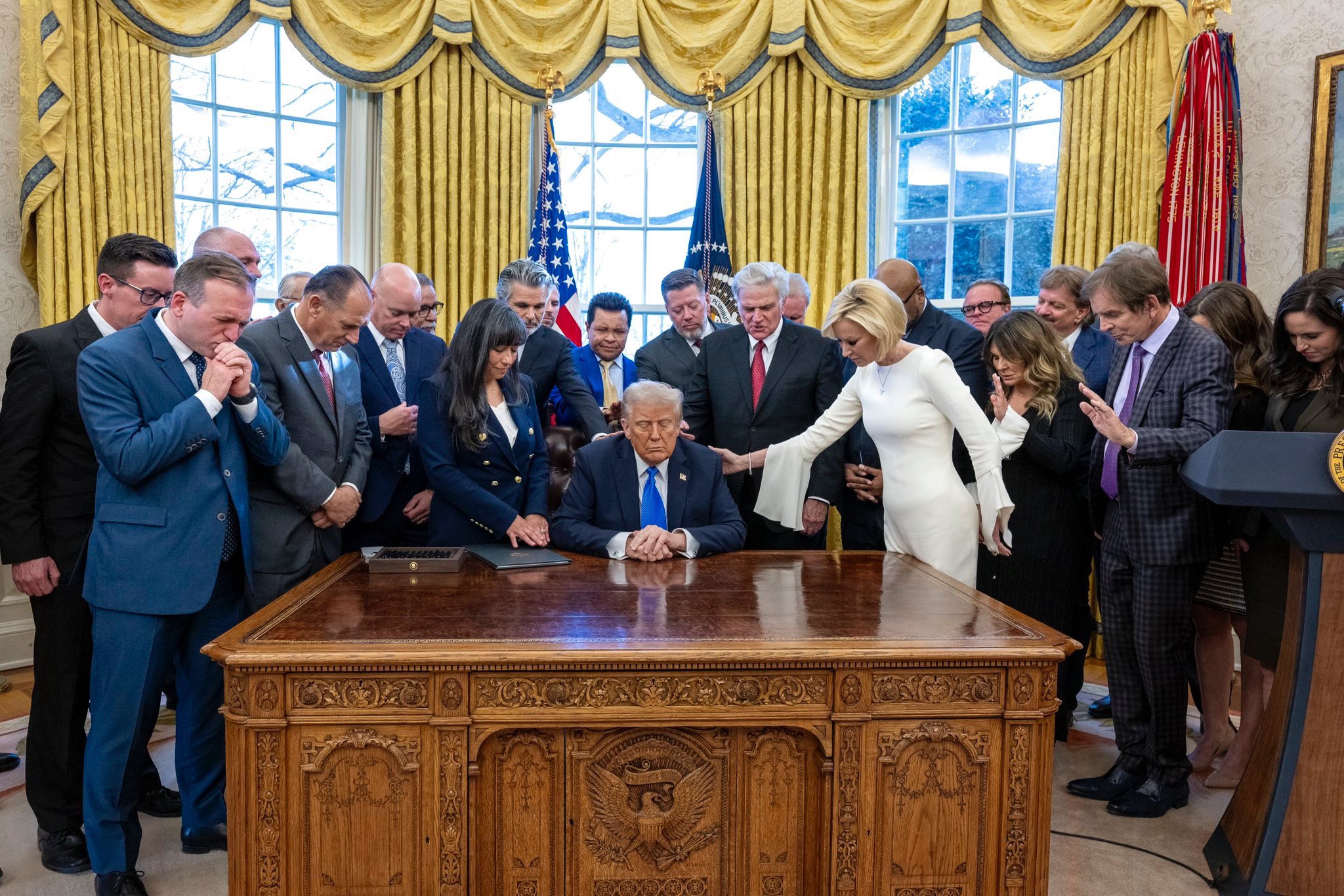
This man, making Christmas calls from the White House, believes the world is a sphere. And he has even flown around it! So has our beautiful FLOTUS, who happens to be his wife!
Truth and common sense must be valued by us, as individuals, in order to lastingly disempower the authoritarian fake news media. This includes the perniciously smarmy science media, which never answers for its errors and lies. I believe that the media has been responsible not only for leftist pathologies like scientism, medical fascism, and radical gender ideology, but also for reactionary movements like modern flat Earth, rejection of all medicine, and Biblical geological literalism.
Just as Wheatie’s Stormwatch Monday Open Thread was created as a place for people to openly express their thoughts and opinions, so, too, is this Thank God Thursday Open Thread, where honest but civil discussion of all topics is encouraged. This thread is also to be known as Theistic Evolution Thursdays, due to the author’s expected “pontification” about his scientific, religious, and political opinions. You are welcome to pontificate back! Free speech matters!
Please label all AI-generated content as being such, unless it is patently obvious (e.g., humorous AI images). It is important that we as individuals not begin to pretend that socially derived artificial intelligence is actually our own, as this form of stealthy social information averaging and feedback would be one more pretense and deception between people, in service of stupid Marxist socialism, and of those who wish to substitute their communally protected lies for actual truth.
The source of alleged truth matters, not for the truth itself, but for validation.
And yes, it’s THURSDAY…again.
And that’s it. We’re done stealing from Wheatie.
OK – maybe her rules need to be posted.
No food fights.
No running with scissors.
If you bring snacks, bring enough for everyone.
Other rules may be derivable from these, and that conjecture is left for discussion.
If there is nothing beyond the “W” below, then this is a placeholder. For health reasons, I can’t always post a timely opinion before each Thursday, but I will try. Otherwise, you have this placeholder post, where YOU provide the content. Enjoy!
W
Not a placeholder. A short selection of tidbits.
(1) AI Sydney Sweeney, bad AI political humor, and bad AI dialogue. UGH. And yet, weirdly watchable, like figures in a small-town wax museum.
(4) Science LYAHF video turns out to be good for all the wrong reasons!
This LYAHF (Let’s You And Her Fight) physics attack video, in which a rather malicious woke establishment science dude obsessively goes after Sabine Hossenfelder and Eric Weinstein, by interviewing six scientists whose fields she has snubbed, turns out to have some amazing explanations of current aspirations in physics by his less malicious and very serious guests.
Watch the attacker act like a typical MSM journalist, pushing his guests to try to get them to say what he wants them to say – that Sabine is a “fraud” and a crackpot.
Nonetheless, very worth the watch to gain an understanding of current progress in string theory, particle physics, etc.
(5) Want to know more about ancient Egyptian?
It takes a while for the story to get there, but it’s worth it.
In the next two parts we take a walk back in time to the first half of the 1700’s in England and then back across the pond to the colonies. We need to establish the influence one fiery preacher of the Gospels had in both England and the colonies as well as on one B. Franklin, Printer among millions of others who heard the preaching. Yes – millions. Per numerous historical accounts George Whitefield preached to over 10 million people during his years on the planet. It is believed over 2 million people accepted Christ from his efforts during this time with most of that number within America’s population.
This discussion of Whitefield will help us better understand not only B and his personal beliefs, but establish why he and that preacher friend of his was so important to our independence and success as a nation. If you are unaware of the history and the seeds that were planted leading up to the patriot movement’s acts of rebellion, you may not grasp the full importance of what the Declaration of Independence states. Despite the anti-Christian recency bias we find today, America would not be America without Christianity. It is a cornerstone of our foundation as a nation. From the pilgrims forward it has guided our principles and approach to relations domestically as well as with the rest of the world.
George Whitefield was born in 1713 in Gloucester, England. His parents kept an inn there and he was the fifth of seven children. His father died when he was two years old. As he aged he helped his mother with the inn. Also as he grew older he discovered he had a passion for acting. However, the family had no money for him to continue his education. So he became a servitor to be able to attend the University of Oxford. This involved him becoming a servant doing simple basic living chores for staff and students there in exchange for free tuition.
George wanted to do good works and obey God, but had not yet fully understood the salvation offered by acceptance of Christ. That all changed when he read the book, The Life of God in the Soul of Man. Finally realizing he could not earn God’s favor by doing good works, he accepted Christ as his personal savior and was converted. He realized that all mankind has sinned against God’s will for us and that he needed God’s grace in the person of Jesus Christ and His sacrifice. He accepted that this righteousness of Christ was then imputed to all who believed and accepted, thereby creating a new heart and nature that willingly desired to serve God.
We hillbillies call it taking off the old coat and putting on the new. Hi there, Wolf!
After Whitefield’s conversion the Bishop of Gloucester ordained him a Deacon in the Church Of England. He began preaching one week after his ordination. He soon took to preaching the Word of God wherever the people were since the Church of England did not give him a church. He was disappointed, but it did not deter him and as a result he went to the parks and fields to reach the people who did not go to church.
Soon, America and Great Britain would never be the same again. However, there was a friend/foe relationship with another major evangelical contemporary of that period who was educated in the same university in the same general time frame as George.
John Wesley and George Whitefield
Rather than summarize this relationship, I am going to post a link below to a short story about the two. In this part I would prefer to avoid a discussion about the issue that divided them – Calvinism versus Arminianism. The truth is that I personally believe elements of both of these Christian doctrines. At that time it was an extremely divisive issue within the clergy. It drove a wedge in the relationship of Wesley and Whitefield. There are letters to each other available for review online that are heart-wrenching. One I read from Whitefield to Wesley sounds like Paul’s reproach of Peter that we read in his letter in scripture. Just know that the two reconciled late in life, basically agreeing to disagree, as should all of us who allow a dividing doctrine to infest our hearts.
The common theme of the two was that they went to the people in both England and the colonies with the intent to bring the message of salvation in Christ as well as providing for the least of these. Both were active in ministry in England prior to going to the colonies. Both were religious until experiencing a time when they found their personal hearts strangely warmed by Christ, a situation and understanding that many believers would call being born again. Both sought for all the experience of seeking Christian perfection as a life long worthy endeavor.
Being “born again” is a real thing. It happened to me.
The Fields Were Ripe For Harvest
By 1738, Whitefield felt the call to go to Georgia in the colonies to minister to orphans there after an unsuccessful, despondent Wesley returned to England at the same time. George began preaching at Christ Church in Savannah, which had been founded by Wesley previously. The Wesley brothers (John and Charles) were not all that pleased with their own results in that colony as they were met with much resistance. Whitefield felt the opposite. He embraced the people and the mission. His passion for the orphans was legendary. He solicited funds and opened three schools, one of which was for girls. He spent every available moment preaching the Word throughout the region. His bullhorn like voice could be heard a mile away, so he was very effective with outdoor assemblies where thousands would attend each time.
Seven months later he decided to return to England and arrived there months later after a very perilous voyage. Not long after arrival he was ordained a priest in the Church of England. After all he was willing to do and had accomplished he believed churches would be opened for him to preach, but the opposite was true. As a man of the people growing up in a lower status he was not welcomed in the pulpits of establishment churches. He made the best of it, preaching wherever he was welcomed. His presence was greatly appreciated when he preached in coal country where 10,000 people at a time would come to hear him speak. What an amazing sight and sound it would have been there to witness thousands standing to sing hymns and praise the Lord during the times he spoke. It was said that the singing could be heard some two miles away.
His largest successes in reaching the people came when preaching in a large, open tract of land known as the Moorfields. He set no schedule for doing so, but no matter whether he preached in the early morning or at night, thousands would come to listen and participate. One morning 20,000 came and later that evening the same day some 35,000 were there to hear him. Not all appreciated what he had to say. He once said, “I was honored with having stones, dirt, rotten eggs and pieces of dead cats thrown at me.” 😂 During one event, 80,000 people came to hear him preach 1.5 hours.
Yet, he was only 25 years old during those days. Wow.
Unfortunately his popularity with the masses disappointed the establishment and his bishop denounced him by August 1739. So, he headed back to the colonies with donations for his planned orphanages. He arrived in Philadelphia in late October and began preaching there. During the short time he was there he preached to tens of thousands of colonists at at time. It was during one of those times he first met B. Franklin, Printer.
His intent was always to return to Georgia and establish the orphan ministry there, but his next stop was New York where there was a similar response to his preaching. He stayed a short time before preaching his way down the Atlantic coast, traveling by horseback, until he finally arrived in Savannah in January 1740. He then went about building the orphanage. By September he was sailing back north to the New England area to begin preaching there. It was in this period that historians state our country’s first “great awakening” occurred.
The great American evangelist,Jonathon Edwards, had been preparing the area for revival for some time before Whitefield. When George arrived, it all broke loose. He was invited to speak by colonial governors and colleges such as Harvard. The places would become so crowded they had to turn people away. This revival lasted 1.5 years before Whitefield returned to England again. The Christian seeds had been planted that would eventually lead to our founding as a nation.
Whether you the reader personally believe in Christianity or not; this historical truth cannot be altered by those seeking to rewrite history or introduce counter narratives. The changes in mind and hearts of We the People in those days flowed into our founding documents that have governed our nation for 250 years. Within those documents We the People acknowledge God’s providence. The law itself is largely in alignment with Biblical principles. We the People of those days cut a forever deal with the Almighty. As has been proven in our nation’s history, any turning from it by leaders or We the People will result in great angst and even violence as discipline. We just need to stop being the prodigal son as a nation and start doing God’s will. Back to Whitefield…
Upon his arrival in England he learned that his friend John Wesley had turned from the Calvinistic Methodism that both embraced as younger preachers. As a result they went their separate ways. Whitefield’s base of preaching moved back to the Moorfields and a tabernacle was built, however, he traveled throughout Great Britain preaching as requested. While in Wales he met his future wife, Elizabeth, a widow. They married and had one son in 1743, who passed away as a four month old baby.
He made seven trips in total to America before passing away in Massachusetts some two hours after preaching before thousands in 1770. His words and presence always sparked an emotional response from those who heard him. Again, the response would be negative at times. There was one occasion he was beaten badly with a cane by a deranged man and other times when he was stoned both in England and in the colonies. Throughout it all he never lost his fervor for bringing God’s Word.
At this point we will conclude until next time with some of his interactions with B, a key founding father with whom he never lost contact and cared deeply about. It is now time to discuss another signer from Pennsylvania.
James Wilson
With James Wilson we have another brilliant attorney and associate justice to the Supreme Court as a founding father who served nobly only to fall victim to seeking riches in land speculation with excessive debt at the end of his life. It sounds like a familiar story with decisions and a similar fate that awaited another previous discussed founder, James Morris.
James Wilson was born in Fife, Scotland in 1742, the middle child of seven in a hard working farming family of the Presbyterian faith. His father rented the land he farmed. At age 15 he entered, studied and graduated from the University of St. Andrews. He followed that with studies at Edinburgh and Glasgow without graduating. In 1765 he emigrated to the colonies at New York in the middle of the Stamp Act controversy and soon moved to Philadelphia. He brought with him letters of introduction that enabled him to receive a job tutoring and teaching at the College of Philadelphia (Penn). While there he proceeded to study law under highly respected John Dickinson. For his work at the school he received an honorary Masters of Arts and later in life, a LL.D. Two years after arrival in 1767 he earned admission to the bar and established a law practice in Reading, PA, where he became very successful. In 1771 he married Rachel Byrd and they had six children together.
The aftermath of the Stamp Act encouraged him to deeply study the legal relationship between Great Britain and the colonies. Taxation without representation was a deal killer as far as Wilson was concerned, so he published his position on the subject. As he continued to research he concluded there was very little basis for the cause of independence for the colonists, yet, there was a recognition that all colonists were citizens of Great Britain with equal rights as residents. As a result in his view the acts Parliament took that related to the colonies were illegal due to the colonists lack of equal representation in governance in the same manner as citizens located in Great Britain.
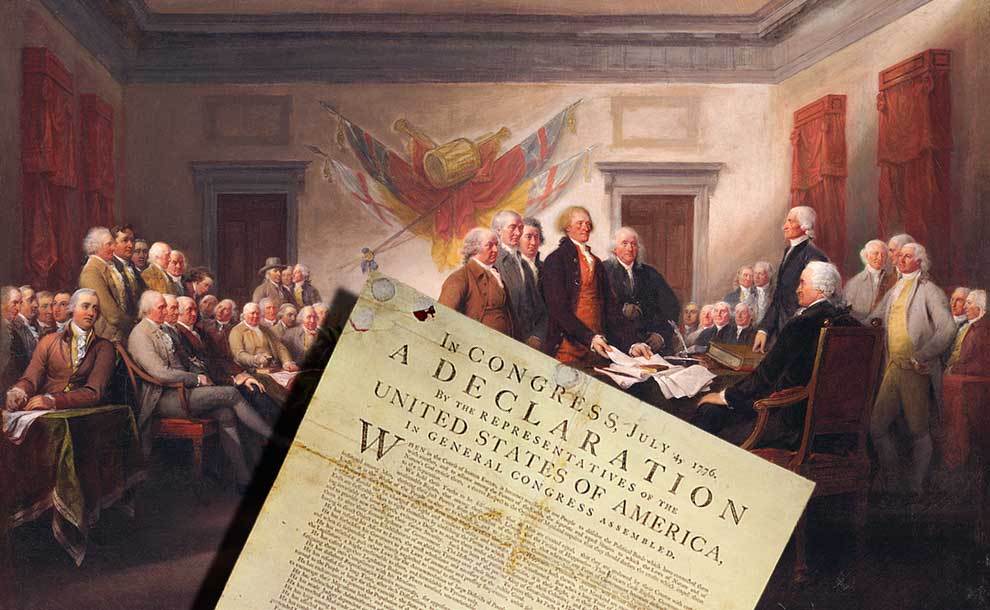
This legal approach was utilized when the Declaration of Independence was drafted. It called out the King for misconduct as a result as we can see from the wording in the document. Wilson published this legal interpretation in 1774. What happened next is best described by this quote from the Descendants site;
Wilson’s language adopting the doctrine of popular sovereignty and natural rights foreshadowed the content of the Declaration of Independence two years later, as indicated by an early paragraph:
All men are, by nature, equal and free: no one has a right to any authority over another without his consent: all lawful government is founded on the consent of those who are subject to it: such consent was given with a view to endure and to increase the happiness of the governed, above what they could enjoy in an independent and unconnected state of nature. The consequence is that the happiness of the society is the first law of every government.
Seems we have seen that content phrased into our Declaration of Independence. But who knew James Wilson was the primary source? Not this guy.
Later in 1774, Wilson was made head of the committee of correspondence at Carlisle and was elected to the first Provincial Conference at Philadelphia. In January 1775, he was a member of the Convention of the Province and in May joined the Continental Congress. A year later in June 1776 as the Congress contemplated Richard Henry Lee’s resolution for independence, Wilson sensed the Congressional members were not yet ready for an affirmative vote as the states were split seven for and five against at that point. He voted for a delay with other key members. After more spirited discussions, three weeks later the vote was held. He, John Morton, and our boy B voted for it, which put Pennsylvania in the for independence column by a vote of 3-2.
After approval and signatures, they quickly moved toward the establishment of state constitutions. Wilson found himself on the wrong side of the issues in Pennsylvania, so he was removed from Congress in 1777. In addition to his return to the law practice, from which he assisted many loyalists, he became an advocate general for France for a handful of years. He was also involved in the formation of the Bank of North America with Robert Morris in 1780 that we addressed in that part. This bank formation provided a much needed funding source for our young nation’s treasury.
Wilson returned to Congress when conservatives assumed more power over state affairs in 1782. He served in it until 1787 when it came time for the Constitutional Convention. His wife had passed away the previous year, so all of his efforts went toward the work.
While at the Convention he played a major role as a framer of the document and was considered by many to be the most knowledgeable lawyer in the group. He was a prominent speaker in the assembly. He continued stressing his emphasis on natural rights within the proposed law. With groups opposing each other regarding election of the President by popular vote (Wilson supported) or legislative vote, Wilson proposed the Electoral College that is now used. At first the idea was rejected in favor of a legislative vote, however, those supporters could not agree on the terms. With James Madison and Gouverneur Morris as strong supporters of Wilson’s proposal, a compromise was reached in the committee incorporating an acceptable version of the Electoral College into the Constitution.
After this work Wilson was selected by Washington to be an Associate Justice on the Supreme Court in 1789. He served until his death from a stroke brought on by malaria in 1798. In 1790 he also became the first law professor in the history of the College of Philadelphia/Penn. In 1793 he married Hannah Gray. They had a child together who passed away at age three. Although Wilson claimed to be anti-slavery, he had a slave for most of his adult life. Hannah requested the man’s release and in 1794 he did so.
However, this last decade of Wilson’s life was tumultuous. He fell victim to the same temptation of Robert Morris through excessive land speculation. He owed hundreds of thousands of dollars on land deals, but would not stop buying more until he became insolvent. He was briefly jailed in debtor’s prison in New Jersey before his son paid the related debt off. He spent the last year of his life running away from other creditors and ended up dying in Edenton, NC in poverty. He was initially interred there before his remains were removed and brought back to the Christ Churchyard in Philadelphia where other founders are interred.
James Wilson as a founding father is another man who is not typically discussed. However, he left a long lasting positive imprint on our nation through his law career and particularly with the Constitution. We remain greatly appreciative of his patriotic service to our country.
Please remember Wolf’s rules for our community. In general that means to be respectful to each other and to pull no shenanigans that your mom might find offensive or otherwise cause jail time. That said, free speech is honored here.
Joe Biden never won. This is our Real President – 45, 46, 47.
AND our beautiful REALFLOTUS.
This Stormwatch Monday Open Thread remains open – VERY OPEN – a place for everybody to post whatever they feel they would like to tell the White Hats, and the rest of the MAGA/KAG/KMAG world (with KMAG being a bit of both).
Our various sister sites, listed in the Blogroll in the sidebar
Our beloved country is under Occupation by hostile forces.
Daily outrage and epic phuckery abound.
We can give in to despair…or we can be defiant and fight back in any way that we can.
Joe Biden didn’t win.
And we will keep saying Joe Biden didn’t win until we get His Fraudulency out of our White House.
Hey – we actually got him out! *salutes Wheatie*
Wolfie’s Wheatie’s Word of the Week:
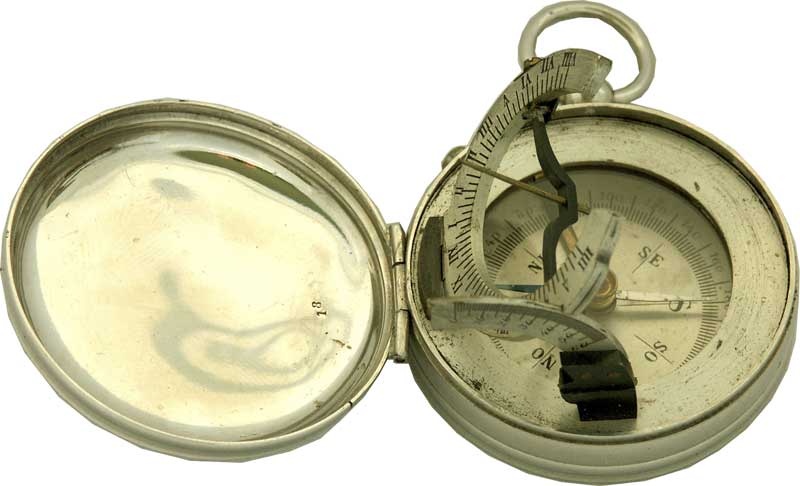
pantochronometer
noun
combined sundial and compass
Used in a sentence
A pantochronometer is a Horizontal Magnetic Dial, i.e. a floating sundial on a compass card. The rotating card automatically aligns itself along a north-south axis.
Shown in a picture
Shown in a video
MUSIC!
Another Sydney Sweeney AI parody for your inspection!
https://youtu.be/gwpiV_6CR_4
THE STUFF
Finnish genetics – evidence of more cross-pole traffic, headed the other way from the ancestors of the American Indians!
This man, making Christmas calls from the White House, believes the world is a sphere. And he has even flown around it! So has our beautiful FLOTUS, who happens to be his wife!
Truth and common sense must be valued by us, as individuals, in order to lastingly disempower the authoritarian fake news media. This includes the perniciously smarmy science media, which never answers for its errors and lies. I believe that the media has been responsible not only for leftist pathologies like scientism, medical fascism, and radical gender ideology, but also for reactionary movements like modern flat Earth, rejection of all medicine, and Biblical geological literalism.
Just as Wheatie’s Stormwatch Monday Open Thread was created as a place for people to openly express their thoughts and opinions, so, too, is this Thank God Thursday Open Thread, where honest but civil discussion of all topics is encouraged. This thread is also to be known as Theistic Evolution Thursdays, due to the author’s expected “pontification” about his scientific, religious, and political opinions. You are welcome to pontificate back! Free speech matters!
Please label all AI-generated content as being such, unless it is patently obvious (e.g., humorous AI images). It is important that we as individuals not begin to pretend that socially derived artificial intelligence is actually our own, as this form of stealthy social information averaging and feedback would be one more pretense and deception between people, in service of stupid Marxist socialism, and of those who wish to substitute their communally protected lies for actual truth.
The source of alleged truth matters, not for the truth itself, but for validation.
And yes, it’s THURSDAY…again.
And that’s it. We’re done stealing from Wheatie.
OK – maybe her rules need to be posted.
No food fights.
No running with scissors.
If you bring snacks, bring enough for everyone.
Other rules may be derivable from these, and that conjecture is left for discussion.
If there is nothing beyond the “W” below, then this is a placeholder. For health reasons, I can’t always post a timely opinion before each Thursday, but I will try. Otherwise, you have this placeholder post, where YOU provide the content. Enjoy!
W
More random interesting things.
(1) Among what are clearly synthetic bands (such as J-pop, K-pop, and USA-pop), this “Siberian Psy-Op” is perhaps even more enigmatic than “Babymetal”!
At least these Siberian chicks aren’t AI – right?
(2) Anastasia, the [probably AI] Chip Chick, talks about Japan’s big integrated circuit plans with IBM.
(3) Flat Earth Disproven (Once Again) By Internet Nerds You May Know!
You may have already seen this, but in case you didn’t, check it out.
(4) BIG BUGS!
Not too gross, some beautiful. Check them out! (Yeah, the cover is total phony gross-out clickbait – don’t worry!)
https://www.youtube.com/watch?v=kOTdofHtGuQ
(5) Fox Outnumbered talks about Sydney Sweeney!
What do you think of Kennedy’s glasses? NOT A FAN, HERE!!!
You will recall that one of the most important functions of this site is that we be able to tell the White Hats (presuming that such people exist, which seems increasingly likely) what we really think about things. We need to do this in a timely fashion, too.
We are now entering one of the most dangerous phases of the Trump administration, where things get real – and therefore really dangerous. Honest, frank talk is needed. Free speech is needed. We need to be able to say what we really think. ALL OF US.
Trump is entering (openly, since we’ve always been “involved”) as a third party into a conflict where both sides, to some extent, hate free speech, hate certain truths, and rely on censorship as a tool of war.
This AMERICAN site, which treasures free speech and the truth, will not be a casualty of that conflict, nor of the tactics of the two sides.
A significant strategy of those who are either opposed to Trump and MAGA – or for whom Trump and MAGA are secondary considerations and expendable – has been to slowly drive people from the public square – including this very site – using a variety of tools and tactics. Some divisions are normal, but others are not. The recent divisions over Epstein and Gaza are not, in my opinion, organic, despite using important, organic issues.
One way to avoid division is to declare topics “off limits” – including in (most ironically) the “open threads”. That will not happen. Nor will a negotiated “code of silence” which accomplishes the same thing. The detente of non-discussion is not an acceptable term of peace. And yet, the fighting over specific issues is calculated to drive people away, ultimately. If we don’t speak, the enemies of free and true speech win. If we leave, the enemies of free and true speech win.
Therefore, I am going to create some capability for people to screen whose comments they see or don’t see, and what subjects they see or don’t see. In this way, people will not be forced to wade through content that makes their time here feel like a burden.
I think we have enough healthy exposure to opposing viewpoints here already.
I am already determining how exactly I am going to be able to let people control their feed. I will have to use a programming language I hate, and integrate my work with code that is (how do I say this kindly?) “less than optimal”. But it can be done. I have tested the basic concepts, and what I am thinking is possible, actually works.
Sadly, that programming will not be easy. It will take weeks.
Therefore, I am going to stop doing anything but placeholders on Mondays and Thursdays. After next week, you will only see placeholders on those days.
I ask for your patience during this time. Once I have the new code in place, I will let you know. I may or may not deploy interim versions – we’ll see. Please don’t complain if you see non-functional gizmos along the way!
You have my best wishes during this time. Please hang tough. If you can make it a few more weeks, that is all I need.
God bless all of you, you personally, Free Speech, President Trump, and America!
And if we can ask it most humbly and undeservingly, may God choose to bless this site as well.
Joe Biden never won. This is our Real President – 45, 46, 47.
AND our beautiful REALFLOTUS.
This Stormwatch Monday Open Thread remains open – VERY OPEN – a place for everybody to post whatever they feel they would like to tell the White Hats, and the rest of the MAGA/KAG/KMAG world (with KMAG being a bit of both).
Our various sister sites, listed in the Blogroll in the sidebar
Our beloved country is under Occupation by hostile forces.
Daily outrage and epic phuckery abound.
We can give in to despair…or we can be defiant and fight back in any way that we can.
Joe Biden didn’t win.
And we will keep saying Joe Biden didn’t win until we get His Fraudulency out of our White House.
Wolfie’s Wheatie’s Word of the Week:
osteoid
adjective
bony
bone-like
resembling bone
of, pertaining to, or characteristic of bone
Used in a sentence
Osteoid osteoma is a benign osteoblastic tumor that was first described in 1930 by Bergstrand.
Shown in a picture (osteoid histopathology)
Used in a company name in a video
MUSIC!
A really nice version of a song that I enjoyed back in the day.
THE STUFF
This is a painful confrontation of an Irish PalPal with facts about Islam. I would say “enjoy”, except it’s literally painful to watch.
https://youtu.be/a2n6TSFtHk8
And then there is this comment on the page…..
I’m a Christian born in a Muslim country. My family migrated to the west when I was 9 years old, we did not want leave but we knew ultimately that one day we would be either killed or kicked out so we decided to leave before that happened. A few years later, the Islamic terrorists started bombing churches. They kidnapped my mums cousin who is a priest. Tortured him for days, pulled his teeth out and eventually by GODs grace he was let go. I met a man whose son was killed in a church that was attacked by Islamic terrorists. This man lives with so much pain every day. He remembers his son every single day. His wife and daughter were almost killed too but his son heroically covered them with his body when the terrorists tried to kill them. Thank GOD they were miraculously spared. My mums brother who’s an engineer was kidnapped twice by terrorists and asked for a large sum of money for his life. Mum was living a nightmare. She couldn’t sleep or eat. I was young and didn’t understand what had happened. Later on I was told. You know the horror and terror we live under everyday just because we are Christian trying to survive in a Muslim country. This young lady doesn’t understand anything. Islam is a problem. It’s a death cult. Please read the quran, the life of Muhammad and the hadiths. They are shocking to say the least. I pray and hope that people like her wake up. Because before you know it, you will find yourself living under Sharia law. Thank you for bringing this to people’s attention. I pray they listen.
This man, making Christmas calls from the White House, believes the world is a sphere. And he has even flown around it! So has our beautiful FLOTUS, who happens to be his wife!
Truth and common sense must be valued by us, as individuals, in order to lastingly disempower the authoritarian fake news media. This includes the perniciously smarmy science media, which never answers for its errors and lies. I believe that the media has been responsible not only for leftist pathologies like scientism, medical fascism, and radical gender ideology, but also for reactionary movements like modern flat Earth, rejection of all medicine, and Biblical geological literalism.
Just as Wheatie’s Stormwatch Monday Open Thread was created as a place for people to openly express their thoughts and opinions, so, too, is this Thank God Thursday Open Thread, where honest but civil discussion of all topics is encouraged. This thread is also to be known as Theistic Evolution Thursdays, due to the author’s expected “pontification” about his scientific, religious, and political opinions. You are welcome to pontificate back! Free speech matters!
Please label all AI-generated content as being such, unless it is patently obvious (e.g., humorous AI images). It is important that we as individuals not begin to pretend that socially derived artificial intelligence is actually our own, as this form of stealthy social information averaging and feedback would be one more pretense and deception between people, in service of stupid Marxist socialism, and of those who wish to substitute their communally protected lies for actual truth.
The source of alleged truth matters, not for the truth itself, but for validation.
And yes, it’s THURSDAY…again.
And that’s it. We’re done stealing from Wheatie.
OK – maybe her rules need to be posted.
No food fights.
No running with scissors.
If you bring snacks, bring enough for everyone.
Other rules may be derivable from these, and that conjecture is left for discussion.
If there is nothing beyond the “W” below, then this is a placeholder. For health reasons, I can’t always post a timely opinion before each Thursday, but I will try. Otherwise, you have this placeholder post, where YOU provide the content. Enjoy!
W
Just gonna throw out some goodies.
(1) I forgot all about this Matrix stuff. Kinda fun.
(2) You think Stalin was bad? He was worse! Way worse!
Obama’s mentor’s mentor! Do things make sense now?
(3) OH NOES – Ancient Humanoids Just Got Even More Complicated!
(WARNING – 41 min EXTREME geek-out scientific paper reviews!)
Is it a mess? YES – and real science admits that it’s a mess, and the mess is evolving, too! But things ARE getting sorted out.
Frankly, I wish we would have had these kinds of science discussions online when I was in school, instead of sending letters by pony express, or using scrolls and clay tablets!
(4) I love this song – in case you haven’t seen it.
https://www.youtube.com/watch?v=_tLCv_ryJAE
AI humor had me cheering, and AI country had me tapping my foot. Not gonna lie!
(5) What links AI, atom bombs, card decks, chemical reactions, search engines, and the very concepts of independence and free will?
The rewriting of history to fit narratives of those with nefarious motives is as common as noses on faces today. It frequently seems that presenting facts and truth are exceptions to the rule in media and many publications. Truthfully, I am sure I have presented questionable information here from what I have summarized from the works of others. It is with that understanding that I bring you a discussion on the spiritual condition of our old friend, B. Franklin, Printer; along with further discussion later about his relationship with the famous Christian evangelist George Whitefield from the Great Awakening period in the 1700’s. There is so much content and relevance that this will be a three parter and will also complete the Pennsylvania signers.
Most all biographical and historical text I studied downplay the Christian faith of B. Most all point to his early days as a Christian in the Puritan faith of his family before undergoing some kind of transformation into becoming a deist leading up to and during his embracement of the Enlightenment period in Europe. For those who are less informed on deism, please review the link below. It is concise and easy to follow. It is kind of a big deal as it informs the world view of some leaders in every walk of life even today.
I am sure you noticed B and Thomas Jefferson mentioned in that piece. I inferred in B’s dedicated American Story, Part 19, that this transformation to deism may have been the case. After more review of additional information outside of the above linked article and other utilized sources, I am rescinding that inference. Nobody knows the truth of the condition of the human heart but God. As observers all we can do is consider the evidence from their lives and suggest that it indicates something of note. I see that the same Christian faith B personally struggled with still exists in Christianity today and probably will until Jesus returns. He grew spiritually as he worked out his faith, just as the Apostle Paul indicates we should in Philippians 2:12. Salvation is a gift of God, which involves a process of growth and maturing in one’s spiritual life. It was always on B’s mind even when he questioned and had doubts. It informed his person and his perpectives.
As I have continued on a deeper dive of B’s words and compared them to actions he took throughout his life, I see a man who had accepted Christ as a young Puritan and attempted to live out his faith through good works to others throughout much of his life. What he rejected was organized religion without what he considered to be substance. He read and exhibited a great understanding the Bible along with participating in Lent all of his life. A committed deist generally does not do those things in that manner.
Like most all of us B had flaws, made missteps, and had serious errors in judgment at times. Sometimes he trusted in his own intellect over God’s wisdom for example. However, when it came time to stand on one side or the other during critical events and periods, he had a compass that pointed directly toward God and His instructions. B did not hesitate to voice his thoughts and heart, which led to actions that reflected an active faith in God that is reflective of Christianity. He truly cared about people and wanted what was good.
Some Evidence
There are many examples of his thoughts through his storied life. Using his own words, I will start first with his doubts and aversion to organized religion for himself while finding it beneficial for society as a whole.
“My Parents had early given me religious Impressions, and brought me through my Childhood piously in the Dissenting Way. But I was scarce 15 when, after doubting by turns of several Points as I found them disputed in the different Books I read, I began to doubt of Revelation itself.”
This was a very bold admission during that time and place. Yet, he even gives the reason why he had doubts – the books he read influenced him. That admission indicates his willingness to consider all points of view and use reason. At that time in his life he just chose to believe in his own reasoning instead of God’s.
“Tho’ I seldom attended any Public Worship, I had still an Opinion of its Propriety, and of its Utility when rightly conducted, and I regularly paid my annual Subscription for the Support of the only Presbyterian Minister or Meeting we had in Philadelphia.“
He might as well have said,” You won’t see me darken the door of a church, but I understand and agree about the value the church has for society. So I will write a check to make sure it continues.” 😂
“[God] ought to be worshiped by Adoration, Prayer and Thanksgiving. But that the most acceptable Service of God is doing Good to Man. […] And that God will certainly reward Virtue and punish Vice either here or hereafter.“
Per this prayer of B’s, he indicates there are consequences on earth and post death in other realms of God concerning the actions of people. It seems good works toward others is a desired way to serve God per B, which is a traditional Christian belief. In Matthew 22:37-38 Jesus tells His followers, “YOU SHALL LOVE THE LORD YOUR GOD WITH ALL YOUR HEART, AND WITH ALL YOUR SOUL, AND WITH ALL YOUR MIND.” and that it is the greatest commandment. He then follows in 22:39 with loving our neighbors (others) as ourselves. Next Jesus follows that in 22:40 with, “Upon these two commandments hang the whole Law and the Prophets.”
Why bother doing the second commandment at all if you do not believe the first since Jesus said doing so is the most important? Nobody that I can find really questioned B about his knowledge of the Bible. B was also noted far and wide for regularly doing the second commandment. That indicates he also believed in doing the first. He referenced and based his decisions on God often. None of that has anything to do with attending church services as a requirement for being good.
“It was wonderful to see the Change soon made in the Manners of our Inhabitants; from being thoughtless or indifferent about Religion, it seem’d as if all the World were growing Religious; so that one could not walk thro’ the Town in an Evening without Hearing Psalms sung in different Families of every Street.“
B saw the miracle happening all around him as hearts were changed and the Lord worshipped without regard to organized religion. Witnessing it lifted his heart and made him joyful. It represented his vision for how life should be for Americans.
As discussed, B’s journey to a stronger faith was greatly impacted by George Whitefield. The effects of their relationship became much more pronounced as he aged and participated in the birth of our nation. It seemed to need to percolate in his mind and heart for a couple of decades. Below are two examples where he left little doubt about the condition of his soul in my opinion. The first had long lasting, major effects on our nation.
This incredible speech is one for the ages,
“How has it happened, sir, that we have not hitherto once thought of humbly appealing to the Father of lights to illuminate our understandings? In the beginning of the contest with Great Britain, when we were sensible to danger, we had daily prayers in this room for Divine protection. Our prayers, sir, were heard and they were graciously answered. I have lived, sir, a long time and the longer I live, the more convincing proofs I see of this truth—that God governs in the affairs of men. And if a sparrow cannot fall to the ground without his notice, is it probable that an empire can rise without His aid? We have been assured, sir, in the sacred writings that except the Lord build the house, they labor in vain that build it. I firmly believe this. I therefore beg leave to move that, henceforth, prayers imploring the assistance of heaven and its blessing on our deliberation be held in this assembly every morning before we proceed to business”
These are the words of B, some 17(?!) years after the death of George Whitefield. They were stated in 1787 at the Constitutional Convention at a critical juncture. The proceedings had grown contentious and fear was rising that the assembly would soon disband while accomplishing nothing of substance. At 81 years of age B rose and addressed George Washington and the assembly with those words. Perhaps you recognize his use of scripture from Psalms and the Gospels within the statement. Maybe you noticed that he said they were “sacred” in his statement. Folks, that is what we Christians call giving a witness, a personal testimony to the greatness of God and the recognition that our nation exists only through His providence.
Just picturing this elderly man who was revered internationally as he awesomely rose to address his contemporaries with that statement brings chills to my spine. This is the stuff that needs taught in our public education system, not the awful woke and rewritten false narratives of the leftists. Out of all of the great accomplishments and quotes of B, this is the one that sets a benchmark for our nation to follow forever.
B’s specific proposal was not accepted, however, his words brought a spirit of reconciliation to all in attendance from that point on due to their respect for him and the providence of God that was clearly present in their successful drive to establish good government for the young nation. The unimportant grudges held against each other along with special interests were laid aside. At last they began to make significant progress toward completion of our nation’s Constitution and Bill of Rights.
Only God knows if B was acting as His servant or as an instrument for accomplishing His will for America. One thing for sure, those words are not of a worldly salesman, politician, or self-serving manipulator. They are grounded in a strong understanding of scripture and how things work best in God’s world.
Late in life B’s belief in Christianity as a necessary moral force in society is why he rejected a manuscript from the well-known deist and fellow Pennsylvanian, Thomas Paine, in which Paine attacked orthodox Christianity. B strongly urged Paine not to print the book or allow anyone else to even see it. He wrote,
“I would advise you, therefore … to burn this piece before it is seen by any other person; whereby you will save yourself a great deal of mortification by the enemies it may raise against you, and perhaps a good deal of regret and repentance. If men are so wicked with religion [Christianity], what would they be if without it?”
Paine did not listen and Part 1 of the Age of Reason was printed (not by B) in 1794. The full text was completed with the publishing of Part 3 in 1807. To understand how right B was and how misguided Thomas Paine was, we only need to read the latter’s tortured words that were spoken from his deathbed,
“I would give worlds, if I had them, if The Age of Reason had never been published. O Lord, help me! Christ, help me! Stay with me! It is hell to be left alone.”
But in the interest of fairness, there is a counter argument about B’s faith experiences that should be presented. Read the quote below.
“As to Jesus of Nazareth, my opinion of whom you particularly desire, I think the system of morals and his religion, as he left them to us, is the best the world ever saw, or is likely to see;
“But I apprehend it has received various corrupting changes, and I have, with most of the present dissenters in England, some doubts as to his divinity; though it is a question I do not dogmatize upon, having never studied it, and think it needless to busy myself with it now, when I expect soon an opportunity of knowing the truth with less trouble. I see no harm, however, in its being believed, if that belief has the good consequence, as probably it has, of making his doctrines more respected and more observed; especially as I do not perceive, that the Supreme takes it amiss, by distinguishing the unbelievers in his government of the world with any peculiar marks of his displeasure.” –Benjamin Franklin wrote this in a letter to Ezra Stiles, President of Yale University on March 9, 1790.
If we trust Jesus for our eternal salvation from sin and death for eternity, we trust not in our own efforts and good works. We realize we are depraved and cannot be good enough. Once we accept Christ and are born again, as Jesus told Nicodemus in John 3, what is required of us has been done. Good works then spring from our new birth, not for the purposes to buy our way into God’s good graces. Only God knows if B sincerely did that at some point in his life.
Since scripture clearly states God’s desire for none to be lost, I suggest that He uses many methods and ways to bring people to a saving knowledge of His grace. However, the central truth is that one must accept the atonement of Christ to receive it.
In the next two parts of this story I will devote more time to B’s relationship with Whitefield, a man he dearly loved and respected. He was the man who brought a traditional and even evangelical understanding of Christ to B, which helped complete the reversal of the appeal of deism from his younger years that had been driven by intellectual curiosity and the rejection of his Puritan upbringing. B openly stated that he strongly regretted that he influenced many younger people with that intellectual pursuit of deism during those days.
Regardless of the final outcome of B’s soul, we have him and Whitefield to thank for the America we experience today. What would we be as a people without The Great Awakening, George Whitefield, and B. Franklin, Printer?
It is now time to discuss yet another signer of the Declaration from the Keystone state.
George Taylor
It appears that George Taylor was born around 1713-1716 (subject to source) near Ulster, Northern Ireland. He emigrated to the colonies at Philadelphia twenty or so years later, apparently around 1736. He appeared to be the son of Protestant clergyman in Scotland. He was indentured to Samuel Savage, Jr. of French Creek Iron Works foundry there to pay for the voyage.
Per a seemingly legit Irish source provided below this happened because he ran away from home. 😂 His family was educating him to be a physician and he did not like it. So he ran away, found a ship headed for the colonies, signed up to be an indentured servant to pay for it, and never returned.
Dang, that’s desperate to get out of there! He did not want to be a doc really badly. Wish some current day lock step jab pushing docs in America had done likewise, but I digress.
Recognizing his good educational background, employer ironmaster Samuel Nutt moved him from labor to clerical roles. A year later in 1739 Nutt passed away, leaving control of the works to Savage and his mother. With the settlement of Nutt’s will, his widow (Anna) and sons from a previous marriage constructed a new foundry, Warwick Furnace, a year later. Taylor went to work for them. Savage then died in 1741, so Taylor took over management of that foundry and a year later married his widow, Ann, whose maiden name also happened to be Taylor. The foundry became very successful under George Taylor’s leadership.
Ann Taylor’s grandfather had arrived in the colonies back in 1684 and he was thought to have been responsible for surveying over a third of the Pennsylvania colony. They were prominent Quakers. With Ann’s marriage to Savage, she had been disowned due to leaving the faith.
In 1747 Taylor entered public service when he was appointed as Captain in a militia that had been formed by B to contain frontier violence. Five years later his step-son took over management of the foundry as planned and George exited the business. Ann gave up her interest to her son per the estate requirements and retained a life estate to two farms of the family. Ann and George had two children during the period; a daughter who died young and a son (James) who lived into adulthood and became an attorney, but who died in 1775.
In 1753, Taylor and a partner leased the Durham Iron Works. During the next years it provided cannon shot for the Provincial Pennsylvania government for the French and Indian War. In this period he was commissioned a justice of the peace and served in his church, Red Hill Presbyterian. His interest in politics grew and he was elected to the Provincial Assembly from 1764-1769 while continuing to serve as a justice of the peace. In 1767 he had purchased a 331 acre property some 15 miles from Easton on which he built a beautiful two story stone house overlooking the Lehigh River called Manor of Chawton. The home still still stands today and is known as the George Taylor Mansion.
Unfortunately, his wife Ann passed away soon after it was built in 1768. A few years later he leased the property and moved in with his son in Allentown. In 1774 he returned and leased the Durham Iron Works again. It was there that he once again produced cannonballs, this time for the Pennsylvania Committee of Safety, as well as making other iron products. A month after the Battle of Bunker Hill he was commissioned as a Colonel of the militia’s 3rd Battalion. In October 1775 he was sent to the Pennsylvania assembly to help issue instructions to Continental Congress representatives to not separate from Great Britain when they met to vote. However, by June 1776 that sentiment had changed dramatically. When John Dickinson and four other PA representatives declined to vote for independence they were replaced by the Assembly on July 20. Their replacements were Taylor, Dr. Benjamin Rush, George Ross, George Clymer, and James Smith – all of whom signed the document and cemented their places in American history forever.
Taylor served the Congress for a few months and returned home to serve as a member of the Pennsylvania Supreme Executive Council, but became ill and soon retired. He continued to operate the Durham Iron Works for two more years of its remaining lease before moving back to Easton in 1780. By February 1781 he passed away and was laid to rest in Easton. At the point of his death his estate had been largely spent.
Normally that would end this discussion, but there is something else to note. Along the way and after the death of Ann, George fathered five additional children with the couple’s housekeeper, Naomi Smith. There appears to be no evidence they formally married. Nothing much is known about them other than the first of their children was born in 1770 with other children being born throughout that decade. George provided for each in his will, however, nothing was left to distribute to them.
The George Taylor Mansion shown below is listed on the National Register of Historic Places. It is owned by the Lehigh County Historical Society, is fully restored, and is open to the public.
Although not as prominent as many of the other signers, George Taylor was highly valued by his peers for his common sense and fearless approach in public service. He faithfully performed his duties whenever called. We remain grateful and honor his dedicated service to our country.
Please remember Wolf’s rules for our community. In general that means to be respectful to each other and to pull no shenanigans that your mom might find offensive or otherwise cause jail time. That said, free speech is honored here.
Joe Biden never won. This is our Real President – 45, 46, 47.
AND our beautiful REALFLOTUS.
This Stormwatch Monday Open Thread remains open – VERY OPEN – a place for everybody to post whatever they feel they would like to tell the White Hats, and the rest of the MAGA/KAG/KMAG world (with KMAG being a bit of both).
This man, making Christmas calls from the White House, believes the world is a sphere. And he has even flown around it! So has our beautiful FLOTUS, who happens to be his wife!
Truth and common sense must be valued by us, as individuals, in order to lastingly disempower the authoritarian fake news media. This includes the perniciously smarmy science media, which never answers for its errors and lies. I believe that the media has been responsible not only for leftist pathologies like scientism, medical fascism, and radical gender ideology, but also for reactionary movements like modern flat Earth, rejection of all medicine, and Biblical geological literalism.
Just as Wheatie’s Stormwatch Monday Open Thread was created as a place for people to openly express their thoughts and opinions, so, too, is this Thank God Thursday Open Thread, where honest but civil discussion of all topics is encouraged. This thread is also to be known as Theistic Evolution Thursdays, due to the author’s expected “pontification” about his scientific, religious, and political opinions. You are welcome to pontificate back! Free speech matters!
Please label all AI-generated content as being such, unless it is patently obvious (e.g., humorous AI images). It is important that we as individuals not begin to pretend that socially derived artificial intelligence is actually our own, as this form of stealthy social information averaging and feedback would be one more pretense and deception between people, in service of stupid Marxist socialism, and of those who wish to substitute their communally protected lies for actual truth.
The source of alleged truth matters, not for the truth itself, but for validation.
And yes, it’s THURSDAY…again.
And that’s it. We’re done stealing from Wheatie.
OK – maybe her rules need to be posted.
No food fights.
No running with scissors.
If you bring snacks, bring enough for everyone.
Other rules may be derivable from these, and that conjecture is left for discussion.
If there is nothing beyond the “W” below, then this is a placeholder. For health reasons, I can’t always post a timely opinion before each Thursday, but I will try. Otherwise, you have this placeholder post, where YOU provide the content. Enjoy!
W
Sundance Figures Out Some Excellent Stuff
There is a CTH article recently that I just finally read, and it synced up and connected a LOT of different loose ends for me.
I’m going to urge you to read it, and then I’m going to explain why I think this is so important.
I will include the first half of Sundance’s article, for those who don’t want to visit the site. I think this is VERY important stuff, and worth a read, even for those who won’t go to his site.
Former House Permanent Select Committee on Intelligence Chairman Devin Nunes appears on OAN with former Congressman Matt Gaetz to discuss the information released by Director of National Intelligence Tulsi Gabbard.
As noted by Nunes, why did it take this long for the information to surface? That question showcases how corrupt the DC system -the Intelligence Community- is in its effort to protect itself from accountability.
Nunes also points to the raid on Mar-a-Lago as a possible entry point for investigative accountability. WATCH:
Let me refresh on something that could potentially be a revelation down the road.
In 2022 a Florida judge dismissed a lawsuit brought by President Trump against Hillary Clinton. [65-page Ruling Here] The media enjoyed ridiculing Trump using the words of the judge who dismissed the case. As noted by the Washington Times, “Judge Donald M. Middlebrooks, a Clinton appointee, said Mr. Trump’s filing was too lengthy, detailing events that “are implausible because they lack any specific allegations which might provide factual support for the conclusions reached.”
When I originally read the 108-page Donald Trump lawsuit filed in March 2022, it took me a few moments, and then I realized this was not a lawsuit; this was a legal transfer mechanism created by lawyers to establish a proprietary information silo.
Here’s a totally different take on the issues surrounding the Trump -v- Clinton lawsuit, which -from the outset- I always believed was going to be dismissed because suing all of those characters under the auspices of a civil RICO case was never the objective.
In the aftermath of the filing, the silo created by the lawsuit is grounded upon attorney-client privilege, a legal countermeasure to a predictable DOJ-NSD lawfare maneuver, which unfolded in the FBI Mar-a-Lago raid and the subsequent Jack Smith targeting operation.
In March 2022 President Trump filed a civil lawsuit against: Hillary Clinton, Hillary for America Campaign Committee, DNC, DNC Services Corp, Perkins Coie, Michael Sussmann, Marc Elias, Debbie Wasserman Schultz, Charles Dolan, Jake Sullivan, John Podesta, Robby Mook, Phillipe Reines as well as Fusion GPS, Glenn Simpson, Peter Fritsch, Nellie Ohr, Bruce Ohr, Orbis Business Intelligence, Christopher Steele, Igor Danchenko, Neustar Inc., Rodney Joffe, James Comey Peter Strzok, Lisa Page, Kevin Clinesmith and Andrew McCabe. [108-Page Lawsuit Here]
When I was about one-third of the way through reading the lawsuit, I initially stopped and said to myself this is going to take a lot of documentary evidence to back up the claims in the assertions. Dozens of attachments would be needed and hundreds of citations to the dozens of attachments would be mandatory. Except, they were not there.
After reading further, while completely understanding the background material that was being described in the filing, I realized this wasn’t a lawsuit per se’. The 108-pages I was holding in my hands was more akin to legal transfer mechanism from President Trump to lawyers who needed it.
The lawsuit filing was contingent upon a series of documents that would be needed to support the claims within it.
Whoever wrote the lawsuit had obviously reviewed the evidence to support the filing. However, the attachments and citations were missing.
That was weird.
That’s when I realized the purpose of the lawsuit. In hindsight, things became clear when the FBI later raided the home of Donald Trump, and suddenly the motive to confiscate documents, perhaps the missing lawsuit attachments and citations, surfaced.
With the manipulative, and I said intentional, “ongoing investigation” angle created by the John Durham probe essentially blocking public release of declassified documents showing the efforts of all the lawsuit participants (Trump-Russia Collusion Hoax), in 2021 President Trump needed a legal way to secure and more importantly share evidence.
Think of it like the people around Trump wanting to show lawyers the evidence in the documents. However, because of the construct of the lawfare being deployed against Trump, any lawyer would need a *reason* to review the evidence. The Trump -v- Clinton et al lawsuit becomes that ‘reason.’
I think Sundance really hit this out of the park. This explains SO MUCH of what has been going on.
The key fact is that Trump was making smart legal maneuvers to prosecute Russiagate, even when he was out of office, on the legal ropes, and basically a civilian at Mar-a-Lago. And these damned criminals KNEW IT. I contend they were STILL spying on him, trying to make sure he could never prosecute them for what they had done.
What we are seeing here, during the 4 years of out-of-office HELL they put Trump through, is Trump maintaining FORWARD LEGAL PROCESS on taking down the Russiagate spying and framing apparatus and punishing those involved. Stated another way, Pam Bondi, Alina Habba, and all the rest of Trump’s legal team were on a course to exactly where we are right now, from the moment that Trump brought each one aboard.
This is why Trump’s team is so prepared for what they’re now doing. This is why the Demmunists basically threw Epstein’s body out of their getaway car, to try to keep Trump from catching them. This is why the Cabal is activating the Israel/Palestine angle at every opportunity.
Suddenly, I realized that Trump has been preparing to go after the “Russiagate set-up / frame job” for MUCH longer than what seems to be going on right now.
Sundance is pushing the date on this stuff back to Durham, but I think we all realize that it probably goes back to the moment that “some dude from NSA” warned Trump that he was being spied on illegally.
I believe that once Trump realized that the establishment was illegally spying on him, he began moving to take them down for it. I don’t think he ever seriously acted as if he was not going to get these guys and gals for what they did. IN FACT, the whole timeline of their attempt to take down Trump makes even more sense now, because THEY knew Trump was going to make them pay, and so they escalated against him.
Even when Trump said that he thought “going after Hillary” for her actual crimes was something he thought that he SHOULDN’T do, I’m sure that Hillary and Obama wanted to make sure that it was something Trump COULDN’T do.
I think the color revolution attack at Charlottesville, the “gun control attack” at Las Vegas, the impeachments, and every other phony scheme against Trump were ALL the result of the plotters being INFLAMED by knowing that Trump wasn’t just bitching about what they had done to him – he was ready and willing to make them pay legally for it. I believe that their continued, unconstitutional, illegal spying revealed Trump to be seriously and continuously moving toward convicting and punishing those who had falsely used the intelligence apparatus to go after him.
And this leads to everything else, including the assassination.
Trump was RELENTLESS in the pursuit of justice, smartly playing every opportunity on the chessboard. They could not shake him. EVEN after they drove him out of office, he was planning how to take them down. Their SPYING on Trump never let up – and it was giving them answers they did not want to hear. I will bet money that Trump NEVER, EVER – even for deception – told anybody that he was going to “let them all off the hook”. Nope. He had them scared shitless, no doubt in my mind.
And THAT is why the Obama people and the Clinton people – every one of them – had to go after Trump. ALL of them. Trump was going to do what was needed to see justice happen. And they knew that, from the moment that Trump learned they were spying on him.
SO SATISFYING. The crooks have KNOWN justice was coming for them. From 2016.
Check out this article:
Trump Really Was Spied On
Durham says techies linked to the Clinton campaign had access to White House and Trump Tower internet data.