20201017: MAGA Protests Against Stupidity, Michigan & Wisconsin

In the interest of being organized and not cluttering up things too badly, multiple events on one day will be on one thread.

First up, Muskegon, Michigan:

Early inhabitants

Human occupation of the Muskegon area goes back seven or eight thousand years to the nomadic Paleo-Indian hunters who occupied the area following the retreat of the Wisconsonian glaciations[citation needed]. The Paleo-Indians were superseded by several stages of Woodland Indian developments, the most notable of whom were the Hopewellian type-tradition, which occupied this area, perhaps two thousand years ago[citation needed].

During historic times, the Muskegon area was inhabited by various bands of the Odawa (Ottawa) and Pottawatomi Indian tribes, but by 1830 Muskegon was solely an Ottawa village.[9] Perhaps the best remembered of the area’s Indian inhabitants was the Ottawa Indian Chief, Pendalouan. A leading participant in the French-inspired annihilation of the Fox Indians of Illinois in the 1730s, Pendalouan and his people lived in the Muskegon vicinity during the 1730s and 1740s until the French induced them to move their settlement to the Traverse Bay area in 1742.[citation needed]

The name “Muskegon” is derived from the Ottawa tribe term “Masquigon,” meaning “marshy river or swamp”.[10]

European arrival

During the lumbering era of the late 1800s, lumber companies sent white pine logs down the Muskegon River from as far away as Houghton Lake in Northern Michigan to sawmills and processing facilities in Muskegon.[11][12]

The “Masquigon” River (Muskegon River) was identified on French maps dating from the late seventeenth century, suggesting French explorers had reached Michigan’s western coast by that time. Father Jacques Marquette traveled northward through the area on his fateful trip to St. Ignace in 1675 and a party of French soldiers under La Salle’s lieutenant, Henry de Tonty, passed through the area in 1679.[13]

The county’s earliest known Euro-American resident was Edward Fitzgerald, a fur trader and trapper who came to the Muskegon area in 1748 and who died there, reportedly being buried in the vicinity of White Lake. Sometime between 1790 and 1800, a French-Canadian trader named Joseph La Framboise established a fur trading post at the mouth of Duck Lake. Between 1810 and 1820, several French Canadian fur traders, including Lamar Andie, Jean Baptiste Recollect and Pierre Constant had established fur trading posts around Muskegon Lake[citation needed].

Euro-American settlement of Muskegon began in earnest in 1837, which coincided with the beginning of the exploitation of the area’s extensive timber resources. The commencement of the lumber industry in 1837 inaugurated what some regard as the most romantic era in the history of the region. Lumbering in the mid-nineteenth century brought many settlers, especially ones from Germany, Ireland, and Canada.[14]

Some neighborhoods of Muskegon began as separate villages. Bluffton was founded as a lumbering village in 1862 in Laketon Township. It had its own post office from 1868 until 1892. Muskegon annexed it in 1889.[15]

And Janesville, Wisconsin:

The Janesville area was home to many Native American tribes before the settlement of people from the East. With the Indian Removal Act of 1830, many Native American peoples were uprooted and forced out of their homelands to make room for the new settlers, with many Native peoples, including the Ho-Chunk and Potawatomi, being forced onto reservations.[7]

American settlers John Inman, George Follmer, Joshua Holmes, and William Holmes, Jr. built a crude log cabin in the region in 1835.[8] Later that year, one key settler named Henry F. Janes,[1] a native of Virginia who was a self-proclaimed woodsman and early city planner, arrived in what is now Rock County. Janes came to the area in the early 1830s, and initially wanted to name the budding village “Blackhawk,” after the famous Sauk leader, Chief Black Hawk, but was turned down by Post Office officials. After some discussion, it was settled that the town would be named after Janes himself and thus, in 1835, Janesville was founded.[9] Despite being named after a Virginian, Janesville was founded by immigrants from New England. These were old stock Yankee immigrants, descended from the English Puritans who settled New England in the 1600s. The completion of the Erie Canal caused a surge in New Englander immigration to what was then the Northwest Territory. Some of them were from upstate New York, and had parents who had moved to that region from New England shortly after the Revolutionary War. New Englanders, and New England transplants from upstate New York, were the vast majority of Janesville’s inhabitants during the first several decades of its history.[10][11][12][13] Land surveys encouraged pioneers to settle in the area among the abundance of fertile farmland and woodlands. Many of these early settlers established farms and began cultivating wheat and other grains.

Some of the key settlers hailed from the burned-over district of western New York State, (an area notable for being a part of the Christian revival movement known as the Second Great Awakening). Some of those in that revival movement were also active in the abolitionist and women’s rights movements.[9] One of the settlers in Janesville was William Tallman, who hailed from Rome, New York. Tallman came to the area in 1850 and bought up large tracts of land in hopes of inspiring his fellow New Yorkers to settle in the fertile Rock County. He established himself as one of the most influential and affluent members of the budding Janesville populace. He was passionate about the call for abolition and became a supporter of the Republican Party. One of the crowning moments in Tallman’s life was when he convinced the up-and-coming Illinois Republican, Abraham Lincoln, to speak in Janesville in 1859. The Tallman house is now a historical landmark, and best known as “The place where Abraham Lincoln slept.”[9]

As the population grew in the Janesville area, several new industries began cropping up along the Rock River, including flour and lumber mills. The first dam was built in 1844.[9]

Janesville was very active during the Civil War. Local farms sold grains to the Union army, and Rock County was one of the counties in Wisconsin with the highest number of men enlisted.[9] Thomas H. Ruger, of Janesville, served in the war, along with his brothers, Edward, William, and Henry, and he rose to the rank of brigadier general. Ruger later served as military governor of Georgia, and commandant of West Point. He is memorialized at Fort Ruger in Diamond Head, Hawaii.[14]

After the Civil War, Janesville’s agriculture continued to surge and a greater demand for new farming technology led to the development of several foundries and farm machine manufacturers in the area, including the Janesville Machine Company, and the Rock River Iron Works. With the boom in the farm service sector and establishment of a rail system, Janesville soon began to ship goods to and from prominent eastern cities, including New York, Boston, and Philadelphia. After decades of rigorous grain farming, the soil quality around Janesville began to degrade. Farmers responded to this by planting tobacco, which became one of the most profitable and prolific crops grown in Wisconsin during the late 19th century.[9]

Another development during the mid-19th century was the establishment of a women’s rights movement in Janesville. The movement was founded in the 1850s and continued after the Civil War. One of the key focuses of the group during the 1870s was the Temperance movement.

In the late 1880s, German immigrants began to arrive in Janesville in large numbers (making up less than 5% of the town before this time). They were the largest non-English-speaking group to settle there. Unlike in some other areas, in Janesville, they experienced virtually no hostility or xenophobia. Janesville’s founding English-Puritan-descended Yankee population welcomed them with open arms, with many writing back to relatives in Germany enthusiastically. This led to chain migration which increased the German population of the town.[15] Only one German-language newspaper was founded in the town; it was known as The Janesville Journal, and began in 1889, printing for only a few years.[16]

More of course at the links above.

I’ll add live links to this post during the late afternoon as they become available.

_____________________________________________________________________

In the meantime, please post tweets and videos below of what’s going on the upper Midwest where fall has arrived, and any travel stories you may have.
20201016: MAGA Protests Against Stupidity, Florida & Georgia

In the interest of being organized and not cluttering up things too badly, multiple events on one day will be on one thread. Today’s events are in Ocala, Florida, and Macon, Georgia.

Ocala is located near what is thought to have been the site of Ocale or Ocali, a major Timucua village and chiefdom recorded in the 16th century. The modern city takes its name from the historical village, the name of which is believed to mean “Big Hammock” in the Timucua language.[8] The Spaniard Hernando de Soto’s expedition recorded Ocale in 1539 during his exploration through what is today the southeastern United States. Ocale is not mentioned in later Spanish accounts; it appears to have been abandoned in the wake of de Soto’s attack.[citation needed]

In the late eighteenth and early nineteenth centuries, Creek people and other Native Americans, and free and fugitive African Americans sought refuge in Florida. The Seminole people formed. After foreign colonial rule shifted between Spain and Great Britain and back again, in 1821 the United States acquired the territory of Florida. After warfare to the north, in 1827 the U.S. Army built Fort King near the present site of Ocala as a buffer between the Seminole, who had long occupied the area, and white settlers moving into the region. The fort was an important base during the Second Seminole War and later served in 1844 as the first courthouse for Marion County.[citation needed]

The modern city of Ocala, which was established in 1849, developed around the fort site. Greater Ocala is known as the “Kingdom of the Sun”.[9] Plantations and other agricultural development dependent on slave labor were prevalent in the region. Ocala was an important center of citrus production until the Great Freeze of 1894–1895.[citation needed]

Rail service reached Ocala in June 1881, encouraging economic development with greater access to markets for produce. Two years later, much of the Ocala downtown area was destroyed by fire on Thanksgiving Day, 1883. The city encouraged rebuilding with brick, granite and steel rather than lumber. By 1888, Ocala was known statewide as “The Brick City”.

In December 1890, the Farmers’ Alliance and Industrial Union, a forerunner of the Populist Party, held its national convention in Ocala. At the convention, the Alliance adopted a platform that would become known as the “Ocala Demands”. This platform included abolition of national banks, promoting low-interest government loans, free and unlimited coinage of silver, reclamation of excess railroad lands by the government, a graduated income tax, and direct election of United States senators. Most of the “Ocala Demands” were to become part of the Populist Party platform.

And Macon:

Macon was founded on the site of the Ocmulgee Old Fields, where the Creek Indians lived in the 18th century. Their predecessors, the Mississippian culture, built a powerful chiefdom (950–1100 AD) based on the practice of agriculture. The Mississippian culture constructed earthwork mounds for ceremonial, burial, and religious purposes. The areas along the rivers in the Southeast had been inhabited by indigenous peoples for 13,000 years before Europeans arrived.[7]

Macon developed at the site of Fort Benjamin Hawkins, built in 1809 at the fall line of the Ocmulgee River to protect the community and to establish a trading post with Native Americans. The fort was named in honor of Benjamin Hawkins, Superintendent of Indian Affairs for the Southeast territory south of the Ohio River for more than 20 years. He lived among the Creek and was married to a Creek woman. This was the most inland point of navigation on the river from the Low Country. President Thomas Jefferson forced the Creek to cede their lands east of the Ocmulgee River and ordered the fort built. (Archeological excavations in the 21st century found evidence of two separate fortifications.)[8]

Fort Hawkins guarded the Lower Creek Pathway, an extensive and well-traveled American Indian network later improved by the United States as the Federal Road from Washington, D.C., to the ports of Mobile, Alabama and New Orleans, Louisiana.[8] A gathering point of the Creek and U.S. cultures for trading, it was also a center of state militia and federal troops. The fort served as a major military distribution point during the War of 1812 against Great Britain and also during the Creek War of 1813. Afterward, the fort was used as a trading post for several years and was garrisoned until 1821. It was decommissioned about 1828 and later burned to the ground. A replica of the southeast blockhouse was built in 1938 and still stands today on a hill in east Macon. Part of the fort site was occupied by the Fort Hawkins Grammar School. In the 21st century, archeological excavations have revealed more of the fort’s importance, and stimulated planning for additional reconstruction of this major historical site.[8]

As many Europeans had already begun to move into the area, Fort Hawkins was renamed “Newtown.” After the organization of Bibb County in 1822, the city was chartered as the county seat in 1823 and officially named Macon. This was in honor of the North Carolina statesman Nathaniel Macon,[9] because many of the early residents of Georgia hailed from North Carolina. The city planners envisioned “a city within a park” and created a city of spacious streets and parks. They designated 250 acres (1.0 km2) for Central City Park, and passed ordinances requiring residents to plant shade trees in their front yards.

The city thrived due to its location on the Ocmulgee River, which enabled shipping to markets. Cotton became the mainstay of Macon’s early economy,[10] based on the enslaved labor of African Americans. Macon was in the Black Belt of Georgia, where cotton was the commodity crop. Cotton steamboats, stage coaches, and later, in 1843, a railroad increased marketing opportunities and contributed to the economic prosperity of Macon. In 1836, the Georgia Conference of the Methodist Episcopal Church founded Wesleyan College in Macon. Wesleyan was the first college in the United States chartered to grant degrees to women.[11] In 1855, a referendum was held to determine a capital city for Georgia. Macon came in last with 3,802 votes.[12]

During the American Civil War, Macon served as the official arsenal of the Confederacy[10] manufacturing percussion caps, friction primers, and pressed bullets.[13] Camp Oglethorpe, in Macon, was used first as a prison for captured Union officers and enlisted men. Later it held officers only, up to 2,300 at one time. The camp was evacuated in 1864.[14]

Macon City Hall, which served as the temporary state capitol in 1864, was converted to a hospital for wounded Confederate soldiers. The Union General William Tecumseh Sherman spared Macon on his march to the sea. His troops had sacked the nearby state capital of Milledgeville, and Maconites prepared for an attack. Sherman, however, passed by without entering Macon.

The Macon Telegraph wrote that, of the 23 companies which the city had furnished the Confederacy, only enough men survived and were fit for duty to fill five companies by the end of the war. The human toll was very high.[15]

The city was taken by Union forces during Wilson’s Raid on April 20, 1865.[16]

In the twentieth century, Macon grew into a prospering town in Middle Georgia. It began to serve as a transportation hub for the entire state. In 1895, the New York Times dubbed Macon “The Central City,” in reference to the city’s emergence as a hub for railroad transportation and textile factories.[17] Terminal Station was built in 1916.[18]

More of course at the links above.

I’ll add live links to this post during the late afternoon as they become available.

_____________________________________________________________________

In the meantime, please post tweets and videos below of what’s going on down south, and any travel stories you may have.
Dear KMAG: 20201016 Open Topic Special 3 Babe Moon Issue / OMG, This Chick Is Smart / OTOH, This One's Smart Glasses Ain't Workin' / The Wolf Who Cried "Boy!"

Free speech, yada, yada, yada. But don’t give Komrade Kamala any excuses to shut us down. This has been addressed elsewhere. Such as HERE:

TERMS OF SERVICE: https://wqth.wordpress.com/2019/01/01/dear-maga-open-topic-20190101/

YOU KNOW THE DRILL.

Give them nothing but one more day to rue, and the wailing and gnashing of teeth.

Remain CIVIL and possibly even GENTEEL.


Today, in our VERY SPECIAL Three Babe Moon issue, dedicated to Tim Matheson who is not Chevy Chase, we have THREE SHORT LESSONS in politically incorrect WOLFTHINK.


OMG, This Chick Is Smart

I’m sorry, but…..

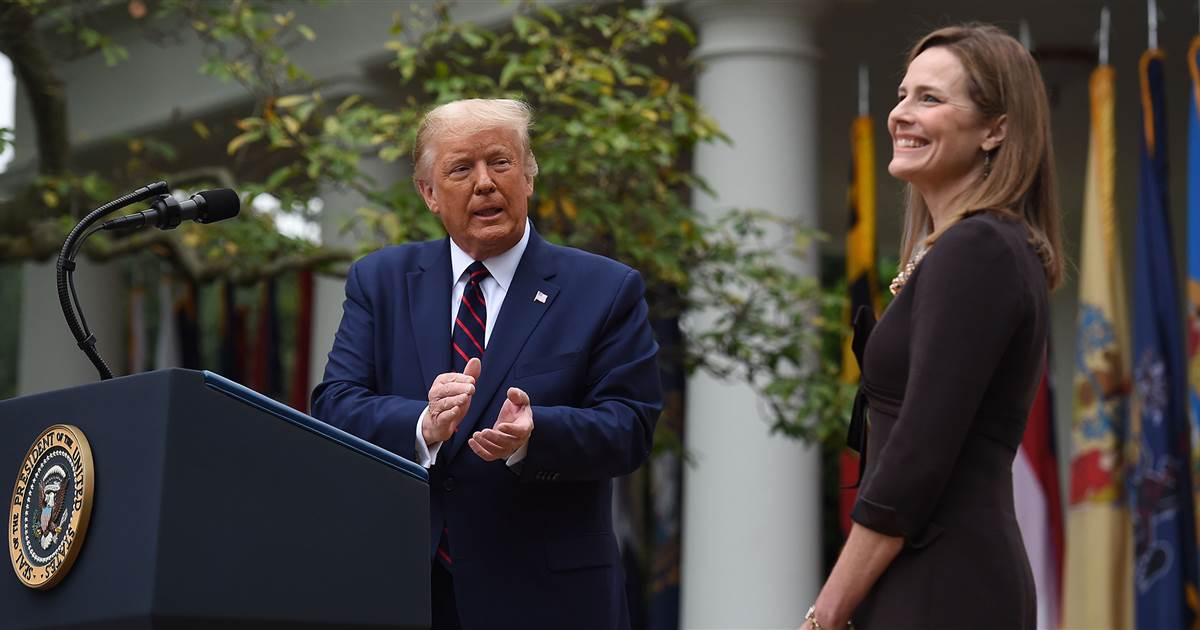
It’s almost comical how utterly qualified Amy Coney Barrett is for SCOTUS.

When I read her short argument invoking – of all people – Ruth Bader Ginsburg – to not just answer the question of why she won’t promise to recuse herself on anything, but to also explain that (yes, I may be extrapolating just a bit)…..

  • any promise of recusal would deprive the OTHER justices of THEIR say in the matter
  • and thus, basically, it’s an unconstitutional request
  • the question should never have been asked
  • the question should never be answered in the affirmative

…..at which point I then realized…..

  • pressured recusals are all a bunch of Alinsky BS and Goebbels misdirection by accusation
  • we’re all [useful] idiots for having ever considered the question
  • the left’s failure to EVER recuse is THEIR ISSUE, not ours
  • there need to be CONSEQUENCES for the left’s failure to properly recuse
  • if such consequences don’t exist or are underutilized, THAT is an issue
  • SCOTUS is damn near like church elders, tribal elders, or a communist cell, take your pick
  • our Democrat communists, communist Democrats, or whatever they are, have therefore been trying to sabotage the only working communism

……OK, sorry, maybe that’s pushing it a bit, but no – AT THAT POINT – I realized that this chick is SO smart, it’s obviously a crime that she’s not ALREADY on SCOTUS.

Yeah, somebody’s got some explaining to do!

ANYWAY, I have STILL not gotten my NOTORIOUS ACB T-SHIRT…..

LINK: https://secure.winred.com/nrsc/notorious-acb

…..so I can’t be as much of a fanboy as I want to, but that’s OK – she’ll be on SCOTUS for a LONG TIME, and every moment will be a VICTORY for Notorious RBG, who got replaced by a woman whose EVERY BREATH will remind the world that Trump FOOLED US ALL when he pretended to RESERVE the “Notorious Seat” for a woman, when what he was really doing was to appoint the smartest and best judge that he could – but he milked it for all it was worth in terms of the WOMEN’S VOTE.

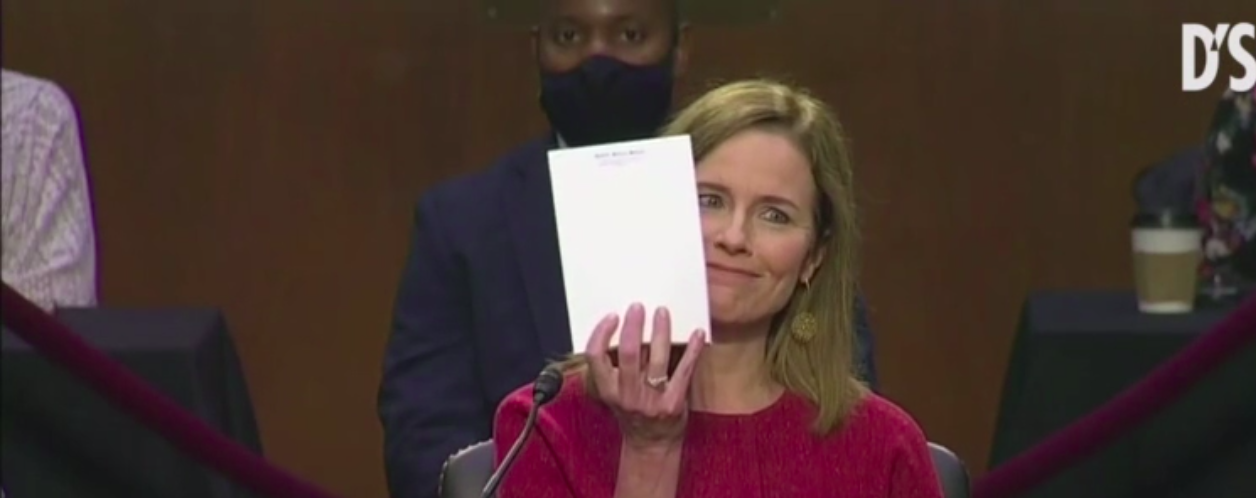
Shrewd. Almost as smart as THAT CHICK with the blank piece of paper.

Or maybe SMARTER!

WHATEVER. We’ll just TAKE THOSE WINNAMINS!


OTOH, This One’s Smart Glasses Ain’t Workin’

This little tweet made me smile!

BWA-HA-HA-HA-HA!

Oh, that’s a good one.

YOU WILL RECALL…..

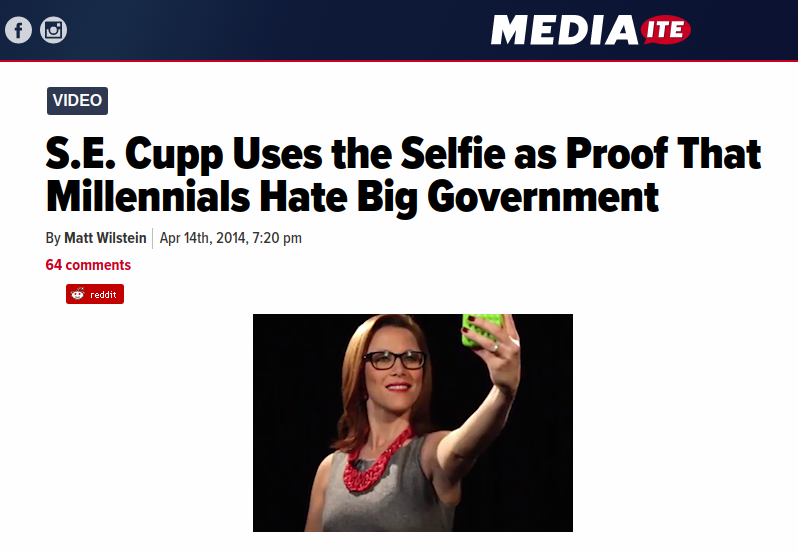
MS. S.E. Cupp is a CIA “fake conservative” used on CNN to “sweep up” the right edge of the Overton Window, which she has obviously been doing a piss-poor job of, since America decided to move the window in the other direction.

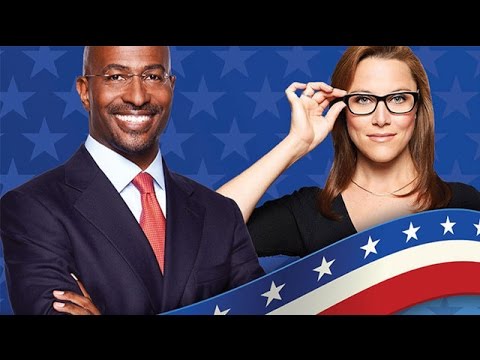
An irredeemable Trump-hater, she was even used in a “debate” with Van Jones in the 2016 election.

AS IF!

The reality, however, is that Ms. Cupp helped reveal just how HORRIBLE and FAKE the media in the United States, and even the entire SUCKER WEST, really is.

And of course, just as she was for CANKLES in 2016…..

Oh REALLY.

SO – BREAK OUT THE POPCORN…..

…..cuz CORN POP is goin’ down, and “C CUP” with him!


The Wolf Who Cried “Boy!”

I’m sorry, but I simply cannot NOT troll the Democrats about “Muh Russia“, so here we go…..

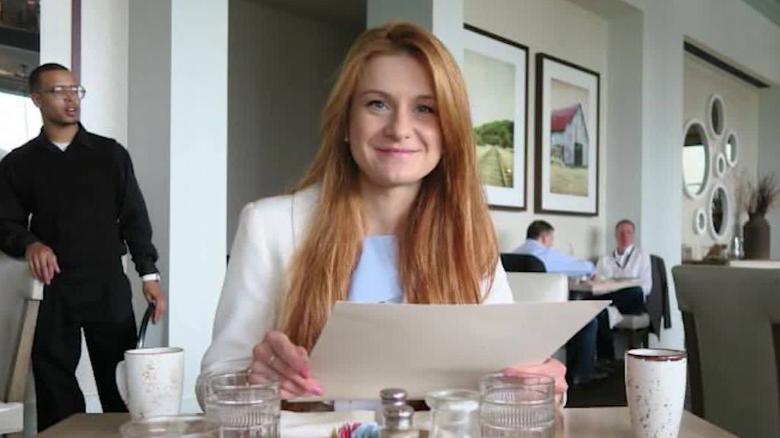
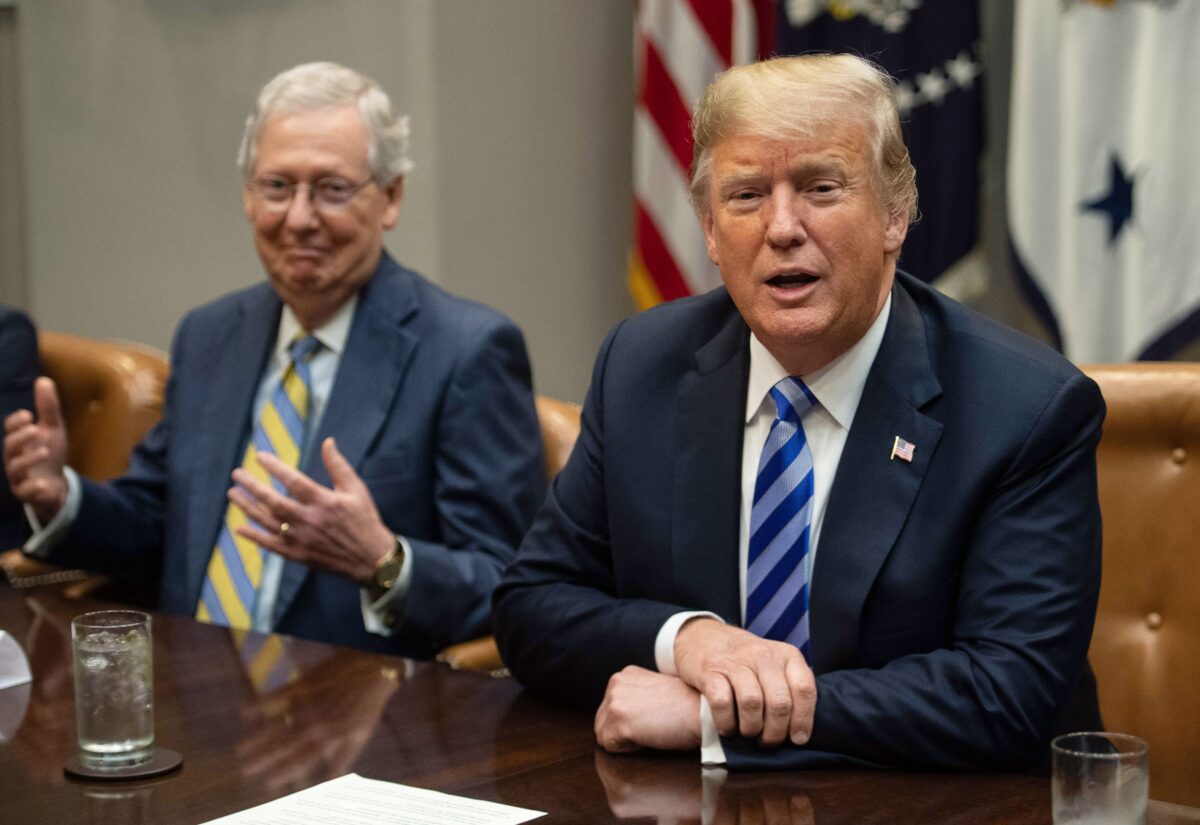
Talk about a “kiss and tell” picture!

Yeah, pass me the SALT, sugar! AYE-YI-YI.

I think people are still trying to figure out where the Democrat lies about Russia end, but leaving aside the easier treason of China, it’s safe to say that the Mueller Coupsters in DOJ wanted this lady GONE for some reason.

REALLY? WHATEVER.

If you want to hear the CRAZIEST story ever about an actual FBI informant and a Russian spy, at the periphery of The Hoax, you can read it all here:

LINK: https://www.deepcapture.com/2020/10/finale-the-deep-states-hillary-clinton-bribery-blackmail-sting-the-maria-butina-rape-murder-gambit/

I’m still trying to figure out what it all means. When I do, I’ll let you know.

All I DO know for sure is this.

WHATEVER is going on with Mary Butyne, the truth is BAD FOR THE COUPISTS AND THE COUP.


SO…..

We have a little over TWO WEEKS until the election.

This is the final stretch.

CALM. STEADY. TO VICTORY.

W


ADDENDUM: ACB Impact on Sessions Recusal

This is really part of the FIRST segment about Amy Coney Barrett, but it broke up the flow, so I am tacking it on at the end.

This gal Notorious ACB is SO SMART, that she “OH BY THE WAY” proved [to me at least] why Sessions’ recusal without consulting Trump, Mike Pence and others was a mistake.

By elucidating a fundamental principle – DUE PROCESS – Amy Coney Barrett is already fixing stuff.

And I repeat – it would be a CRIME not to vote to confirm this woman!

First of all, let us consider that the same RBG logic of ACB’s refusal to hastily recuse herself may likewise apply here – that the A.G. should not make the decision to recuse without discussions or at least prior notification of others OUTSIDE OF DOJ who are affected by the recusal, including POTUS, VP, CoS, head of FBI, Chief Justice.

NO SUCH discussion or notification PRECLUDES the A.G. from recusing in a proper and timely fashion if properly warranted. This is KEY. In fact, hasty [media-driven] recusal by the A.G. to CAST LESS SUSPICION ON SELF becomes a self-serving act (downside of all virtue signals) which may unfairly CAST MORE SUSPICION ON OTHERS, or in SEVERAL important ways deprive OTHERS of their guaranteed rights, particularly of DUE PROCESS. That is a complicated but absolutely powerful point, and it is clear to me that the LAWFARE GANG understood it, when they talked Sessions into a HASTY RECUSAL which DEPRIVED THE WHITE HOUSE OF PROPER REPRESENTATION.

It’s the SCALES, amigos.

This is an example of an “Alinsky WIN”, not by making the other side live up to its well-considered rules (which would be a DRAW), but rather by making the other side live up to its rules TOO MUCH. Owning the MEDIA allows this kind of trick to work.

Note that Comey saying “Trump was not being investigated” was not exactly true, but his lie and/or legal façade still mocks the basic TRUE principle of “innocent until proven guilty”. This has a huge effect on things, but before I get to that, consider more deeply the Comey grift.

We don’t know if redactions are hiding the fact that Comey’s statement to Trump that he was not under investigation was a LIE, and we further note that if Trump was being investigated as an INTELLIGENCE matter, that is not the same as a LEGAL matter. Likewise, any “investigation” of Trump was more likely being done as “incidental” to investigating others, and thus under greater “color of law”, if not actual “cover of law”.

IN ANY CASE, if Trump was DUE the respect of being “treated as innocent” by the Constitution, then there is absolutely no excuse for the A.G. not to share the still-open question of recusal with Trump, and to get his input or response. Any other POLICY of DOJ is likely to be an unconstitutional HOLDERISM. The MEDIA can insinuate whatever it wants – Trump was innocent until proven guilty, and was entitled to make an INNOCENT decision that he needed a FRESH and UNRECUSED A.G., and not an ACTING A.G. who might be corrupt, biased, or subject to inappropriate pressures (meaning Sally Yates or Rod Rosenstein). He could have then made this critical point to HIS subordinate, the Attorney General, to consider and possibly reject. Note that this is all about DUE PROCESS – the fact that we must not ASSUME guilt on the part of either Trump or Sessions, either in the past, or even more importantly IN THE FUTURE.

The fact that Jeff Sessions was TARGETED by DOJ staff to talk him into a hasty recusal and deprive President Trump of his rights may in fact be CRIMINAL. It was certainly LAWFARE, and thus I think it is very important to know if people OUTSIDE DOJ in the “lawfare” community had a hand in it.

Bottom line – somebody knew they could push Jeff Sessions into hasty recusal to create “The Hoax”, and do EVEN WORSE than to simply deprive President Trump of his Constitutional rights. Depriving Trump of his rights was THEN used for a political impeachment, likewise an abuse of power.

But we won’t get into THEIR crimes quite yet.

W

IN GOD WE TRUST

Trump Derangement Syndrome is REAL – and very SCARY!

I had my first up-close and personal experience today with Trump Derangement Syndrome, and it was scary enough that I thought it merited a post of its own. I want all of us to understand the danger we are in, in the most innocuous of circumstances.

As most of you are probably aware, I live in a very small town in Montana. The big town, Missoula, is where I sometimes have to go to get things I don’t want to wait for by mail. Today I needed some craft supplies, which I ordered and planned to pick up curbside in the “big city.” The DH decided to go with me, thank God, considering what happened.

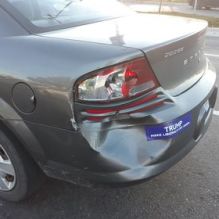
There is a very over-crowded five-lane road out to the shopping area. Today like most days there was a lot of traffic. I was traveling in the right hand lane at about thirty-five miles an hour, when I looked in the rear-view mirror and saw a pickup truck barreling towards me VERY fast, probably fifty at least. I watched for at least 2-3 seconds, and it seemed like the driver was hesitating back and forth for a second, and then gunned it. I had time to say “shit, she’s gonna hit me,” and then she rammed me hard! Thank God I saw it coming, so I was able to control the car.

The truck pulled up next to me and then past, braking and then pulling ahead, and then braking again. I thought about it for a second and then realized, OMG, the bumper sticker!

I have one bumper sticker on my car, on the driver’s side bumper. It says “Trump 2020, Make Liberals Cry Again.” I know, I know, but I live in a SMALL, mostly conservative town. And it’s funny.

I was still driving onward, and the truck pulled into my lane in front of me, still braking periodically. I had backed off them as best I could. I said, “honey, that was ON PURPOSE,” and explained why I thought so. The truck pulled into the gas station on the corner, and DH made me follow, driving past where they parked and on into the shopping center parking area. He already had 911 on the phone. He isn’t afraid of anything, he’s a life-long martial artist, but I was scared. If he hadn’t been with me, I doubt I would have stopped. Not worth it to confront somebody that crazy.

DH got out of the car and headed toward the pickup. The man in the passenger seat was already out of the truck with a crowbar, trying to pry the bumper off his tire. Next thing I know, this young woman pulls up next to me, gets out and says “I saw that, do you want me to hang around?” I could have kissed her!

DH was talking to the man with the crowbar, and on the phone at the same time. He told me later that the guy was pushing him to exchange insurance info, saying they were “in a hurry.” The cops arrived really fast. First one car, then two. DH is sure they were trying to get the bumper pried back so they could flee, but the cops were already there.

The man lied to the cops and said he was driving, which the witness (God Bless her) contradicted, as did I. I saw her in the driver’s seat when they went past me on the road. The cop who was taking statements and filling out paperwork was the only person I talked to. The other cop was all over the couple from the pickup. He never walked away from them. Within about five minutes, a THIRD policeman showed up. He went over with the couple, too. The two cops bracketed those people until we left.

The witness, who was a very sweet woman, looked at the pickup and said “uh-oh, they’re from Washington State.” I thought, oh boy, I wonder what part? Seattle maybe?

The paperwork cop told us “the other cops are just here because of the lying thing,” and that he was going to “cite” the driver. He said he wanted to get us “on our way.” The other two cops had still not moved from the truck couple. They were still there when I drove away.

My car was drive-able, so when the cop gave us the paperwork we needed, we left. I was so shaken I didn’t even glance at the paperwork until I got home. The address given was Arlington, Washington, a suburb of Seattle! I KNEW IT!

I plan to check the jail roster tomorrow to see if there was an arrest of either of the two. I have both names because the lying man wrote his name on the paperwork when he was claiming HE was driving.

Be careful out there people! Trump Derangement is REAL!

TDS 2020
I survived Trump Derangement 2020

20201014: MAGA Protest Against Stupidity, Des Moines, Iowa

So, POTUS, not even two weeks following a bout with the Wuhan Flu is giving the world his impression of Superman and the Energizer Bunny Combined, and his opponent…well….

Is MIA. Again. With 20 days to go before the election.

https://www.gannett-cdn.com/-mm-/ca2c30a383450ee7a690a0e92c63ff2aa4bacf33/c=114-0-1887-1333&r=x404&c=534×401/local/-/media/2016/05/22/IAGroup/DesMoines/635995264970482714-20150916-bp-OverTheEdge-17.JPG

Alright, well, tonight, the campaign turns to flyover country and the state up the river known as Iowa. President Trump will be in Des Moines, to be precise. From wiki:

Des Moines takes its name from Fort Des Moines (1843–46), which was named for the Des Moines River. This was adopted from the name given by French colonistsDes Moines (pronounced [de mwan] (listen); formerly [de mwɛn]) translates literally to either “from the monks” or “of the monks”. The historian Virgil Vogel claimed that the name was derived from Moingona, an Algonquian clan name, which means “Loon“.[15]

Some historians and researchers lacking linguistic or Algonquianist training concluded that Moingona meant “people by the portage” or something similar, a reference to the Des Moines Rapids. This was where the earliest known encounters between the Moingona and European explorers took place.[16]

One popular interpretation of “Des Moines” ignores Vogel’s research, and concludes that it refers to a group of French Trappist monks, who in the 17th century lived in huts built on top of what is now known as the ancient Monks Mound at Cahokia, the major center of Mississippian culture, which developed in what is present-day Illinois, east of the Mississippi River and the city of St. Louis. This was some 200 miles (320 km) from the Des Moines River.[17]

Cahokia…I have ancestors who lived there.

Oh, wait, we’re supposed to be in Iowa, not Illinois. Here you go:

Based on archeological evidence, the junction of the Des Moines and Raccoon Rivers has attracted humans for at least 7,000 years. Several prehistoric occupation areas have been identified by archeologists in downtown Des Moines. Discovered in December 2010, the “Palace” is an expansive, 7,000-year-old site found during excavations prior to construction of the new wastewater treatment plant in southeastern Des Moines. It contains well-preserved house deposits and numerous graves. More than 6,000 artifacts were found at this site. State of Iowa archaeologist John Doershuk was assisted by University of Iowa archaeologists at this dig.[19]

At least three Late Prehistoric villages, dating from about AD 1300 to 1700, stood in or near what developed later as downtown Des Moines. In addition, 15 to 18 prehistoric American Indian mounds were observed in this area by early settlers. All have been destroyed during development of the city.[20][21]

https://2.bp.blogspot.com/-ceARTlnDBJQ/V7xmv_zXl7I/AAAAAAAComc/QtJQWwLbE3oWVYtJifBoY1SWOups6FFfgCPcB/s1600/20160819_135744.jpg

Origin of Fort Des Moines

Des Moines traces its origins to May 1843, when Captain James Allen supervised the construction of a fort on the site where the Des Moines and Raccoon Rivers merge. Allen wanted to use the name Fort Raccoon; however, the U.S. War Department preferred Fort Des Moines. The fort was built to control the Sauk and Meskwaki Indians, whom the government had moved to the area from their traditional lands in eastern Iowa. The fort was abandoned in 1846 after the Sauk and Meskwaki were removed from the state and shifted to the Indian Territory.[22]

Archaeological excavations have shown that many fort-related features survived under what is now Martin Luther King Jr. Parkway and First Street.[22][23] Soldiers stationed at Fort Des Moines opened the first coal mines in the area, mining coal from the riverbank for the fort’s blacksmith.[24]

https://2mv53u1cm6mneu0xp29yafi1-wpengine.netdna-ssl.com/wp-content/uploads/2019/03/1905-1.jpg

On September 22, 1851, Des Moines was incorporated as a city; the charter was approved by voters on October 18. In 1857, the name “Fort Des Moines” was shortened to “Des Moines”, and it was designated as the second state capital, previously at Iowa City. Growth was slow during the Civil War period, but the city exploded in size and importance after a railroad link was completed in 1866.[27]

In 1864, the Des Moines Coal Company was organized to begin the first systematic mining in the region. Its first mine, north of town on the river’s west side, was exhausted by 1873. The Black Diamond mine, near the south end of the West Seventh Street Bridge, sank a 150-foot (46 m) mine shaft to reach a 5-foot-thick (1.5 m) coal bed. By 1876, this mine employed 150 men and shipped 20 carloads of coal per day. By 1885, numerous mine shafts were within the city limits, and mining began to spread into the surrounding countryside. By 1893, 23 mines were in the region.[28] By 1908, Des Moines’ coal resources were largely exhausted.[29] In 1912, Des Moines still had eight locals of the United Mine Workers union, representing 1,410 miners.[30] This was about 1.7% of the city’s population in 1910.

By 1880, Des Moines had a population of 22,408, making it Iowa’s largest city. It displaced the three Mississippi River ports: Burlington, Dubuque, and Davenport, that had alternated holding the position since the territorial period. 

More at wiki.

I’ll add live links to this post during the late afternoon as they become available.

_____________________________________________________________________

In the meantime, please post tweets and videos below of what’s going on in Iowa, and any travel stories you may have of the place.

20201013: MAGA Protest Against Stupidity, Johnstown, Pennsylvania

https://i.pinimg.com/736x/c8/ce/d7/c8ced7ca33227b53269f0f2d1762424e.jpg

Now that he’s recovered from the Wuhan Flu, President Trump is going to drive the rest of us ragged in the final push to save the world. Today, he lead the patriots of steel and coal country in Appalachia in a little place called Johnstown, Pennsylvania, known for floods, and being the backdrop of the sports classic “Slap Shot,” the only of the sports insider movies to be embraced by the people who play for being just the way life is in sports.

http://pix.mdmpix.com/680/2010/2010-06-26_017/Johnstown-PA.jpg

We’ll start with wiki, of course:

Archaeological evidence shows that the area was inhabited for some 10,000 years.[11] Penn’s Woods saw much Native American activity as well as the Quemahoming area. Three distinct tribes (Shawnee, Delaware and Monogahela) migrated, hunted and fished in the area. Johnstown was called Conemaugh Old Town in the native Algonquin language. Old Town was linked to the outlying areas by the Stoney Creek, Quemahoming Creek and Conemaugh Rivers joining Johnstown to older settlements on the river including New Florence (Squirrel Hill), Quemahoming and Kickenapaulin’s (near Hooversville).

A settlement was established here in 1791 by Joseph Jahns, in whose honour it was named, and the place was soon laid out as a town.[12]

Johnstown was formally platted as Conemaugh Old Town in 1800 by the Swiss German immigrant Joseph Johns (born Josef Schantz). The settlement was initially known as “Schantzstadt”, but was soon anglicized to Johnstown. The community incorporated as Conemaugh borough January 12, 1831,[13] but renamed Johnstown on April 14, 1834.[14] From 1834 to 1854, the city was a port and key transfer point along the Pennsylvania Main Line Canal. Johnstown was at the head of the canal’s western branch, with canal boats having been transported over the mountains via the Allegheny Portage Railroad and refloated here, to continue the trip by water to Pittsburgh and the Ohio Valley. Perhaps the most famous passenger who traveled via the canal to visit Johnstown briefly was Charles Dickens in 1842. By 1854, canal transport became redundant with the completion of the Pennsylvania Railroad, which now spanned the state. With the coming of the railroads, the city’s growth improved. Johnstown became a stop on the main line of the Pennsylvania Railroad and was connected with the Baltimore & Ohio. The railroads provided large-scale development of the region’s mineral wealth.

Ironcoal, and steel quickly became central to the town of Johnstown. By 1860, the Cambria Iron Company of Johnstown was the leading steel producer in the United States, outproducing steel giants in Pittsburgh and Cleveland. Through the second half of the 19th century, Johnstown made much of the nation’s barbed wire. Johnstown prospered from skyrocketing demand in the western United States for barbed wire. Twenty years after its founding, the Cambria Works was a huge enterprise sprawling over 60 acres (24 ha) in Johnstown and employing 7,000. It owned 40,000 acres (160 km2) of valuable mineral lands in a region with a ready supply of iron, coal and limestone.

https://cdn.shopify.com/s/files/1/0021/3472/products/Johnstown_1054_1200x630.jpg

Floods were almost a yearly event in the valley during the 1880s. On the afternoon of May 30, 1889, following a quiet Memorial Day ceremony and a parade, it began raining in the valley. The next day water filled the streets, and rumors began that a dam holding an artificial lake in the mountains to the northeast might give way. It did, and an estimated 20 million tons of water began spilling into the winding gorge that led to Johnstown some 14 miles (23 km) away. The destruction in Johnstown occurred in only about 10 minutes. What had been a thriving steel town with homes, churches, saloons, a library, a railroad station, electric street lights, a roller rink, and two opera houses was buried under mud and debris. Out of a population of approximately 30,000 at the time, at least 2,209 people are known to have perished in the disaster. An infamous site of a major fire during the flood was the old stone Pennsylvania Railroad bridge located where the Stonycreek and Little Conemaugh rivers join to form the Conemaugh River. The bridge still stands today.[15]

http://1.bp.blogspot.com/-H84N_k0L2t4/Tpy-twLbQvI/AAAAAAAAJXE/HtE9Q3Nqp-c/s1600/img312.jpg

The Johnstown flood of 1889 established the American Red Cross as the pre-eminent emergency relief organization in the United States. Founder Clara Barton, then 67, came to Johnstown with 50 doctors and nurses and set up tent hospitals as well as temporary “hotels” for the homeless, and stayed on for five months to coordinate relief efforts.[16]

https://whyy.org/wp-content/uploads/2017/08/johnstown_then_now_20140807_1696388793.jpg

The mills were back in operation within a month. The Cambria Works grew, and Johnstown became more prosperous than ever. The disaster had not destroyed the community but strengthened it. Later generations would draw on lessons learned in 1889. After the successful merger of six surrounding boroughs,[citation needed] Johnstown became a city on April 7, 1890.[17]

More at wiki.

I’ll add live links to this post during the late afternoon as they become available.

_____________________________________________________________________

In the meantime, please post tweets and videos below of what’s going on in Pennsylvania, and any travel stories you may have of the place.

20201012: MAGA Protest Against Stupidity, Sanford, Florida

Sorry about the lack of info here in the body of the thread. I hope you’re here for the comments. I did something dumb when reformatting for Johnstown, PA tonight. With all luck this is now fixed.

I’ll add live links to this post during the late afternoon as they become available.

_____________________________________________________________________

In the meantime, please post tweets and videos below of what’s going on in Pennsylvania, and any travel stories you may have of the place.

Dear KMAG: 20201012 Open Topic

This Stormwatch Monday Open Thread is VERY OPEN – a place for everybody to post whatever they feel they would like to tell the White Hats, and the rest of the MAGA/KMAG/KAG world (with KMAG being a bit of both).

Yes, it’s Monday…again.

polar-bear-dragging-himself-around

But it’s okay! We’ll get through it.

ThreadTheNeedle

Free Speech is practiced here at the Q Tree. But please keep it civil.
Discussion of Q is not only allowed but encouraged. Imagine that! We can talk about Q here and not get banned.

Please also consider the Important Guidelines, outlined here. Let’s not give the odious Internet Censors a reason to shut down this precious haven that Wolf has created for us.

Our President is fighting for us night and day…please pray for him.

TrumpPrayer

Wheatie’s Rules:

            1. No food fights.
            2. No running with scissors.
            3. If you bring snacks, bring enough for everyone.

……………………………………………………………………………………………………………………………..

For your listening enjoyment, I offer this composition by Mark Petrie, titled ‘Meissa’:

[youtube https://www.youtube.com/watch?v=DFQ84H5kqW0&w=644&h=362]

And ‘Aeons’ by Mark Petrie and Andrew Prahlow:

[youtube https://www.youtube.com/watch?v=Nf-QAh_rJFw&w=644&h=362]

……………………………………………………………………………………………………………………………..

Wheatie’s Word of the Day:

Fribble

‘Fribble’ is both a noun and a verb, depending on how it’s used.

As a verb, fribble means…to waste something, to fritter something away, such as ‘to fribble away an inheritance’; to act in a frivolous way.

As a noun, fribble means…a trifle, a frivolity; a person who acts in a foolish, frivolous way. A slang usage of fribble has emerged in recent years, though, and means…a fart which follows through with a slight dribbly discharge.

Used in a sentence:

People have learned to keep their distance from Jerry Nadler when they hear him suddenly release a fribble.

………………………………………………………………………………………………………………………………

RacoonDancing

Evidence Of Voter Fraud, Cheating In A Coup Attempt Piles Up

On Sunday morning, I helped out at my home parish which has become a hotbed of social justice warrioring and people steeped in the culture of fear which is feeding the quarantine mentality of the day. (That’s quite a change from when I was a kid.) It was announced from the pulpit that at a certain time, three parishioners had volunteered to notarize mail-in ballots on the lawn of the church.

That was certainly nice of those people given that notary publics can be hard to find, but the reality is that my state, Missouri, requires notarized live signatures on mail in ballots.

That is interesting, as across the nation, that is not always the case, and in some states, mail in ballot scams and finding mail in ballots on the side of the road seems to be the order of the day.

Well, now that is interesting. If it wasn’t for voter fraud, no Democrat could be elected in the People’s Republic of California where the Democrats have been in control for the better part of four decades.

Interesting.

And given some background information and empirical evidence, most likely completely true.

In 1965, in the midst of all the civil rights uproar, a landmark piece of legislation was passed known as the Voting Rights Act of 1965. The act itself was supposed to ensure equal rights for voting nation wide, especially in the South where it was said that some demographic groups were discriminated against.

The bill contained several special provisions that targeted certain state and local governments: a “coverage formula” that determined which jurisdictions were subject to the act’s other special provisions (“covered jurisdictions”); a “preclearance” requirement that prohibited covered jurisdictions from implementing changes to their voting procedures without first receiving approval from the U.S. attorney general or the U.S. District Court for D.C. that the changes were not discriminatory; and the suspension of “tests or devices”, such as literacy tests, in covered jurisdictions. The bill also authorized the assignment of federal examiners to register voters, and of federal observers to monitor elections, to covered jurisdictions that were found to have engaged in egregious discrimination. The bill set these special provisions to expire after five years

Fifty-five years later, with twenty one challenges to the act and/or its provisions in the Supreme Court, and the darn thing is still with us.

So, what were the special provisions? After all poll taxes had been outlawed the year before.

Section 4(b) contains a “coverage formula” that determines which states and local governments may be subjected to the act’s other special provisions (except for the Section 203(c) bilingual election requirements, which fall under a different formula). Congress intended for the coverage formula to encompass the most pervasively discriminatory jurisdictions. A jurisdiction is covered by the formula if:

  1. As of November 1, 1964, 1968, or 1972, the jurisdiction used a “test or device” to restrict the opportunity to register and vote; and
  2. Less than half of the jurisdiction’s eligible citizens were registered to vote on November 1, 1964, 1968, or 1972; or less than half of eligible citizens voted in the presidential election of November 1964, 1968, or 1972.

As originally enacted, the coverage formula contained only November 1964 triggering dates; subsequent revisions to the law supplemented it with the additional triggering dates of November 1968 and November 1972, which brought more jurisdictions into coverage.[40] For purposes of the coverage formula, the term “test or device” includes the same four devices prohibited nationally by Section 201—literacy tests, educational or knowledge requirements, proof of good moral character, and requirements that a person be vouched for when voting—and one further device defined in Section 4(f)(3): in jurisdictions where more than five percent of the citizen voting age population are members of a single language minority group, any practice or requirement by which registration or election materials are provided only in English. The types of jurisdictions that the coverage formula applies to include states and “political subdivisions” of states.[42]:207–208 Section 14(c)(2) defines “political subdivision” to mean any county, parish, or “other subdivision of a State which conducts registration for voting.”[95]

As Congress added new triggering dates to the coverage formula, new jurisdictions were brought into coverage. The 1965 coverage formula included the whole of Alabama, Alaska, Georgia, Louisiana, Mississippi, South Carolina, and Virginia; and some subdivisions (mostly counties) in Arizona, Hawaii, Idaho, and North Carolina.[40] The 1968 coverage resulted in the partial coverage of Alaska, Arizona, California, Connecticut, Idaho, Maine, Massachusetts, New Hampshire, New York, and Wyoming. Connecticut, Idaho, Maine, Massachusetts, and Wyoming filed successful “bailout” lawsuits, as also provided by section 4.[40] The 1972 coverage covered the whole of Alaska, Arizona, and Texas, and parts of California, Florida, Michigan, New York, North Carolina, and South Dakota.[40]

Section 5[98] requires that covered jurisdictions receive federal approval, known as “preclearance”, before implementing changes to their election laws. A covered jurisdiction has the burden of proving that the change does not have the purpose or effect of discriminating on the basis of race or language minority status; if the jurisdiction fails to meet this burden, the federal government will deny preclearance and the jurisdiction’s change will not go into effect. The Supreme Court broadly interpreted Section 5’s scope in Allen v. State Board of Election (1969),[99] holding that any change in a jurisdiction’s voting practices, even if minor, must be submitted for preclearance.[100] The court also held that if a jurisdiction fails to have its voting change precleared, private plaintiffs may sue the jurisdiction in the plaintiff’s local district court before a three-judge panel.[e] In these Section 5 “enforcement actions”, a court considers whether the jurisdiction made a covered voting change, and if so, whether the change had been precleared. If the jurisdiction improperly failed to obtain preclearance, the court will order the jurisdiction to obtain preclearance before implementing the change. However, the court may not consider the merits of whether the change should be approved.

https://upload.wikimedia.org/wikipedia/en/3/32/Us_s5_cvr08.PNG

Note that California, the Golden State, and in 1972 the place where a lot of people were moving, was ADDED to the states needing to prove non-discrimination in voting practices. (Also note the number of now “swing states” listed as having to prove they don’t discriminate. There are also states with HUGE numbers of electoral votes in comparison to the states not even mentioned.)

Fast forward a bit to 1982, and the Ronald Reagan administration. Reagan, as it turns out, was not supposed to win. He was most assuredly not the choice of the powers that wannabe, The Big Club that most of us are not a part of. Given that at the top of the food chain there really is no difference between the parties, somehow it was agreed that Republicans, the party presenting the more pro-American messaging in word if not in deed, would acquiesce to Democrats, and whenever a question of voter fraud would arise, it simply would not be prosecuted.

Courtesy of Gail:

As I explained in my post of November 15, 2012, “Why the GOP won’t challenge vote fraud,” in 1981, during the gubernatorial election in New Jersey (NJ), a lawsuit was brought against the Republican National Committee (RNC), the NJ Republican State Committee (RSC), and three individuals (John A. Kelly, Ronald Kaufman, and Alex Hurtado), accusing them of violating the Voting Rights Act of 1965 (VRA), 42 U.S.C. §§ 1971, 1973, and the Fourteenth and Fifteenth Amendments to the Constitution of the United States.

The lawsuit was brought by the Democratic National Committee (DNC), the NJ Democratic State Committee (DSC), and two individuals (Virginia L. Peggins and Lynette Monroe).

The lawsuit alleged that:

The RNC and RSC targeted minority voters in New Jersey in an effort to intimidate them.

The RNC created a voter challenge list by mailing sample ballots to individuals in precincts with a high percentage of racial or ethnic minority registered voters. Then the RNC put the names of individuals whose postcards were returned as undeliverable on a list of voters to challenge at the polls.

The RNC enlisted the help of off-duty sheriffs and police officers with “National Ballot Security Task Force” armbands, to intimidate voters by standing at polling places in minority precincts during voting. Some of the officers allegedly wore firearms in a visible manner.

To settle the lawsuit, in 1982 — while Ronald Reagan was President (1981-1989) — the RNC and RSC entered into an agreement or Consent Decree, which is national in scope, limiting the RNC’s ability to engage or assist in voter fraud prevention unless the RNC obtains the court’s approval in advance.

To put it bluntly, the Consent Decree in effect gave a carte blanche to the Democrat Party to commit vote fraud in every voting district across America that has, in the language of the Consent Decree, “a substantial proportion of racial or ethnic populations.” The term “substantial proportion” is not defined….

Since 1982, the Consent Decree had been renewed every year by the original judge, Carter appointee District Judge Dickinson R. Debevoise, who, even after he retired, returned every year for the sole purpose of renewing his 1982 order for another year. Debevoise died in August 2015.

The 1982 Consent Decree died in January 2018 thanks to being handled by a different judge who did not agree that Republicans had violated said decree, and not a moment too soon.

The problem by then, though, was that voter fraud was more or less institutionalized and had been denied for so long, even undercover Project Veritas videos were denied as being what they clearly proported to be: evidence of voter fraud.

Simply, the Republicans could not fight back, nor were efforts to institute voter ID universally successful. The Supreme Court would inevitably tell the various states that having to spend money on state identification was “disenfranchising.”

https://thefederalistpapers.org/wp-content/uploads/2018/01/cartoon_08_3.jpg

My passport renewal was expensive, yes, but a valid state identification card is not.

In addition to Republicans being hamstrung regarding suing Democrats over voter fraud, the states were, shall we say, lax in being sure the voter rolls are accurate. In an attempt to clean that up, the Trump Administration did actually form an election integrity commission, but abandoned it when it was clear the states themselves would not cooperate.

“Rather than engage in endless legal battles at taxpayer expense, today President Donald J. Trump signed an executive order to dissolve the Commission, and he has asked the Department of Homeland Security to review its initial findings and determine next courses of action,” White House press secretary Sarah Sanders said in a statement.

The commission, led by Vice President Mike Pence and Kansas Secretary of State Kris Kobach, had asked all 50 states and the District of Columbia to hand over reams of personal voter data, including voters’ names, voting histories and party affiliations.

Multiple states — including Virginia, Kentucky, and California — as well as D.C. declined to comply with the commission’s requests.

Now why would that be if elections were honest, and the voter rolls were in pristine, up to date condition.

Plain and simply, they wouldn’t be, and in one of many states being watched, where current representatives always seem to win by razor thin margins, and the total number of voters always seems to be higher than the number of people living in the district…there seems to be the odor of dead fish.

As reported by the National Review’s Deroy Murdock, who did some numbers-crunching of his own, “some 3.5 million more people are registered to vote in the U.S. than are alive among America’s adult citizens. Such staggering inaccuracy is an engraved invitation to voter fraud.”

Murdock counted Judicial Watch’s state-by-state tally and found that 462 U.S. counties had a registration rate exceeding 100% of all eligible voters. That’s 3.552 million people, who Murdock calls “ghost voters.” And how many people is that? There are 21 states that don’t have that many people.

Nor are these tiny, rural counties or places that don’t have the wherewithal to police their voter rolls.

California, for instance, has 11 counties with more registered voters than actual voters. Perhaps not surprisingly — it is deep-Blue State California, after all — 10 of those counties voted heavily for Hillary Clinton.

Los Angeles County, whose more than 10 million people make it the nation’s most populous county, had 12% more registered voters than live ones, some 707,475 votes. That’s a huge number of possible votes in an election.

But, Murdock notes, “California’s San Diego County earns the enchilada grande. Its 138% registration translates into 810,966 ghost voters.”

Well, that might explain a lot, especially when all those voters “vote.”

Just imagine if that happens not just in California, but in a whole lot of other states, like, say, New York, New Jersey, Virginia, Texas, Florida…places with transient populations….

And the states are not cooperating when it comes to cleaning up the voter rolls both of those who have passed on to their rewards, and those who moved and registered to vote in another state.

And then there’s this year’s boondoggle: mail in voting.

It is true that a handful of states have had mail in voting for a while now, and wouldn’t you know it, all of them consistently sport Democrat “leadership.” (See Oregon for how that works out.) But now, in states that are known to swing, like Ohio, there is a push for no holds barred mail in voting using the fear stoked over COVID-19 as the reason why it should be accepted.

And the usual suspects are trying to be sure that all ballots are counted even if the signatures on them don’t match.

On Tuesday, the American Civil Liberties Union (ACLU), ACLU of Ohio, Lawyers’ Committee and the law firm of Covington & Burling LLP announced they filed a motion in Cincinnati federal court for a preliminary injunction against Ohio Secretary of State Frank LaRose.

The legal action is on the behalf of plaintiffs League of Women Voters of Ohio, the A. Philip Randolph Institute of Ohio, and several impacted Ohio voters, according to an ACLU news release.

They call Ohio’s system “flawed,” particularly in light of the unprecedented numbers of voters statewide likely to vote by mail this November.

The motion asks the court “to ensure voters have sufficient notice of purportedly mismatched signatures and the opportunity to fix those mismatches when boards of elections mistakenly reject their ballots and ballot applications on the basis of signature mismatches.”

Is this REALLY about election integrity, or is there an organized, concerted effort to subvert the 2020 election of any and all offices using any and every method of cheating that has ever worked?

Some might call that a coup.

What it really is is an attempt to keep the will of the people from being realized, which we are all now coming to understand has been in motion for decades including the move away from paper ballots and toward electronic voting machines that just happen to be sold by a company financed by America hater George Soros.

This thread is about putting stories and evidence of election shenanigans in one spot. Please, put any personal accounts, posts from other forums, video, etc., in the comments below.

We’re in for the fight of our lives with this election. We all need to be able to spot fraud when we see it.