Our mission, as God-fearing and God-loving patriots, is to defend this Constitutional Republic and to increase its greatness, in all good things and ways, by using our voices in free but courteous speech, by discussing the happenings of the world and coming to a profound understanding of those things, and by sharing and promulgating these Truths on both this platform and others.
This Stormwatch Monday Open Thread remains open – VERY OPEN – a place for everybody to post whatever they feel they would like to tell the White Hats, and the rest of the MAGA/KAG/KMAG world (with KMAG being a bit of both).
Our various sister sites, listed in the Blogroll in the sidebar
Our beloved country is under Occupation by hostile forces.
Daily outrage and epic phuckery abound.
We can give in to despair…or we can be defiant and fight back in any way that we can.
Joe Biden didn’t win.
And we will keep saying Joe Biden didn’t win until we get His Fraudulency out of our White House.
Wolfie’s Wheatie’s Word of the Week:
zymotechnics
noun
the art of fermentation
fermentation technology
Used in a sentence
If one considers Pasteur and zymotechnics to be ancestral to modern biotechnology, then surely Liebig and early organic chemistry are foundational to modern pharmaceutical, agrochemical, and medicinal chemistry. (Derived from THIS LINK.)
Shown in a picture, sorta, kinda, hey, look! A squirrel!
Shown in a Soviet Uzbek film – no, wait – that’s not….. whatever!
MUSIC!
Well, now that we’re committed to the theme…..
UGH. Think I’ll have a sparkling water!
THE STUFF
If you want to see how much bad science is out there, just watch this lady review a scientific paper that was getting some “wowee” buzz.
You don’t have to understand the equations – just assume for the moment that she knows what she’s talking about (this is her area of science).
But notice that the opposite should also be true (and she says it). Some valuable gems get lost in the trash as well. Good science is increasingly not noticed, until it is rediscovered a second or third time and somehow gets more attention.
This Stormwatch Monday Open Thread remains open – VERY OPEN – a place for everybody to post whatever they feel they would like to tell the White Hats, and the rest of the MAGA/KAG/KMAG world (with KMAG being a bit of both).
Gail Combs can’t get into the WordPiss editor – it’s some kind of browser/WordPiss compatibility problem. Doesn’t matter – we shall overcome. I am able to get past the problem, thankfully. Thus, this PLACE HOLDER UNDER ARREST post, which is a tweaked copy of a post I made on 20240403, which included the notorious PLACE HOLDER UNDER ARREST-ORAMA image and Word Of The Week.
So here we go. Start thinking about Trump’s inauguration.
Who here is going? Any plans being made? Time to start thinking about it!
So now we return to this lightly updated “vintage” post. Enjoy!
W
Joe Biden didn’t win, and neither did Hillary Clinton or Kamala Harris. This is our Real President:
U.S. President Donald Trump prepares to board Marine One with first lady Melania Trump en route to his Mar-a-Lago estate in West Palm Beach, Florida following the release of the Mueller report at the White House in Washington, U.S., April 18, 2019. REUTERS/Carlos Barria – RC1F20A769B0
AND our beautiful REALFLOTUS.
This Stormwatch Monday Open Thread remains open – VERY OPEN – a place for everybody to post whatever they feel they would like to tell the White Hats, and the rest of the MAGA/KAG/KMAG world (with KMAG being a bit of both).
Please forgive us, Wheatie, we did not know That you had left us with armor in tow We had no idea with what you dealt We did not know the pain you felt And now we can only imagine With you what really did happen Cause rarely did you complain And/or share your personal pain Of one thing we are most certain You are flying high behind the curtain Watching over us above the crowds Our Warrior Angel above the clouds Thank You, Wheatie, for caring for us While you were here among the fuss We miss you dear you have no idea Since time began in the pangaea With you there was no time In your wisdom you would chime To clarify and magnify The what where how and why We did not question when you left We were not slightly bereft But over time we wondered why You did not at least stop by Now we know where you have gone With the break of this new dawn We could be angry but are not Tho with an arrow we’ve been shot Rest peacefully Warrior Angel dear Send us a sign that you are near A butterfly a flower a kiss of rain From your love do not refrain God sends Angels to watch over us And now we have an Angel Plus A Warrior Angel of Magnificence From today and forward hence
Boilerplate, more or less, but worth reading again and again, if only for the minor changes, and to stay out of moderation.
MINOR CHANGE NUMBER 1 – RETRACTED!
No reasons for you not to joke about Team Harpies On Pedestals, now that the nation has voted overwhelmingly for FREE SPEECH. Just remember that I really avoid deleting posts, so if you say something stupid, and you regret it later, you will need to add a clarification comment, as opposed to deleting it.
OK? Them’s the rules.
OTHER THAN THAT…….
The bottom line is Free Speech. Theories and ideas you don’t agree with must be WELCOME here, and you must be part of that welcoming. But you do NOT need to be part of any agreement.
Bottom line – respect other people’s FIRST AMENDMENT RIGHTS.
Our only additional requirement is that you do so NICELY. Or at least try to make some effort in that direction.
SO….. [ENGAGE BOILERPLATE…..]
We must endeavor to persevere to love our frenemies – even here.
Those who cannot deal with this easy requirement will be forced to jump the hoops of moderation, so that specific comments impugning other posters and violating the minimal rules can be sorted out and tossed in the trash.
In Wheatie’s words, “We’re on the same side here so let’s not engage in friendly fire.”
That includes the life skill of just ignoring certain other posters.
We do have a site – The U Tree – where civility is not a requirement. Interestingly, people don’t really go there much. Nevertheless, if you find yourself in an “argument” that can’t really stay civil, please feel free to “take it to the U Tree”. The U Tree is also a good place to report any technical difficulties, if you’re unable to report them here. Please post your comment there on one of Wolf’s posts, or in reply to one of Wolf’s comments, to make sure he sees it (though it may take a few hours).
We also have a backup site, called The Q Tree as well, which is really The Q Tree 579486807. You might call it “Second Tree”. The URL for that site is https://theqtree579486807.wordpress.com/. If this site (theqtree.com) ever goes down, please reassemble at the Second Tree.
If the Second Tree goes down, please go to The U Tree, or to our Gab Group, which is located at https://gab.com/groups/4178.
We also have some “old rules” and important guidelines, outlined here, in a very early post, on our first New Year’s Day, in 2019. The main point is not to make violent threats against people, which then have to be taken seriously by law enforcement, and which can be used as a PRETEXT by enemies of this site.
In the words of Wheatie, “Let’s not give the odious Internet Censors a reason to shut down this precious haven that Wolf has created for us.”
A Moment of Prayer
Our policy on extreme religious freedom on this site is discussed HERE. Please feel free to pray and praise God anytime and anywhere.
Thus, please pray for our real President, the one who actually won the 2016, 2020, and 2024 elections.
You may also pray for our nation, our world, and even our enemies.
Musical Interlude
In honor of dear Wheatie, we now present some music to soothe, inspire, invigorate, or relax.
Here are three “placeholder” videos, selected from old Wheatie posts.
This Stormwatch Monday Open Thread remains open – VERY OPEN – a place for everybody to post whatever they feel they would like to tell the White Hats, and the rest of the MAGA/KAG/KMAG world (with KMAG being a bit of both).
Our various sister sites, listed in the Blogroll in the sidebar
Our beloved country is under Occupation by hostile forces.
Daily outrage and epic phuckery abound.
We can give in to despair…or we can be defiant and fight back in any way that we can.
Joe Biden didn’t win.
And we will keep saying Joe Biden didn’t win until we get His Fraudulency out of our White House.
Wolfie’s Wheatie’s Word of the Week:
volacious
adjective
able, apt or fit to fly
Shown in a picture
Used in a sentence
It’s not a question of whether or not to toss the toxic dwarf into GITMO – the question is whether he is sufficiently volacious to make it there intact without bubble wrap.
MUSIC!
Speaking of volcano sacrifices, as a belated Halloween offering, and with EPIC musical character beloved by Wheatie, we bring you this little number…..
And now for…..
THE STUFF
Thank you, Elon! You did it!
SO, in honor of Senator “Lurch” Thune, we have this!
And if that’s not enough Lurch, here’s more than you can handle!
What is it that feeds our battle, yet starves our victory?
This post is scheduled to go “live” at 10:01PM MST on Friday, November 15, 2024. That’s 00:01 EST on Saturday, November 16, 2024 for those of you in that benighted timezone near the Atlantic Ocean.
As of that moment, there are 65 days, 11 hours, and 59 minutes until our rightful President of the United States is restored to office.
Not that I’m counting, mind you.
January 6 Tapes Reminder
After the first release, we were supposed to get more, every week.
As far as I know it hasn’t happened.
Speaker Johnson, please follow through!
A Caution
Just remember…we might replace the RINO candidates. (Or we might not. The record is mixed even though there is more MAGA than there used to be.) But that will make no difference in the long run if the party officials, basically the Rhonna McDaniels (or however that’s spelled–I suspect it’s RINO), don’t get replaced.
State party chairs, vice chairs, secretaries and so on, and the same at county levels, have huge influence on who ultimately gets nominated, and if these party wheelhorses are RINOs, they will work tirelessly to put their own pukey people on the ballot. In fact I’d not be surprised if some of our “MAGA” candidates are in fact, RINO plants, encouraged to run by the RINO party leadership when they realized that Lyn Cheney (and her ilk) were hopelessly compromised as effective candidates. The best way for them to deal with the opposition, of course, is to run it themselves.
Running good candidates is only HALF of the battle!
Biden Gives Us Too Much Credit
…we can move on to the next one.
Apparently Biden (or his puppeteer) has decided we’re to blame for all of the fail in the United States today.
Sorry to disappoint you Joe (or whoever), but you managed to do that all on your own; not only that, you wouldn’t let us NOT give you the chance because you insisted on cheating your way into power.
Yep, you-all are incompetent, and so proud of it you expect our applause for your sincerity. Fuck that!!
It wouldn’t be so bad, but you insist that everyone else have to share in your misery. Nope, can’t have anyone get out from under it. Somehow your grand vision only works if every single other person on earth is forced to go along. So much as ONE PERSON not going along is enough to make it all fail, apparently.
In engineering school we’re taught that a design that has seven to eight billion single points of failure…sucks.
Actually, we weren’t taught that. Because it would never have occurred to the professors to use such a ridiculous example.
Justice Must Be Done.
The prior election must be acknowledged as fraudulent, and steps must be taken to prosecute the fraudsters and restore integrity to the system.
Nothing else matters at this point. Talking about trying again in 2022 or 2024 is hopeless otherwise. Which is not to say one must never talk about this, but rather that one must account for this in ones planning; if fixing the fraud is not part of the plan, you have no plan.
Kamala Harris has a new nickname since she finally went west from DC to El Paso Texas: Westward Hoe.
Lawyer Appeasement Section
OK now for the fine print.
This is the WQTH Daily Thread. You know the drill. There’s no Poltical correctness, but civility is a requirement. There are Important Guidelines, here, with an addendum on 20191110.
We have a new board – called The U Tree – where people can take each other to the woodshed without fear of censorship or moderation.
And remember Wheatie’s Rules:
1. No food fights 2. No running with scissors. 3. If you bring snacks, bring enough for everyone. 4. Zeroth rule of gun safety: Don’t let the government get your guns. 5. Rule one of gun safety: The gun is always loaded. 5a. If you actually want the gun to be loaded, like because you’re checking out a bump in the night, then it’s empty. 6. Rule two of gun safety: Never point the gun at anything you’re not willing to destroy. 7. Rule three: Keep your finger off the trigger until ready to fire. 8. Rule the fourth: Be sure of your target and what is behind it.
(Hmm a few extras seem to have crept in.)
Spot Prices
All prices are Kitco Ask, 3PM MT Friday (at that time the markets close for the weekend). (Note: most media quotes are for the bid…the price paid by the market makers, not the ask, which is what they will sell at. I figure the ask is more relevant to people like us who wish we could afford to buy these things. In the case of gold the difference is usually about a dollar, for the PGMs the spread is much wider.)
There’s no sugar coating it…the precious metals except for platinum are taking a beating. (Platinum was already on sale anyway.) Silver at least didn’t take quite as much of a beating as gold. The FRNSI, when I calculated it, turned out to be 122.9996 which rounds up to 123.000, which is why it looks suspiciously “round” at the moment. (Like the time twenty years or so ago when I bought a bunch of random things, and the total at the cash register, including sales tax, was exactly $100.00. I told the cashier to get the machine checked.)
*The SteveInCO Federal Reserve Note Suckage Index (FRNSI) is a measure of how much the dollar has inflated. It’s the ratio of the current price of gold, to the number of dollars an ounce of fine gold made up when the dollar was defined as 25.8 grains of 0.900 gold. That worked out to an ounce being $20.67+71/387 of a cent. (Note gold wasn’t worth this much back then, thus much gold was $20.67 71/387ths. It’s a subtle distinction. One ounce of gold wasn’t worth $20.67 back then, it was $20.67.) Once this ratio is computed, 1 is subtracted from it so that the number is zero when the dollar is at its proper value, indicating zero suckage.
Neptune
We now reach the last full planet. But is it the end of the road?
History
Neptune’s discovery was a triumph of Newtonian theory.
Newton in the mid-late 1600s was pondering the forces that make the planets move, as opposed to forces we see on Earth. Apparently he saw an apple fall (it did not bonk him on the noggin), and it occurred to him that the force that made the apple fall might be the same force that makes the Moon orbit the Earth. Newton knew how far away the Moon was, he knew how much it would have to accelerate to remain in its orbit about the Earth. (If there was no acceleration, it would just go in a straight line and eventually disappear from sight from becoming too faint to see.) He also knew how far he and the apple were from the center of the Earth, and already knew how fast the apple accelerated.
He was able to determine that if the acceleration induced by gravity dropped off as the square of the distance, the number for the Moon’s distance actually matched what the Moon was doing.
Twenty years later after a lot of refining and elaboration, well…For the first time we knew that the stuff “up there” follows the same rules as the stuff “down here.” It’s not a special realm, as the ancients believed.
Newton did not discover gravity. Gravity was known to Og the caveman especially after he did a faceplant tripping over something while chasing game, nor was Og the first to notice it. What Newton did do was to show that gravity is universal, it applies everywhere not just here on Earth. And he was able to write equations that described it quite accurately.
Newton, during those 20 years, had gone on to prove that such a force would cause things to orbit other things in ellipses…which matched what we already knew; Johannes Kepler had in the early 1600s proved with meticulously collected data spanning decades and years of his own skull sweat that the orbits of the planets around the Sun (and the Moon around the Earth) were ellipses. Newton also was able to show that Kepler’s other two laws of planetary motion applied. Better, one could apply his laws to the Galilean moons (as well as Titan orbiting Saturn) and show that they, too followed Newtonian mechanics and gravity.
Over the next decades astronomers refined their data on the planets and had more and more accurate data to “plug into” their equations and predicting where planets and the Moon would be became an exact science; instead of being off by five degrees (the width of you three big fingers (not the thumb and not the pinky) held at arms length), we were much less than half a degree.
Then Uranus was discovered in 1781, and that was one more thing to track on top of the other planets, known moons of planets, and so on. (Starting in 1650, we discovered binary stars orbiting each other and could track them too.) Alexis Bouvard published tables of Uranus’s ephemerides (predictions of future predctions) in 1821.
Except there was a problem, one which became apparent over the next few decades (it takes a long time, when the planet has an 84 year orbital period or “year”). Uranus was being an ass…not behaving. It was traveling too fast for a while…then too slow.
Was Newton wrong after all? In spite of his stuff having worked so well for over a century?
Bouvard didn’t think so. He speculated that some unknown body was perturbing Uranus’s orbit, pulling on it and either making it speed up or slow down, depending on where it was in relation to Uranus. In 1843 John Couch Adams began trying to figure out where this unknown body was, and by 1845-6 had generated several predictions; he was continually refining them because his method was iterative. He’d guess, run the numbers, adjust his guess, and repeat. Then repeat again.
But Adams had competition; Urbain Le Verrier was also working on the problem. He came up with similar answers. The Astronomer Royal of England, Sir George Airy, persuaded James Challis to actually look through a telescope and try to find the planet. Challis tried through August and September 1846, and failed. (However he realized much later that he had actually seen it a couple of times in July and August 1845 (a year before his search) and not recognized it for what it was, because he had poor observing techniques and old star charts. D’oh!)
Le Verrier wasn’t going to wait on the Brits to get their act together; he wrote to Johan Gottfried Galle in Berlin, and asked him to look. Galle received the lettter on the 23rd of September, 1846. Heinrich d’Arrest, a student at the observatory, pointed out that they had just made a chart of that part of the sky recently. So all Galle had to do was point his telescope and look for something that wasn’t on the chart. That would be a moving object…a planet. Galle looked that evening with a nine inch refractor telescope (one with lenses at both ends of the tube), and found it almost immediately, less than a degree away from where Le Verrier had said it would be, and twelve degrees away from Adam’s prediction. However…the old chart could just be missing the object by mistake. Galle looked at the object over the next few days and satisfied himself that it wasn’t a mistake. It was indeed a moving object.
Another planet had been found!
Newton in trouble? No way! This was actually a triumph for Newtonian mechanics because it had been used to find a planet!
(As a footnote…Galileo saw Neptune, diagrammed its position in his notes, not once but twice when it was near Jupiter on 28 December 1612 and 27 January 1613 [both dates New Style] but didn’t realize it was a moving object. So, although interesting, it isn’t enough to give him credit for the discovery. However, “In 2009, a study suggested that Galileo was at least aware that the “star” he had observed had moved relative to fixed stars.” [From Wikipedia])
Voyager 2, 25 August 1989
This is a collection of official NASA animations depicting the sole spacecraft encounter (so far) with Neptune. These videos were made before the encounter, so Neptune’s and Triton’s appearances are just guesses. They also show the rings as arcs, because that’s what they thought back then (it turns out that they’re full rings, with some thicker sections we mistook for partial arcs).
Basic Info
For a while, it was simply called “the planet exterior to Uranus” or “Le Verrier’s Planet”. Galle suggested calling it Janus, which fortunately didn’t happen or it would be confused with the Hugh Janus of the solar system. Le Verrier said, since he had discovered it, he should be able to name it and he suggested “Neptune.” And that’s the name that ultimately “stuck.” The planet had a bluish tinge and Neptune was the Roman god of the sea (corresponding to the Greek Poseidon).
Neptune orbits the Sun in 164.8 years, almost twice as long as Uranus (84.02 years). Its average distance from the sun is 30.07 AUs (30.07 times as much as Earth’s average disance). That puts it at 4.5 billion kilometers from the Sun. That means that radio signals to and from Voyager 2 took over four hours each way!
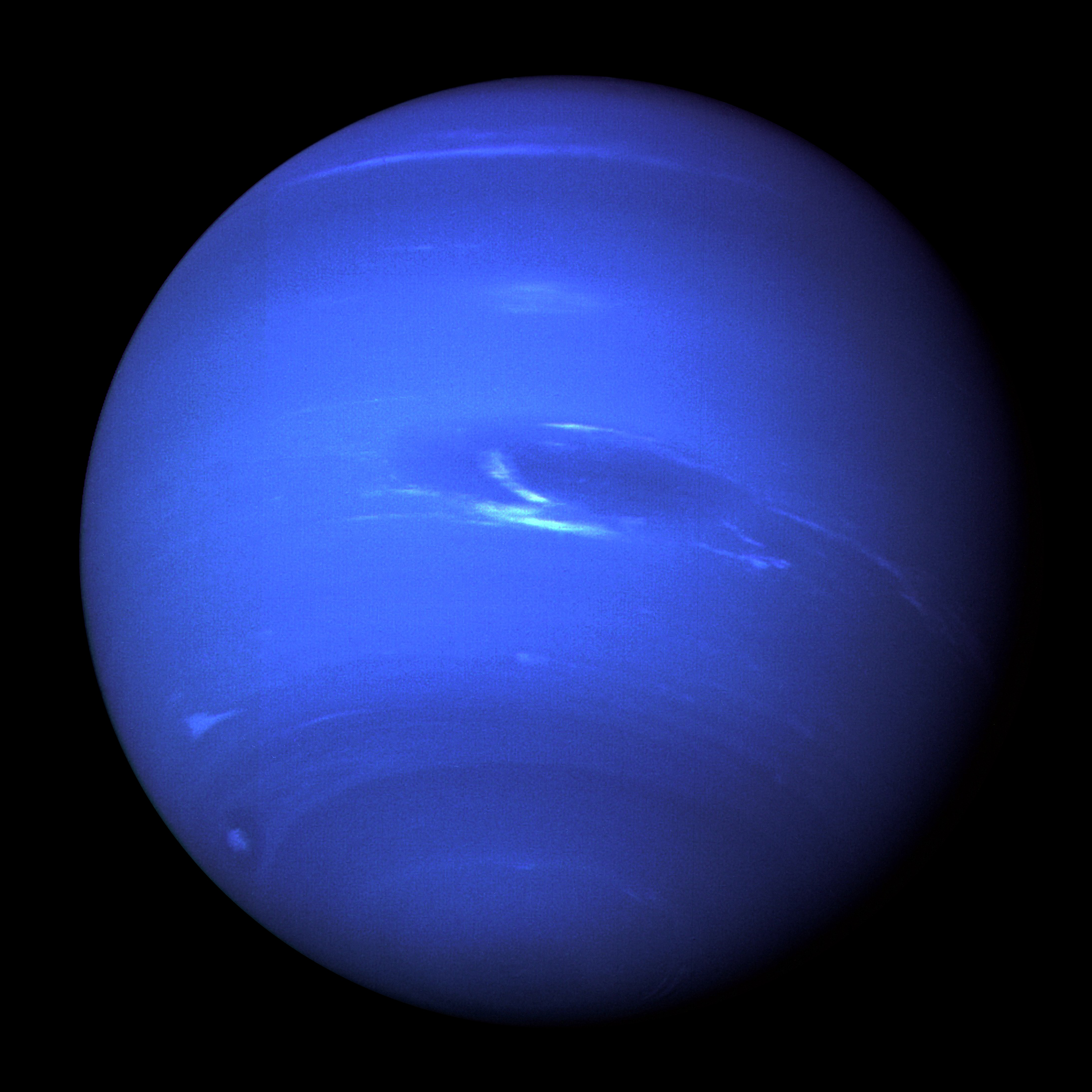
Here it is in true color, with the Earth photoshopped in for comparison.
It’s roughly the same size as Uranus…just a bit smaller, but it is considerably denser than Uranus and notably more massive (Uranus is 14.536 times the mass of the Earth, Neptune is 17.147 times.)
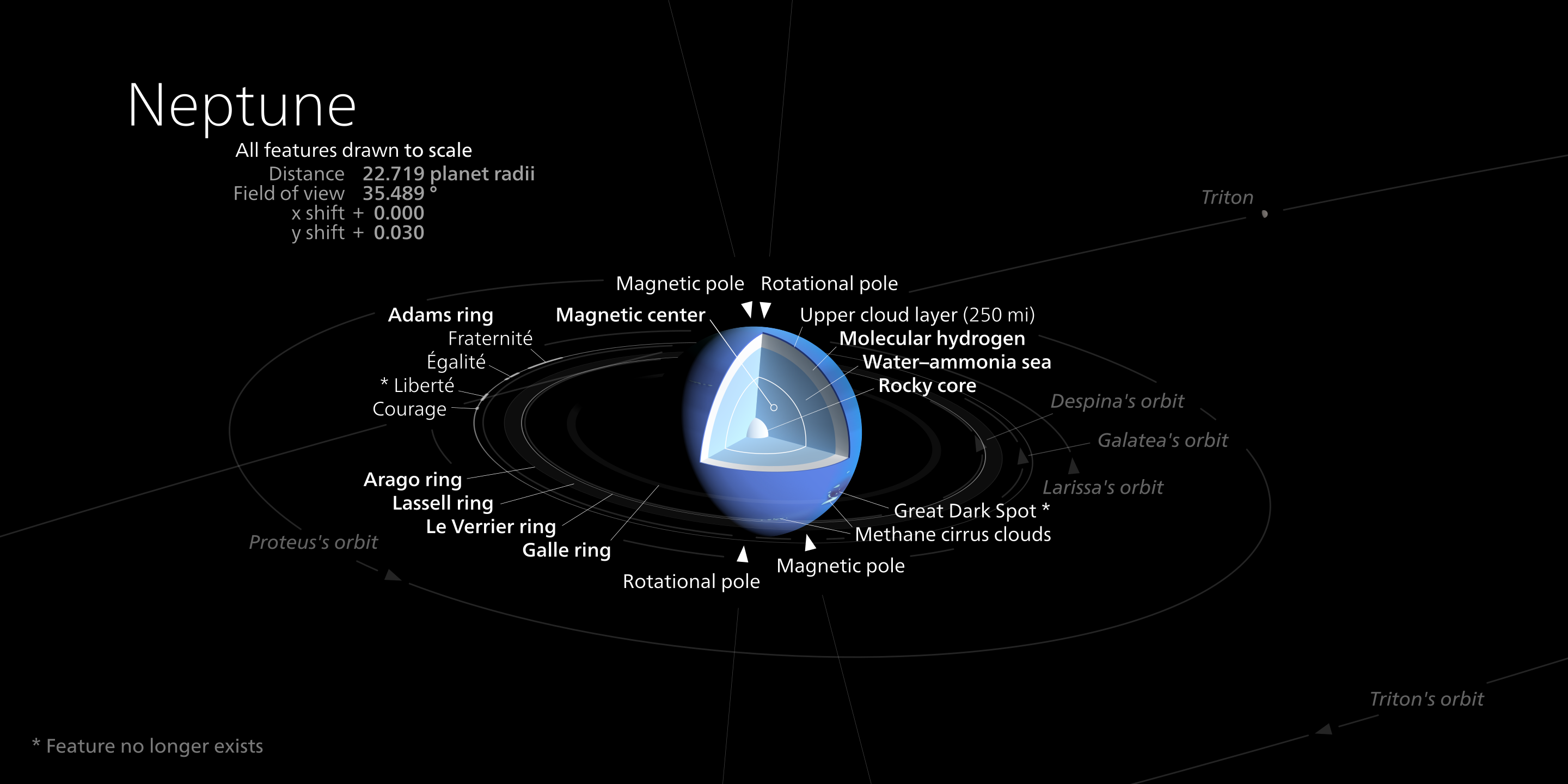
Neptune rotates in 16 hours, 6 minutes; that’s its day. Its axis is tilted 28.2 degrees, a bit more than Earth’s but not ridiculous like with Uranus or Venus. The temperature is 55-72 Kelvins (-218 to -201 C) depending on how deep into the atmosphere you measure it. The latter number is measured where the atmospheric pressure is the same as Earth’s at sea level. The atmosphere consists of 80 percent hydrogen, 19 percent helium and 1.5 percent methane by volume, with traces of ethane, ammonia, water ice, and ammonium hydrosulfide. The methane gives Neptune its bluish tinge.
Innards
Deeper down the methane, ammonia and water ices become more prevalent, earning Neptune its place among the ice giants. One thing I just spotted is the speculation that at a depth of 7000km, methane might decompose with the carbon forming diamond crystals that rain downwards like hailstones; this would be true on Jupiter, Saturn and Uranus as well.
Whoops, spoiler…Rings.
You’re probably used to seeing this picture of Neptune:
But if you scroll back to the earlier picture, it’s the same picture of Neptune, just rendered in different colors. This one exaggerated the colors for contrast, and in it you can see the “Great Dark Spot” which means I can now segue to discussing the weather.
Weather
The “Great Dark Spot” is similar to Jupiter’s Great Red Spot. It’s 13,000km x 6,600 km or so…which means that measured the long way it’s slightly broader than Earth! However, it wasn’t nearly as permanent as the Red Spot. By the time Hubble looked at Neptune eight years later in 1994, it was gone. But a new dark spot had appeared in Neptune’s northern hemisphere.
The white smudge is called “Scooter” because it moved more rapidly than the Great Dark Spot
Neptune has the most extreme winds in the solar system…at least, as far as we can tell. The prevailing winds on the equator are 400 m/s, dropping to a “mere” 250 m/s at the poles. In the storms the velocity can reach 600 m/s. That’s roughly 2,200 kph or 1,300 mph, well over the speed of sound. This is a stark contrast to Uranus, which had no obvious storms when Voyager 2 flew by. The concentration of methane, ethane, and acetylene at the equator is 100 times that at the poles, so it seems that at the equator the atmosphere is upwelling, bringing that stuff from down deeper where it is more common. It subsides near the poles.
Neptune, like Uranus, has a multi pole magnetic field, indicating its dynamo is probably in a relatively thin layer of the planet–much as is thought with Uranus.
Rings
Neptune has rings, but not very substantial ones. In this case it’s likely to be tiny ice particles coated with carbon-based material. And here, we came up with cool names: the most important rings are named Adams, Le Verrier, and Galle. The best way to view them is in infrared..and well guess what we just put up there that sees really, really well in infrared?
None other than the James Webb Space Telescope, of course!
Before the Voyager 2 encounter, we thought the rings were partial arcs rather than full circles; we eventually figured out those arcs were actually thicker parts of full rings.
And what a nice segue into the moons, since we can see some of them here.
Moons
You might expect the same progression of small, inner moons, nice and regular in circular orbits, then major moons (either large and planetary sized, or medium or medium-small but still round, or a mix), also in nice tidy regular orbits, then irregular satellites, that we saw with Jupiter, Saturn, and Uranus. Surely with a pattern like this three times running, we can expect more of the same here?
You might expect it, but that ain’t what you’re gonna get!
Neptune has 16 known moons, with a naming theme of water deities and one water critter out of Greek mythology.
First we have seven small regular satellites…in other words, inner moons. Some of them orbit among Neptune’s rings, as seen in the JWST photo above. Five of them were discovered by Voyager 2 in 1989, and of course the best photos we have of any of them are from that spacecraft, the only one ever to visit Neptune. Larissa was actually discovered in 1981, while Hippocamp was first spotted in 2013.
The largest of these is Proteus, with a diameter of 420 km. That puts it in the same size range as Mimas and Miranda, those smallest round moons, but it’s not round! It’s more like Hyperion in that regard, but unlike Hyperion, it’s not a gigantic sponge.
A craptastic picture like this is the best we can do when only Voyager 2 ever got close to it. Proteus, 420 km or so in diameter, orbiting at 117,646 km in 1.12 (Earth) days.
It is remarkable Proteus was discovered well after Larissa (which is much smaller) and Nereid, which is also smaller and has been known for decades–we’ll get to that.
So far so good, right? Inner moons.
Next should be large, planetary-sized moons and/or medium moons, all nice and regular.
Well, we do get a large moon. But it’s not regular. Not even close!
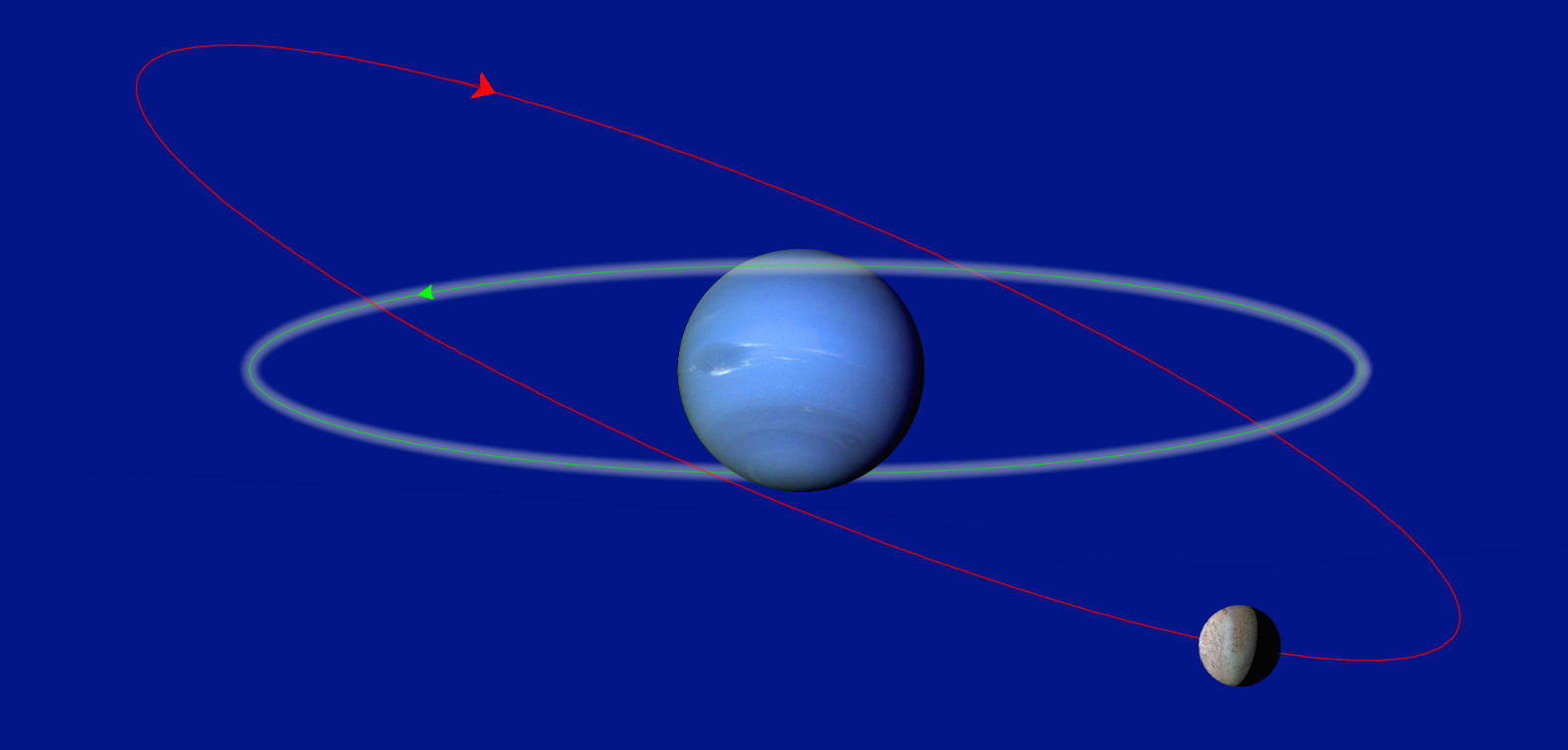
Triton is 2,705 km (give or take about 5 km) orbiting at 352,759 km in 5.87 days. It’s in a nice circular equatorial orbit…but it’s not in Neptune’s equatorial plane; it’s inclined at 23 degrees. Well, no, actually, it’s inclined at 157 degrees. Yes, it’s retrograde.
Triton’s orbit in red, compared to a “normal” moon’s orbit in green. Note the opposite directions of motion.
What the Biden is going on here? We’ll come back to that. And we’ll hit Triton in more detail shortly. Meanwhile, I’ll point out that it was discovered weeks after Neptune itself, by the English astronomer William Lassell.
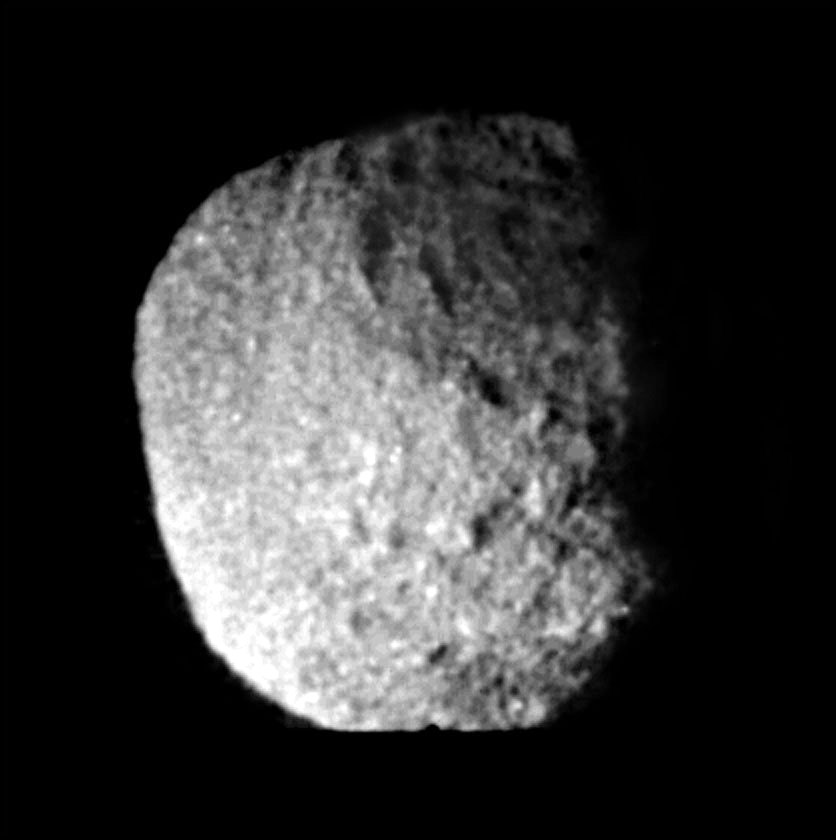
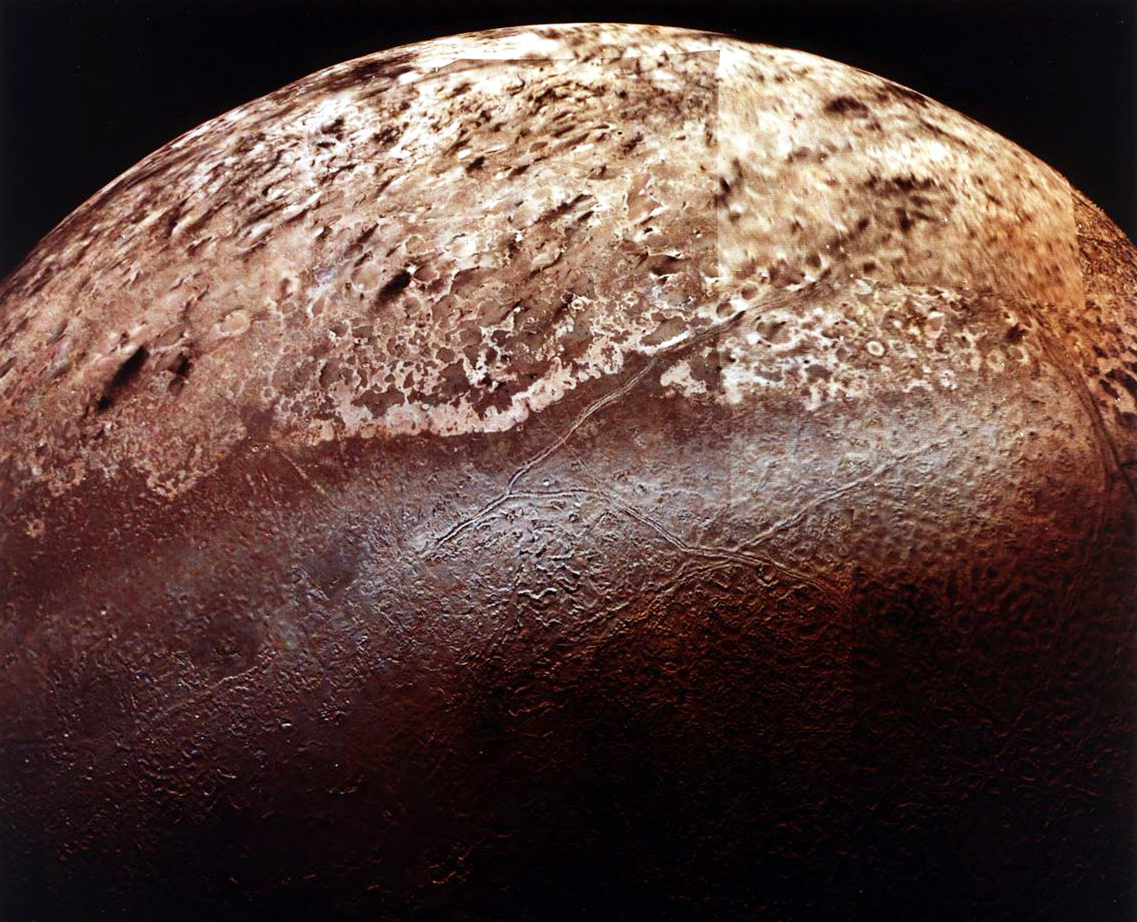
A black and white picture of Triton–it’s actually a mosaic pieced together from smaller pictures. Triton looks a lot like a cantaloupe in places.
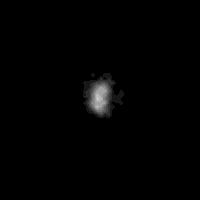
Next out is Nereid, discovered in 1949 by Gerard Peter Kuiper (you may recall I warned you that you’d be seeing his name again! And I wasn’t thinking about this when I said so). Nereid is 357 km across (give or take 13 km), and another non-round, but medium small moon. And now we see the suckage we have to deal with when only one spacecraft has ever spent any time at all near Neptune, and that only a few hours. Here is our absolute best picture of Nereid (out of 83 that Voyager took):
Nereid is another one of those “medium small” moons that didn’t quite become rounded. It got discovered before Proteus (which is larger) because it has a high albedo, reflecting most of the light that hit it.
And Nereid’s orbit is wacky. Its average distance from Neptune is 5,513,900 km–a huge jump up from Triton (it takes 360 days to orbit Neptune). But it’s at a relatively sane inclination of 5 degrees…very small for an irregular moon. But here’s the big surprise: the eccentricity is a whopping 0.75! That’s extremely elliptical. Its closest approach to Neptune is 1,381,500 km and its furthest distance is 9,626,500 km.
Next out is Halimede, about 62 km across, at 16,590,500 km, orbiting in 1879 days (almost five years), it’s retrograde and has an eccentricity of 0.521. It looks like it’s made out of the same stuff as Nereid, and there’s a 41 percent chance that at sometime in the past, it actually collided with Nereid. Or rather, that it broke off of Nereid (when you “run that tape backwards” that looks like a collision).
There are then two groups of three, the Sao group (inclined 36-50 degrees) and the Neso group (inclined 127-135 degrees), all of them 25-60km in diameter.
Halimede on out are clearly outer, irregular moons so here at least the usual pattern fits.
OK, we’ve got some crazy stuff going on here.
Triton
There are seven “large” or “planetary sized” moons in our Solar System (the Moon, Io, Europa, Ganymede, Callisto, Titan and Triton) and Triton is the smallest of them. It’s the only moon in the Solar System with a diameter in the 2,000-3,000 km range. Even so, it’s larger than all of the smaller moons in the Solar System, put together.
Before Voyager 2 flew by, we knew very little about Triton; Kuiper tried to measure its diameter in 1954 (well over a century after its discovery) and got 3,800 km. Others got values anywhere from 2500 to 6000km; that last is almost half the diameter of Earth and would have made Triton the largest moon in the solar system, beating out even Ganymede. The answer turned out to be 2706 km as measured by Voyager 2 on August 25, 1989.
Triton has a density of about 2 grams per cubic centimeter, which indicates that unlike many moons of the outer solar system, it’s more rock than ice. Its surface temperature is 38 K (-235C), slightly colder than Hitlary Klinton’s lap.
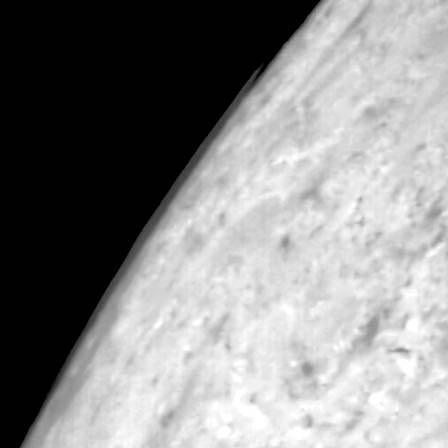
In the 1990s an atmosphere was detected (by watching stars fade as Triton passed in front of them). This is a very thin atmosphere, 0.02 millibar at most (Earth’s atmosphere is close to 1013 millibars). Nonetheless, clouds were photographed by Voyager (look at the horizon)
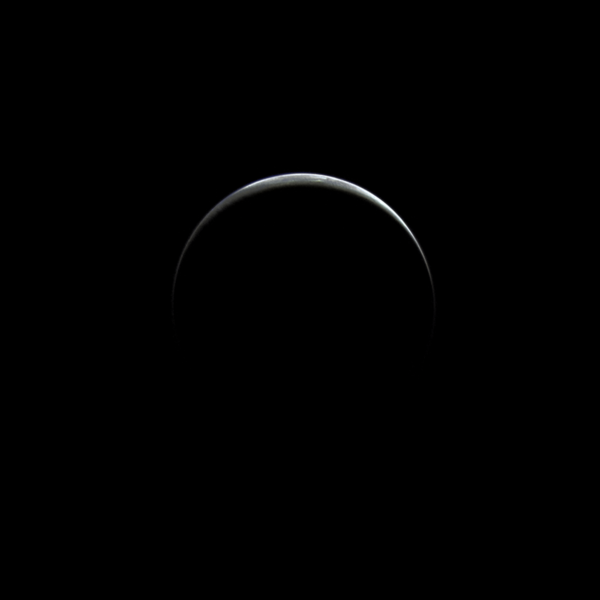
And also in this picture, a “parting shot” at Triton from the opposite side from the Sun (backlit pictures like this one can be very useful when studying atmospheres):
Triton also has geysers, this time of nitrogen. Triton is cold enough to have nitrogen ice on it (and remember that liquid nitrogen is stereotypically very cold stuff), but below the surface it’s warmer and you can have nitrogen geysers. The black smudges are thought to be downwind of them.
And finally we have this picture of the south polar ice cap (yes, “upside down” with south at the top):
Away from the cap we see more cantaloupe terrain. This feature is unique to Triton, so far as we know, and consists mostly of dirty water ice. They might be caused by lumps of less-dense material slowly rising to the surface, or perhaps flooding from cryovulcanism.
What’s with the red color? We’ve seen this a lot and it’s time I discussed it a bit. All of these outer moons have some amount of hydrocarbons on them (especially Titan), things like methane, ethane, and so forth. There’s zero protection from ultraviolet light on any of these moons (except maybe Titan), so the UV acts on the hydrocarbons and any sulfur that’s around and produces tholins, which are pretty much random goo formed of polymers. The term tholin was coined by Carl Sagan, who wrote:
For the past decade we have been producing in our laboratory a variety of complex organic solids from mixtures of the cosmically abundant gases CH4, C2H6, NH3, H2O, HCHO, and H2S [methane, ethane, ammonia, water, formaldehyde and hydrogen sulfide, respectively–SteveInCO]. The product, synthesized by ultraviolet (UV) light or spark discharge, is a brown, sometimes sticky, residue, which has been called, because of its resistance to conventional analytical chemistry, “intractable polymer”. […] We propose, as a model-free descriptive term, ‘tholins’ (Greek Θολός, muddy; but also Θόλος, vault or dome), although we were tempted by the phrase ‘star-tar’.[3][1]
We’ve only seen 40 percent of Triton, because that’s what Voyager photographed as it sped by. The other side might very well be a gigantic billboard reading “For a Good Time Call…” with Kamala Harris’s phone number, for all we know.
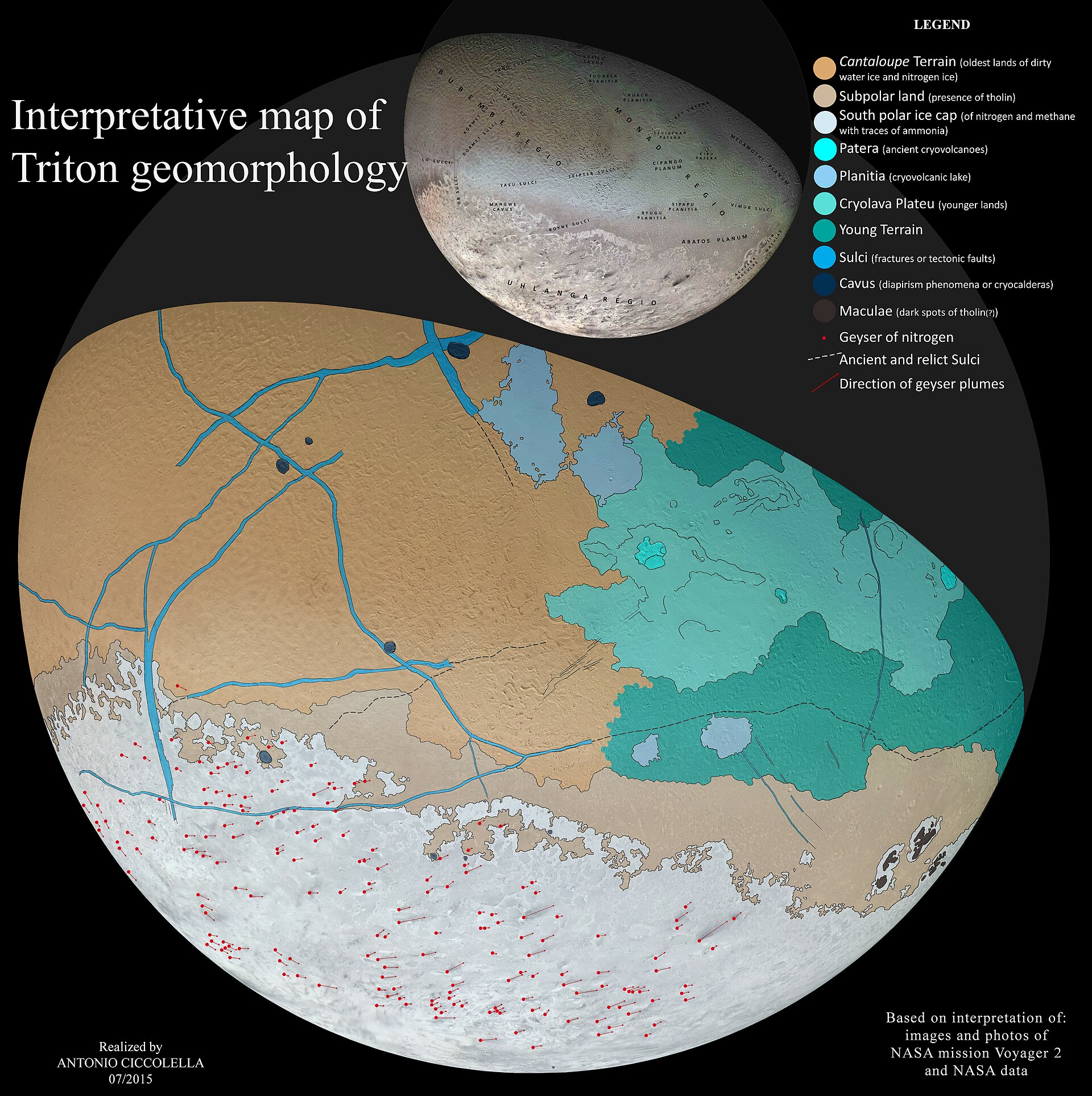
Here’s a geological map of Triton, based on what we have seen.
Triton orbits closer to Neptune than the Moon does to Earth, yet it is highly inclined and retrograde. Its orbit is nearly circular, and it has become tidally locked to Neptune (as would be expected).
Earth’s moon is slowly receding from Earth at a few centimeters per year. Triton is getting closer. In fact, in about three and a half billion years, it will probably get close enough to Neptune that tidal forces will pull it apart and we’ll have an absolutely killer set of rings to admire. (Book your travel plans now!)
But why is it getting closer to Neptune, when our Moon is getting further from Earth? Let’s look at why our Moon is getting further from Earth. It’s both raising and pulling at our tidal bulges, and our tidal bulges are pulling on the moon. The bulges precede the moon (because the rotation of the Earth shoves them ahead of where they “should” be directly under the Moon), which means the moon is pulling back on them and slowing the rotation of the Earth (which is why we keep having to add leap seconds). Conversely the bulges pull the Moon forward and cause it to speed up in its orbit. Speeding up raises the orbit. The Moon slowly recedes.
The same thing happens with Neptune and Triton…except that now the tidal bulges try to pull Triton “forward” in its orbit…but Triton is moving backward in its orbit, so pulling it forward actually cancels part of the backwards motion and slows Triton down. So, slowly but surely Triton’s orbit gets smaller and smaller.
OK So What Happened That Left This Trainwreck?
Neptune’s moon system is radically different from the others. There’s simply no way Triton could have formed where it did.
Astronomers are fairly certain that Triton is actually a captured object. And when it was captured, it wreaked havoc with the rest of Neptune’s moon system. Nereid, for instance is either also a captured object, or got put into its oddball orbit by Triton during the capture–if so it’s probably the only original Neptunian regular moon that survived, though it’s not regular any more. Any other moon that Neptune had at the time is long gone.
Adding to the pile of evidence for Triton being captured: it turns out to have a very similar chemical composition to Pluto, suggesting that they formed near each other.
Another Visit?
Will we ever visit Neptune again? Obviously the next step is an orbiter. Multiple concepts, both orbiters and more flybys, have been proposed and rejected. There’s some thought of doing things under the New Frontiers program, perhaps orbiters that would spend a lot of time on Triton, but these would be launching in 2031 or 2041 and arriving in 2047 and 2056 (note the fifteen or sixteen year travel times!). I’ll be a geezer by 2056; older than my parents lived. Failing that, the Chinese might put something at Neptune by 2058. So it looks like, not in my lifetime.
Neptune, the Mystic
Gustav Holst (1874-1934) composed an orchestral suite called The Planets in 1914-1917, with movements for Mars, Venus, Mercury, Jupiter, Saturn, Uranus and Neptune. (It’s one of the few “classical” works from the 20th century that I like.) Although he tried to evoke the mythological figures the planets are named after, I find the Neptune movement evocative of the vast distance that Neptune is, and its extreme isolation.
The slow fading out makes one think of journeying off into the stupendous void that is beyond Neptune.
The sun is 30 times further away from Neptune than it is from Earth. It’s half a degree across as seen from earth (30 minutes of arc), which means it’s one minute of arc across at Neptune. It looks the size of a quarter at 100 yards. No wonder it gives such little warmth, 1/900th of what it gives to us. And also the same tiny fraction of light. Cold and Dark, and it’s hard to imagine it getting colder and darker. Surely we are at the corner of “no” and “where.”
And yet, though we are out of planets, we are not done.
This Stormwatch Monday Open Thread remains open – VERY OPEN – a place for everybody to post whatever they feel they would like to tell the White Hats, and the rest of the MAGA/KAG/KMAG world (with KMAG being a bit of both).
Our various sister sites, listed in the Blogroll in the sidebar
Our beloved country is under Occupation by hostile forces.
Daily outrage and epic phuckery abound.
We can give in to despair…or we can be defiant and fight back in any way that we can.
Joe Biden didn’t win.
And we will keep saying Joe Biden didn’t win until we get His Fraudulency out of our White House.
Wolfie’s Wheatie’s Word of the Week:
xenocracy
noun
government by a body of foreigners
Shown in a picture
Used in a sentence
It’s hard to say who has been in charge of the intermittent American xenocracy, but we know for sure that it has not been Americans. They do prefer to rule us through “quasi-Americans” like Osatan , Kakula, and even Lyin’ Ted Cruz.
MUSIC!
Have some random previously unknown (to me) country music!
Has anybody here ever heard of this woman before?
THE STUFF
Thank you, Elon!
Fake science is real. But we’re starting to take it on.
This Stormwatch Monday Open Thread remains open – VERY OPEN – a place for everybody to post whatever they feel they would like to tell the White Hats, and the rest of the MAGA/KAG/KMAG world (with KMAG being a bit of both).
Our various sister sites, listed in the Blogroll in the sidebar
Our beloved country is under Occupation by hostile forces.
Daily outrage and epic phuckery abound.
We can give in to despair…or we can be defiant and fight back in any way that we can.
Joe Biden didn’t win.
And we will keep saying Joe Biden didn’t win until we get His Fraudulency out of our White House.
Wolfie’s Wheatie’s Word of the Week:
xerophobous
adjective
unable to survive drought
intolerant of dry conditions
Shown in a picture
Used in a sentence
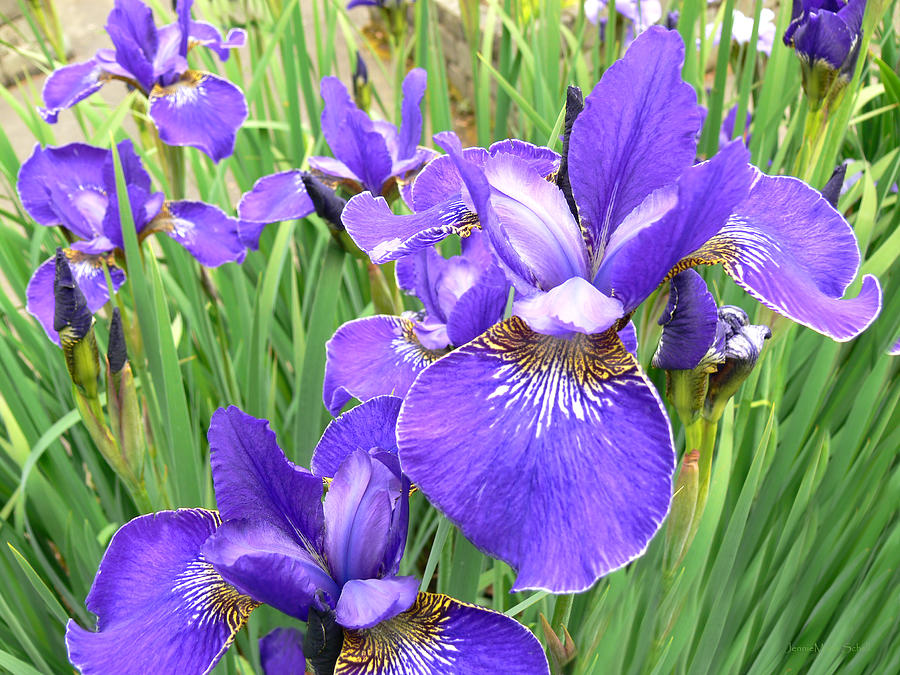
Xerophobous plants which require wet soil or even standing water, such as some species of the Japanese iris, are sometimes described as water-loving, but are perhaps better described as water-needful.
MUSIC!
Enjoy some real piano music!
The tank-top is the perfect touch!
THE STUFF
While we’re here, some kudos to Musk for inspiring us all.
Video from a different vantage point shows Starship Booster never came even close to hitting the tower.
As far as I can tell, this was as perfect of a Mechazilla catch as SpaceX could have hoped for. pic.twitter.com/TagzygAQgG
This is a fun piece of an interview with aging scientist Roger Penrose, a highly respected astrophysicist and theoretician. Don’t sweat it if you don’t understand the details. Soak up the controversy, still rumbling a century after the 1920s, when general relativity and quantum mechanics were just arriving.
This is, and was, what science was supposed to be like. Great minds feuding and governments staying the F out of the arguments.
HINT – “collapse of the wavefunction” means that “the tumbling dice of many possibilities settle down to something specific.” Penrose is saying that the idea our minds do this is bullshit. He believes that something in physics makes the dice settle on a value, but he doesn’t guess as to what it might be.
This Stormwatch Monday Open Thread remains open – VERY OPEN – a place for everybody to post whatever they feel they would like to tell the White Hats, and the rest of the MAGA/KAG/KMAG world (with KMAG being a bit of both).
Our various sister sites, listed in the Blogroll in the sidebar
Our beloved country is under Occupation by hostile forces.
Daily outrage and epic phuckery abound.
We can give in to despair…or we can be defiant and fight back in any way that we can.
Joe Biden didn’t win.
And we will keep saying Joe Biden didn’t win until we get His Fraudulency out of our White House.
Wolfie’s Wheatie’s Word of the Week:
ischiorrhogic
adjective
of an iambic line, having spondees in the second, fourth or sixth place
in ancient prosody, noting a variety of iambic trimeter which has not only a spondee or trochee for an iambus in the sixth or last place, as in the choliamb, but a spondee in the fifth place also
Wolf’s easy alternative explanation
A kind of irregularity in old Greek poetry, which jazzes things up, but too much so, in the opinions of some.
When the variation on the sixth foot of the trimeter coexists with a spondee in the fifth place, the verse becomes still more irregular, and can, in fact, hardly be considered an Iambic verse, but is rather a combination of an iambic diameter with a trochaic monometer. Such lines are called by the grammarians Ischiorrhogic (broken-backed) : they are very rarely used by Hipponax. LINK
This Stormwatch Monday Open Thread remains open – VERY OPEN – a place for everybody to post whatever they feel they would like to tell the White Hats, and the rest of the MAGA/KAG/KMAG world (with KMAG being a bit of both).
We’ve talked about theories of flat earth, and of gravity not existing. What about the other direction – not only gravity existing, but anti-gravity, too?
SO – the failure of “beautiful theories” led her to begin questioning them – and to wondering how beauty and math might be misleading the direction of physics.
Well – let’s couple that with journalism – how the cross-interests of journalism – the WOW – the NOW – the NO – the WHOA – and the WOO – how that might ALSO be misleading science.
This Stormwatch Monday Open Thread remains open – VERY OPEN – a place for everybody to post whatever they feel they would like to tell the White Hats, and the rest of the MAGA/KAG/KMAG world (with KMAG being a bit of both).
Our various sister sites, listed in the Blogroll in the sidebar
Our beloved country is under Occupation by hostile forces.
Daily outrage and epic phuckery abound.
We can give in to despair…or we can be defiant and fight back in any way that we can.
Joe Biden didn’t win.
And we will keep saying Joe Biden didn’t win until we get His Fraudulency out of our White House.
Wolfie’s Wheatie’s Word of the Week:
anticryptic
adjective
Best Definition
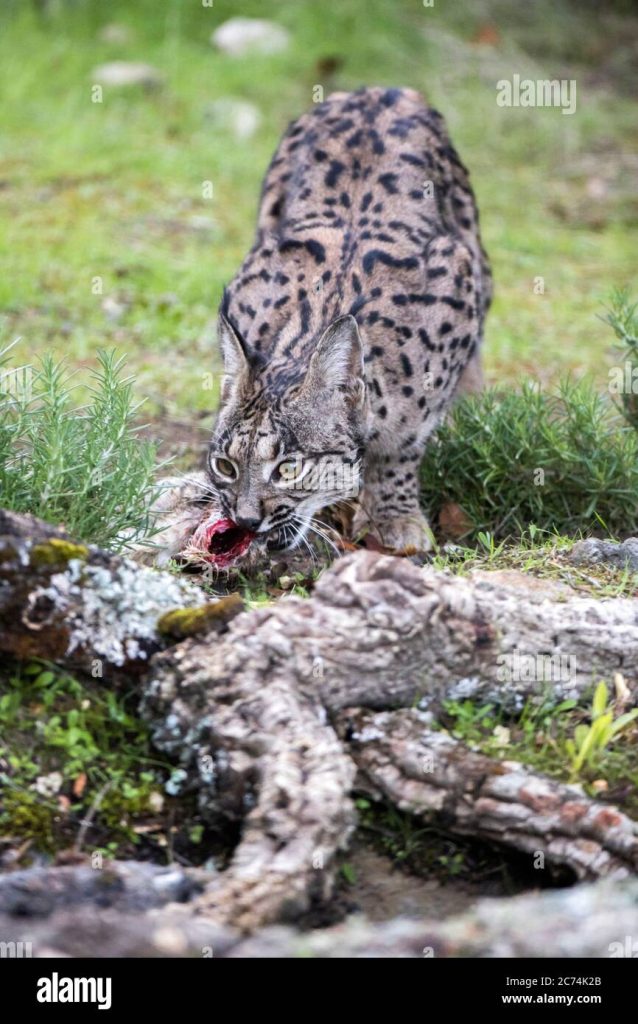
in biology, serving to conceal or fitted for concealing one organism to the disadvantage of another: as contrasted with procryptic, serving to hide an organism for its own welfare
Inferior and Less Clear or Complete Definitions
camouflaged
having protective resemblance to environment
of or pertaining to camouflage used by a predator to provide stealth, as opposed to camouflage used by prey to hide
of or relating to resemblance to surroundings that renders an animal less conspicuous to its prey
serving to conceal an animal from its prey
Shown in a picture
Unencrypted by magnification, so to speak
Crazy cat ladies – stay away, with your vegan cat food!
MUSIC!
I let this nice song hang out in a tab forever. Need some room!
Ah, Celtic Woman! Always a pleasure!
THE STUFF
Care for a piece of pi?
SO – what do we have here? A new way to calculate pi? That’s still pretty complicated?